30783.
Zuruby Hannum, Circassian Beauty.

Zuruby Hannum, Circassian Beauty.
Madame Milo, woman with long hair.
George–Mexican Wild Man, Captured 8 1/2 yrs. ago.
Miss Leah Sherman, Lady Whittler, Wonderland, Milwaukee, Wis. Nov. 30th, 1892.
Barnum’s hairy man.
Chang-Yu-Sing, Chinese Giant.
Col. Noah Orr, The American Giant. Height 8 ft, 8 in., weight 550 lbs., age 22 years, at Barnum’s Museum.
The Original Eliophobus Family. Rudolph Lucasie, Wife and Son. From the Island of Madagascar. Prominent Peculiarities. White Silken Hair. Alabaster Complexion. Eyes Pink. Pupils Angular, nearly square.
Albino Woman with Parrot.
Chang and Eng, Siamese Twins.
Christmas 1880.
John S. Elliott, largest man in Maryland. Signed on verso. The following from his death notice: “Death of the Largest Man in Maryland. John S. Elliott died at his residence in Queen Anne’s county, Md., on Sunday, of pneumonia, aged fifty-nine years. He was the largest man ever raised in Maryland, and perhaps in the United States. A few years ago, while exhibiting, he weighed nearly five hundred pounds; of late he had fallen off, and his weight was reduced to less than four hundred pounds. In height he was five feet ten inches, and two feet across from shoulder to shoulder. He generally enjoyed good health, but the disease from which he died carried him off after a few days’ illness. He was a native of Queen Anne’s county, but was well known in the adjacent counties.”
Circassian Woman.
Juggler, pin in the air, held by a string no doubt.
Young Acrobats.
Dan Rice, celebrated circus clown.
Ball walker.
Lulu Lataska, Snake Lady, born in Russia.
Cabinet photograph depicting a normal size man pointing to a very tall man made up to look like a native of some sort. The native man has a bone ring in both his nose and ear as well as face paint. He wears an open long-sleeve robe and has a leopard like loin covering. He wears pants and fur topped boots. He is holding something out over the head of the other man, maybe a hat. Identified by David B. Doghouse as Mianko Karoo.
6428-Group of Lions, Hagenbach’s.
Detroit, Michigan, June 20, 1910. Man on stilts in crowd.
Montreal. Man on stilts leading band.
Ottawa, Ontario. June, 10, 1911. Man on stilts advertising banner on back.
Montreal. Man on stilts in crowd.
Montreal. Man on stilts among children in a field.
Che-Mah, the Chinese Dwarf.
Maximo & Bartola, Aztecs of Ancient Mexico. Máximo and Bartola (also known as Maximo Valdez Nunez and Bartola Velasquez respectively) were the stage names of two Salvadoran siblings both suffering from microcephaly and cognitive developmental disability who were exhibited in human zoos in the 19th century. Originally from near Usulután, El Salvador, the siblings were given by their mother to a merchant who promised he would take them to Grenada to be educated and exhibited. They then went through several guardians afterwards. They were eventually billed as “Aztec Children” and an elaborate story was constructed of how they were found in the temple of a lost Mesoamerican city. They toured the U.S. and Europe, appearing before various regents and dignitaries.
Unidentified Circassian Snake Lady.
Puppet Show Streets of Naples.
Punch & Judy.
Pigeon’s London Punch and Judy Drama.
Col. Routh Goshen, the “Arabian Giant,” 8 feet high-weight 475 lbs.
Col. Routh Goshen, the “Arabian Giant,” 8 feet high-weight 475 lbs.
Albino woman.
Col. Routh Goshen, The Arabian Giant. 8 feet high–weight 475 lbs. As exhibited at Barnum’s Museum, New York.
Prince Bendon & Walking Figure.
Prof. J.H. Master, Mimic and Ventriloquist with his Life Size King Figures of the World in Their Merry Hours.
Young man with two ventriloquist dolls.
Ventriloquist with 2 dummies.
Prof. Maurettus and his ventriloquist dummies.
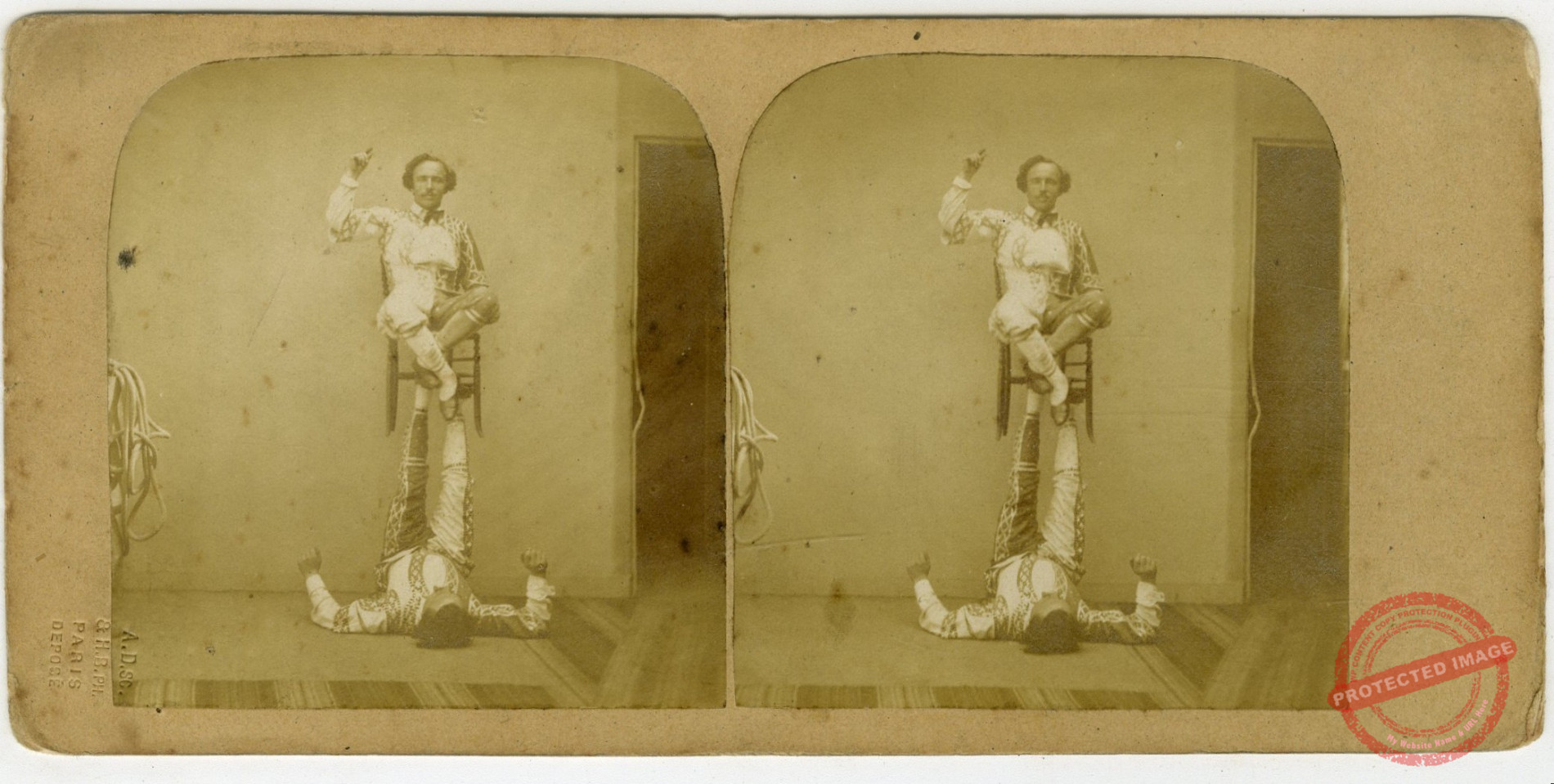
Equilibrists 1859.
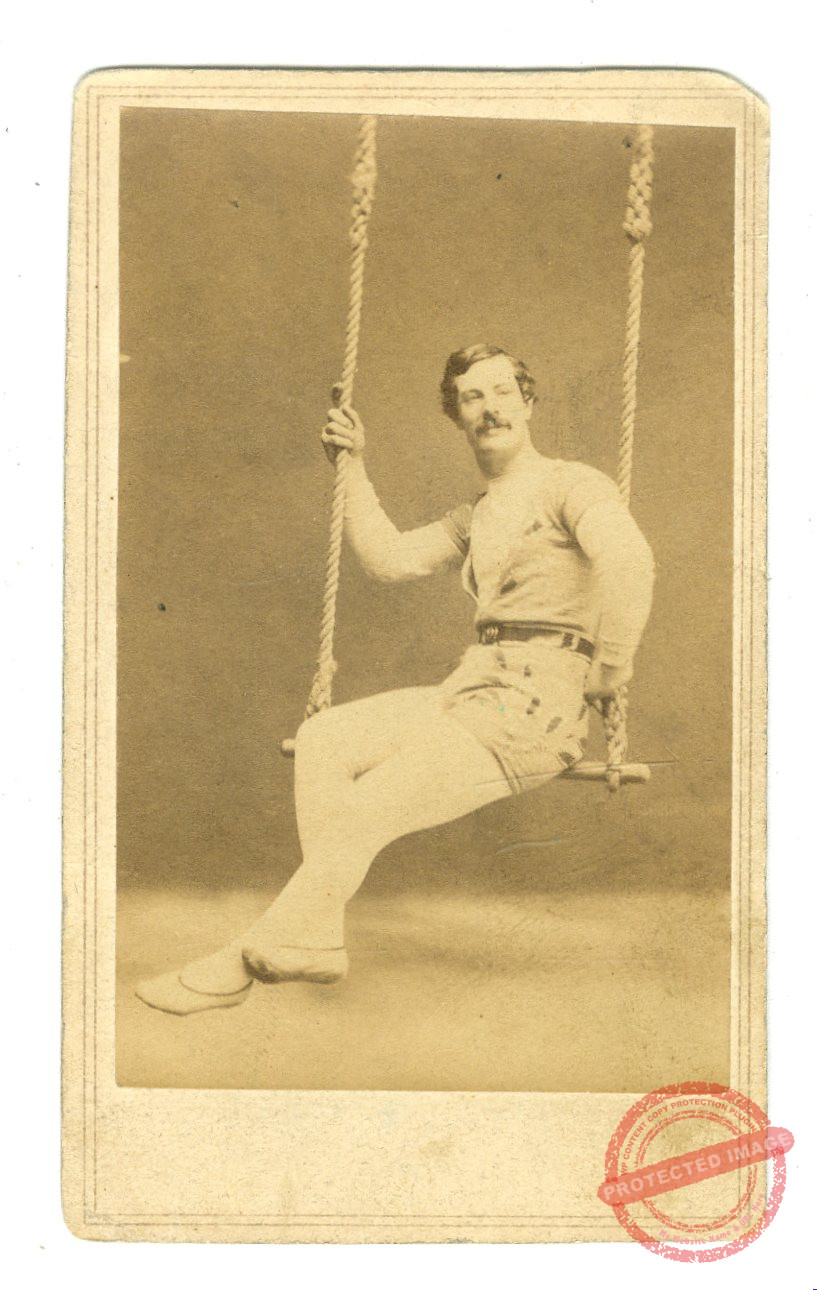
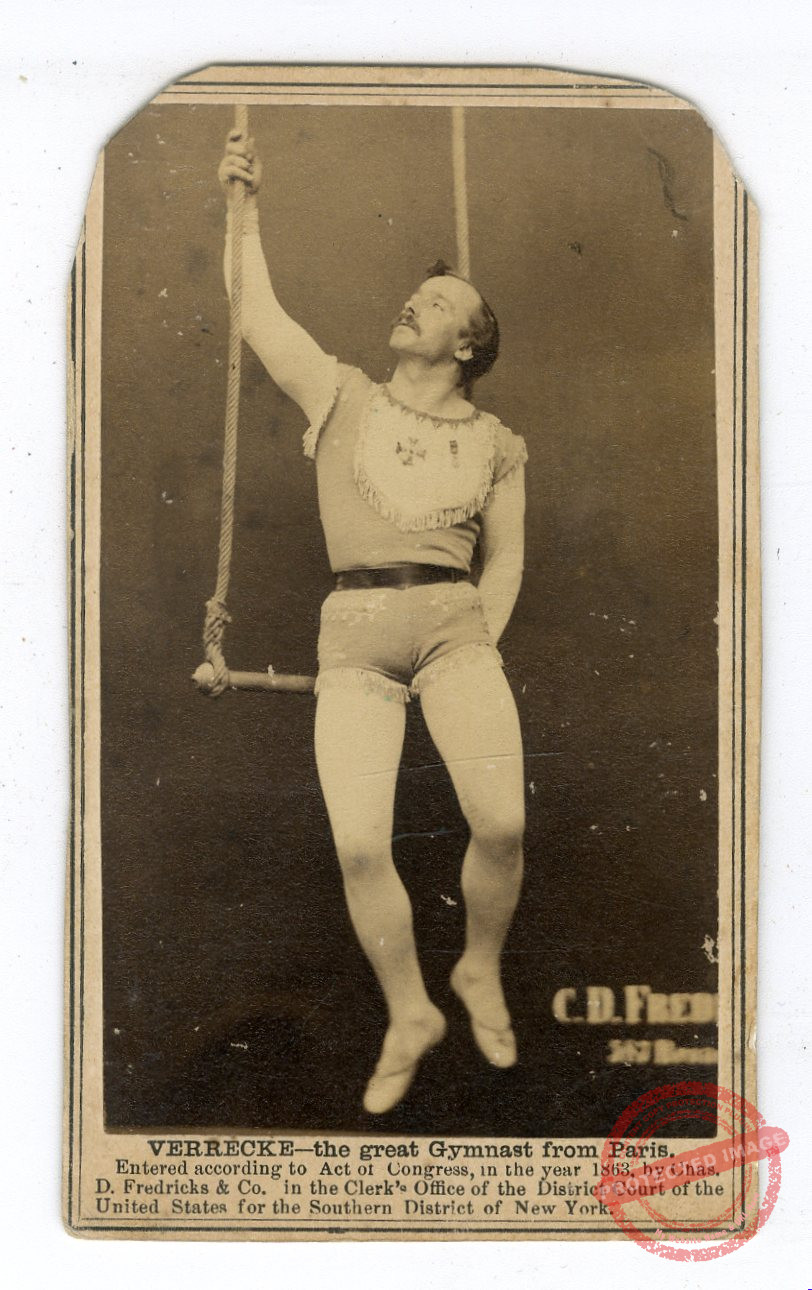
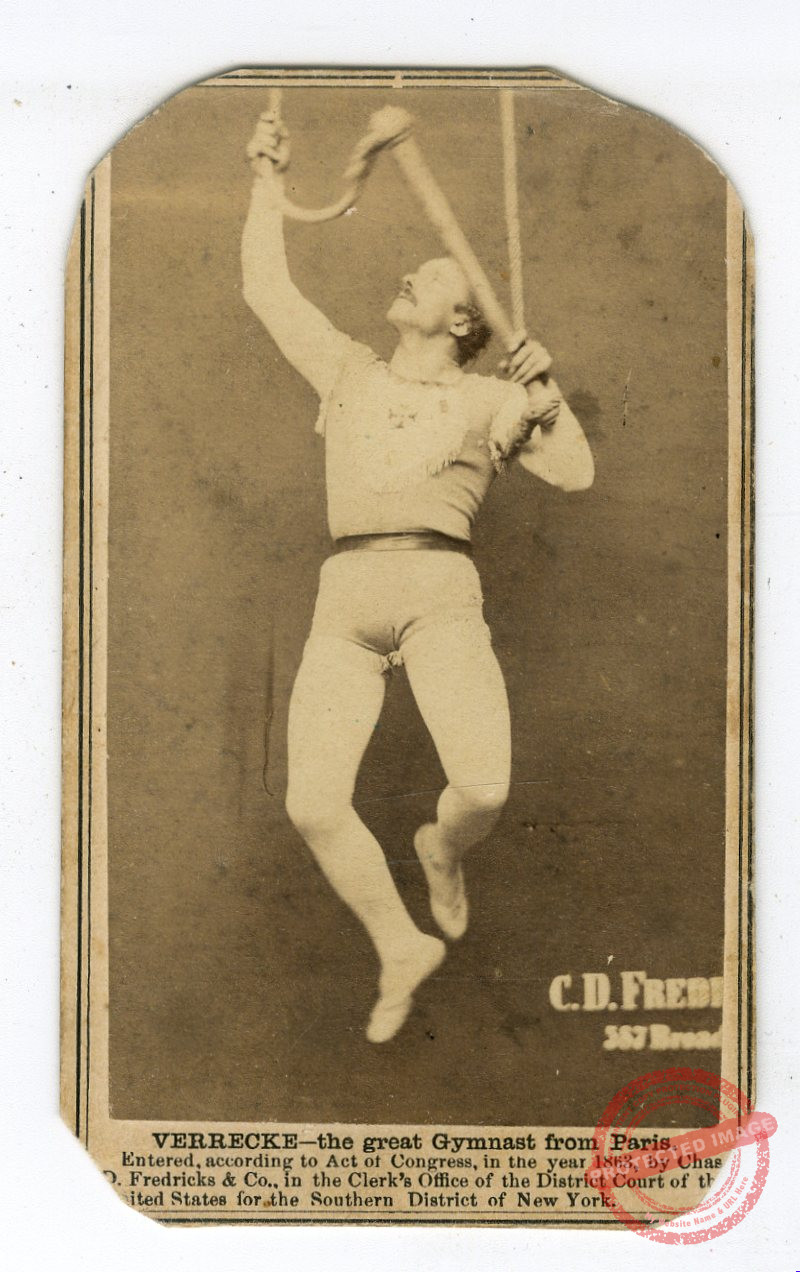
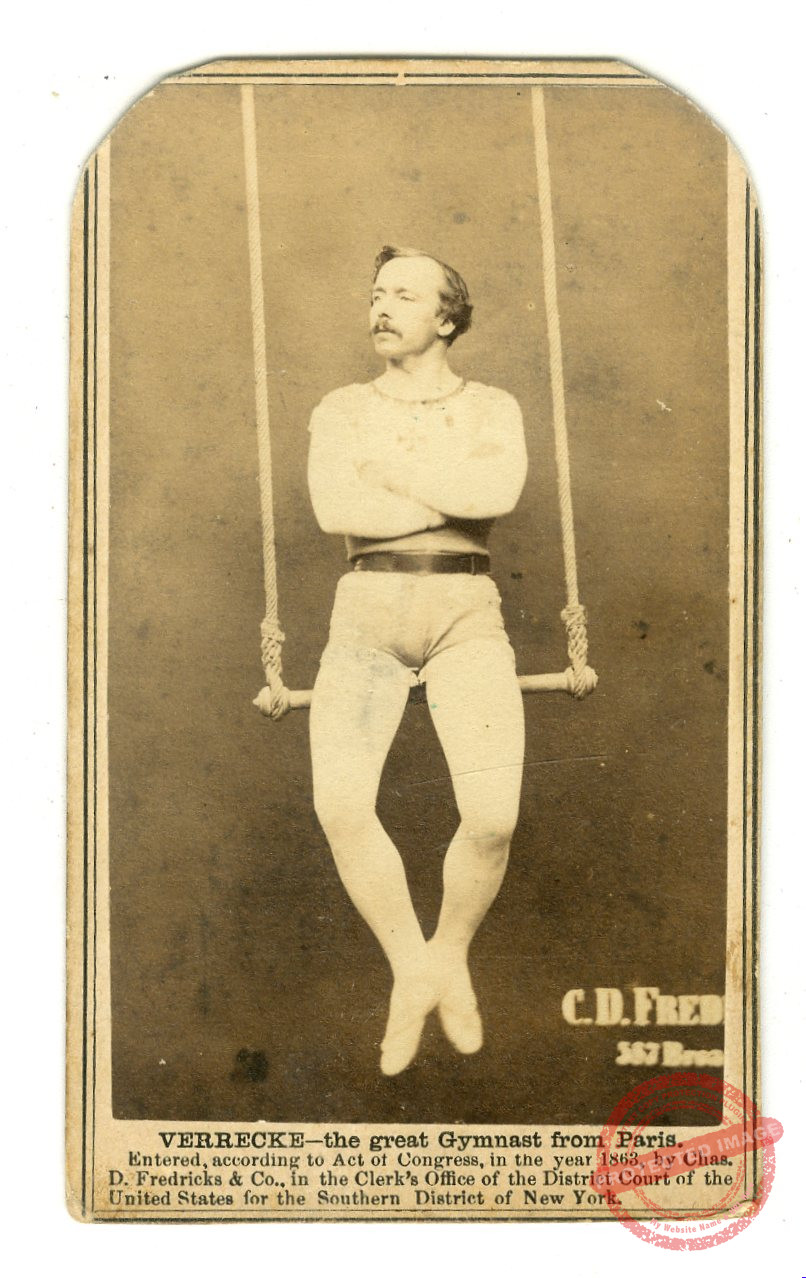
Léopold Verrecke was a renowned 19th-century Belgian trapeze artist and gymnast who later became a wartime balloon pilot during the Siege of Paris. Billed in performances as “Verrecke the Great Gymnast,” he gained widespread fame in the 1860s as a premier aerialist alongside pioneers like Jules Léotard. Verrecke achieved star status when engaged by director Louis Dejean to perform at the famous Cirque Napoleon (now the Cirque d’Hiver) in Paris during the 1860s. At the time, the word “gymnast” was commonly used to describe circus aerialists and acrobats. Verrecke was celebrated for his daring feats on the flying trapeze, a discipline invented by Jules Leotard at that very venue in 1859.
Like other major acrobats of the era, he toured internationally and posed for cartes de visite showcasing his athletic physique and circus costumes. During the Franco-Prussian War (1870–1871), when Prussian forces surrounded Paris, the French government recruited daring circus acrobats, sailors, and athletes to pilot hot-air and gas balloons carrying mail and dispatches out of the besieged city. On December 20, 1870, Verrecke piloted the mail balloon Général Chanzy, departing from the Gare du Nord in Paris at 2:00 a.m. with three passengers, carrier pigeons and 25 kilograms of mail including a letter from Georges Clemenceau to his wife. Strong winds blew the balloon off course into enemy territory, landing in Roedersdorf, Bavaria, at 10:20 a.m.. Prussian forces captured Verrecke, his passengers, and the mailbags. Because Prussian Chancellor Otto von Bismarck had previously threatened to treat captured balloonists as spies rather than regular soldiers, widespread rumors circulated in France that Verrecke and his crew had been executed by firing squad. Verrecke and the passengers were subjected to mistreatment and a grueling captivity in Bavaria, though they all survived the war and were not executed.
Verrecke-the great Gymnast from Paris.
Léopold Verrecke was a renowned 19th-century Belgian trapeze artist and gymnast who later became a wartime balloon pilot during the Siege of Paris. Billed in performances as “Verrecke the Great Gymnast,” he gained widespread fame in the 1860s as a premier aerialist alongside pioneers like Jules Léotard. Verrecke achieved star status when engaged by director Louis Dejean to perform at the famous Cirque Napoleon (now the Cirque d’Hiver) in Paris during the 1860s. At the time, the word “gymnast” was commonly used to describe circus aerialists and acrobats. Verrecke was celebrated for his daring feats on the flying trapeze, a discipline invented by Jules Leotard at that very venue in 1859.
Like other major acrobats of the era, he toured internationally and posed for cartes de visite showcasing his athletic physique and circus costumes. During the Franco-Prussian War (1870–1871), when Prussian forces surrounded Paris, the French government recruited daring circus acrobats, sailors, and athletes to pilot hot-air and gas balloons carrying mail and dispatches out of the besieged city. On December 20, 1870, Verrecke piloted the mail balloon Général Chanzy, departing from the Gare du Nord in Paris at 2:00 a.m. with three passengers, carrier pigeons and 25 kilograms of mail including a letter from Georges Clemenceau to his wife. Strong winds blew the balloon off course into enemy territory, landing in Roedersdorf, Bavaria, at 10:20 a.m.. Prussian forces captured Verrecke, his passengers, and the mailbags. Because Prussian Chancellor Otto von Bismarck had previously threatened to treat captured balloonists as spies rather than regular soldiers, widespread rumors circulated in France that Verrecke and his crew had been executed by firing squad. Verrecke and the passengers were subjected to mistreatment and a grueling captivity in Bavaria, though they all survived the war and were not executed.
Exterior of Photo Studio with images displayed. Probably the studio of the photographer Harry T. Slaughenhaupt, York Springs, Pa. There are 6 men and 2 kids outside.
Blanch Starr and Highland Park, 1896. Blanch was the daughter of the photographer A.M. Starr of Grand Rapids, Michigan.
Artist’s Studio–Northfield. There is a daguerreotype camera and a stereo camera on the table and many images along the wall.
E. & H. T. Anthony & Co. display area at the Exposition of the National Photographic Association–Cleveland Bank 1870.
Photographic displays at the Exposition of the National Photographic Association–Cleveland Bank 1870.