43801.
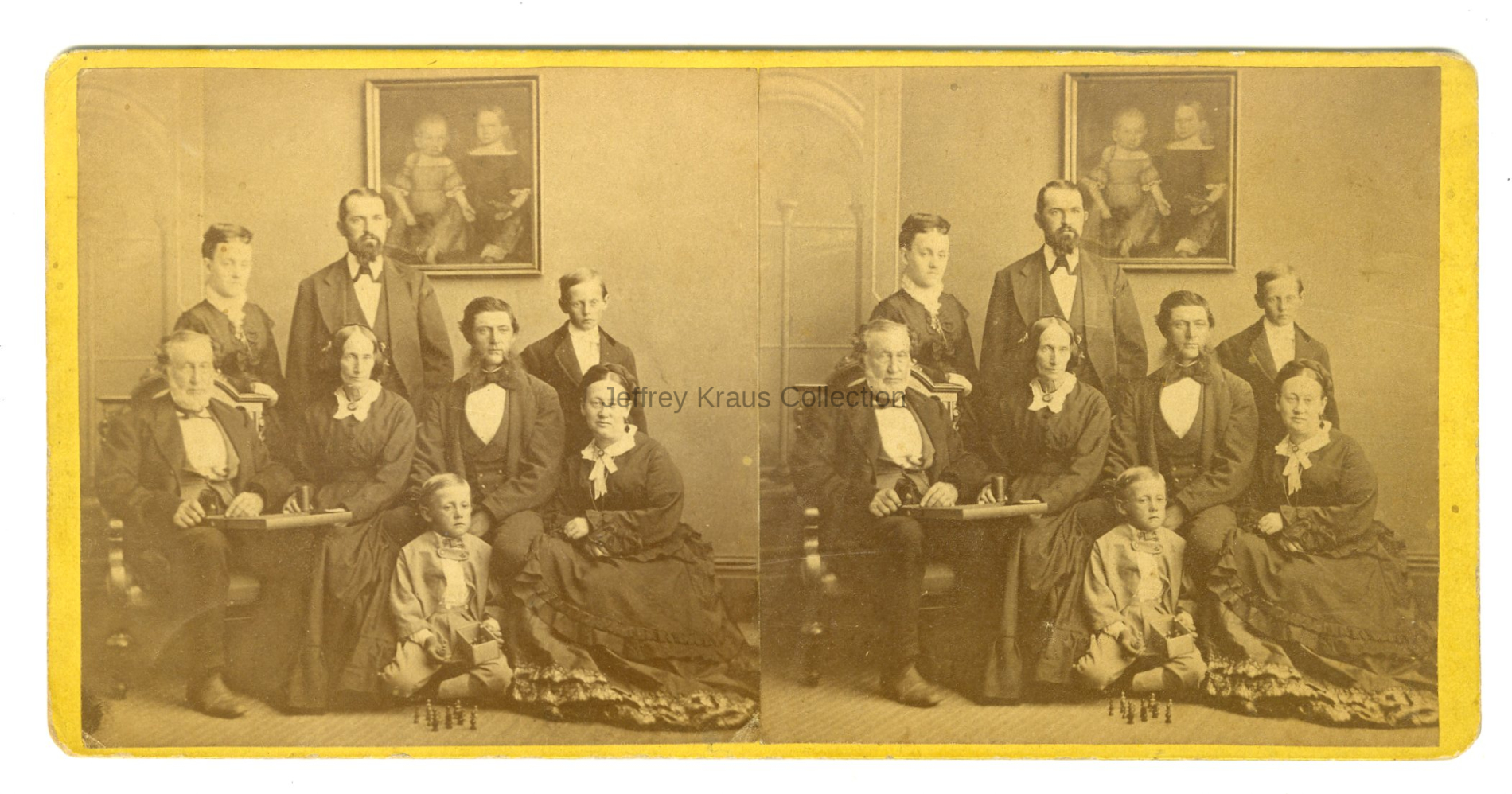
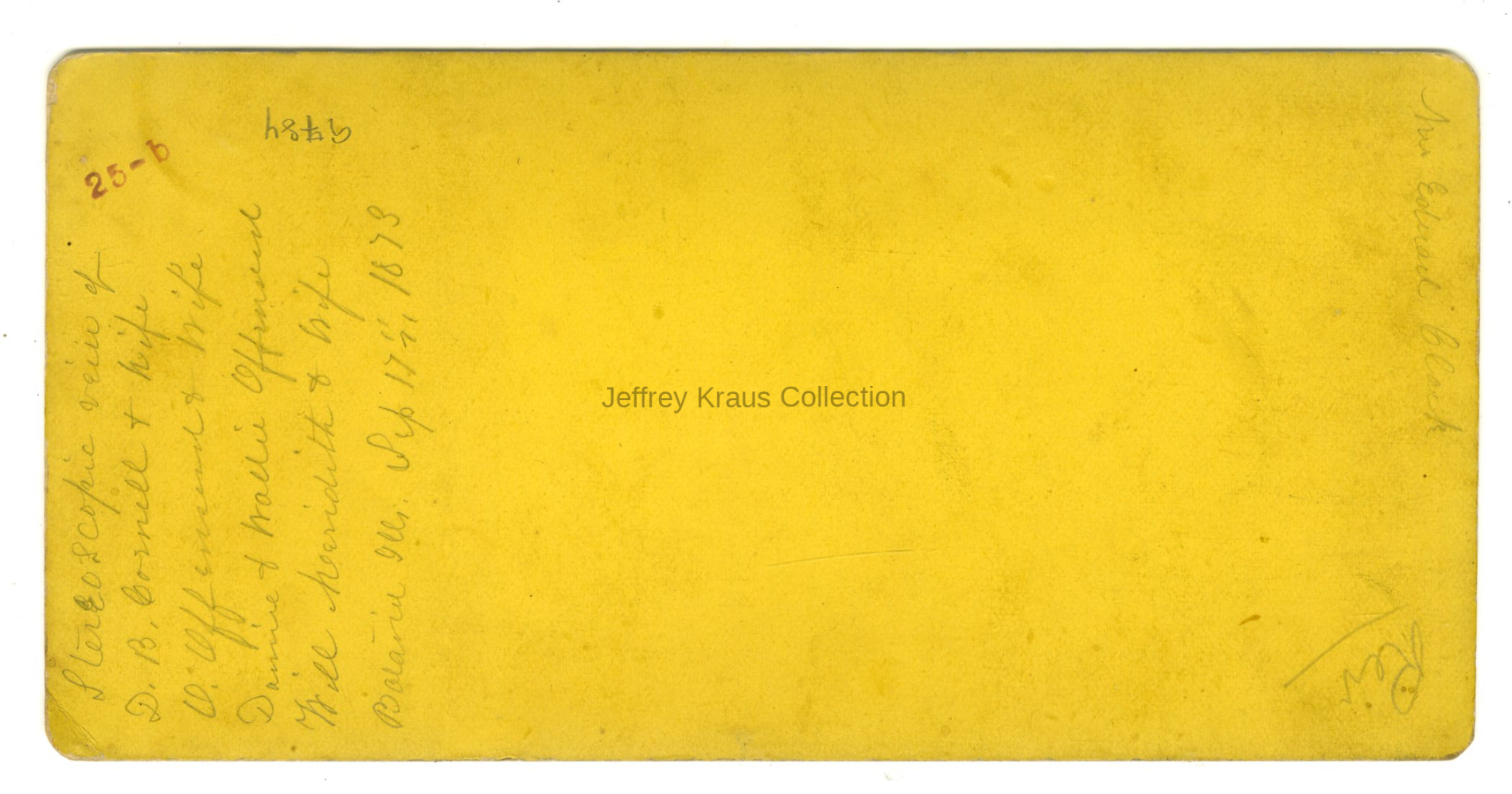
Family group posed in front of folk-art painting of two children. Chess pieces on floor in front. Couple with game table at left.

Family group posed in front of folk-art painting of two children. Chess pieces on floor in front. Couple with game table at left.
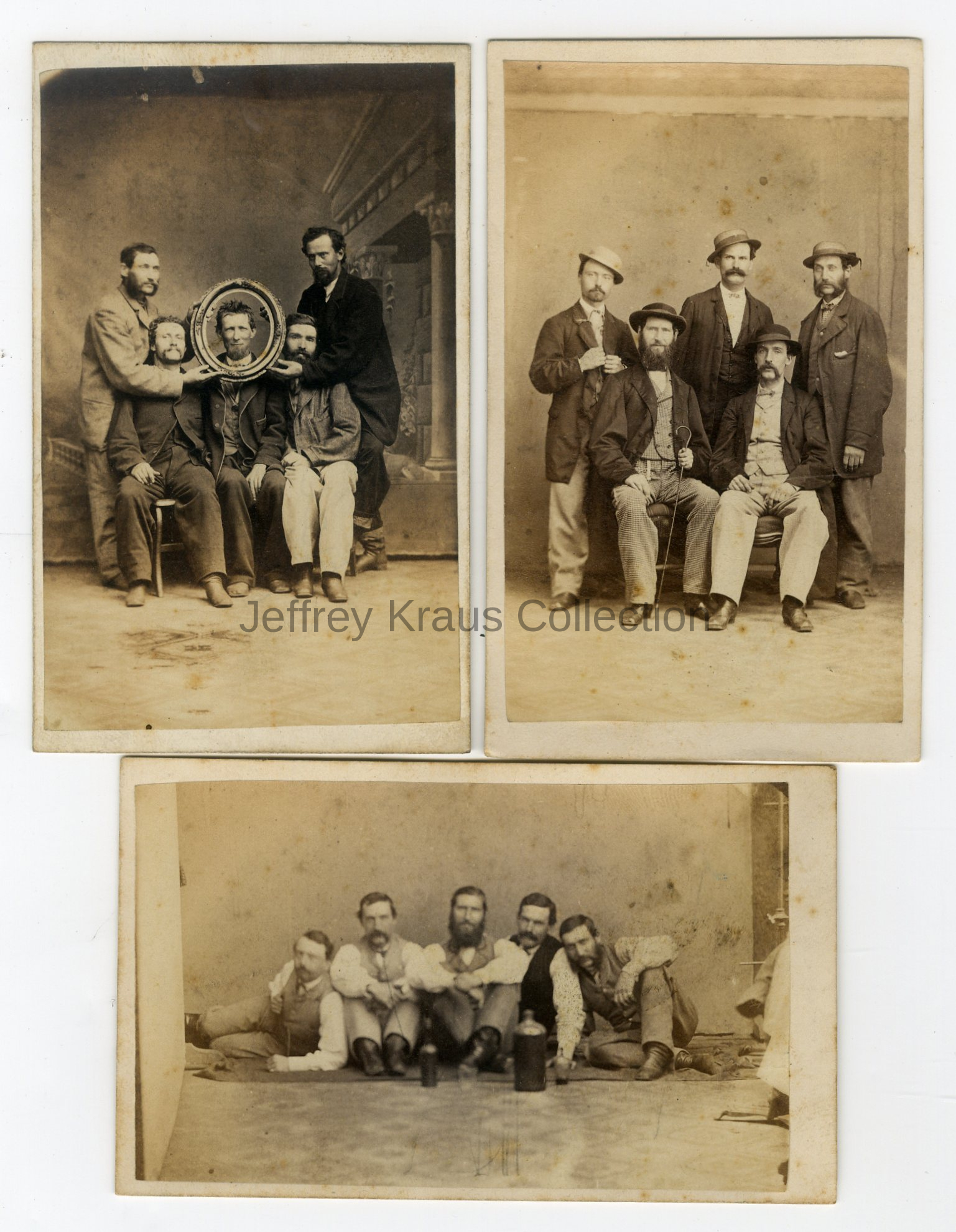
3 cdvs of groups of 5 men, some of the same men in each. [D]
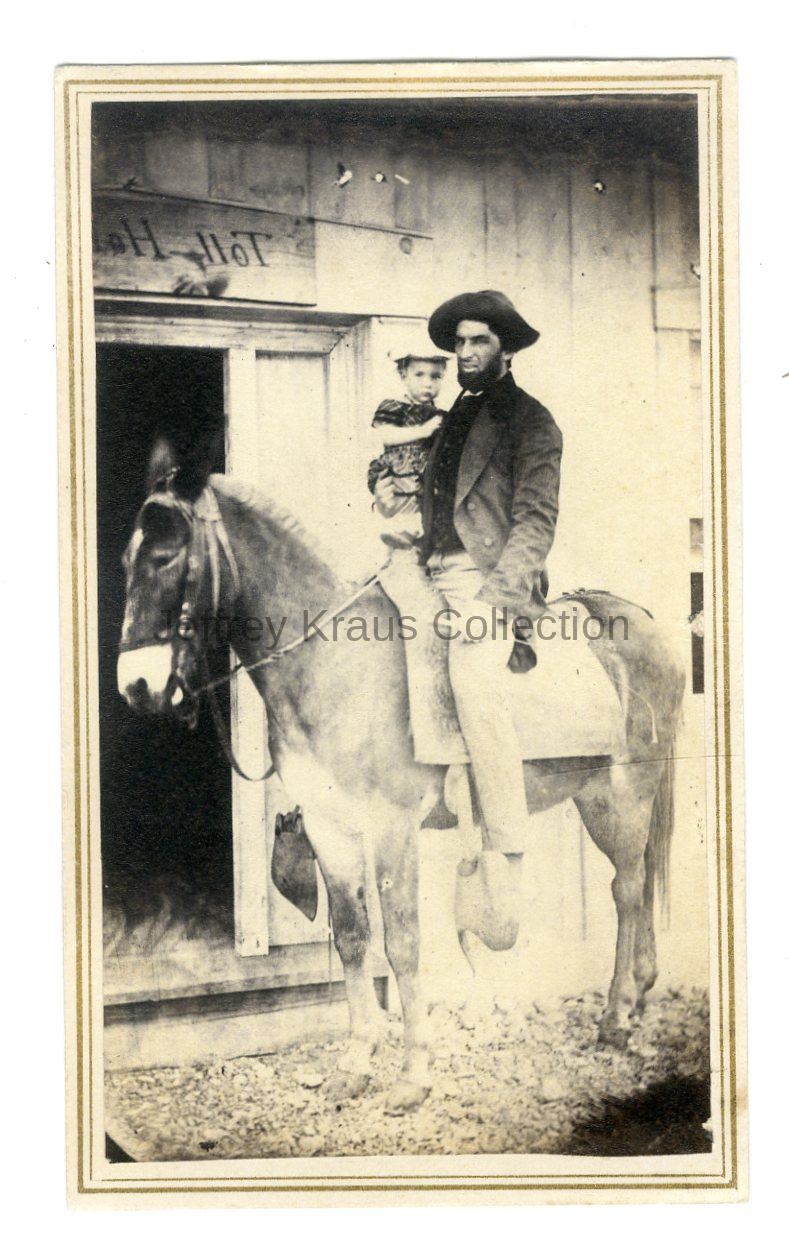
Man on horseback holding child in front of a Toll House.
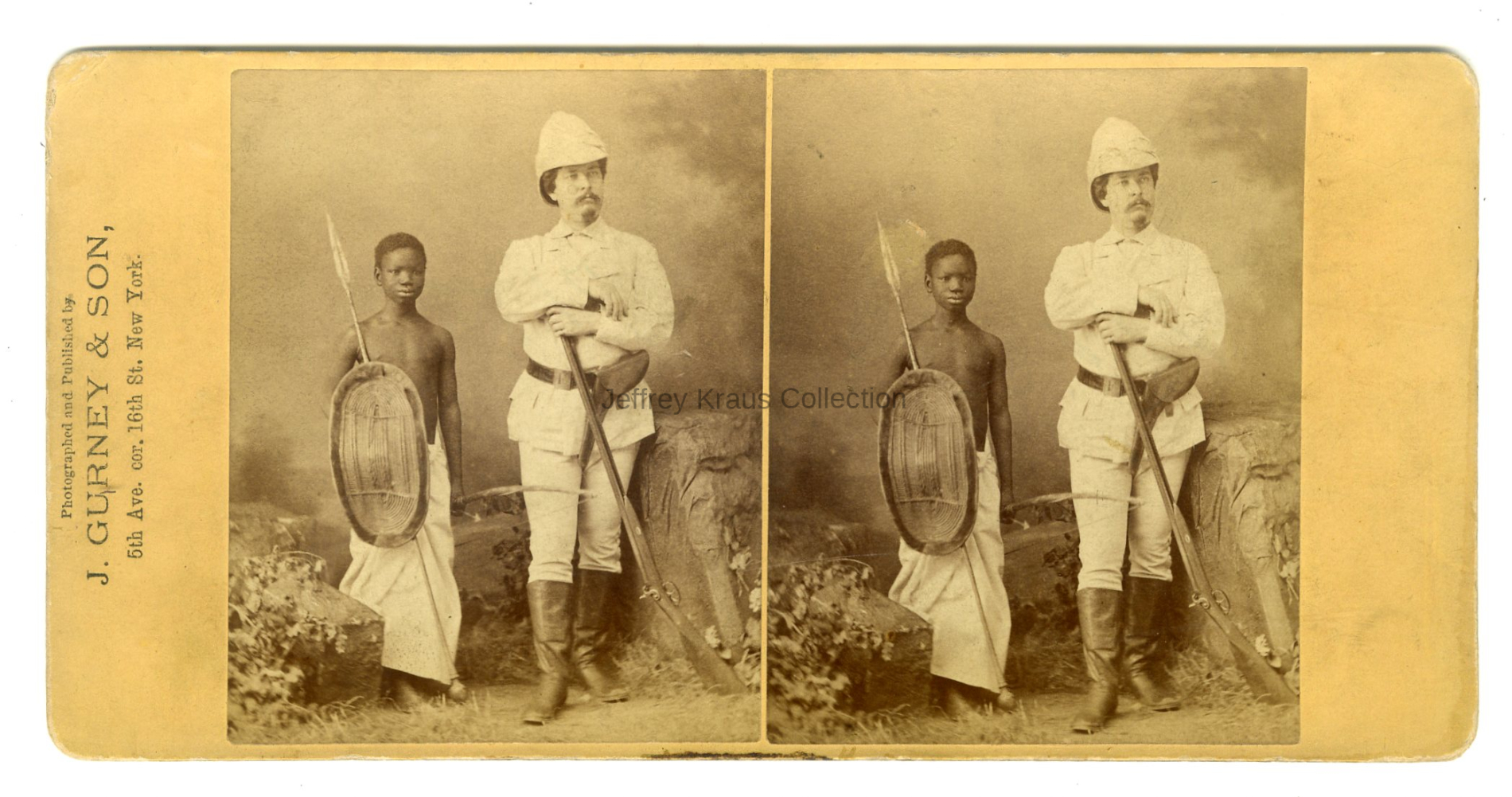
Henry Morton Stanley & Native Boy.
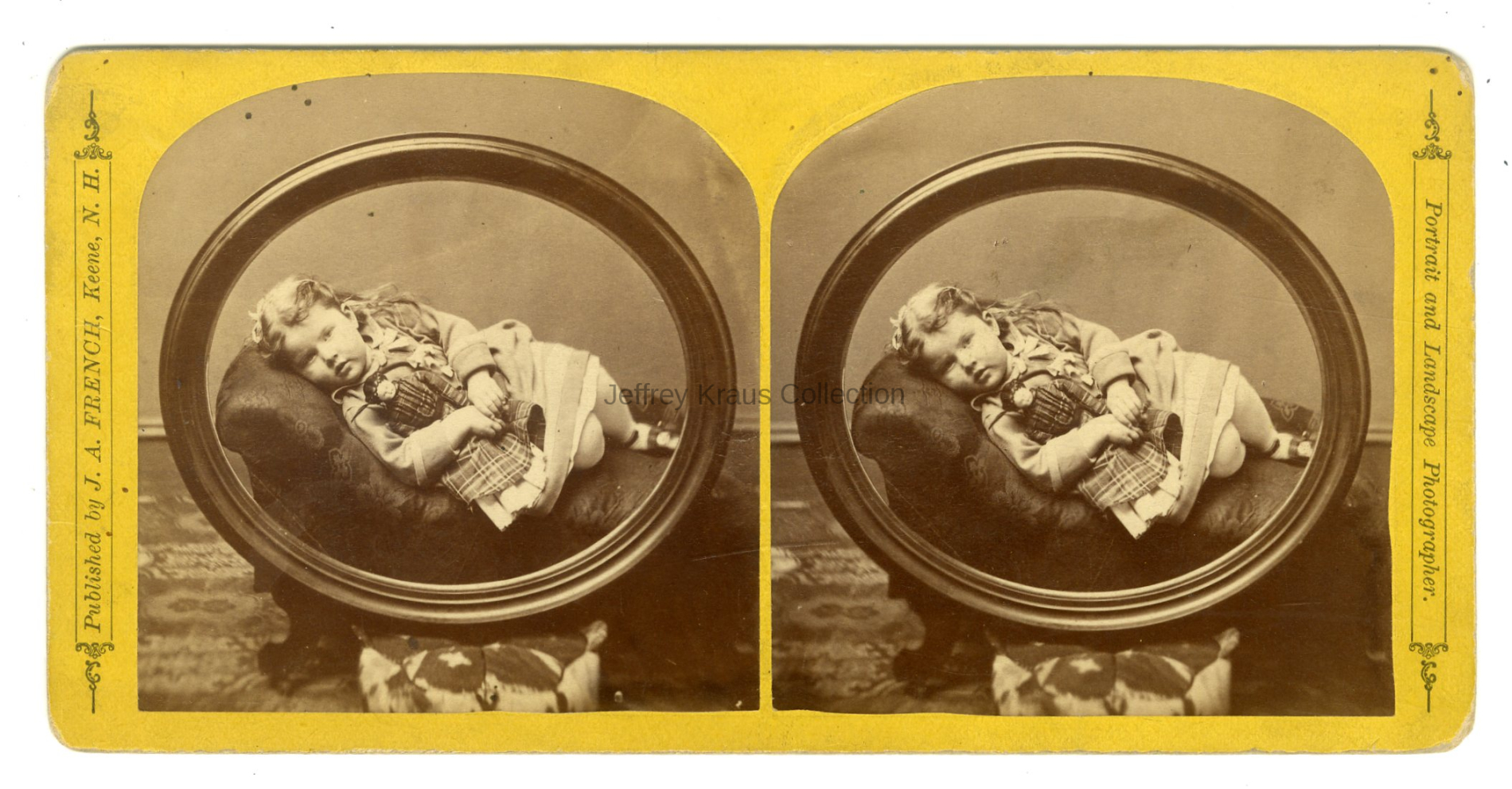
Beautifully Framed!
762. Already Framed.
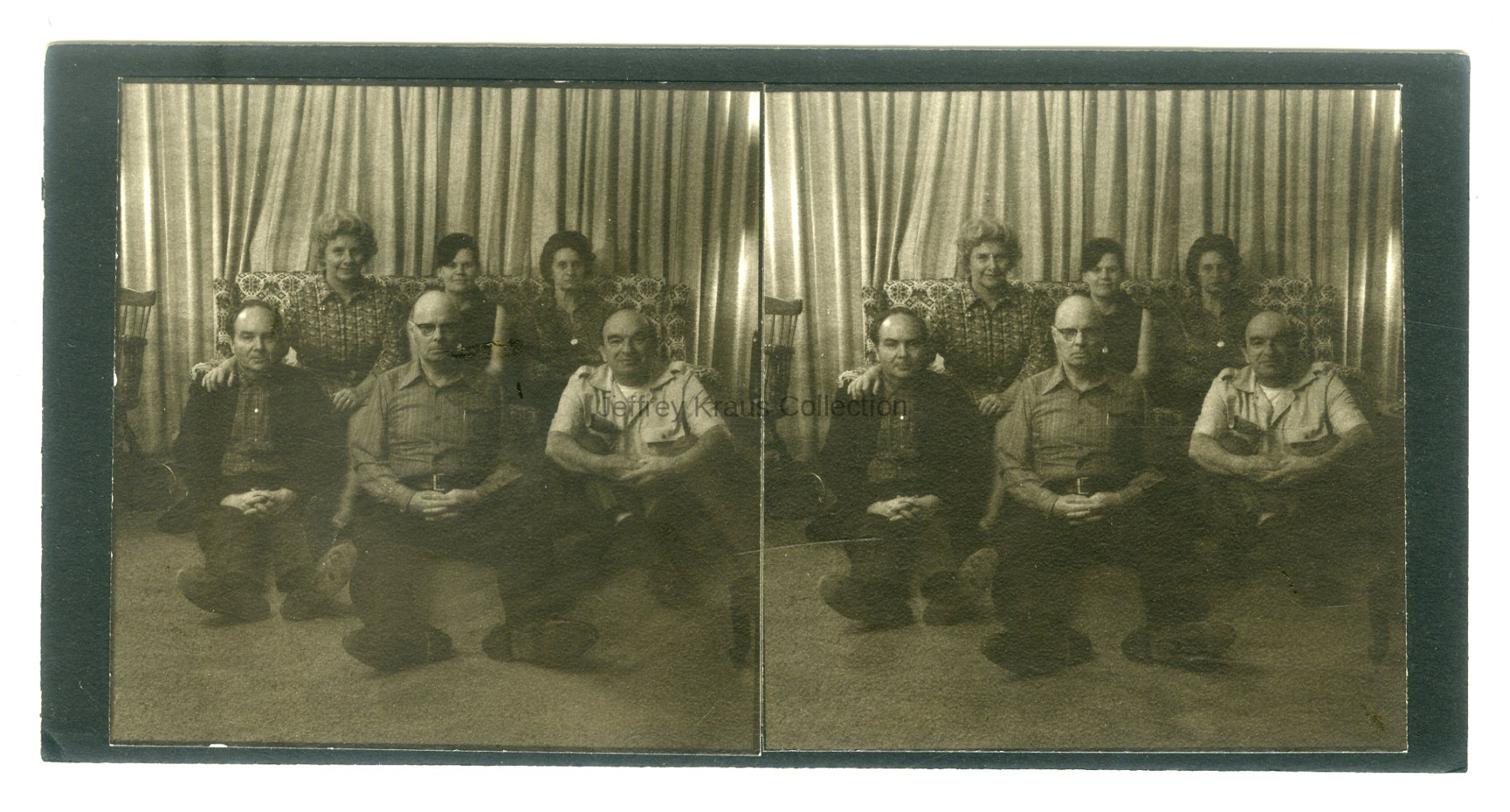
Front row on floor: Fred Lightfoot, Jim Klar, Jerry Slutzsky; Rear row: Margaret Lightfoot, Linda Slutzsky, Margaret Klar.
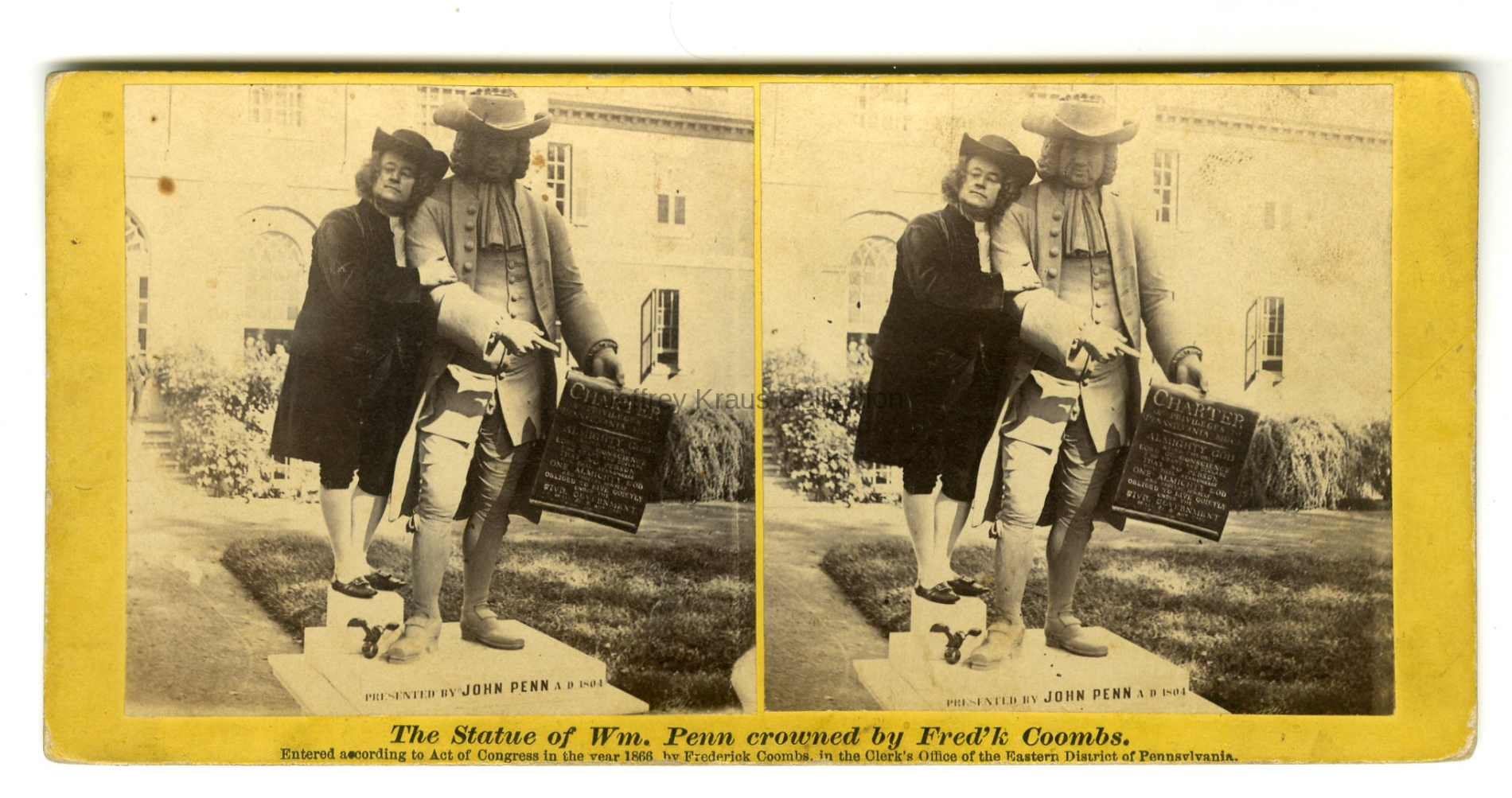
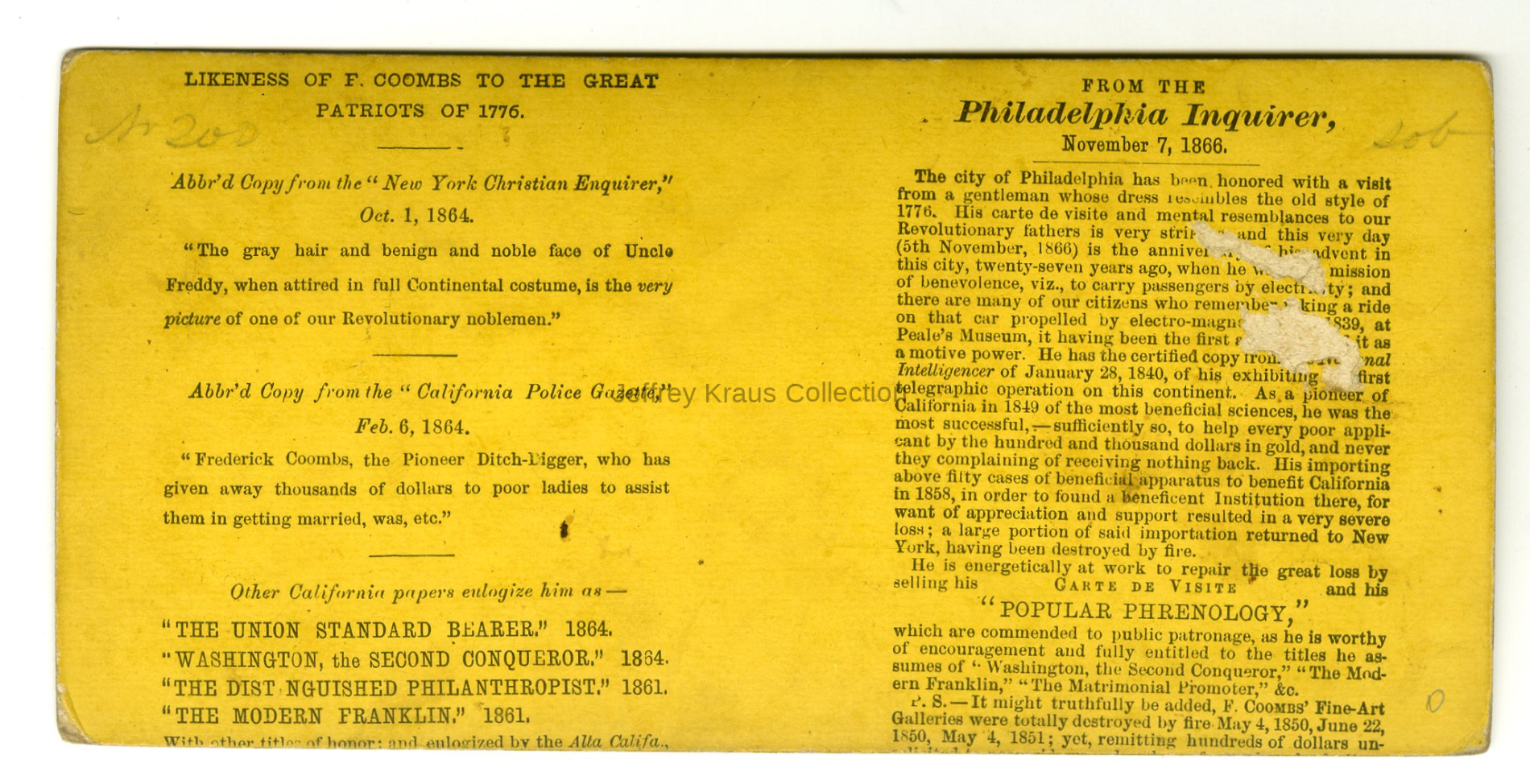
The Statue of Wm. Penn crowned by Fred’k Coombs. Frederick Coombs (sometimes Willie Coombs and also known as George Washington II) was an eccentric who lived in San Francisco in the 19th century and believed himself to be George Washington. For a time he was as popular a figure as Joshua A. Norton, the “Emperor of the United States and Protector of Mexico”, and his deeds were reported in the local newspapers. He left the city after a feud with Norton, who he thought was jealous of his “reputation with the fairer sex” and moved to New York City. Little is known of his early life. According to his own account, he was born in England in 1803. Coombs was apparently a phrenologist by trade, though he was also an accomplished photographer, daguerreotypist, inventor, and possibly a marriage broker. He had travelled throughout the west during the 1830s giving demonstrations of phrenology, apparently accompanied by a giant and a dwarf, and published at least one book on the subject, 1841’s Popular Phrenology, in which the features of George Washington’s skull are praised on the introductory page. He was interested in railways and designed a type of electric locomotive that enjoyed some minor success as a curiosity but was never put into large scale production. In 1848 he visited England where he obtained some commissions for the use of his engine, and claimed to have received a proposition to supply his engine to the Russians. He spent five years in England before returning to the United States.
Coombs was active as a photographer in the 1850s on the West Coast. Some time before 1863 he appeared in San Francisco, either claiming to be George Washington from the outset, or by other accounts, setting up his phrenology business and entertaining fashionable society with readings of their skulls. According to this second story, he was generally known as “Professor” Freddy Coombs and resembled George Washington so much that after many comments, he became convinced that he was the former President of The United States and took to dressing in uniform.
He wore a Continental Army uniform of tanned buckskin, and set up his headquarters at the saloon of Martin and Horton, where he would study maps while planning his campaigns for the Revolutionary War. He was reported to have spent a winter starving himself until he was convinced by concerned friends that the Battle of Valley Forge was over. In his office as President he composed letters to the United States Congress and issued proclamations, just as Norton did.
During the day he would often be seen in Montgomery Street wearing a powdered wig and tricorne hat and carrying a banner proclaiming himself “The Great Matrimonial Candidate”. Initially he, Norton, and the two well-known stray dogs Bummer and Lazarus drew equal interest from the San Francisco newspapers who delighted in recounting their exploits. Coombs appears in a couple of satirical cartoons by Edward Jump alongside Norton and the dogs: in Ambling along Montgomery Street he appears in the centre of the picture in full uniform holding a banner with the words “And Still They Go Marching On”, while in The Funeral of Lazarus he features as the gravedigger while Norton performs the ceremony.
Although short, balding, and rotund, Coombs was pompous and vain, and thought himself to be a ladies’ man. He believed this formed the basis of his dispute with Emperor Norton. Norton had torn down some posters that Coombs had put up in Montgomery Street and Coombs reported him to the police. As it was not a criminal offence the police told him they could do nothing, so in an attempt to raise funds for a civil action he sold his story to the Alta California newspaper. When the reporter asked him why Norton would have done such a thing Coombs replied that he “was jealous of my reputation with the fairer sex”. This caused great amusement and a few days later the Alta California published a story mocking both the men in which they reported that the “light of insanity” could be seen in Coombs’s eyes. Norton and Coombs, both convinced of their sanity, demanded a retraction, but Norton also issued his own proclamation against Coombs in which he ordered the Chief of Police to:
[…] seize upon the person of Professor Coombs, falsely called Washington No. 2, as a seditious and turbulent fellow, and to have him sent forthwith, for his own good and the public good, to the State Lunatic Asylum for at least thirty days.
Coombs left the city immediately, presumably for New York, as in 1868 he was discovered there by Mark Twain, still believing himself to be Washington and still convinced of the effect of his charms on the ladies, whom he entertained by displaying his legs on street corners. Twain reported that he travelled around New York, Philadelphia, Baltimore, and Washington selling photos of himself visiting Benjamin Franklin’s grave for 25 cents. When the William Penn Mansion in Philadelphia was proposed for demolition he asked Congress to give it to him. After it was torn down he switched to demanding the Washington Monument.
Coombs died in New York City on April 9, 1874.
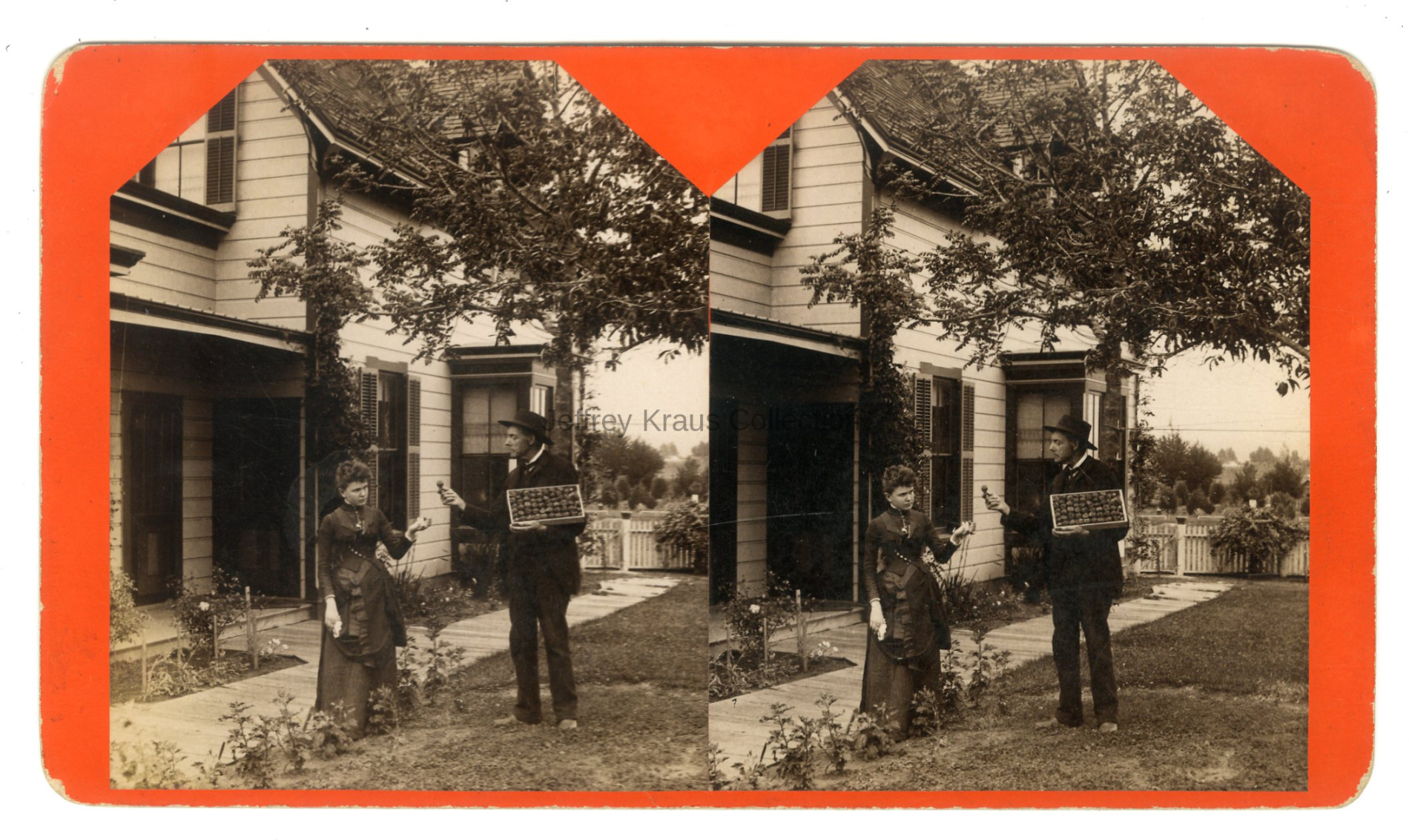
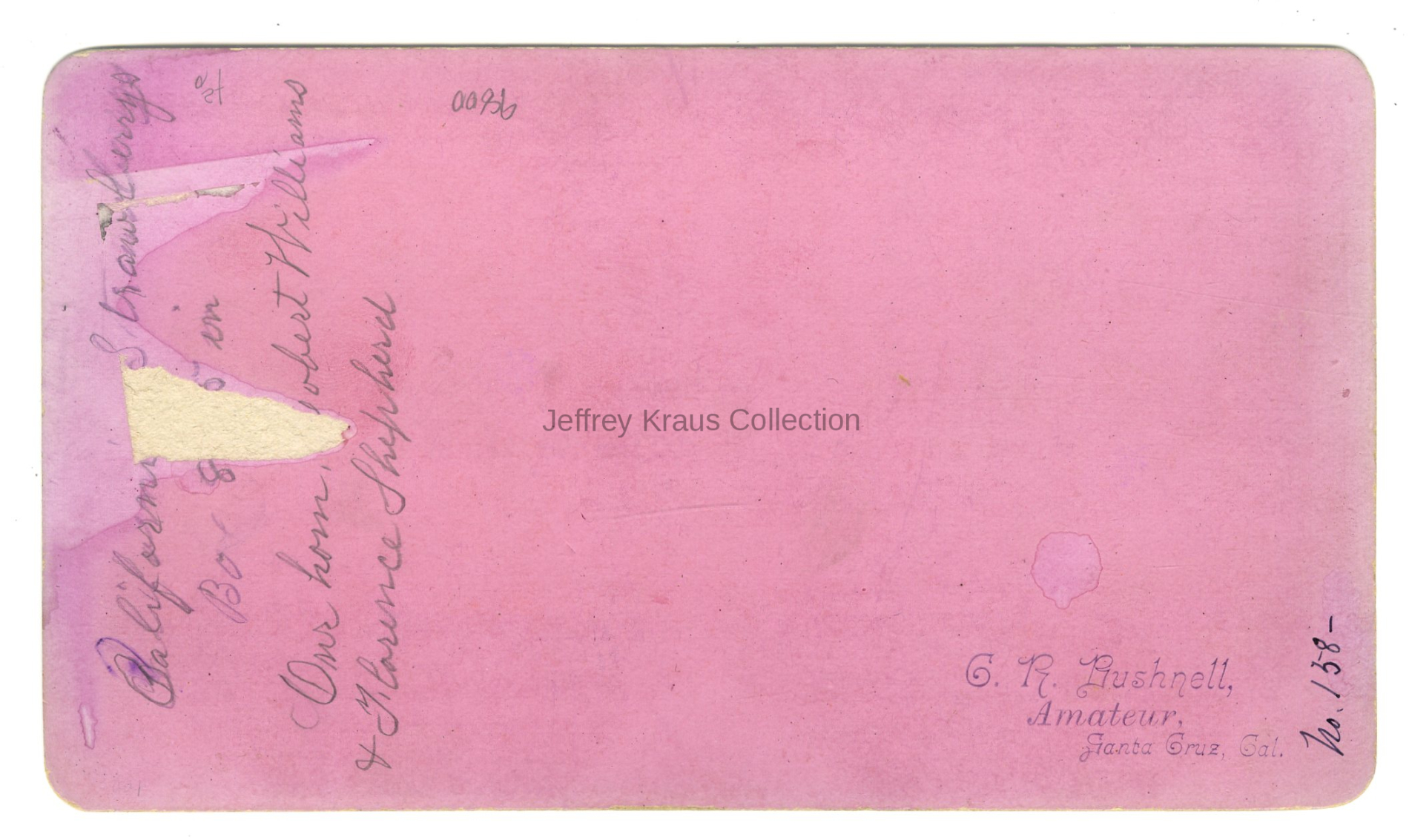
California Strawberries. Our home, Robert Williams & Florence Shepherd.
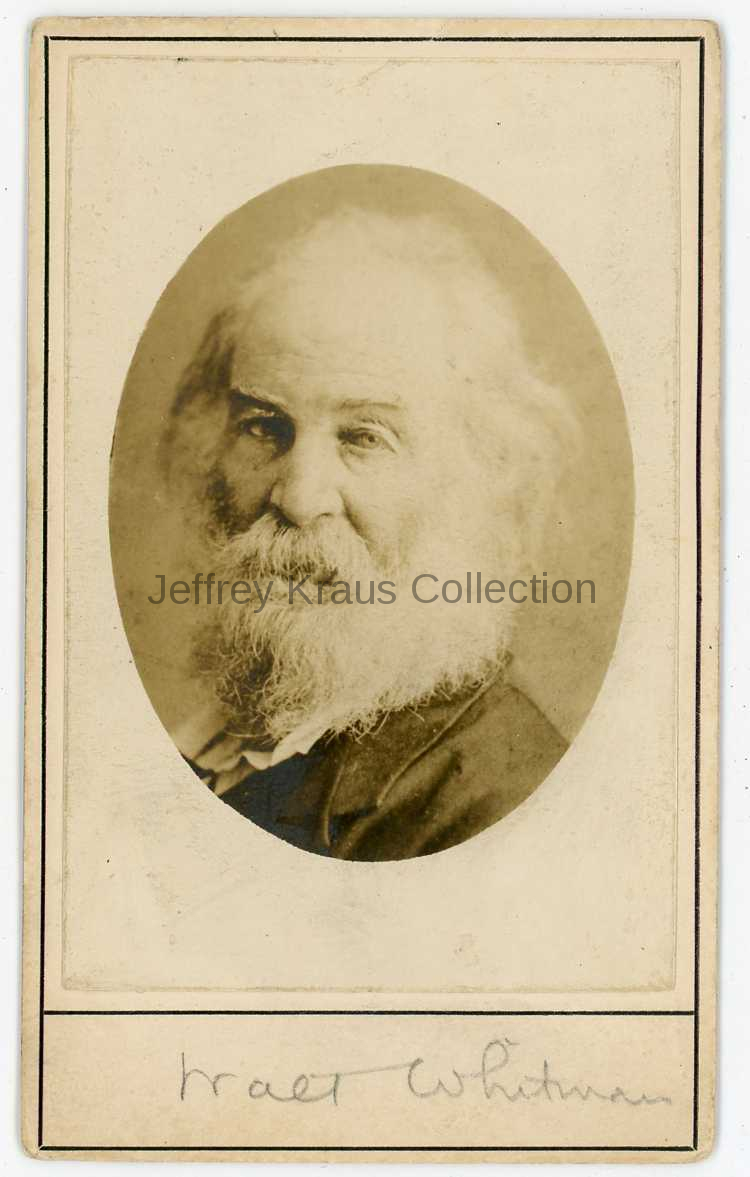
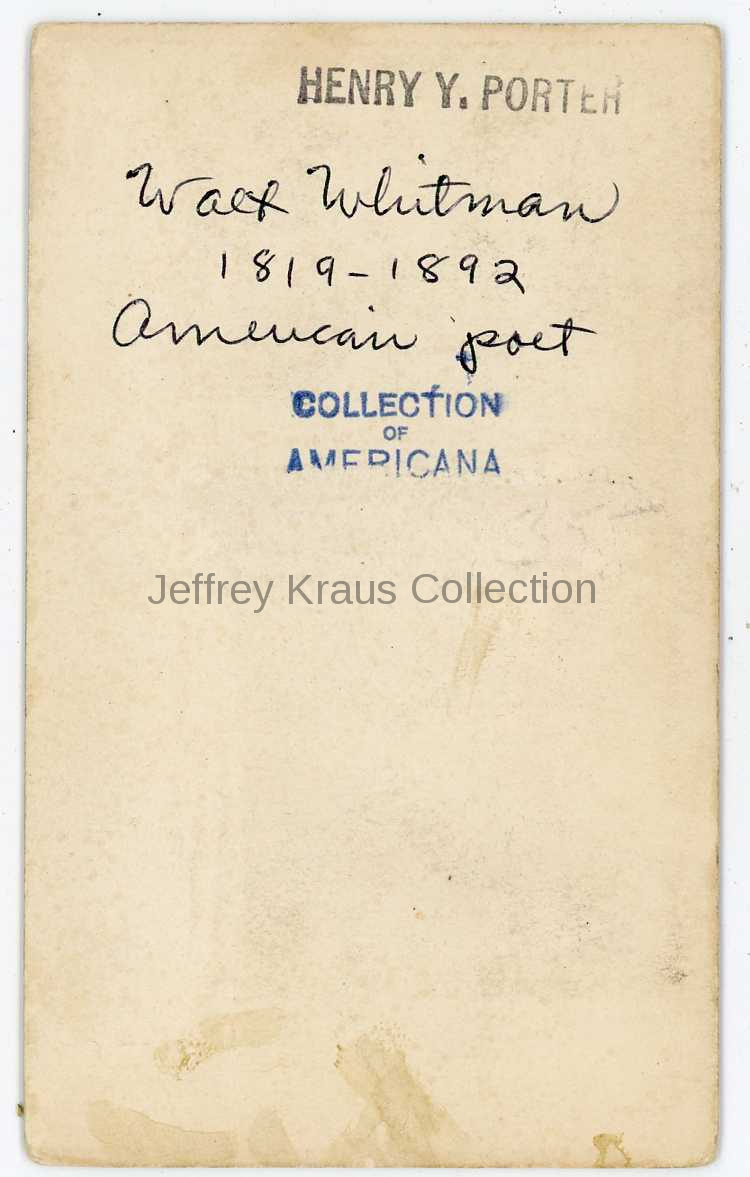
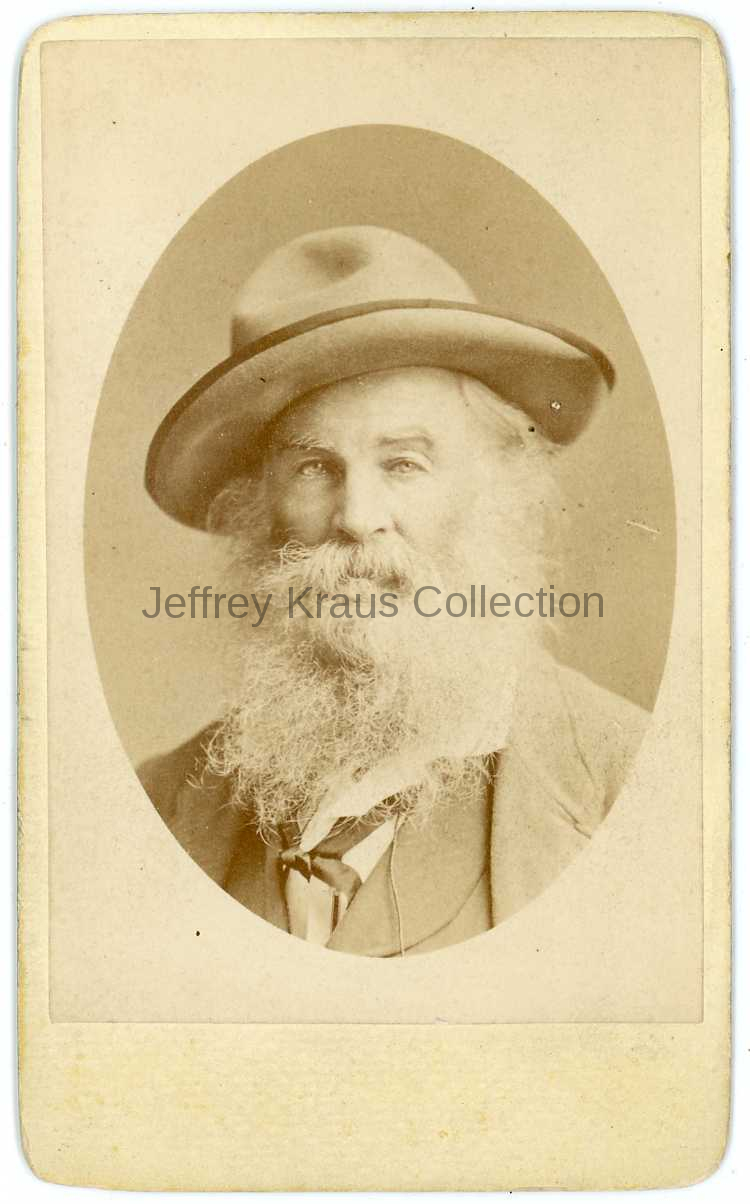
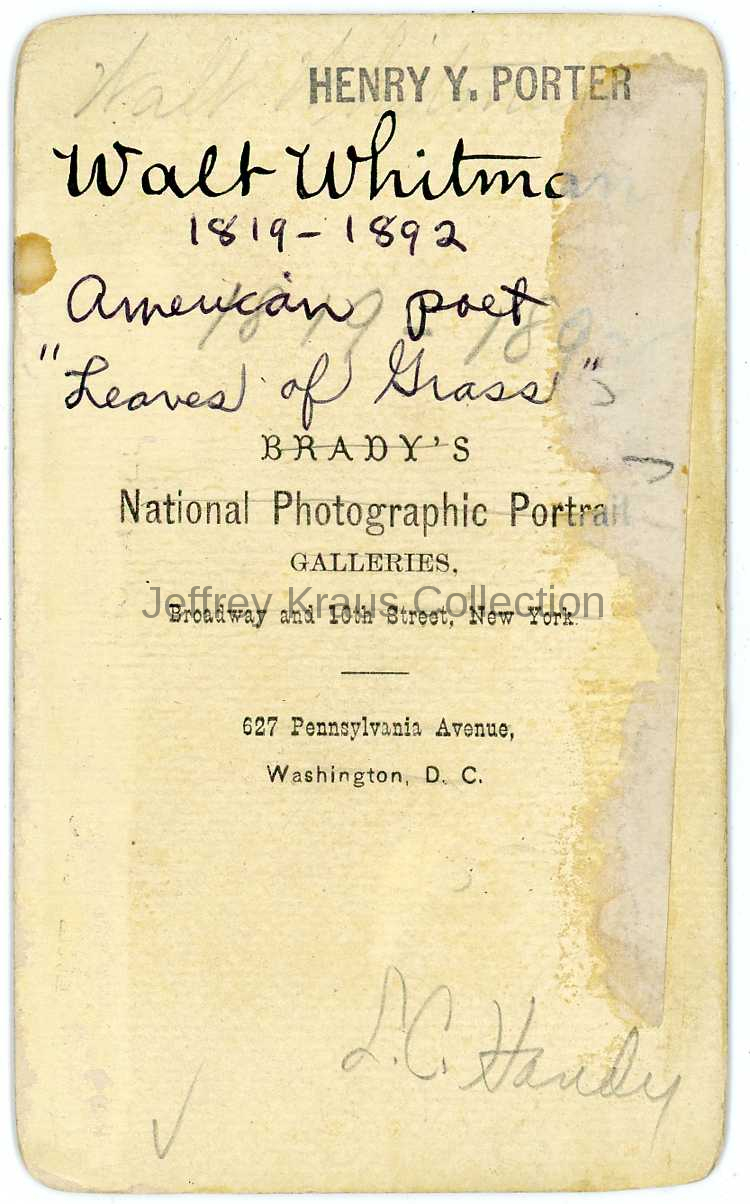
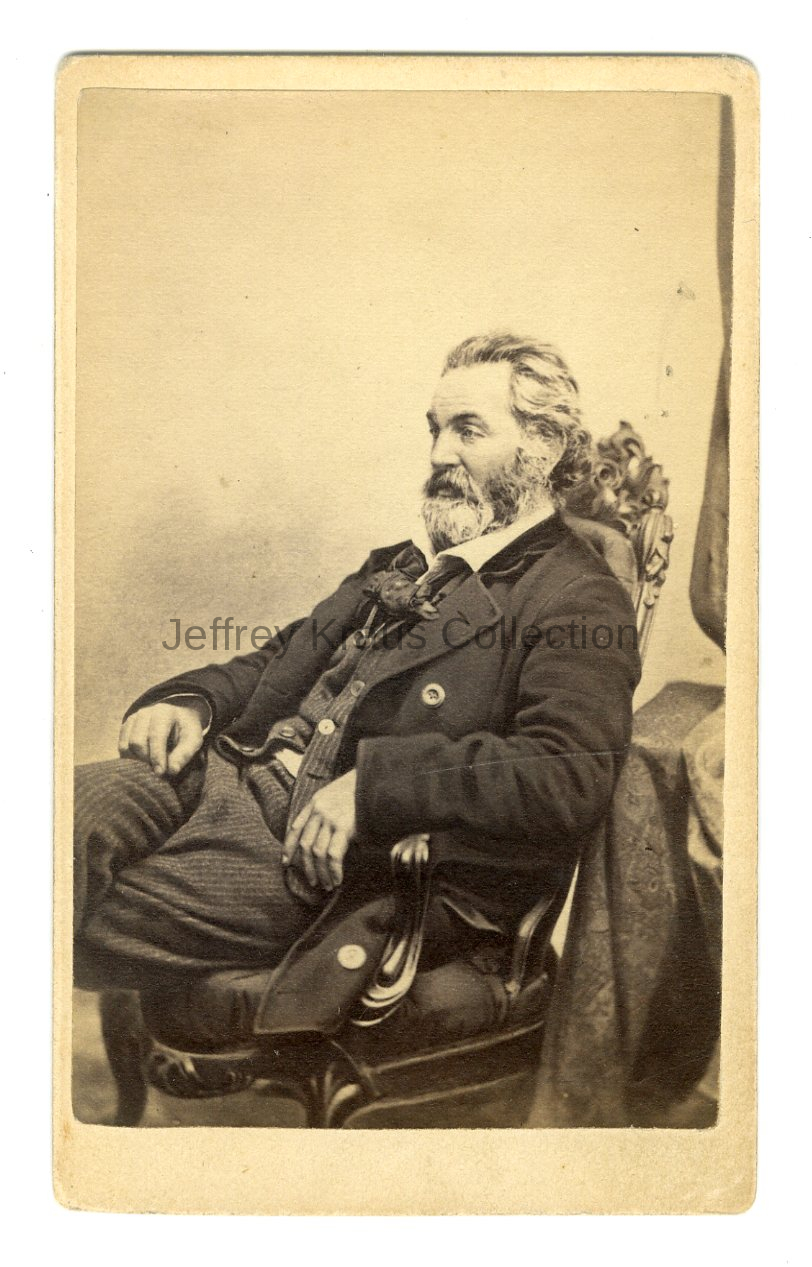
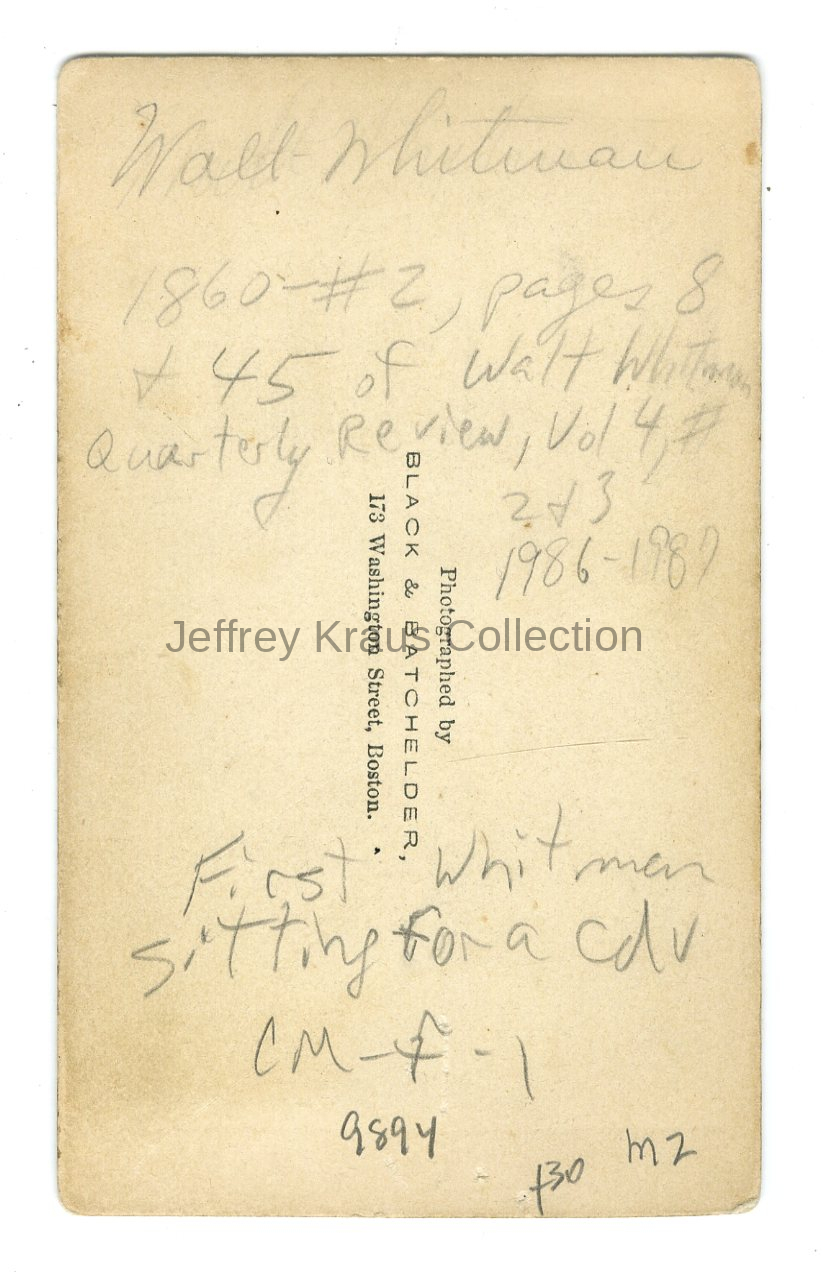
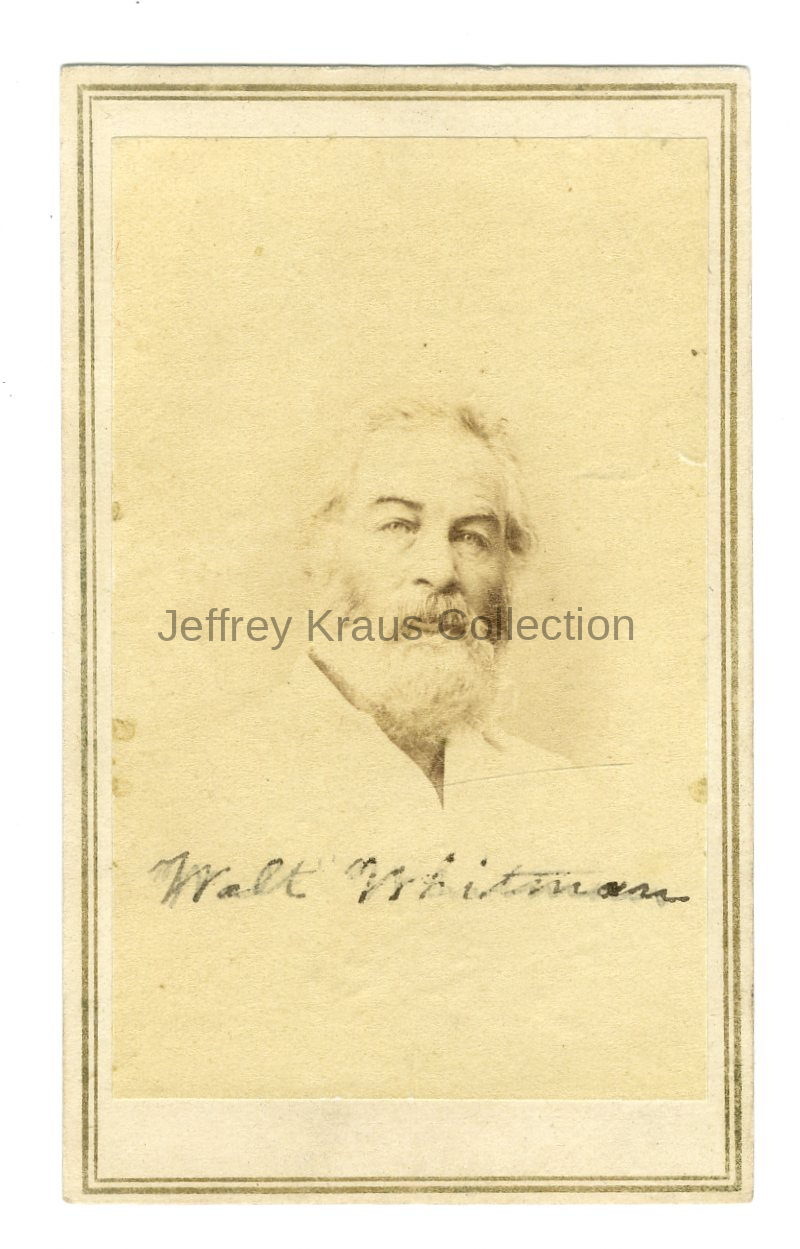
Walt Whitman.
Walt Whitman.
Walt Whitman, 1860.
Walt Whitman, 1865.
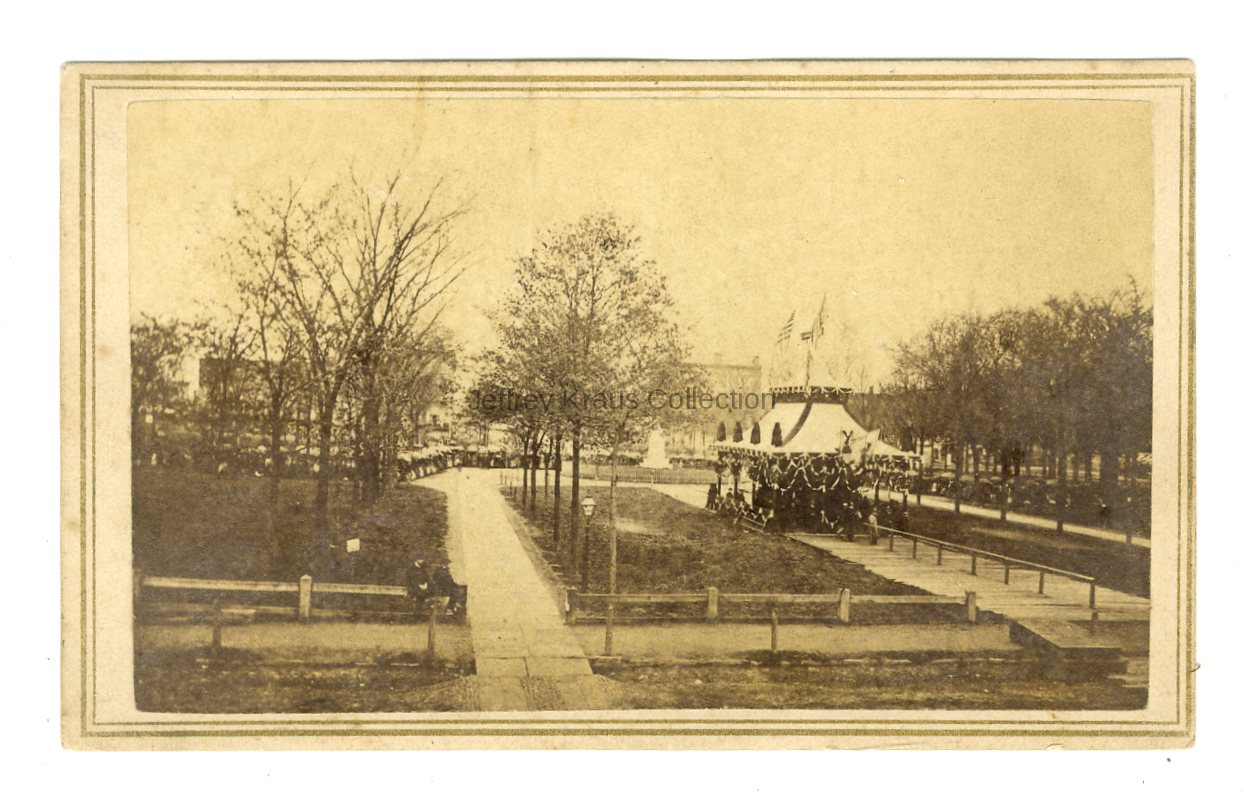
Abraham Lincoln’s funeral, Cleveland.
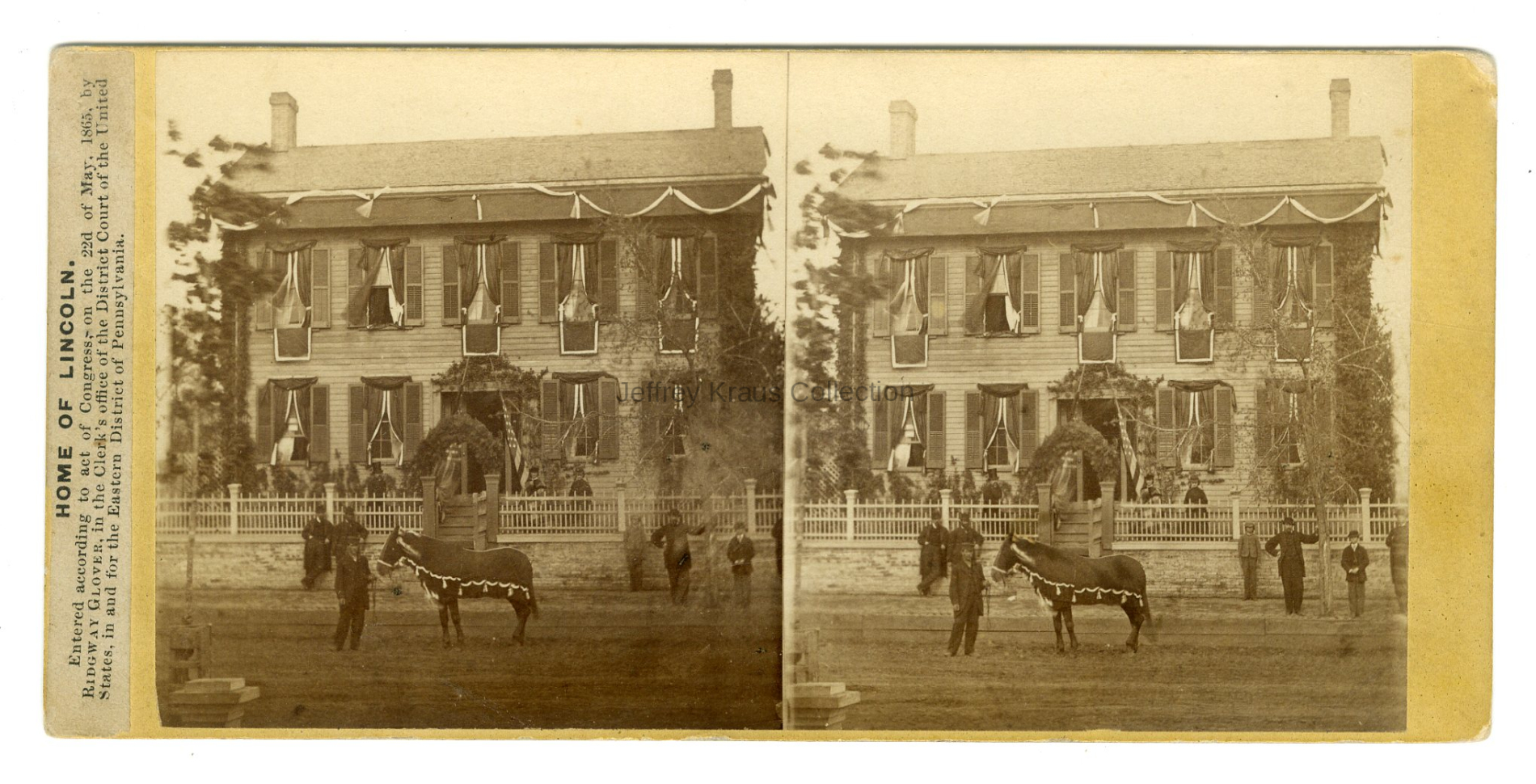
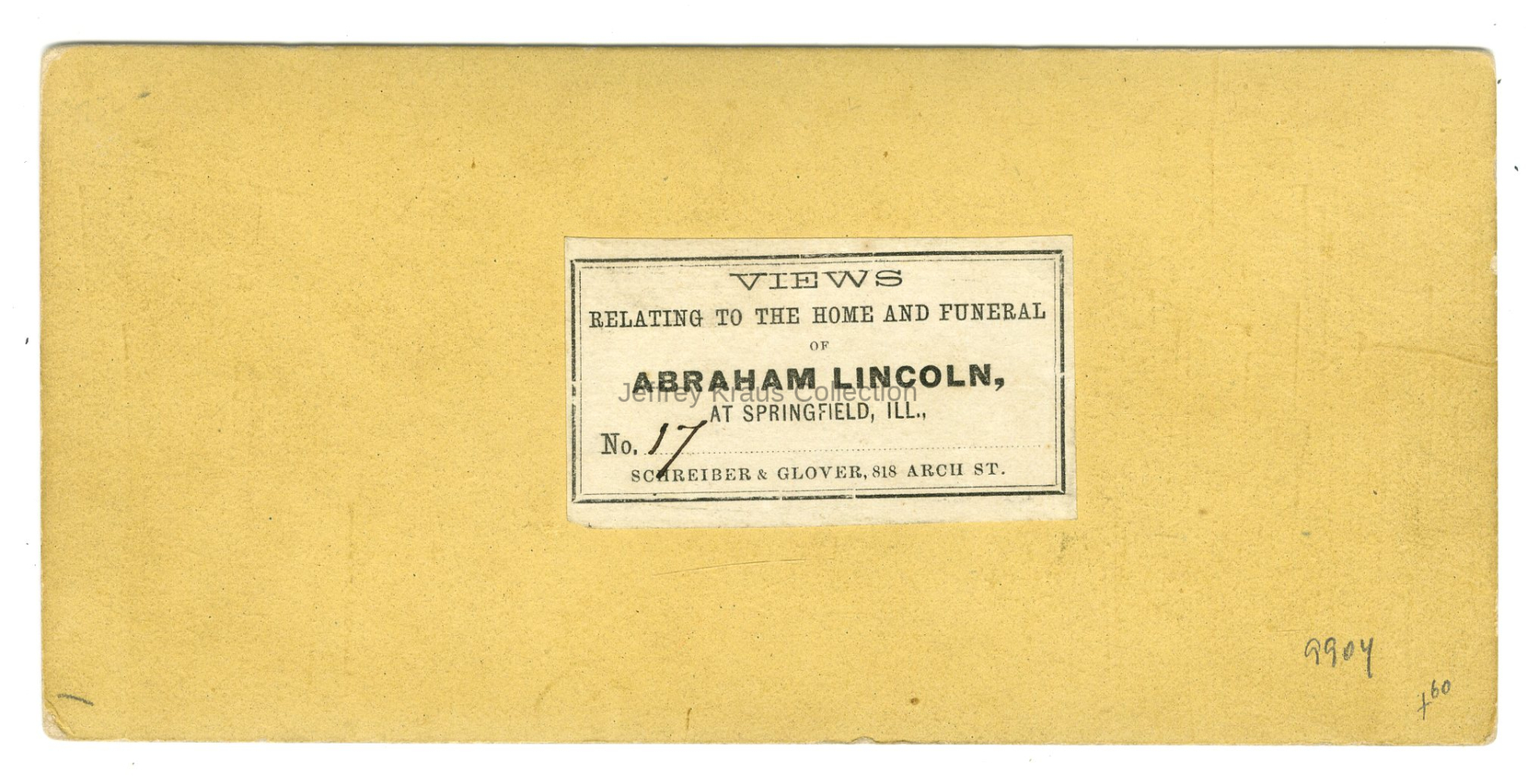
Views Relating to the Home and Funeral of Abraham Lincoln at Springfield, Ill. No. 17.
Railroad Express Robbers, November 5, 1870. [D]
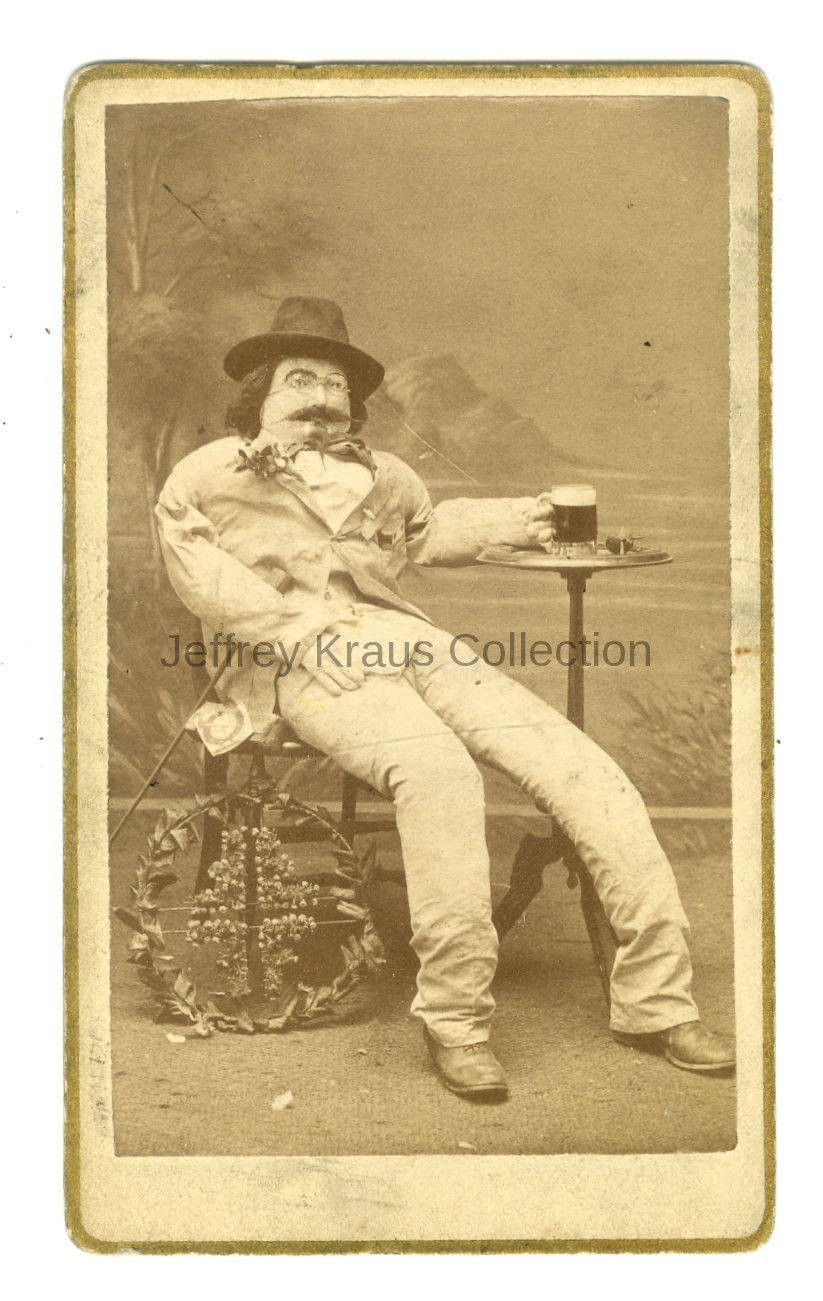
Odd figure with beer.
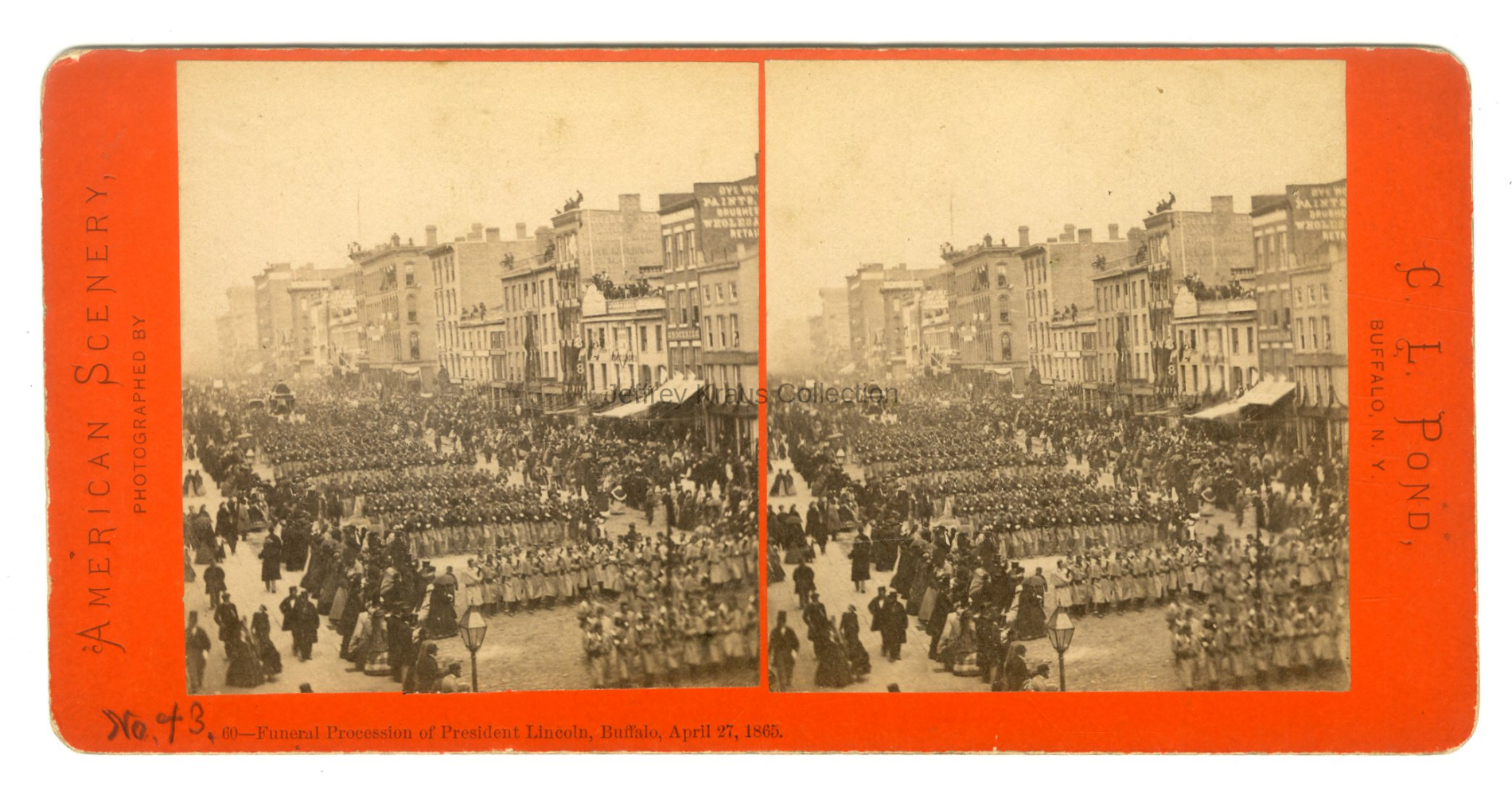
60. Funeral Procession of President Lincoln, Buffalo, April 27, 1865.
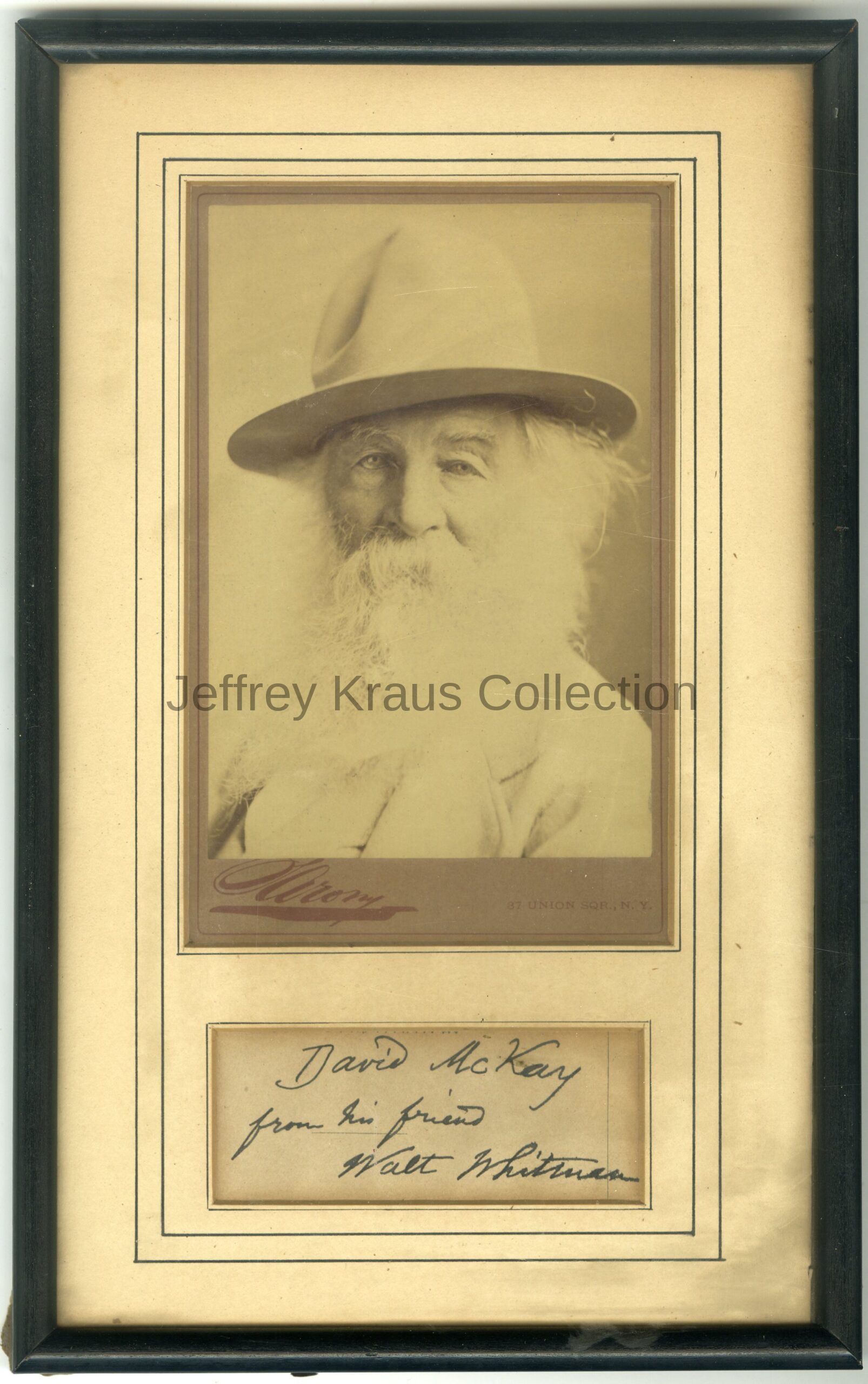
Walt Whitman, framed along with paired inscription “David McKay from his friend Walt Whitman.” Mckay was Whitman’s final publisher.
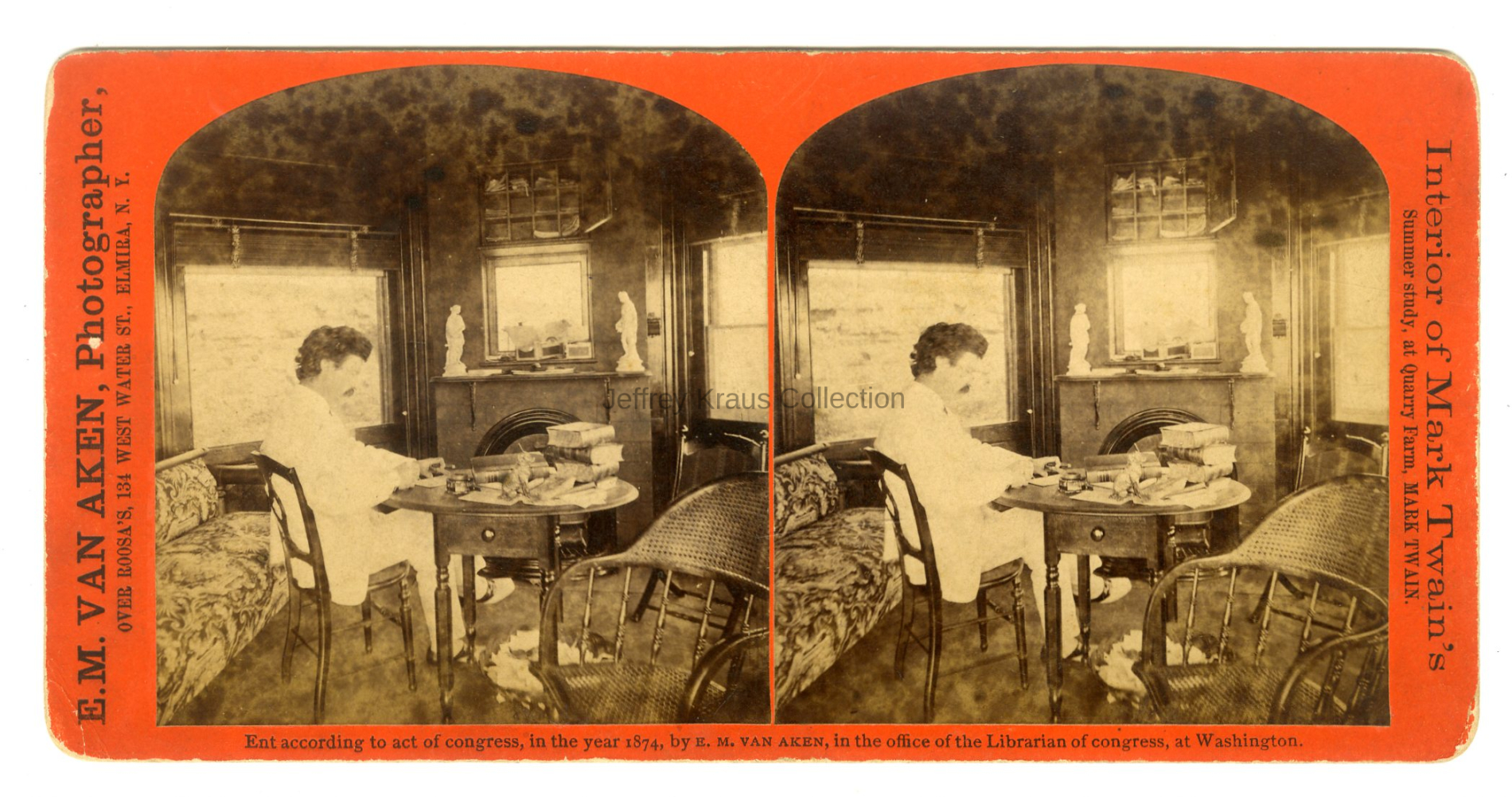
Interior of Mark Twain’s summer study, at Quarry Farm.
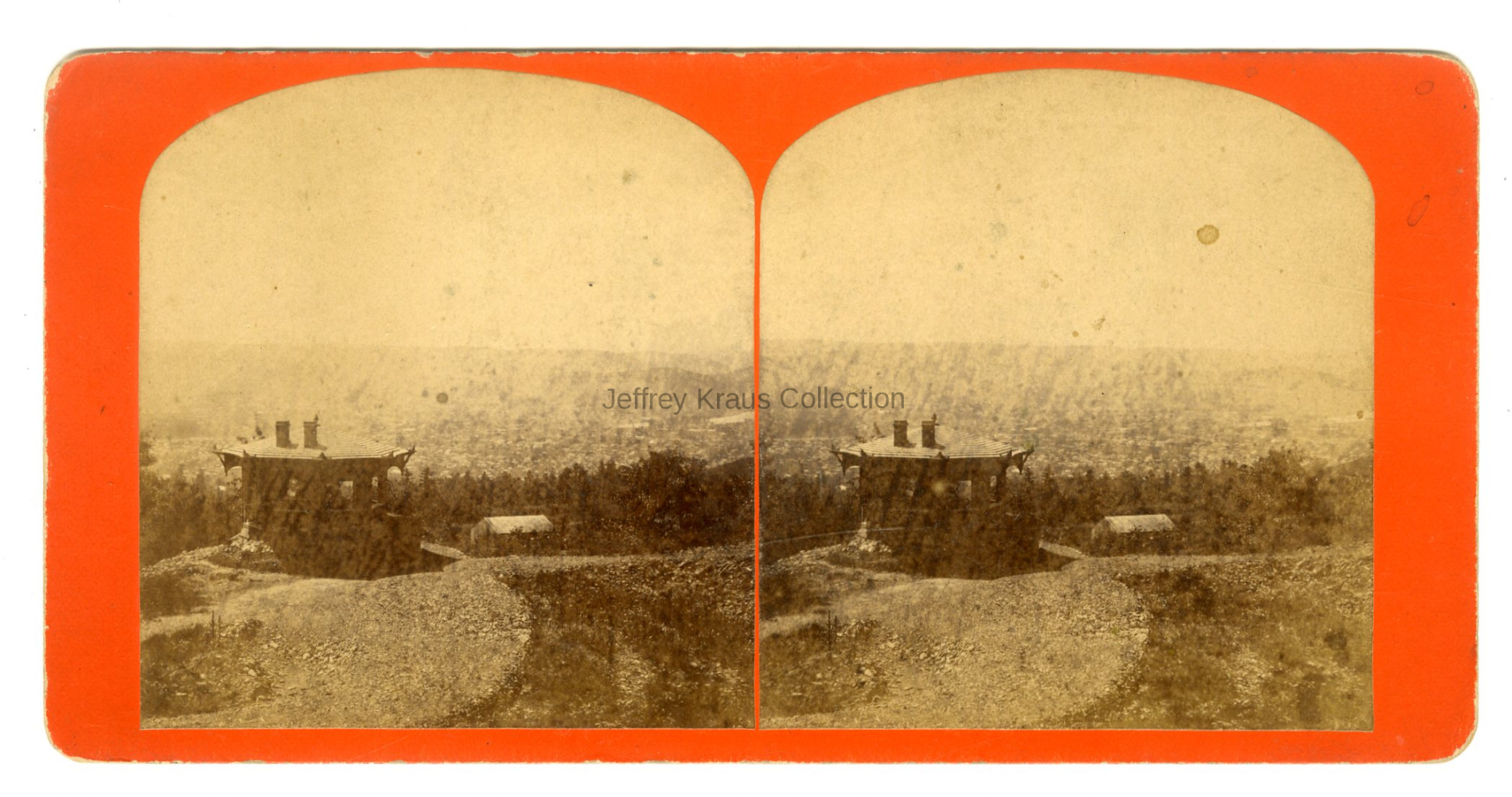
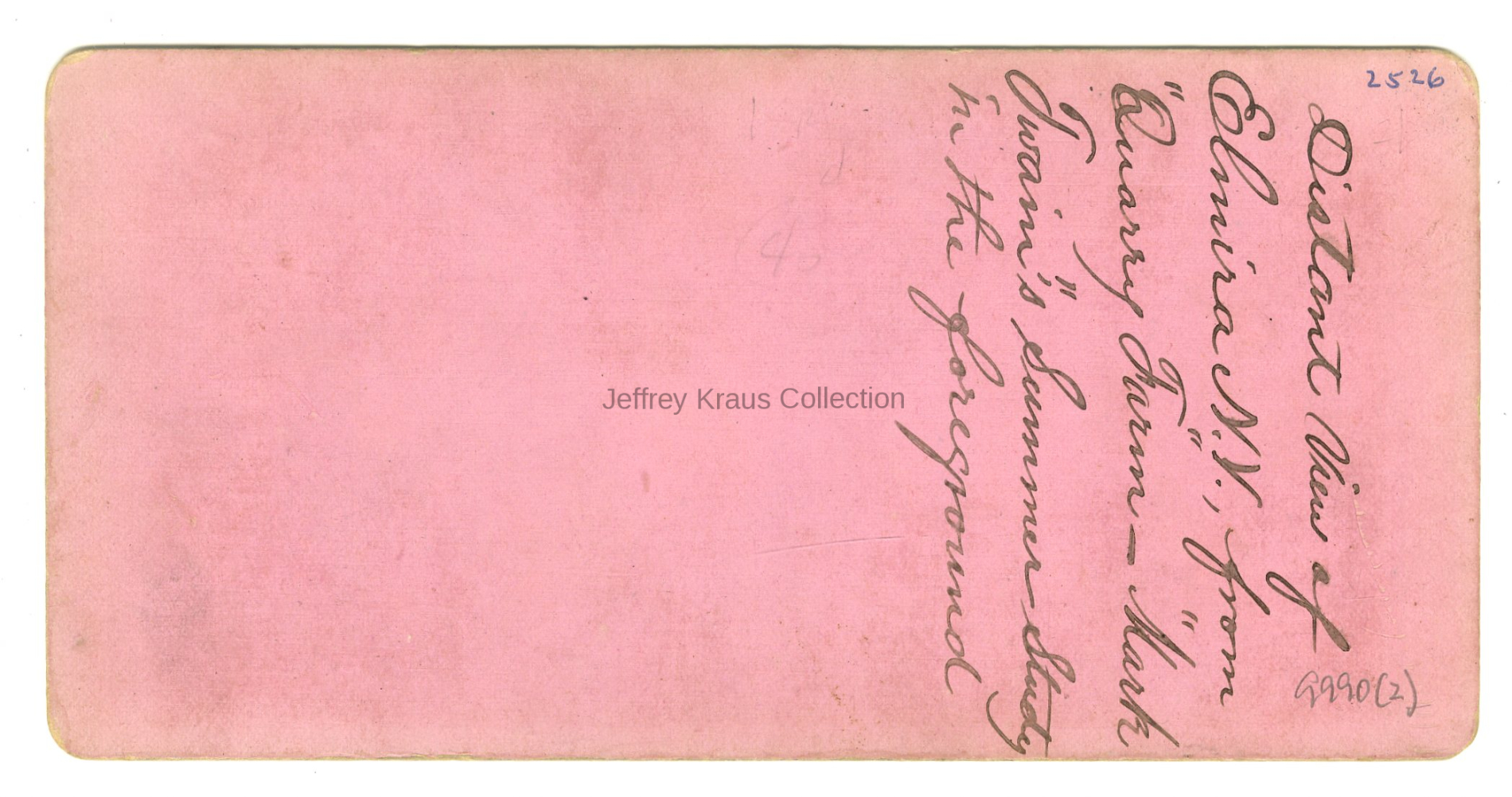
Distant view of Elmira, NY, from Quarry Farm-Mark Twain’s Summer Study in the foreground.
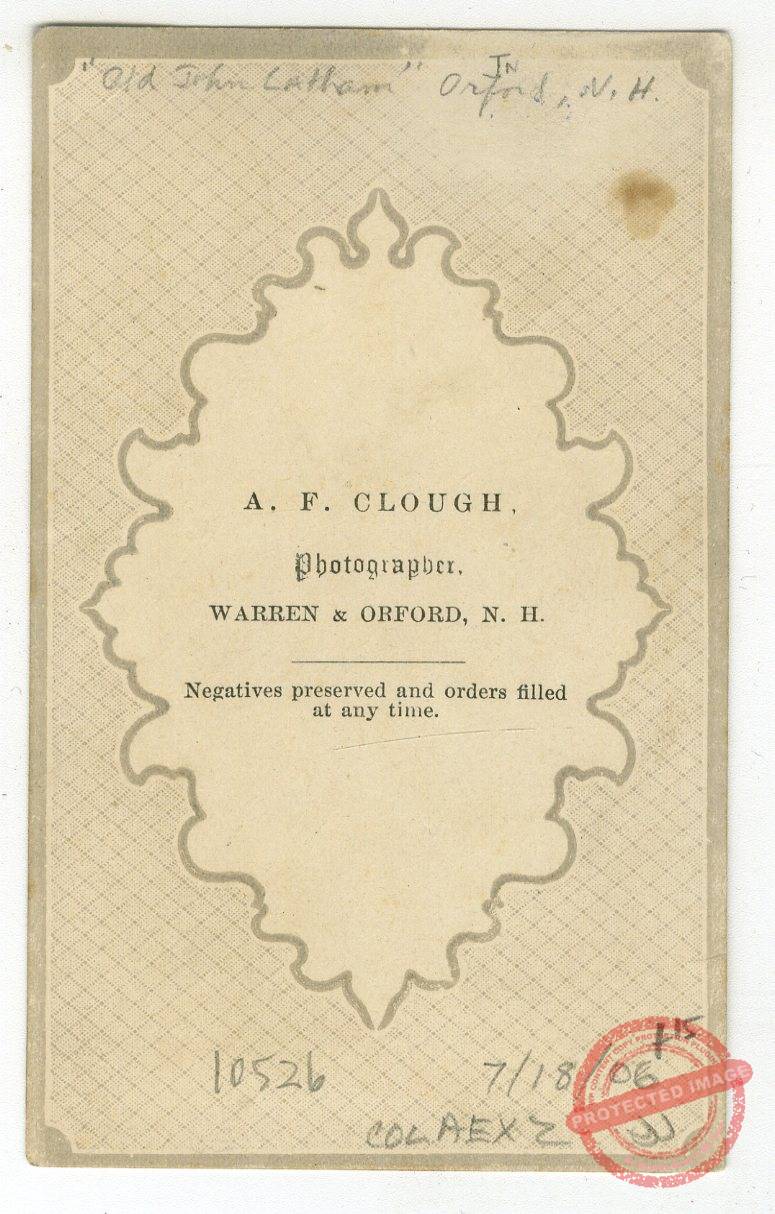
Old John Latham, Oxford, NH.
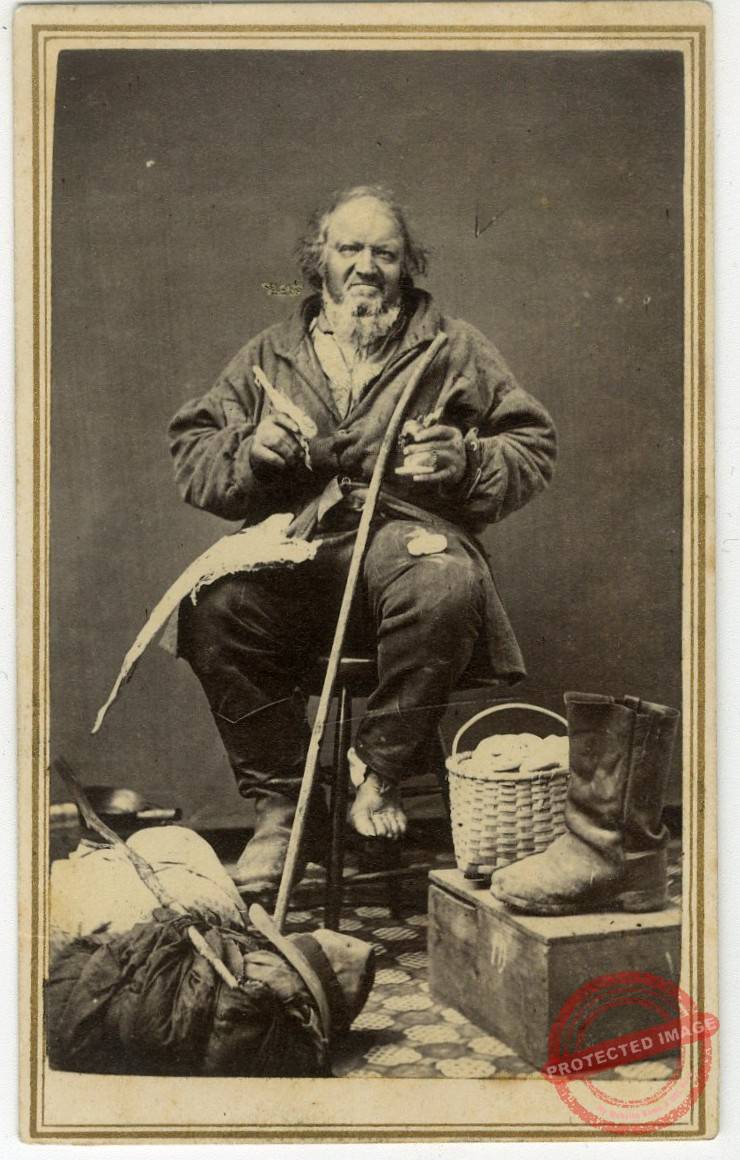
“Uncle Johnny” dining off Codfish and Crackers. This is “Old John Latham” in Oxford, NH.
The American Dream.
Prominent Portraits. No. 4770. Hon. Gideon Welles, Secretary of U.S. Navy.
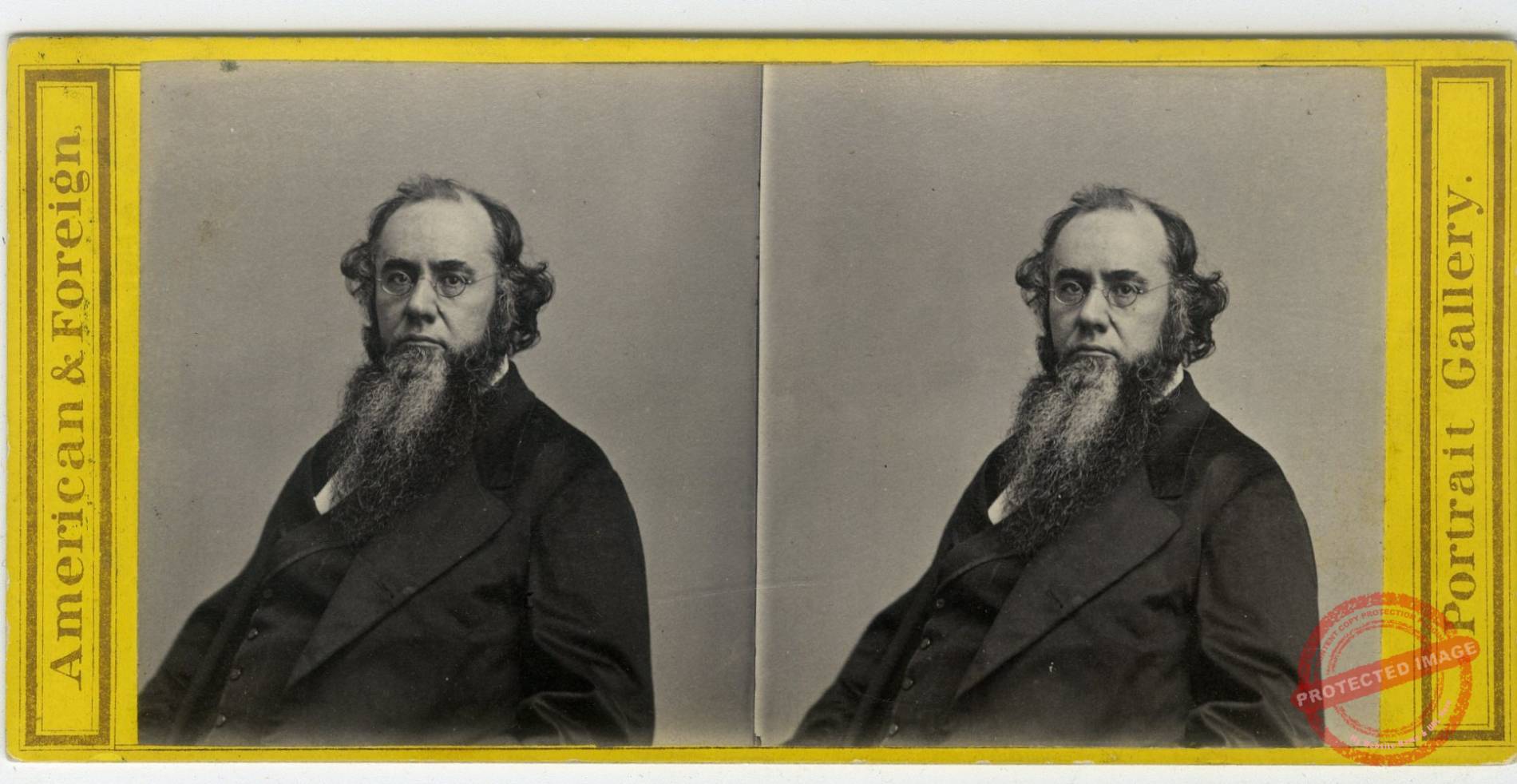
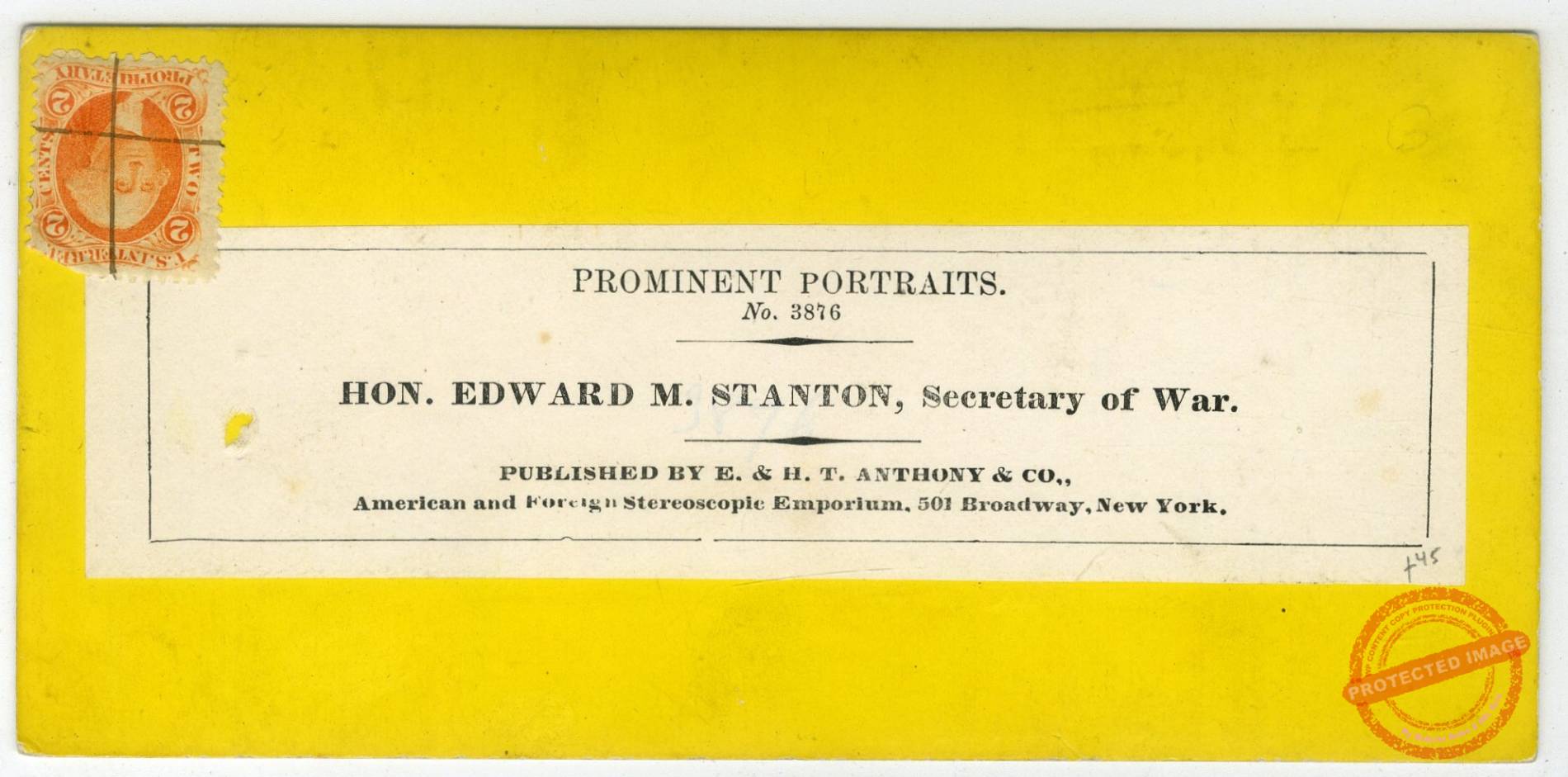
Prominent Portraits. No. 3876. Hon. Edward M. Stanton, Secretary of War.
2 kids on a mule, one on the wall.
Group of kids and a dog probably on the school steps.
Prominent Portraits. No. 2965. Lieut. Gen’l Ulysses S. Grant, Com. in chief Armies of U.S.
Making a toast, bottle on the table.
Trying on His New Boots.
The Three Turks. Nassau Hall in lower right, possibly Princeton University.
4 Pipe-smokers with sticks out for a march.
Backwards man holding child.
An Artist’s Study. First Prize. The Artist is the photographer Sheldon in all the images.
The Union Be Preserved. Signed “Respectfully Yours, O.W. Barlow.” Otis W. Barlow: Residence, Norwich, CT. Enlisted 4/22/61 at Norwich, CT as a Private. On 5/7/61, he mustered into “C” Co., CT 2nd Inf. He was mustered out on 8/7/61 at New Haven, CT. On 7/28/63, he mustered into “M” Co., CT 1st Heavy Artillery. He deserted on 7/31/65. Buried in North Cemetery, Sturbridge, Worcester Co., MA.
Wisconsin Views. No. 4. Brick Pomeroy’s Office, La Crosse. Marcus Mills “Brick” Pomeroy (also known as Mark M. Pomeroy; December 25, 1833 – May 30, 1896) was an American journalist who became notorious for his anti-Lincoln sentiment during the Civil War. Pomeroy was born in Elmira, New York in 1833. As a young man, he worked as a printer’s devil. (An apprentice in a printing establishment.) Pomeroy established the first newspaper in Corning, New York in 1854 and then moved to Wisconsin in 1857. There he was a La Crosse, Wisconsin newspaperman, editor of the La Crosse Democrat from 1860 to 1869, then editor of Pomeroy’s Democrat from 1869 to 1887 (1869 to 1879 in New York City, then in La Crosse, with branch offices in Chicago and probably elsewhere). It was during this time that he acquired the nickname “Brick”. According to one account, after he had displayed skill in writing an article, another editor said that someone that could write so well was “a perfect brick” (i.e., a good fellow). According to another account, a journalist in the eastern United States had written a series of articles about celebrities called “charcoal sketches,” and Pomeroy imitated these in a more extravagant manner, describing Wisconsin personalities and dubbing his articles “brick-dust sketches.” During the Civil War, Pomeroy initially supported preservation of the Union and was commissioned as a second lieutenant in the Union forces. However, he later became a Copperhead, and in an editorial he called Abraham Lincoln “fungus from the corrupt womb of bigotry and fanaticism” and a “worse tyrant and more inhuman butcher than has existed since the days of Nero…. The man who votes for Lincoln now is a traitor and murderer…. And if he is elected to misgovern for another four years, we trust some bold hand will pierce his heart with dagger point for the public good.” Pomeroy relocated to New York in 1868, and then to Chicago in 1875, also spending time in Denver before returning to New York. In later years, he became a leader of the Greenback Party and the People’s Party/Union Labor Party of Wisconsin. During the 1880s he employed African-American journalist George Edwin Taylor as city editor of Pomeroy’s Democrat. It claimed to have the largest circulation of any political newspaper in the country. In July of 1891, he visited Logan County, West Virginia and interviewed William Anderson “Devil Anse” Hatfield. (William Anderson “Devil Anse” or “Uncle Anse” Hatfield (September 9, 1839 – January 6, 1921) was the patriarch of the West Virginian Hatfield family who led the family during the Hatfield–McCoy feud.) Pomeroy died in Brooklyn in 1896.
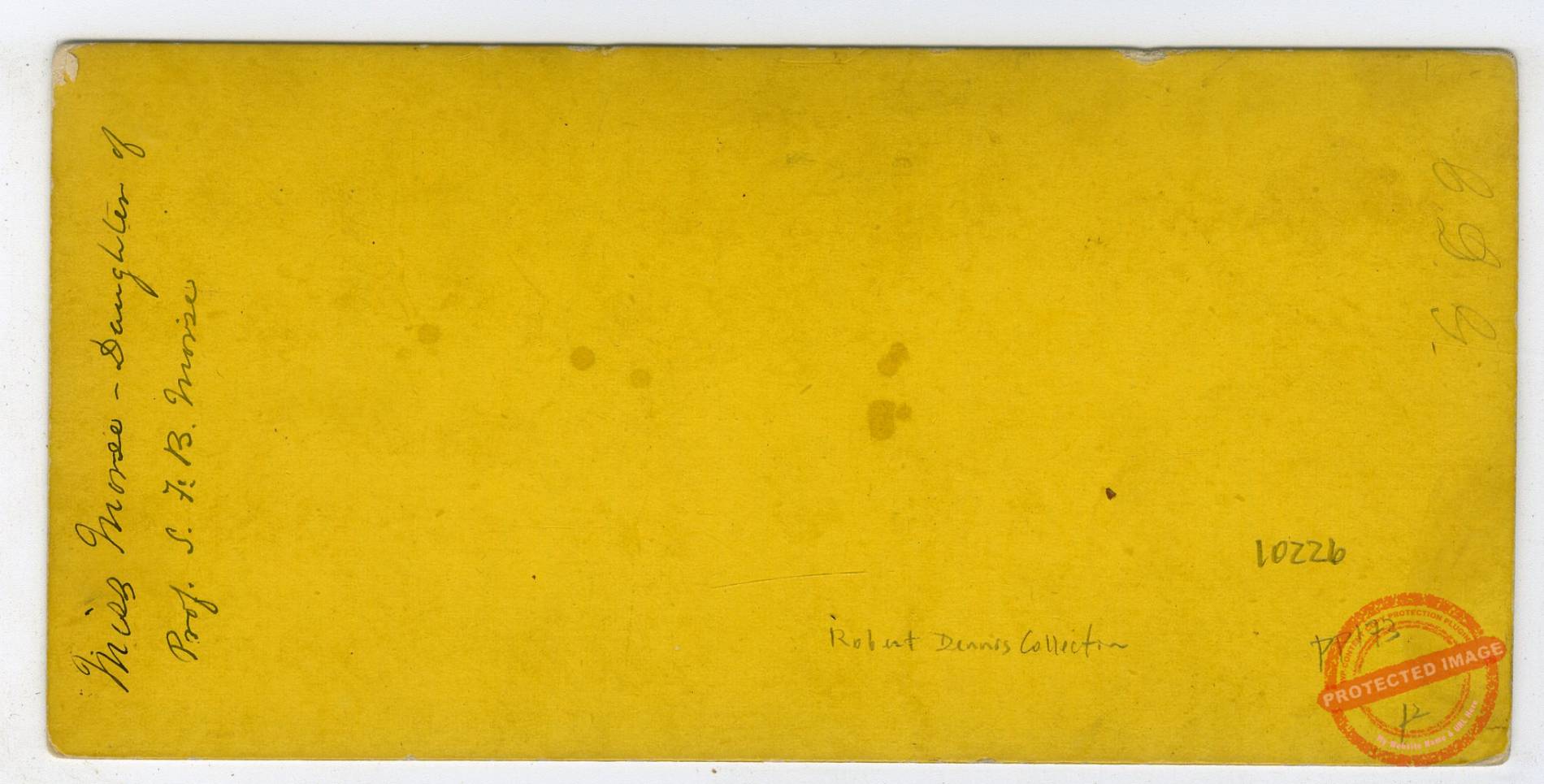
Miss Morse-Daughter of Prof. S.F.B. Morse. I think this is Cornelia (Leila) Livingston Morse (1851-1937), Morse’s daughter with his second wife Sarah Elizabeth Griswold (1823-1901).
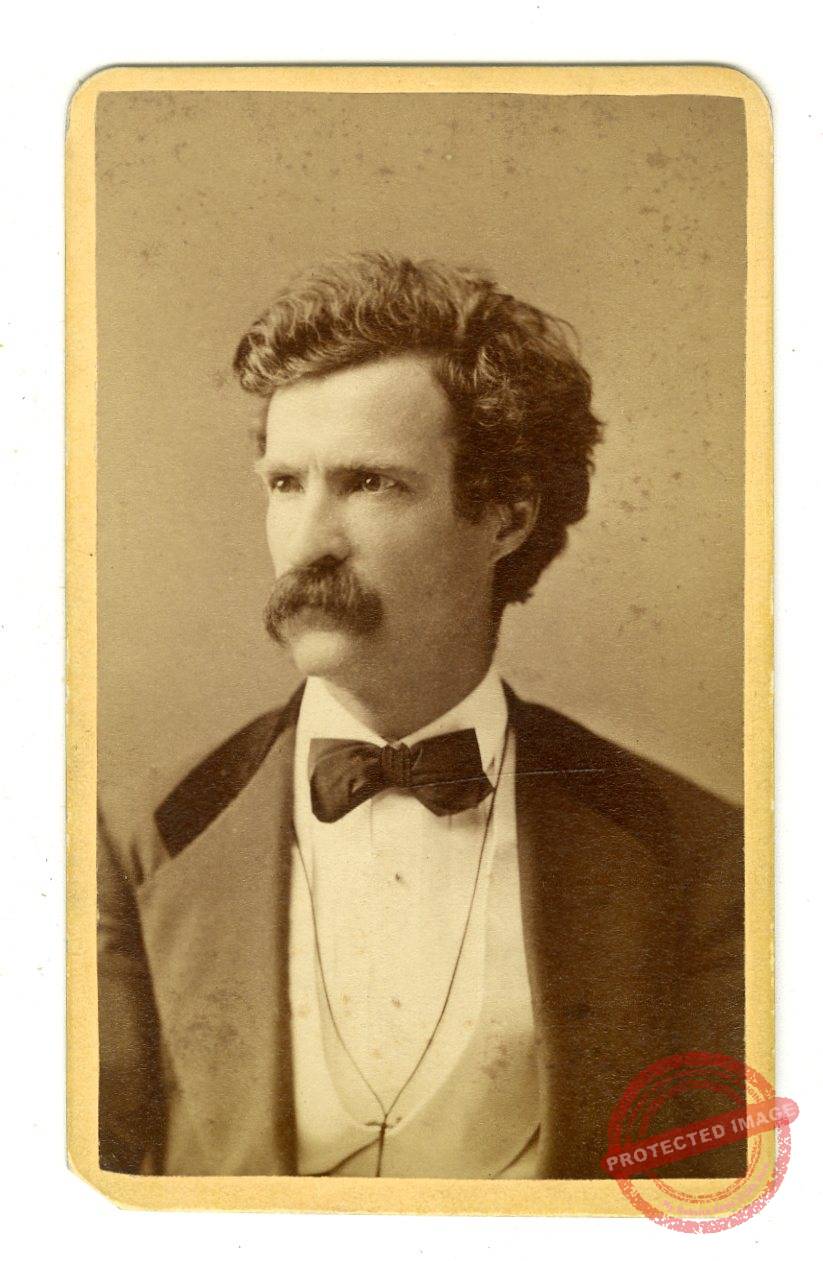
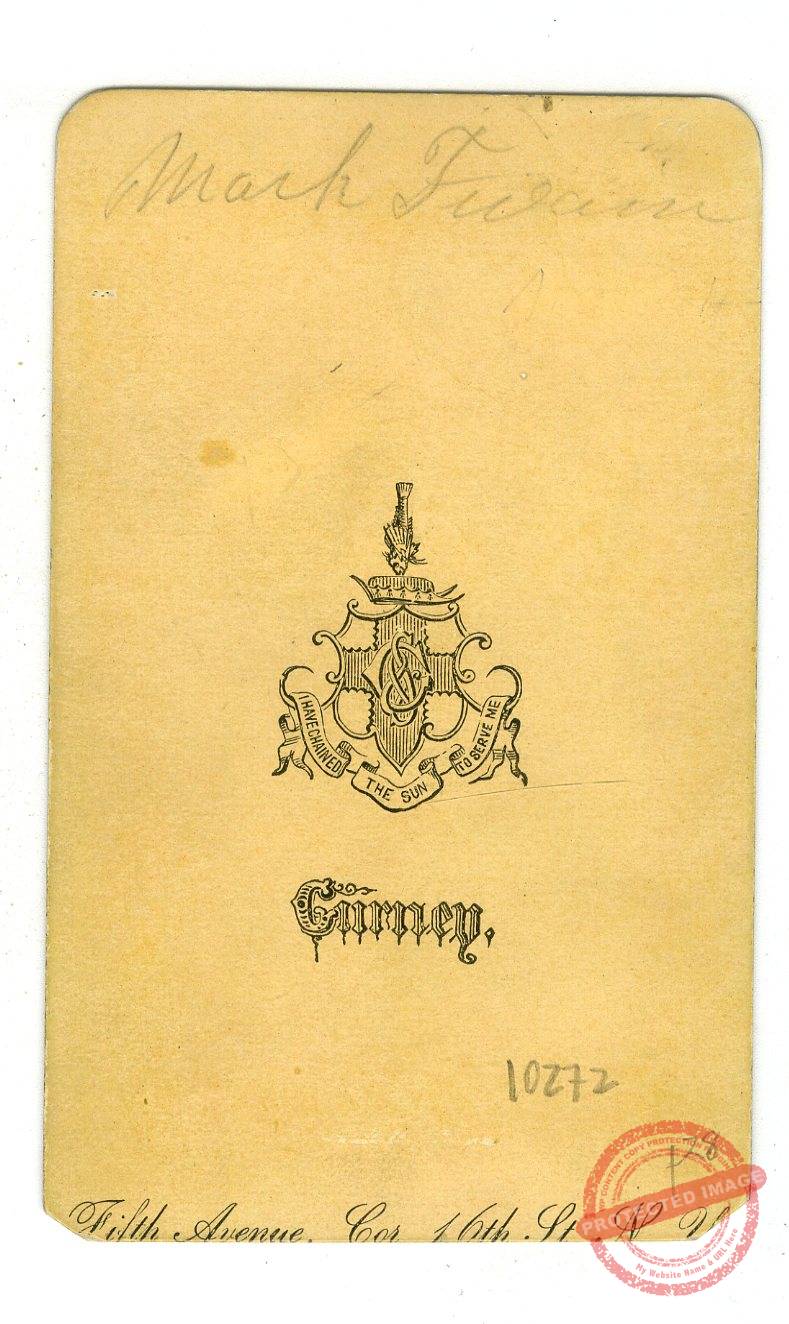
Mark Twain.
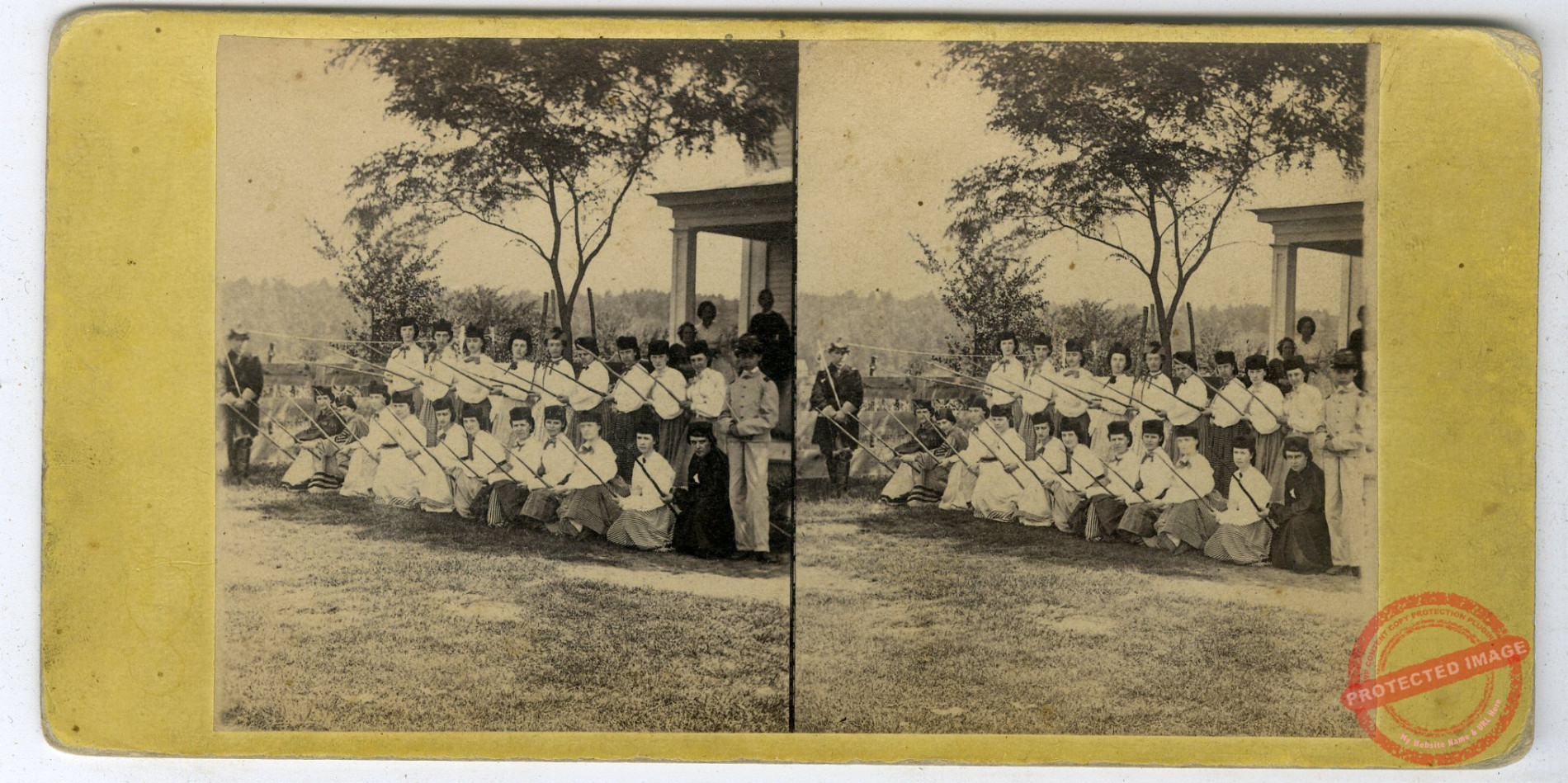
The Home Guard, White Mountain Rangers.
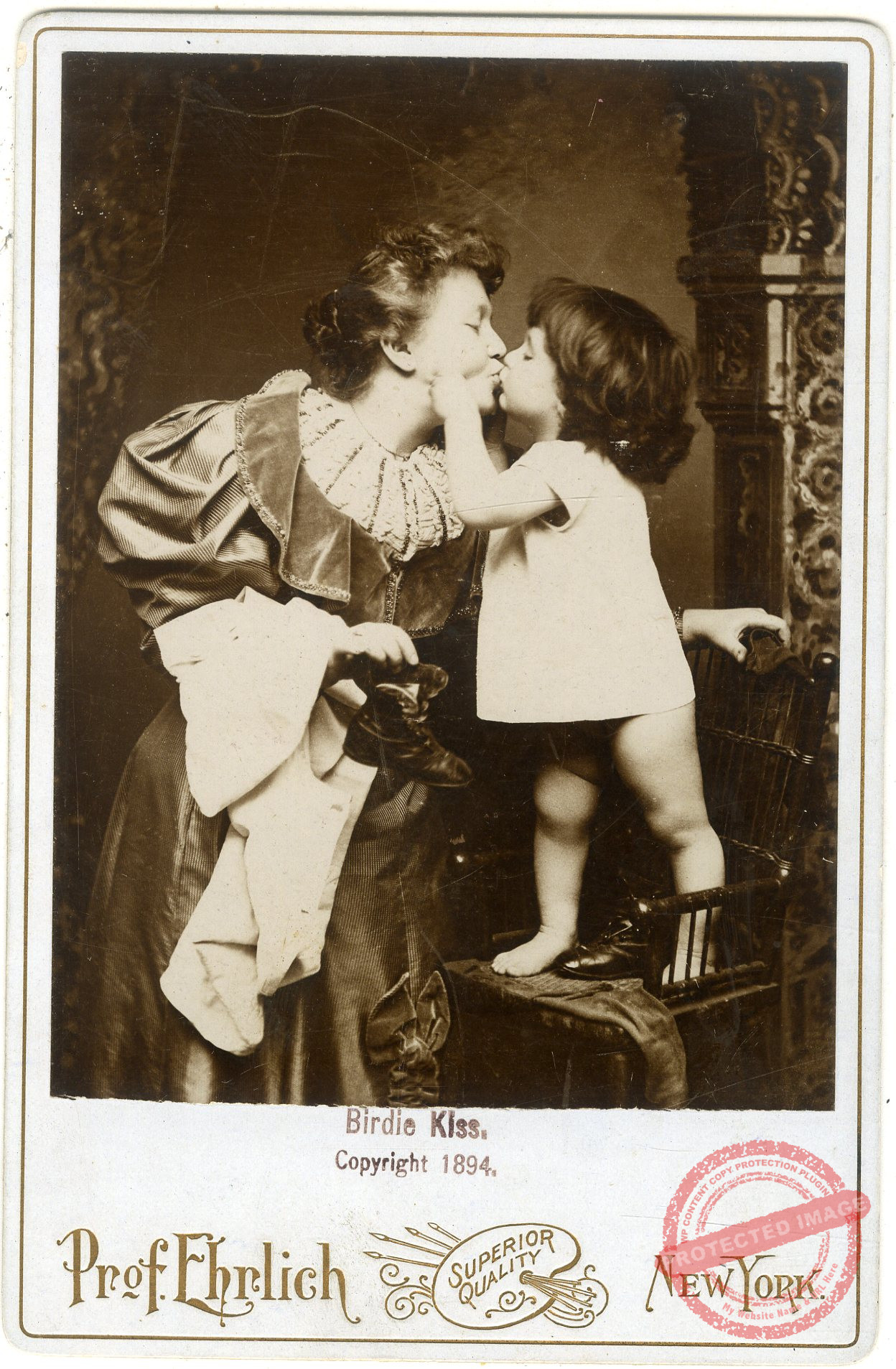
Birdie Kiss.
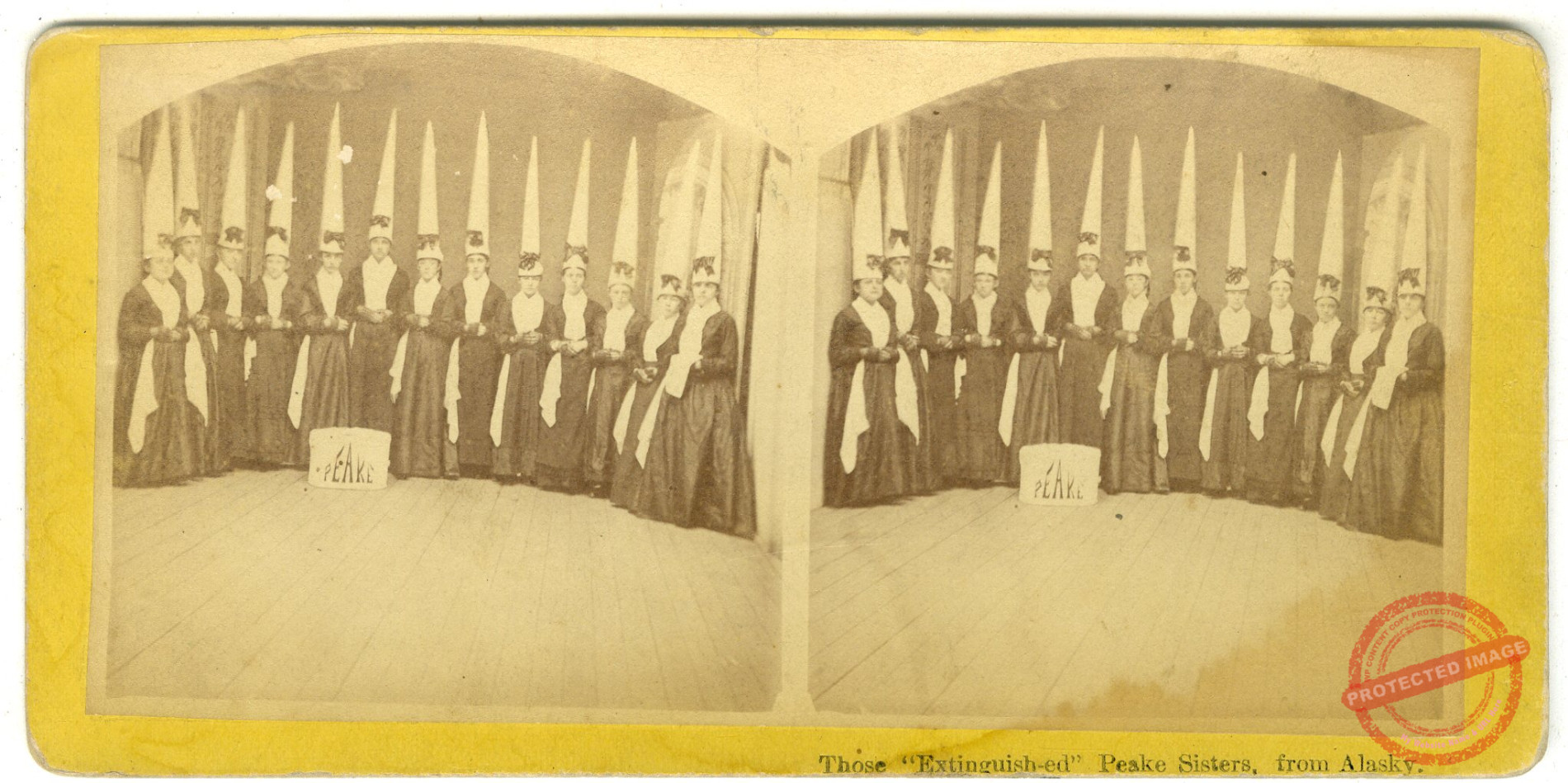
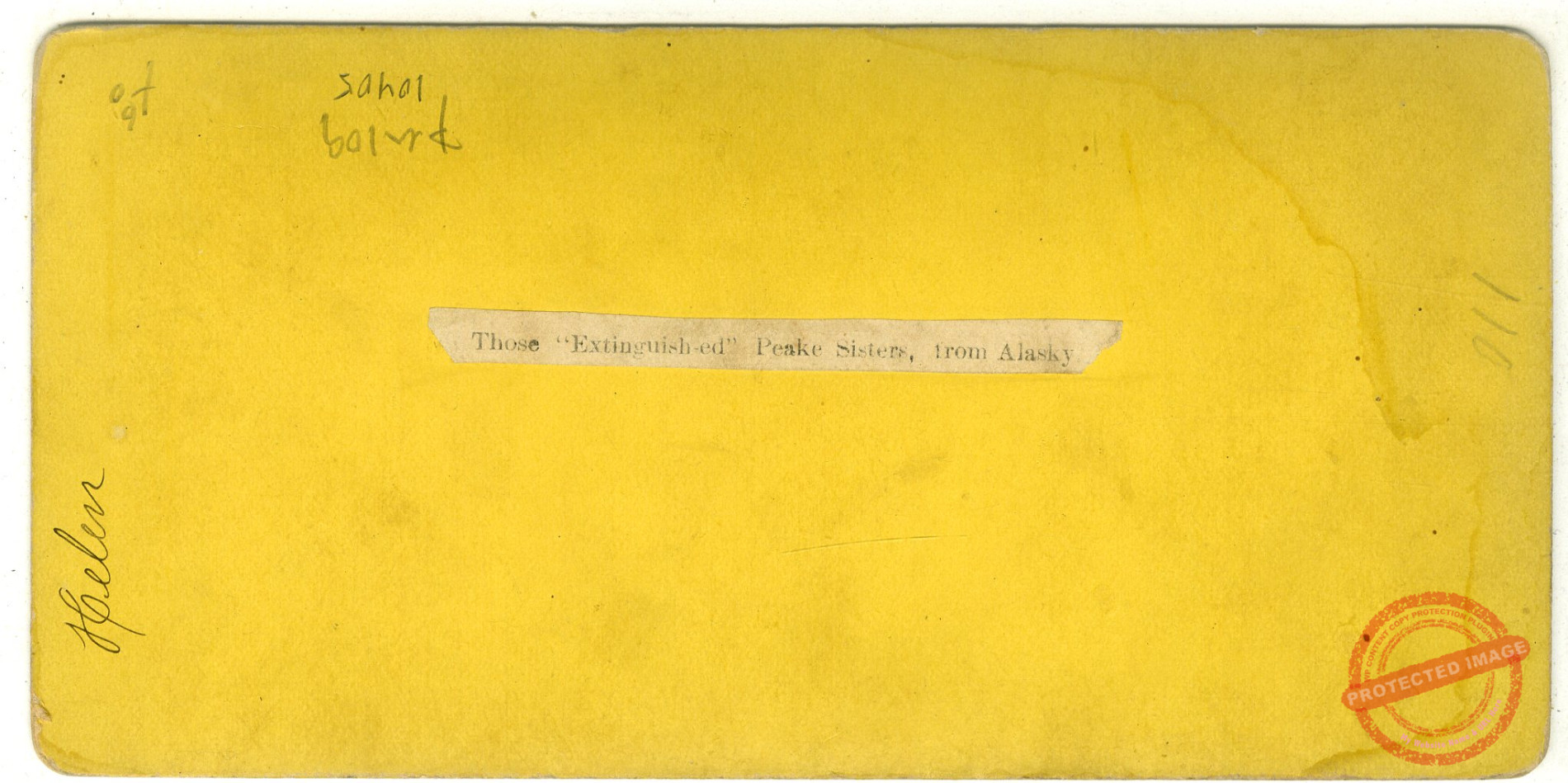
Those “Extinguish-ed” Peake Sisters, from Alasky.
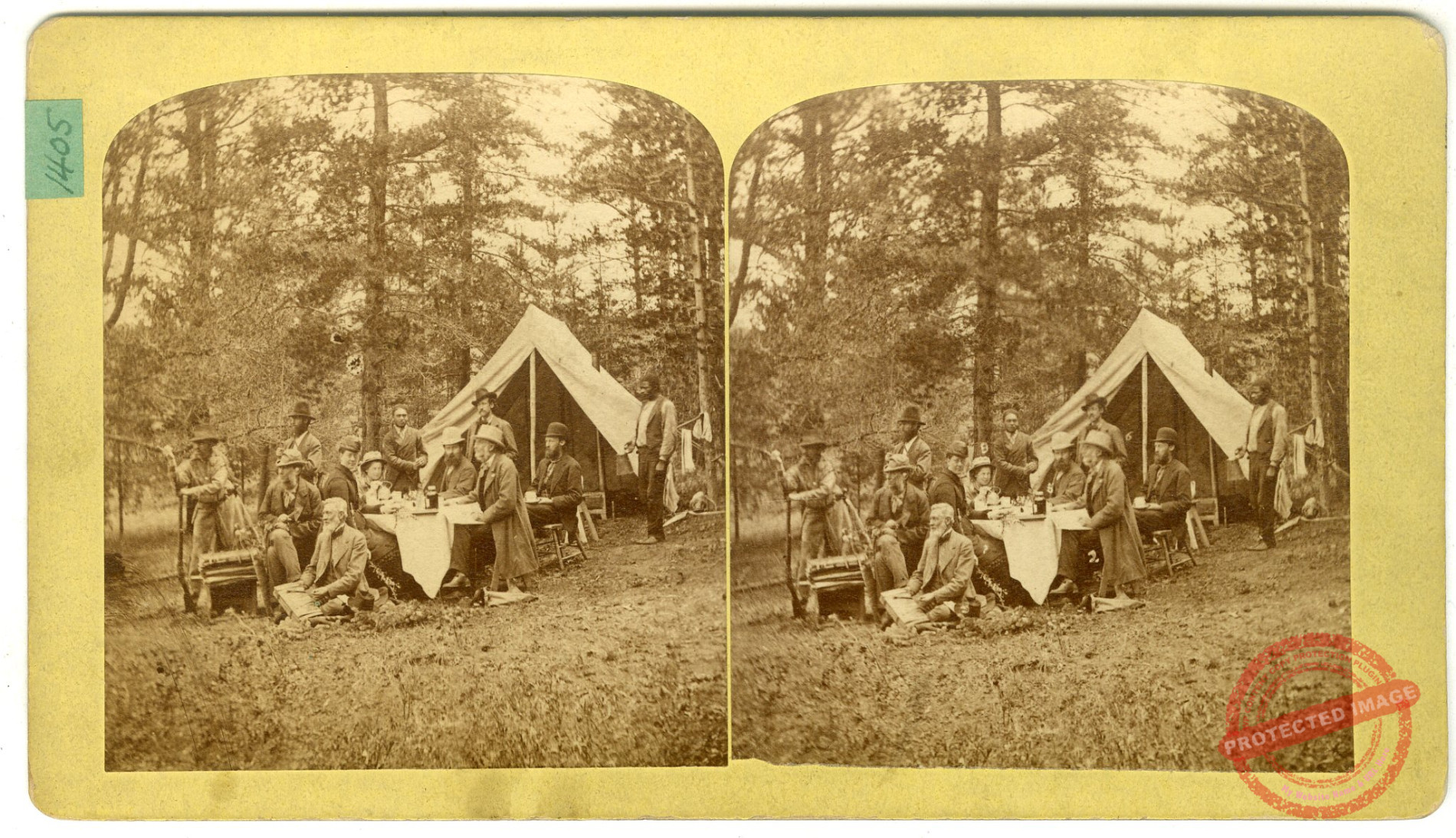
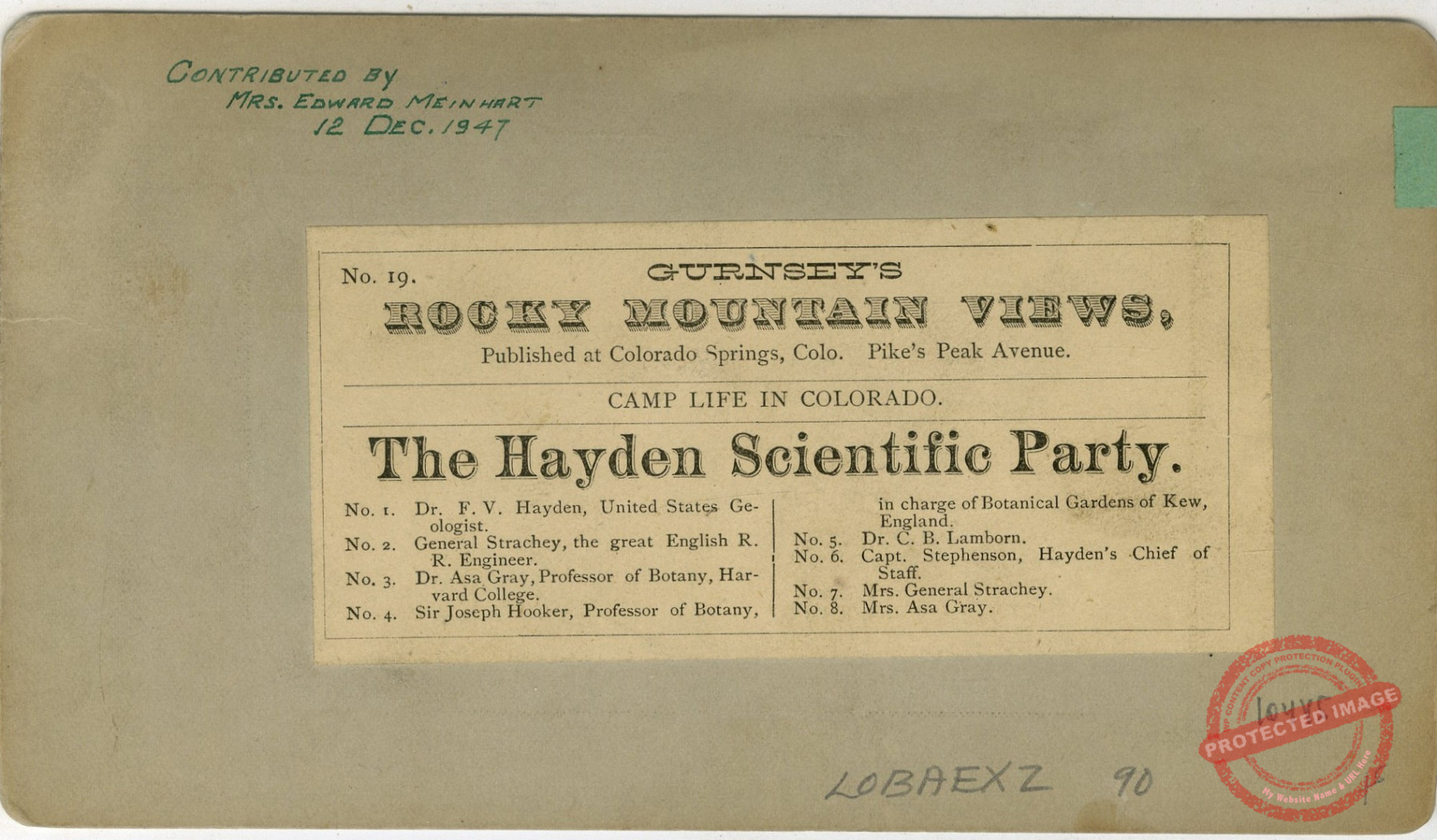
The Hayden Scientific Party. No. 1. Dr. F.V. Hayden, United States Geologist. No. 2. General Strachey, the great English R.R. Engineer. No. 3. Dr. Asa Gray, Professor of Botany, Harvard College. No. 4. Sir Joseph Hooker, Professor of Botany, in charge of Botanical Gardens of Kew, England. No. 5. Dr. C.B. Lamborn. No. 6. Capt. Stephenson, Hayden’s Chief of Staff. No. 7. Mrs. General Strachey. No. 8. Mrs. Asa Gray. While this image is issued by Gurnsey, it was taken by William Henry Jackson in La Veta Pass in the Sangre de Cristo Mountains, Colorado, in August, 1877.
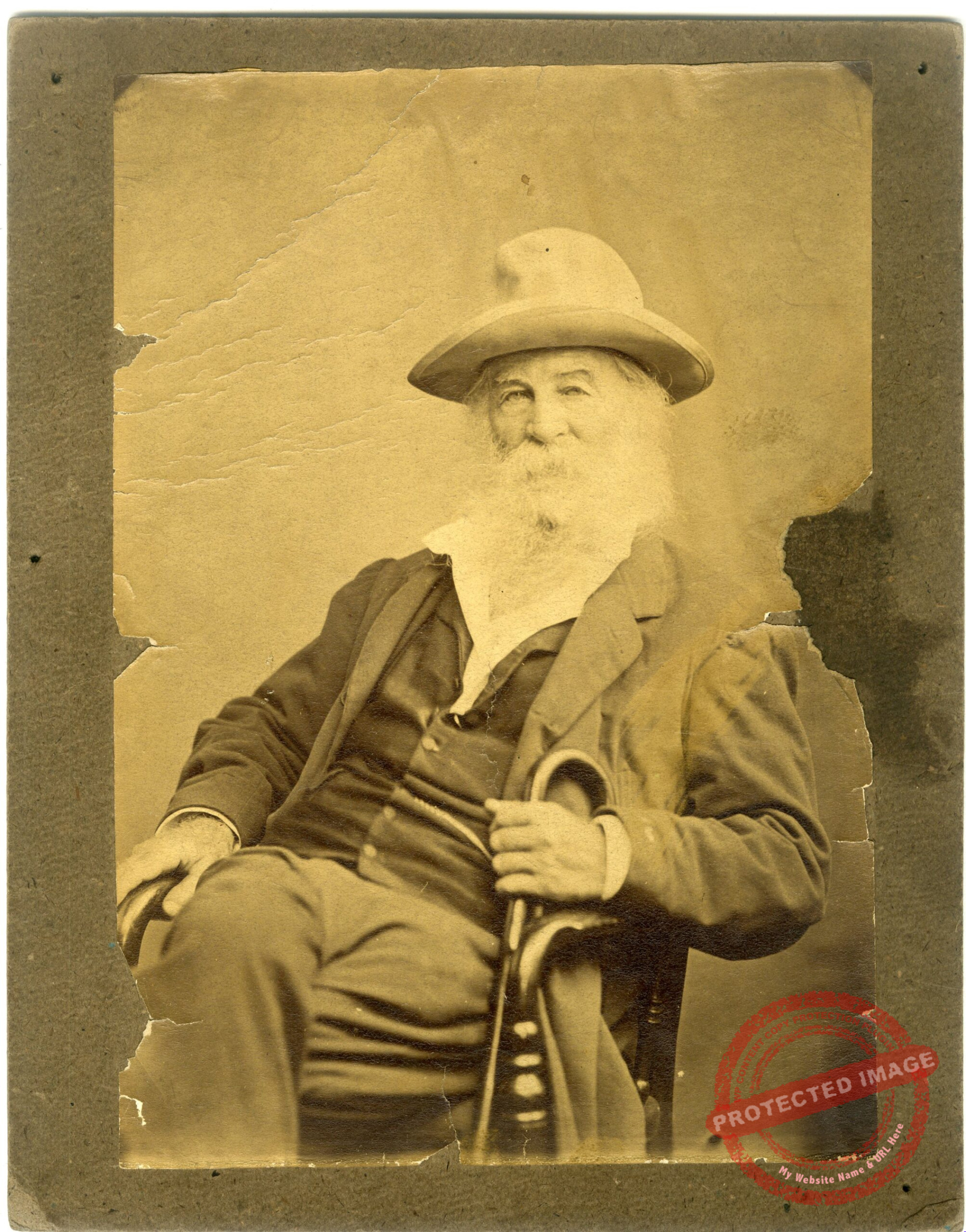
Walt Whitman, London, Ontario, Canada, Summer, 1880. Whitman traveled to London, Ontario, Canada on June 3, 1880 to visit his friend, physician, and eventual biographer Dr. Richard Maurice Bucke. He spent the majority of his 3-month stay at Dr. Bucke’s home, located at the London Asylum for the Insane, where Bucke was the superintendent. He visited the studio of the Edy Brothers and had 7 photographs made, this being one of them.
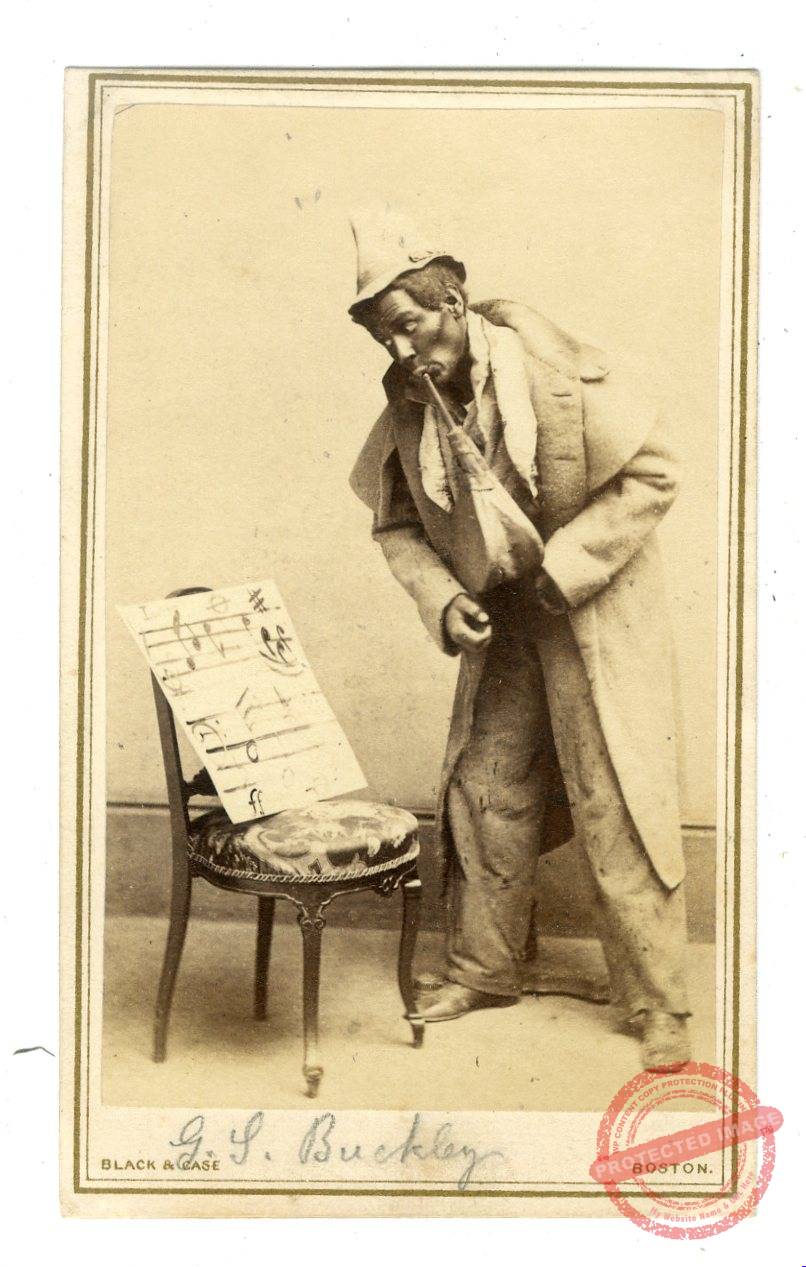
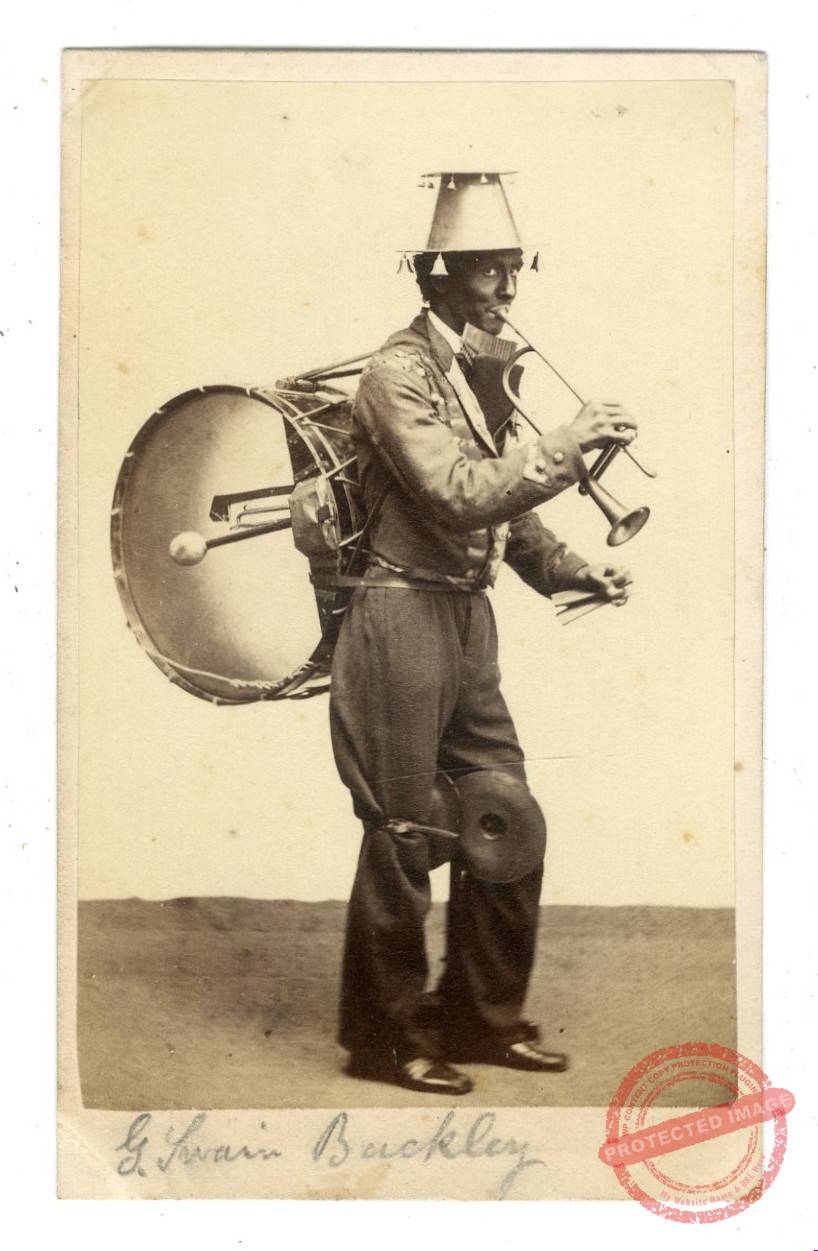
George Swayne Buckley.
George Swayne Buckley.
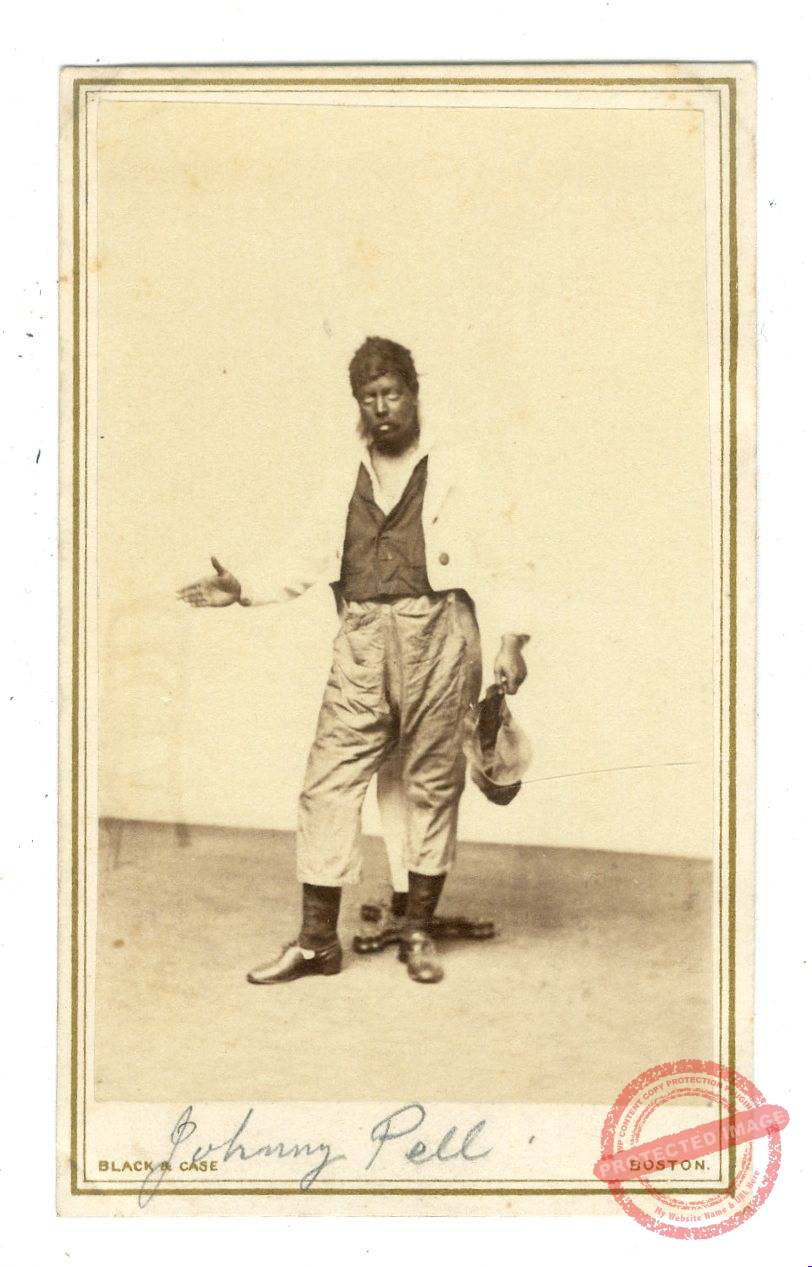
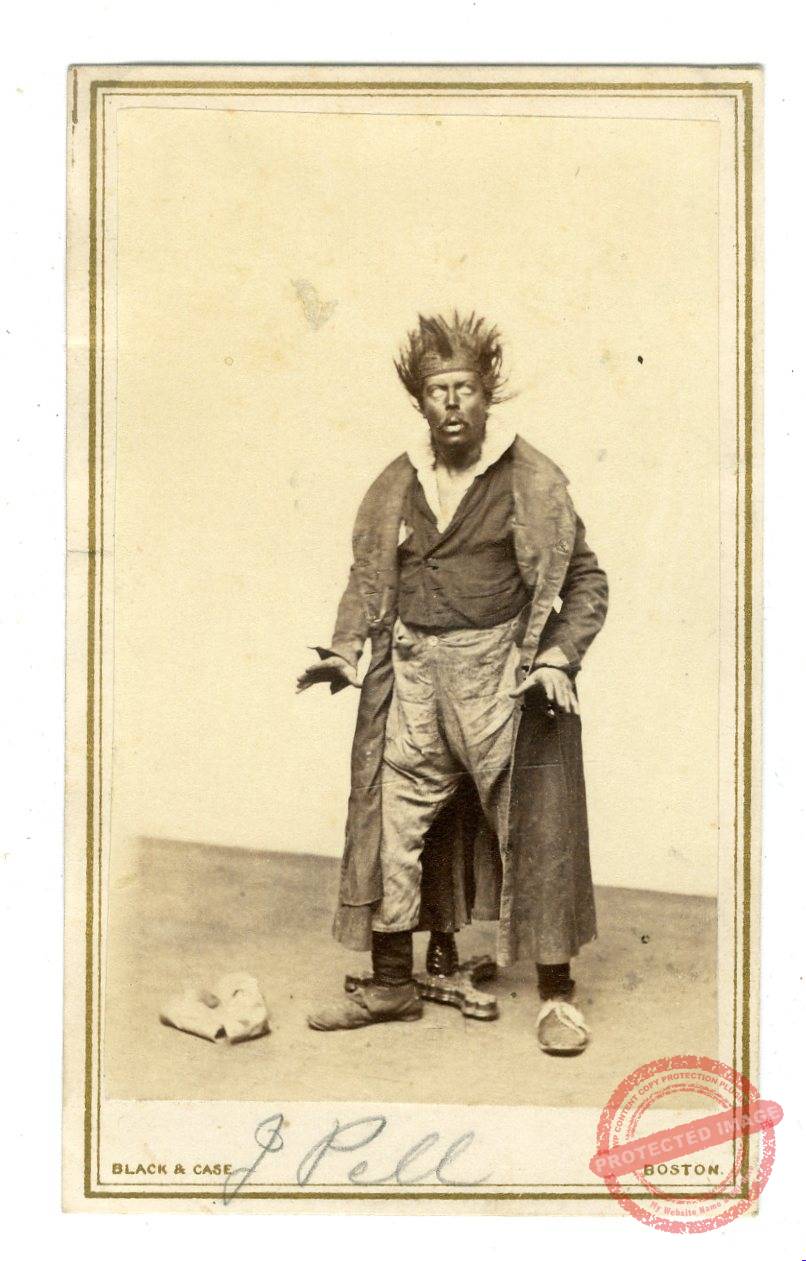
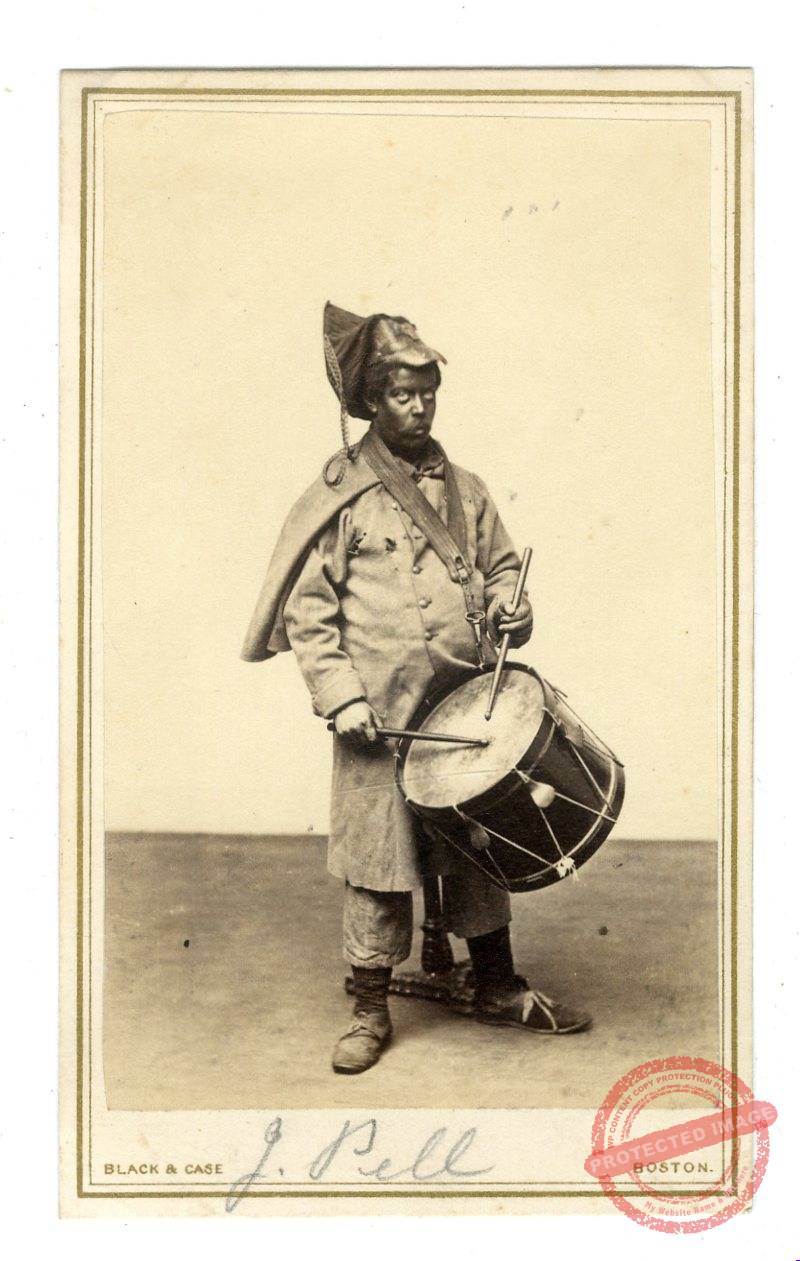
Johnny Pell.
Johnny Pell.
Johnny Pell.