40280.
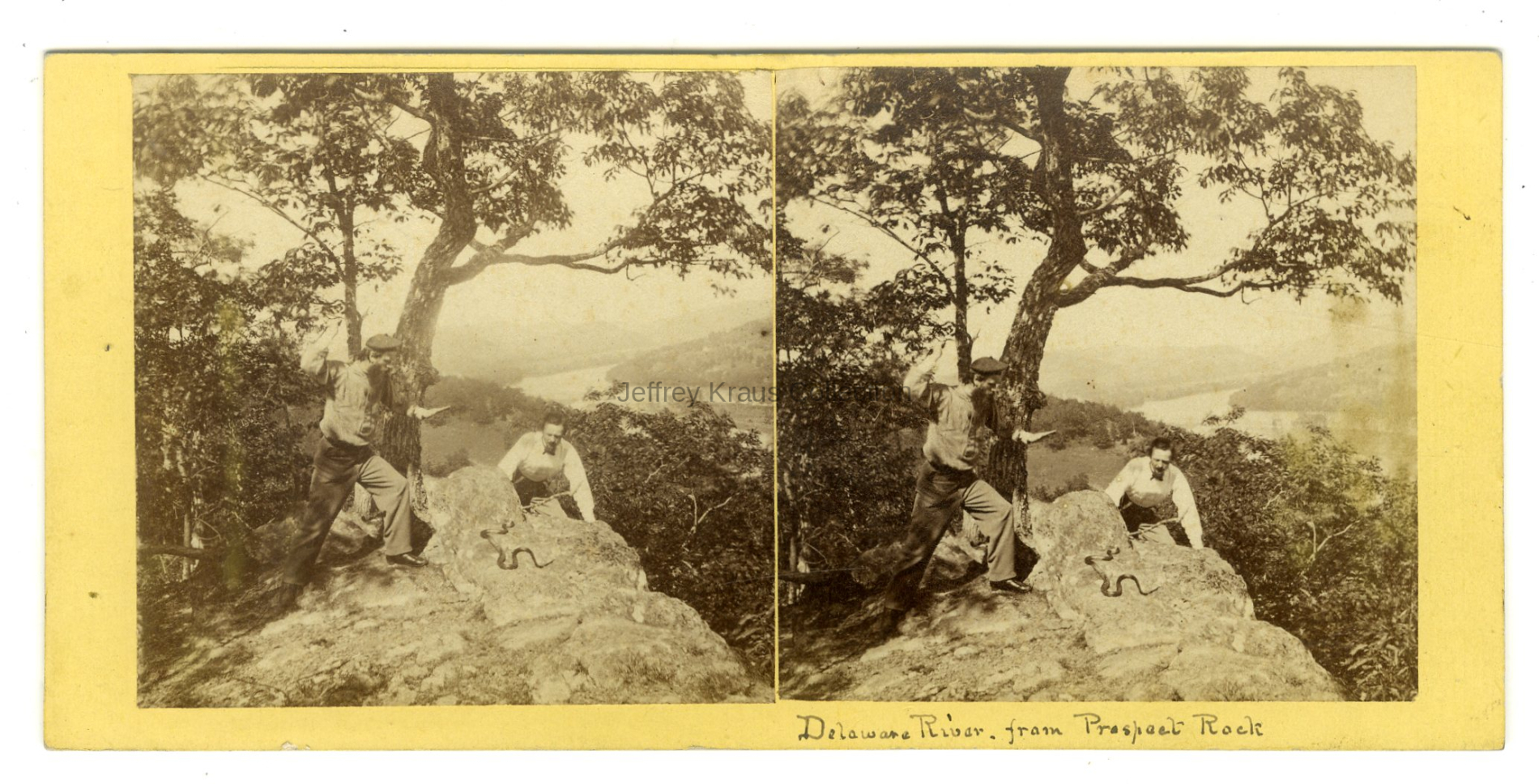
Killing the Snake. Thomas Moran at left, his brother Edward Moran at right. Case with artist’s paints in foreground.

Killing the Snake. Thomas Moran at left, his brother Edward Moran at right. Case with artist’s paints in foreground.
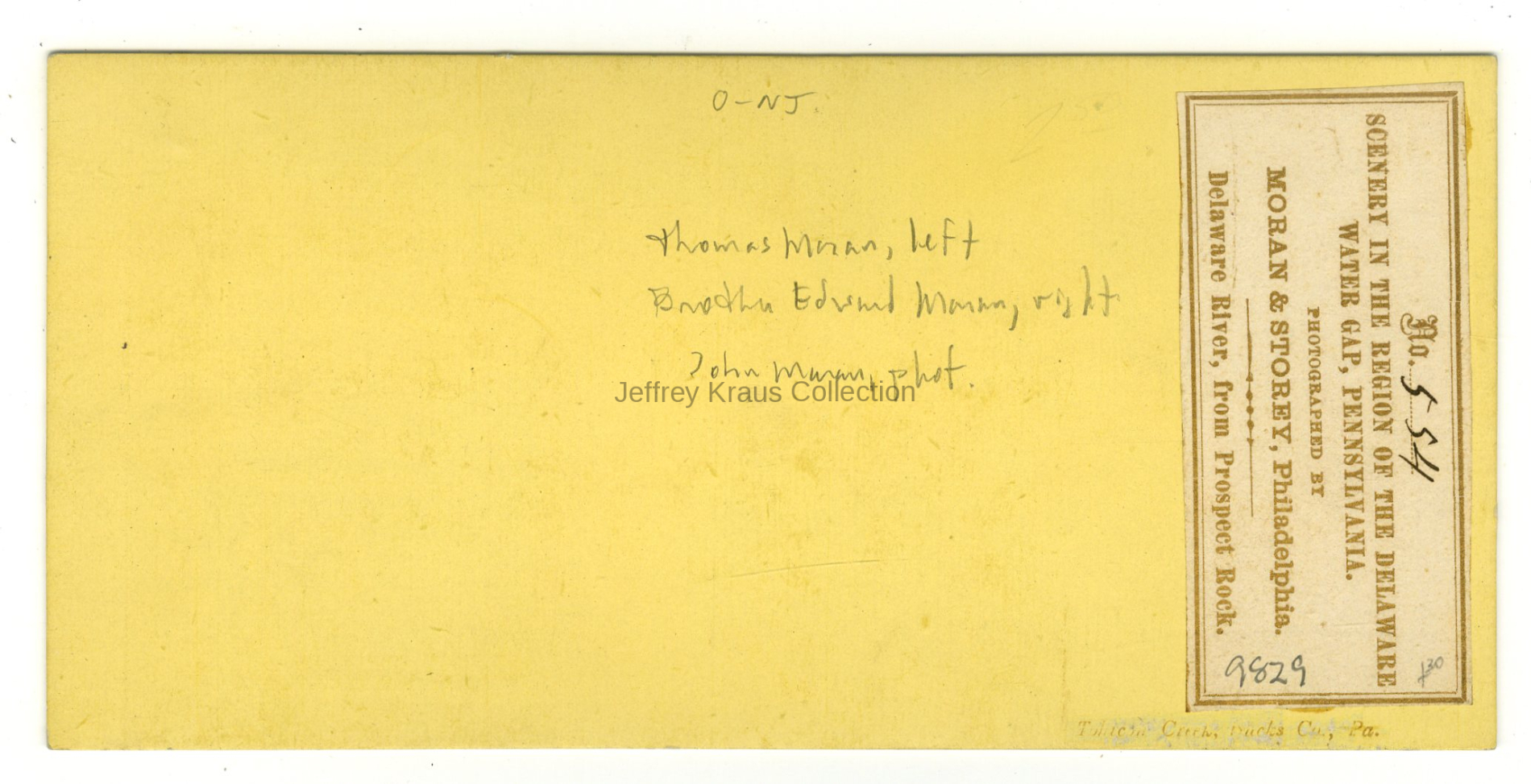
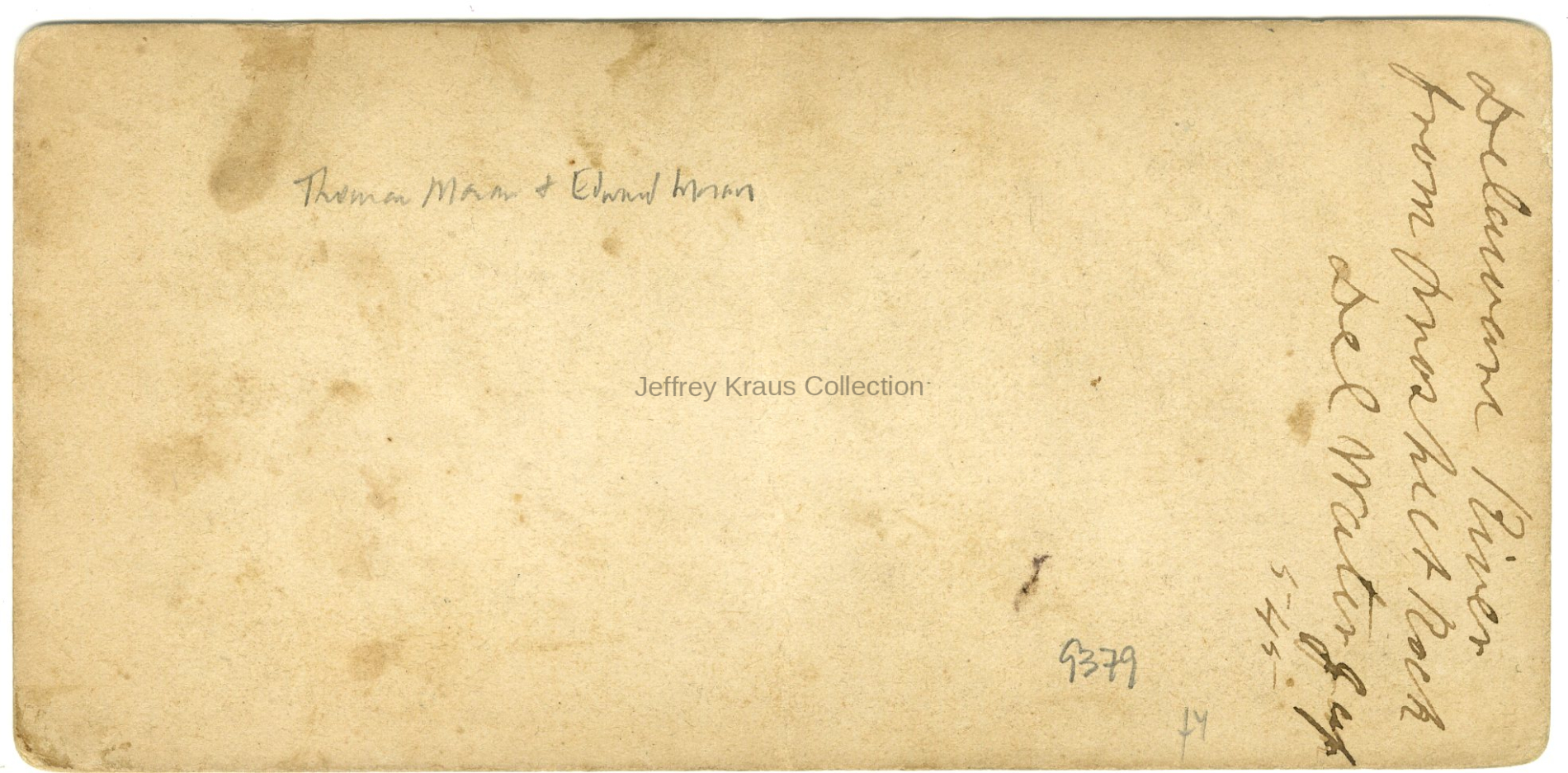
No. 554. Scenery in the Region of the Delaware Water Gap, Pennsylvania. Delaware River, from Prospect Rock. Thomas Moran, left, brother Edward Moran on right.
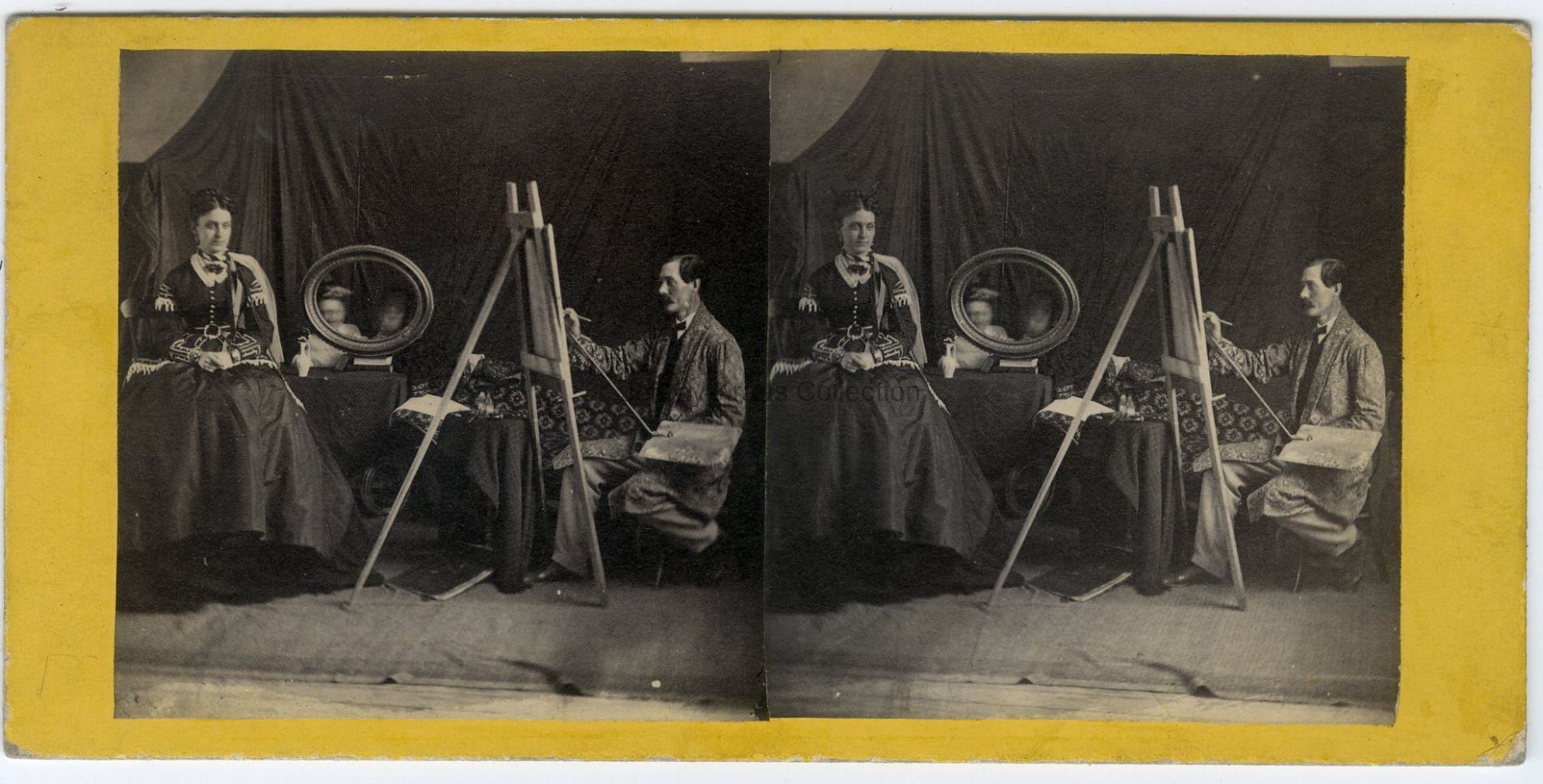
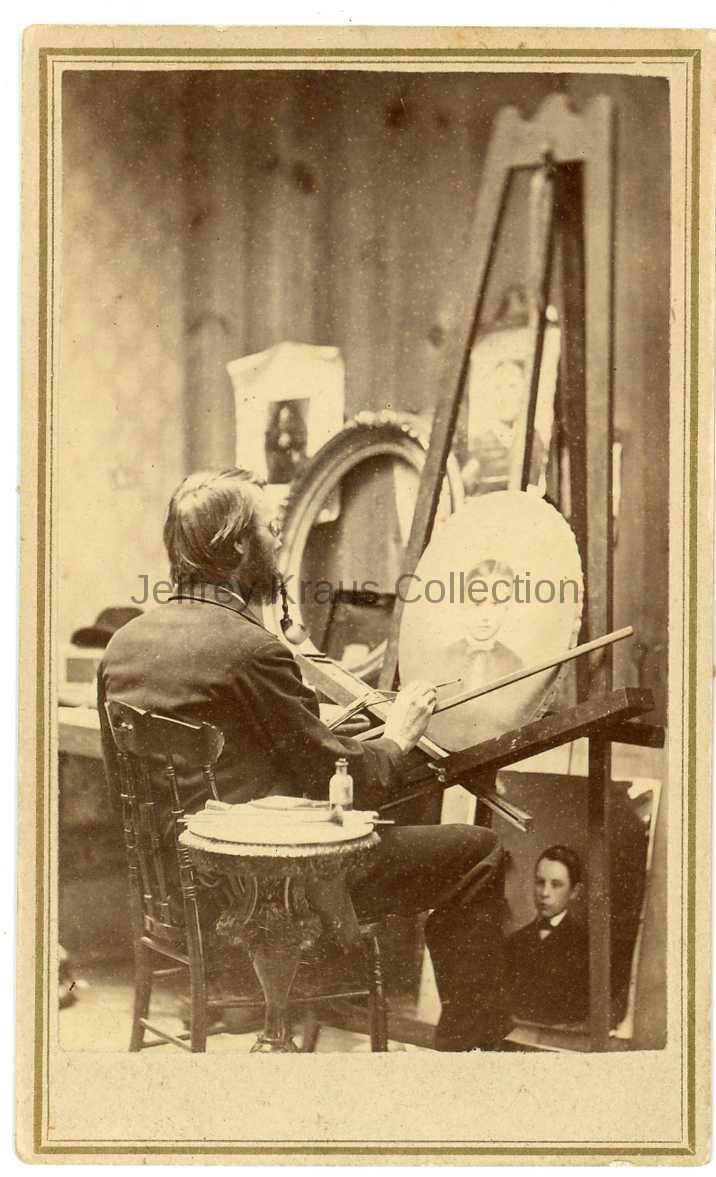
Painter at work.
111. The Artists’ Studies.
Family portrait.
Family portrait.
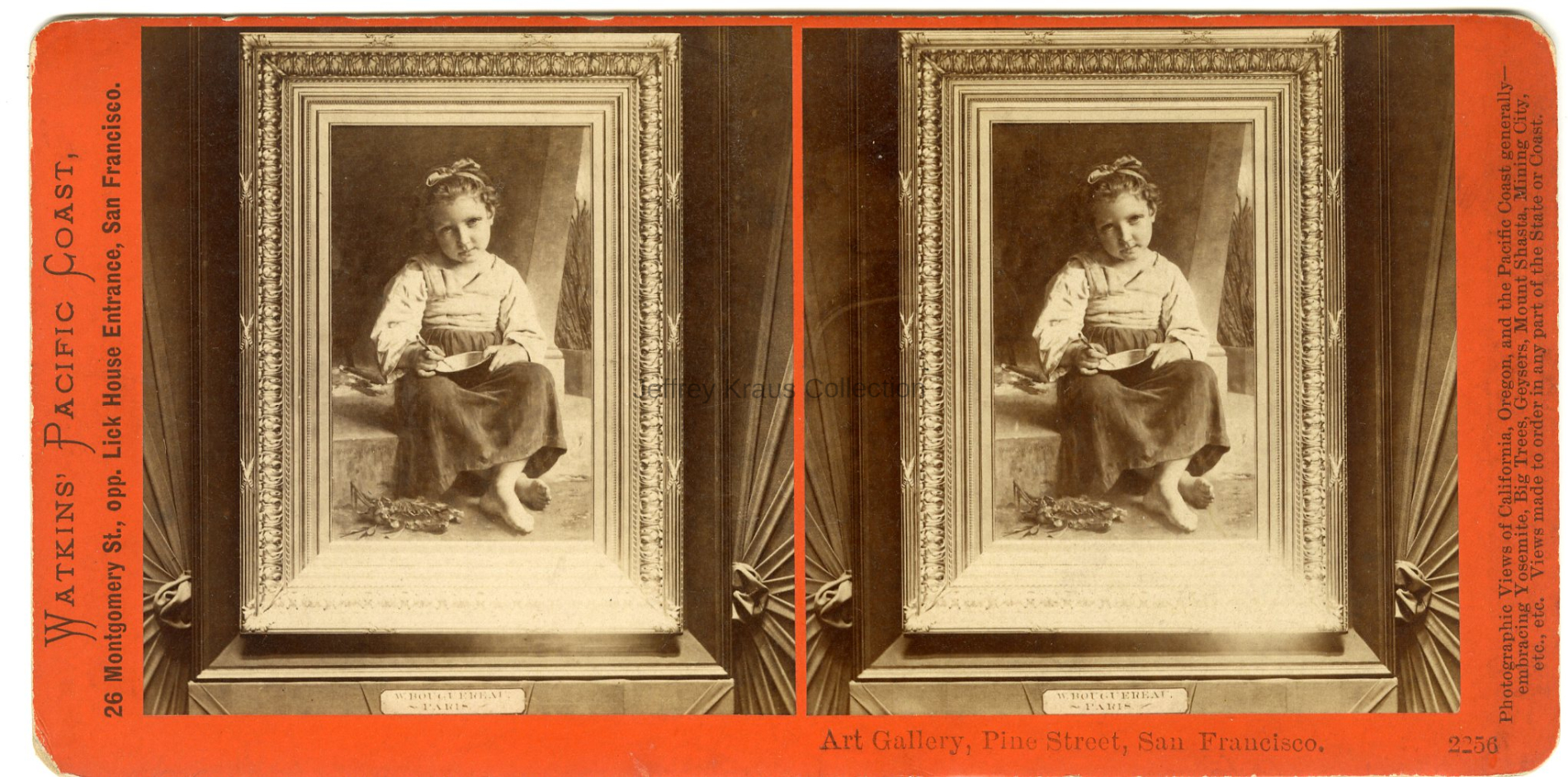
2256. Art Gallery, Pine Street, San Francisco.
Family portrait.
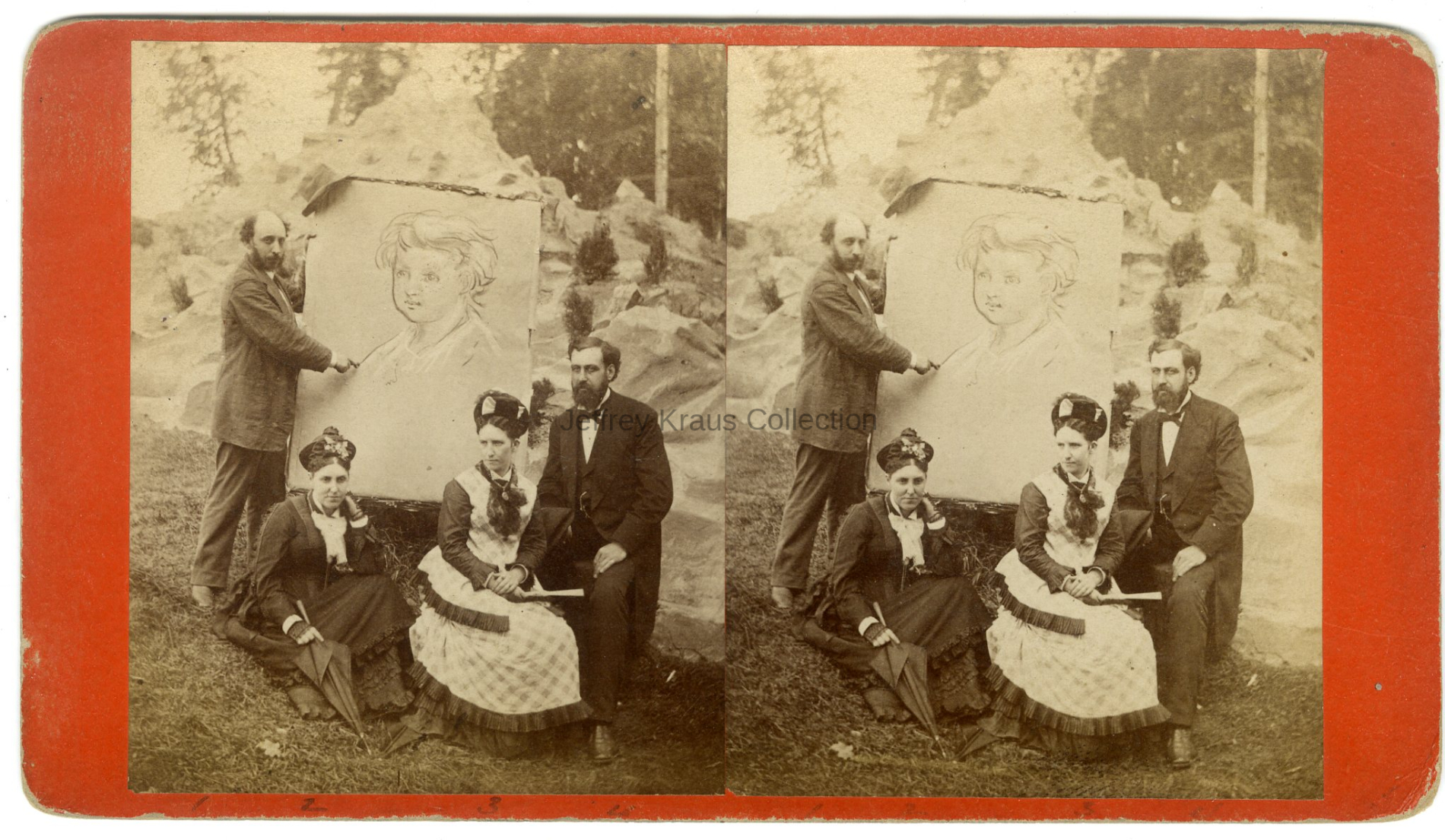
Philip Paul Bliss at right and his wife Lucy seated at left, with an artist identified as Beard sketching a child on a large drawing board. Philip Paul Bliss (1838–1876) was a prominent American gospel singer and composer associated with the Moody and Sankey revivals. Mrs. Bliss sits in the foreground holding a closed parasol, wearing a dark dress with contrasting trim, while Bliss is seated at right in a dark suit with waistcoat and bow tie. The central seated woman wears a patterned dress with apron and hat, positioned between the couple, with rocks and trees forming a constructed outdoor backdrop. Bliss and his wife Lucy (1841–1876) died together in the Ashtabula River railroad disaster in Ohio on December 29, 1876, when a bridge collapse caused a train to plunge into a ravine and burn.
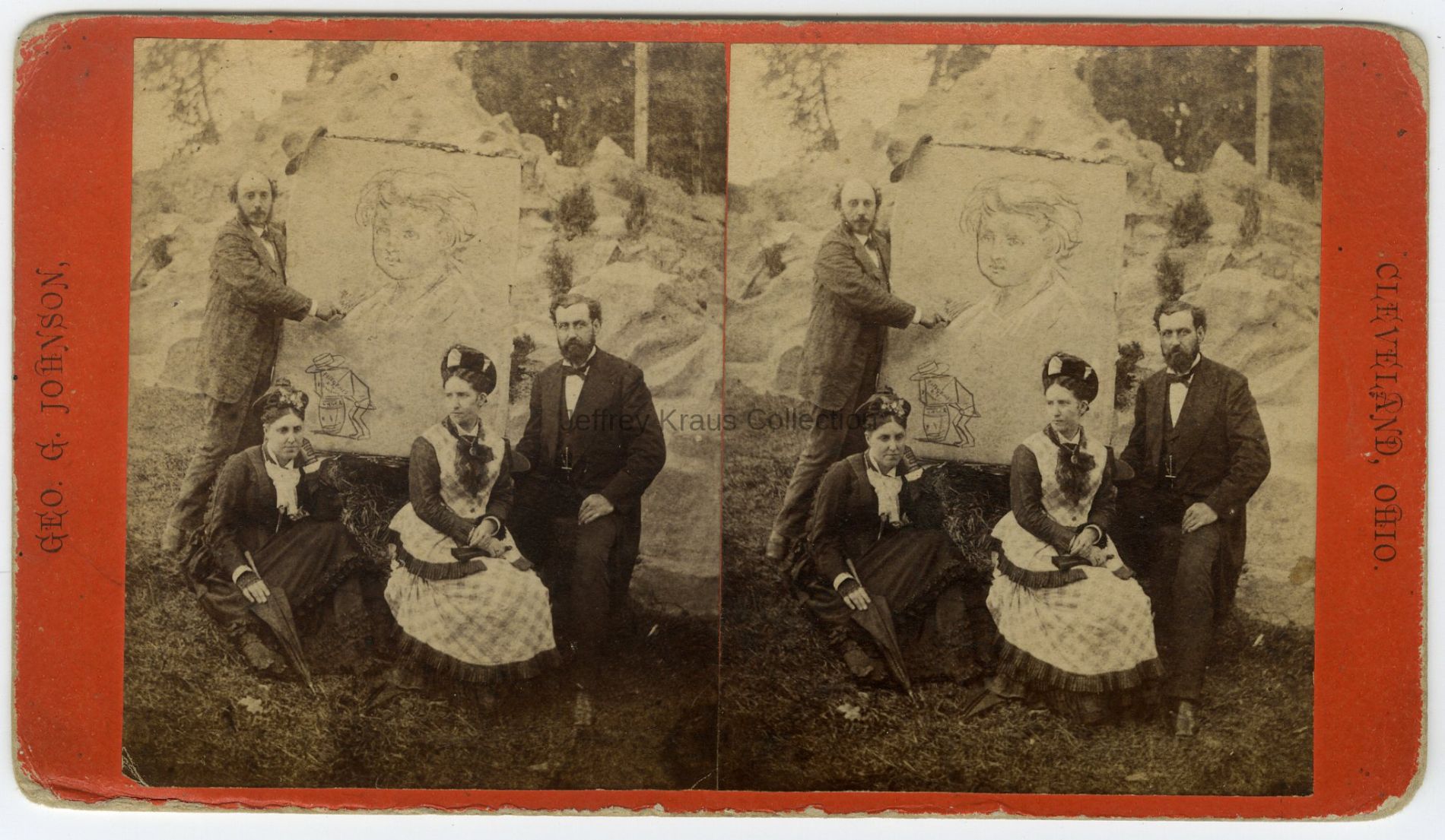
Philip Paul Bliss at right and his wife Lucy seated at left, with an artist identified as Beard sketching a child on a large drawing board. Philip Paul Bliss (1838–1876) was a prominent American gospel singer and composer associated with the Moody and Sankey revivals. Mrs. Bliss sits in the foreground holding a closed parasol, wearing a dark dress with contrasting trim, while Bliss is seated at right in a dark suit with waistcoat and bow tie. The central seated woman wears a patterned dress with apron and hat, positioned between the couple, with rocks and trees forming a constructed outdoor backdrop. Beard has sketched the photographer Johnson at the lower left. Bliss and his wife Lucy (1841–1876) died together in the Ashtabula River railroad disaster in Ohio on December 29, 1876, when a bridge collapse caused a train to plunge into a ravine and burn.
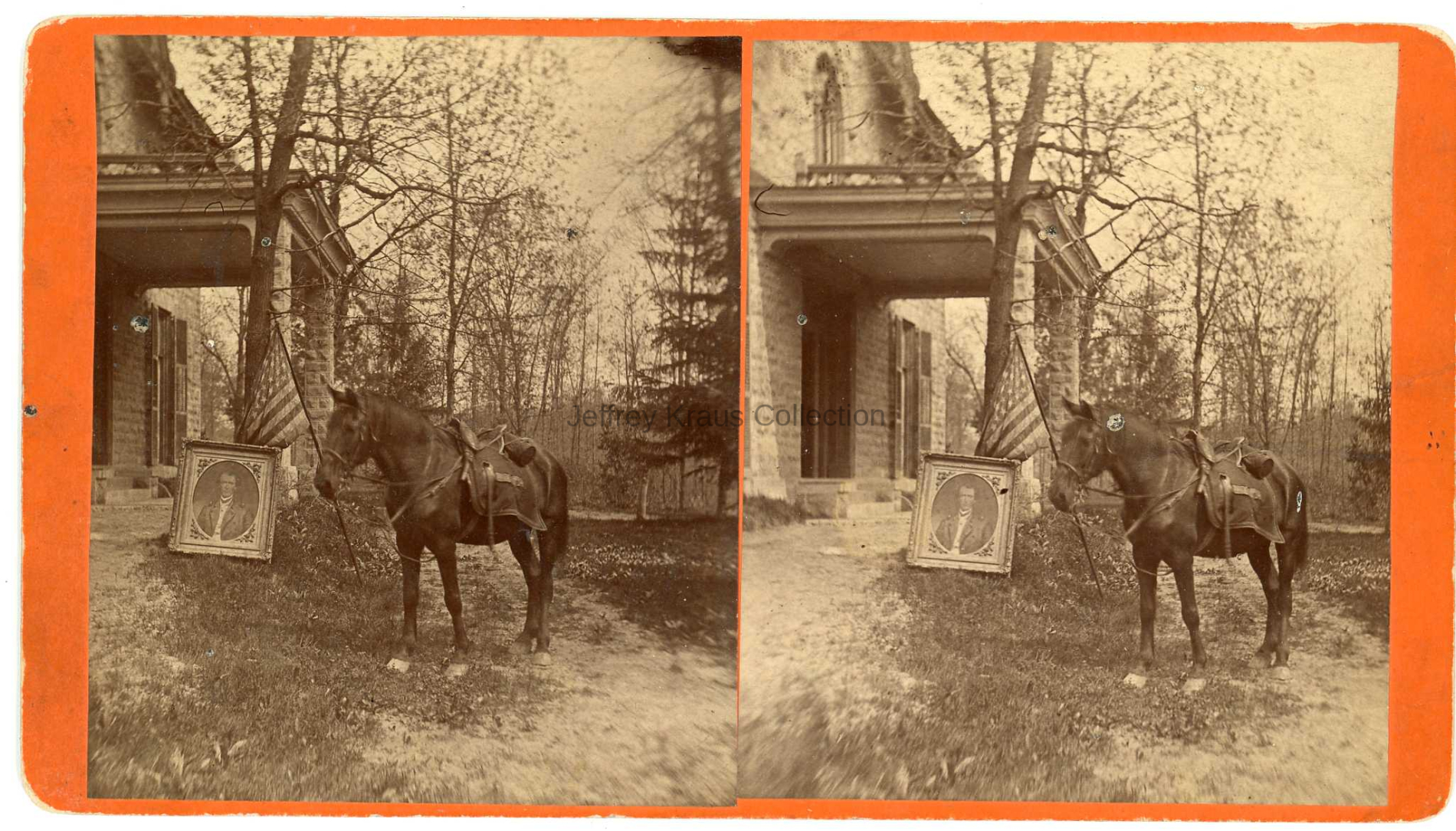
A War-Horse.
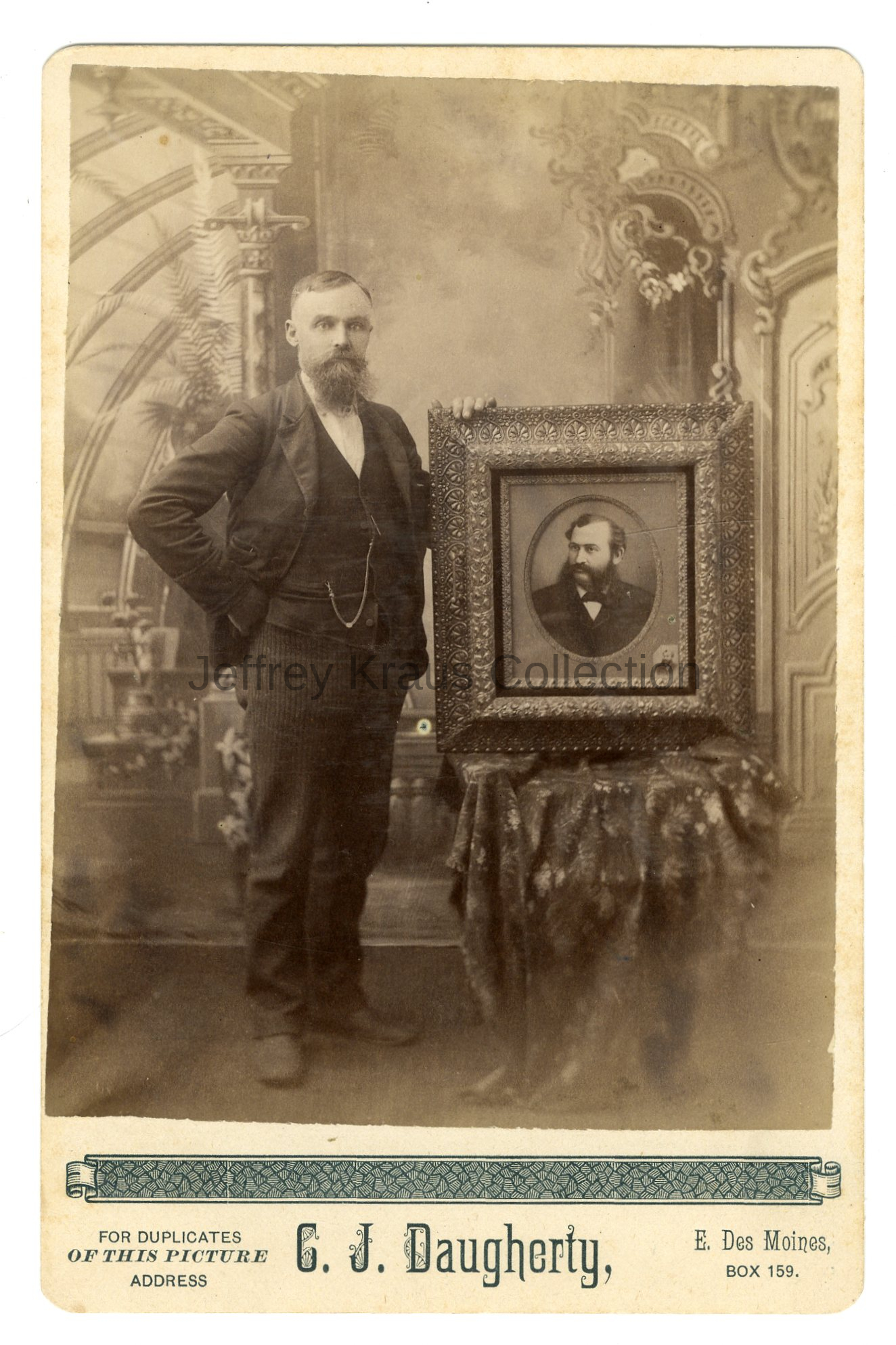
Gentleman holding painting on table.
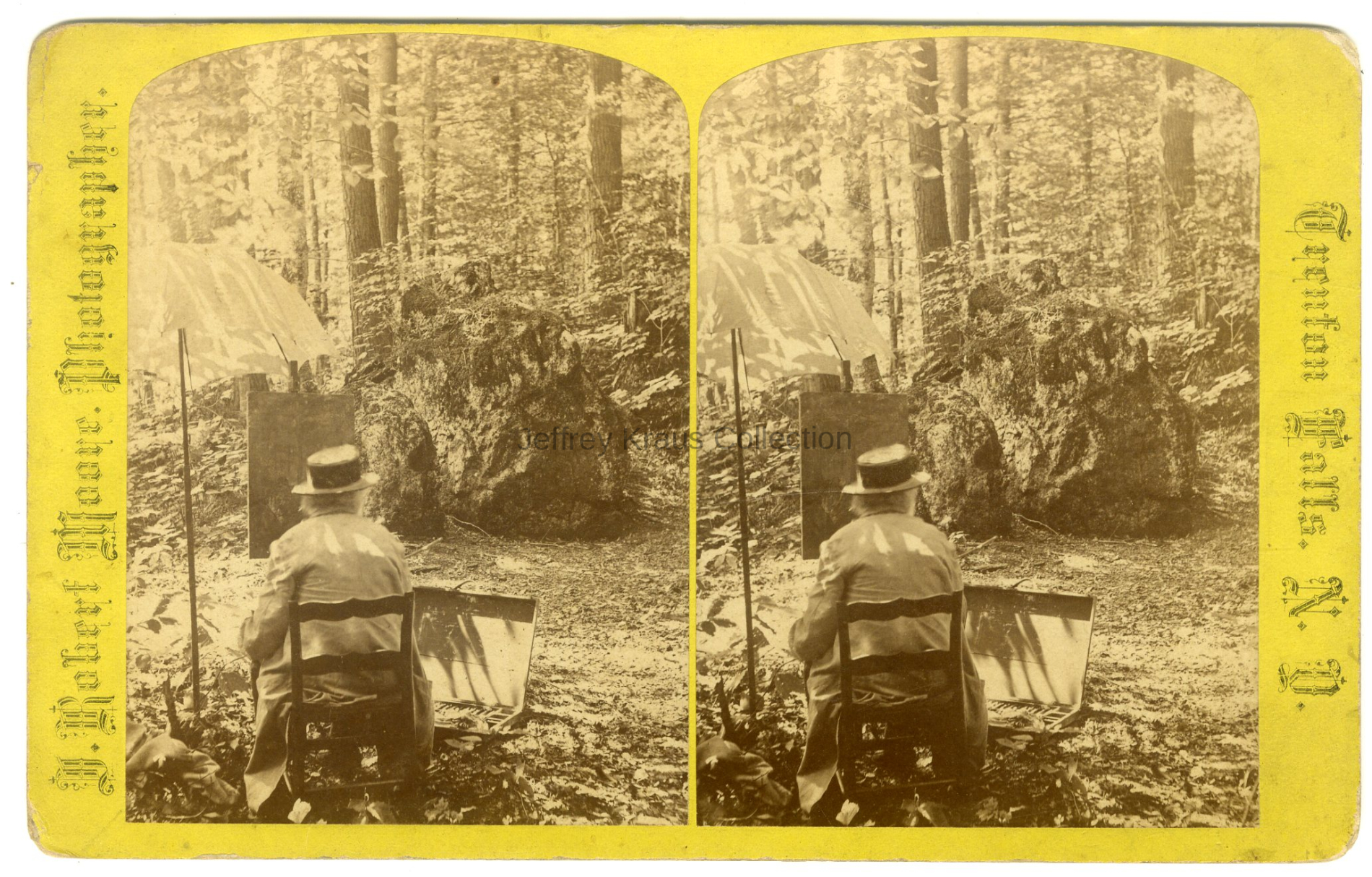
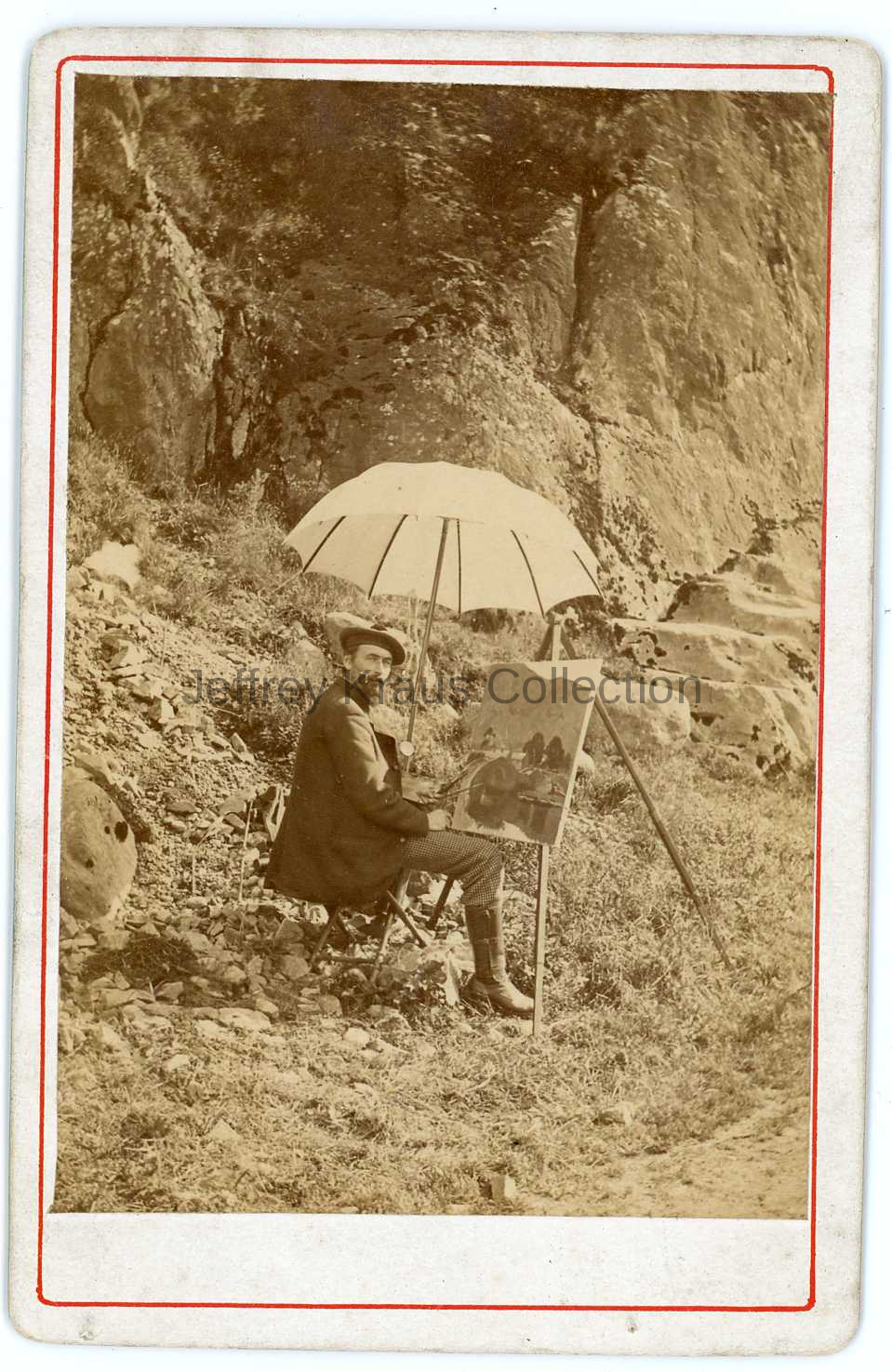
Unidentified painter in plein air.
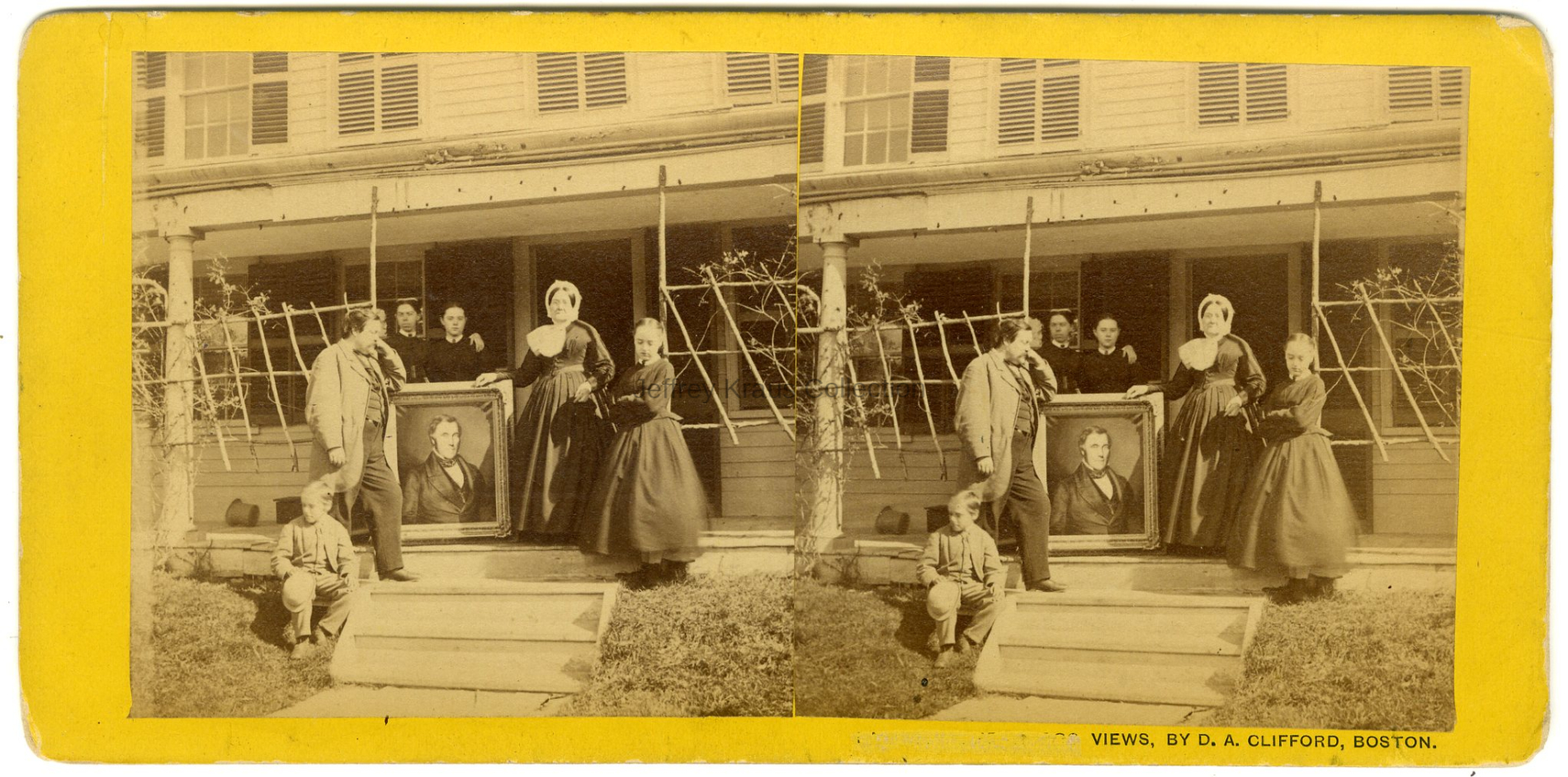
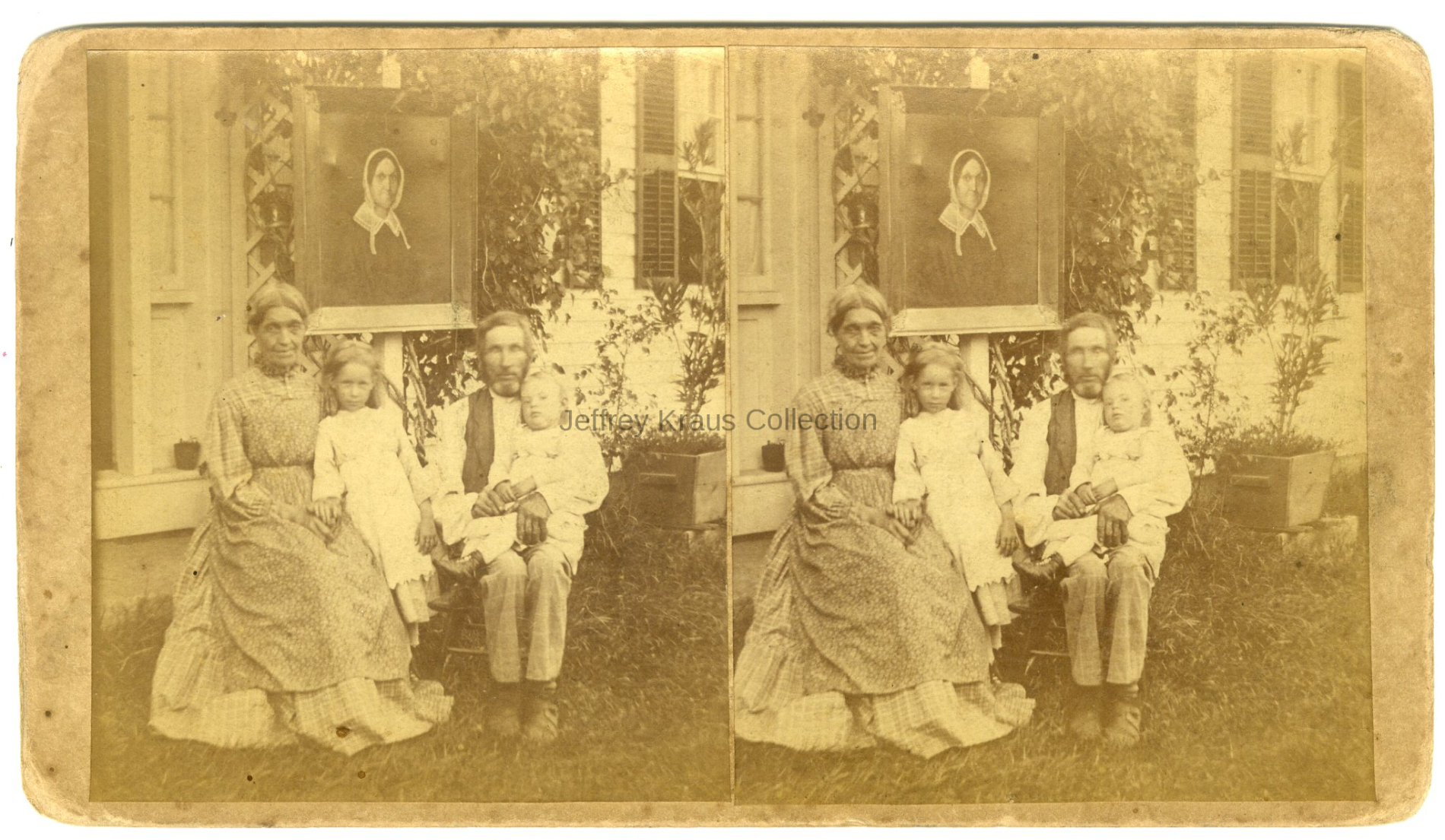
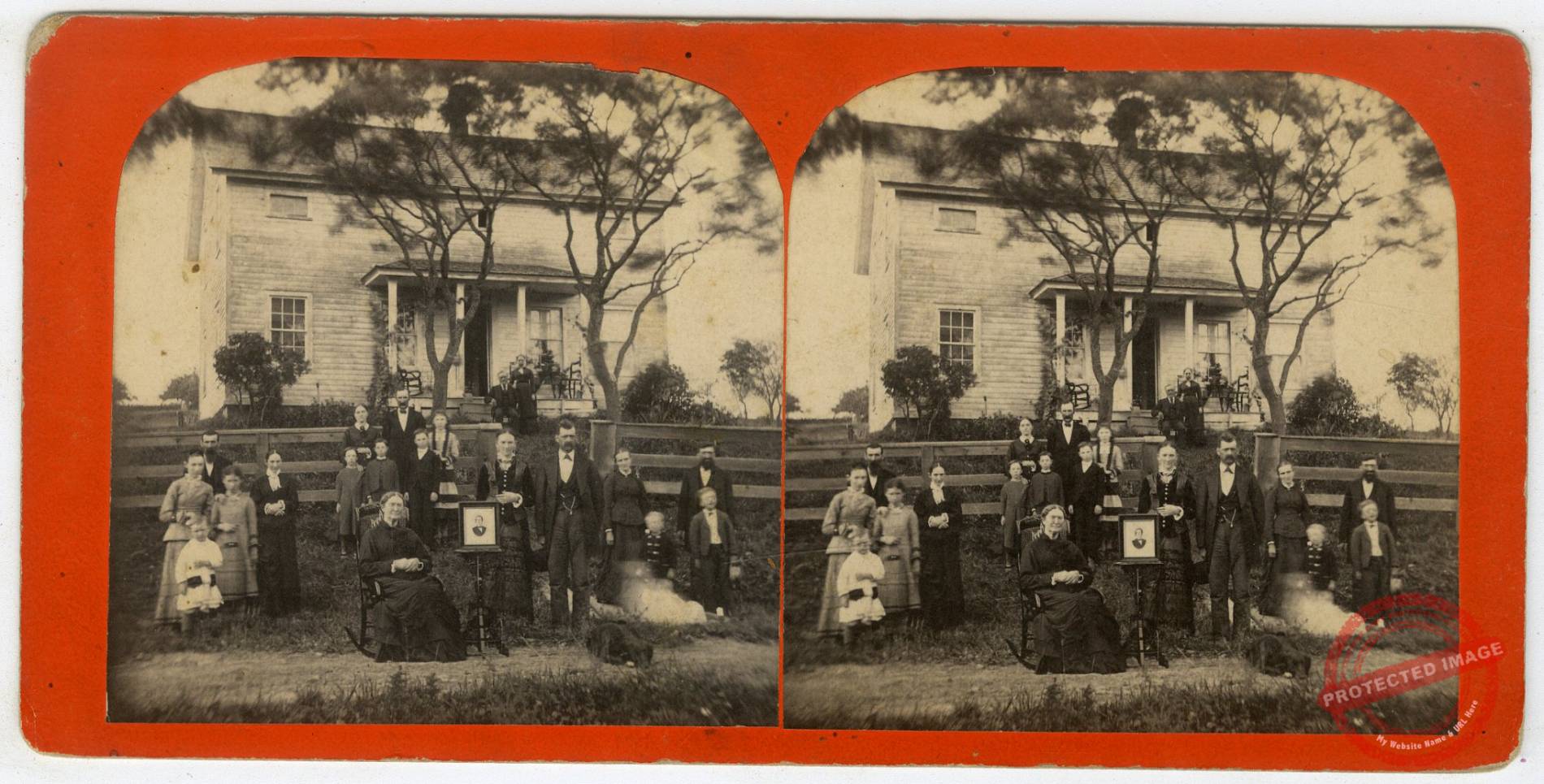
Family posed with a photograph of their deceased grandfather.
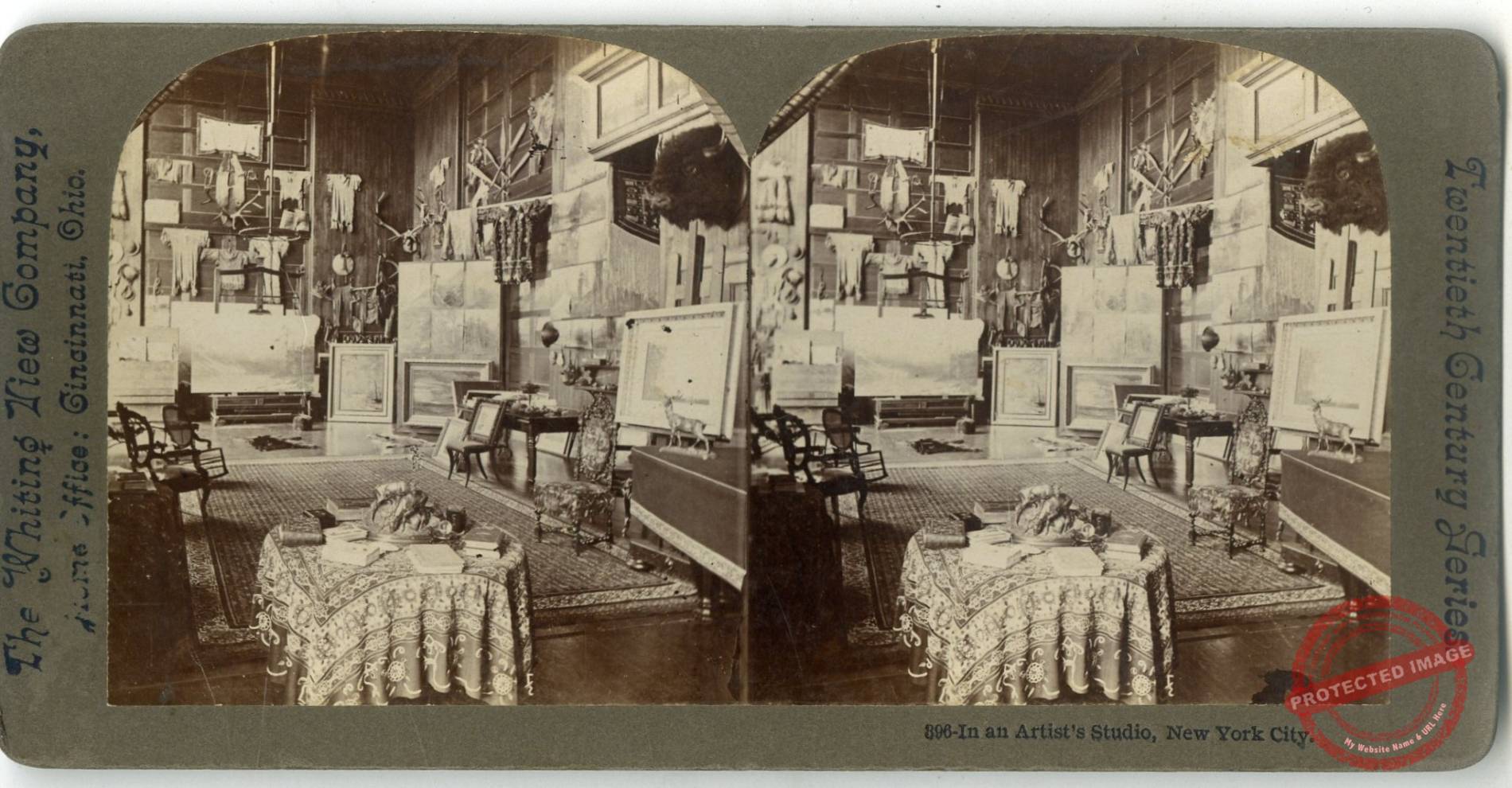
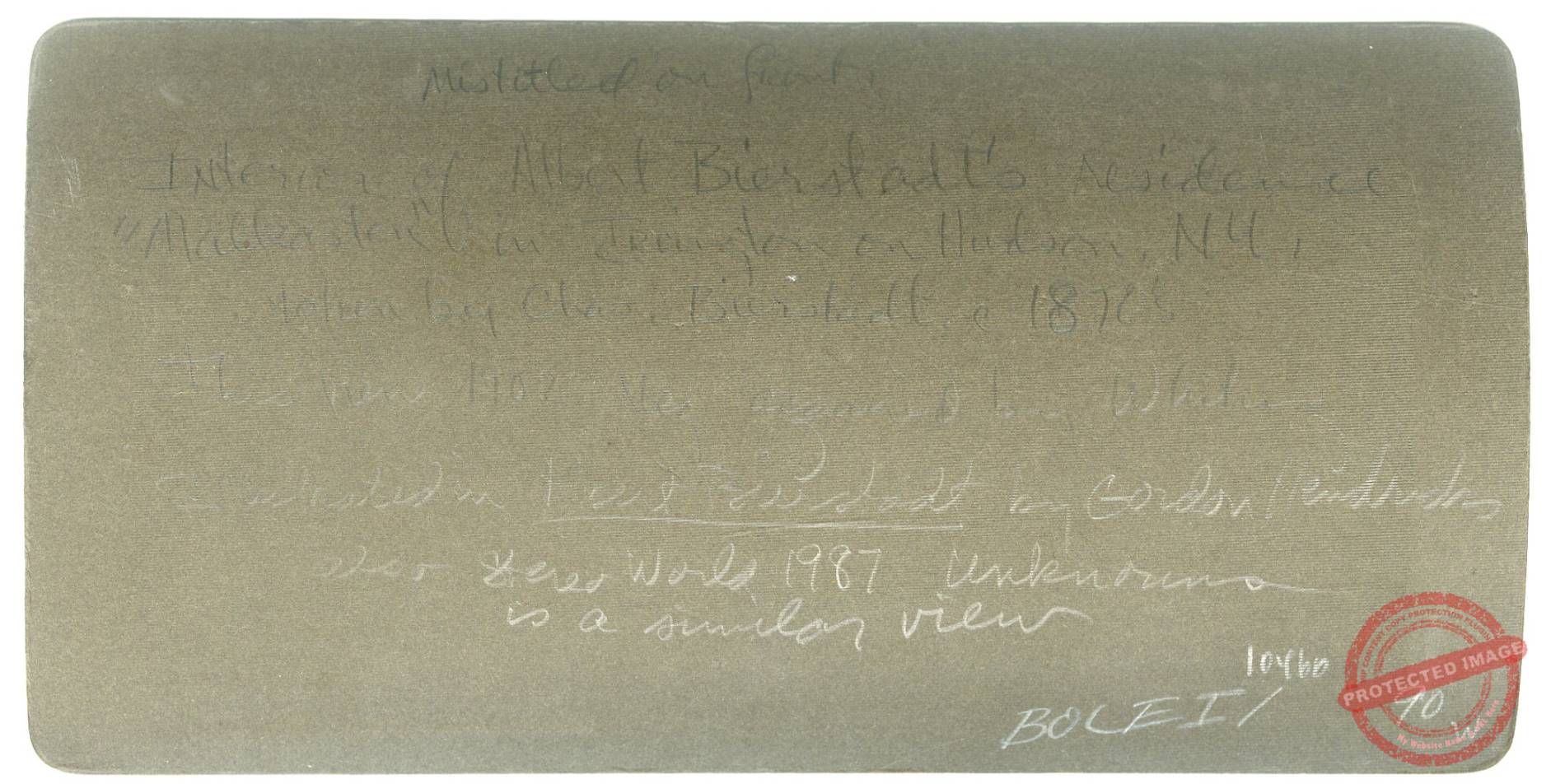
Interior of Albert Bierstadt’s residence “Malkasten” (Painter’s Box) in Irvington-on-Hudson, NY, taken by his brother, Charles Bierstadt in the 1870s. This view is a 1902 issue by Whiting View Co. The image is illustrated in the book Albert Bierstadt by Gordon Hendricks. The view is also illustrated in a 1987 Stereo World article. His studio was destroyed by fire in 1882, along with many of the items shown in the picture.
J.N. Arnold, Portrait Painter–Painting his own Boy’s likeness.
Painter en plein air.