Bridges, Tunnels

12286.

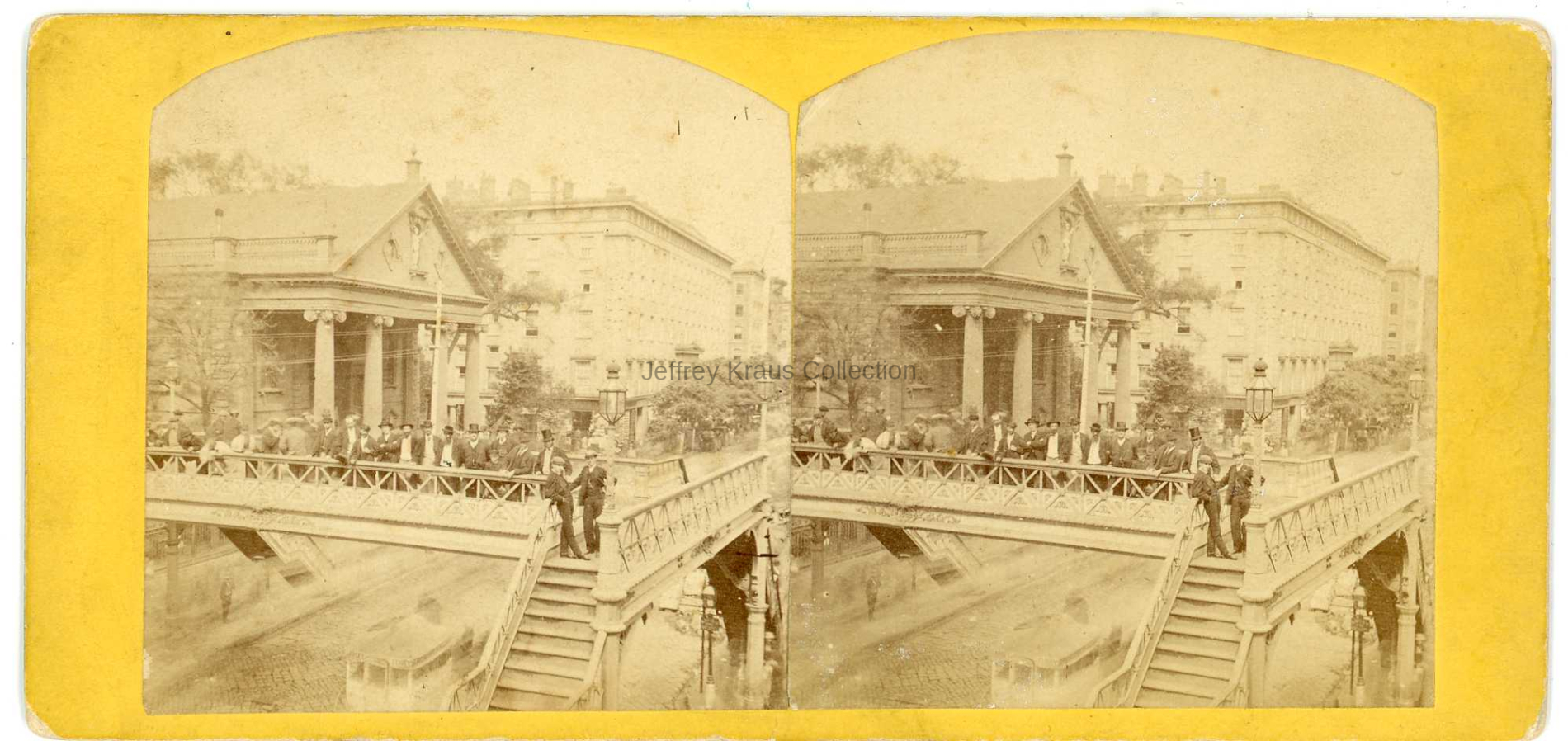
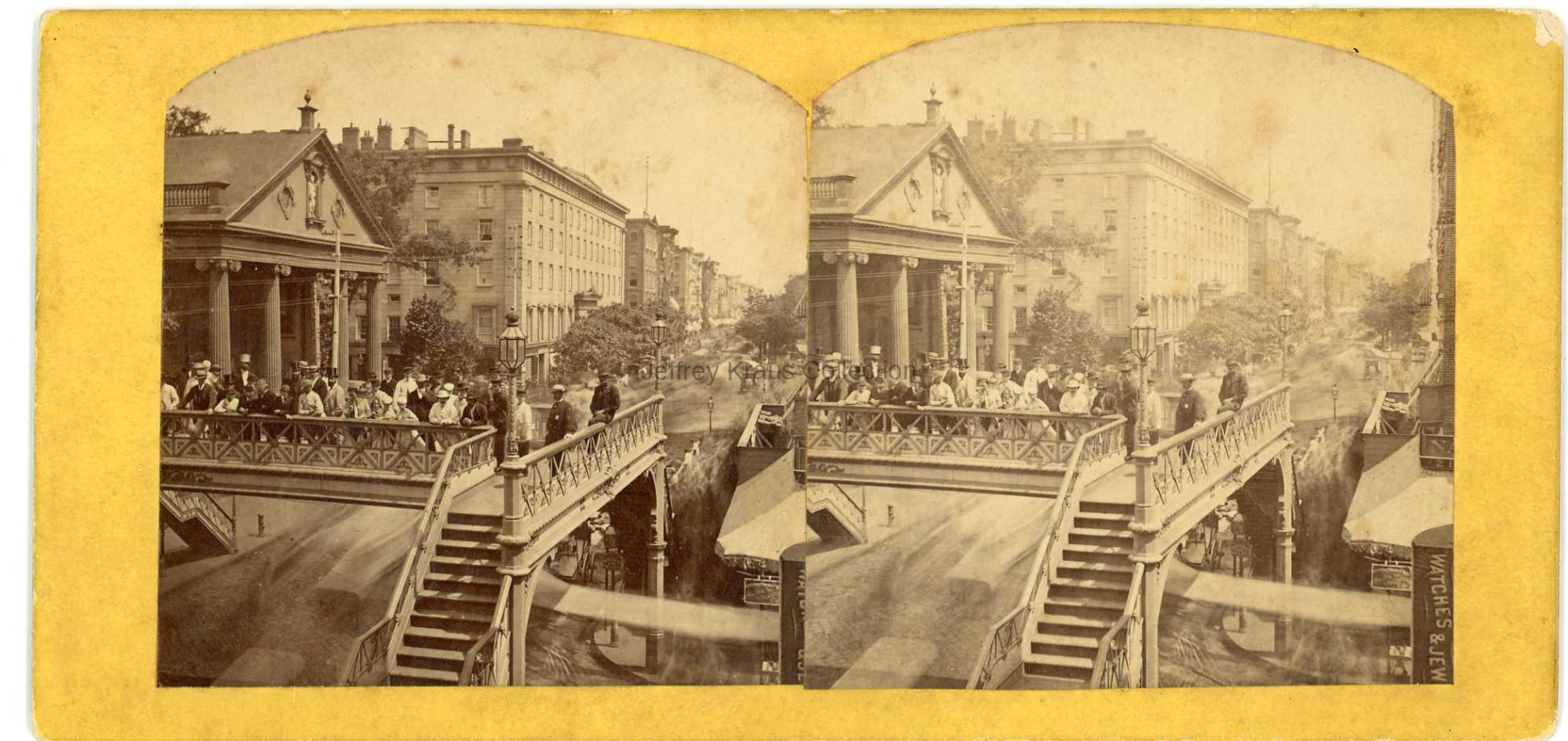
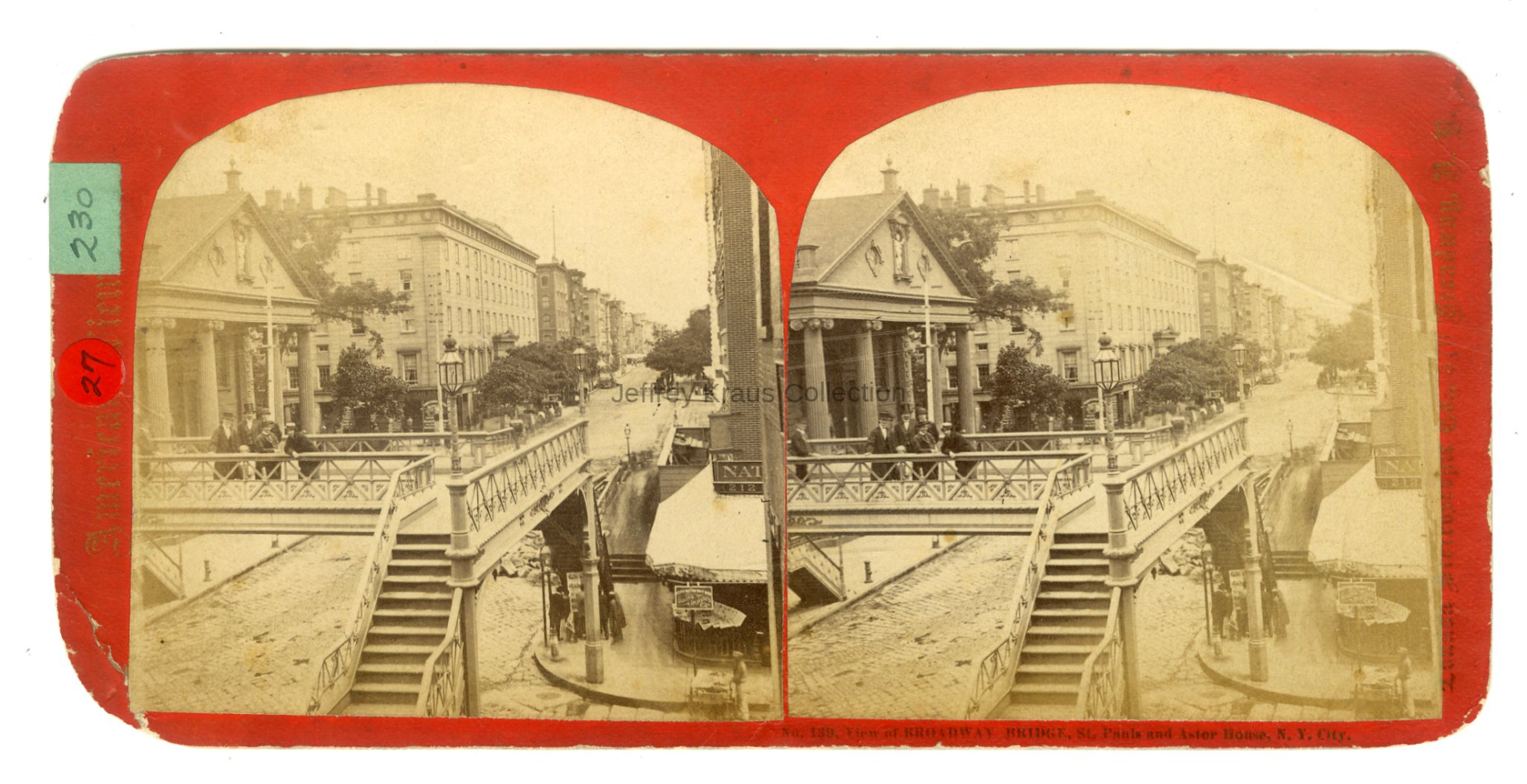
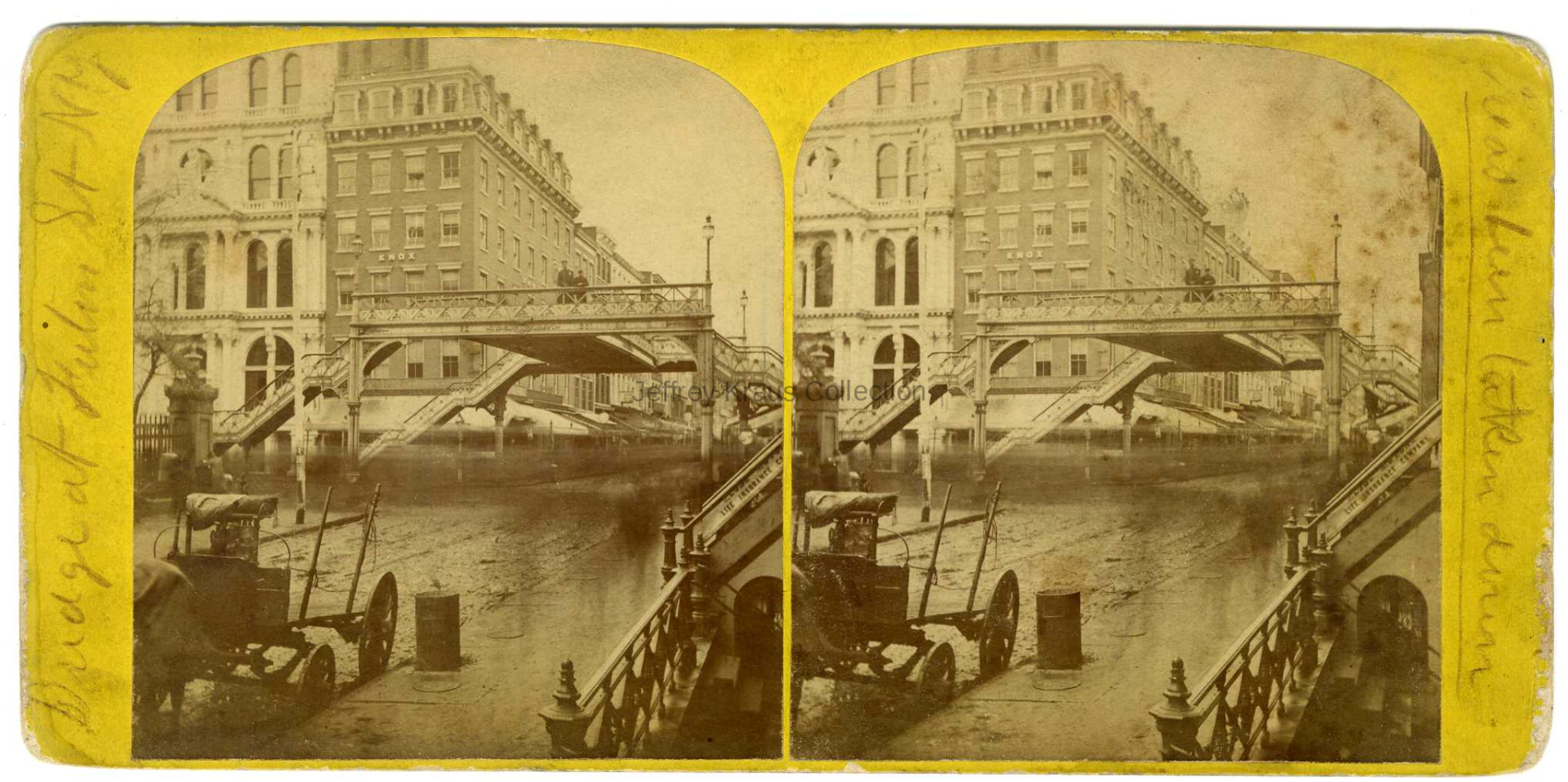
No. 163. Fulton Street Bridge. Written in left and right margins is “Bridge at Fulton St. NY, has been taken down.” Here is the story of the short life of this bridge: There was awful gridlock on Broadway in the 1860s with two-way traffic, no marked lanes and no lights. “It is always a difficult matter for a pedestrian to cross the lower part of Broadway in the busy season. Ladies, old persons, and children find it impossible to do so without the aid of police, whose duty it is to make a passage for them through the crowd of vehicles.” To make this stretch of Broadway safer for pedestrians—and of course, encourage more foot traffic to his shop—a well-known hatter named John Genin, whose store sat on the southwest corner of Broadway and Fulton Street, pressured the city to build a crossing steps from his door. He’d dreamed of a footbridge here since the 1850s and drew up designs too. In 1866, the fanciful Loew Bridge, named after city politico Charles Loew, opened. New Yorkers used the lacy, elegant bridge to get across the street as well as take in the view. Genin must have been happy. But another hatter on the northeast corner of Broadway and Fulton, Charles Knox, was not. Shadows cast by the bridge put Knox’s shop in darkness, and he was convinced he was losing sales. He and a group of hatters from his side of Broadway sued the city, forcing city officials to tear it down. Loew Bridge only lasted a year, undone by a fierce business rivalry in an industry that barely exists in the New York of today.
12287.

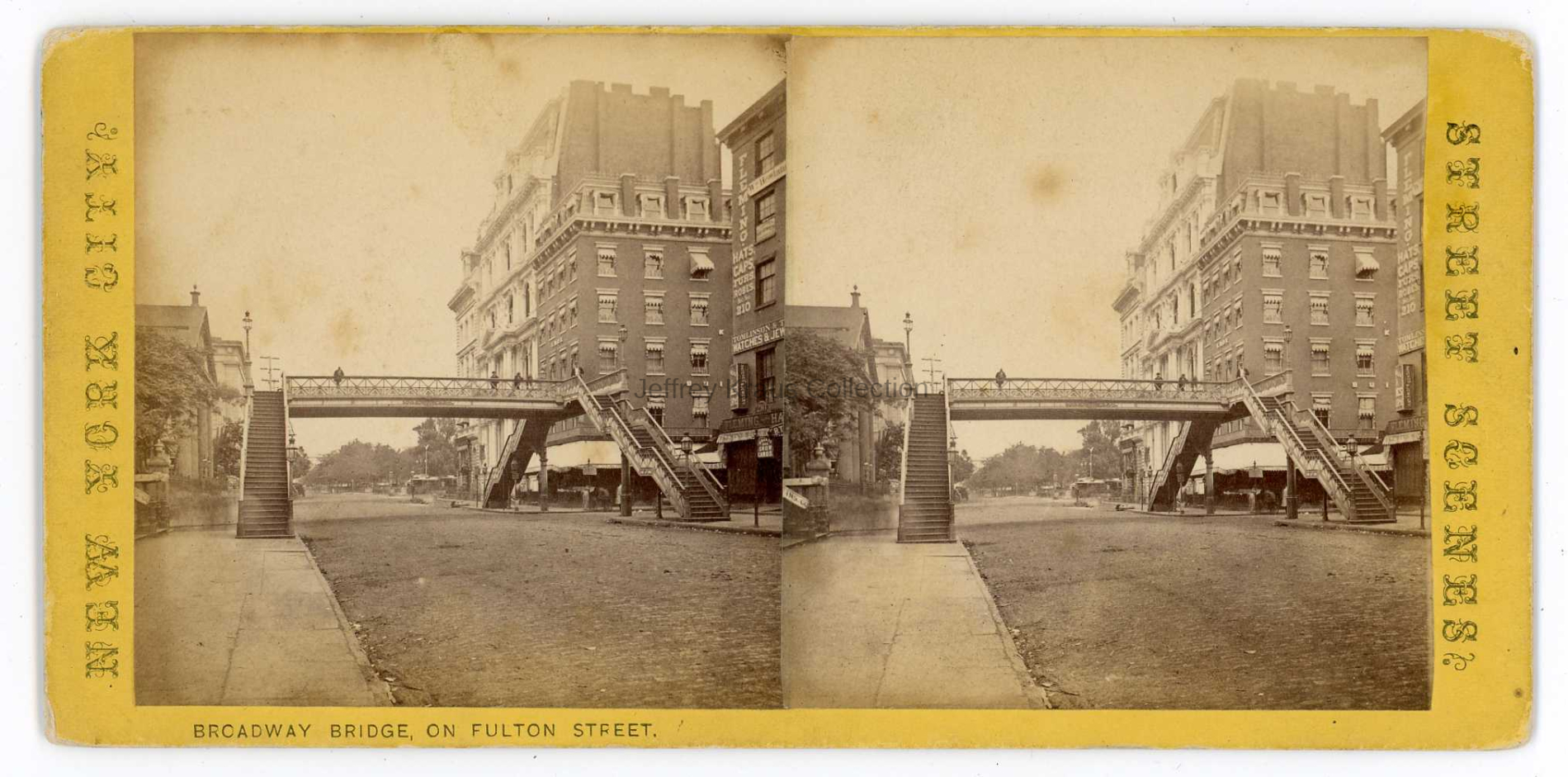
Broadway Bridge on Fulton Street.

12317.

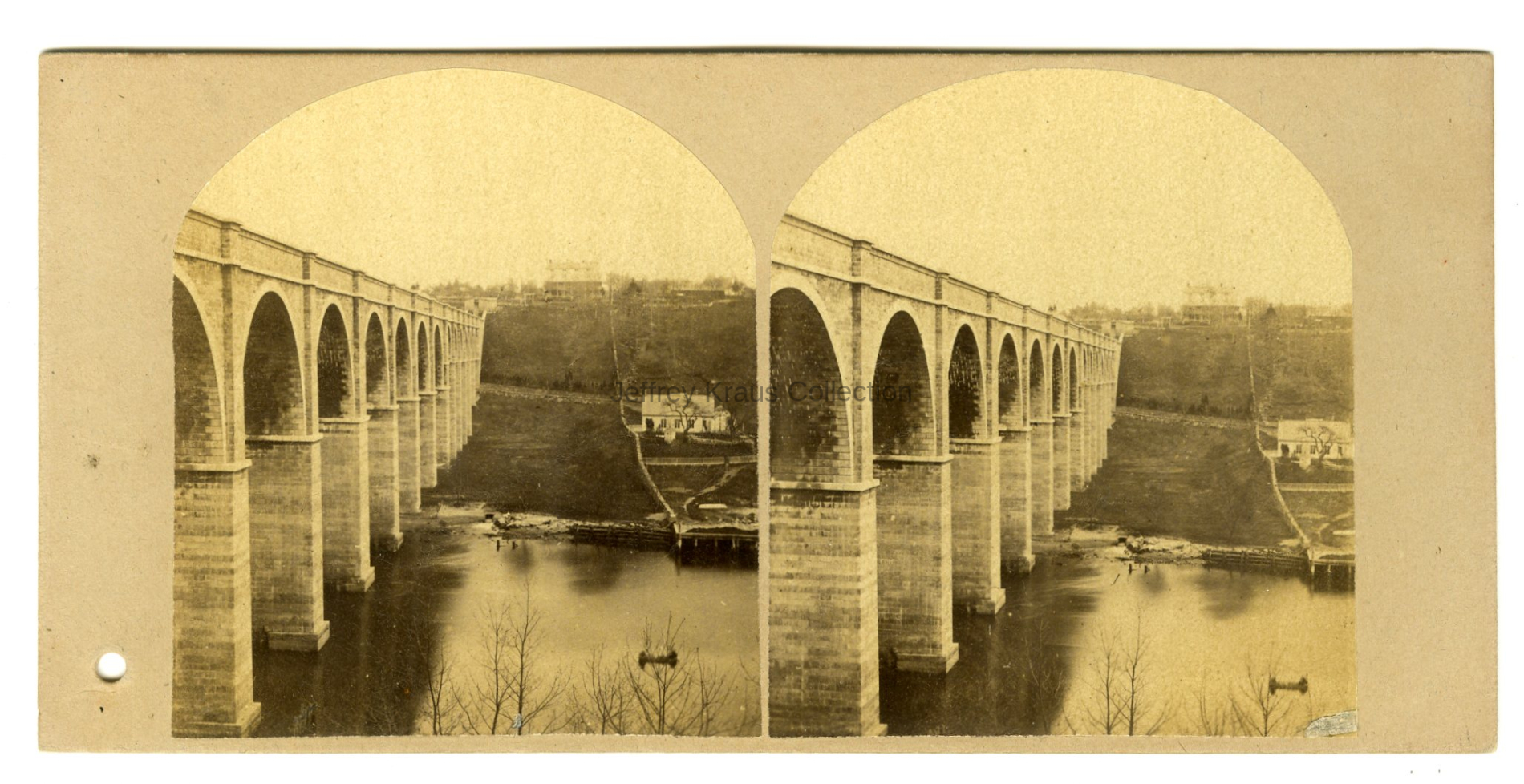
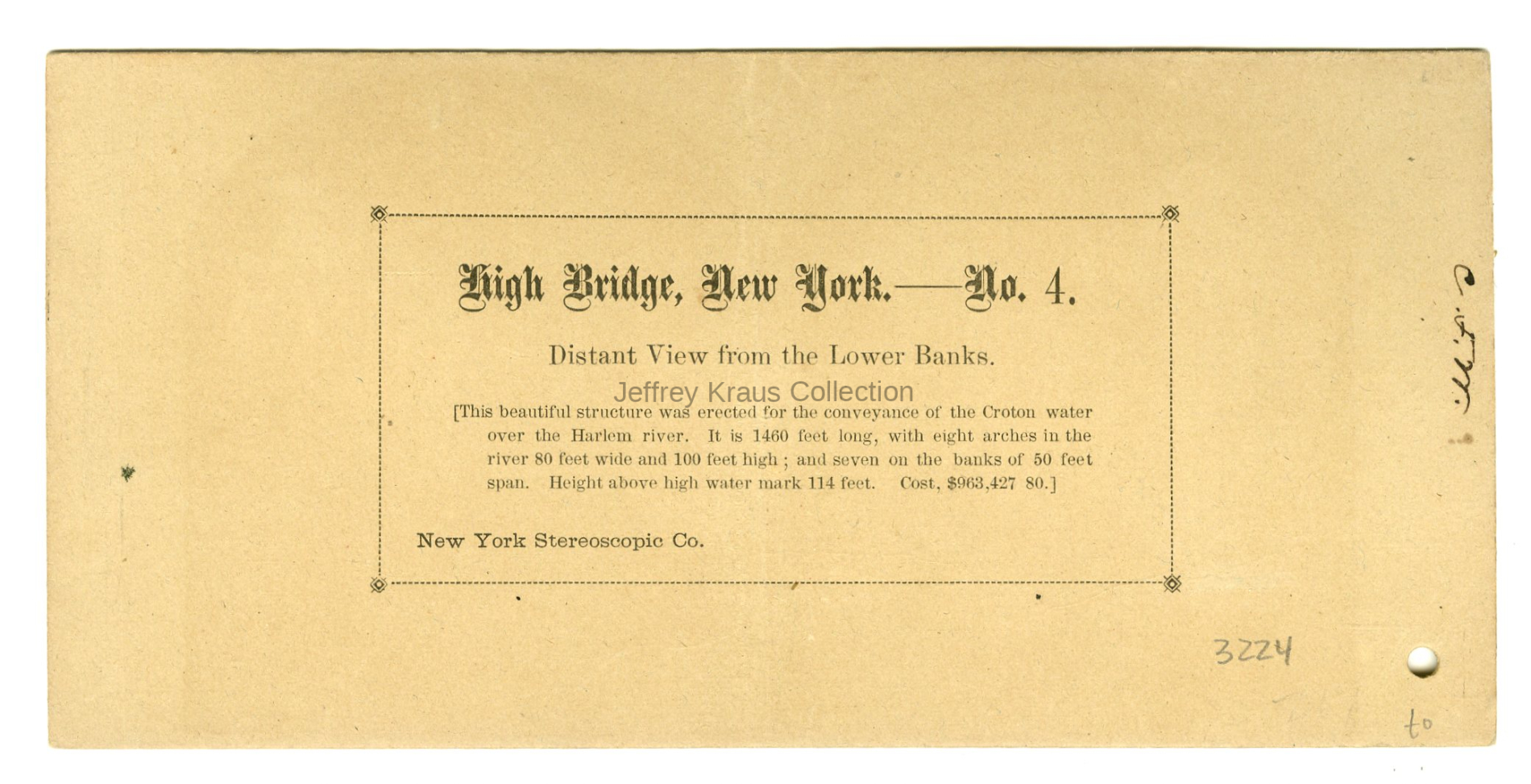
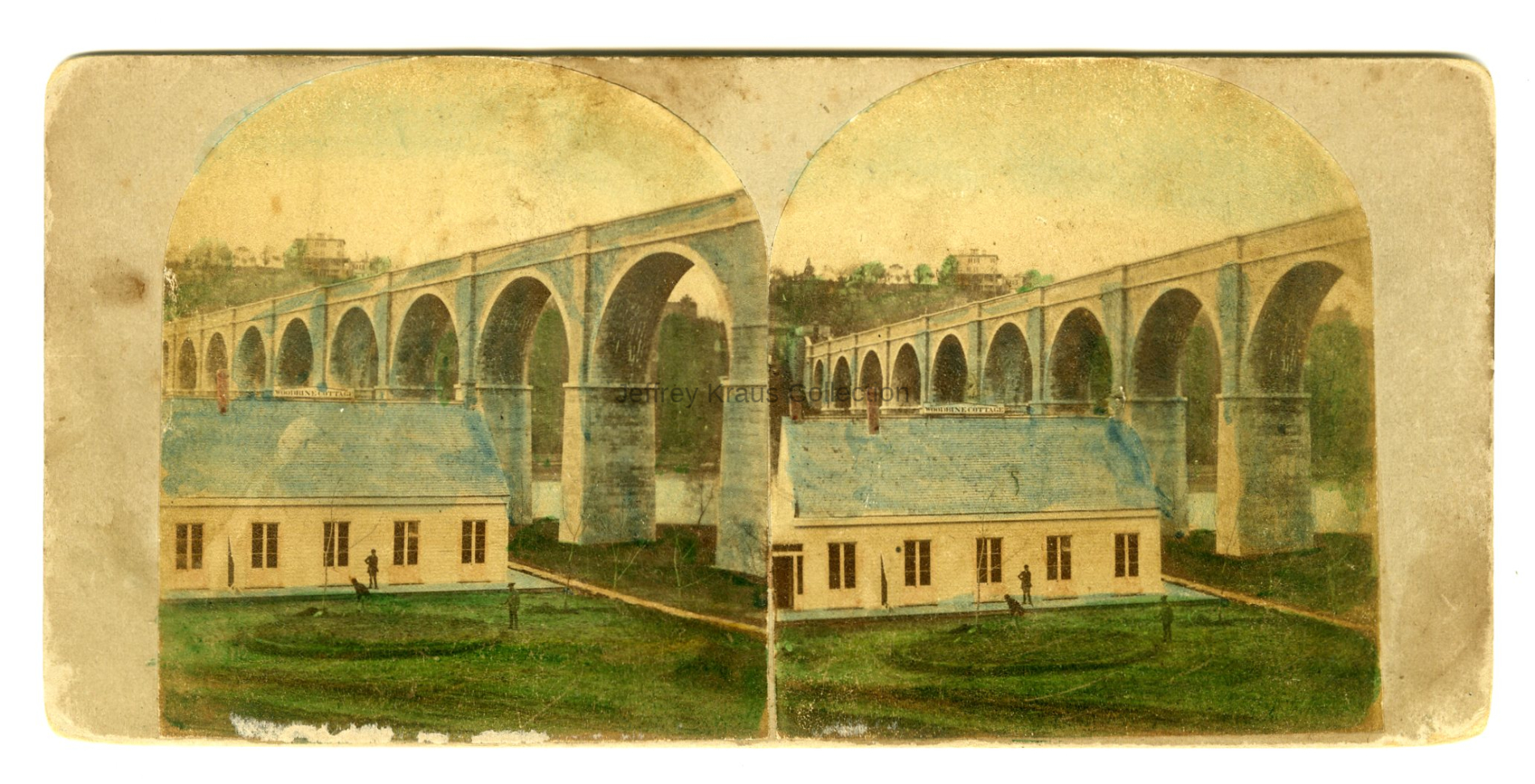
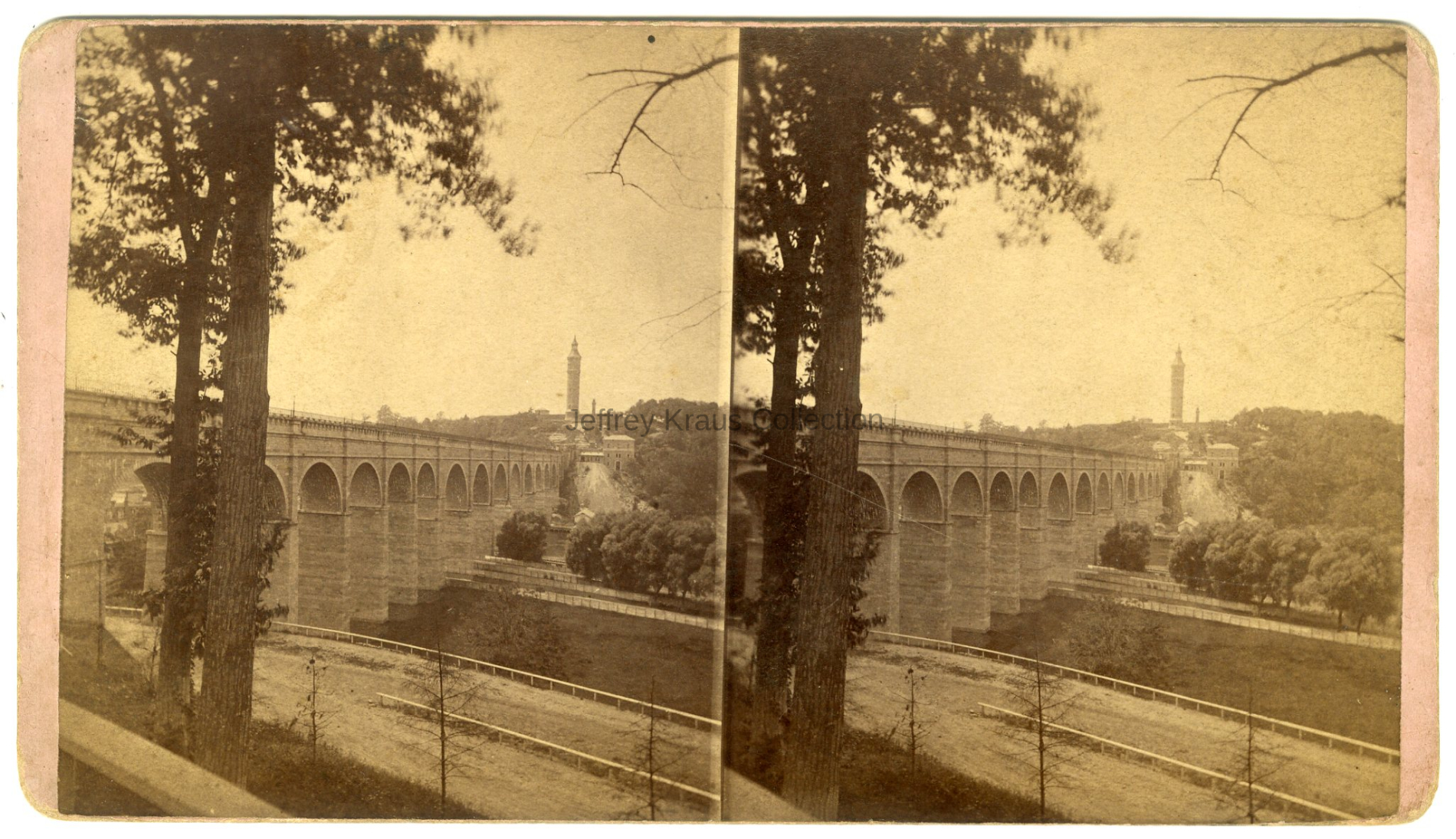
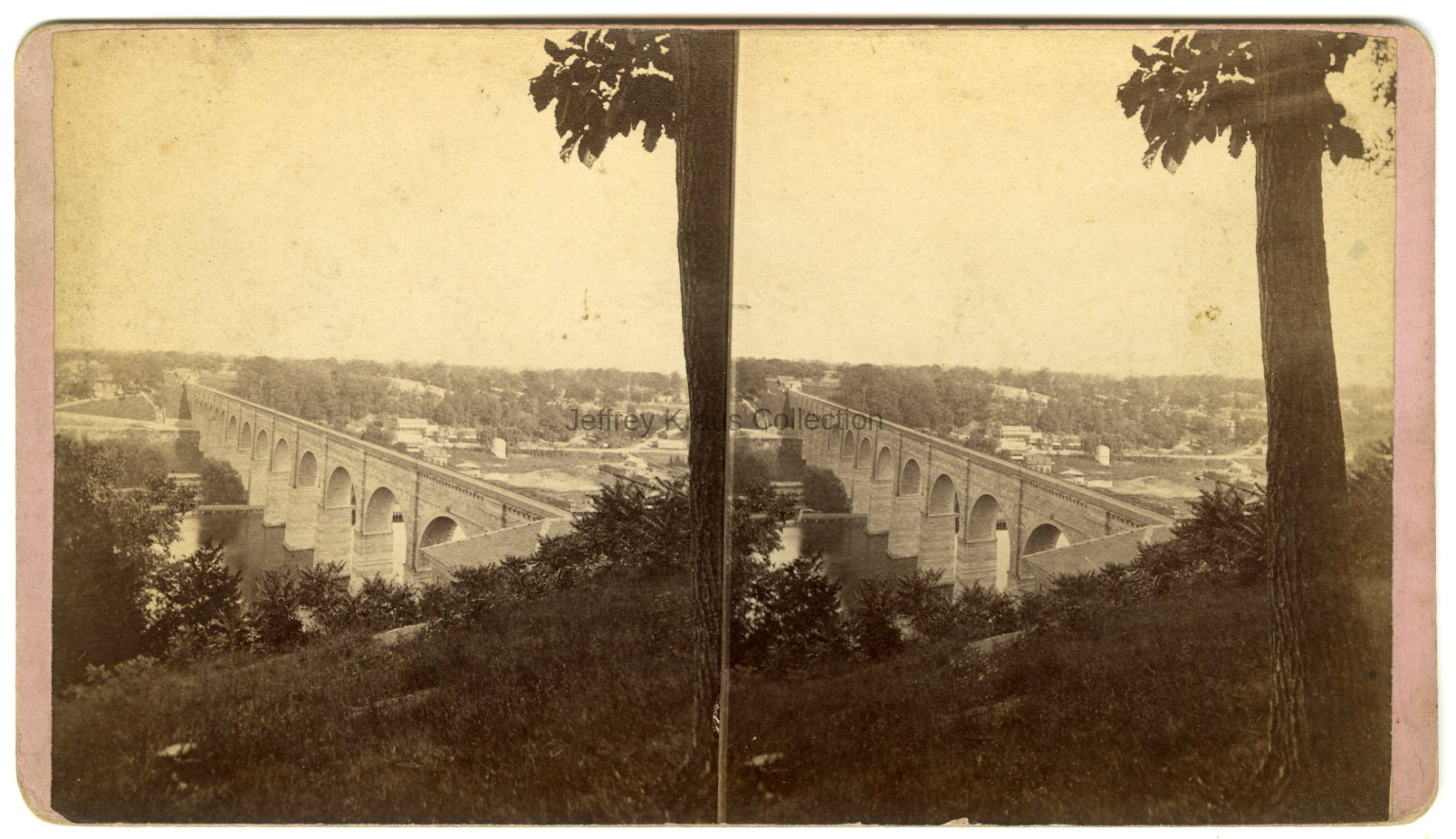
High Bridge, New York.–No. 4. Distant View from the Lower Banks.

12318.

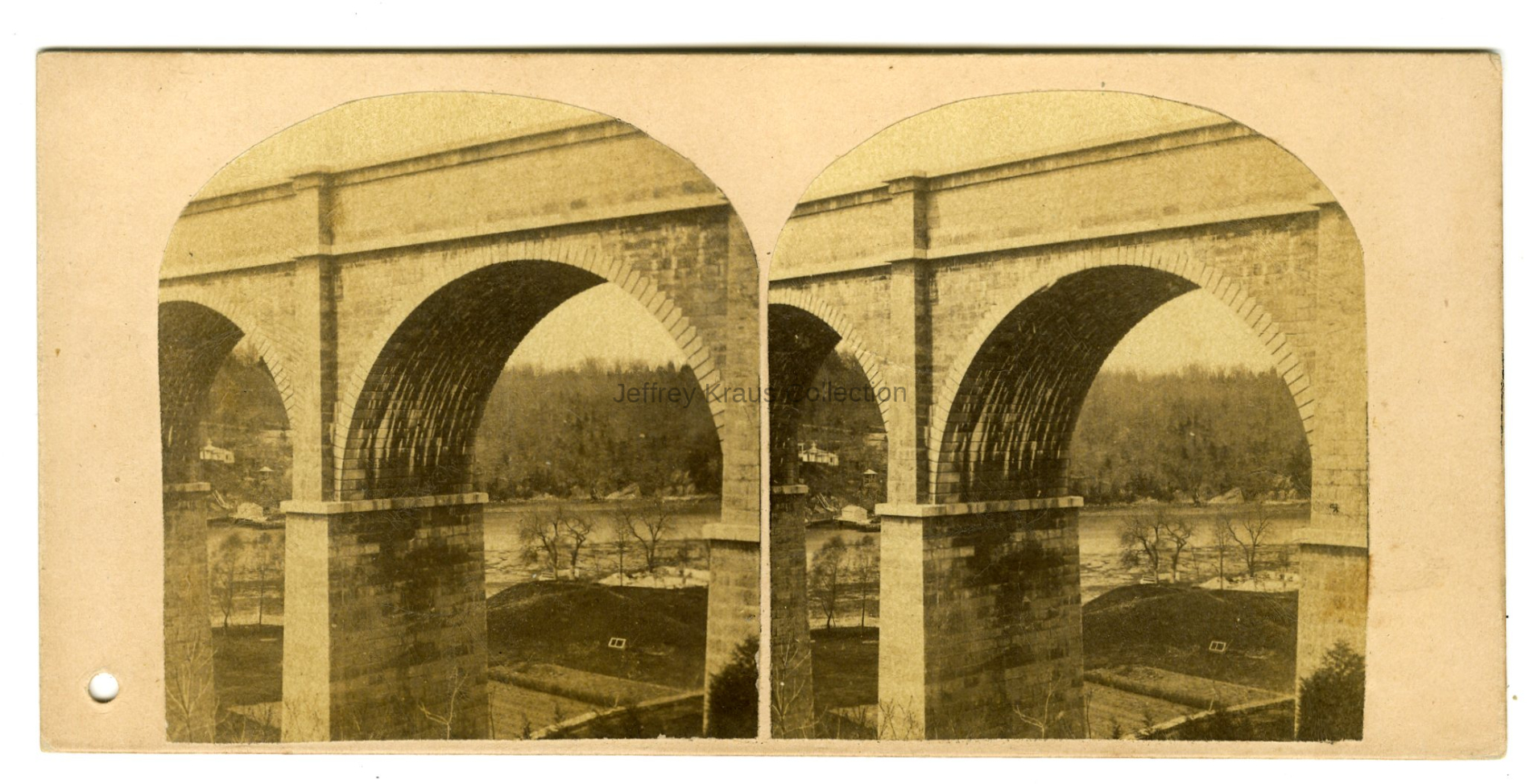
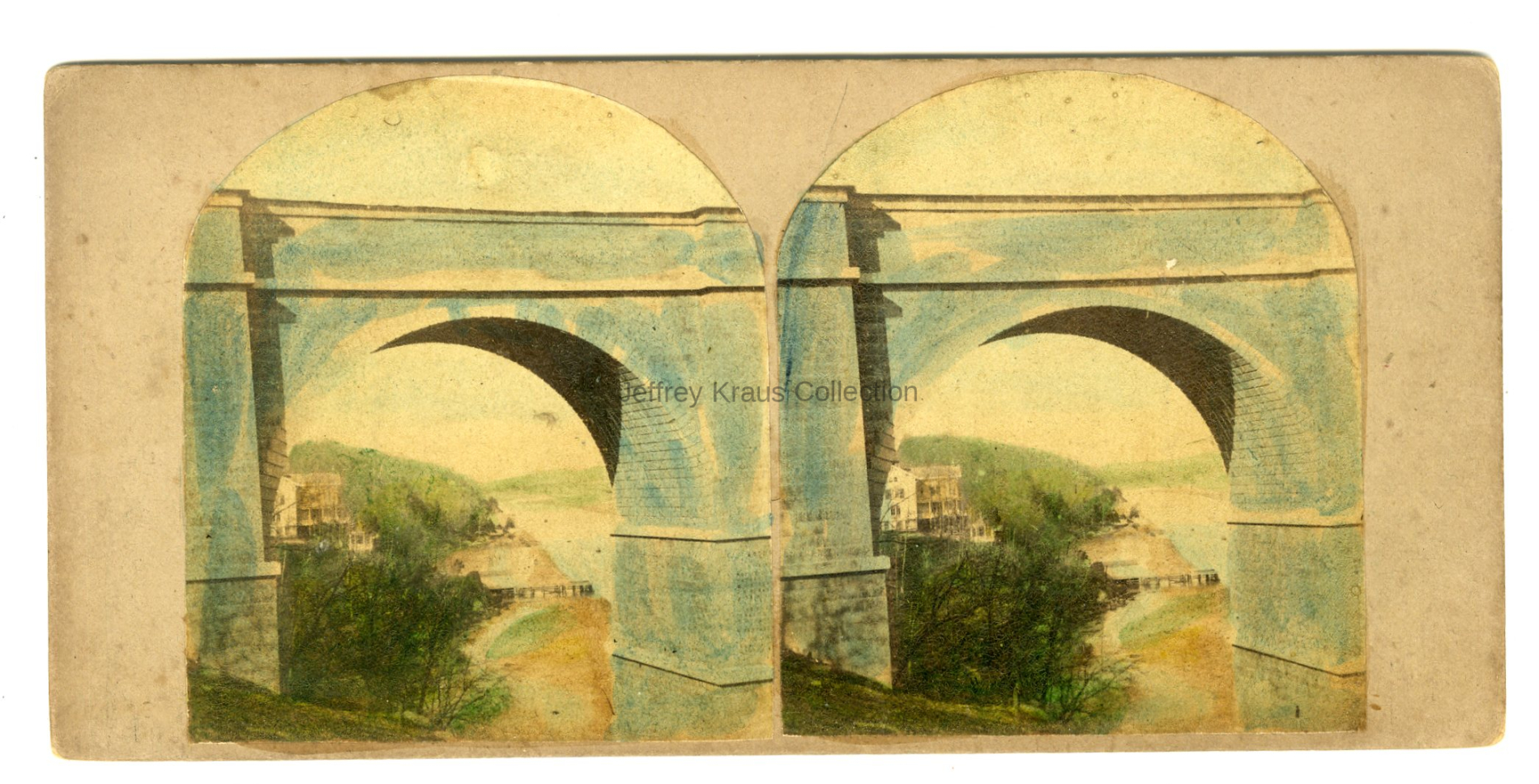
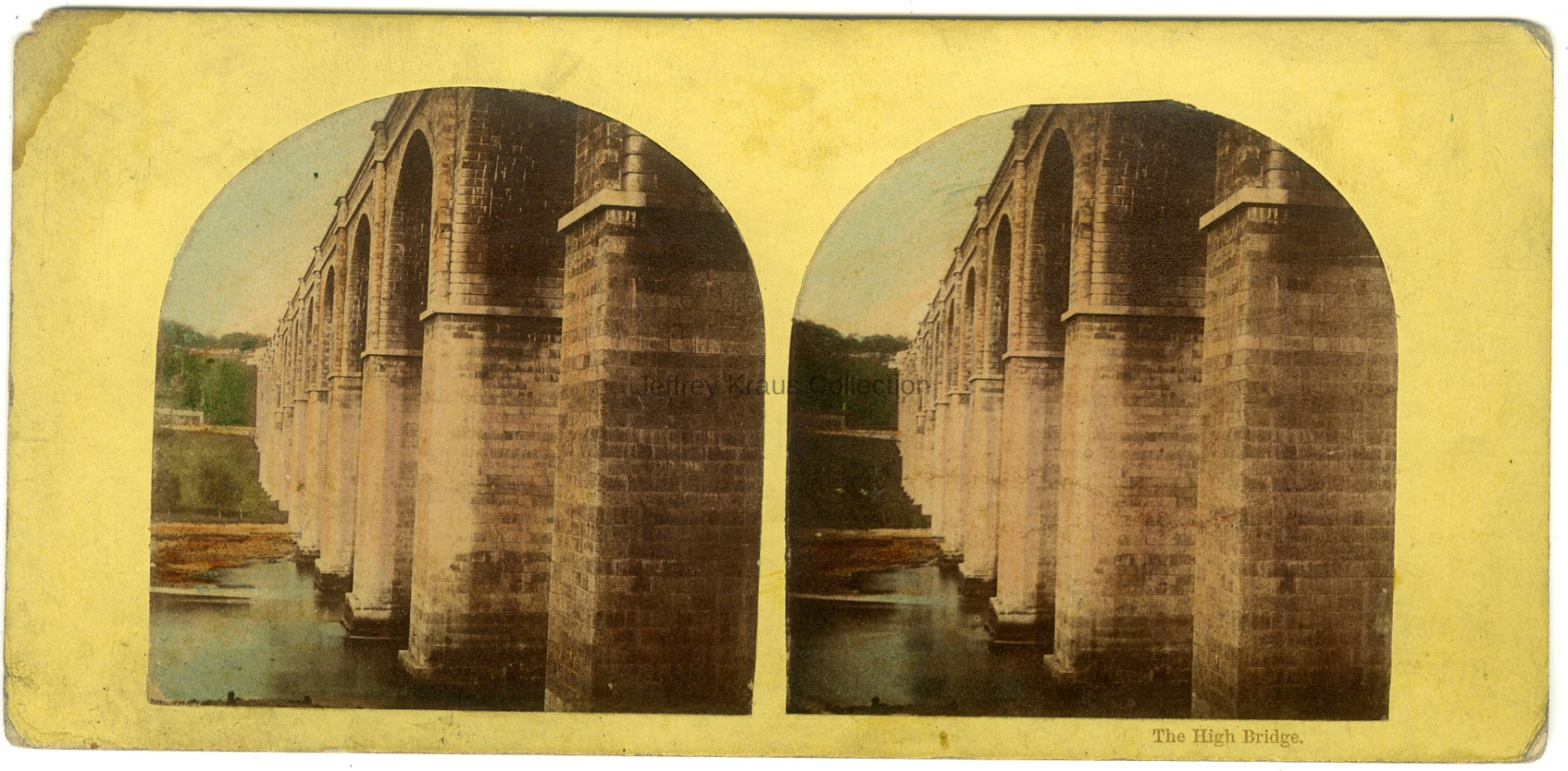
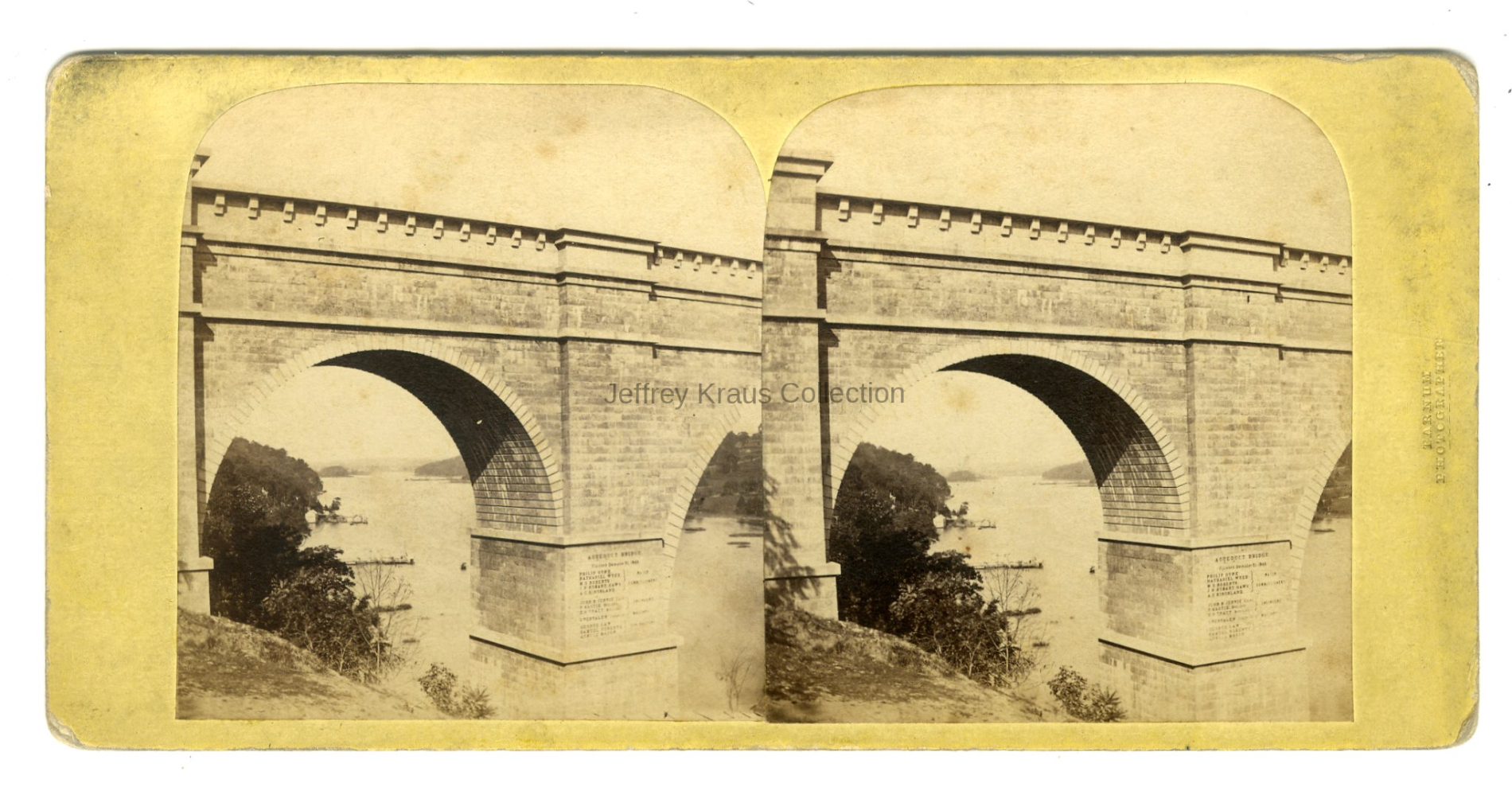
High Bridge, New York. View of Harlem River, through one of the Arches.

12319.

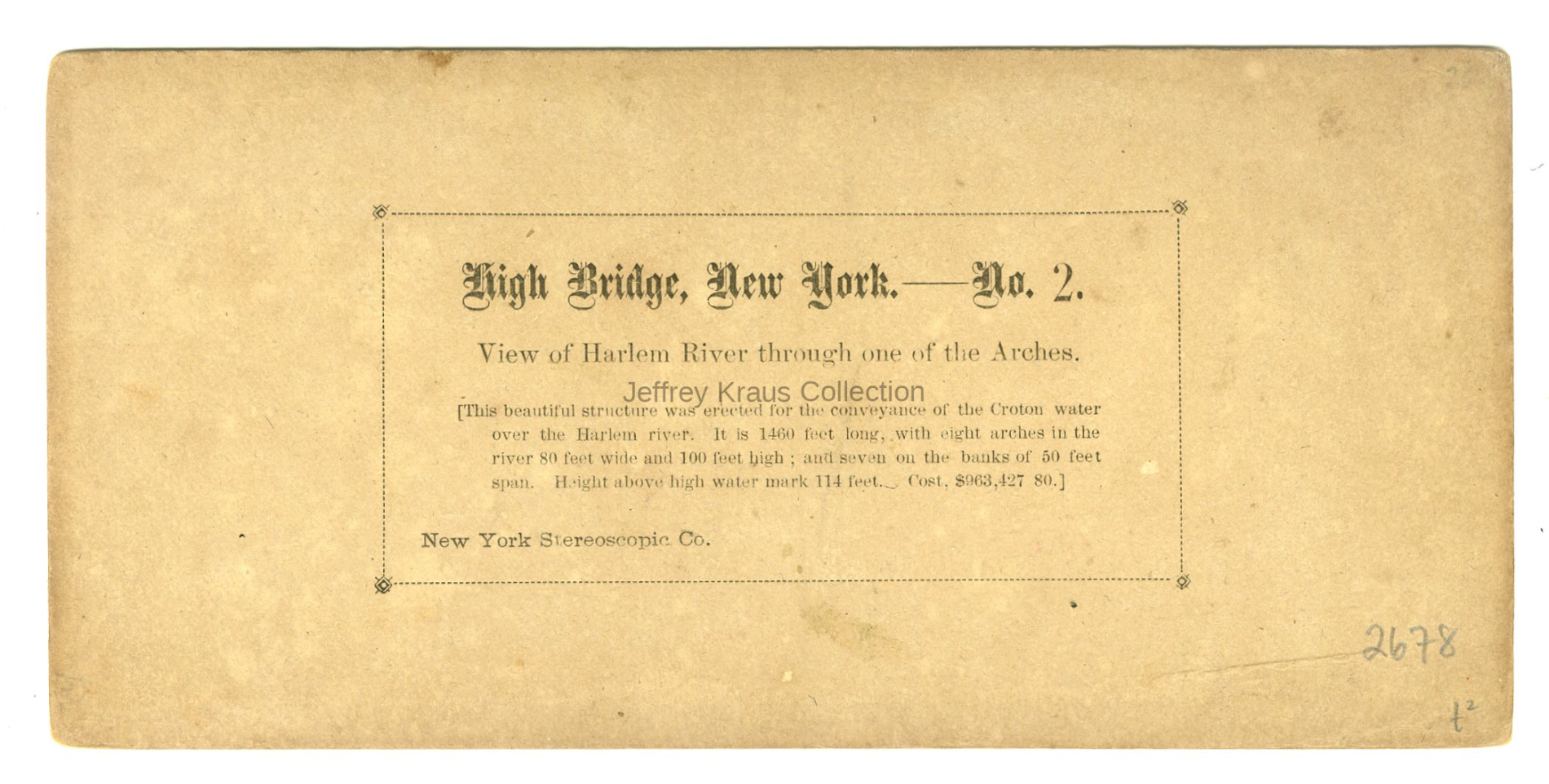
High Bridge, New York.–No. 2. View of Harlem River through one of the Arches.

12320.

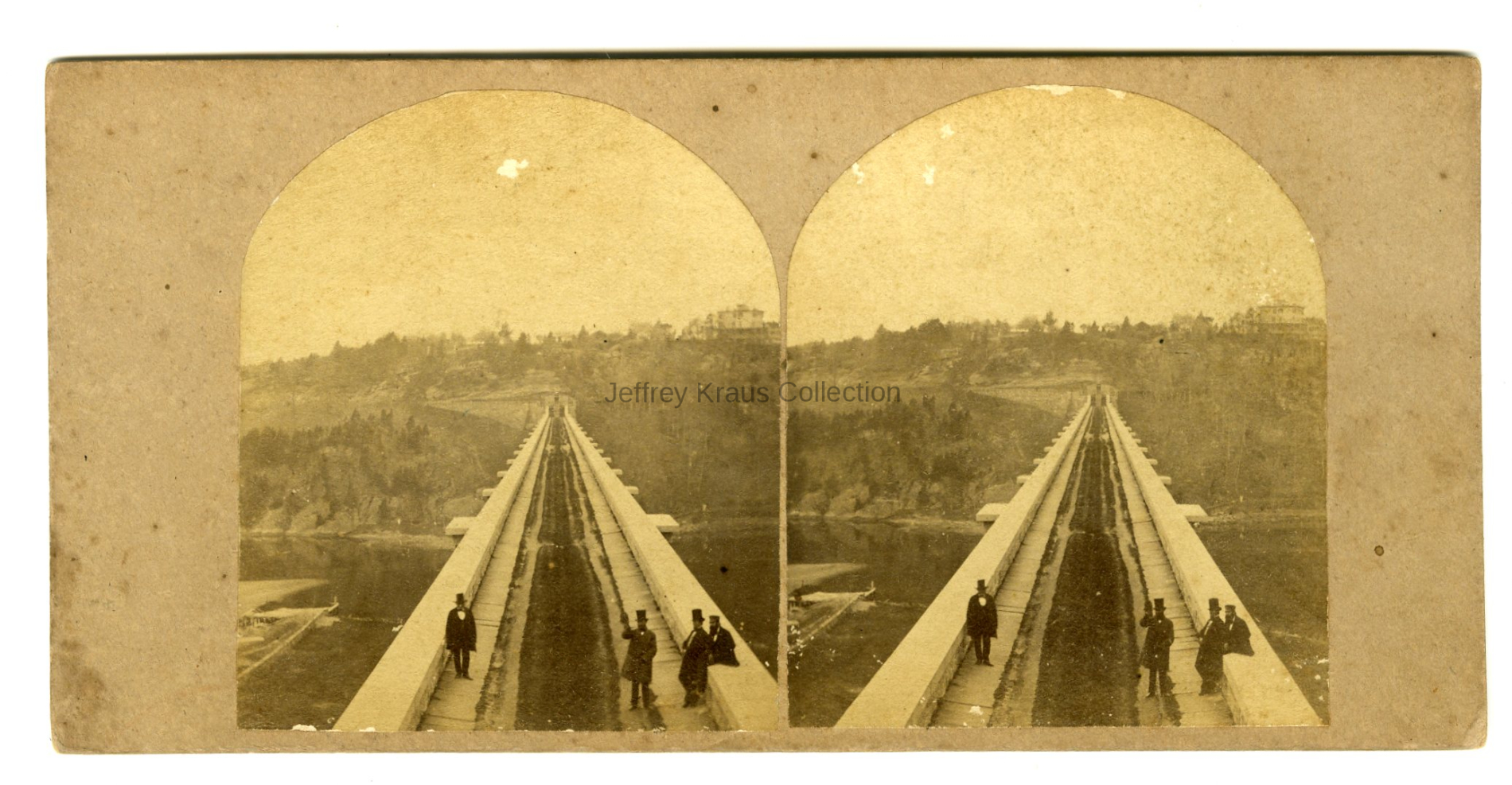
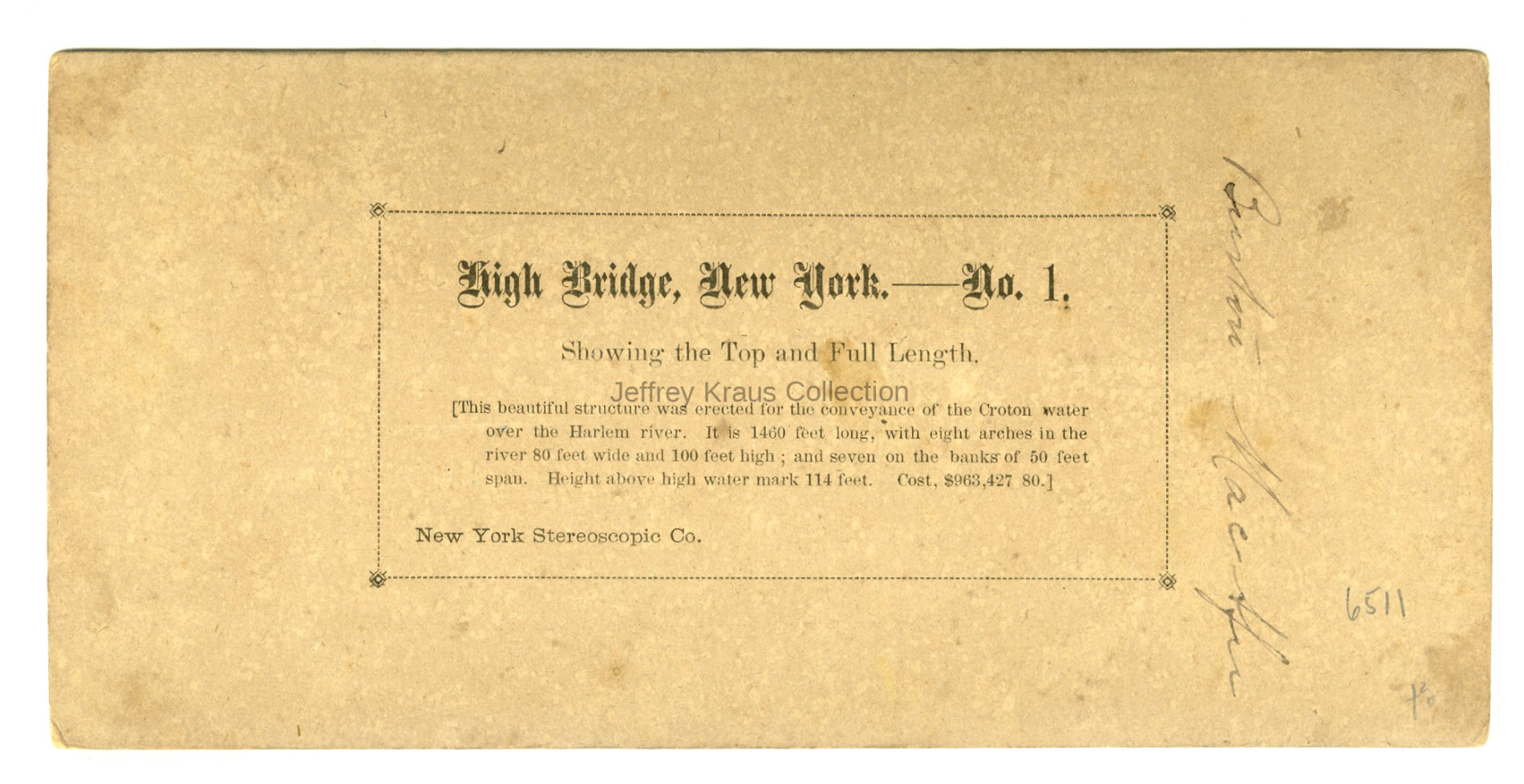
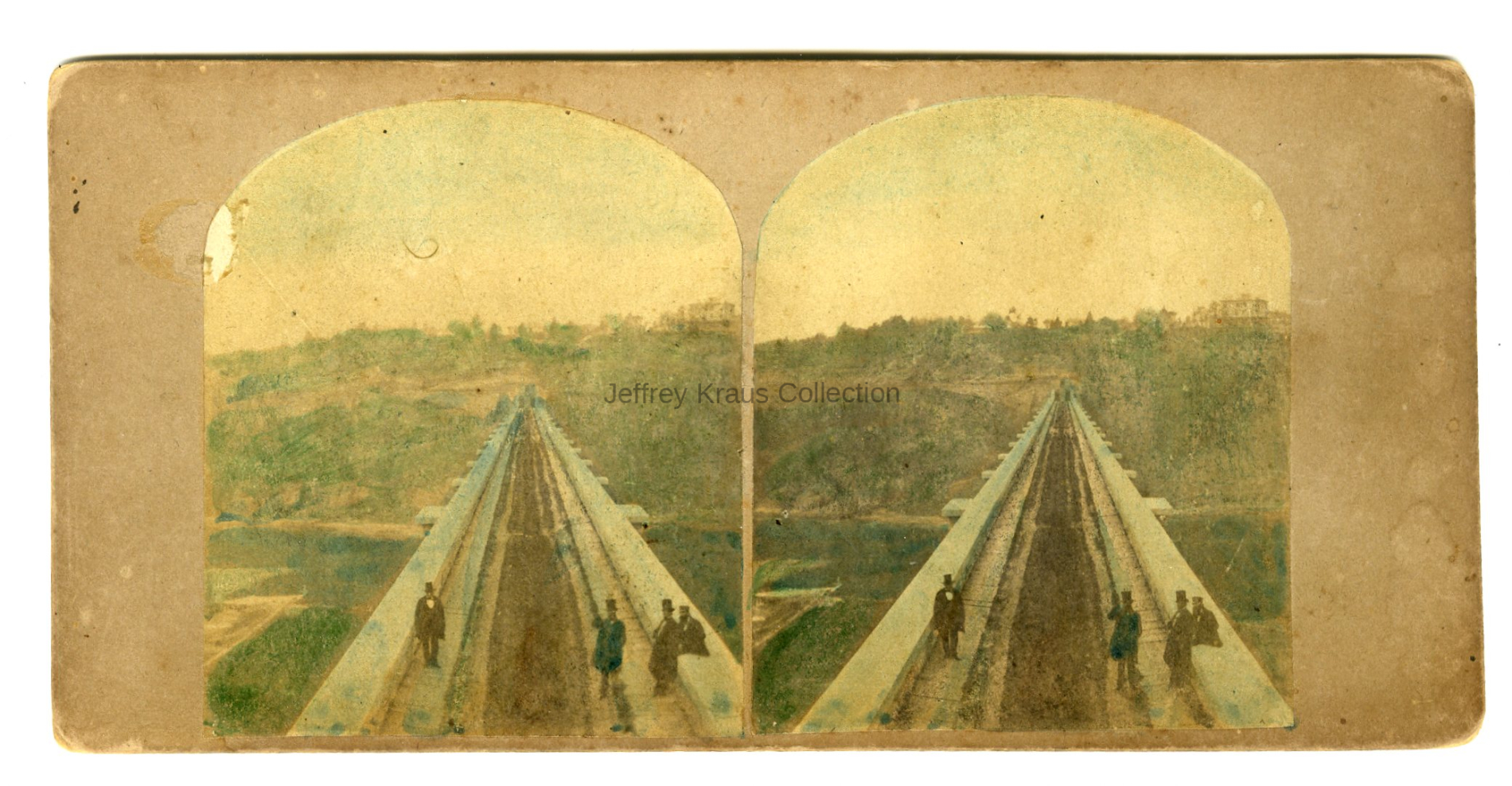
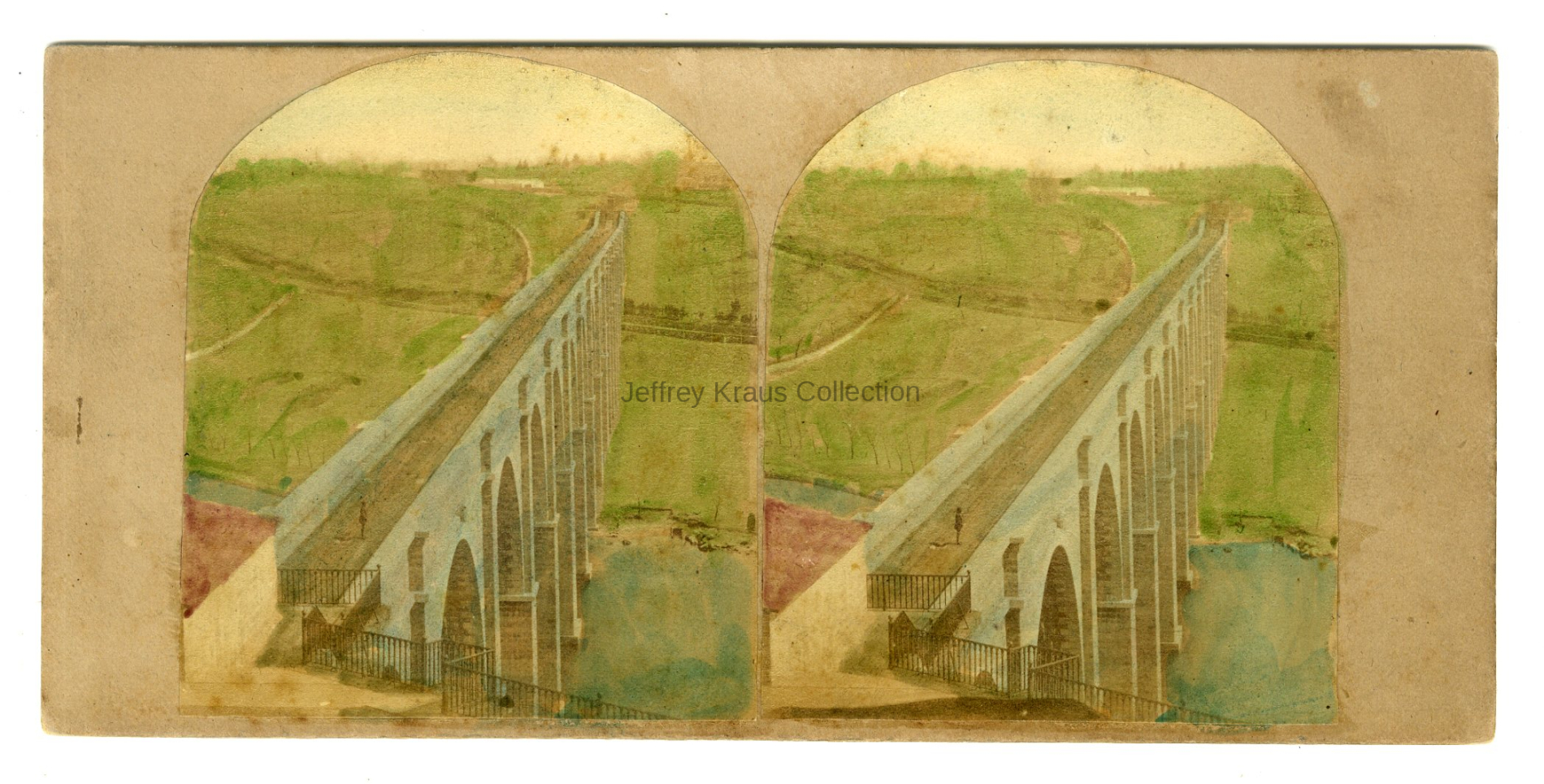
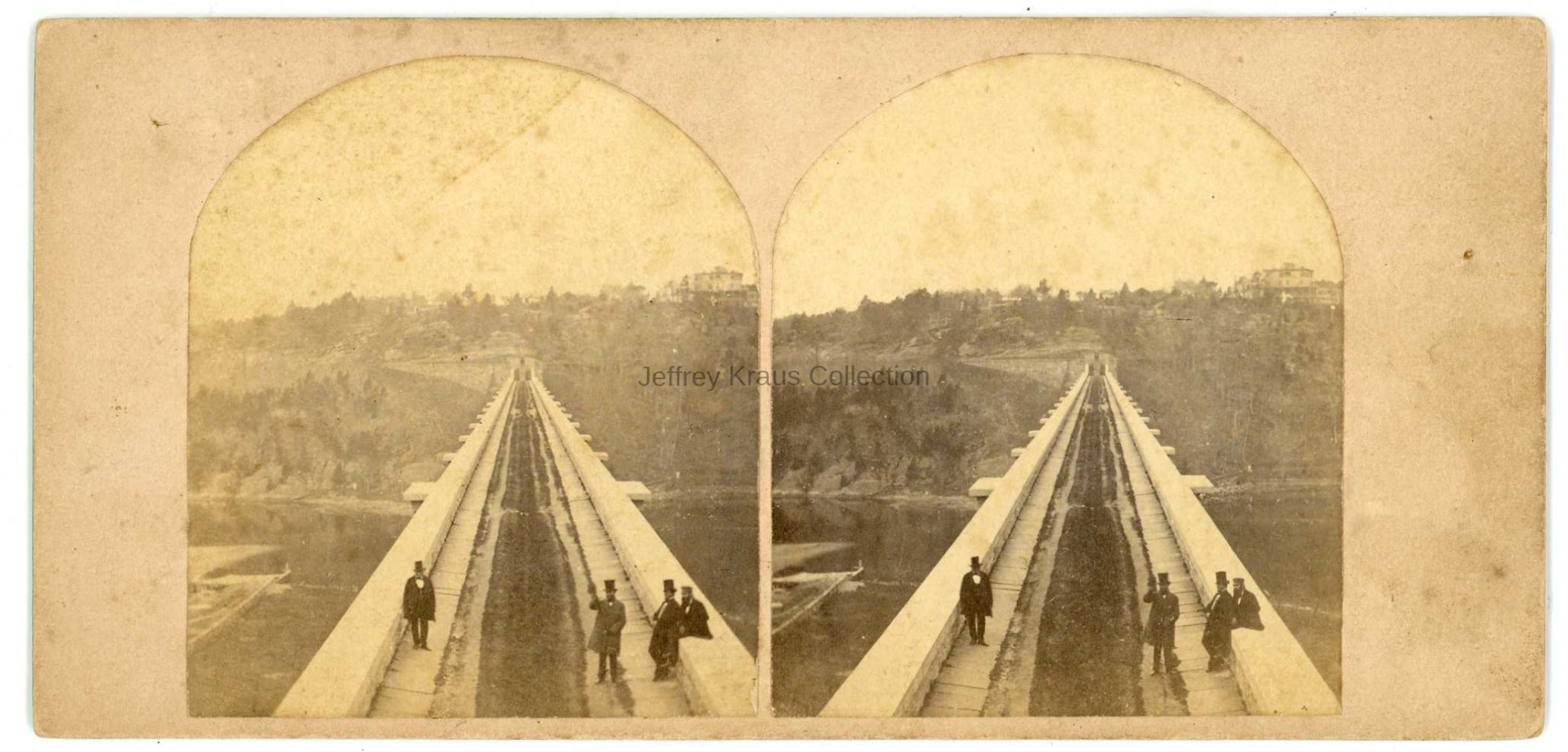
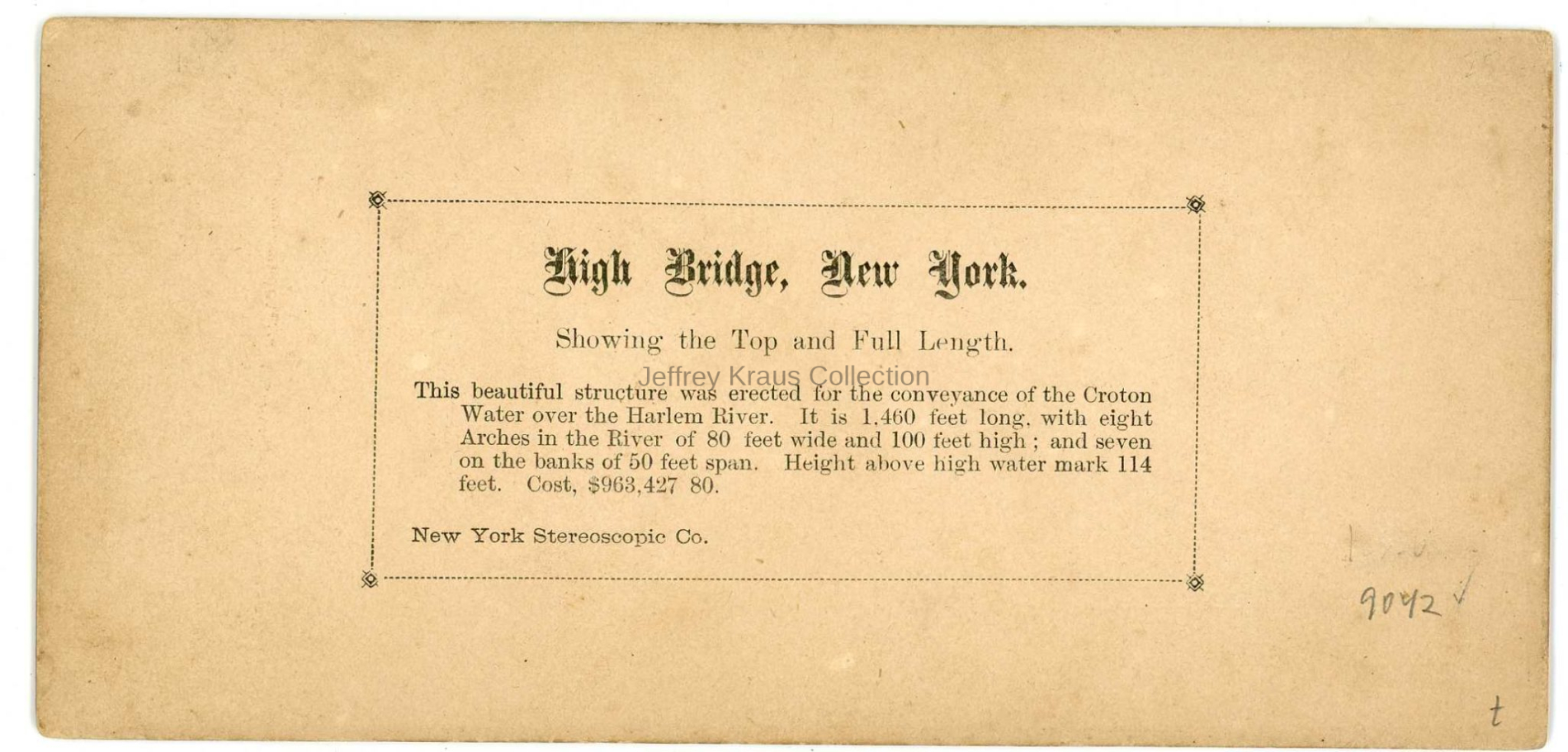
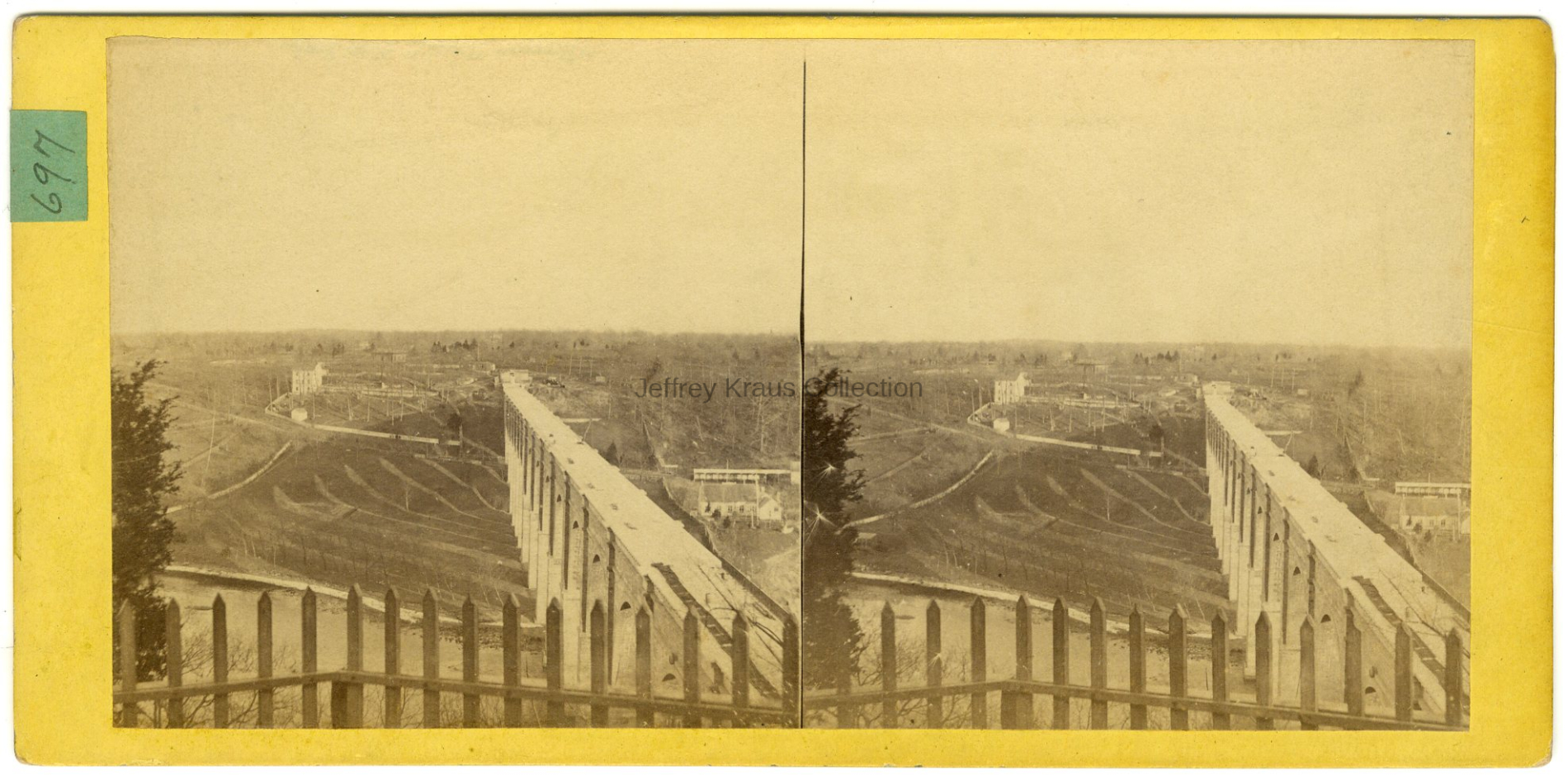
High Bridge, New York.–No. 1. Showing the Top and Full Length.

12321.

High Bridge, New York.–No. 1. Showing the Top and Full Length.

12322.

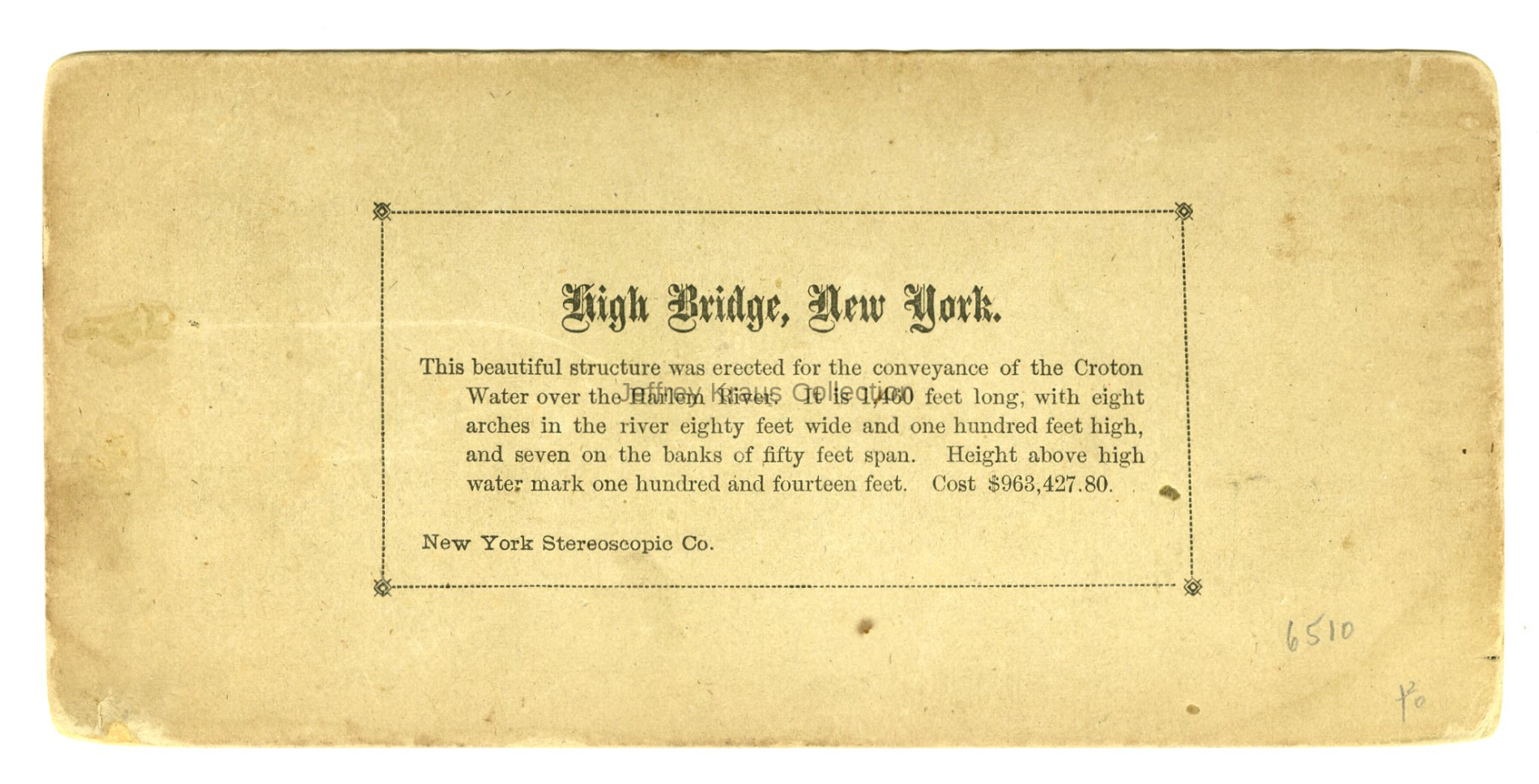
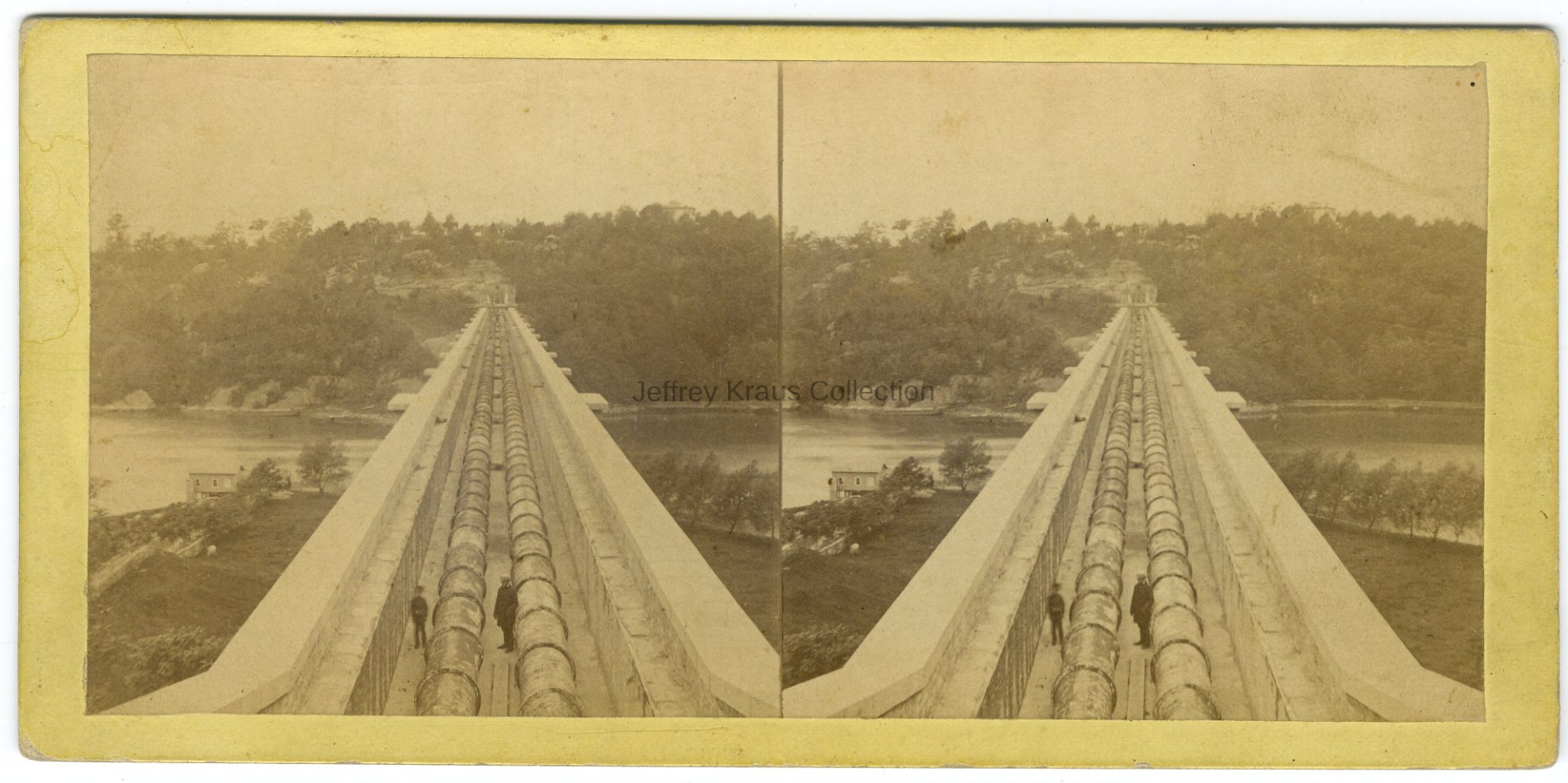
High Bridge, New York.

12323.

High Bridge, New York. –No. 1. Showing the Top and Full Length.

12324.

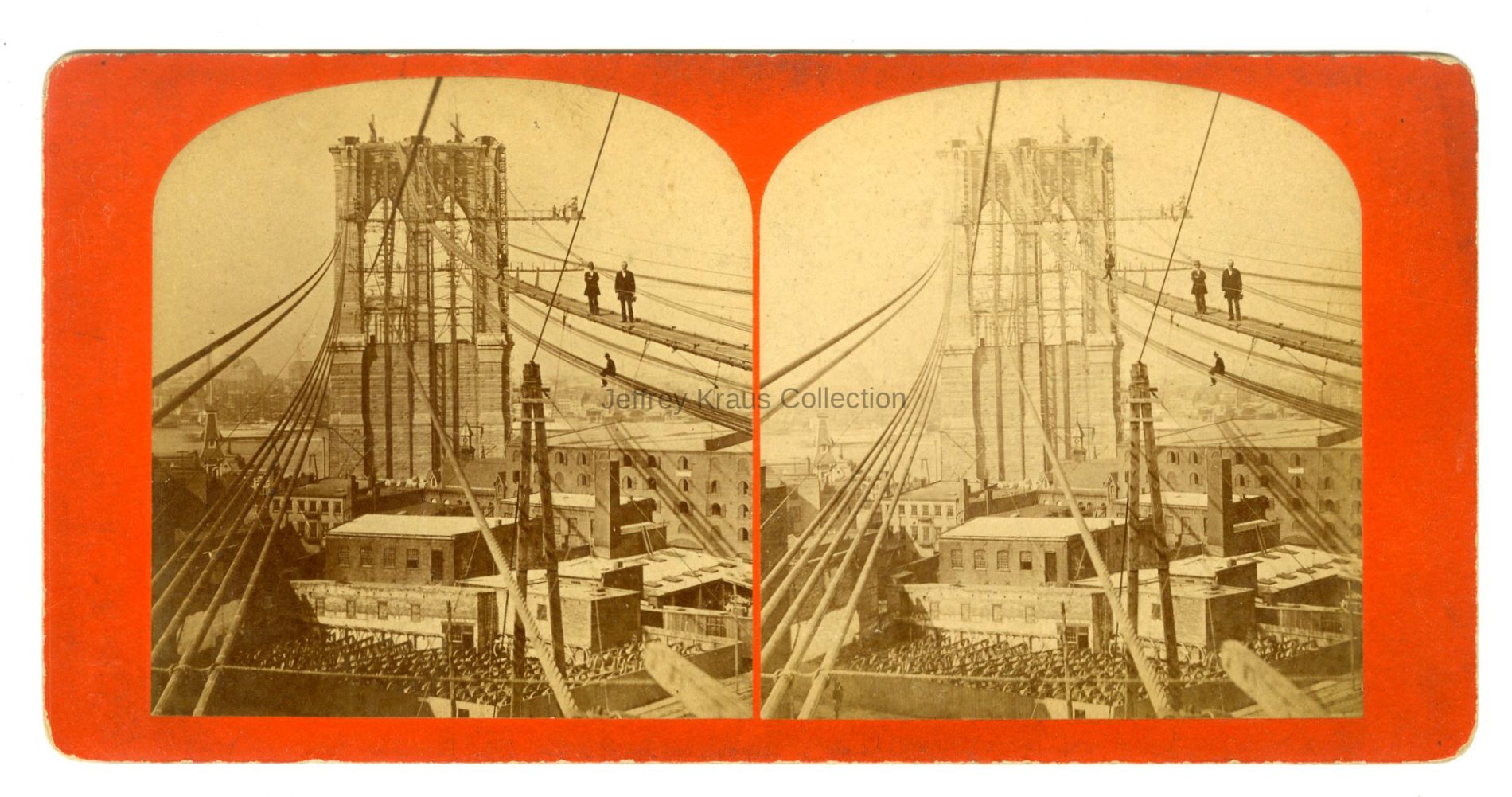
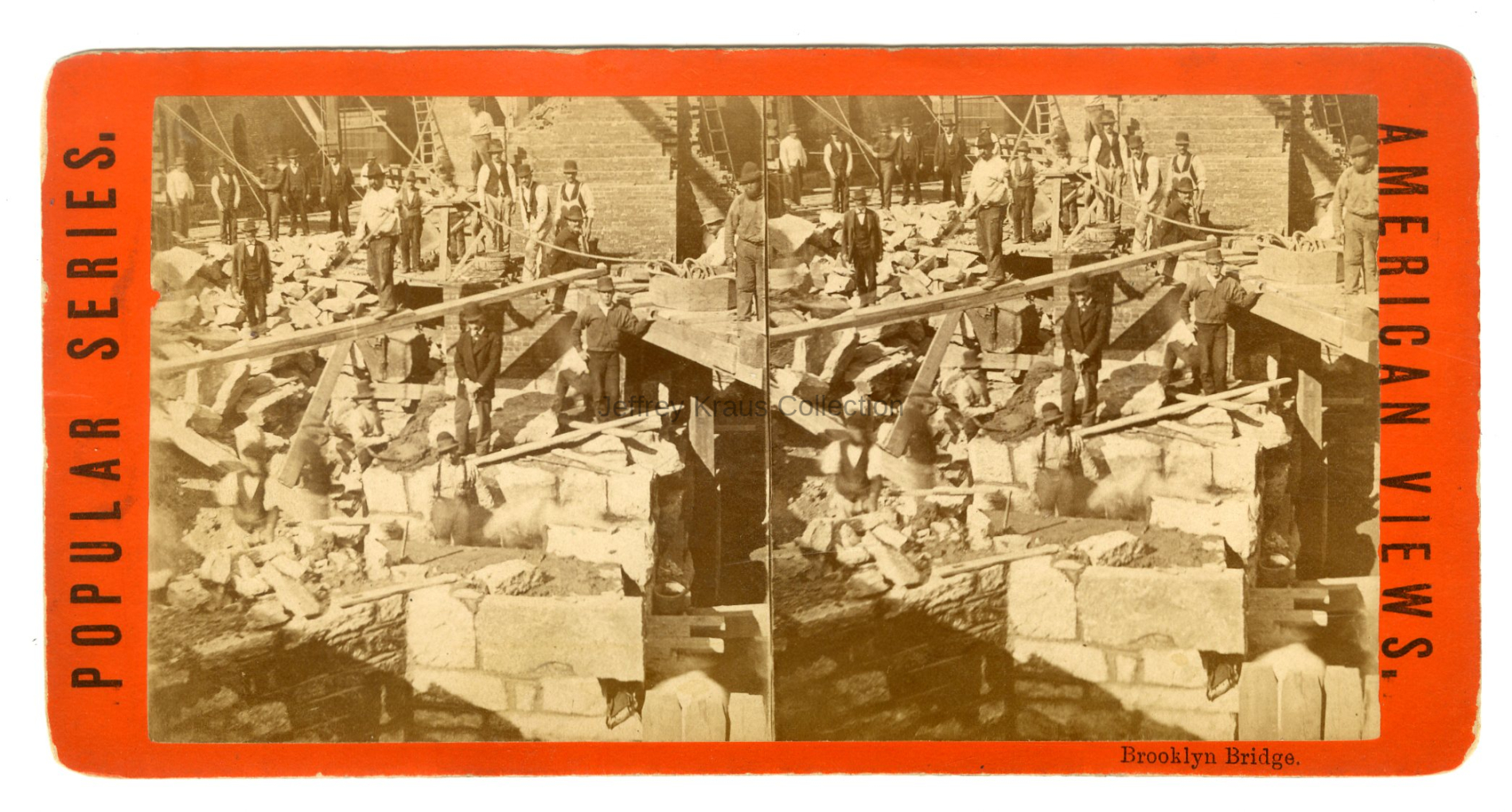
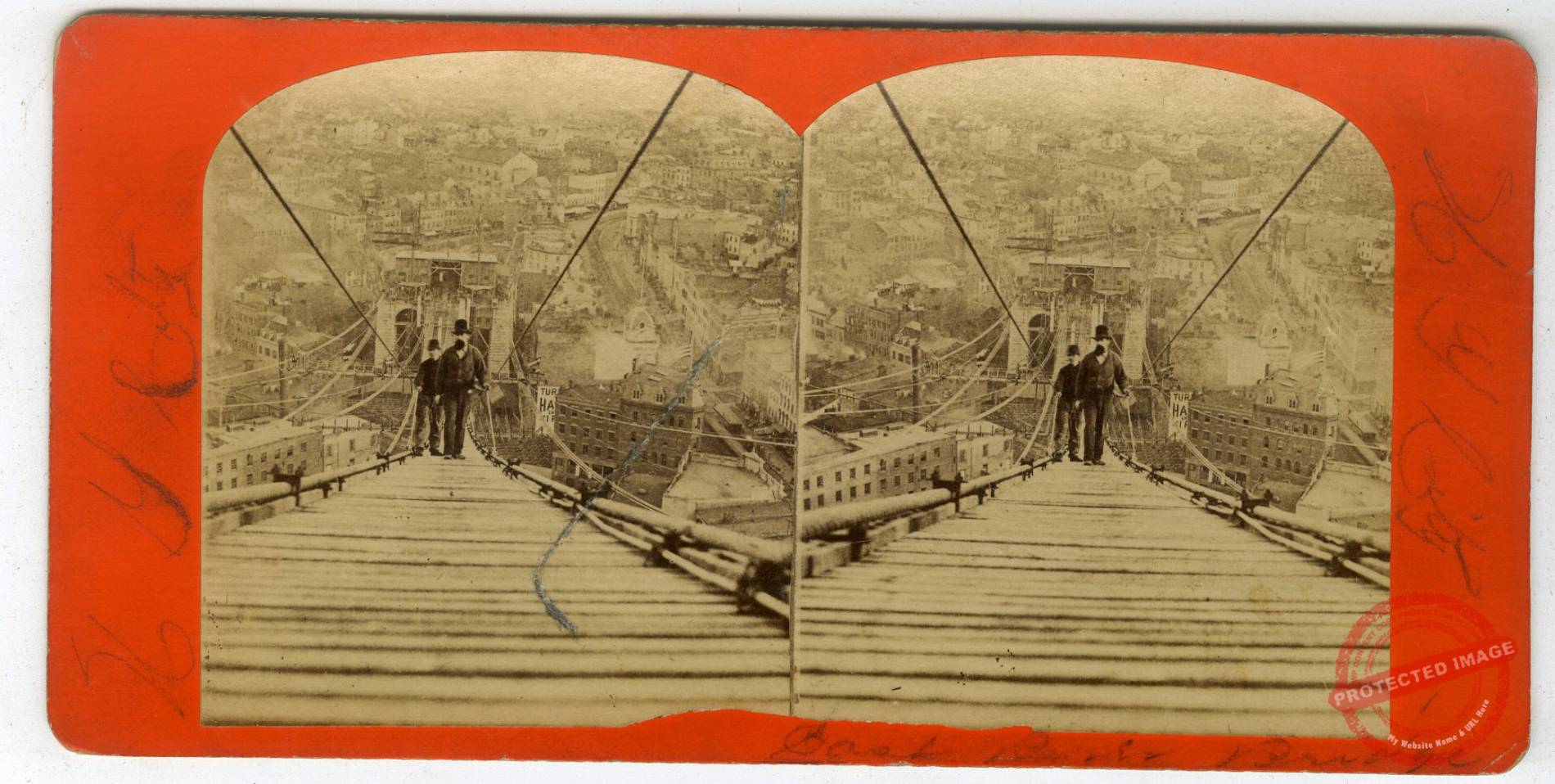
Construction view of Brooklyn Bridge with men on walkways.

12327.

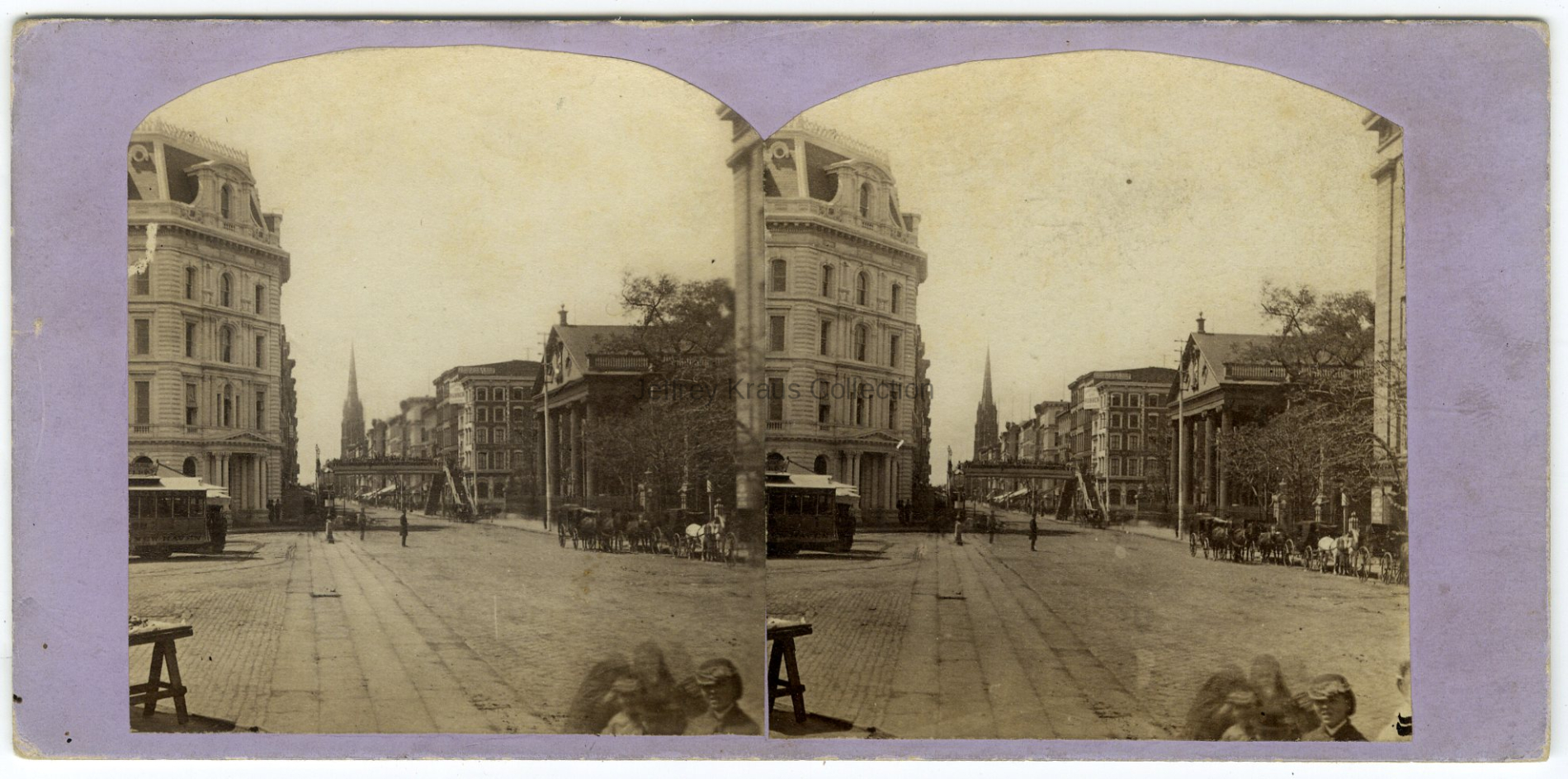
The Broadway Bridge.

12328.

The Broadway Bridge.

12336.

High Bridge, New York. Showing the Top and Full Length.

12337.

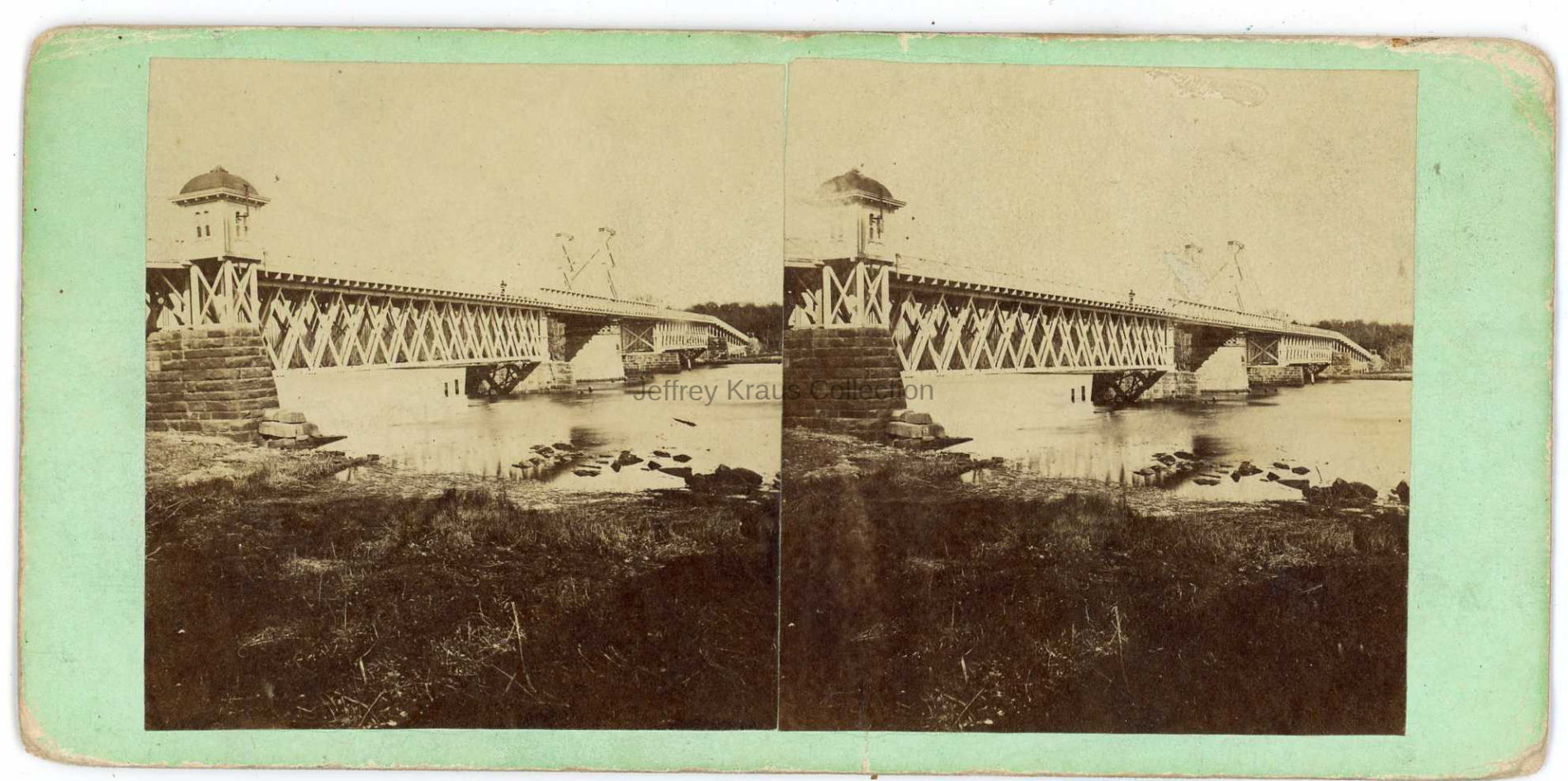
Harlem River RR Bridge, N.Y.

12344.

Untitled view of the construction of the Brooklyn Bridge. Primarily roadway work remaining.

12356.

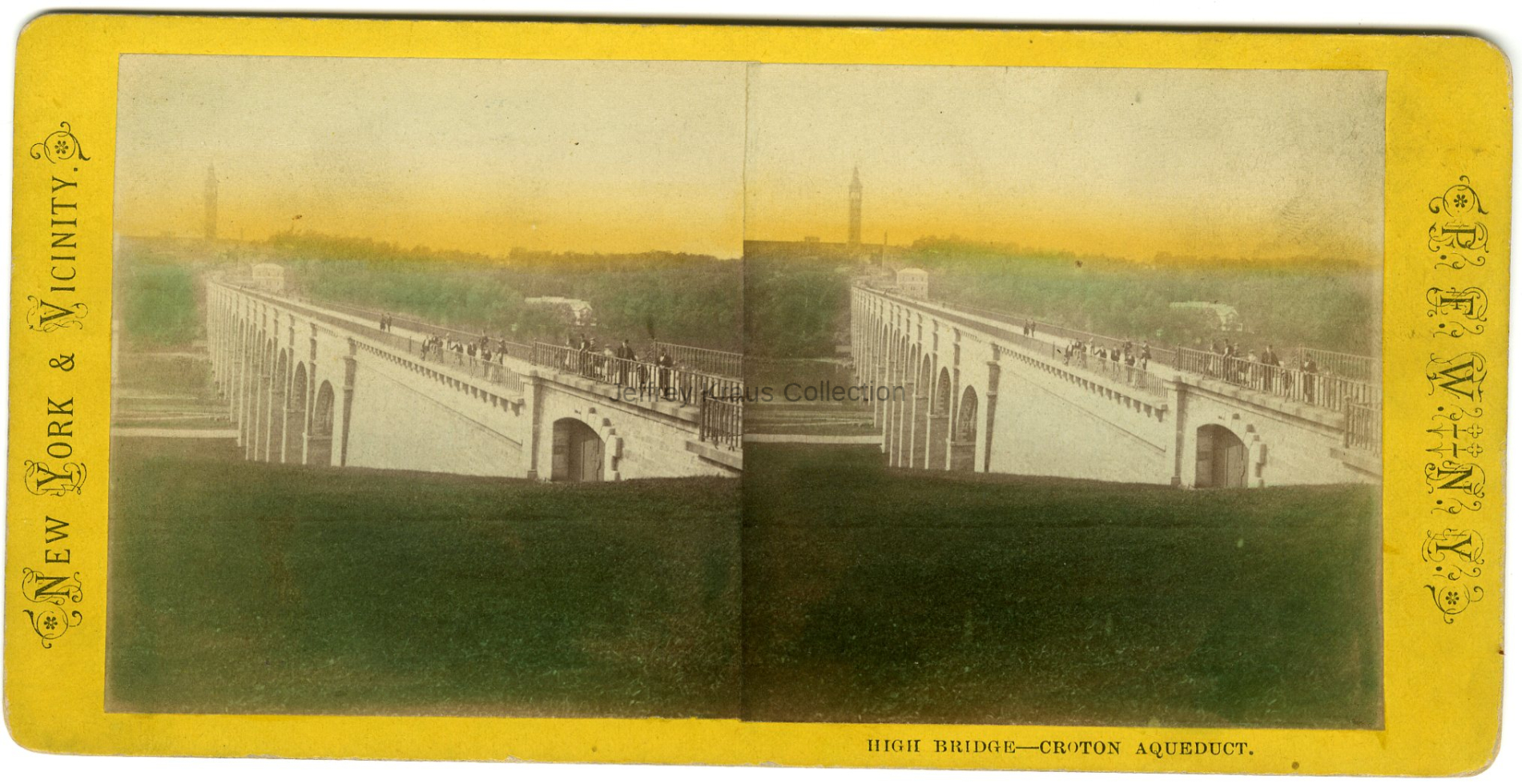
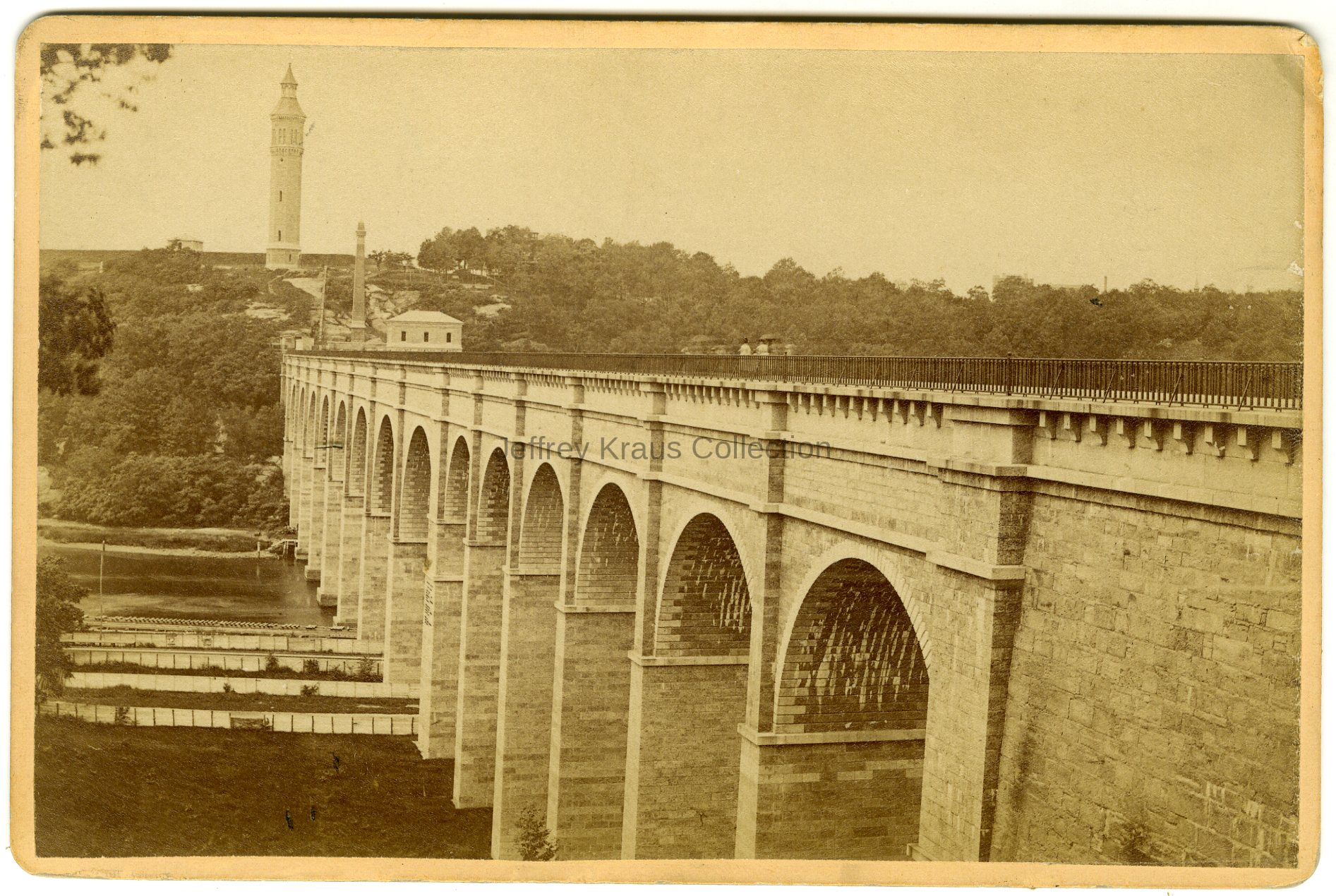
High Bridge-Croton Aqueduct.

12357.

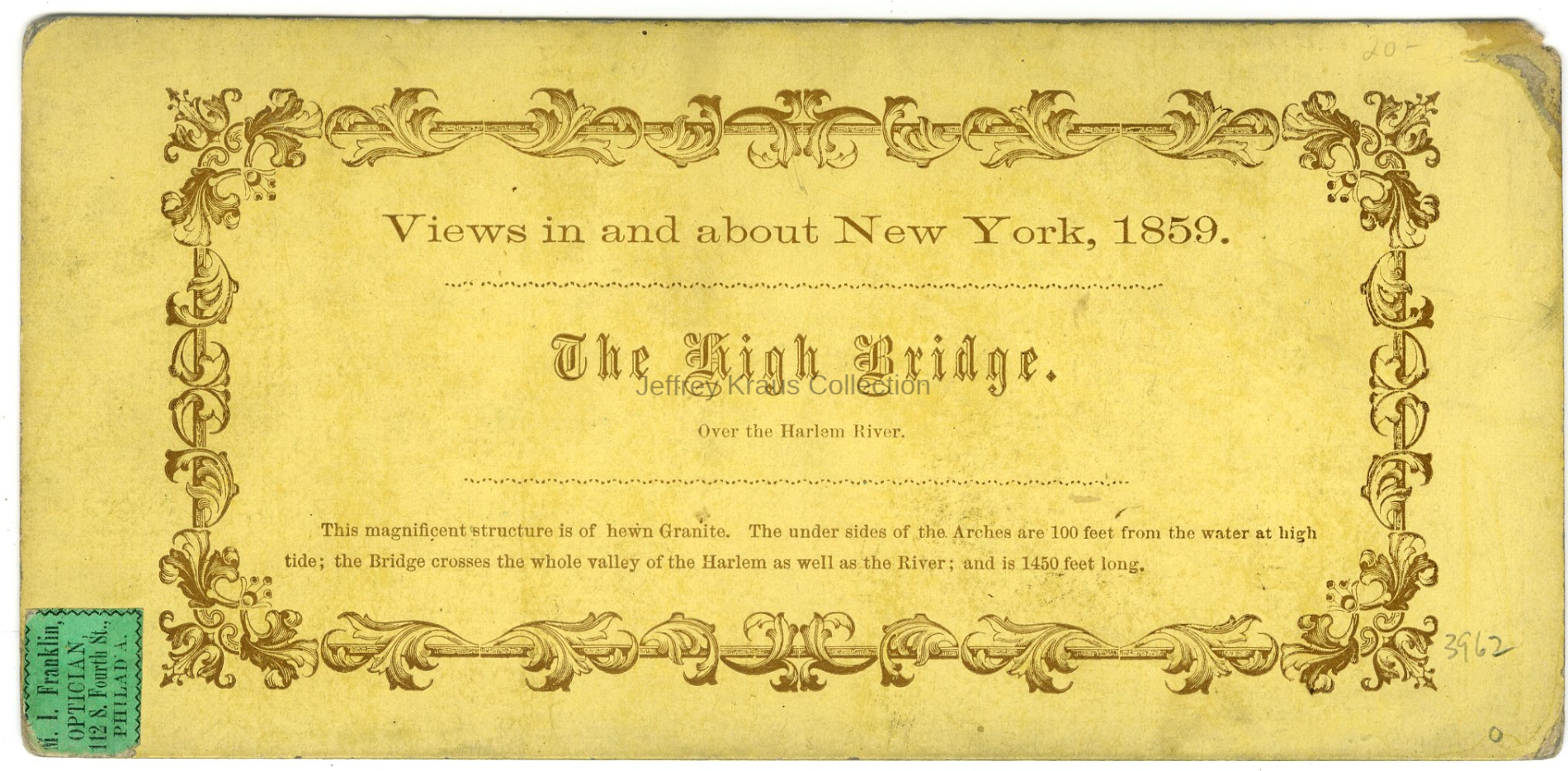
Views in and about New York, 1859. The High Bridge over the Harlem River.

12358.

High Bridge.

12359.

High Bridge.

12360.

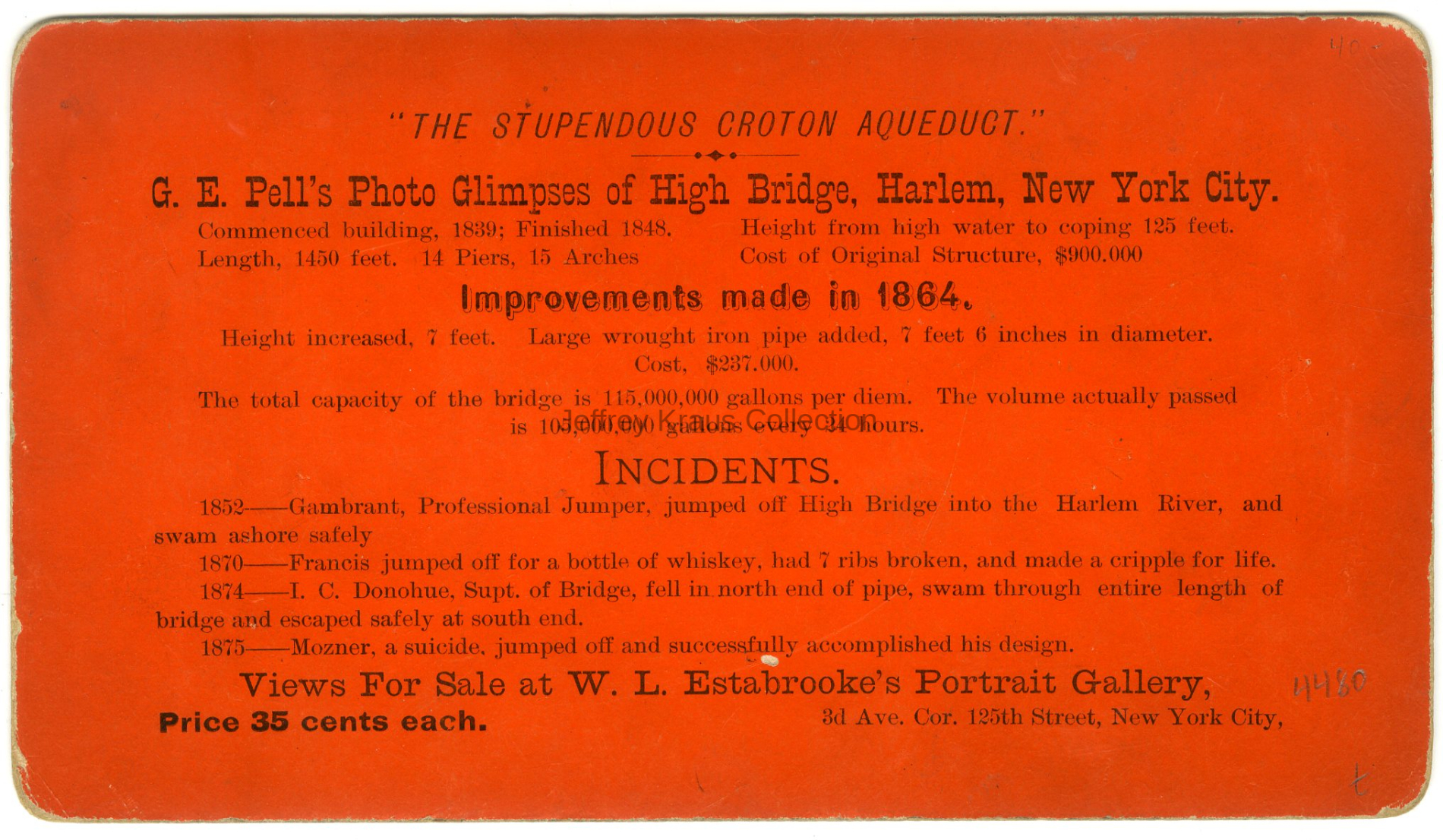
The Stupendous Croton Aqueduct. G.E. Pell’s Photo Glimpses of High Bridge, Harlem, New York City.

12361.

The Stupendous Croton Aqueduct. G.E. Pell’s Photo Glimpses of High Bridge, Harlem, New York City.

12362.

High Bridge.

12413.

Top View, High Bridge, NY.

12476.

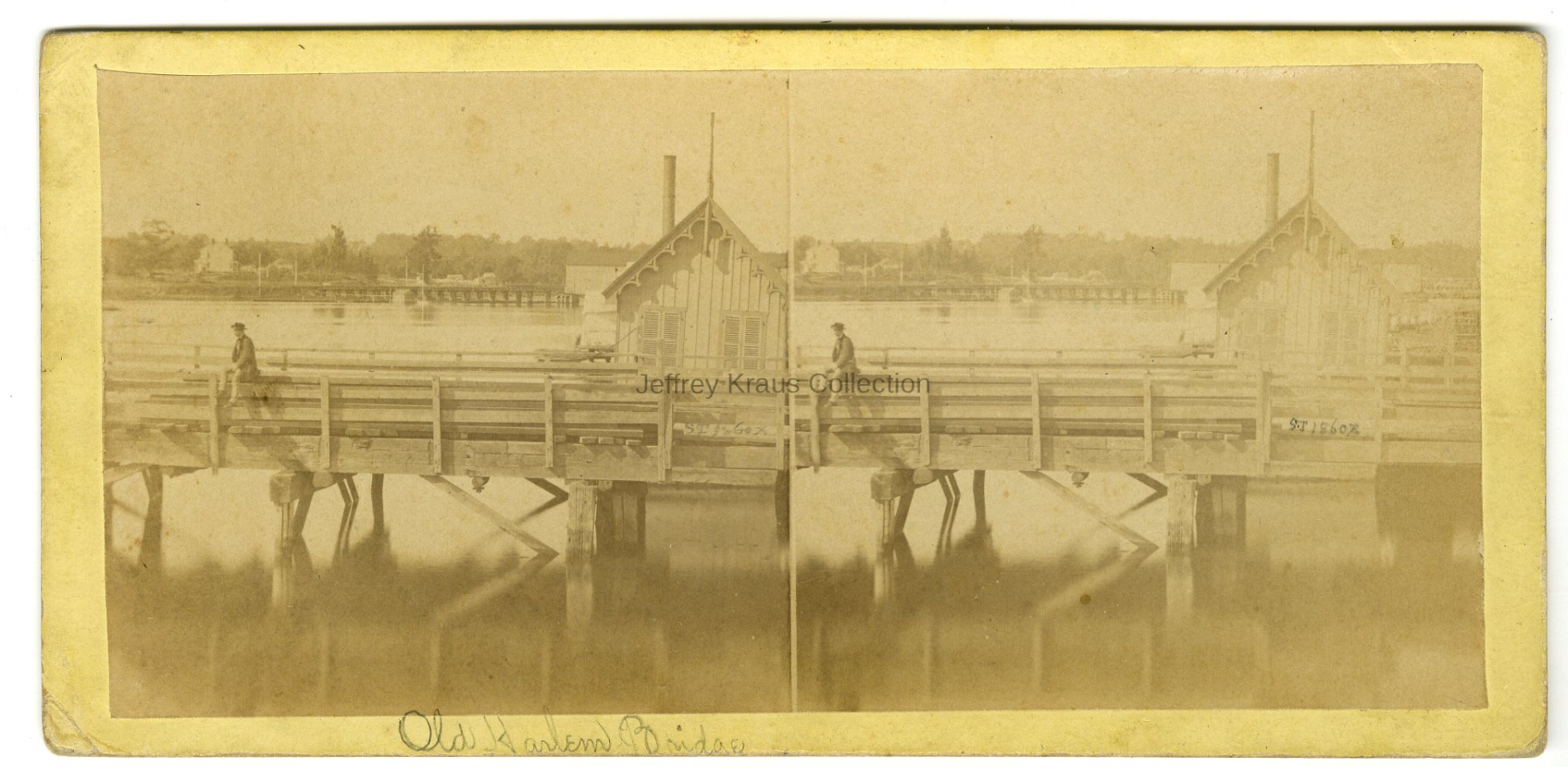
Old Harlem Bridge.

12479.

St. Paul’s Church & Astor House, N.Y. Bridge across. (Broadway Bridge.)

12582.

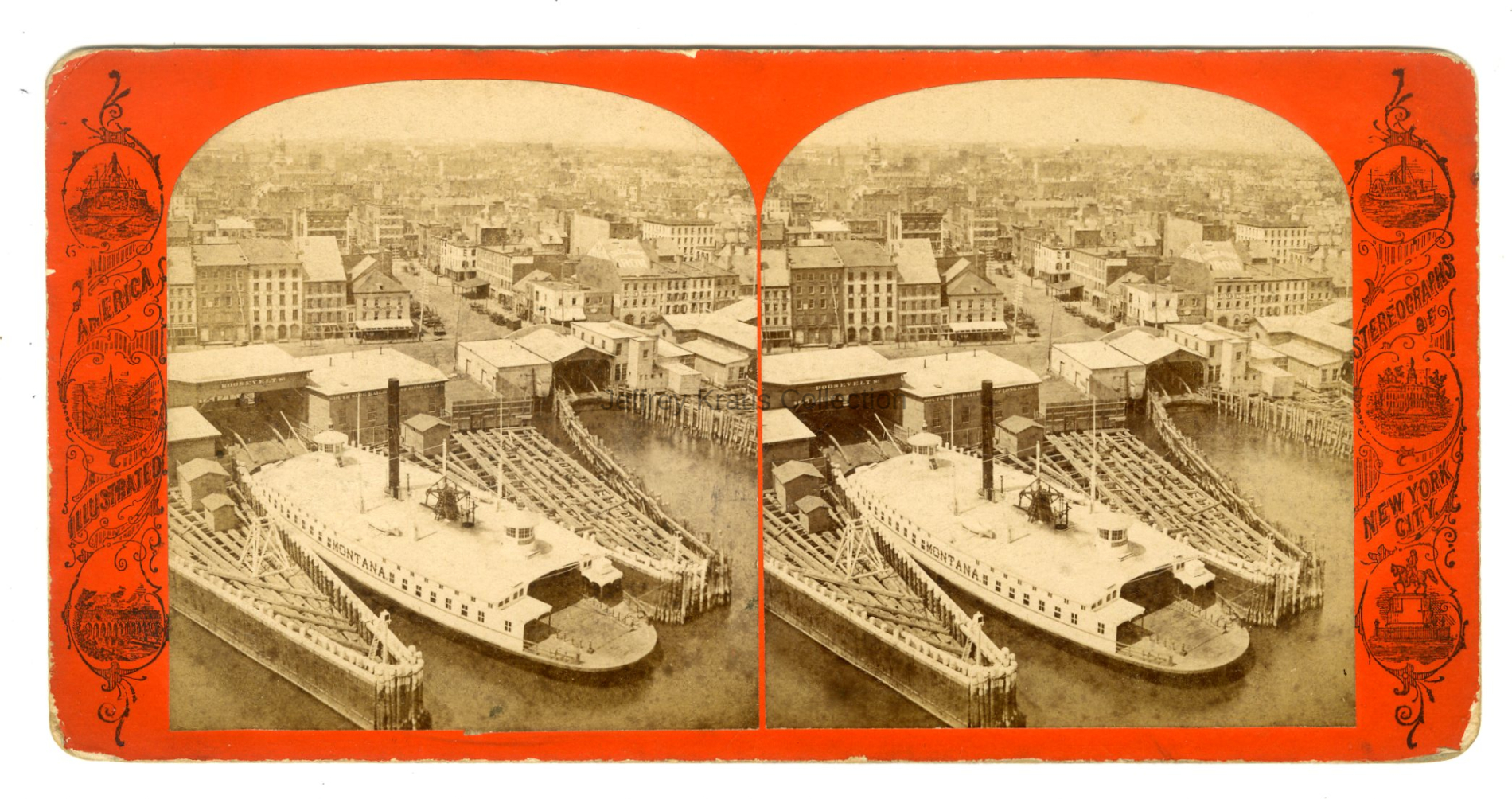
Fulton Ferry House, Brooklyn. Brooklyn Bridge Tower under construction.

12634.

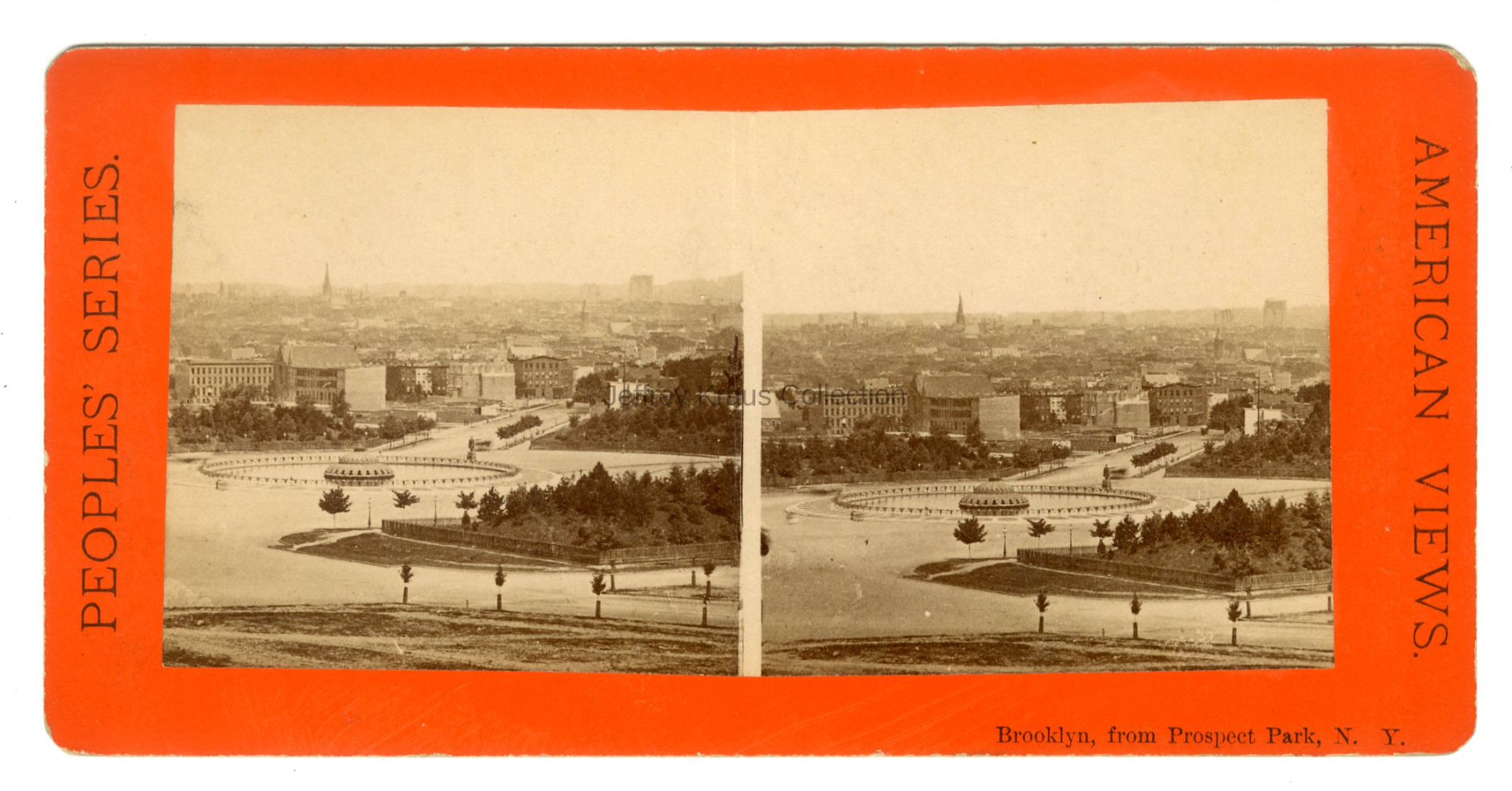
Brooklyn, from Prospect Park. Towers of Brooklyn Bridge under construction in the distance.

12657.

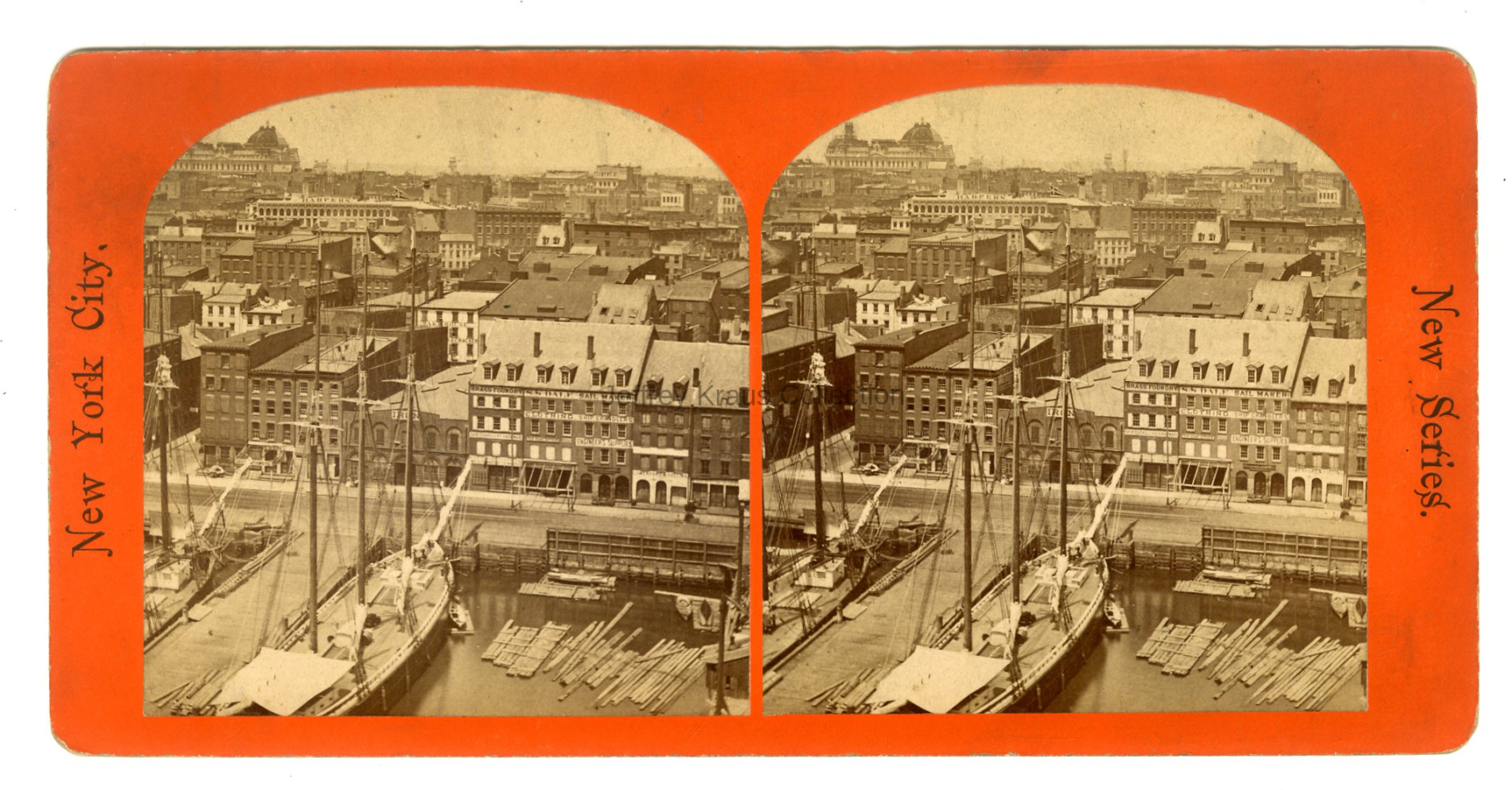
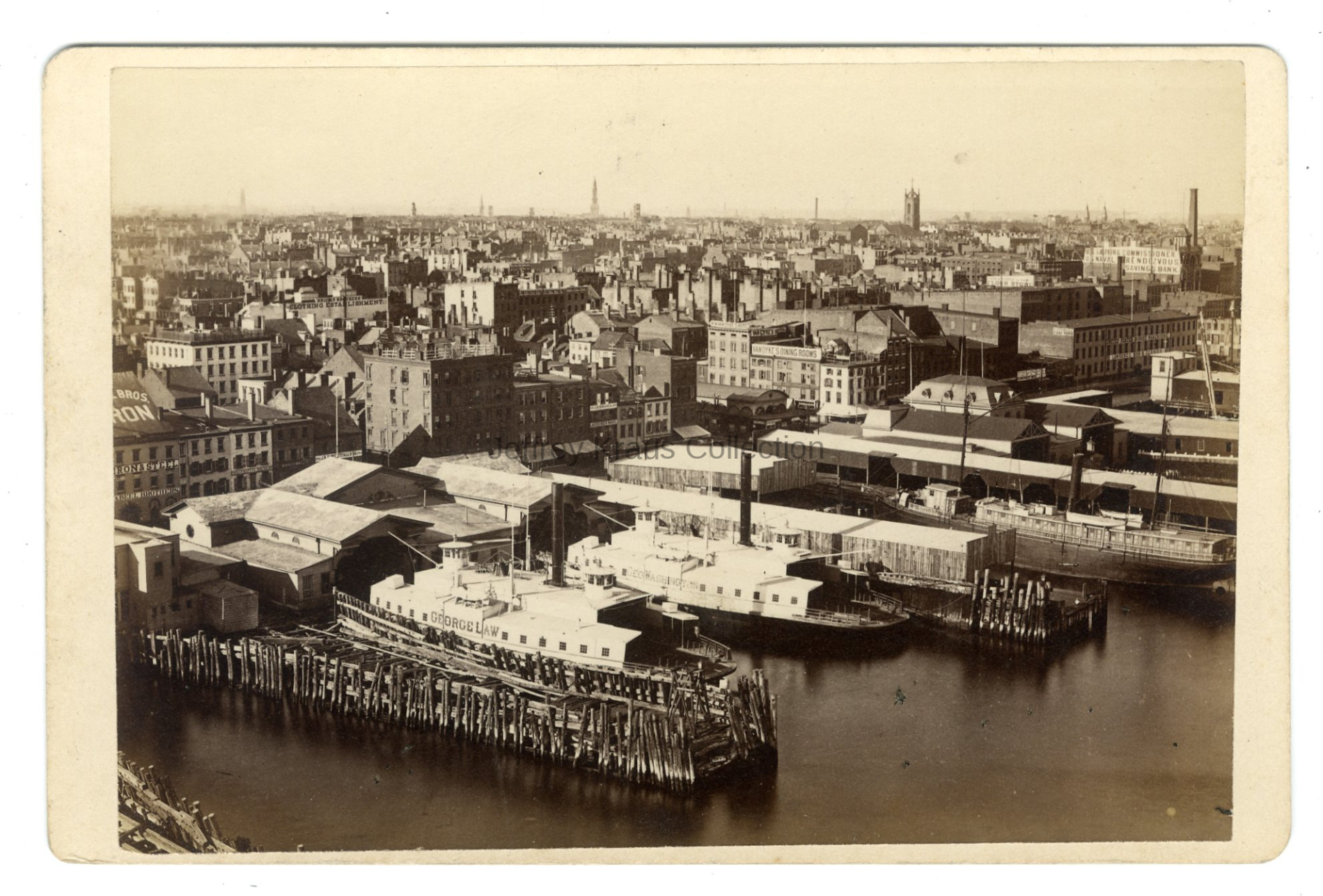
View from New York Bridge Tower.

12662.

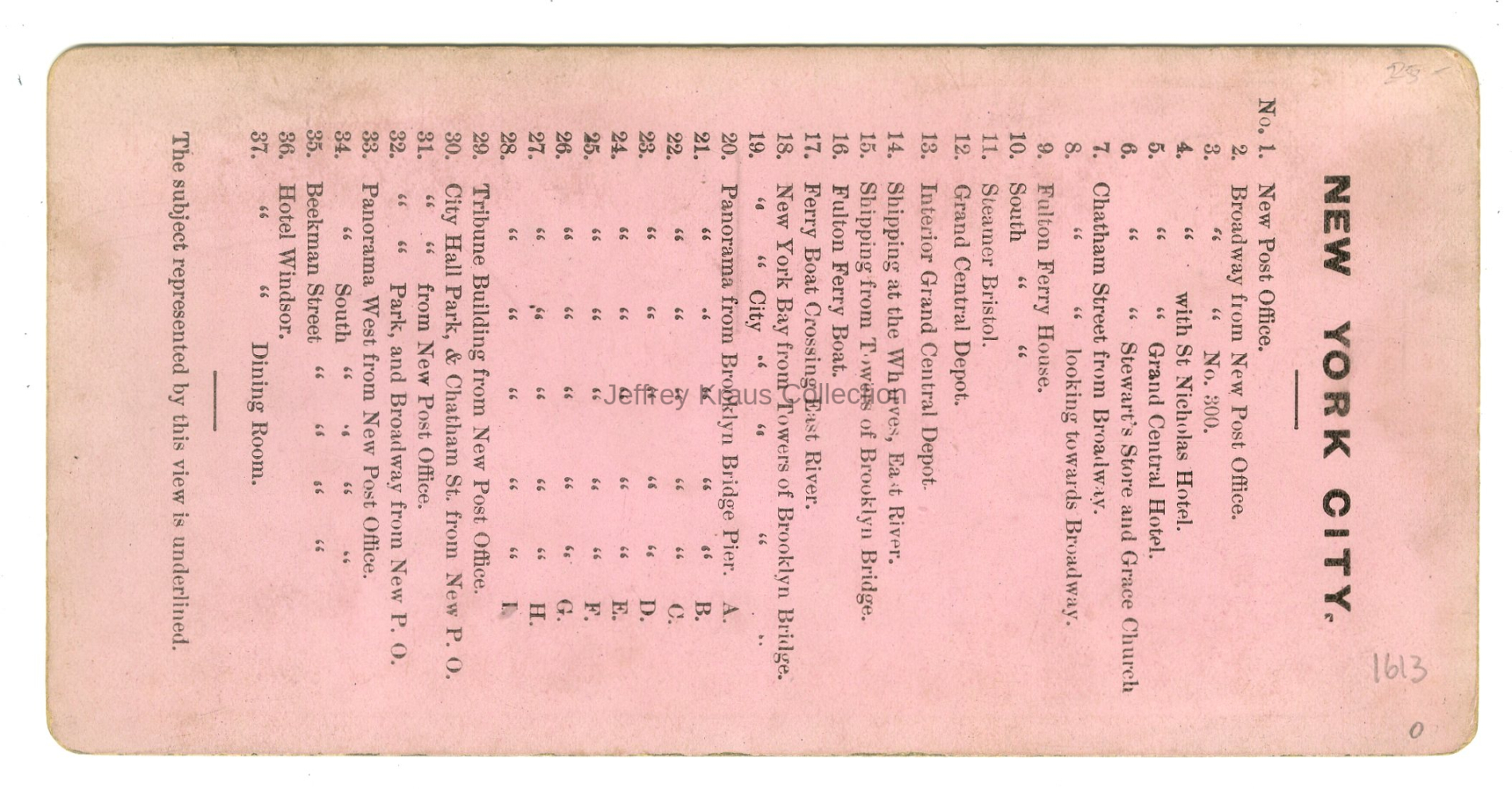
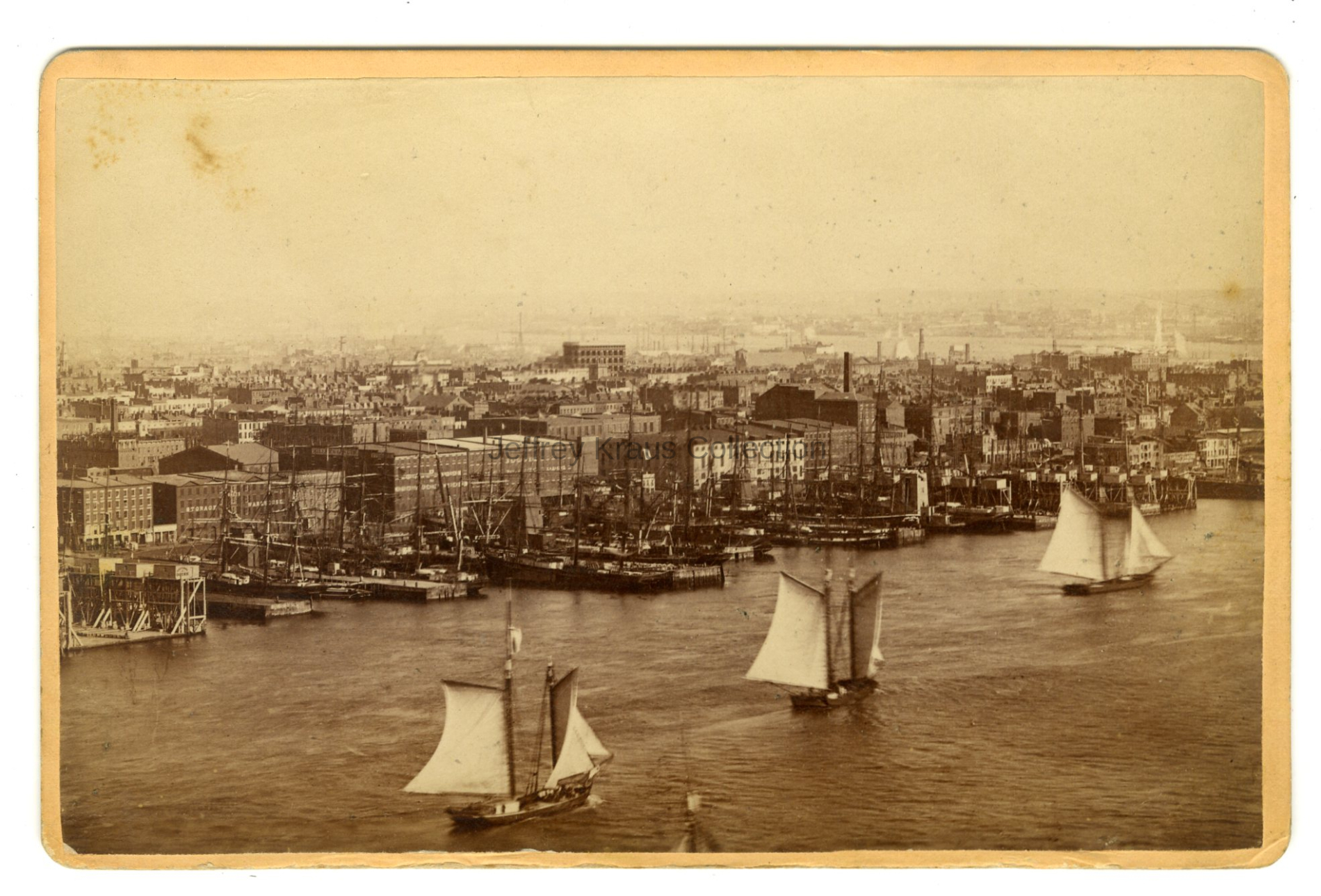
No. 19. New York City from Towers of Brooklyn Bridge.

12718.

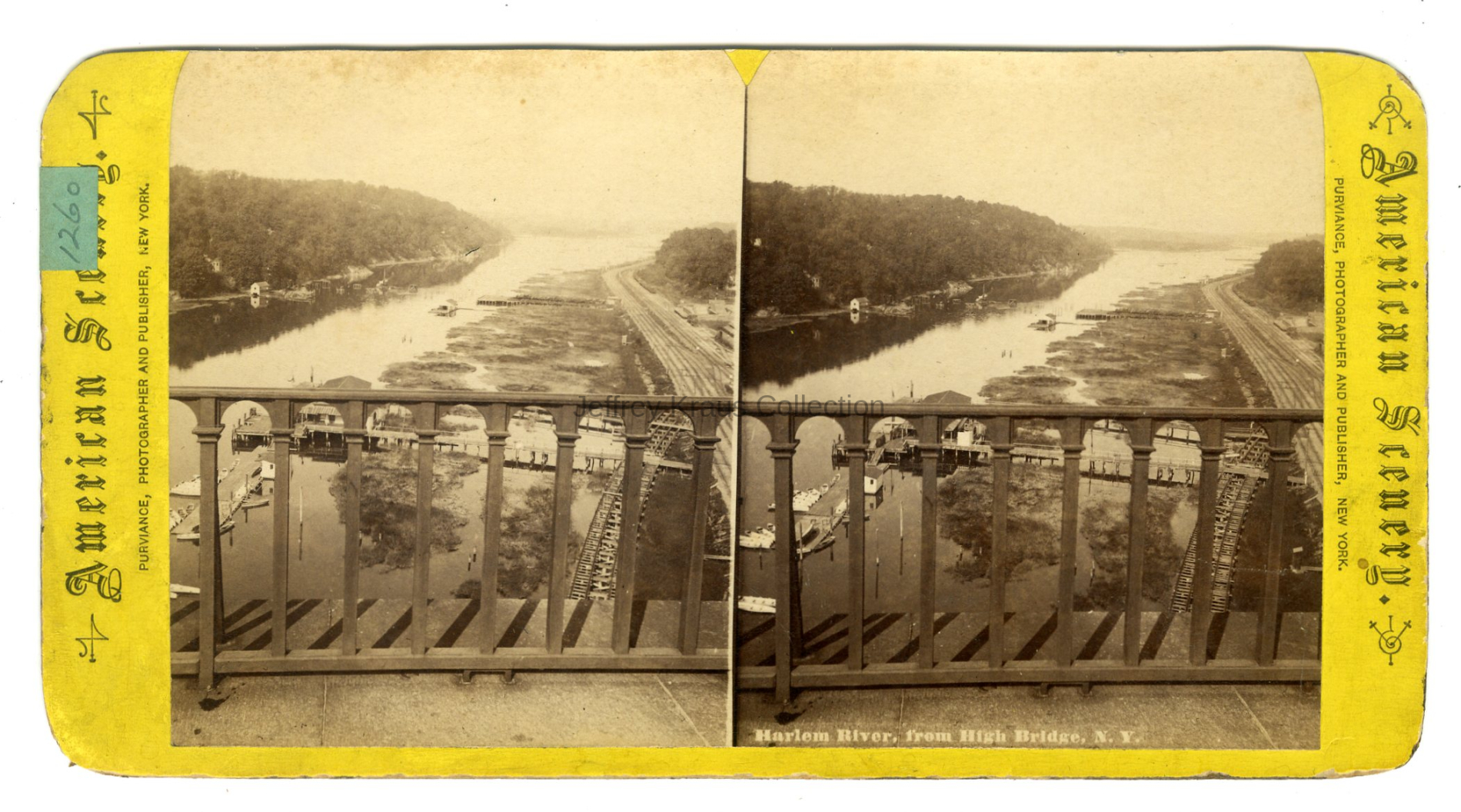
Harlem River, from High Bridge, N.Y.

12752.

High Bridge boat Sugar Lily.

12759.

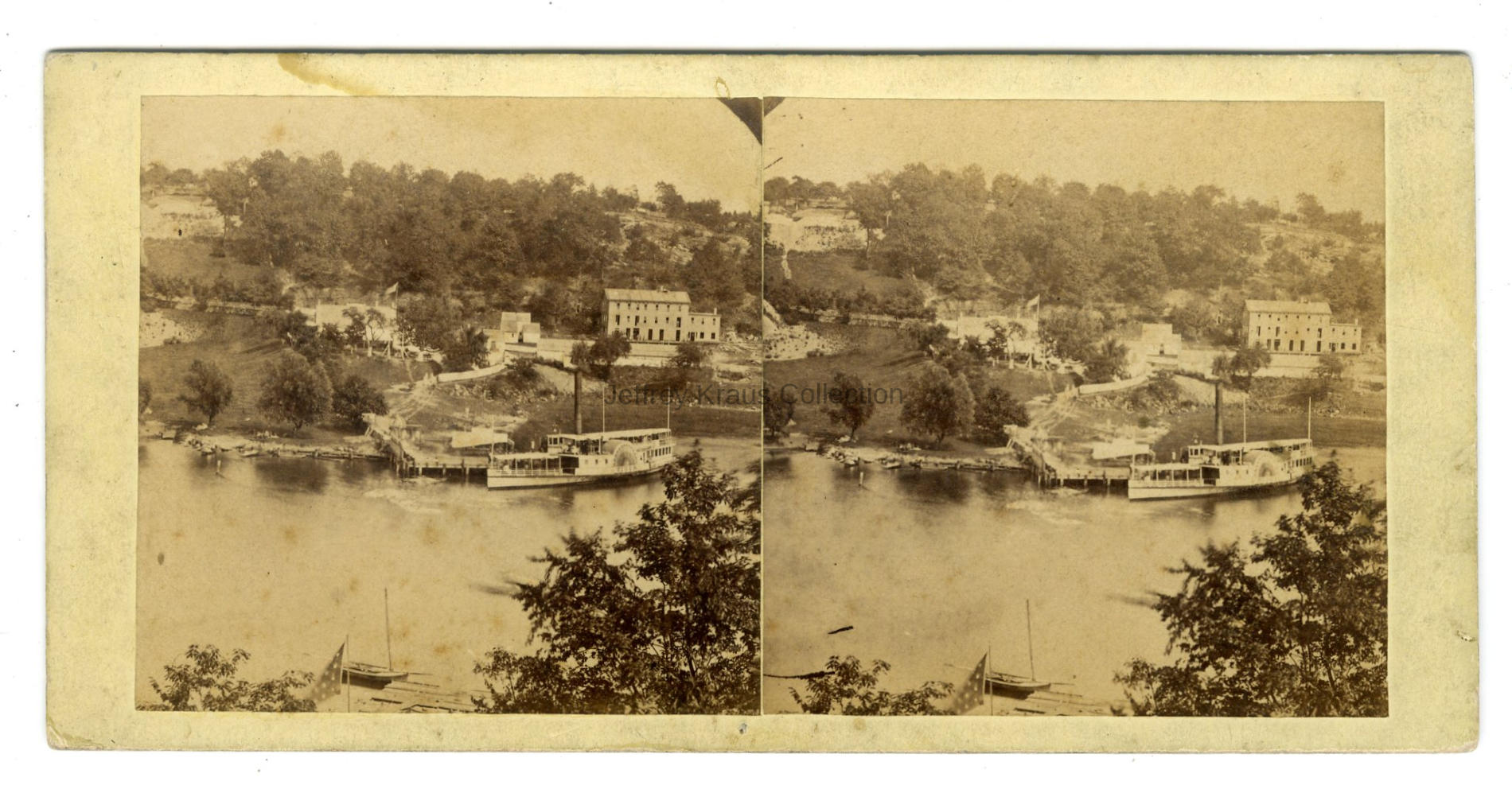
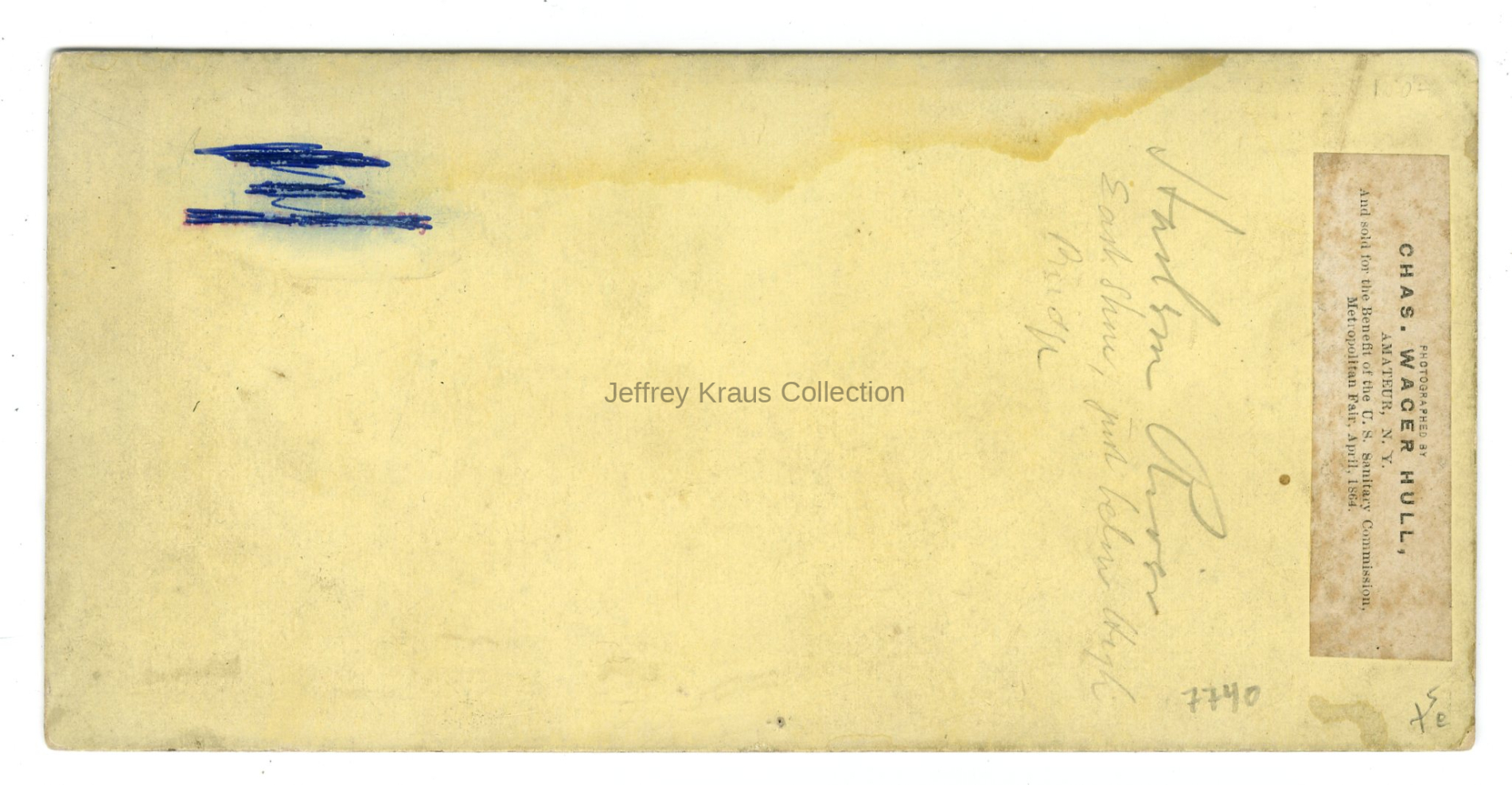
Harlem River, East Shore, just below High Bridge. The label on verso indicates that this view was “Photographed by Chas. Wager Hull, Amateur, N.Y. And sold for the Benefit of the U.S. Sanitary Commission, Metropolitan Fair, April, 1864.”

12786.

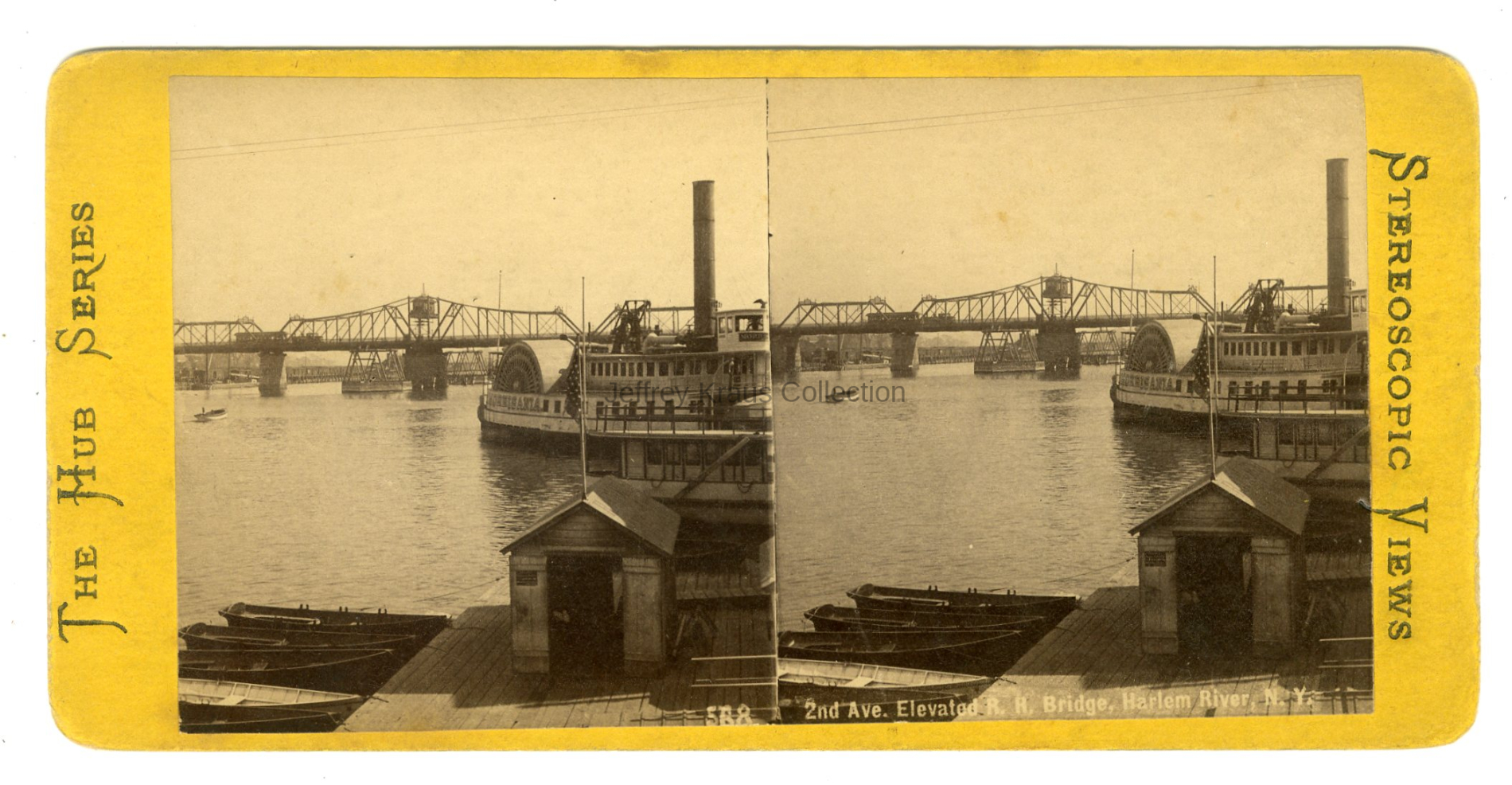
588. 2nd Ave. Elevated R.R. Bridge, Harlem River, NY.

12815.

View from Brooklyn Bridge Tower.

12816.

View from New York Bridge Tower.

12831.

High Bridge, NY.

12832.

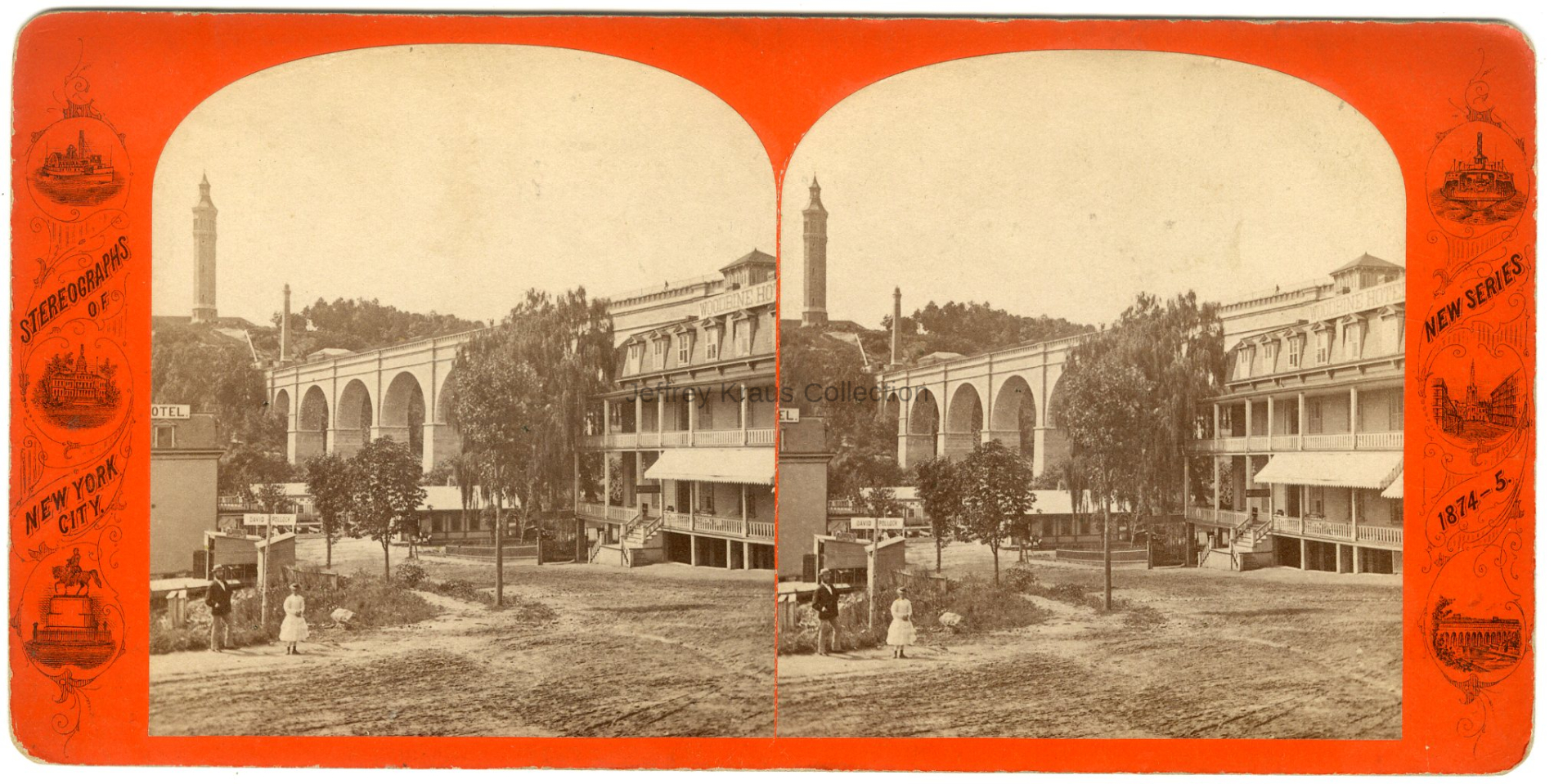
High Bridge Landing. Over Harlem River. Croton Aqueduct.

12833.

Section of High Bridge.

12941.

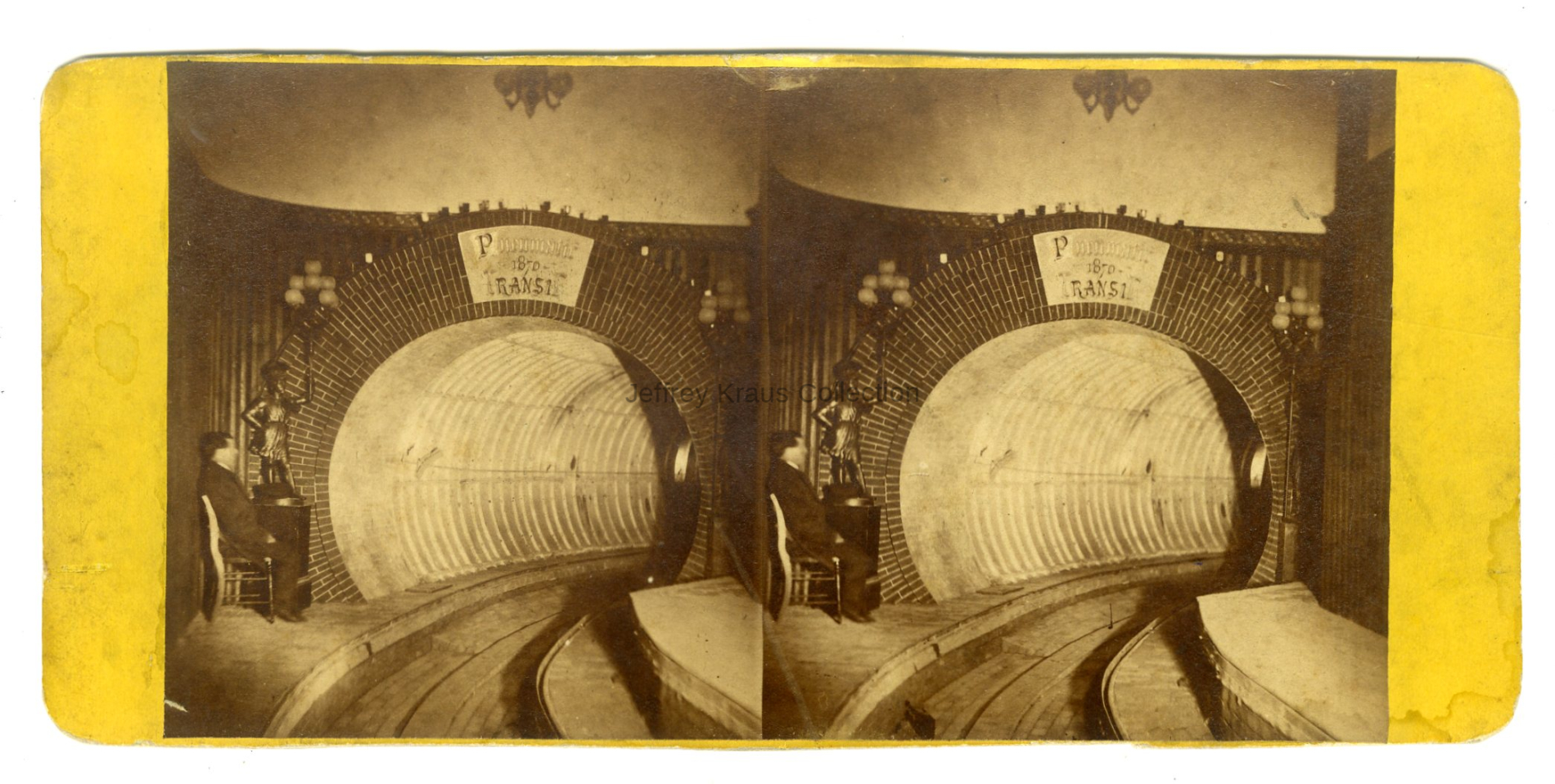
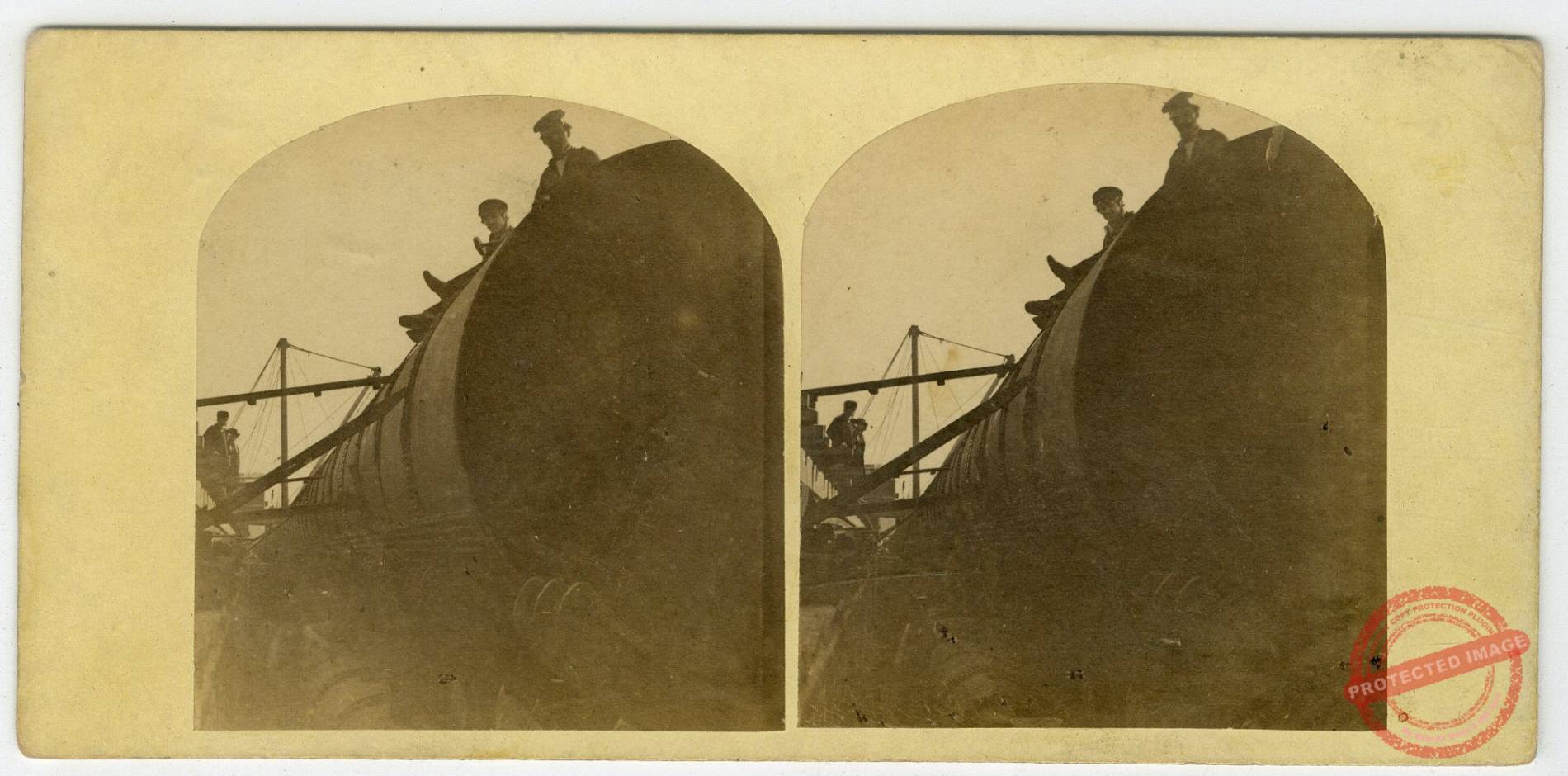
Beach Pneumatic Tunnel under Broadway. Inventor Alfred Ely Beach—who was also the editor of Scientific American—latched onto the idea of constructing a pneumatic railway, where steam-powered fans would create a vacuum, pushing and pulling cars through a tunnel. Inspired by successful pneumatic mail systems in London, in 1868, Beach convinced the state legislature to pass “An Act to provide for the transmission of letters, packages, and merchandise, in the cities of New York and Brooklyn, and across the North and East Rivers, by means of pneumatic tubes, to be constructed beneath the surface of the streets and public places in said cities, and under the waters of said rivers.” Beach then constructed one giant tube—ostensibly to hold all the smaller tubes—under the building between Warren and Murray streets where he had his offices. Instead of a pneumatic mail system, he built a one-block pneumatic passenger train. Beach hoped that this prototype would spur further interest and investment. He began taking passengers on the one-block ride in February 1870—the same month the elevated railway was supposed to finally begin operation. However, despite carrying 400,000 passengers over the next couple of years, Beach’s subway never progressed beyond its novelty beginnings.
12942.

Beach Pneumatic Tunnel under Broadway. Inventor Alfred Ely Beach—who was also the editor of Scientific American—latched onto the idea of constructing a pneumatic railway, where steam-powered fans would create a vacuum, pushing and pulling cars through a tunnel. Inspired by successful pneumatic mail systems in London, in 1868, Beach convinced the state legislature to pass “An Act to provide for the transmission of letters, packages, and merchandise, in the cities of New York and Brooklyn, and across the North and East Rivers, by means of pneumatic tubes, to be constructed beneath the surface of the streets and public places in said cities, and under the waters of said rivers.” Beach then constructed one giant tube—ostensibly to hold all the smaller tubes—under the building between Warren and Murray streets where he had his offices. Instead of a pneumatic mail system, he built a one-block pneumatic passenger train. Beach hoped that this prototype would spur further interest and investment. He began taking passengers on the one-block ride in February 1870—the same month the elevated railway was supposed to finally begin operation. However, despite carrying 400,000 passengers over the next couple of years, Beach’s subway never progressed beyond its novelty beginnings.
12942.

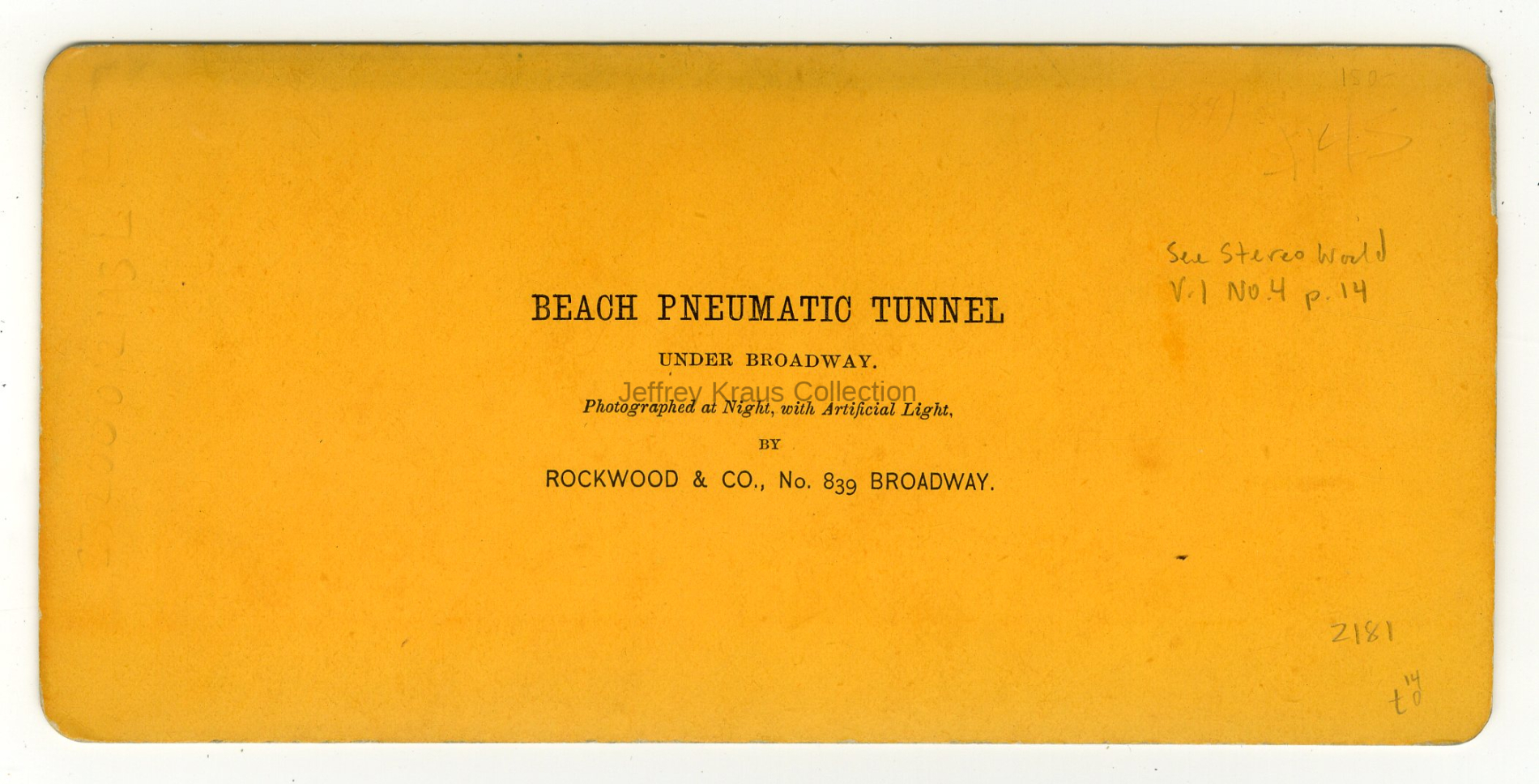
Beach Pneumatic Tunnel under Broadway. Photographed at Night with Artificial Light.

13006.

Brooklyn Bridge under construction.

13012.

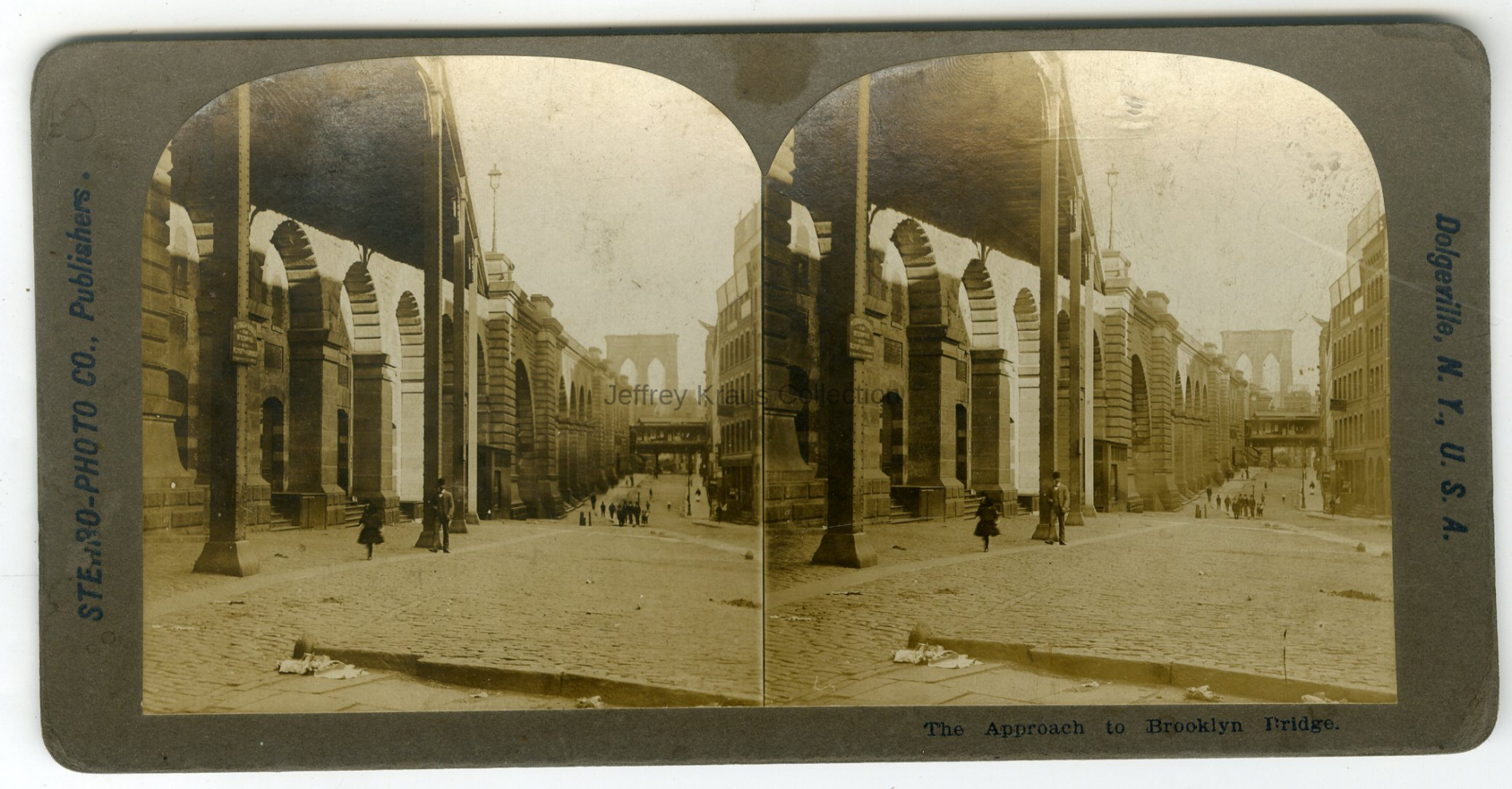
The Approach to Brooklyn Bridge.

13014.

No. 139. View of Broadway Bridge, St. Pauls, and Astor House, NY City.

13019.

Looking West  toward New York from Brooklyn Bridge.

13055.

Brooklyn Bridge under construction.

13056.

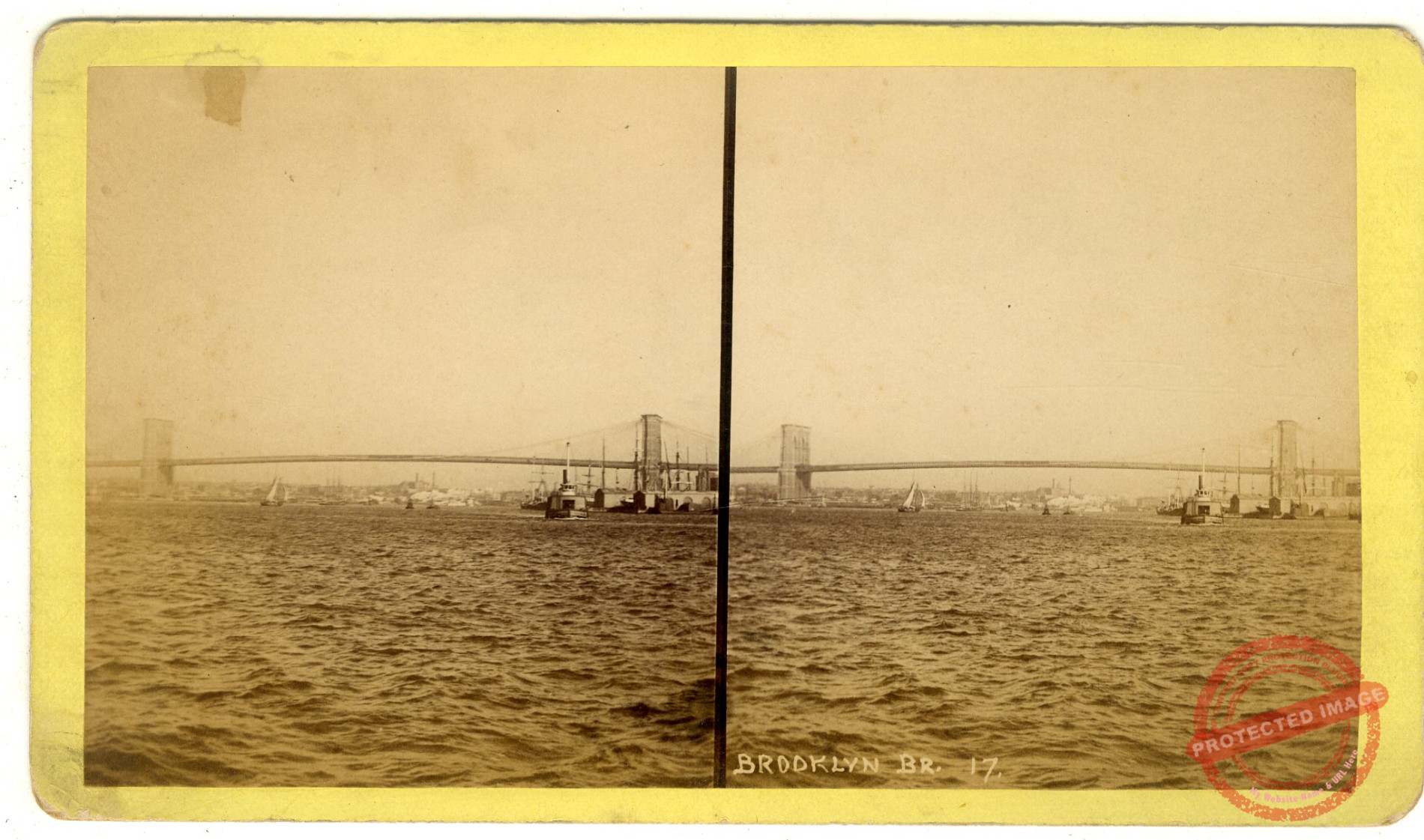
17. Brooklyn Bridge.

13077.

Croton Water Works System, High Bridge, NY.

20001.

13506-Looking across Brooklyn Bridge toward New York, N.Y.

20002.

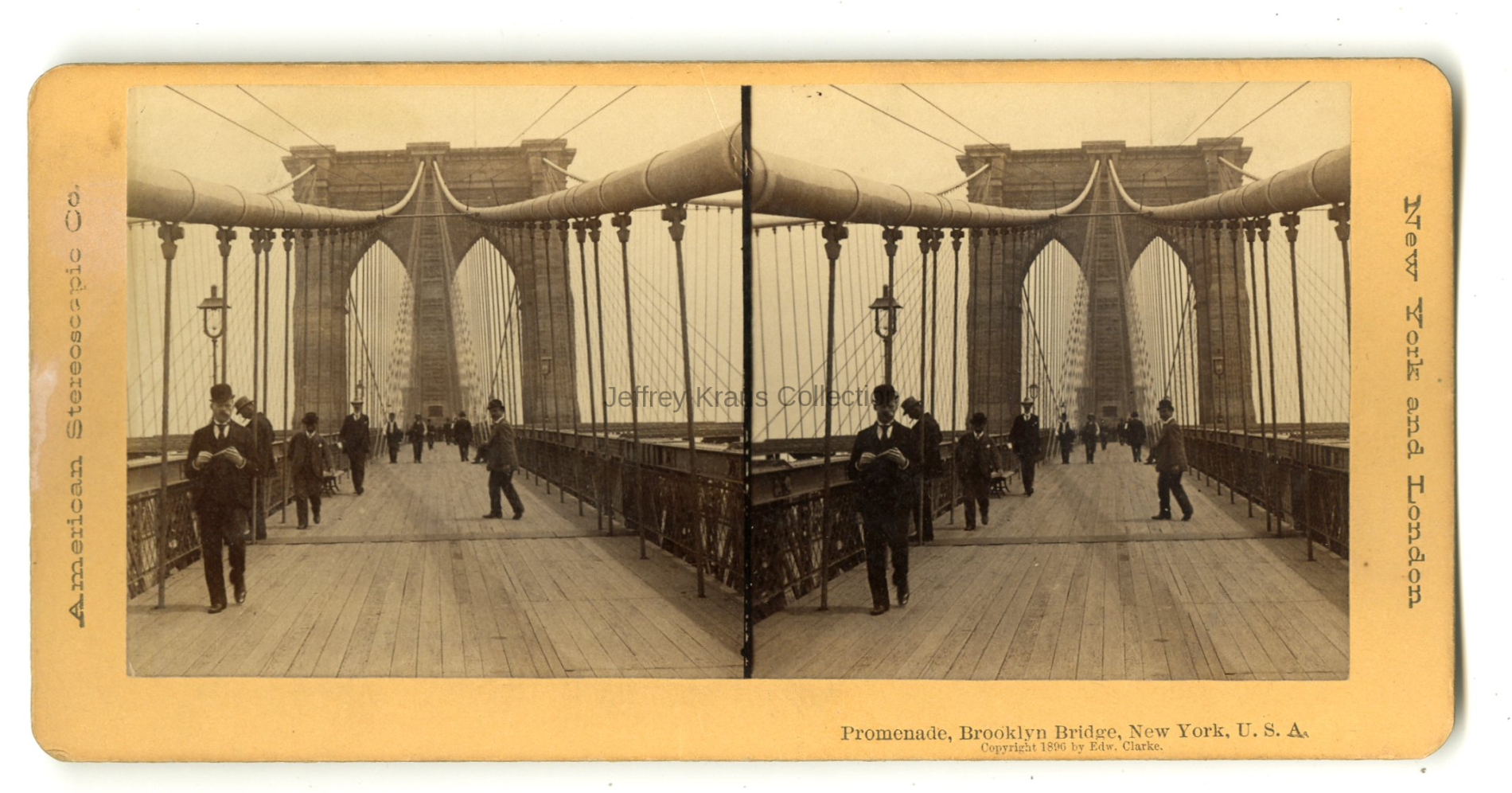
Promenade, Brooklyn Bridge, New York.