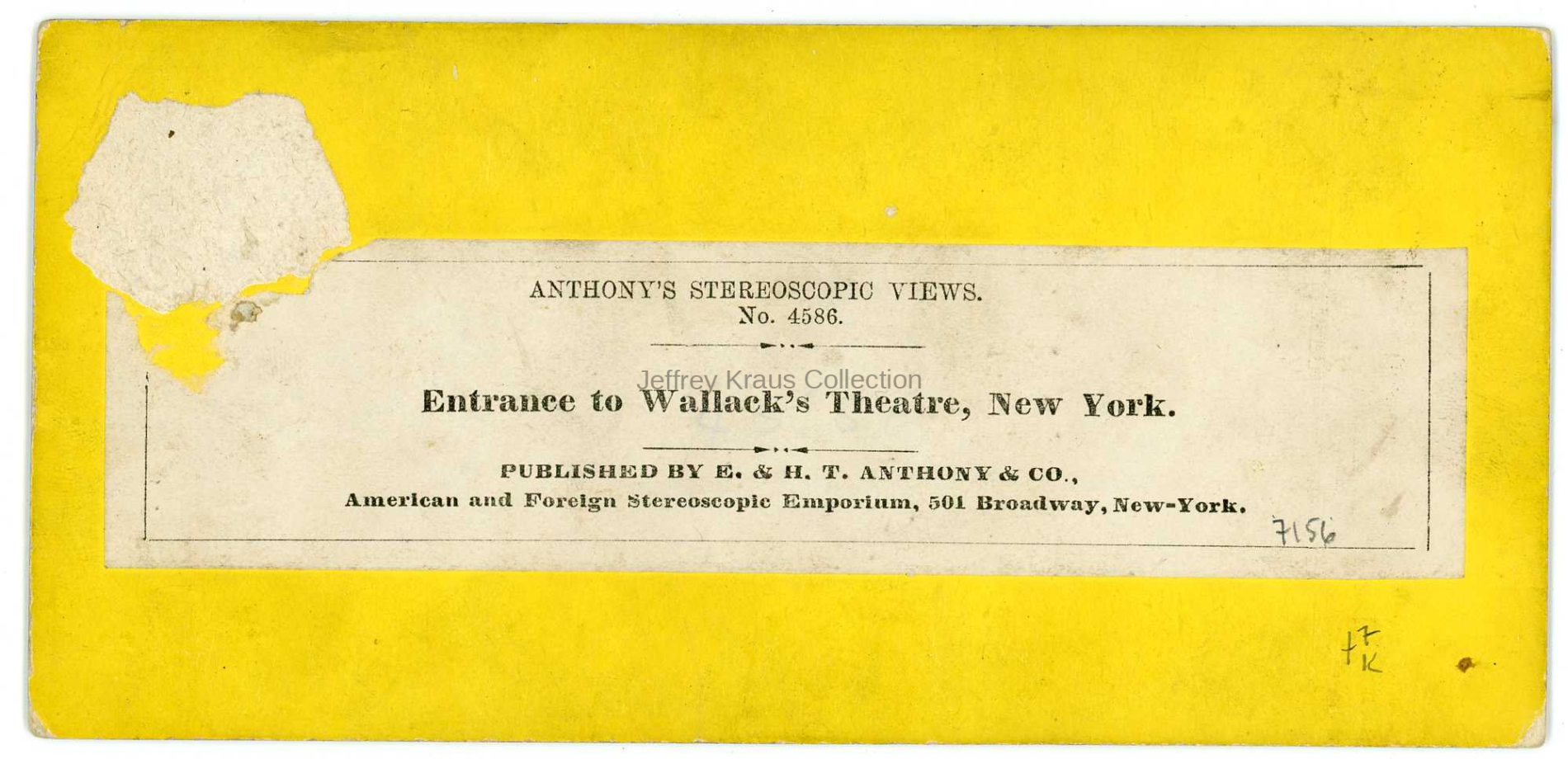
4586.
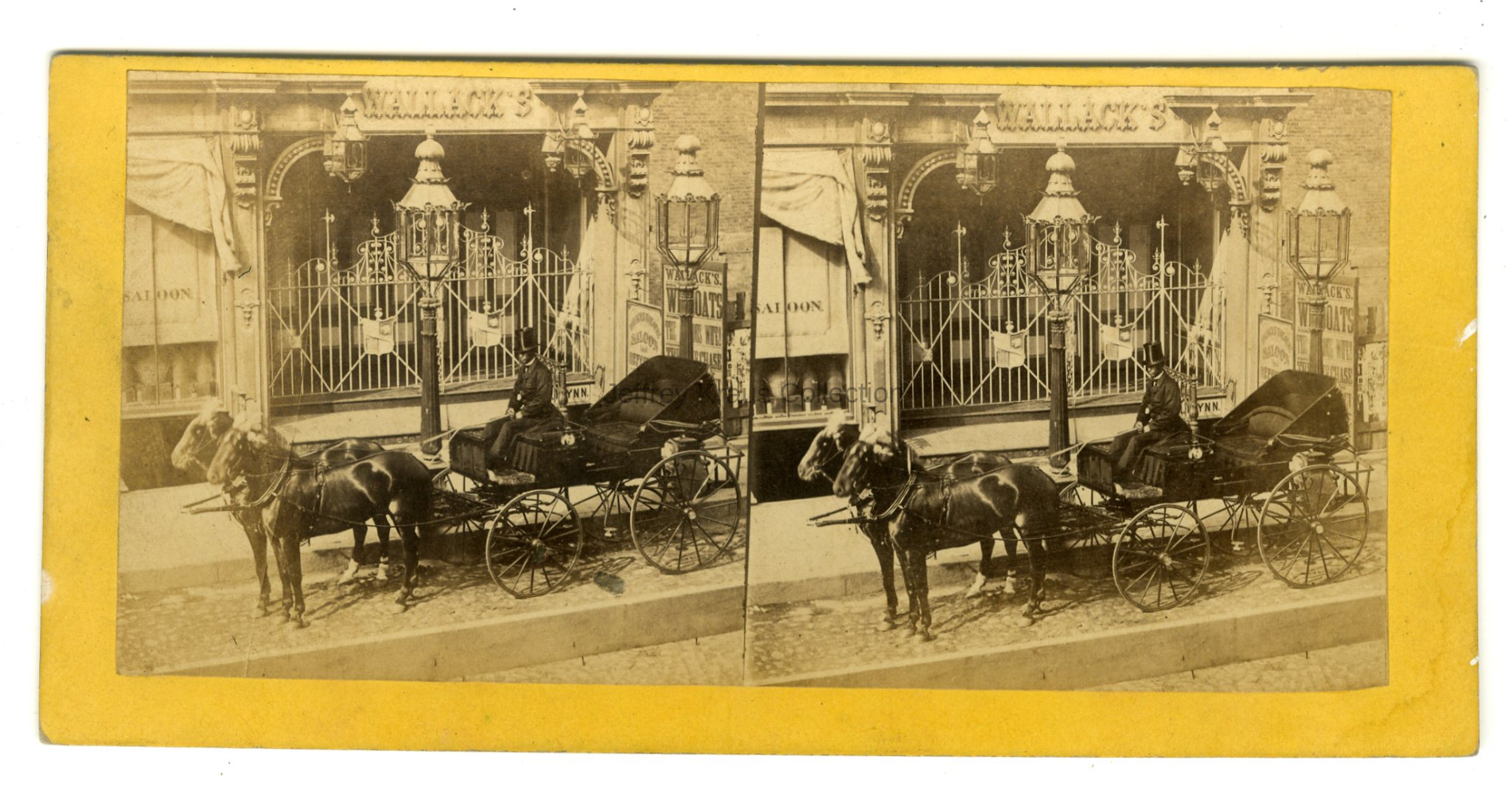
Entrance to Wallack’s Theater.

Entrance to Wallack’s Theater.
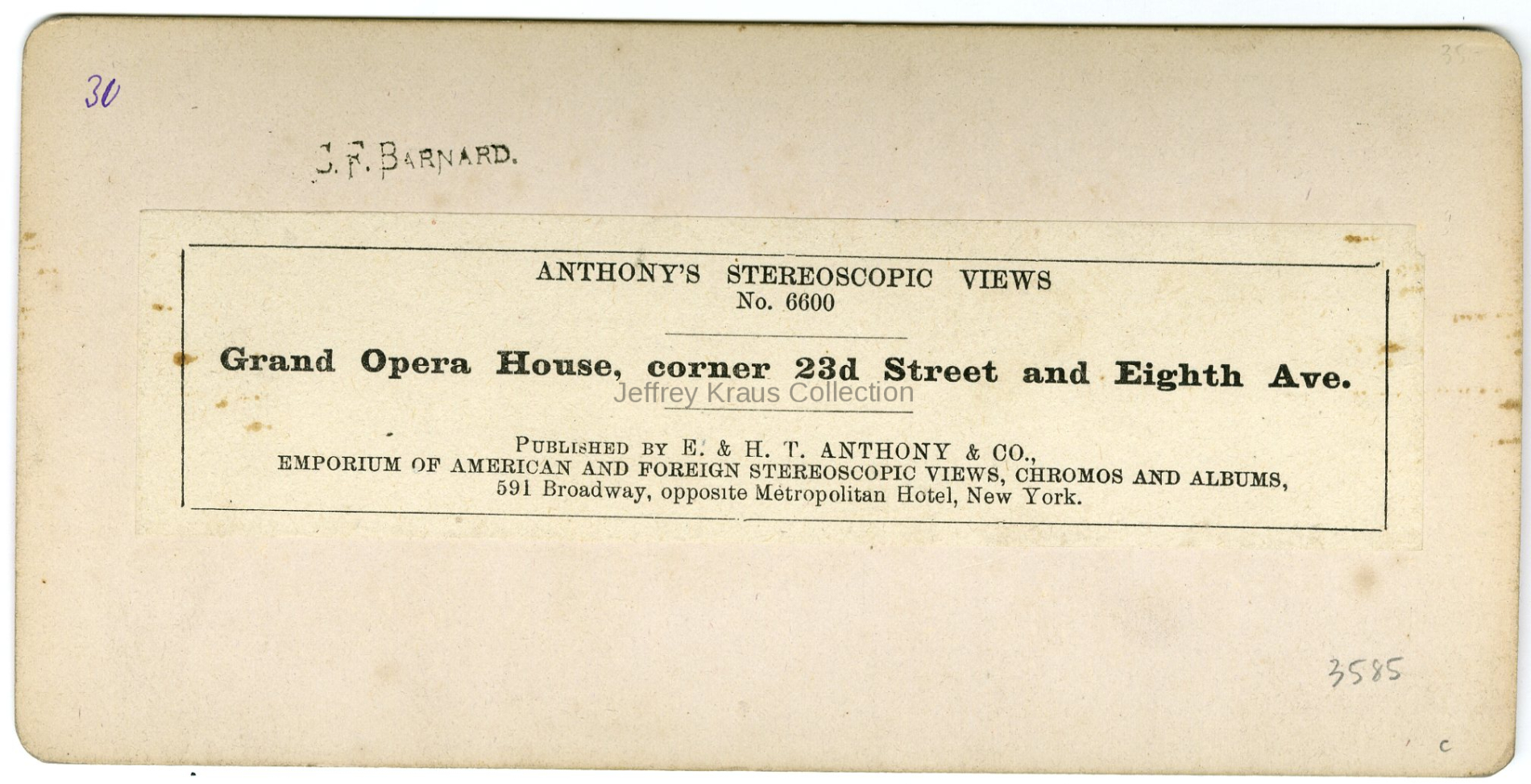
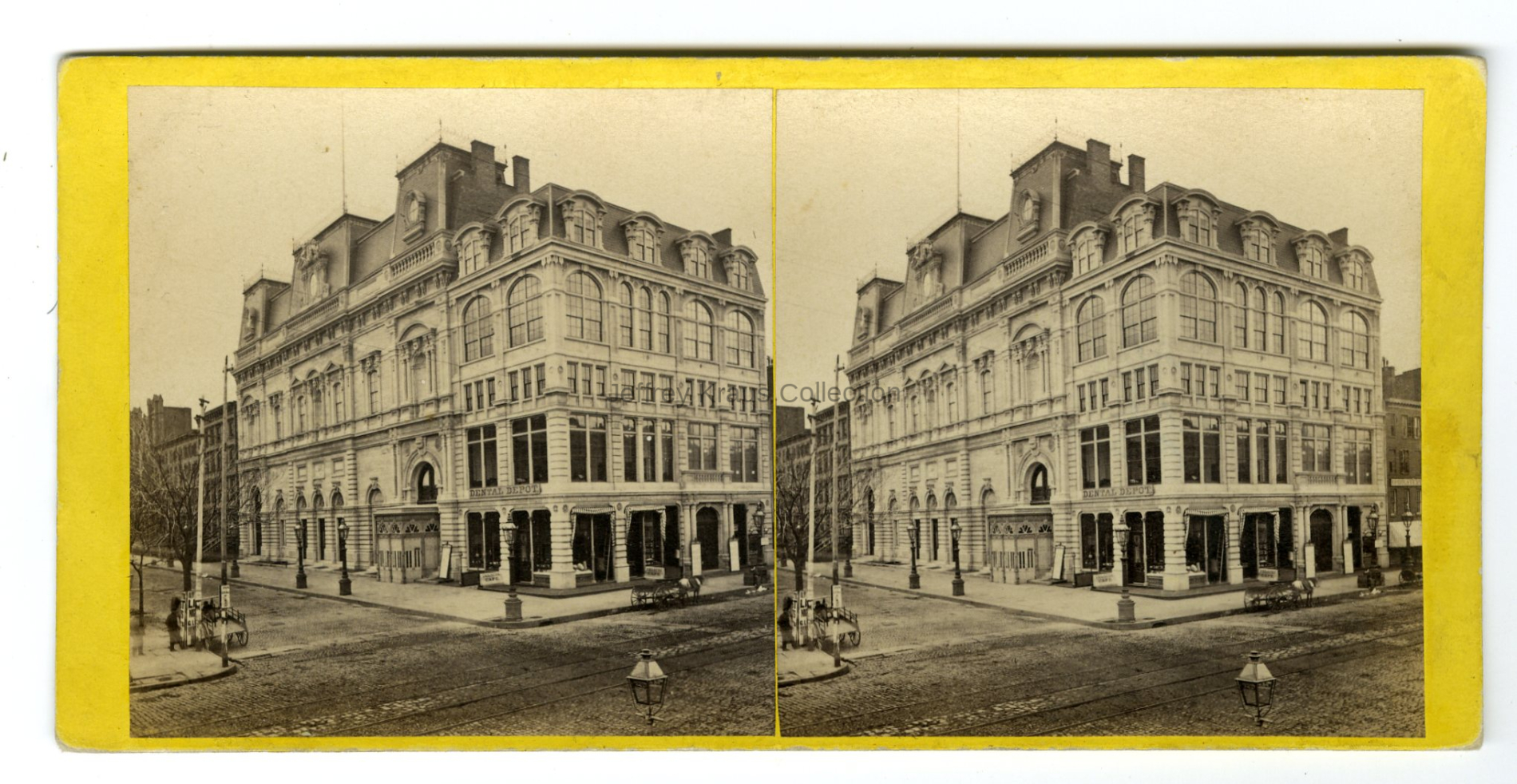
Grand Opera House, corner 23d Street and Eighth Ave.
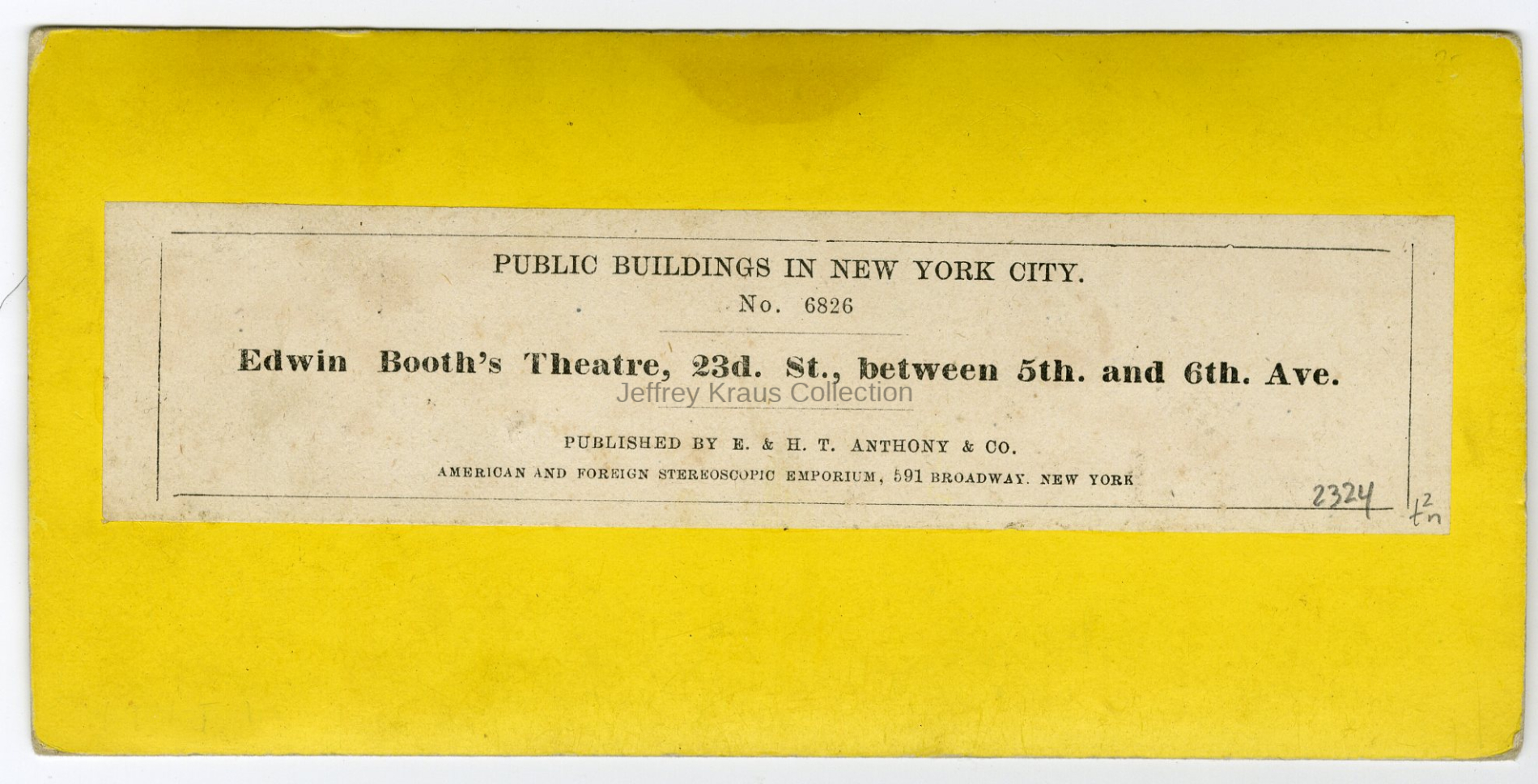
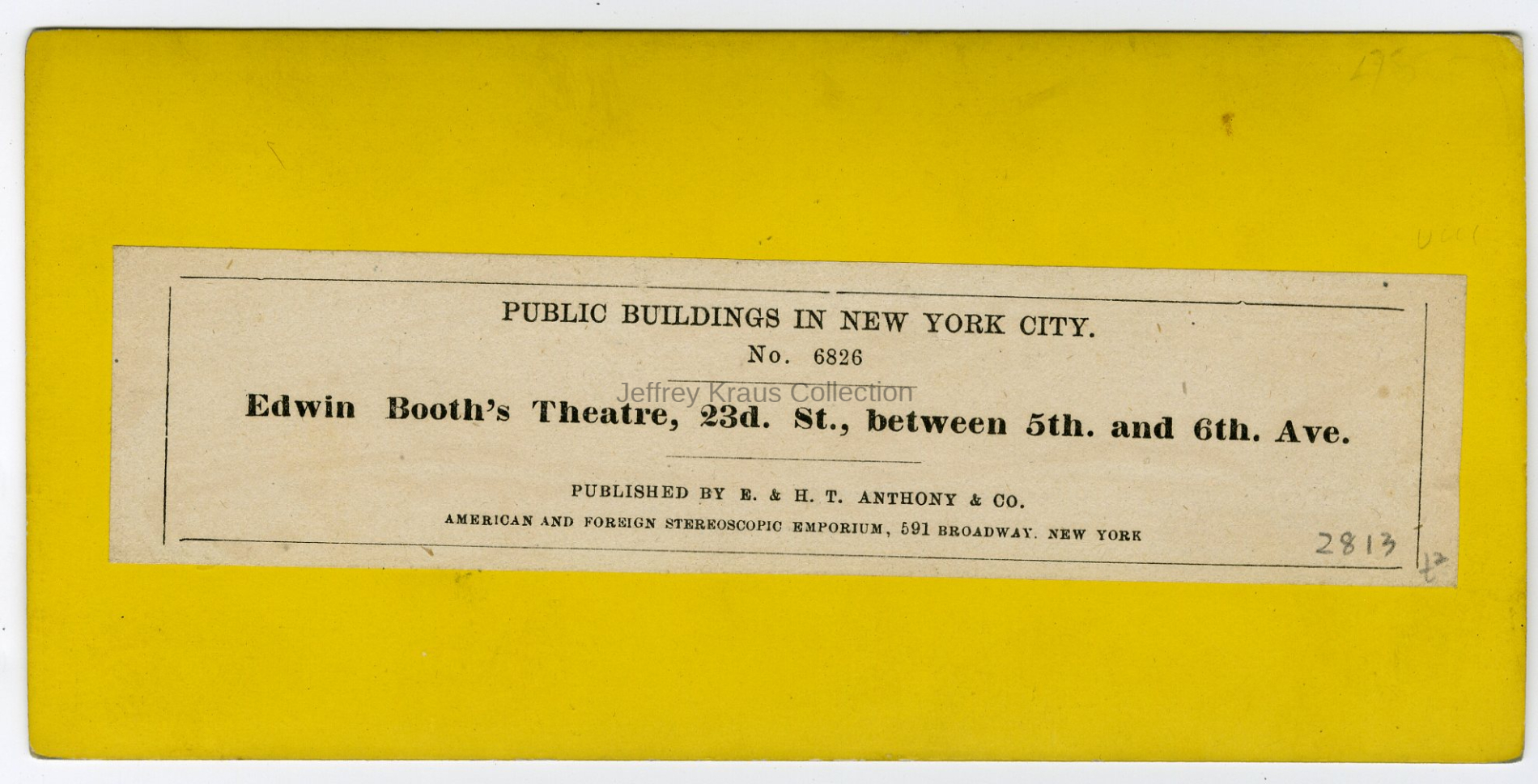
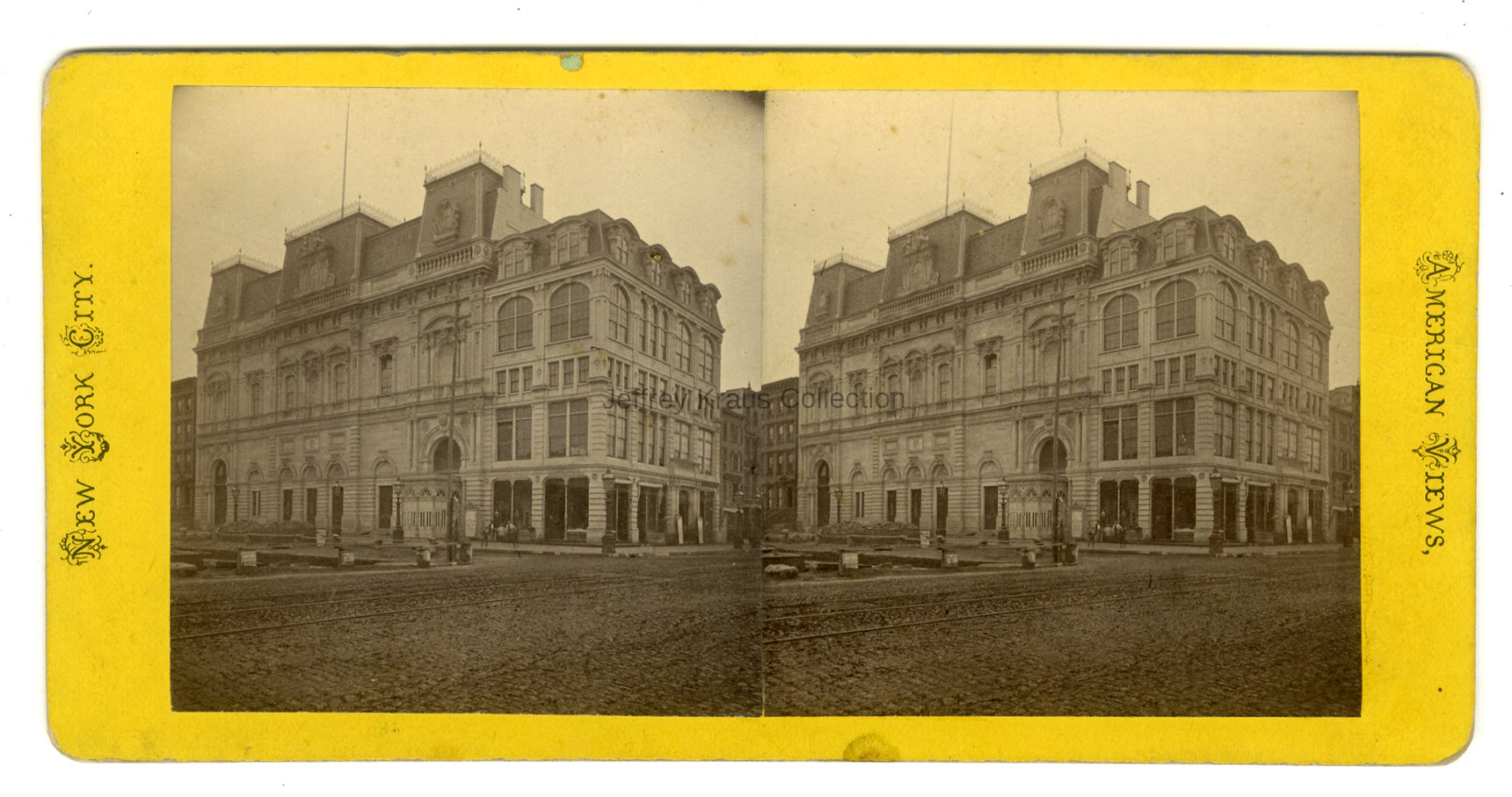
Edwin Booth’s Theatre, 23d St., between 5th. and 6th. Ave. Booth’s Theatre was a theatre in New York built by actor Edwin Booth. Located on the southeast corner of 23rd Street and Sixth Avenue, Booth’s Theatre opened on February 3, 1869. The theatre featured a grand vestibule with Italian marble floors and a large statue of Edwin Booth’s father, the Shakespearean actor Junius Brutus Booth, by the sculptor Thomas Ridgeway Gould. The auditorium was similarly elaborate in its decor, and featured a large chandelier, as well as a stage that incorporated the most modern machinery in use at the time, such as hydraulic rams to raise and lower scenery, and stage lights that could be completely extinguished during the performance, a first in the United States. Despite the appearances by important talent of the times, Booth could not make the theatre a financially viable enterprise. It was sold in December 1881, and was converted into McCreery & Co. department store until 1965, when it was demolished to make room for a parking lot.
Edwin Booth’s Theatre, 23d St., between 5th. and 6th. Ave. Booth’s Theatre was a theatre in New York built by actor Edwin Booth. Located on the southeast corner of 23rd Street and Sixth Avenue, Booth’s Theatre opened on February 3, 1869. The theatre featured a grand vestibule with Italian marble floors and a large statue of Edwin Booth’s father, the Shakespearean actor Junius Brutus Booth, by the sculptor Thomas Ridgeway Gould. The auditorium was similarly elaborate in its decor, and featured a large chandelier, as well as a stage that incorporated the most modern machinery in use at the time, such as hydraulic rams to raise and lower scenery, and stage lights that could be completely extinguished during the performance, a first in the United States. Despite the appearances by important talent of the times, Booth could not make the theatre a financially viable enterprise. It was sold in December 1881, and was converted into McCreery & Co. department store until 1965, when it was demolished to make room for a parking lot.
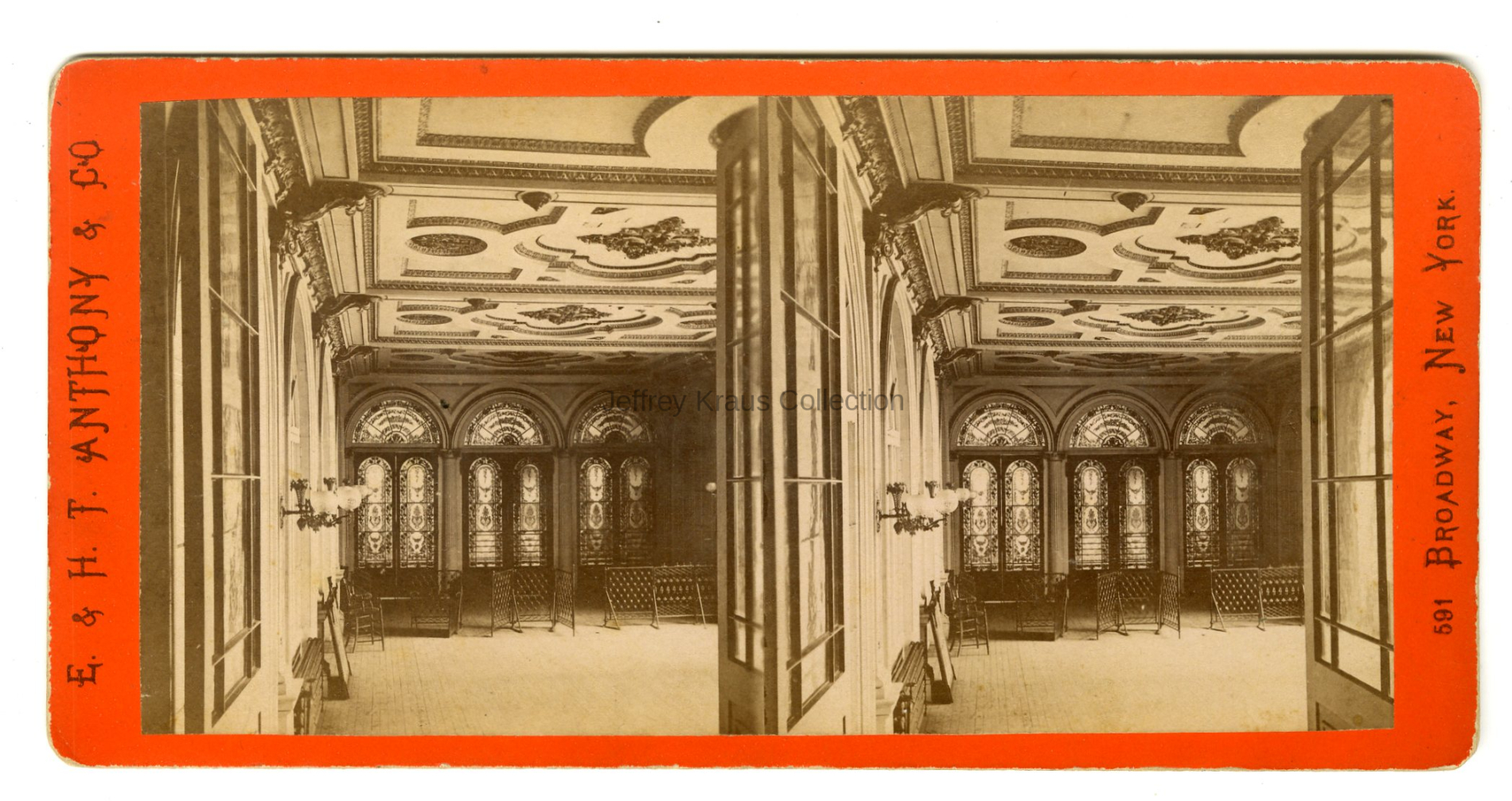
Niblo’s Theatre–Vestibule.
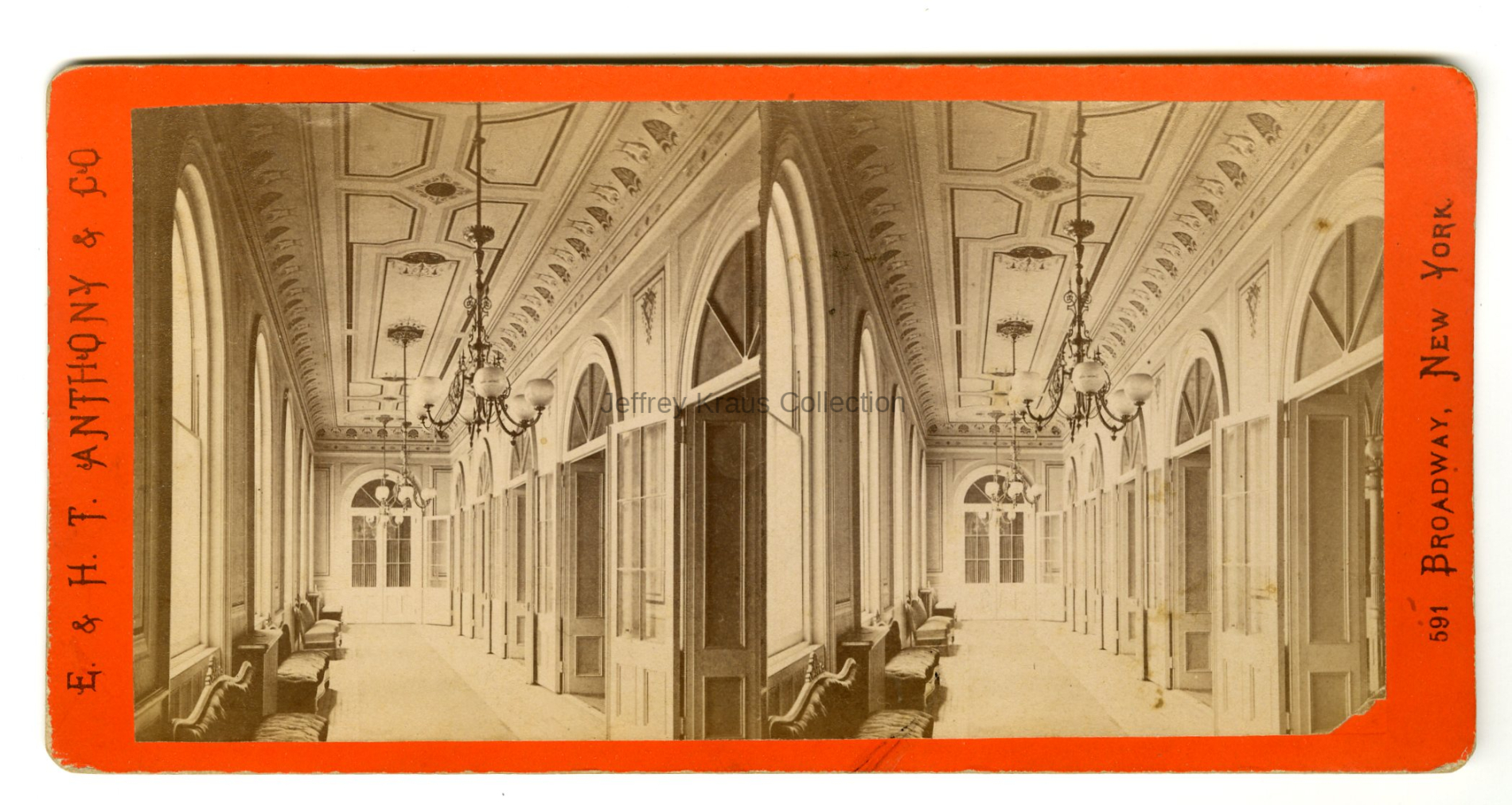
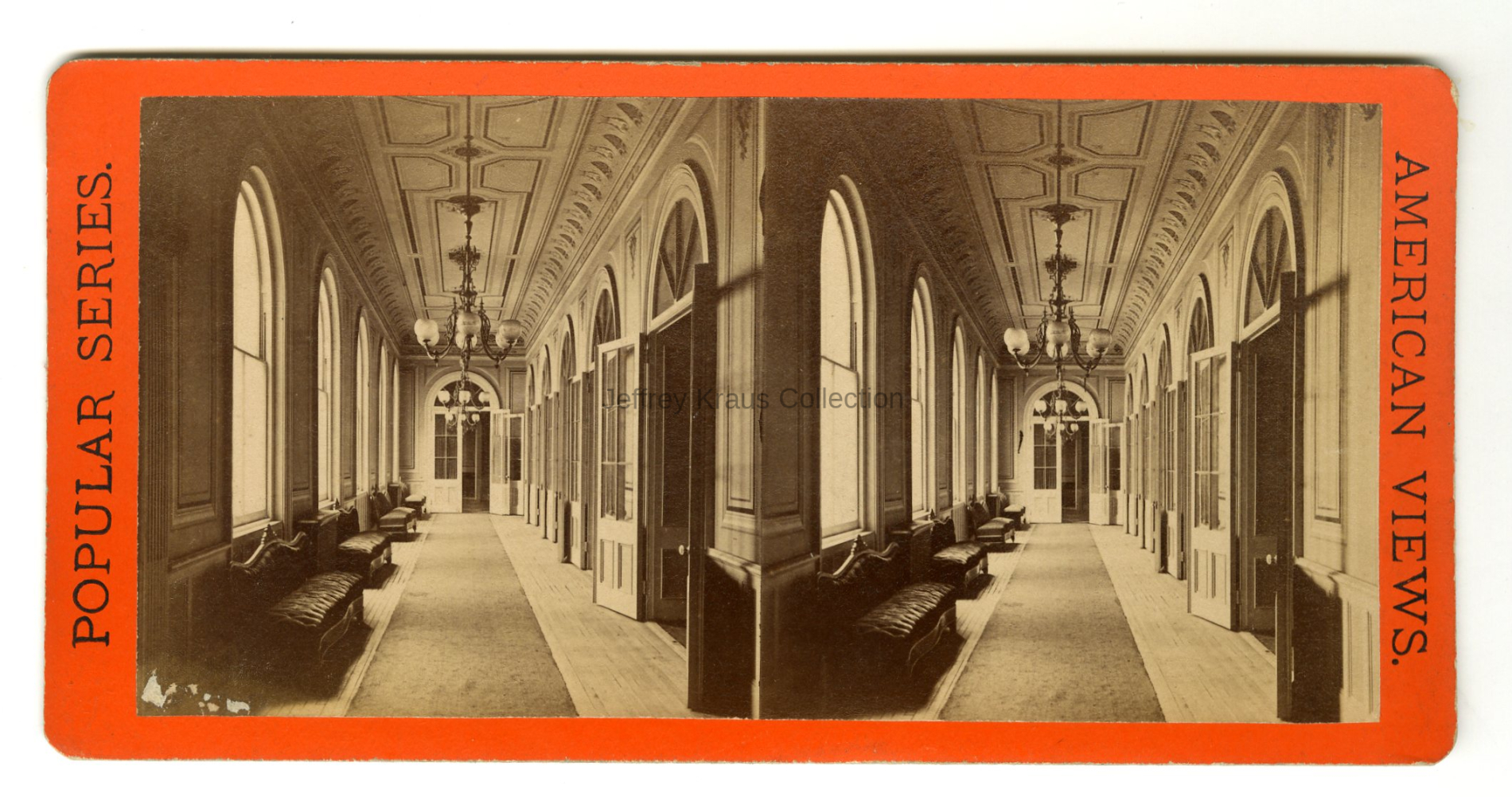
Niblo’s Theatre–Passage to A.T. Stewart’s Private Box.
Niblo’s Theatre–Passage to A.T. Stewart’s Private Box.
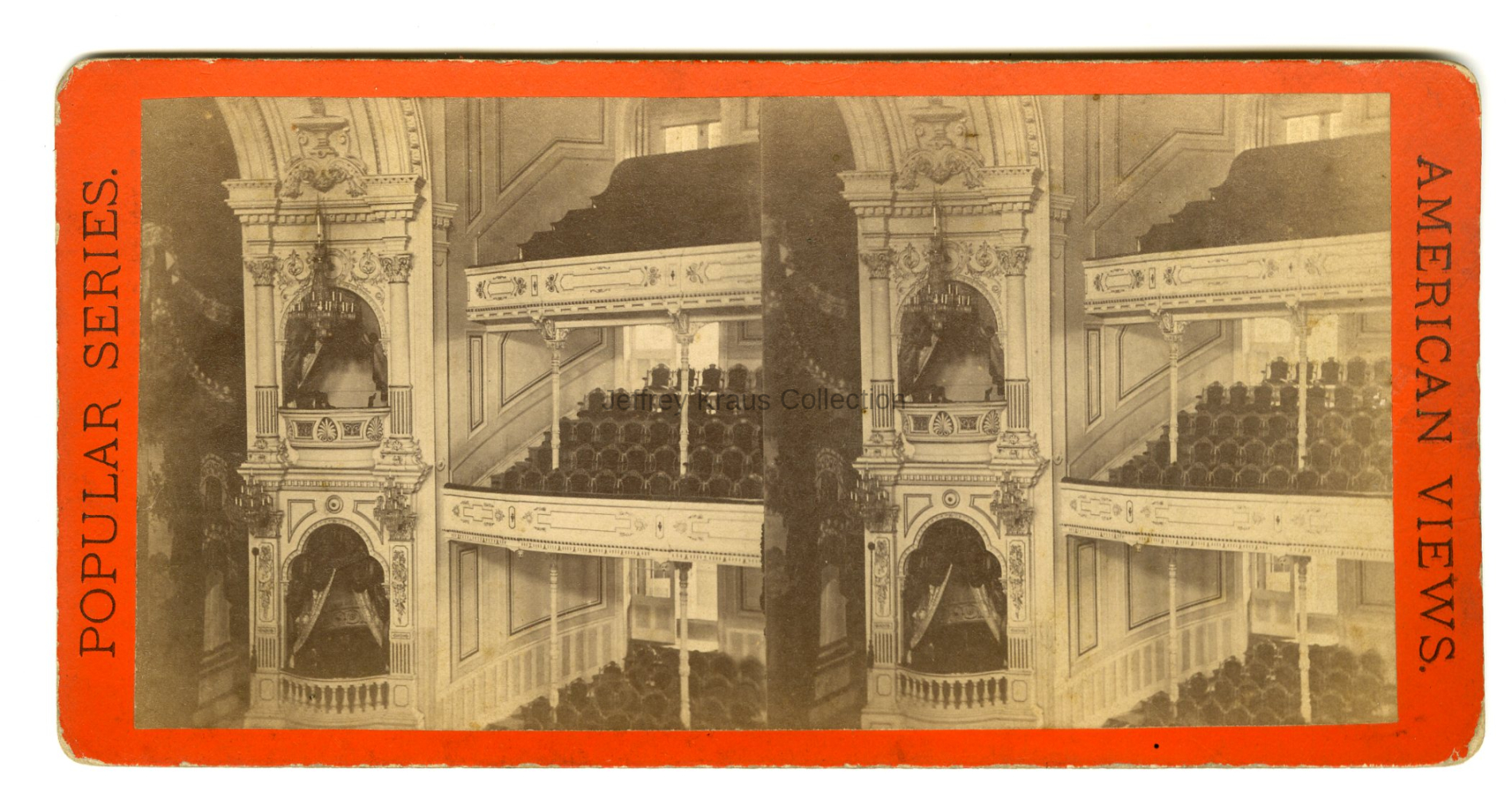
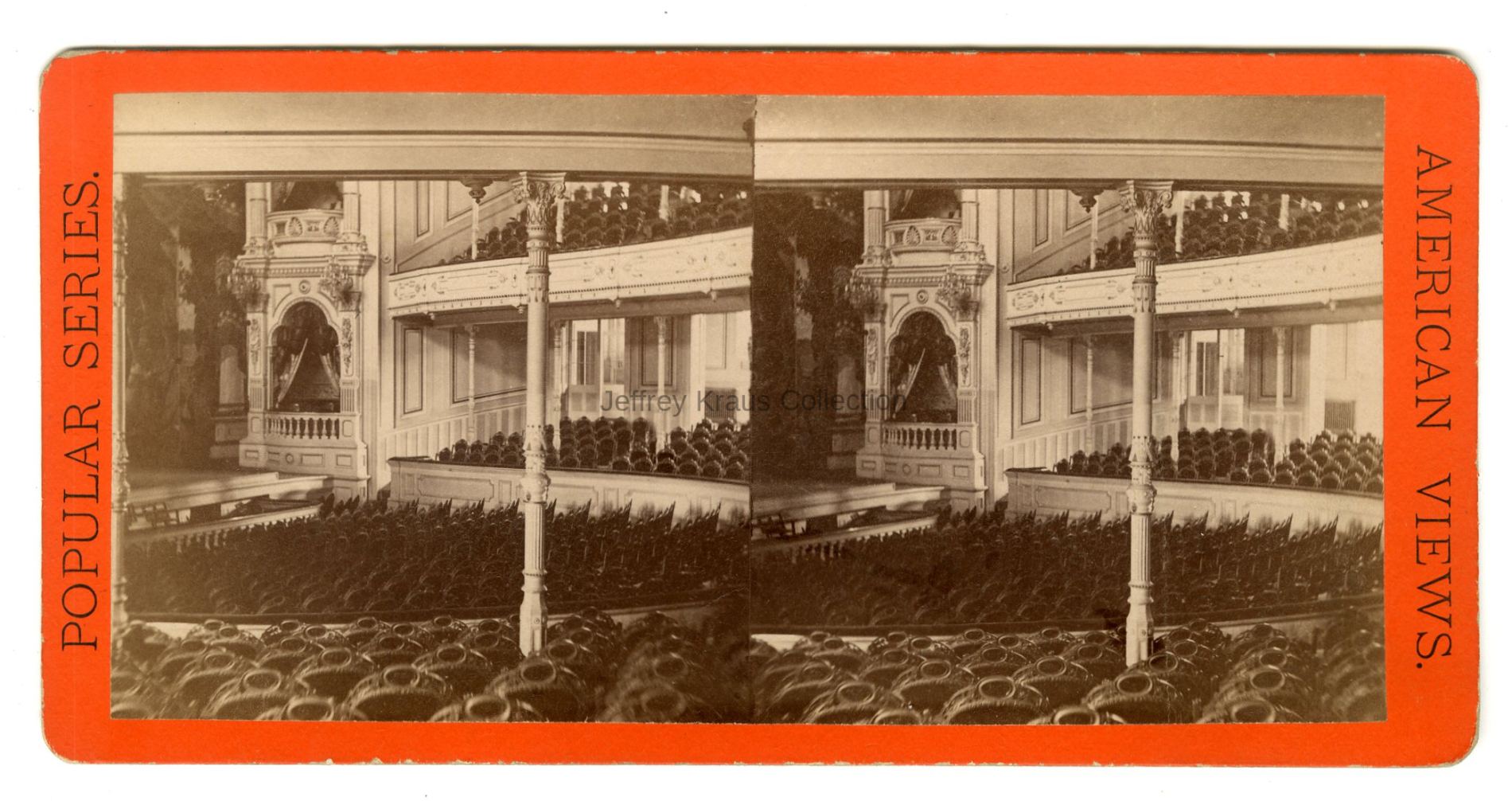
Niblo’s Theatre–Private Boxes.
Niblo’s Theatre–Private Boxes.
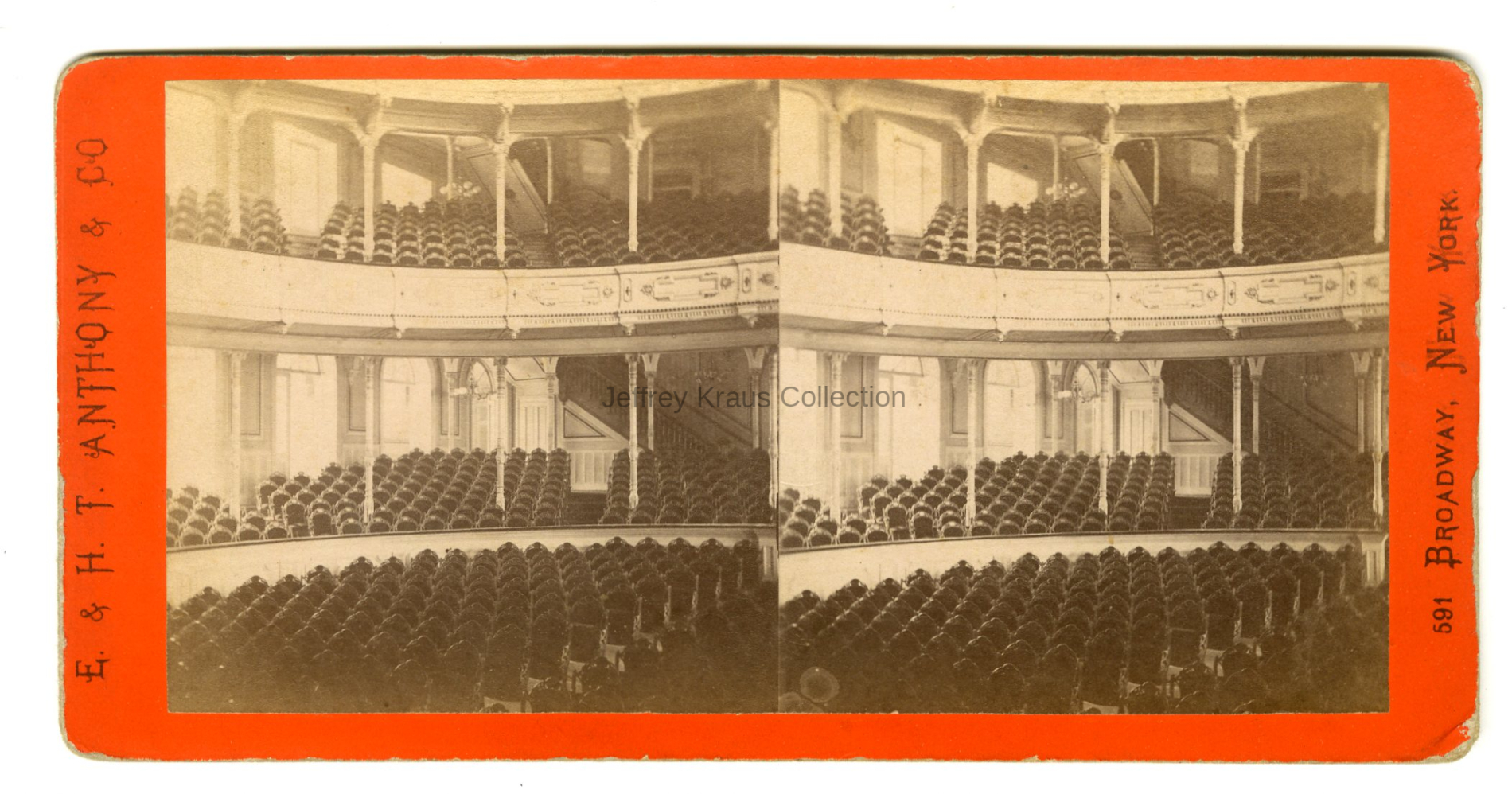
Niblo’s Theatre–General View from the Stage.
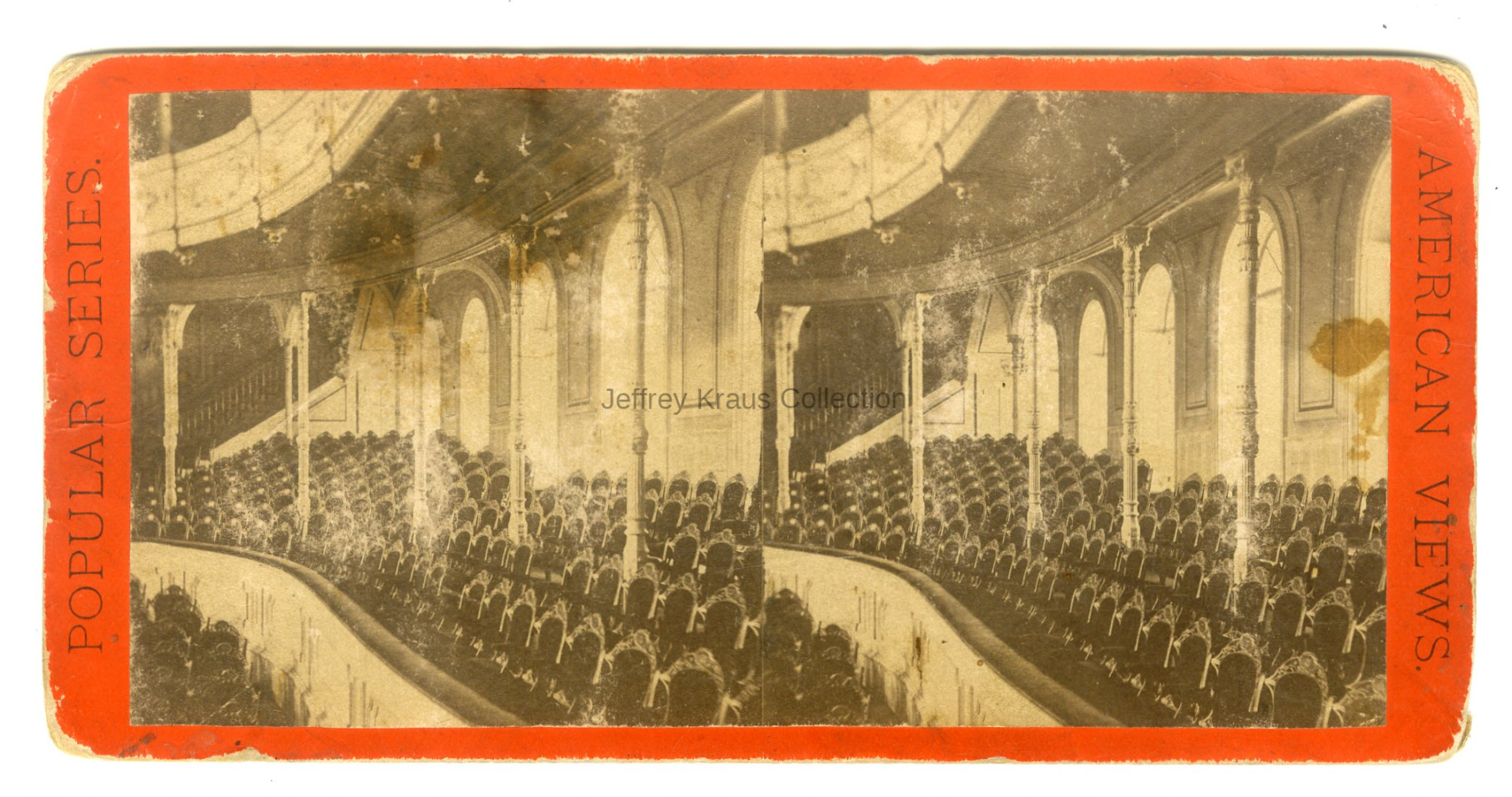
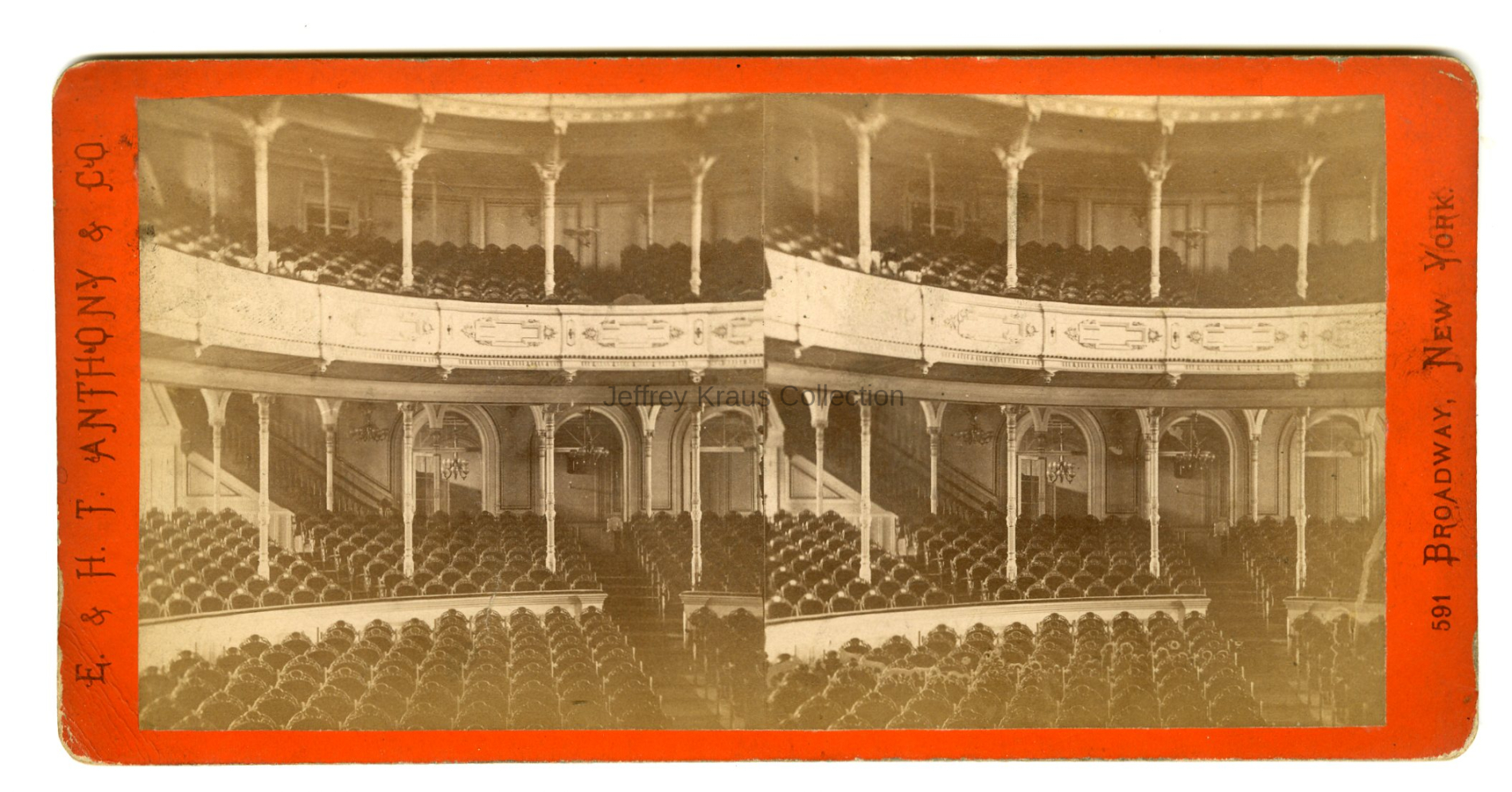
Niblo’s Theatre-View under the Gallery.
Niblo’s Theatre–View from the Stage.
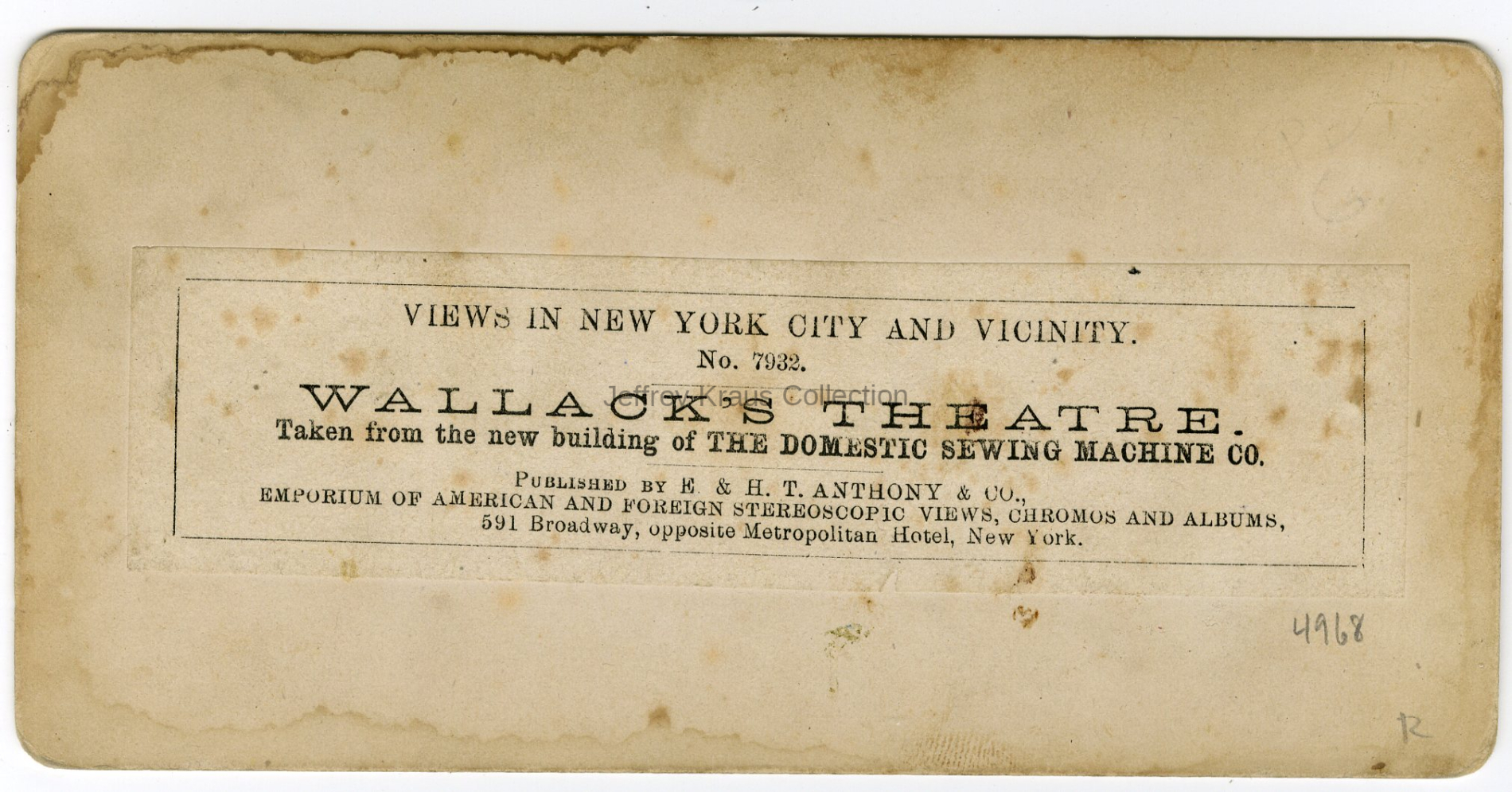
Wallack’s Theatre. Taken from the new building of the Domestic Sewing Machine Co.
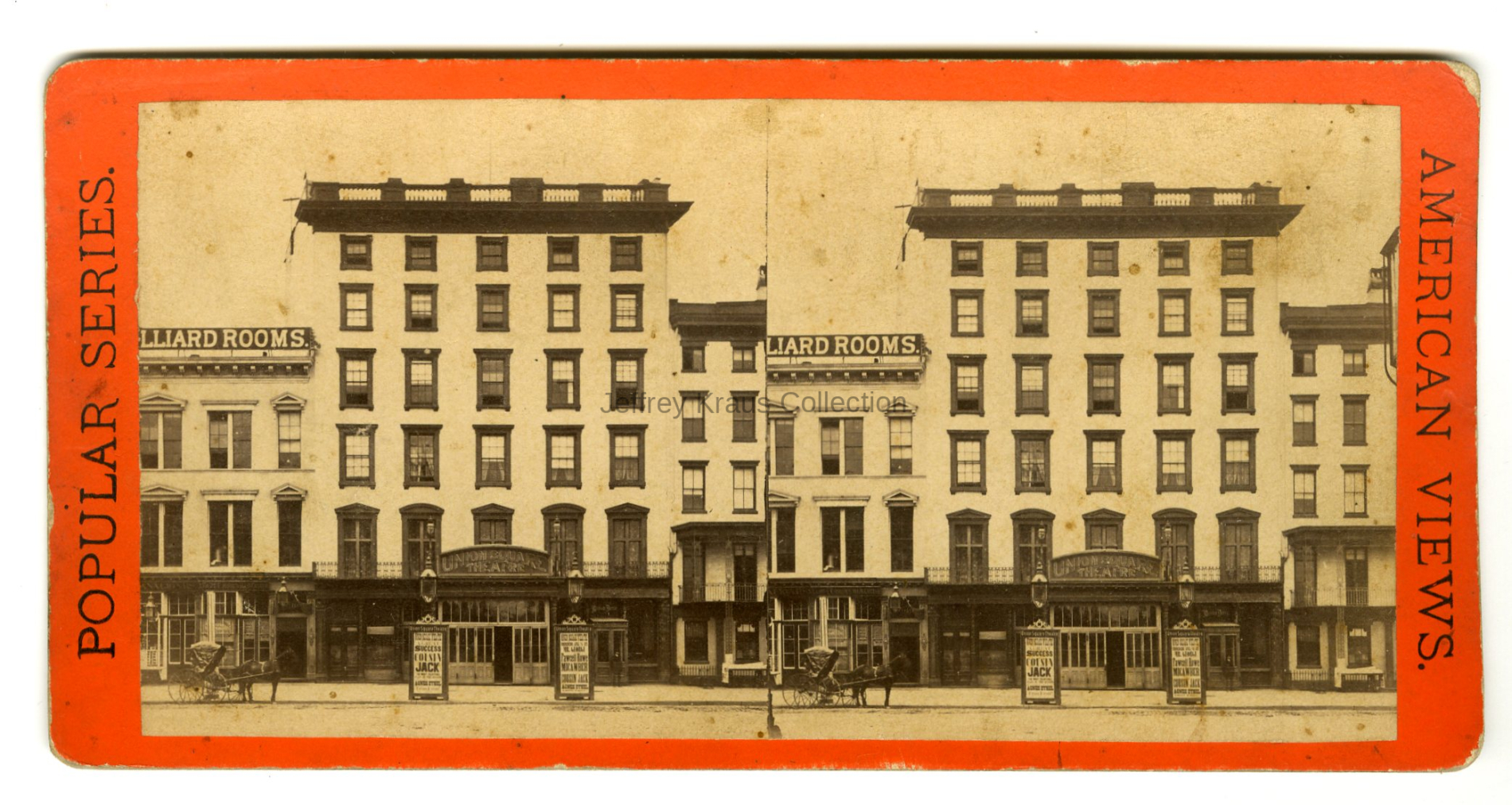
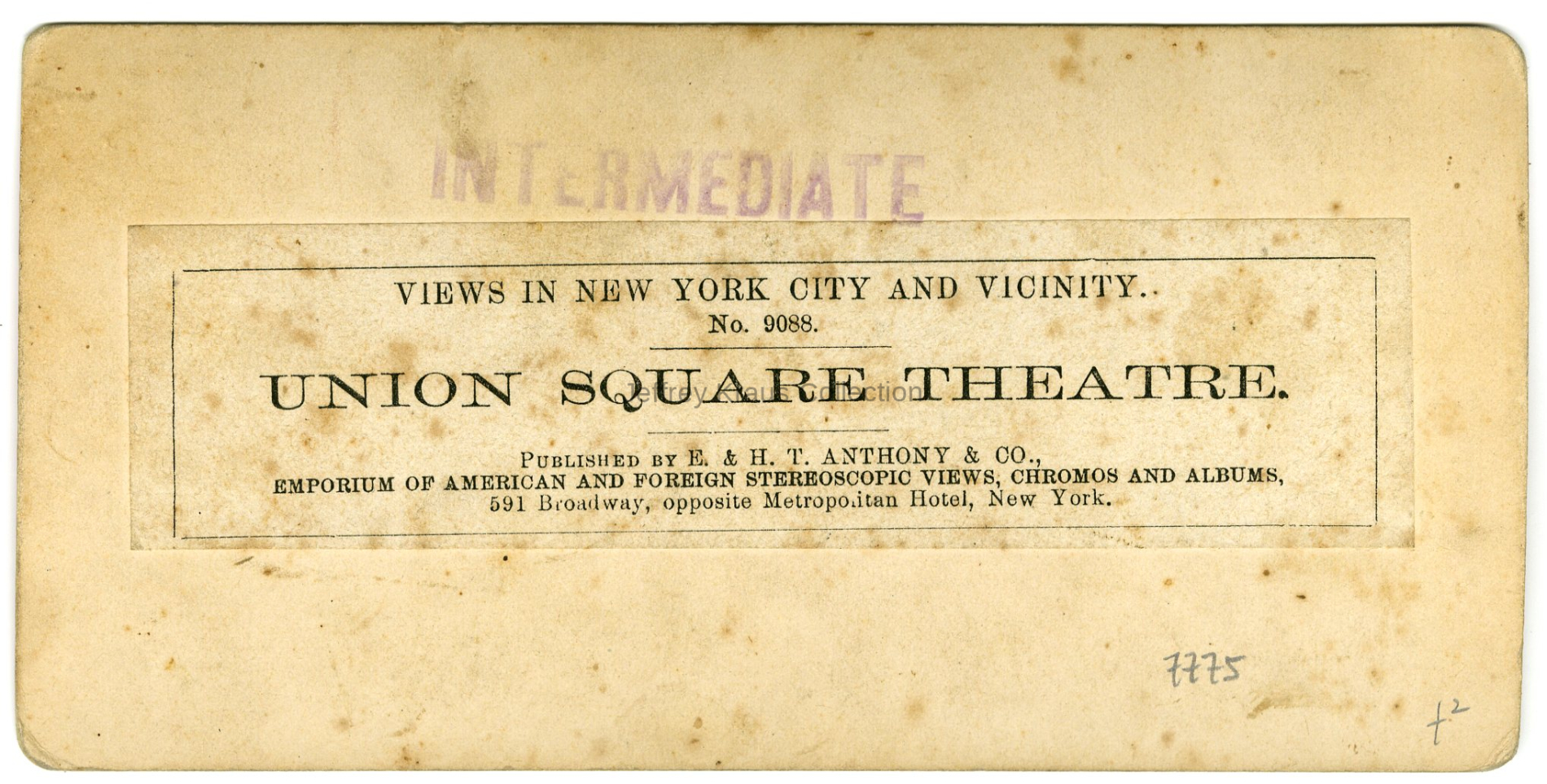
Union Square Theatre.
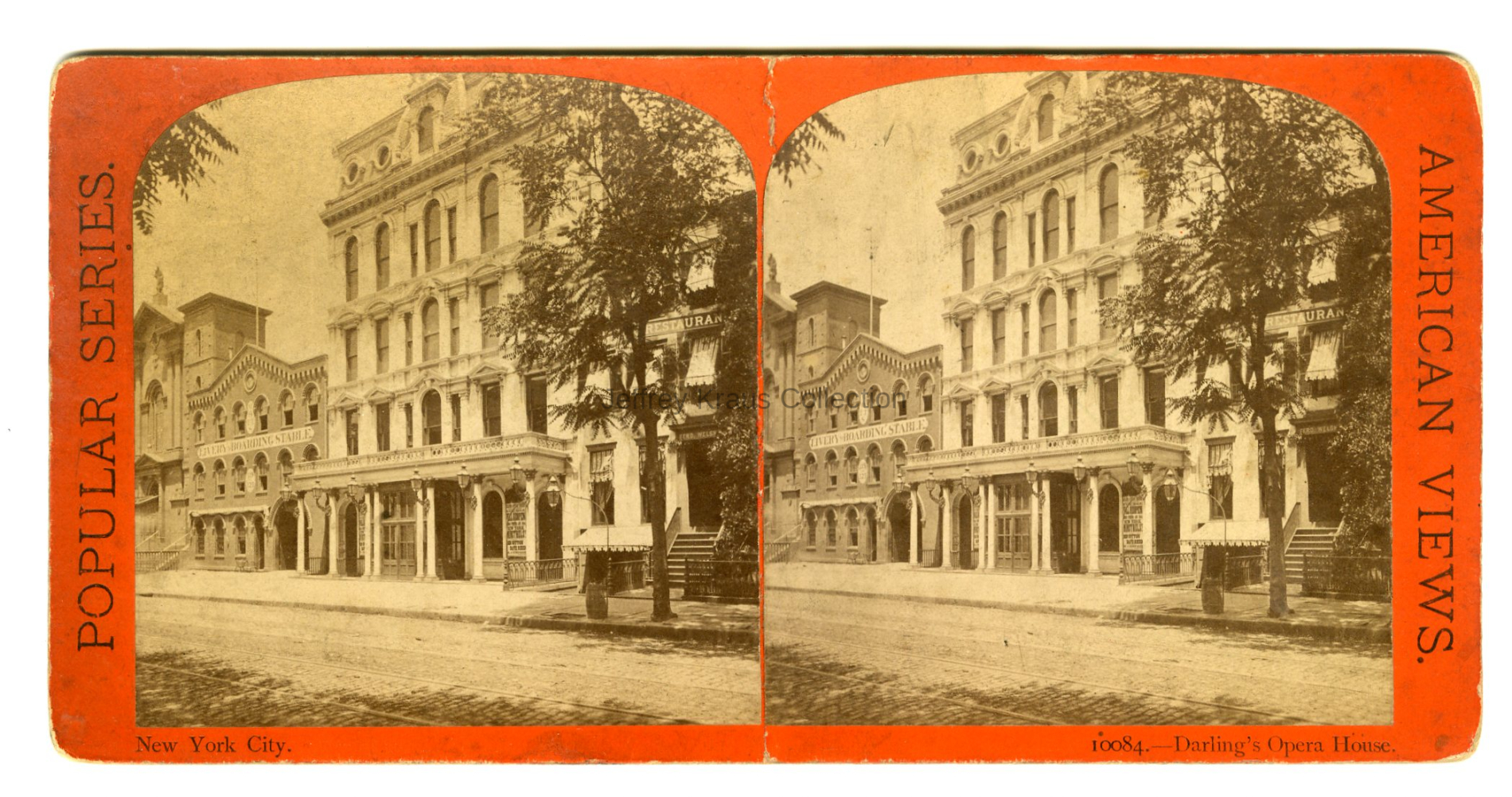
Darling’s Opera House.
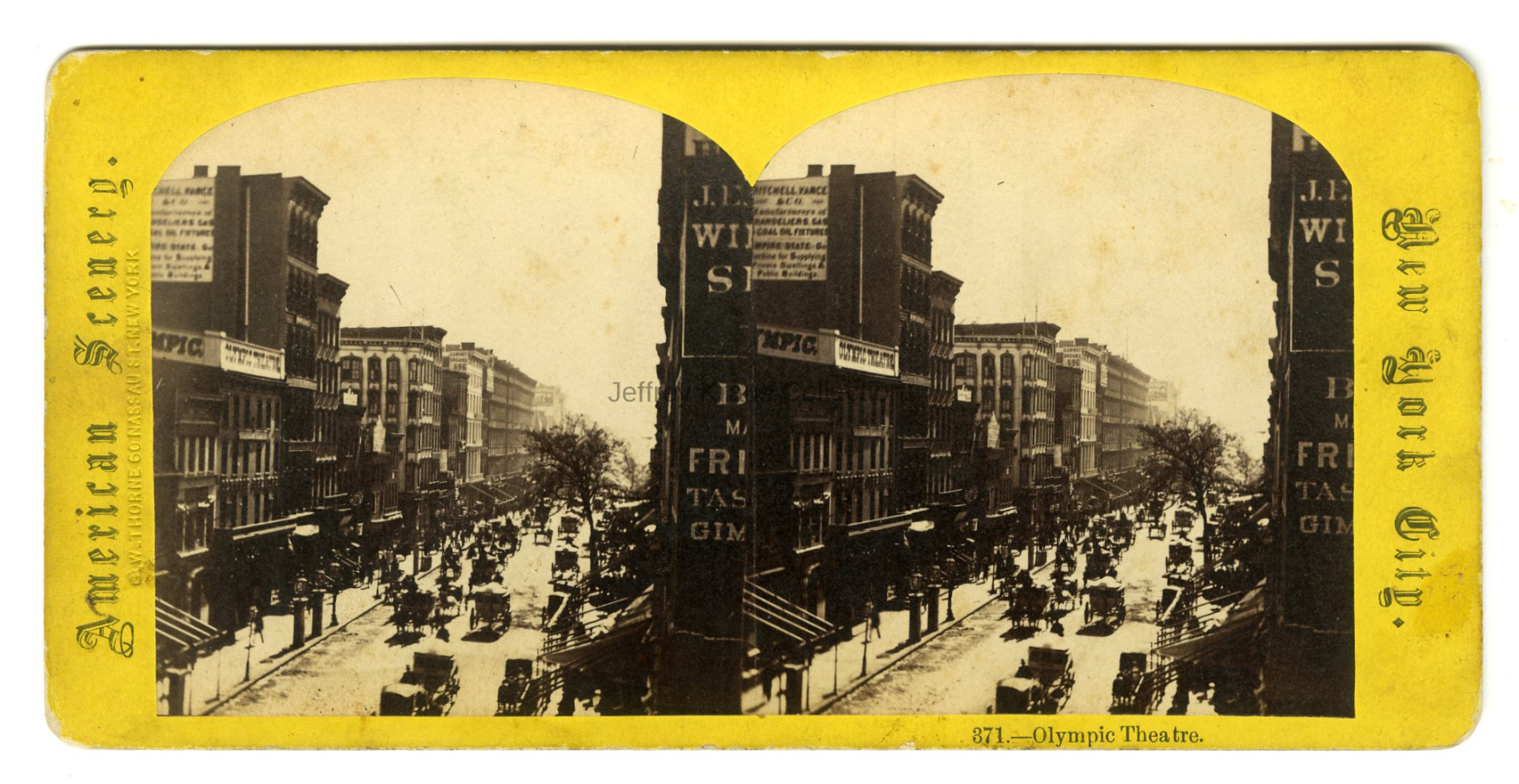
371.-Olympic Theatre.
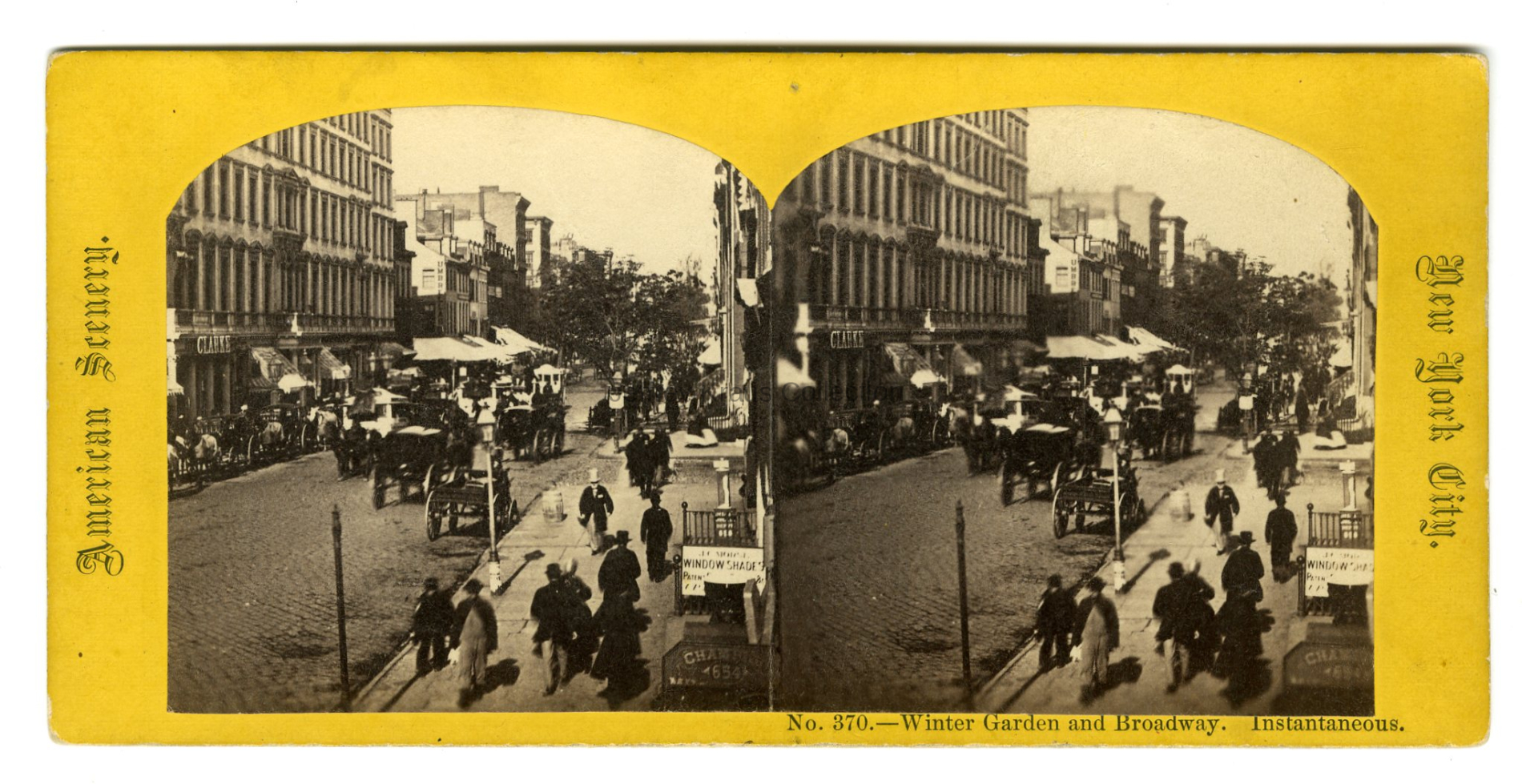
No. 370.-Winter Garden and Broadway. Instantaneous.
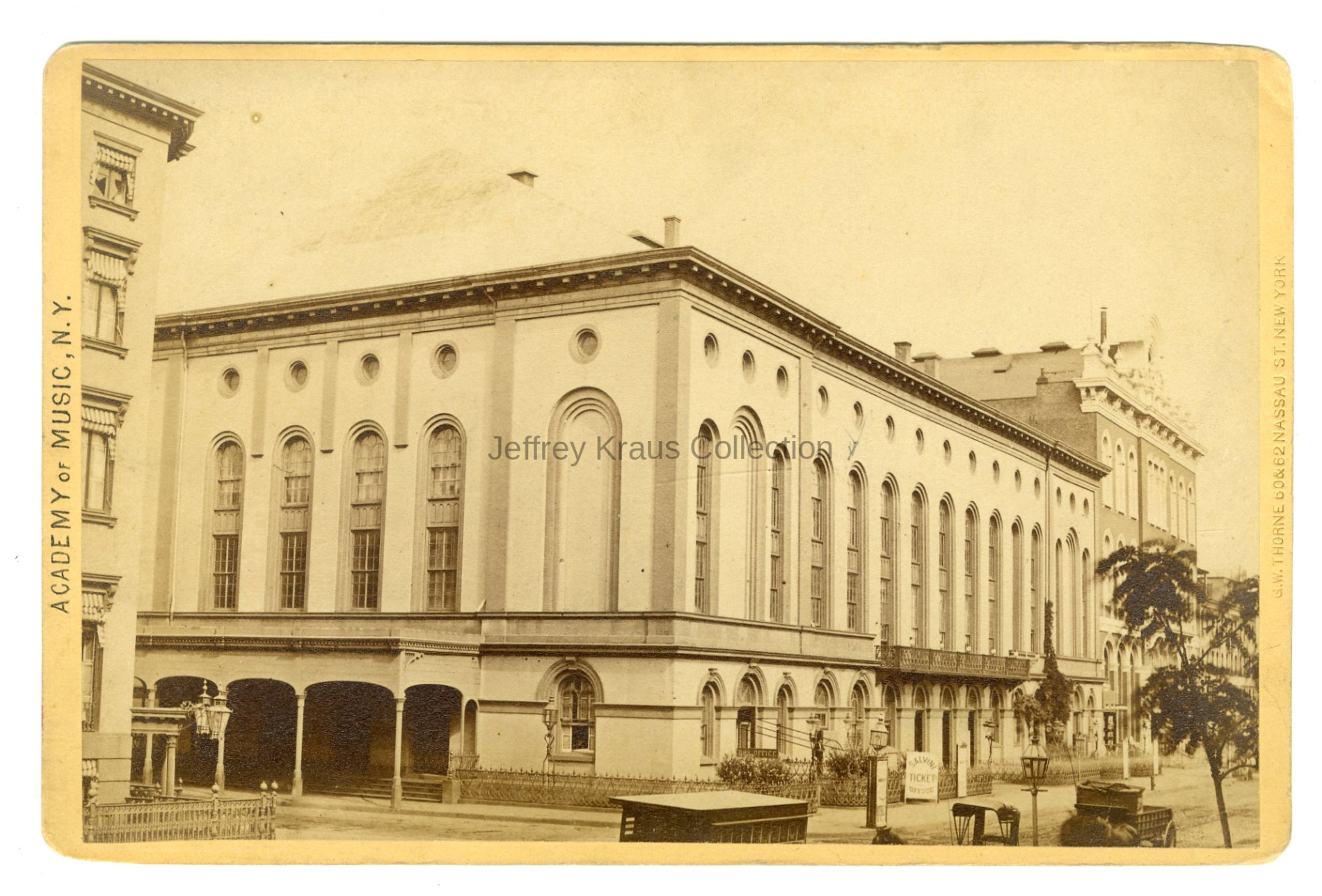
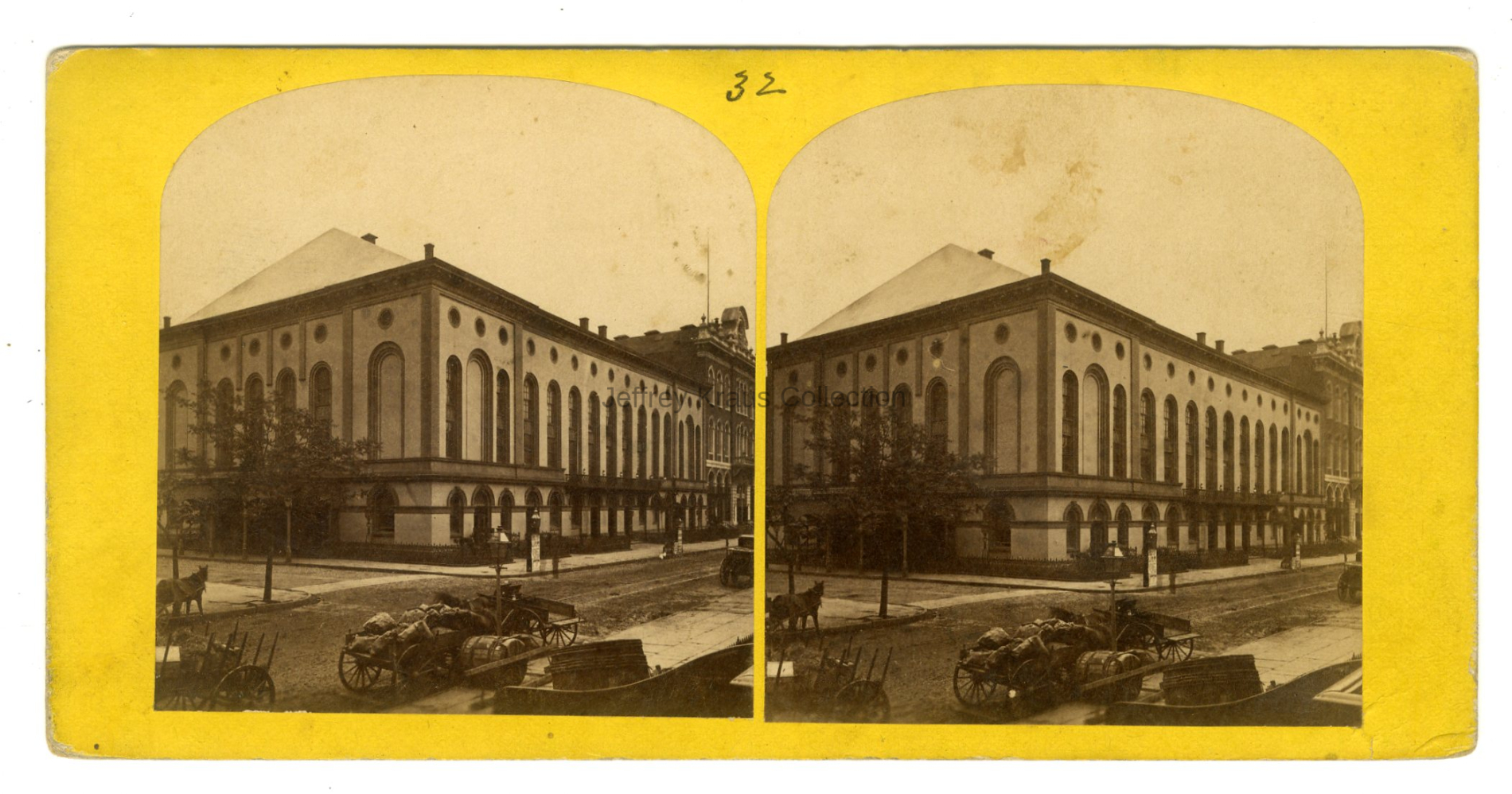
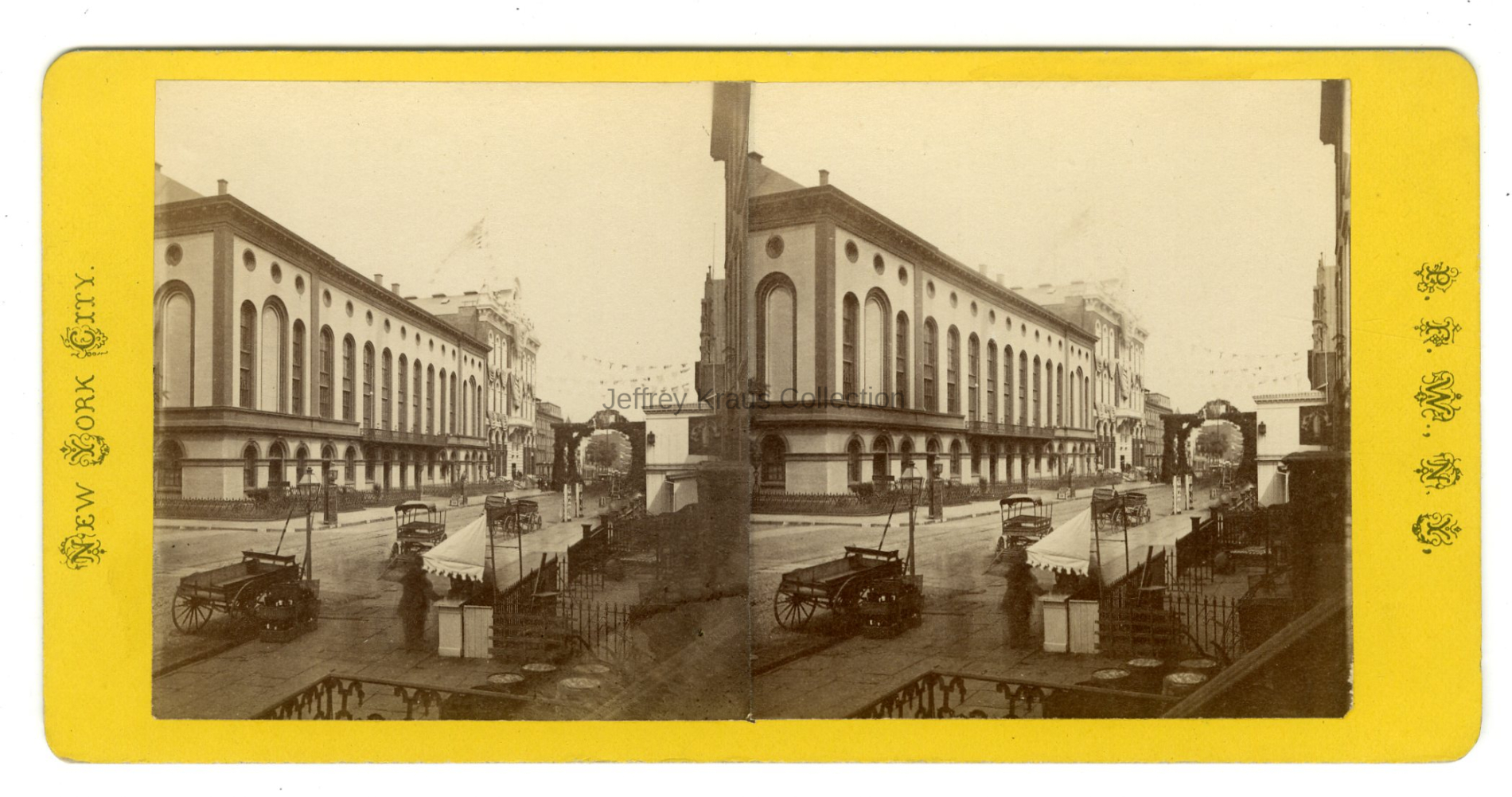
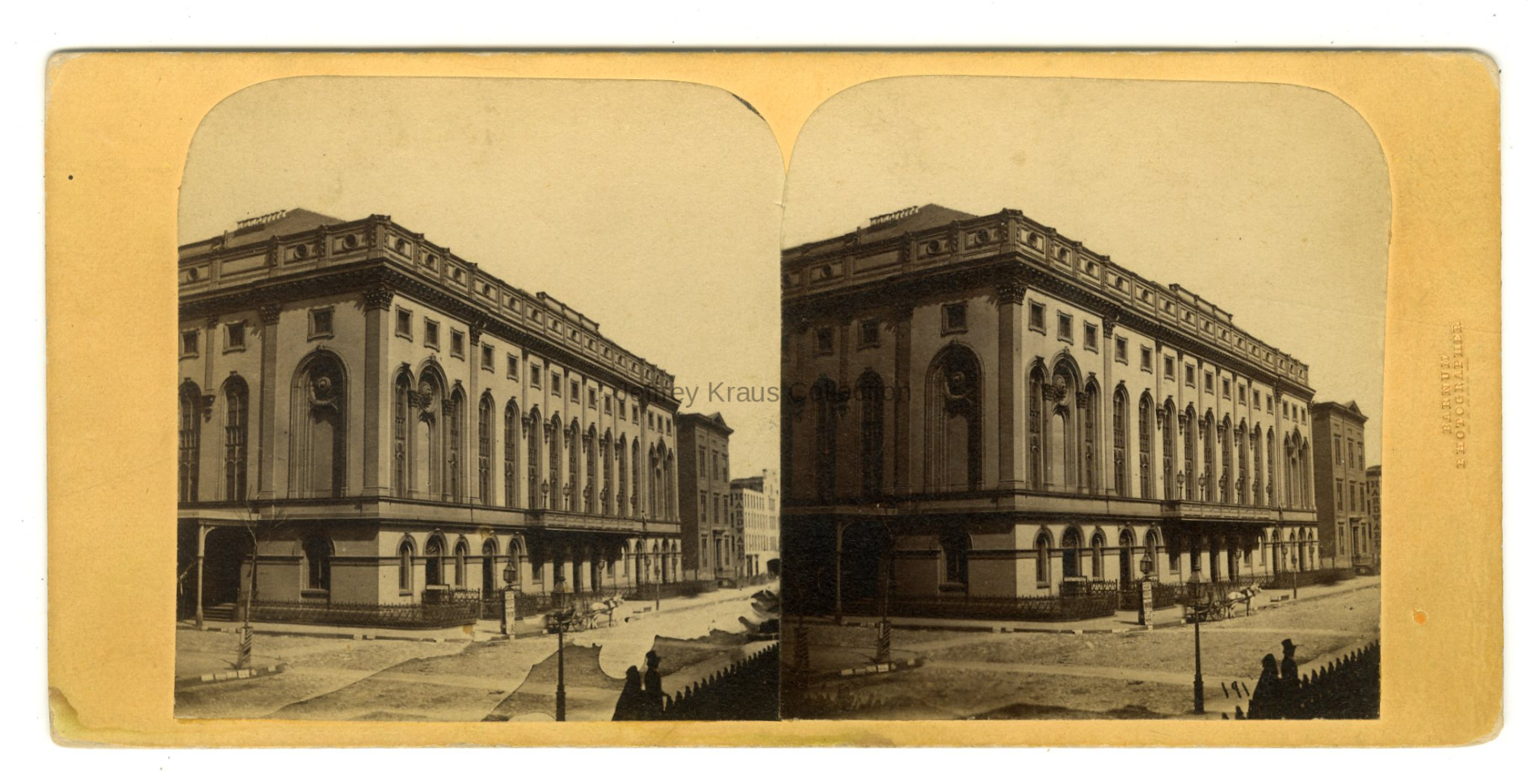
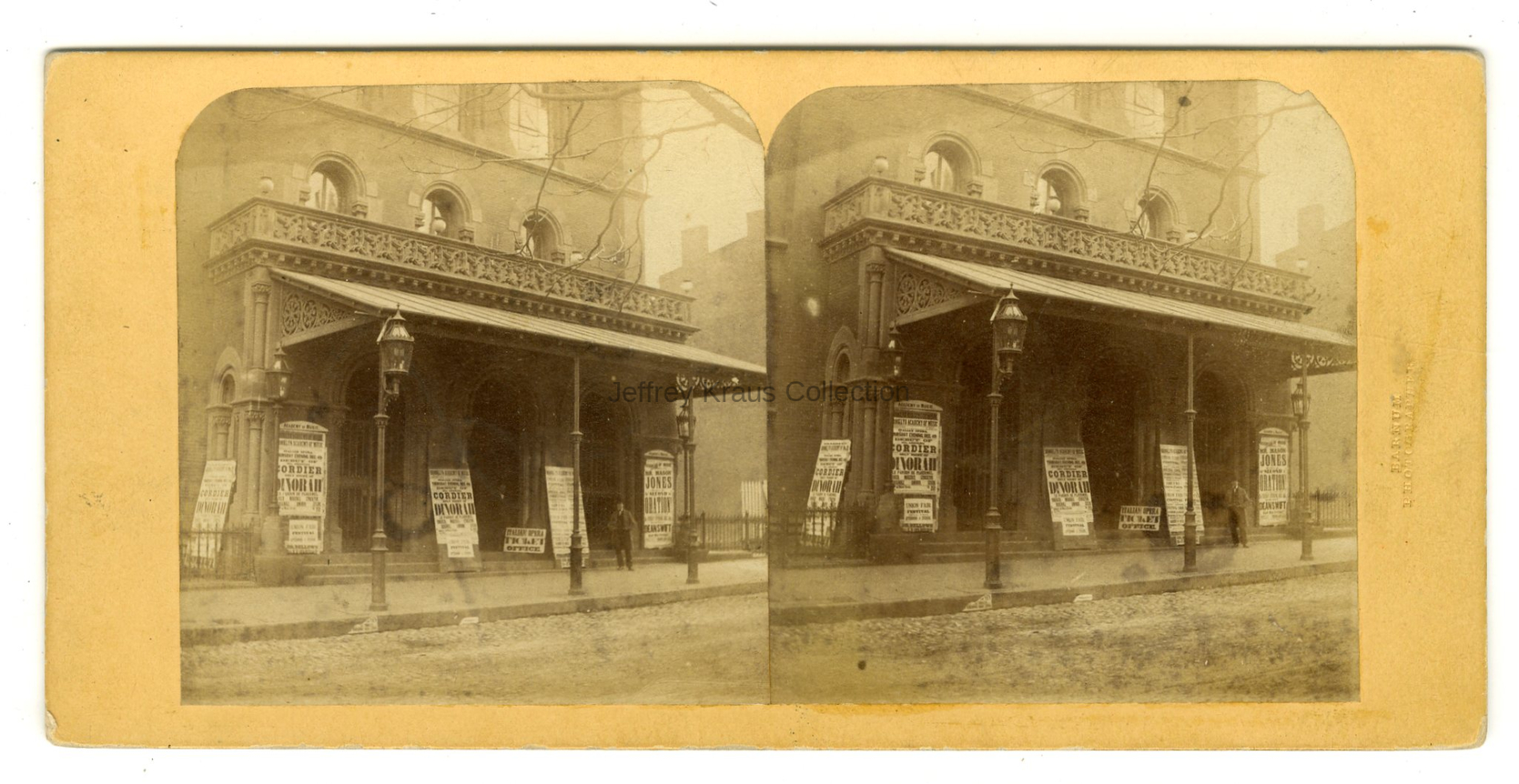
Academy of Music.
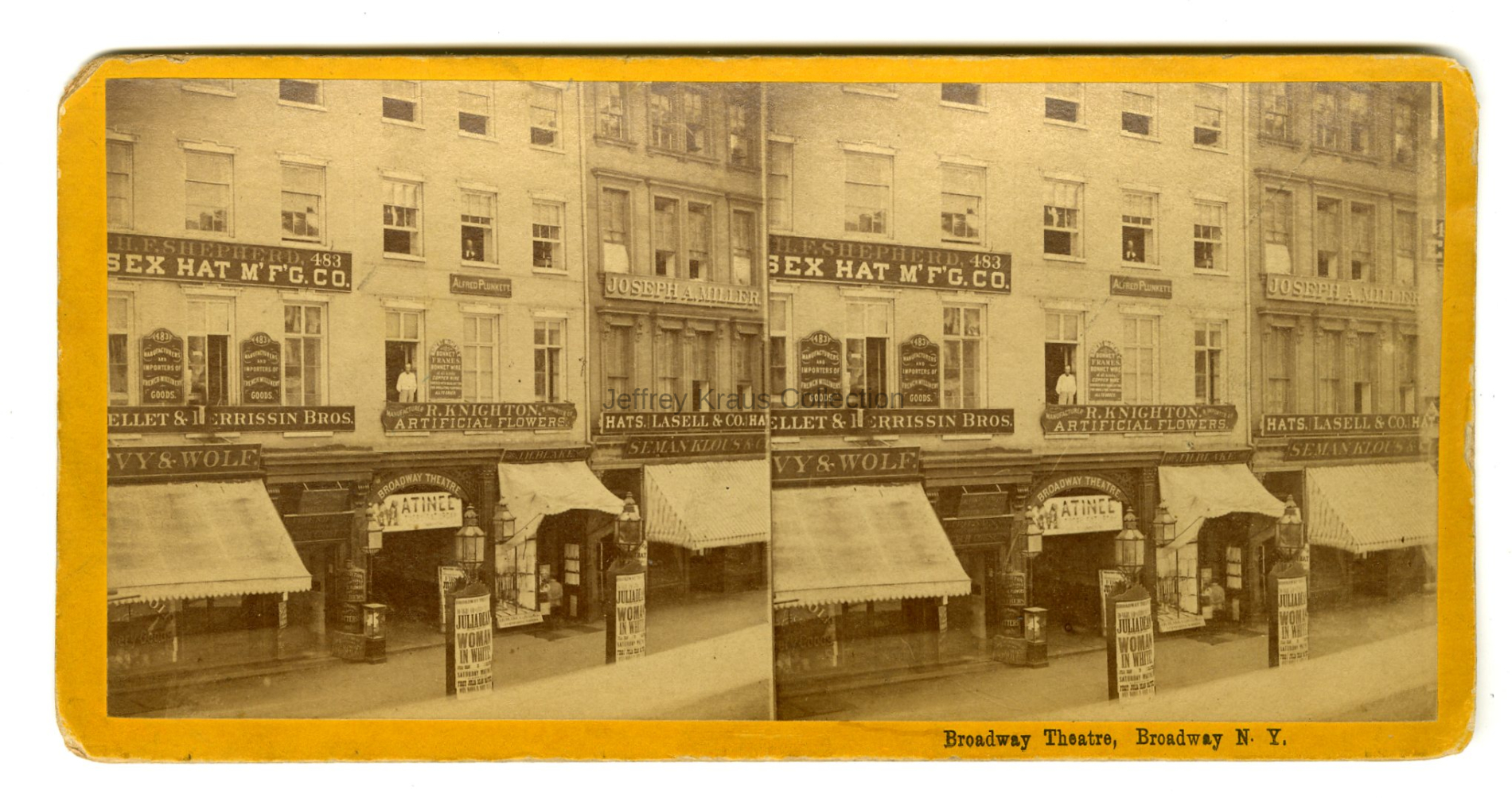
Broadway Theatre, Broadway, NY.
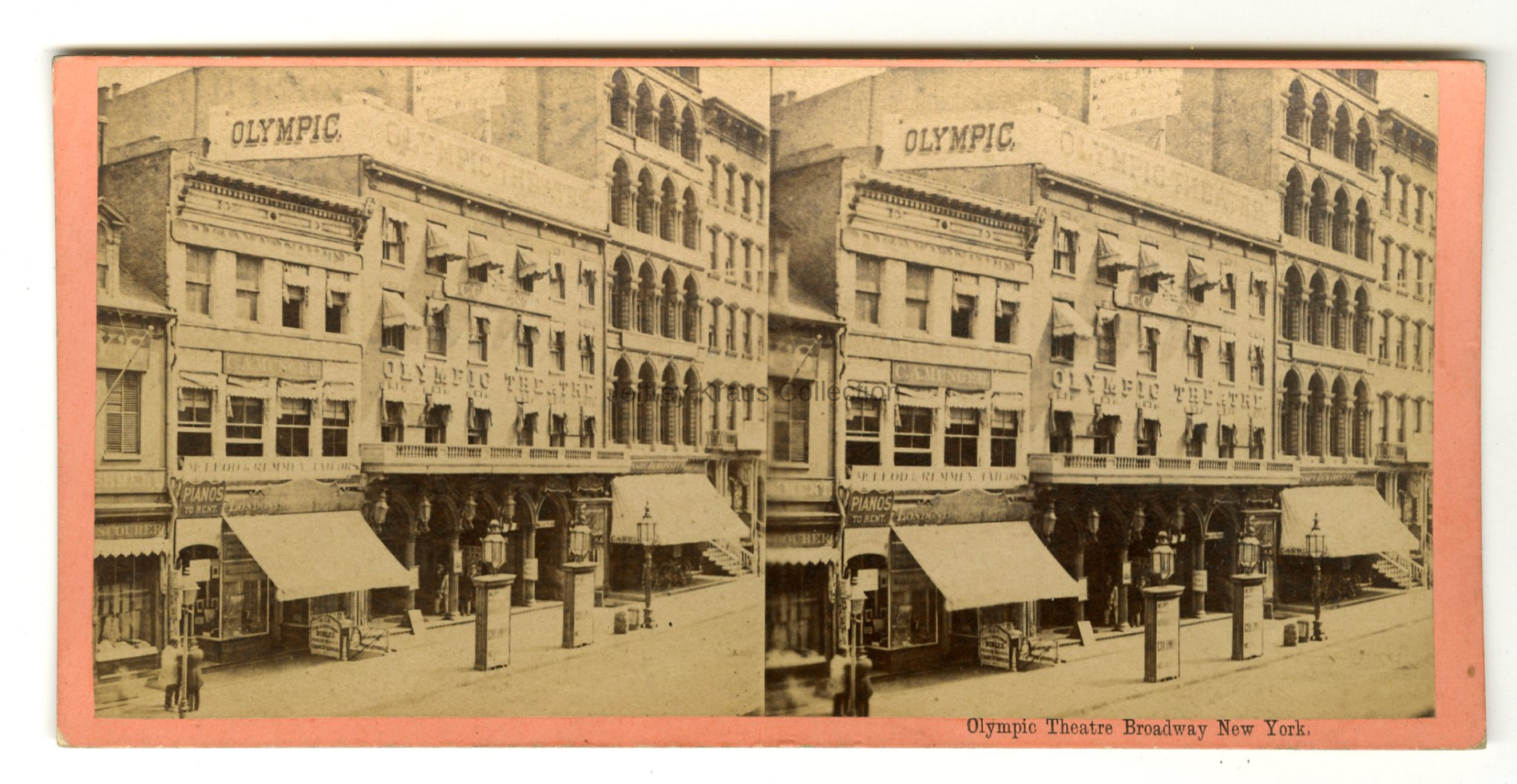
Olympic Theatre, Broadway, New York.
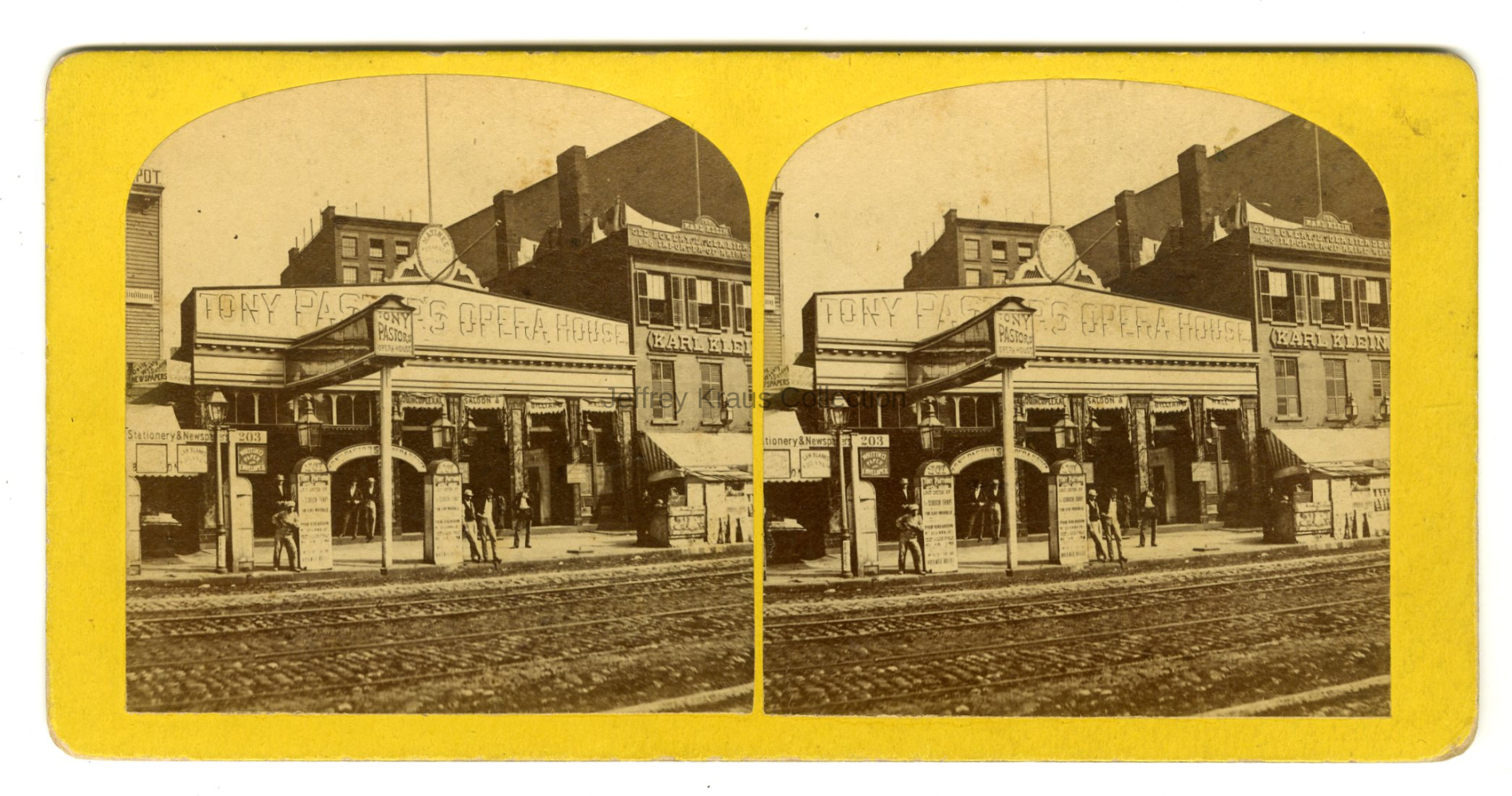
Tony Pastor’s Opera House, Bowery, New York.
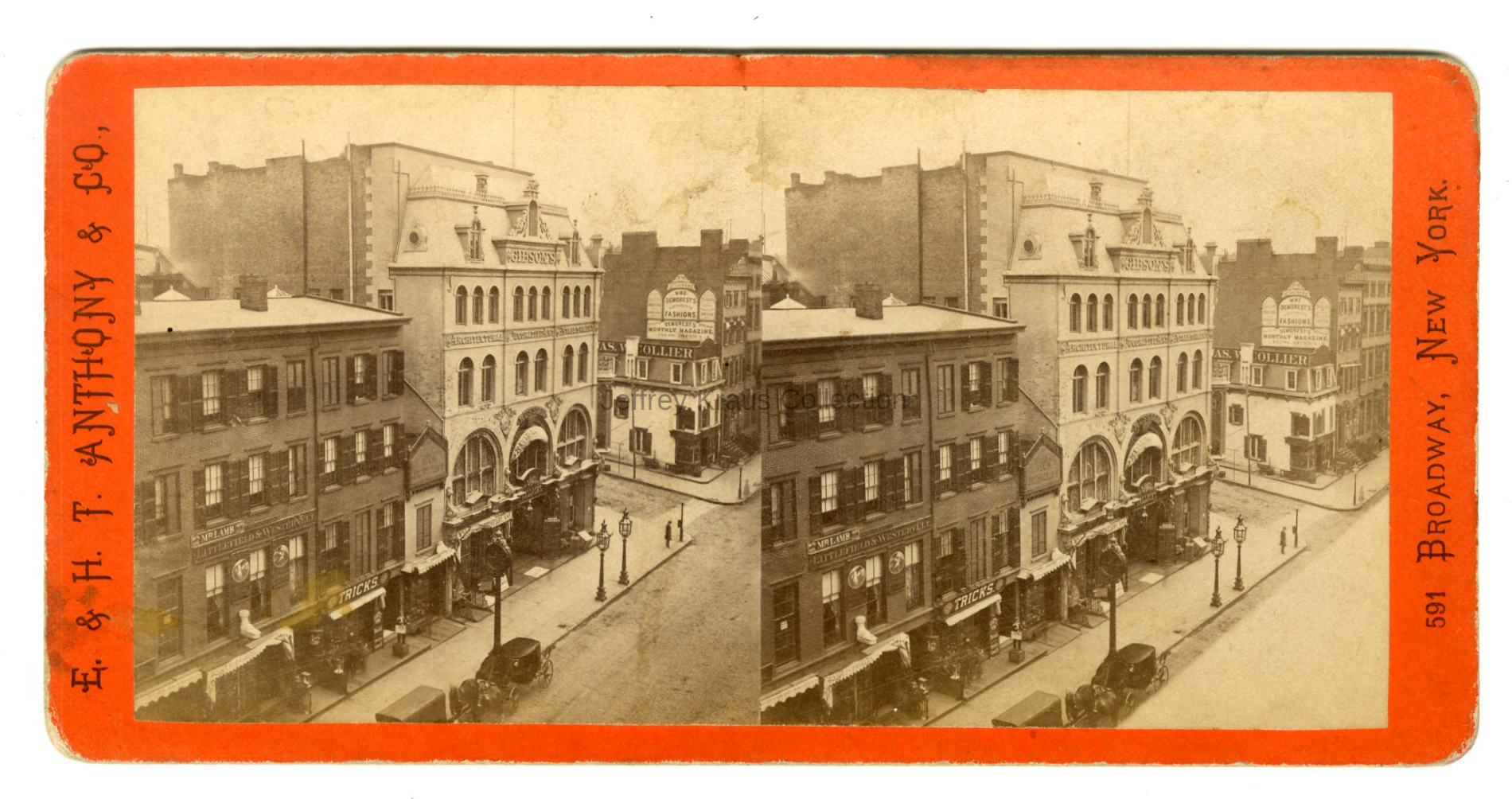
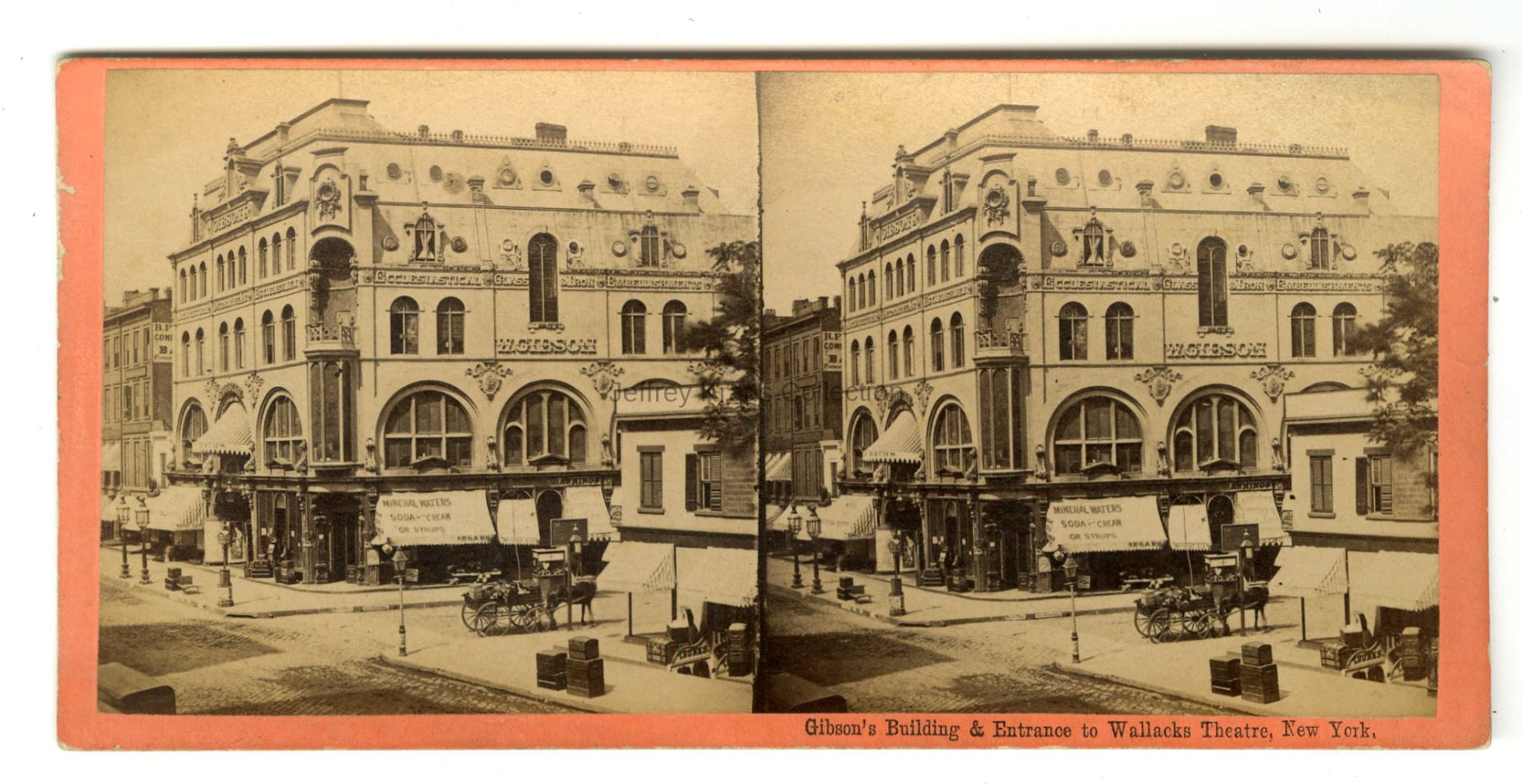
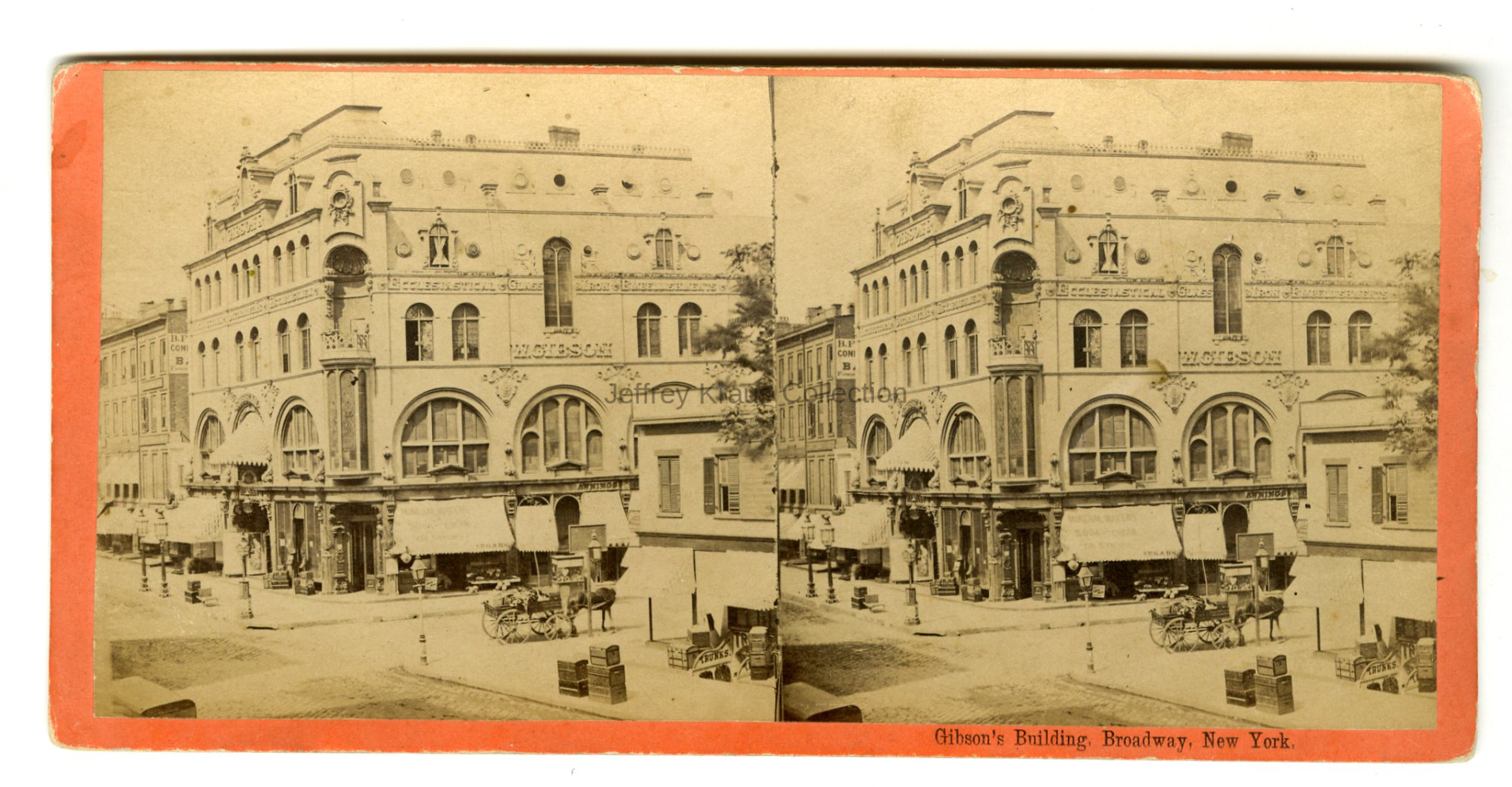
Gibson’s Building & Entrance to Wallack’s Theatre, New York.
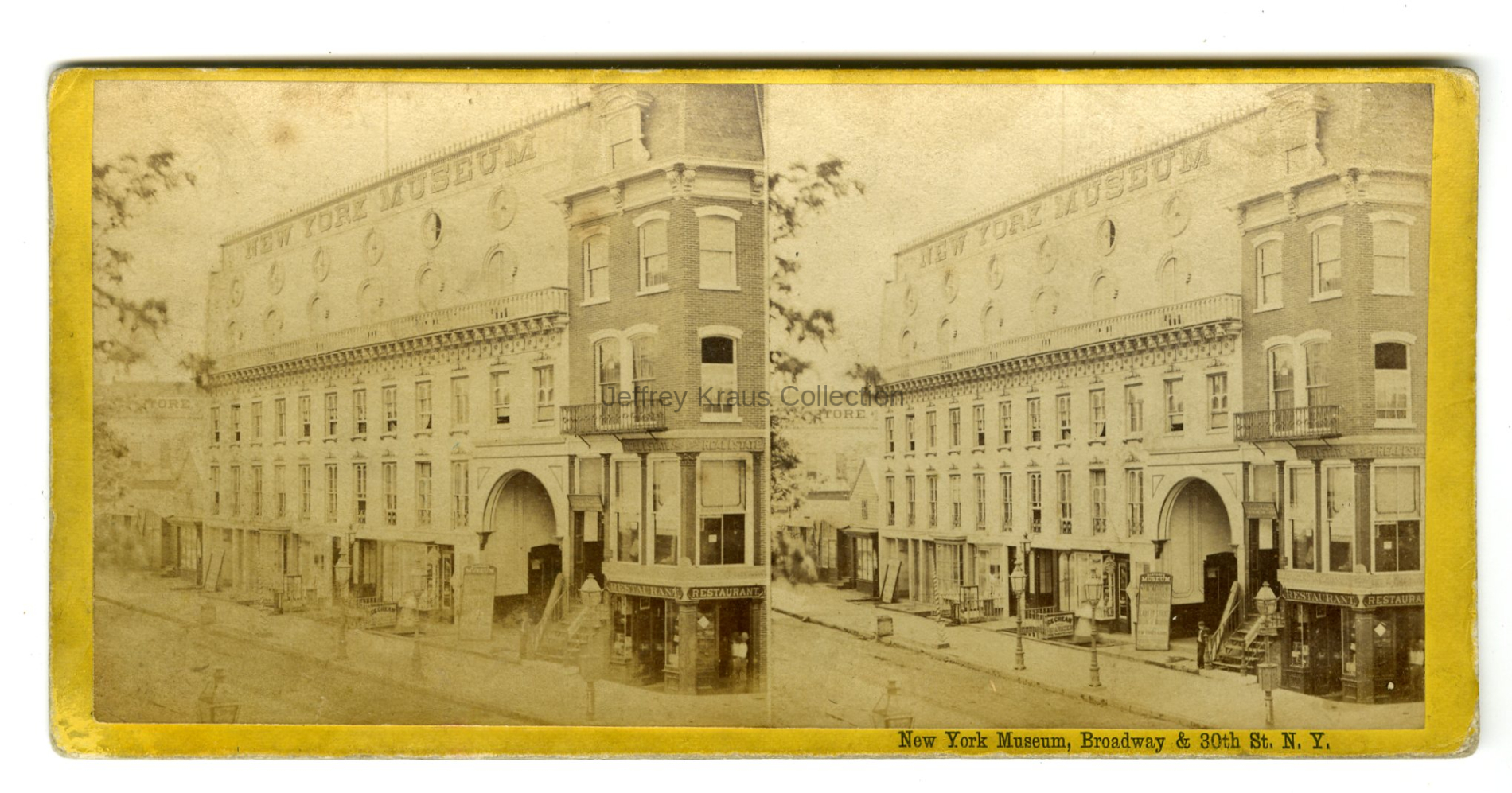
New York Museum, Broadway & 30th St., NY.
Gibson’s Building, Broadway, New York.
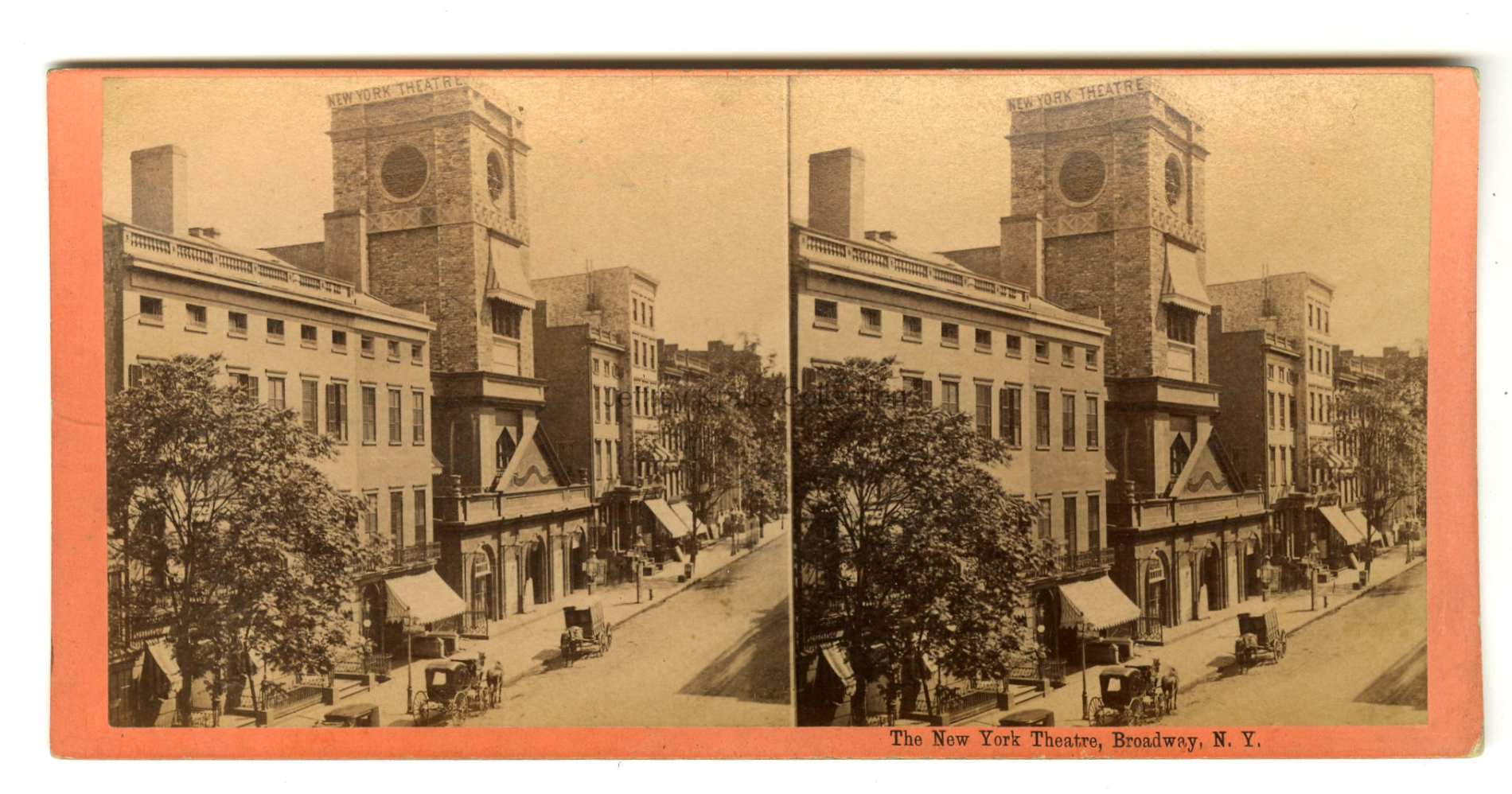
The New York Theatre, Broadway, NY.
The Old Bowery Theatre, Bowery, NY.
No. 333. Booth’s Theatre. Booth’s Theatre was a theatre in New York built by actor Edwin Booth. Located on the southeast corner of 23rd Street and Sixth Avenue, Booth’s Theatre opened on February 3, 1869. The theatre featured a grand vestibule with Italian marble floors and a large statue of Edwin Booth’s father, the Shakespearean actor Junius Brutus Booth, by the sculptor Thomas Ridgeway Gould. The auditorium was similarly elaborate in its decor, and featured a large chandelier, as well as a stage that incorporated the most modern machinery in use at the time, such as hydraulic rams to raise and lower scenery, and stage lights that could be completely extinguished during the performance, a first in the United States. Despite the appearances by important talent of the times, Booth could not make the theatre a financially viable enterprise. It was sold in December 1881, and was converted into McCreery & Co. department store until 1965, when it was demolished to make room for a parking lot.
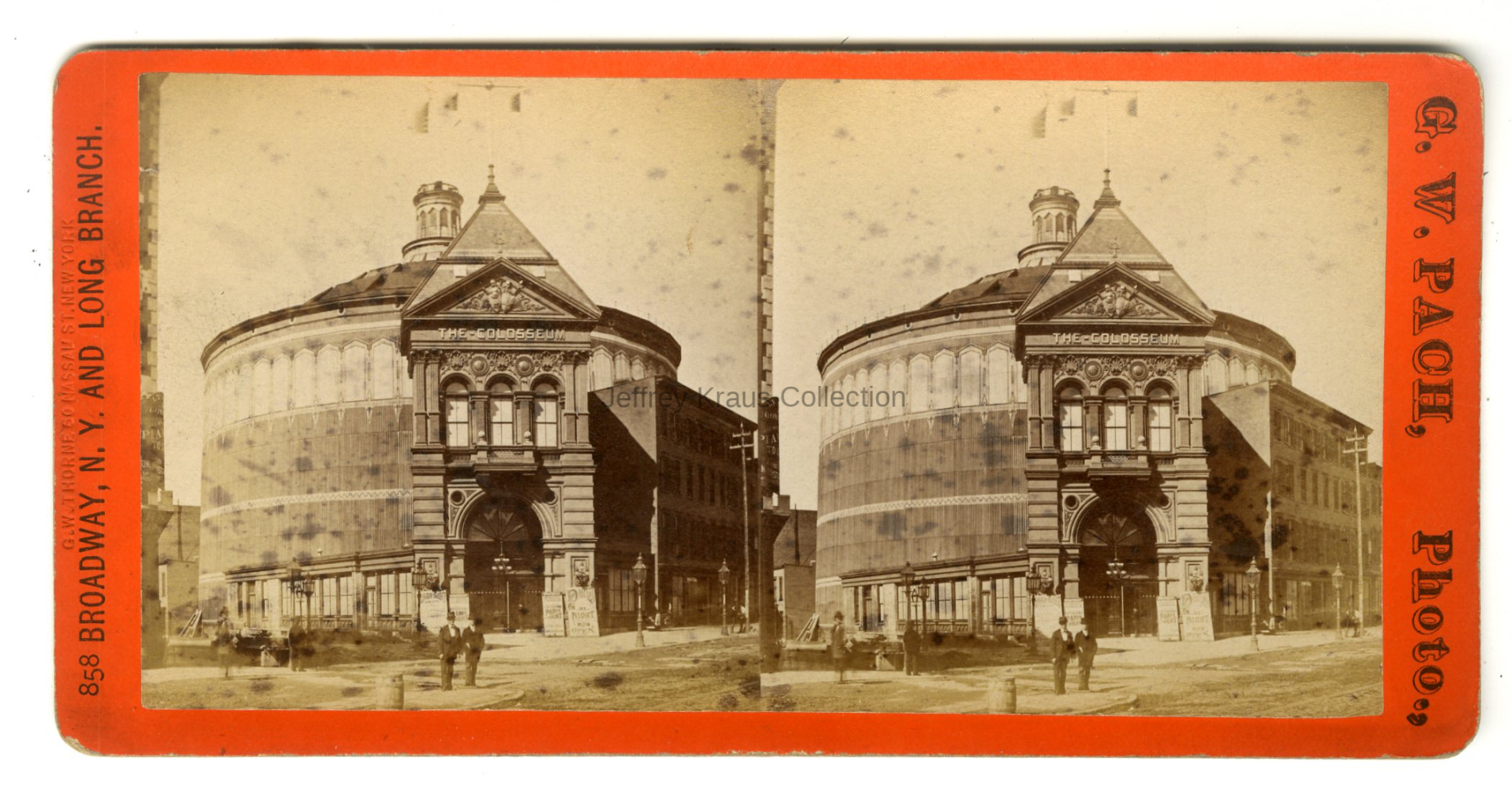
No. 329. The Colosseum.
Academy of Music.
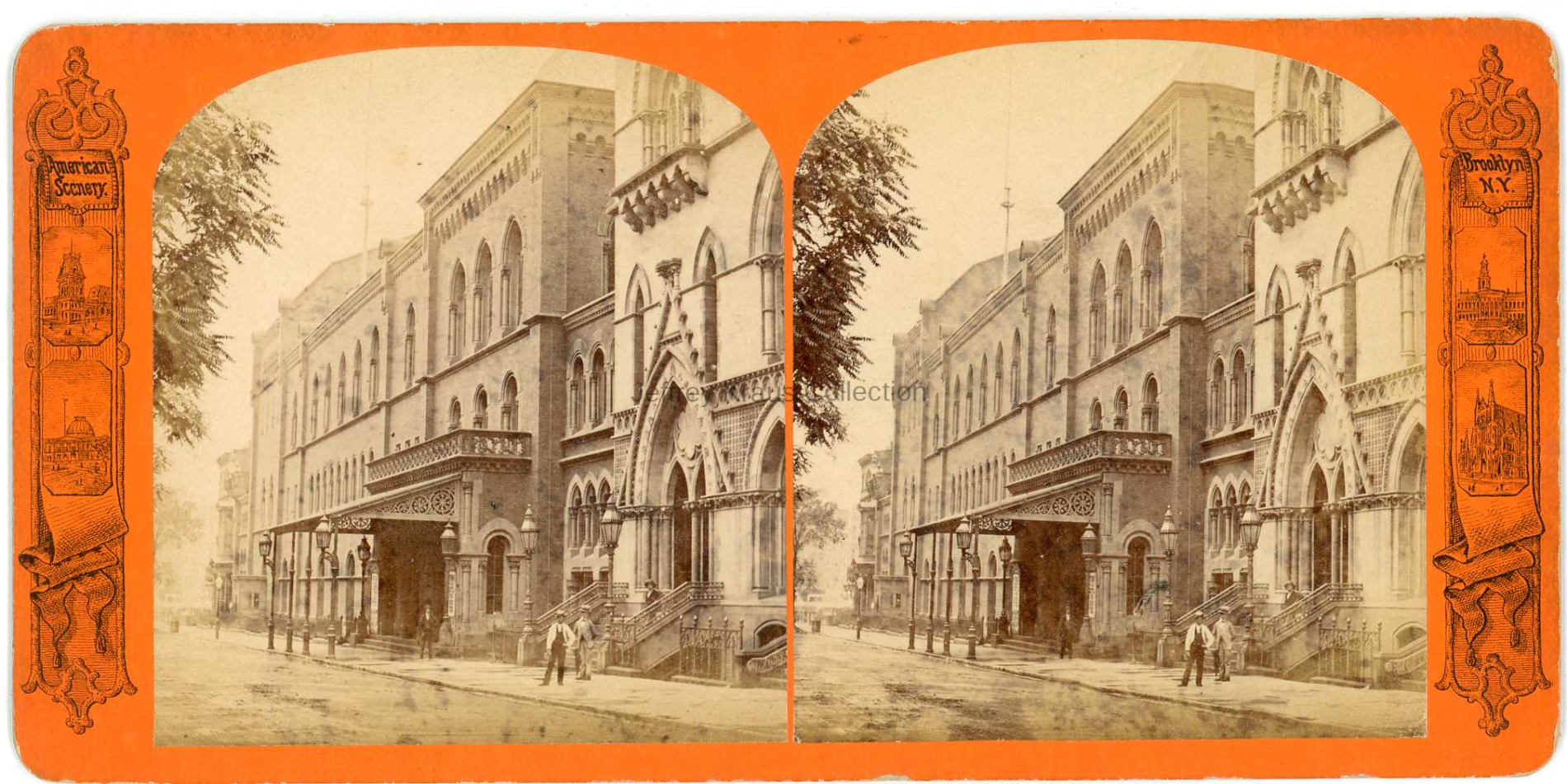
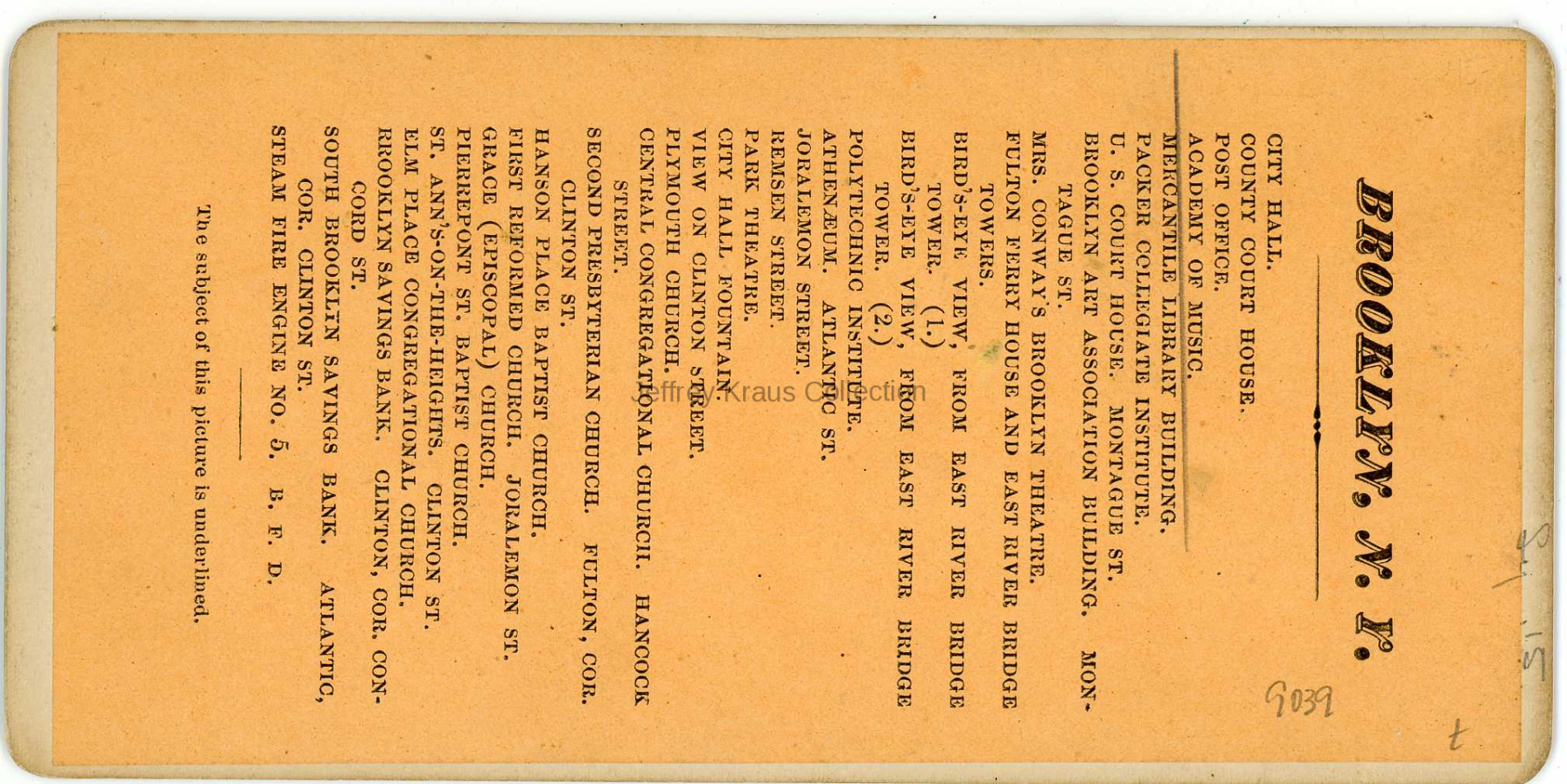
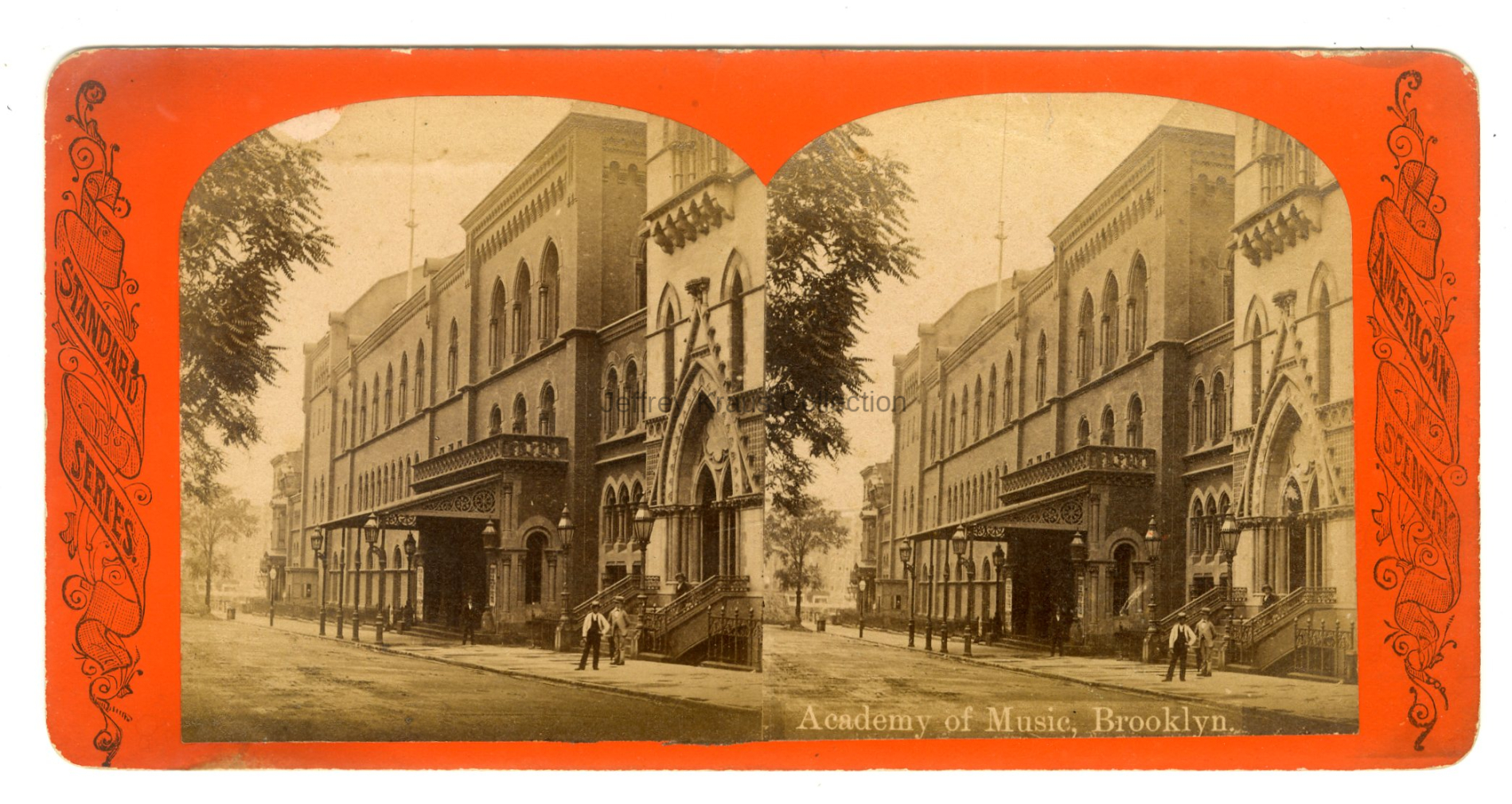
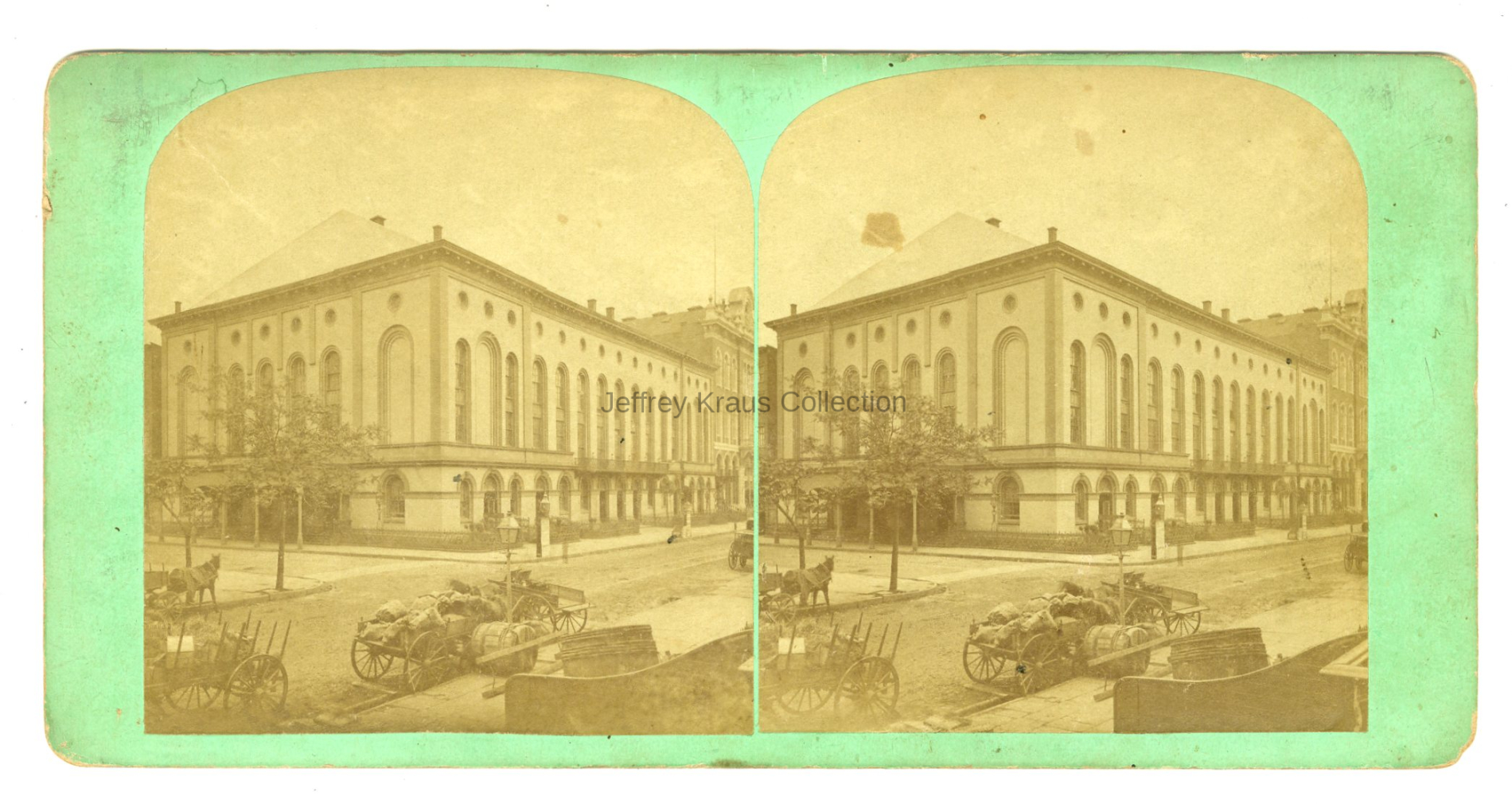
Academy of Music, Brooklyn.
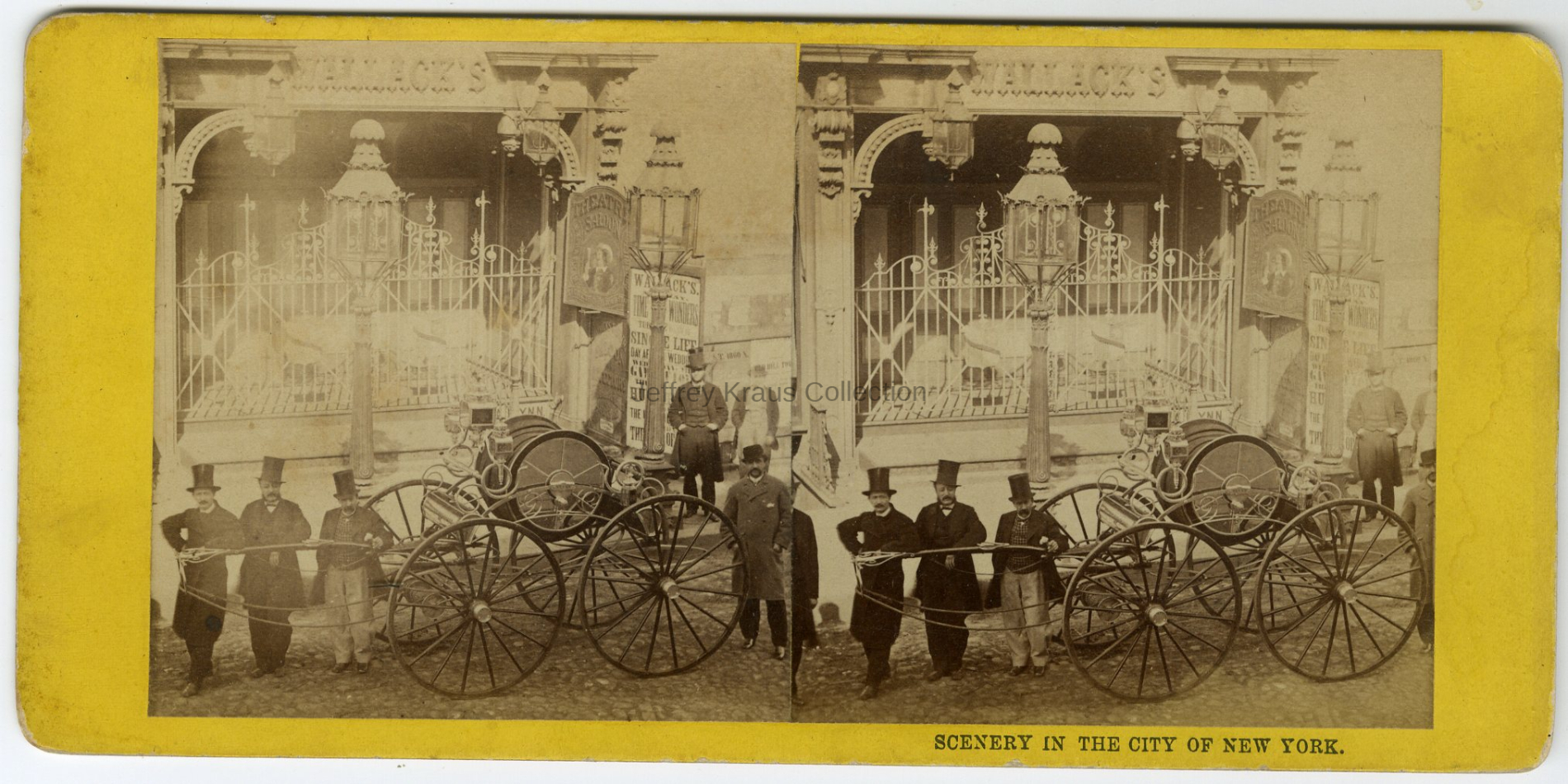
Broadway & 13th Street. Fire Hose Carriage in front of Wallack’s Theater.
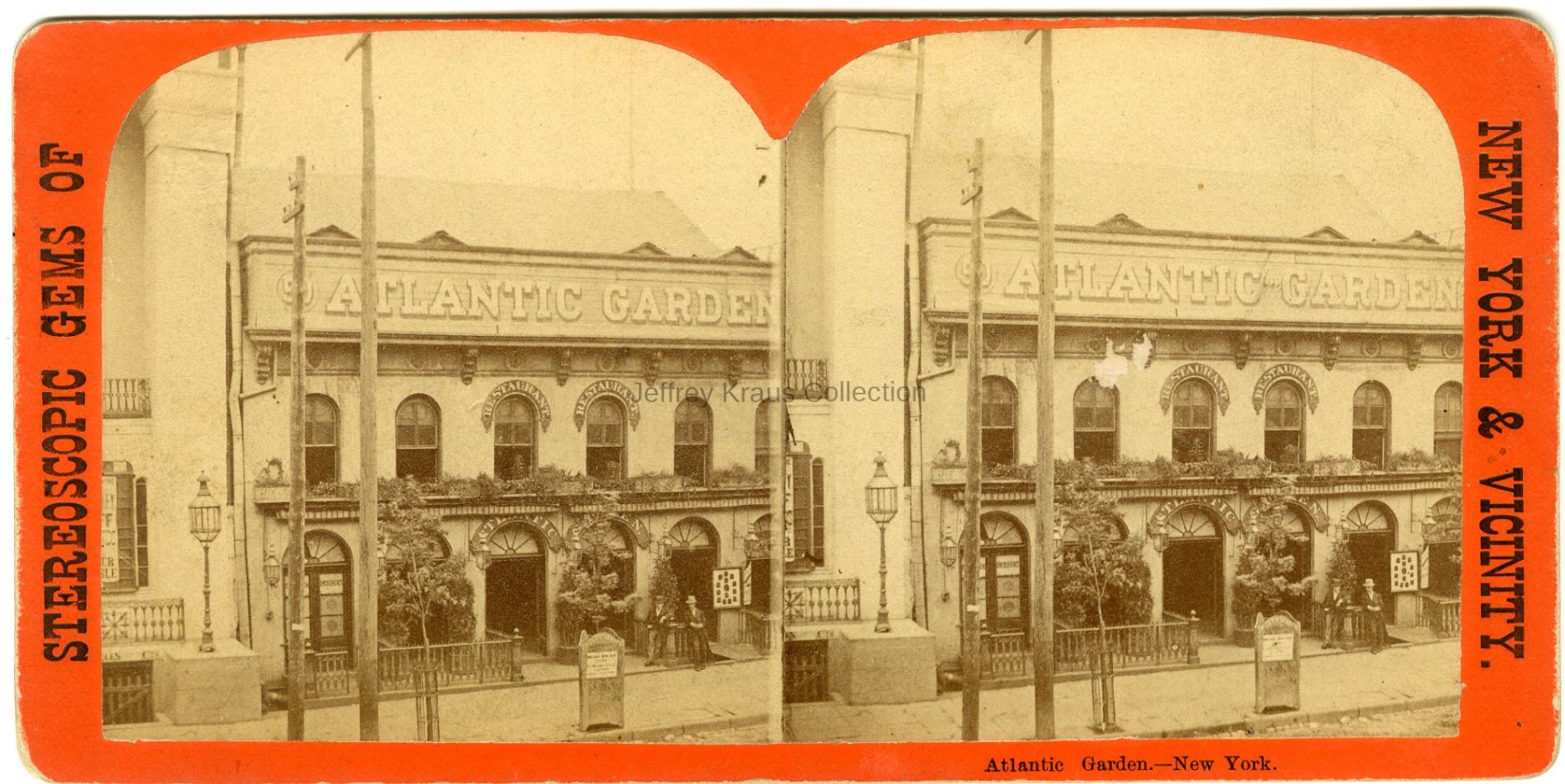
Atlantic Garden.–New York.
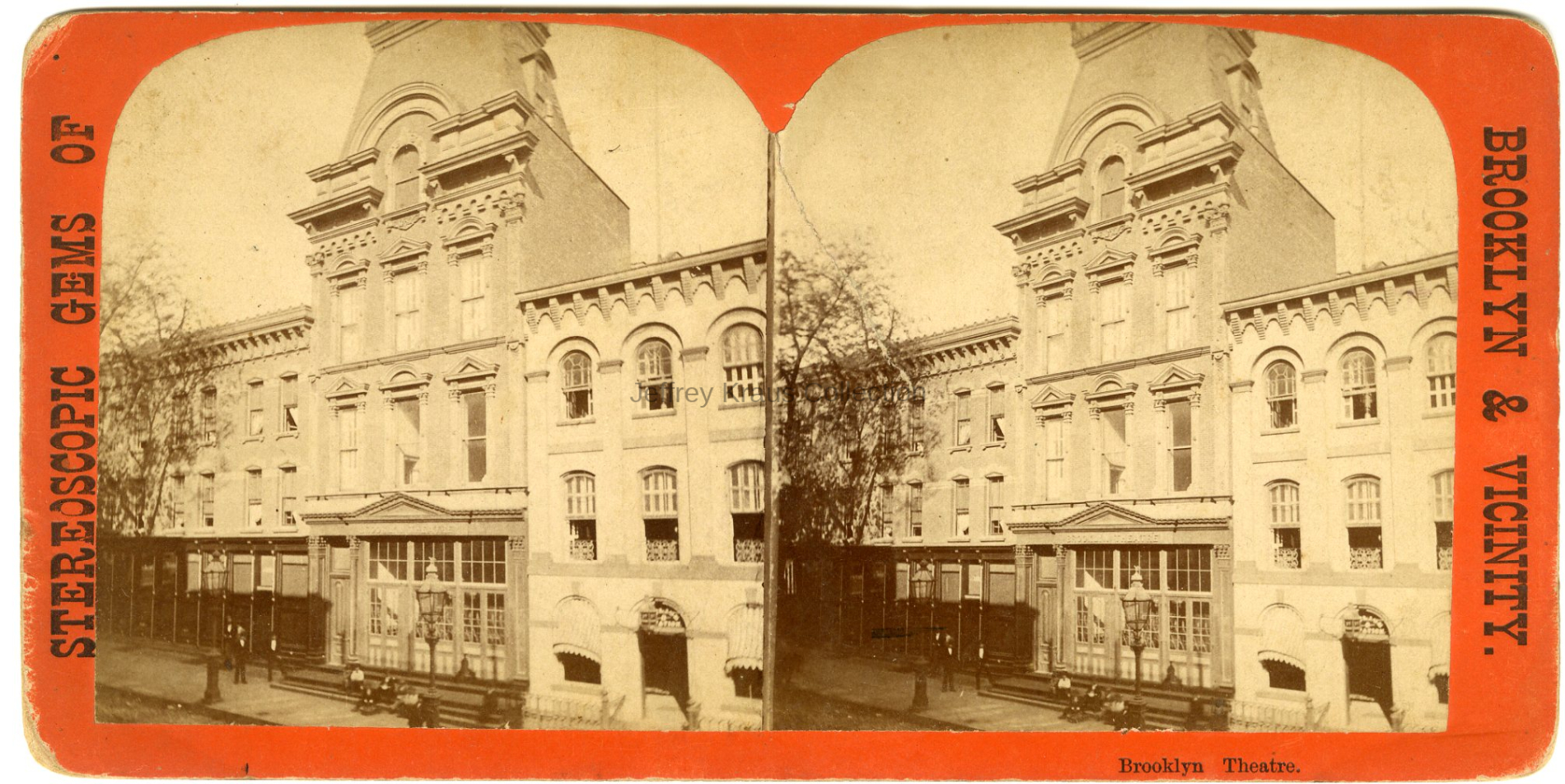
Brooklyn Theatre.
Tony Pastor’s Opera House, NY. Bowery near Prince St.
Academy of Music, NY.
14th St. Academy of Music & Tammany Hall.
Booth’s Theatre. Booth’s Theatre was a theatre in New York built by actor Edwin Booth. Located on the southeast corner of 23rd Street and Sixth Avenue, Booth’s Theatre opened on February 3, 1869. The theatre featured a grand vestibule with Italian marble floors and a large statue of Edwin Booth’s father, the Shakespearean actor Junius Brutus Booth, by the sculptor Thomas Ridgeway Gould. The auditorium was similarly elaborate in its decor, and featured a large chandelier, as well as a stage that incorporated the most modern machinery in use at the time, such as hydraulic rams to raise and lower scenery, and stage lights that could be completely extinguished during the performance, a first in the United States. Despite the appearances by important talent of the times, Booth could not make the theatre a financially viable enterprise. It was sold in December 1881, and was converted into McCreery & Co. department store until 1965, when it was demolished to make room for a parking lot.
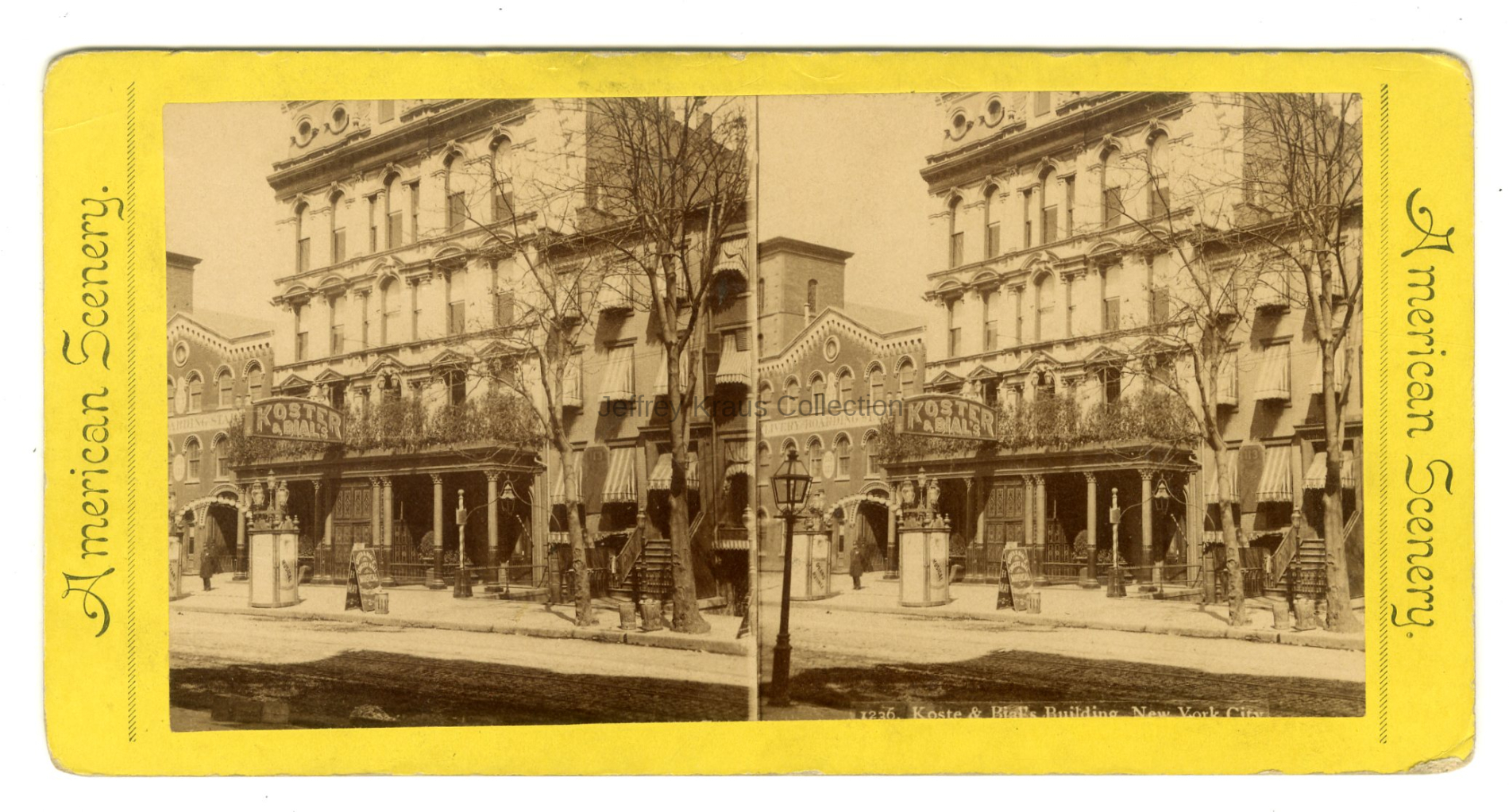
1236. Koste & Bial’s Building, New York City.
Bowery, (Atlantic Garden) N.Y. The Atlantic Garden was a beer garden and music hall established by William Kramer in 1858 at what is now 50 Bowery, next to the Bowery Theatre (built in 1826) and on the site of the Bull’s Head Tavern, formerly headquarters for New York’s cattle market, and the New York Hotel. The premises extended west to a secondary frontage on Elizabeth Street. The Bowery Theatre was built as a fashionable theater, but by the 1850s it came to cater to immigrant groups; the Germans especially patronized Atlantic Garden, which featured a theater behind the beer hall, where the new entertainment of “variety” acts were presented along with popular music concerts. In 1910, following the neighborhood’s changing dynamic, Atlantic Garden switched to presenting Yiddish theatre. In 2013 structures on the site were razed to make way for a high-rise hotel.
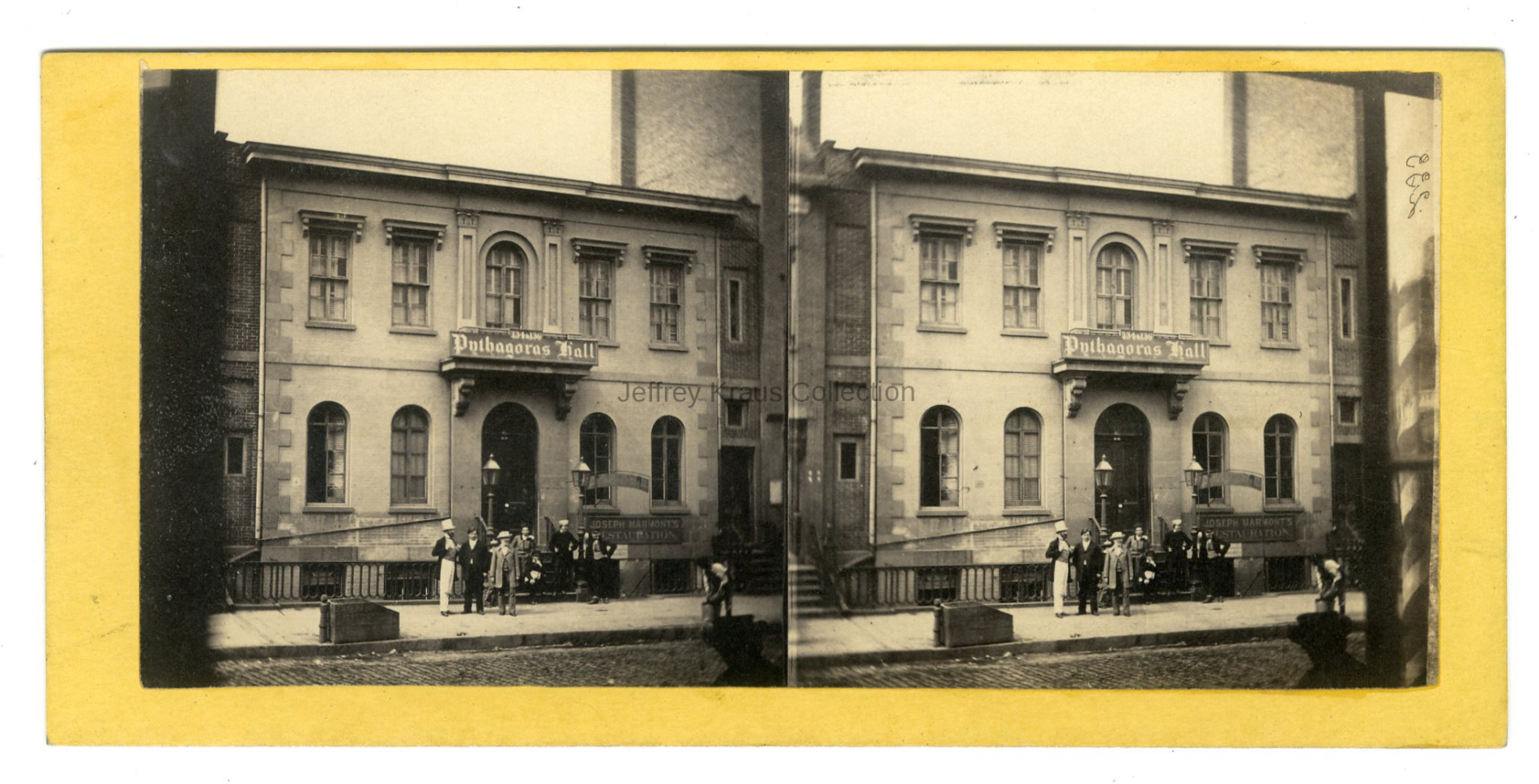
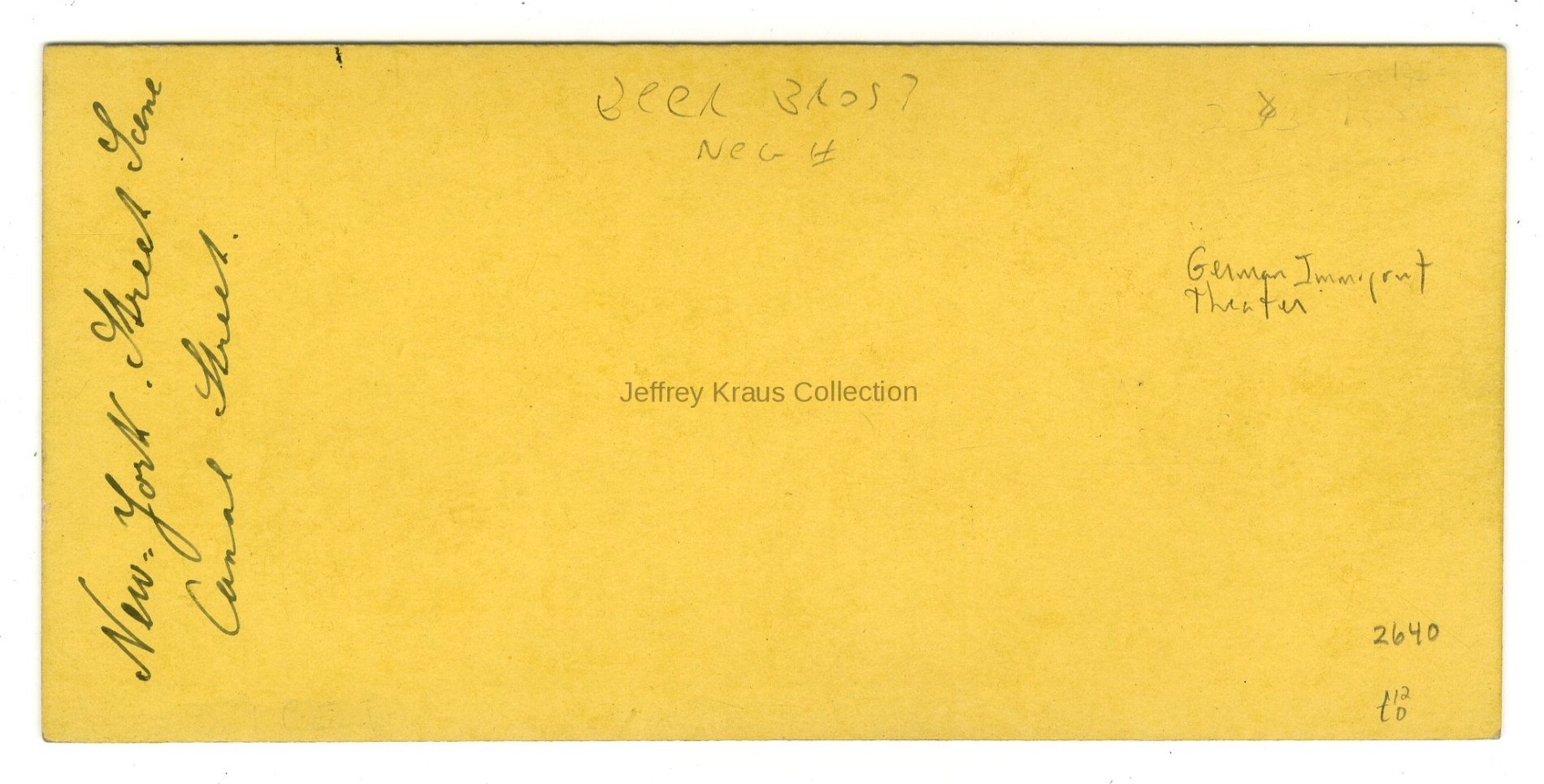
New York Street Scene, Canal Street. Pythagoras Hall, 134 & 136 Canal Street.
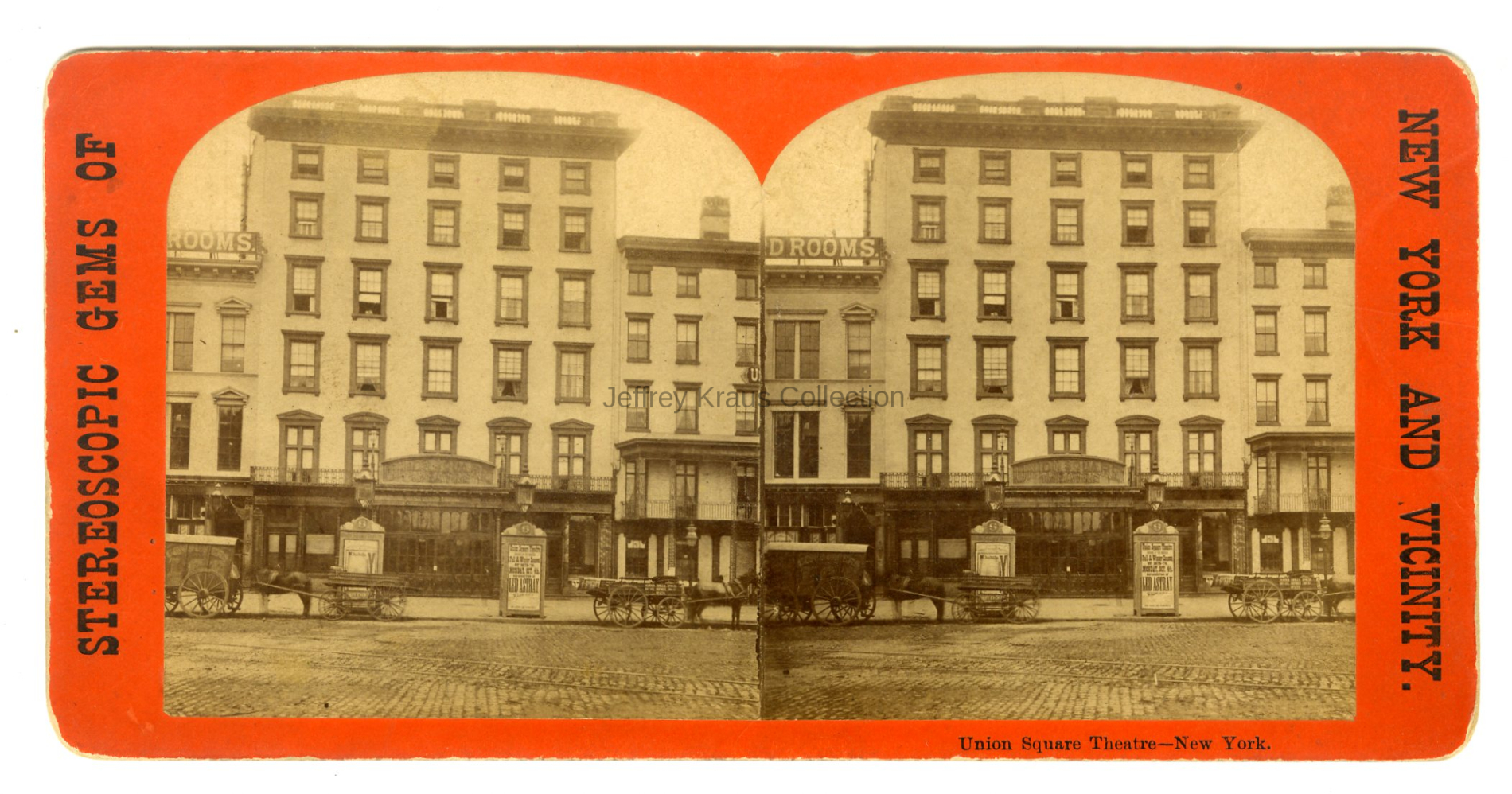
Union Square Theater-New York.
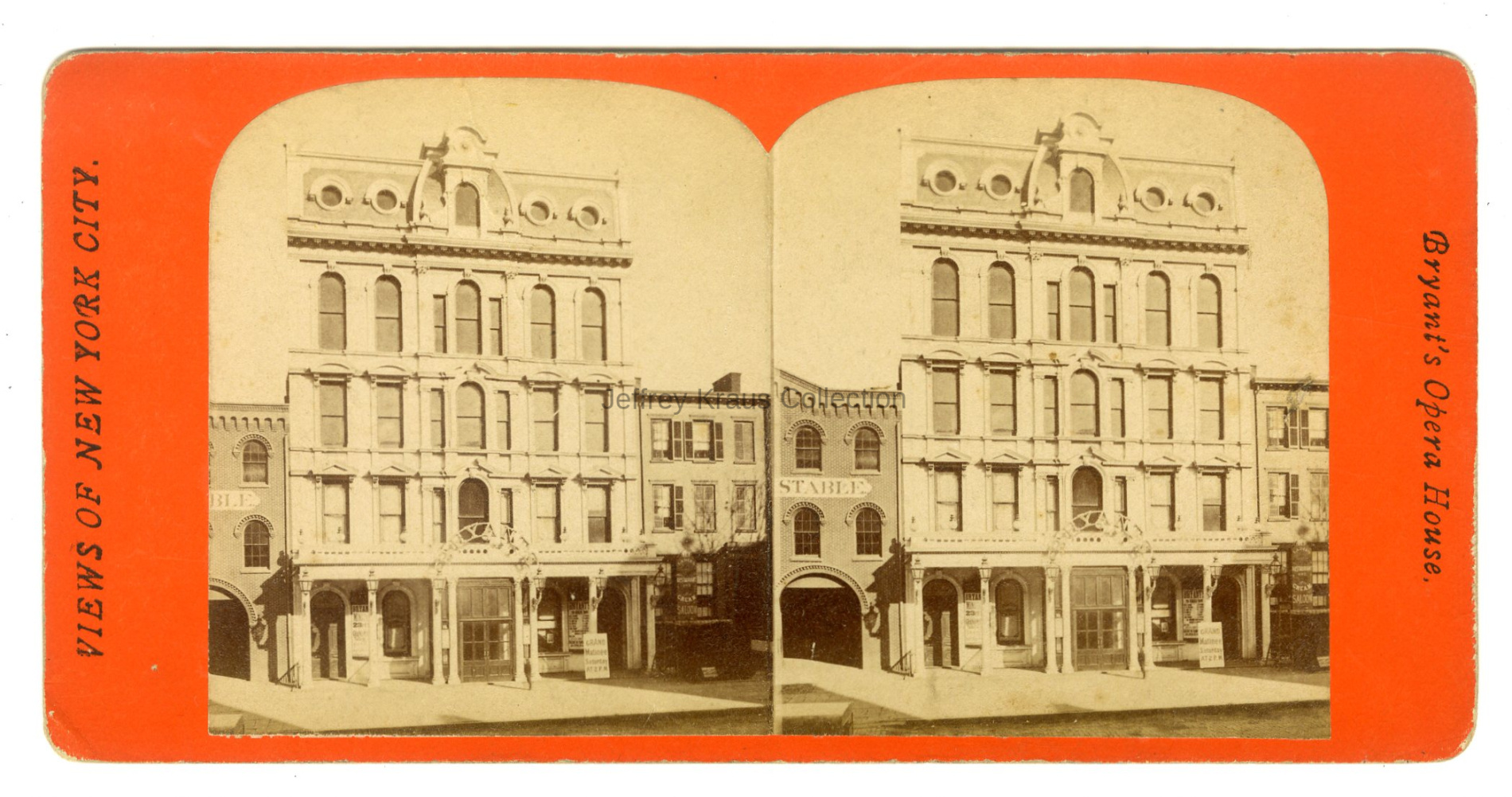
Bryant’s Opera House.
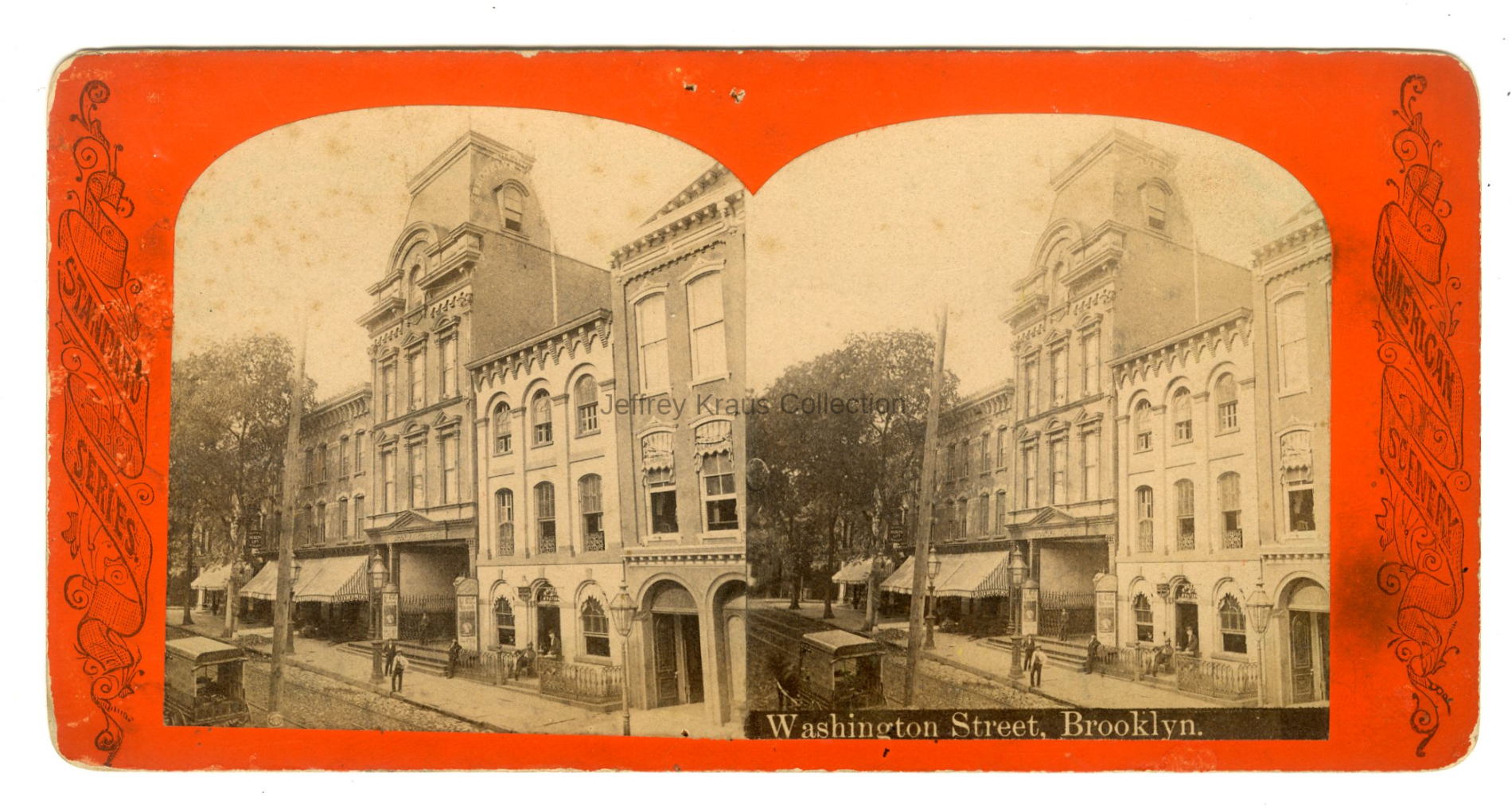
Washington Street, Brooklyn.
Academy of Music.
Scene on Broadway near 13th St., New York. In front of Wallack’s Theater.
Academy of Music, New York.
Academy of Music, Brooklyn.
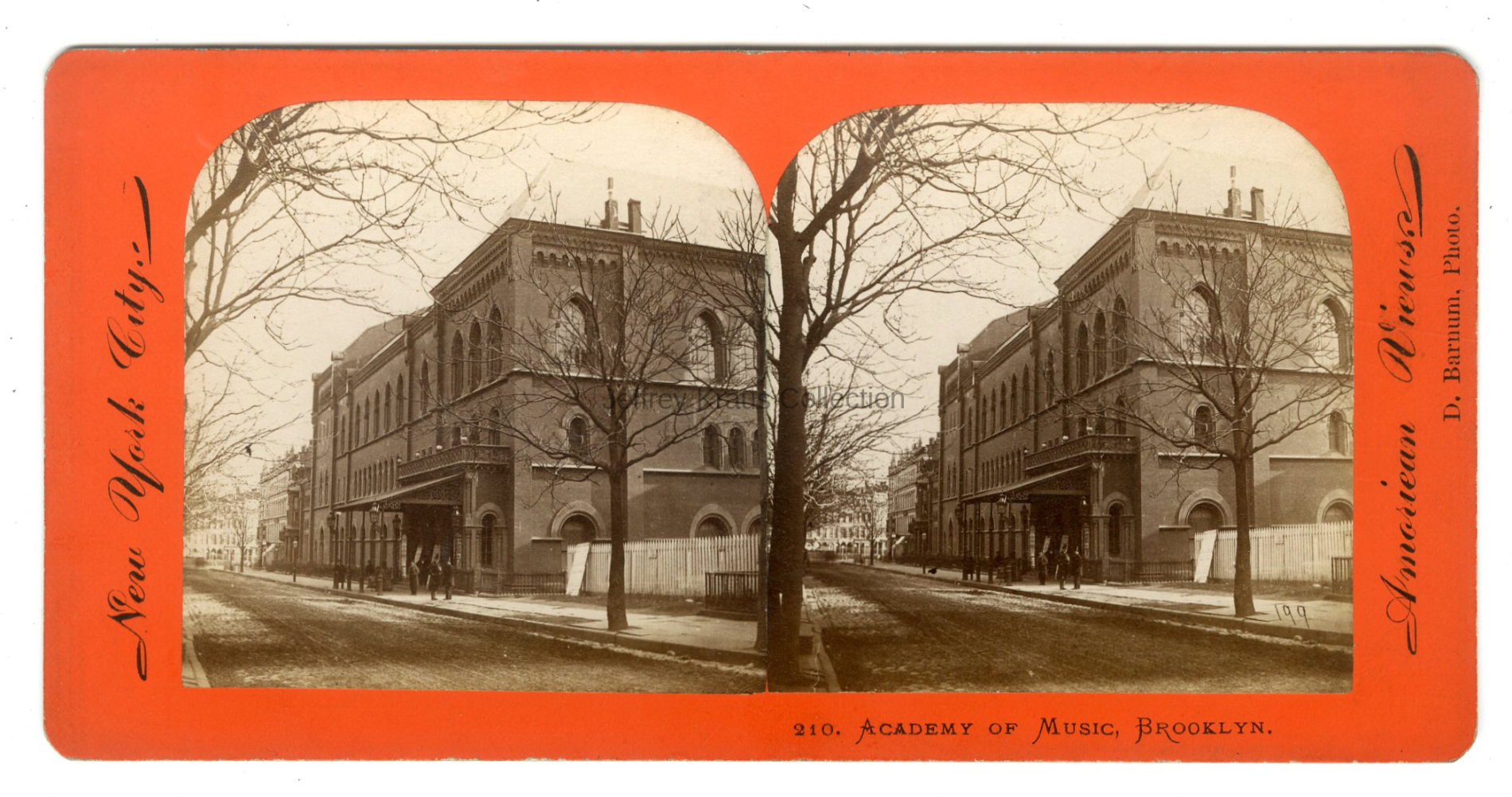
210. Academy of Music, Brooklyn.
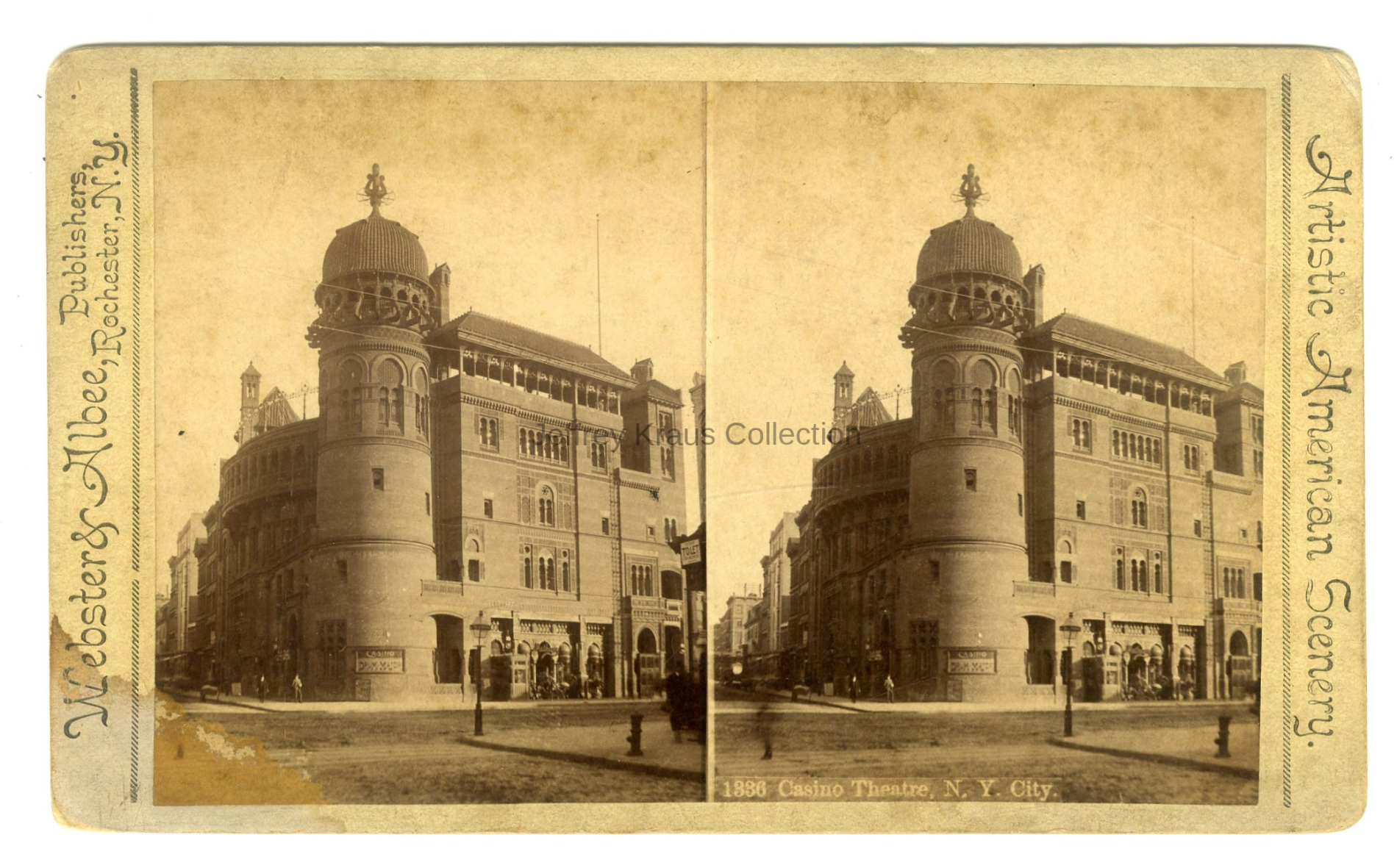
1336. Casino Theatre, N.Y. City. The Casino Theatre was a Broadway theatre located at 1404 Broadway and West 39th Street in New York City. Built in 1882, it was a leading presenter of mostly musicals and operettas until it closed in 1930. The theatre was the first in New York to be lit entirely by electricity, popularized the chorus line and later introduced white audiences to African-American shows. It originally seated approximately 875 people, however the theatre was enlarged in 1894 and again in 1905, after a fire, when its capacity was enlarged to 1,300 seats. It hosted a number of long-running comic operas, operettas and musical comedies, including Erminie, Florodora, The Vagabond King and The Desert Song. It closed in 1930 and was demolished the same year.