30076.
P.T. Barnum & Commodore Nutt.

P.T. Barnum & Commodore Nutt.
Unidentified performing dogs.
Commodore Foote’s Dream.
Chang and Eng and two of their children.
Microcephalic siblings.
Dan Rice, celebrated circus clown.
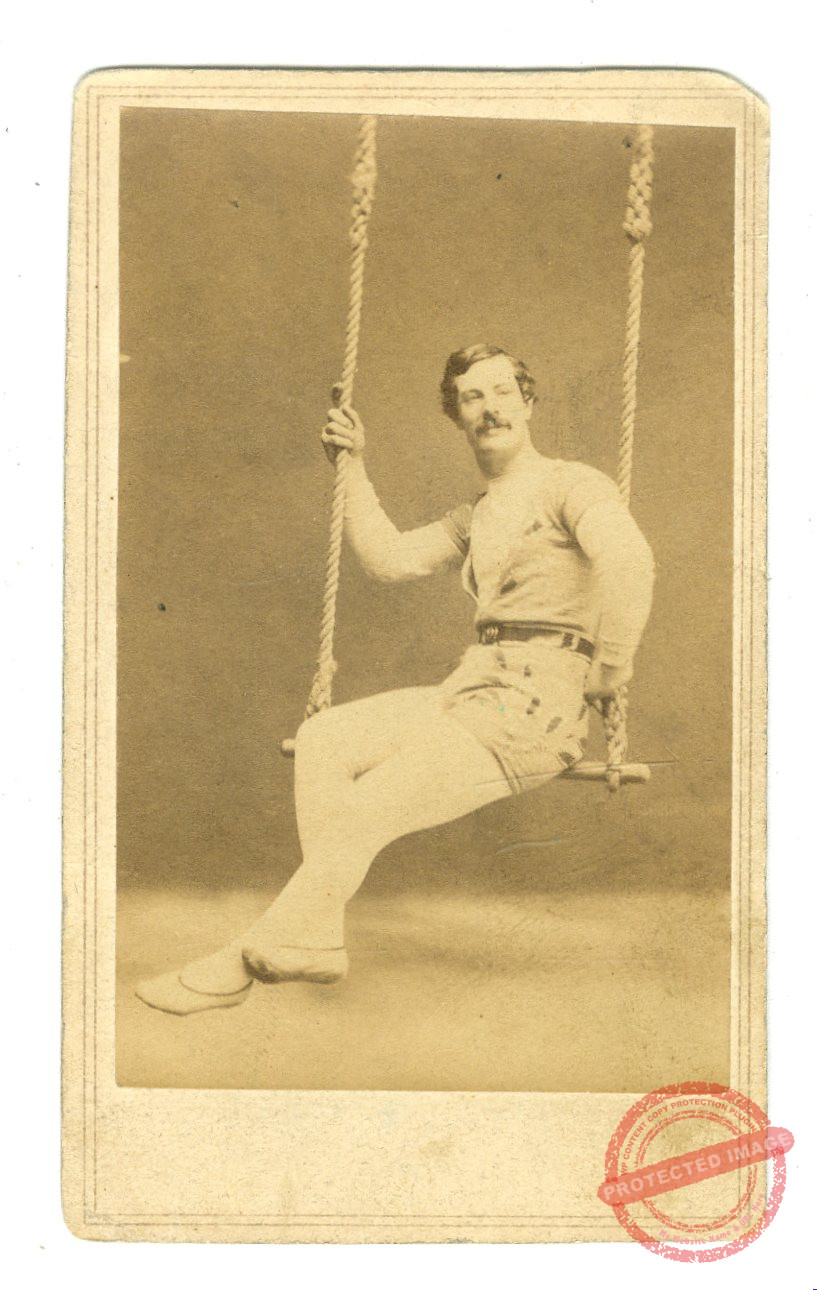
Léopold Verrecke was a renowned 19th-century Belgian trapeze artist and gymnast who later became a wartime balloon pilot during the Siege of Paris. Billed in performances as “Verrecke the Great Gymnast,” he gained widespread fame in the 1860s as a premier aerialist alongside pioneers like Jules Léotard. Verrecke achieved star status when engaged by director Louis Dejean to perform at the famous Cirque Napoleon (now the Cirque d’Hiver) in Paris during the 1860s. At the time, the word “gymnast” was commonly used to describe circus aerialists and acrobats. Verrecke was celebrated for his daring feats on the flying trapeze, a discipline invented by Jules Leotard at that very venue in 1859.
Like other major acrobats of the era, he toured internationally and posed for cartes de visite showcasing his athletic physique and circus costumes. During the Franco-Prussian War (1870–1871), when Prussian forces surrounded Paris, the French government recruited daring circus acrobats, sailors, and athletes to pilot hot-air and gas balloons carrying mail and dispatches out of the besieged city. On December 20, 1870, Verrecke piloted the mail balloon Général Chanzy, departing from the Gare du Nord in Paris at 2:00 a.m. with three passengers, carrier pigeons and 25 kilograms of mail including a letter from Georges Clemenceau to his wife. Strong winds blew the balloon off course into enemy territory, landing in Roedersdorf, Bavaria, at 10:20 a.m.. Prussian forces captured Verrecke, his passengers, and the mailbags. Because Prussian Chancellor Otto von Bismarck had previously threatened to treat captured balloonists as spies rather than regular soldiers, widespread rumors circulated in France that Verrecke and his crew had been executed by firing squad. Verrecke and the passengers were subjected to mistreatment and a grueling captivity in Bavaria, though they all survived the war and were not executed.
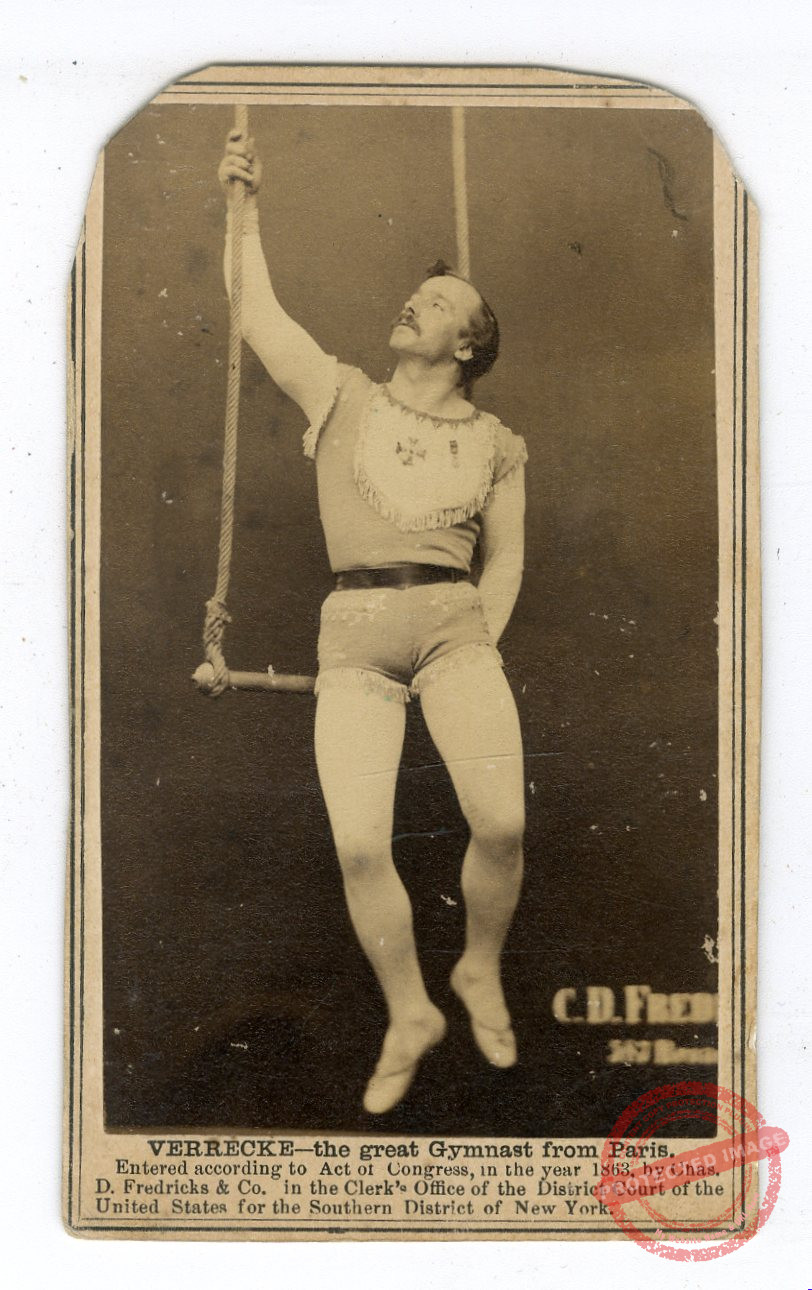
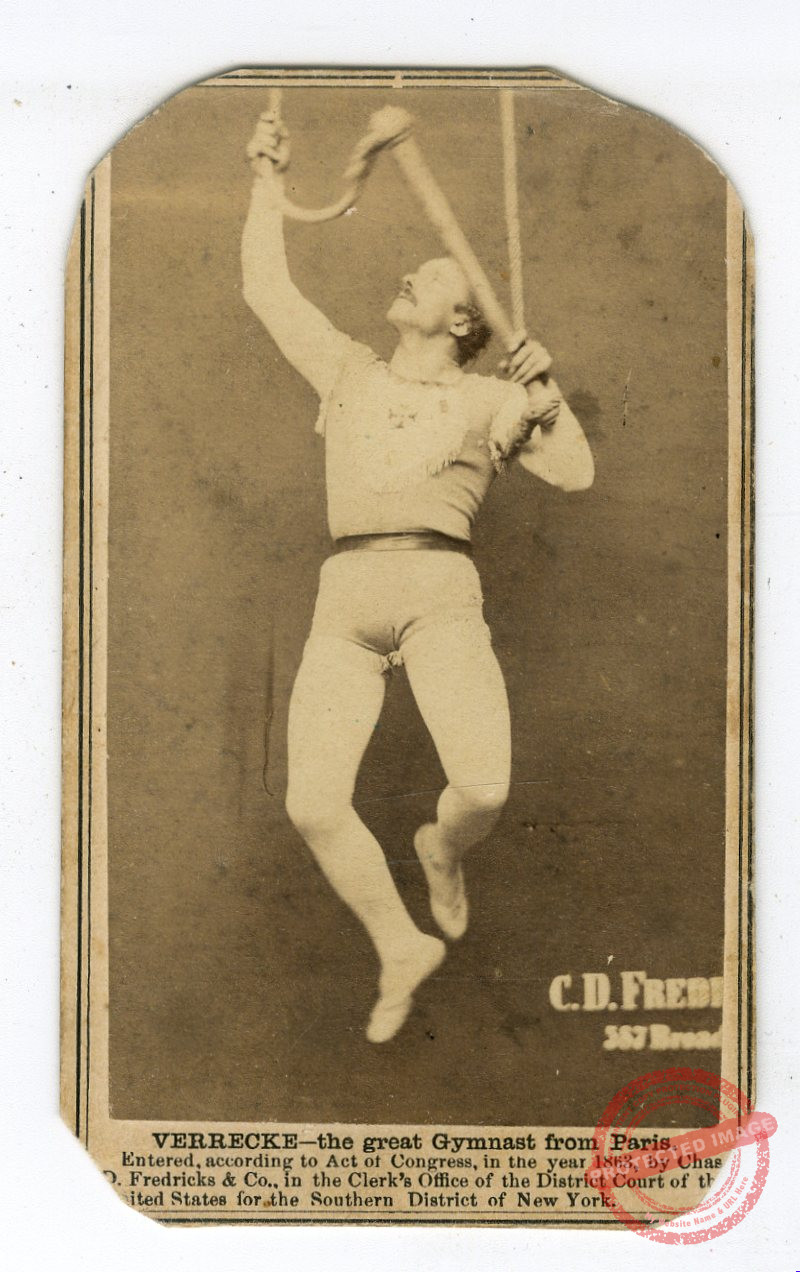
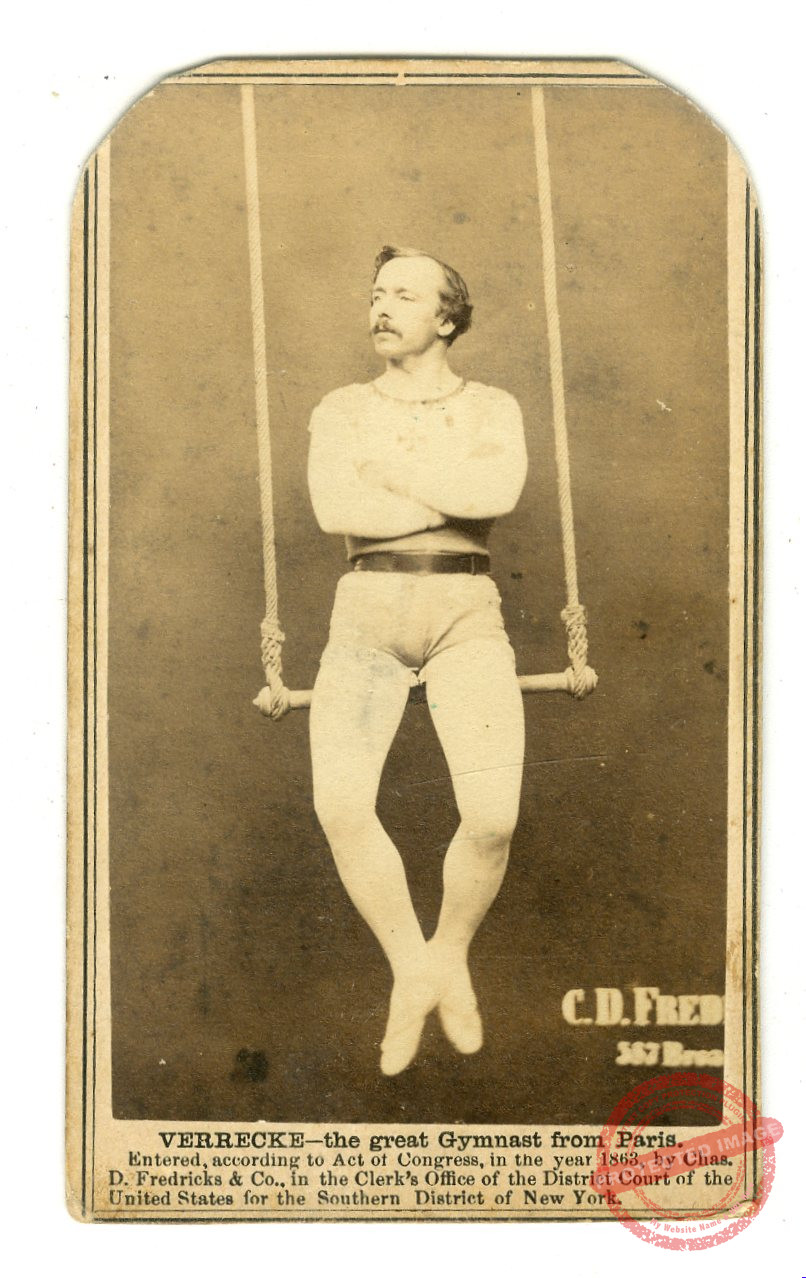
Verrecke-the great Gymnast from Paris.
Léopold Verrecke was a renowned 19th-century Belgian trapeze artist and gymnast who later became a wartime balloon pilot during the Siege of Paris. Billed in performances as “Verrecke the Great Gymnast,” he gained widespread fame in the 1860s as a premier aerialist alongside pioneers like Jules Léotard. Verrecke achieved star status when engaged by director Louis Dejean to perform at the famous Cirque Napoleon (now the Cirque d’Hiver) in Paris during the 1860s. At the time, the word “gymnast” was commonly used to describe circus aerialists and acrobats. Verrecke was celebrated for his daring feats on the flying trapeze, a discipline invented by Jules Leotard at that very venue in 1859.
Like other major acrobats of the era, he toured internationally and posed for cartes de visite showcasing his athletic physique and circus costumes. During the Franco-Prussian War (1870–1871), when Prussian forces surrounded Paris, the French government recruited daring circus acrobats, sailors, and athletes to pilot hot-air and gas balloons carrying mail and dispatches out of the besieged city. On December 20, 1870, Verrecke piloted the mail balloon Général Chanzy, departing from the Gare du Nord in Paris at 2:00 a.m. with three passengers, carrier pigeons and 25 kilograms of mail including a letter from Georges Clemenceau to his wife. Strong winds blew the balloon off course into enemy territory, landing in Roedersdorf, Bavaria, at 10:20 a.m.. Prussian forces captured Verrecke, his passengers, and the mailbags. Because Prussian Chancellor Otto von Bismarck had previously threatened to treat captured balloonists as spies rather than regular soldiers, widespread rumors circulated in France that Verrecke and his crew had been executed by firing squad. Verrecke and the passengers were subjected to mistreatment and a grueling captivity in Bavaria, though they all survived the war and were not executed.
William Hanlon (1842-1923) with trapeze and barbell.