50011.
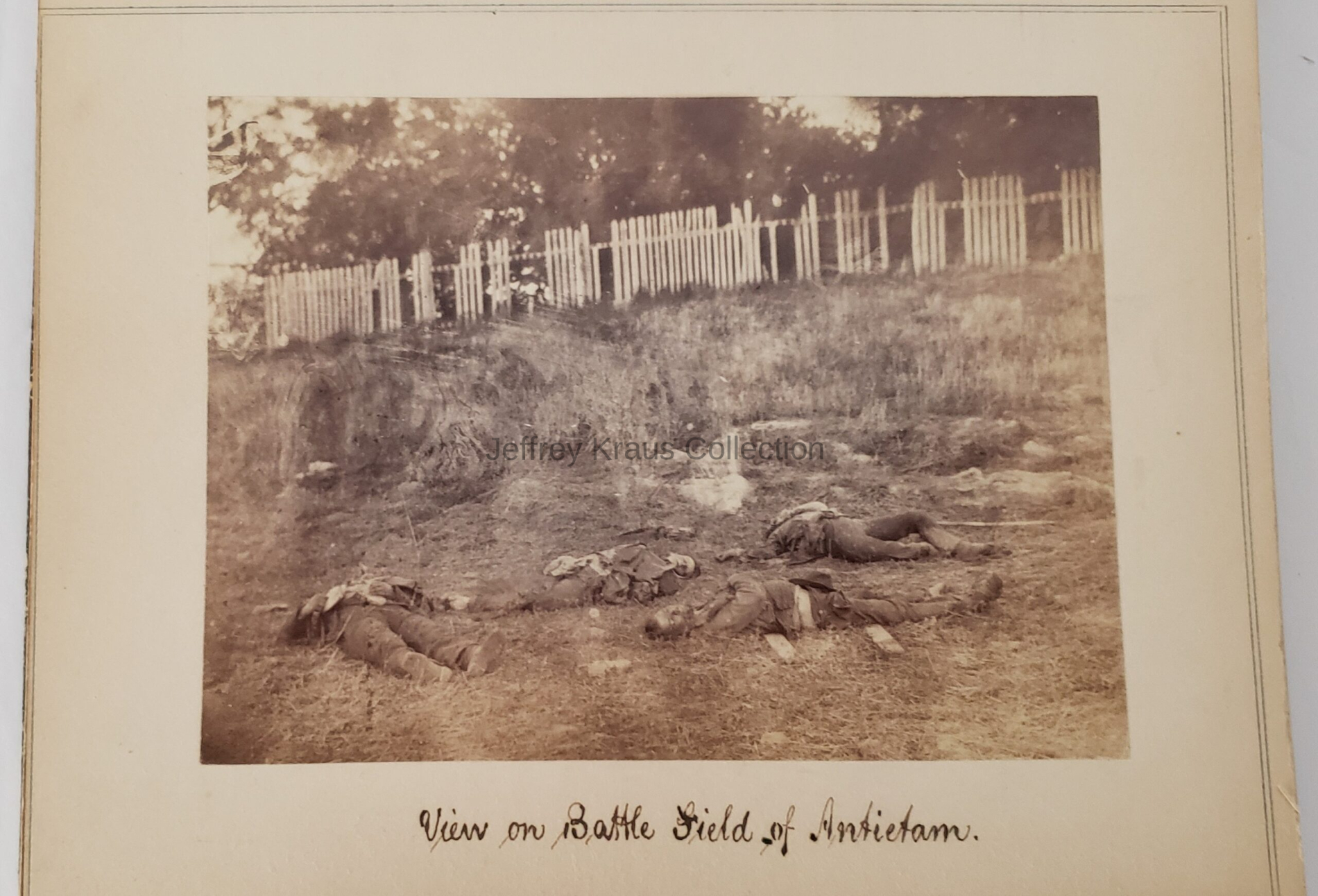
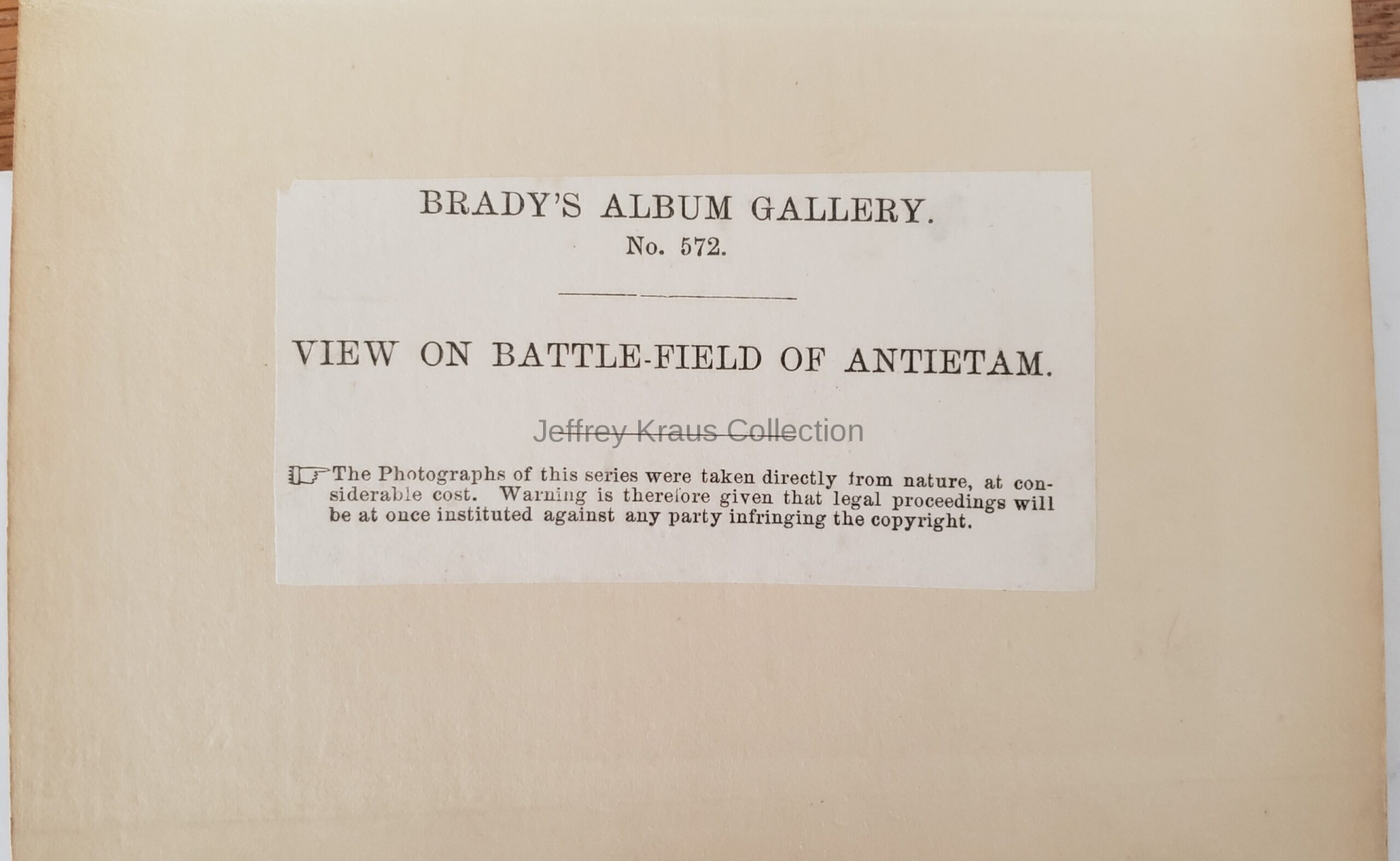
No. 572. View on the Battle-Field of Antietam.

No. 572. View on the Battle-Field of Antietam.
No. 569. View on Battle-Field of Antietam.
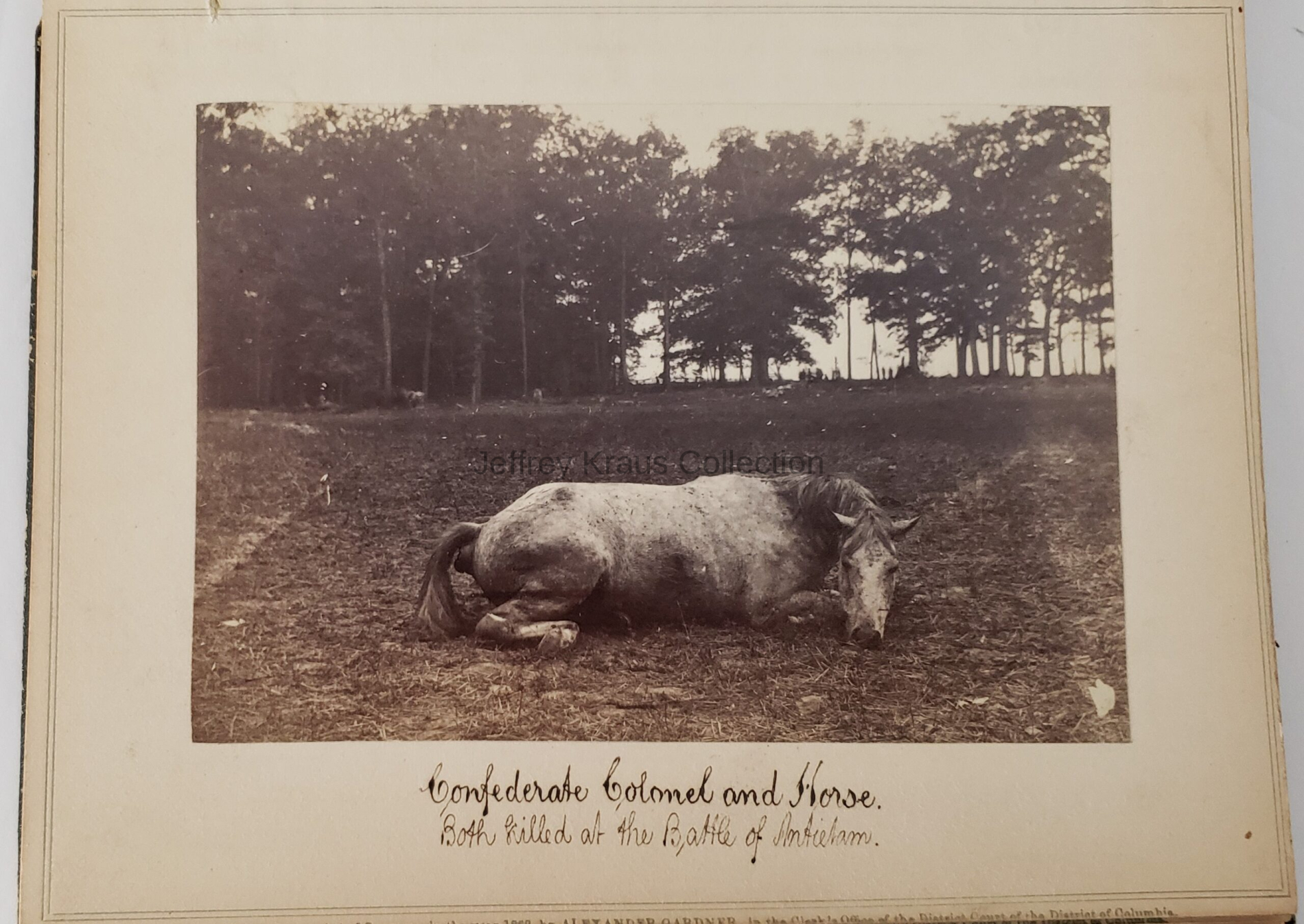
No. 558. Confederate Colonel and Horse, Both killed at the Battle of Antietam.
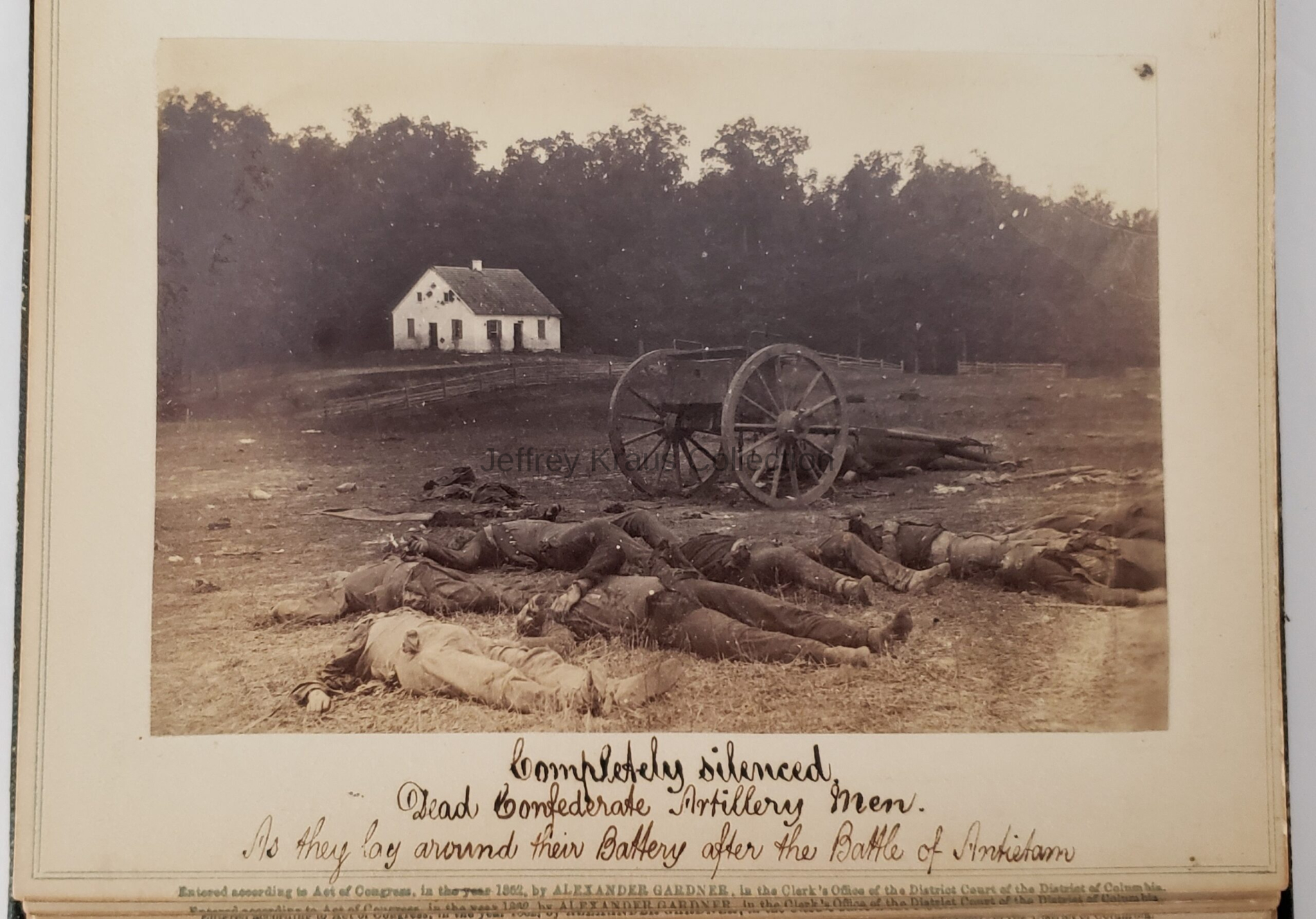
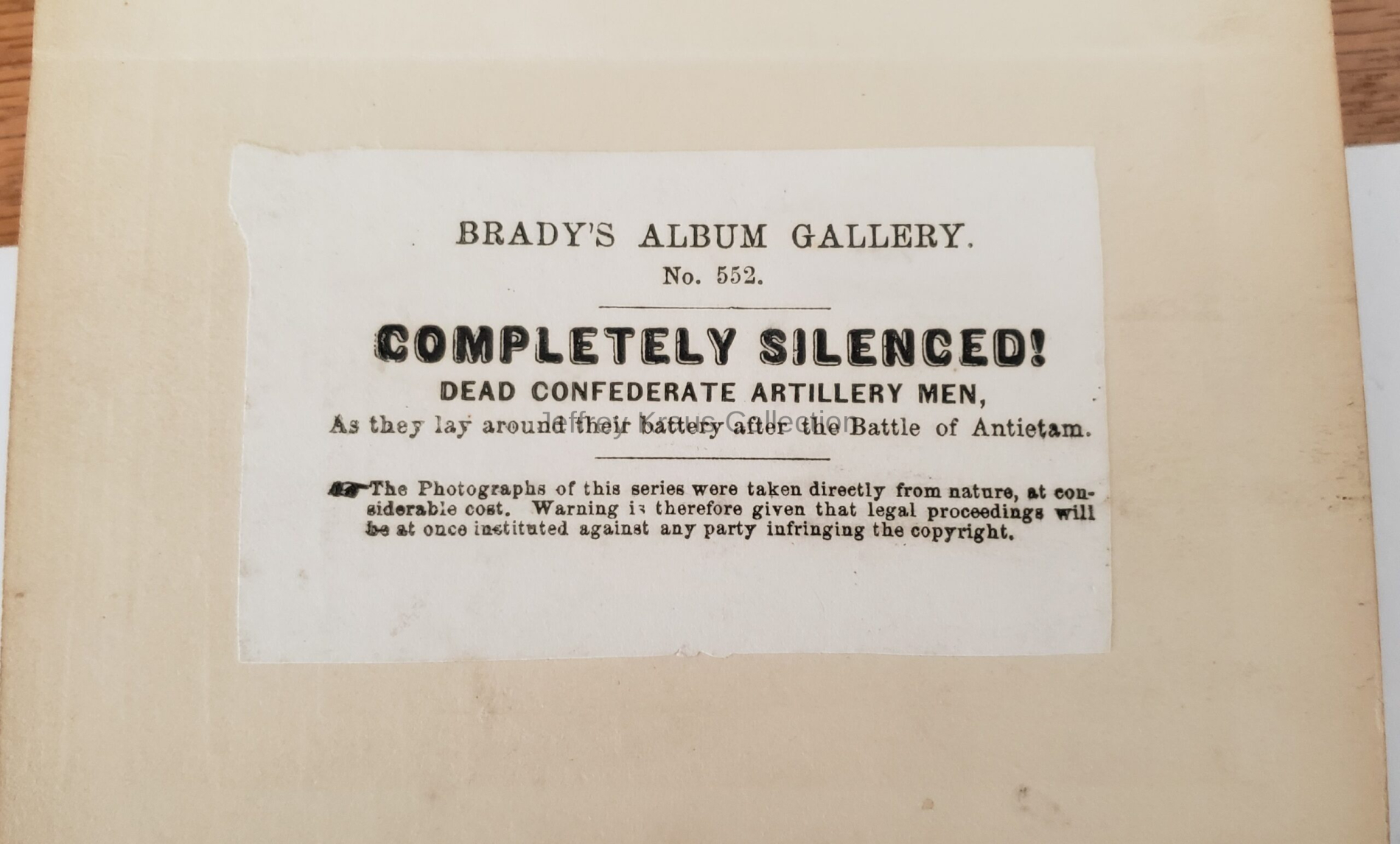
552. Completely Silenced! Dead Confederate Artillery Men, as they lay around their battery after the Battle of Antietam.
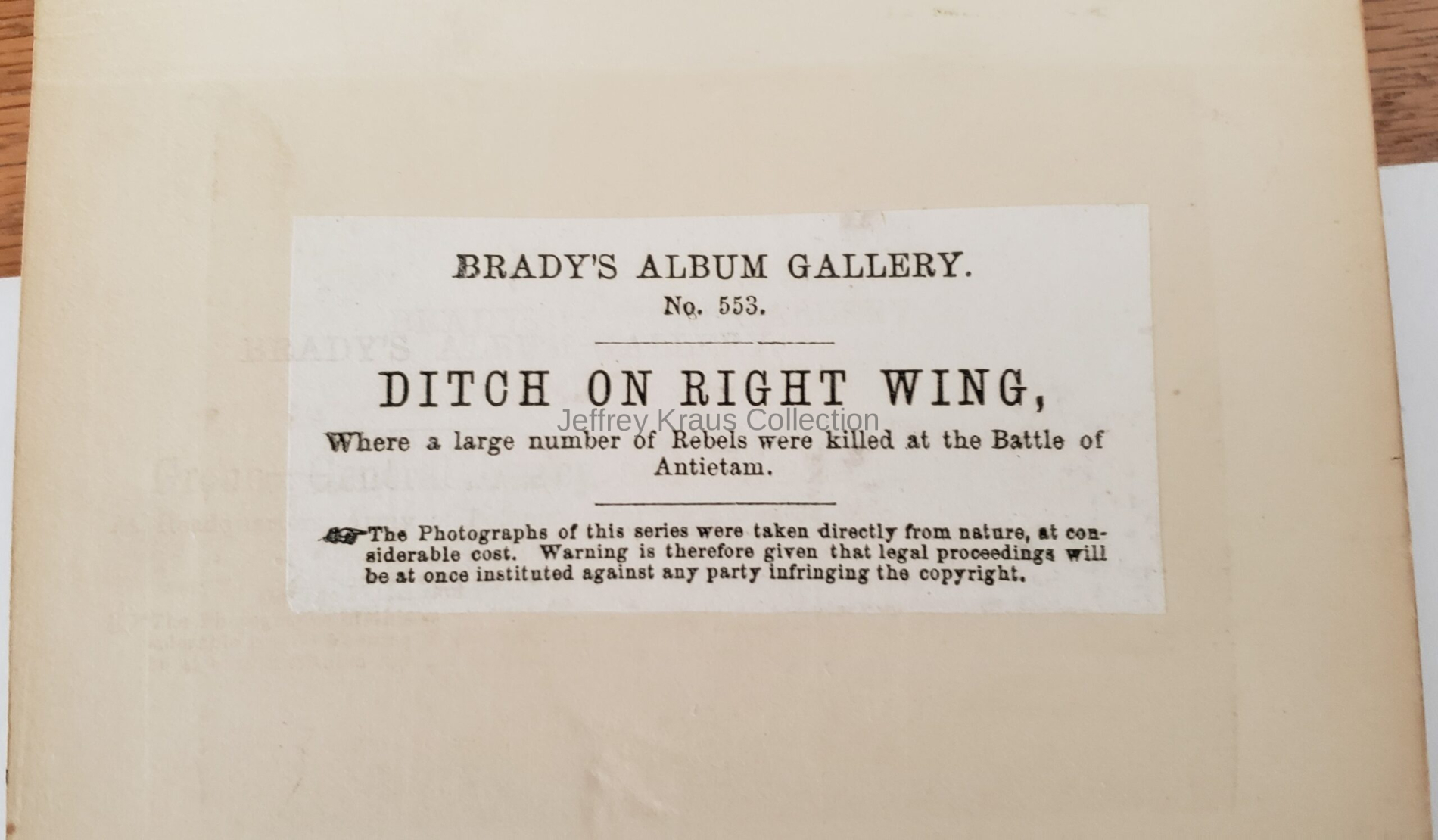
No. 553. Ditch on Right Wing, Where a large number of Rebels were killed at the Battle of Antietam.
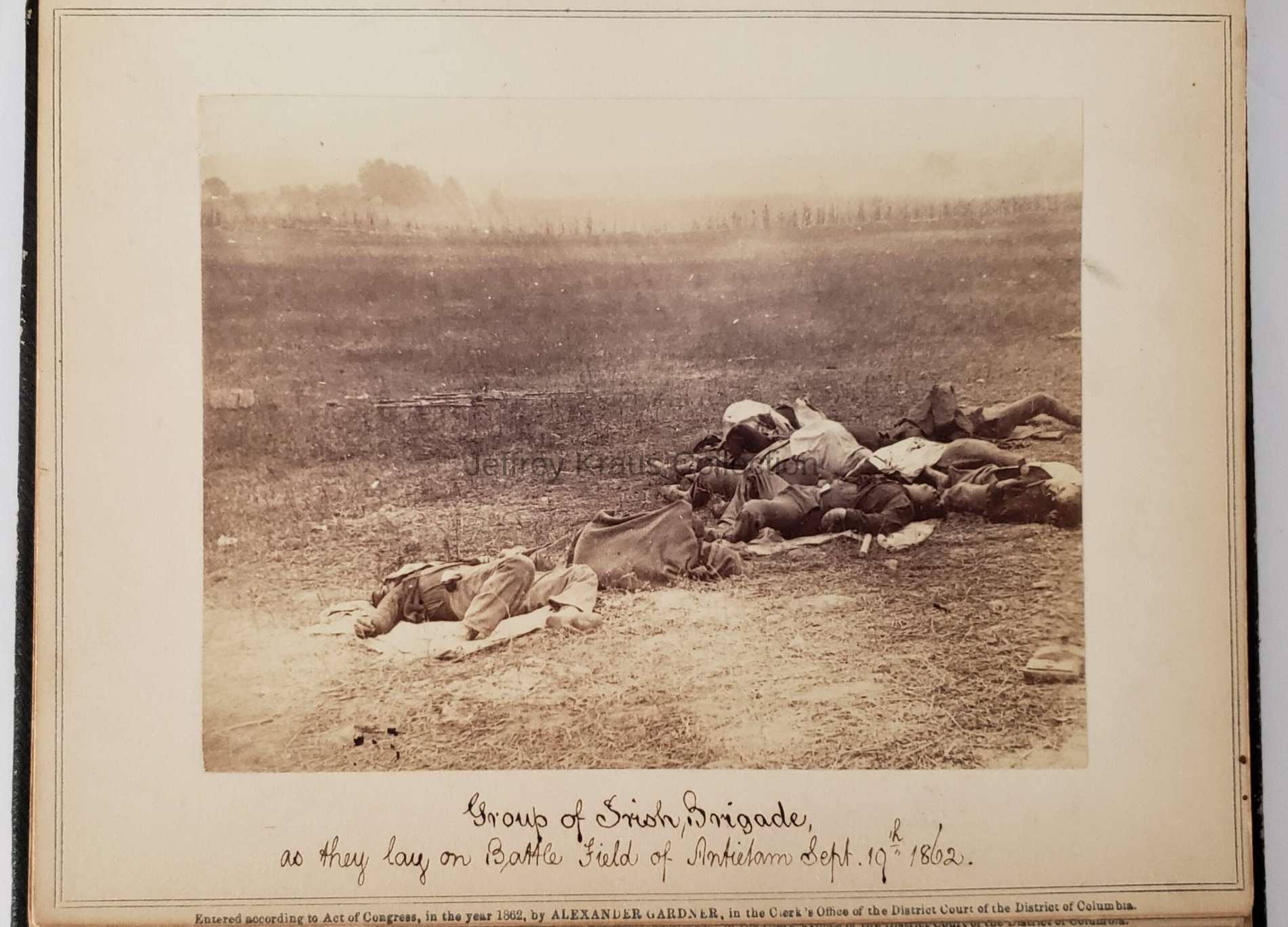
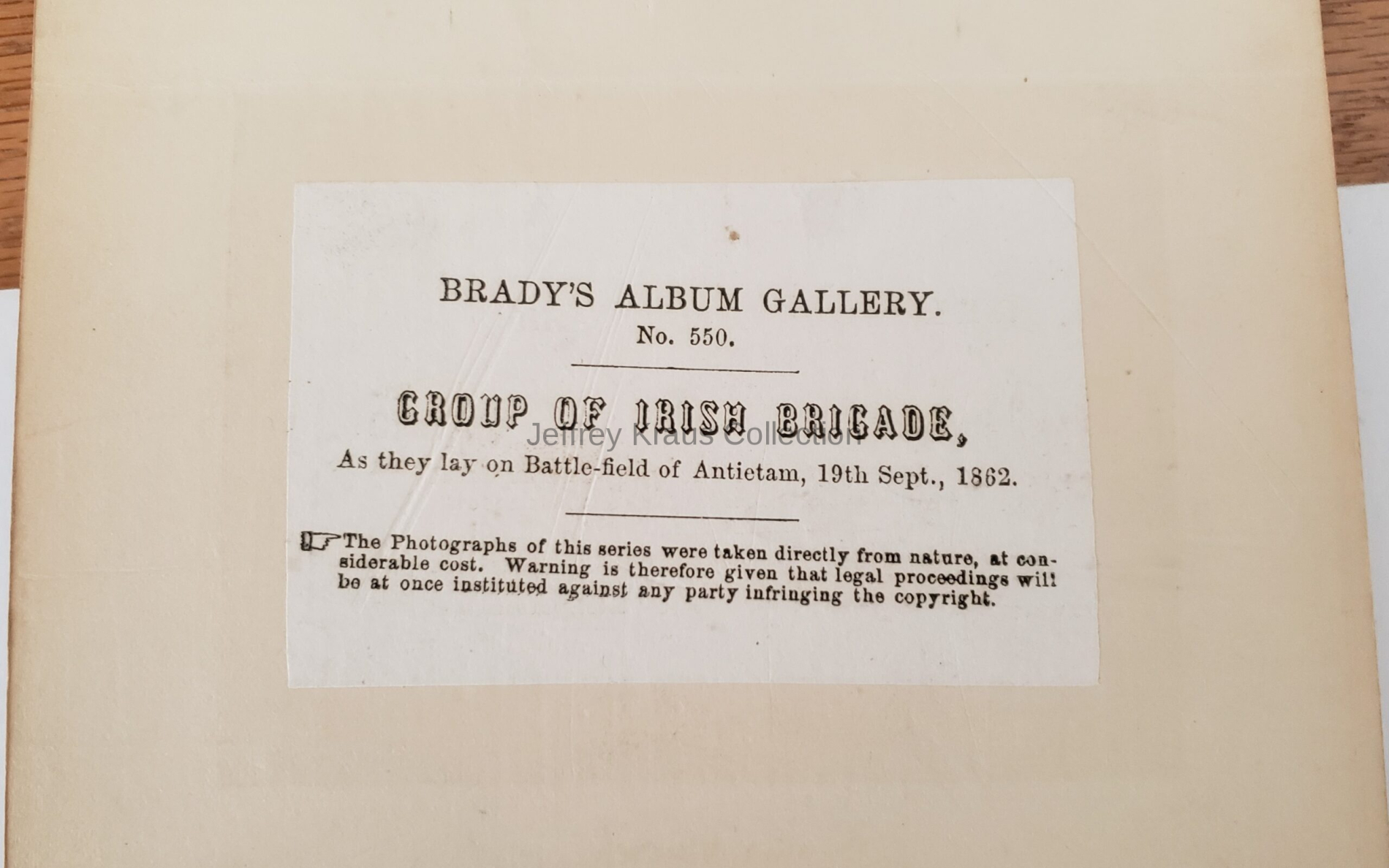
No. 550. Group of Irish Brigade, As they lay on Battle-field of Antietam, 19th Sept., 1862.
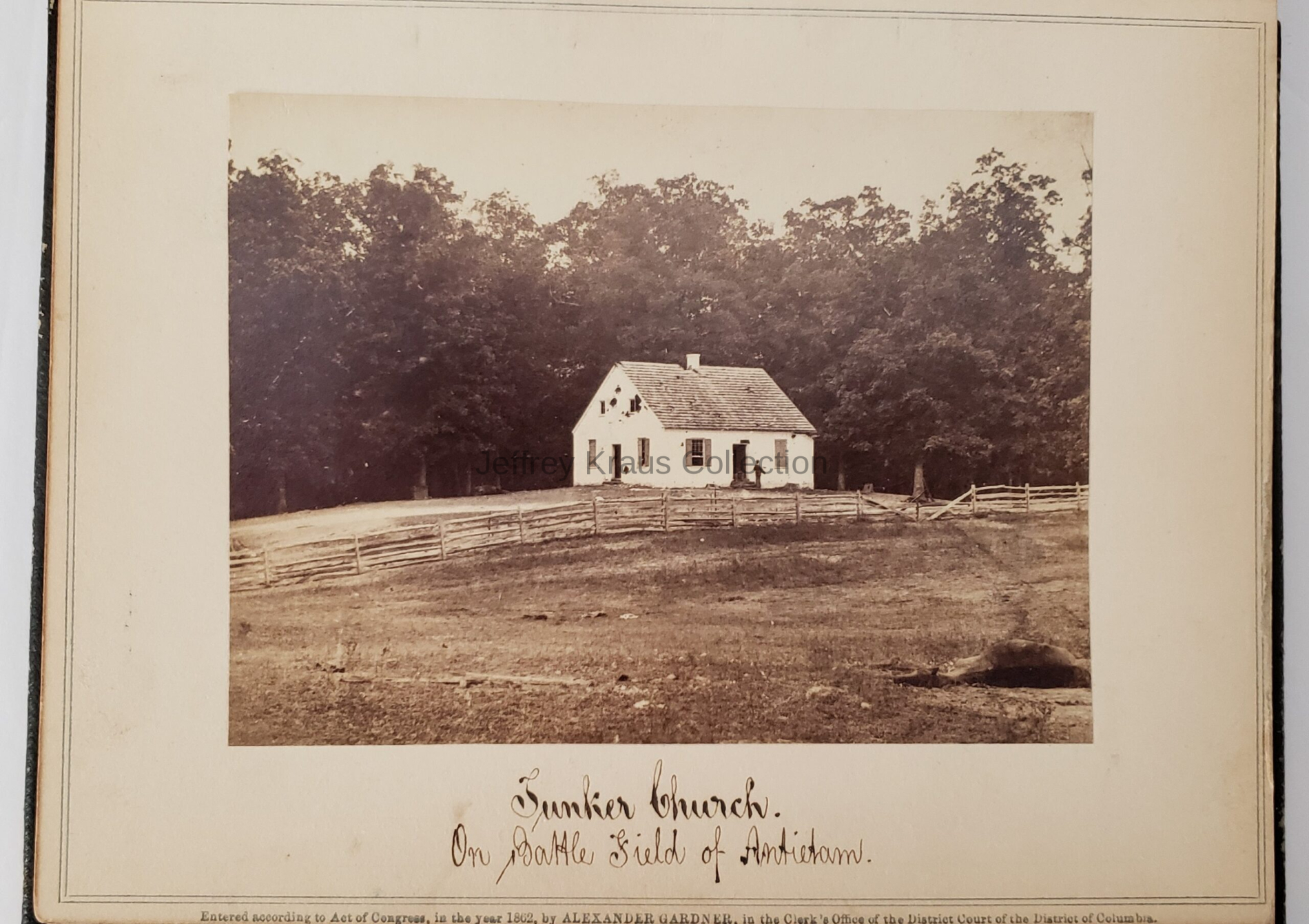
No. 573. Tunker [sic] Church, on Battle-Field of Antietam. Should be Dunker Church.
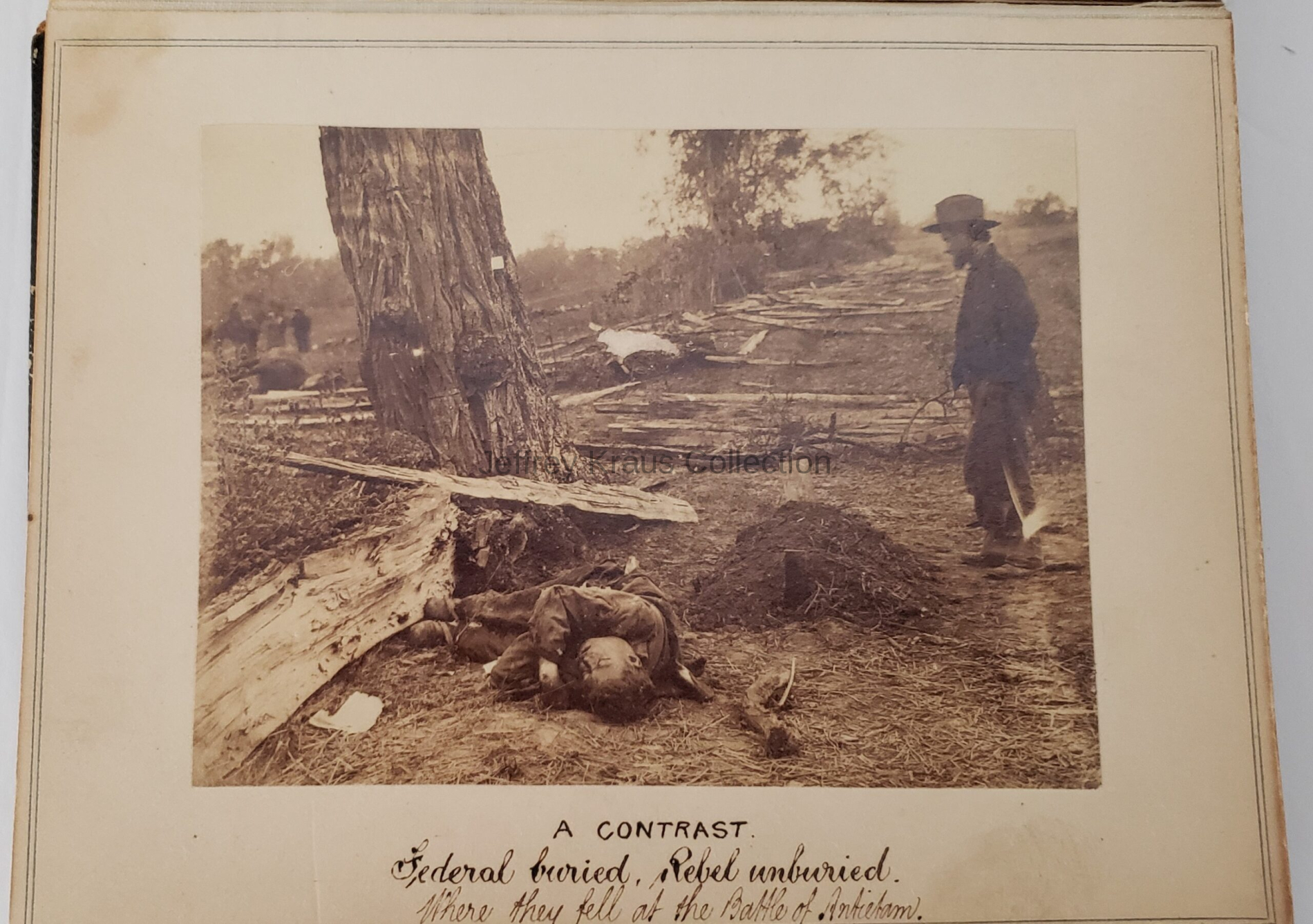
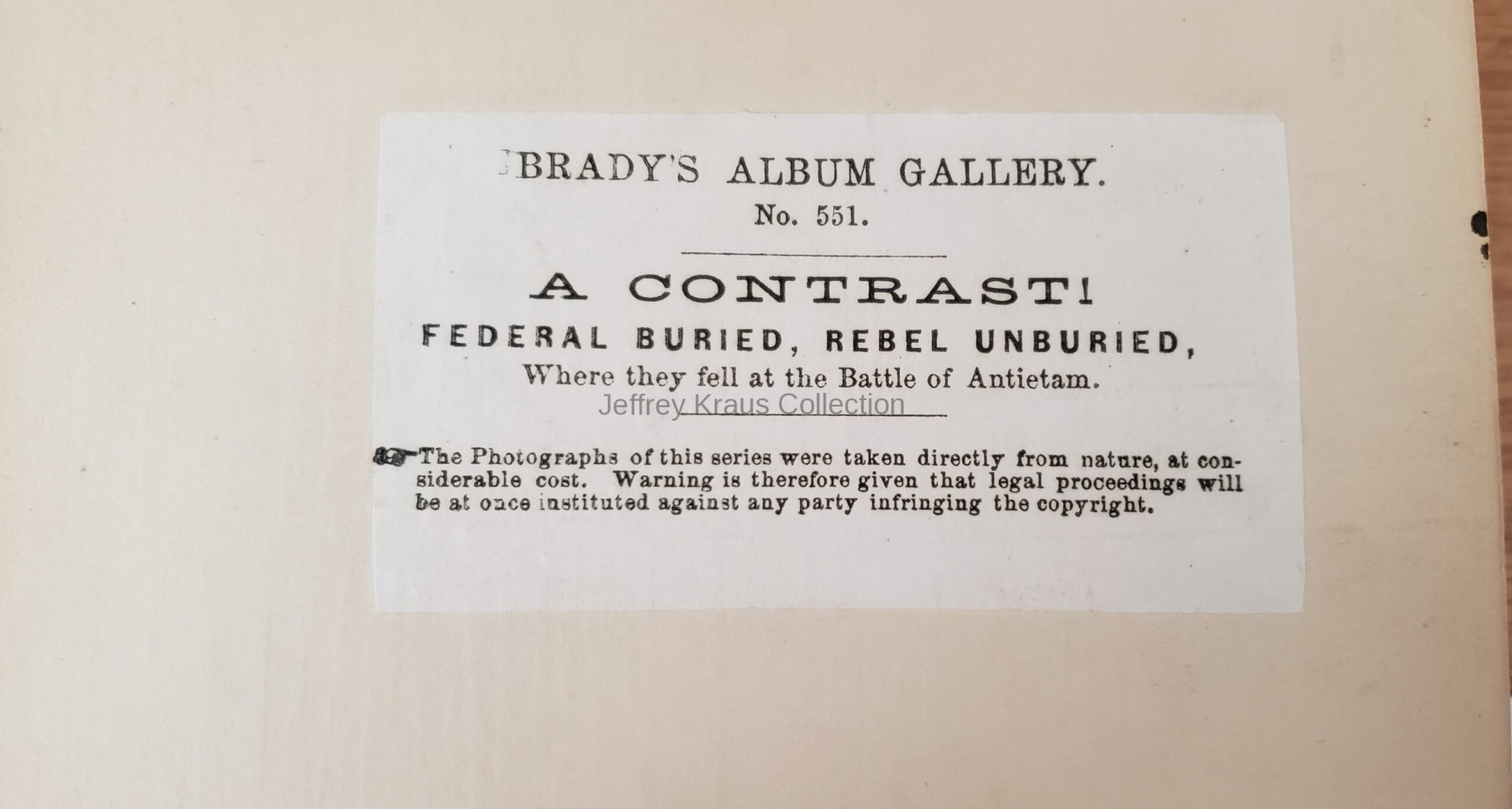
No. 551. A Contrast! Federal Buried, Rebel Unburied, Where they fell at the Battle of Antietam.
Album card album measuring 6″ x 5.”
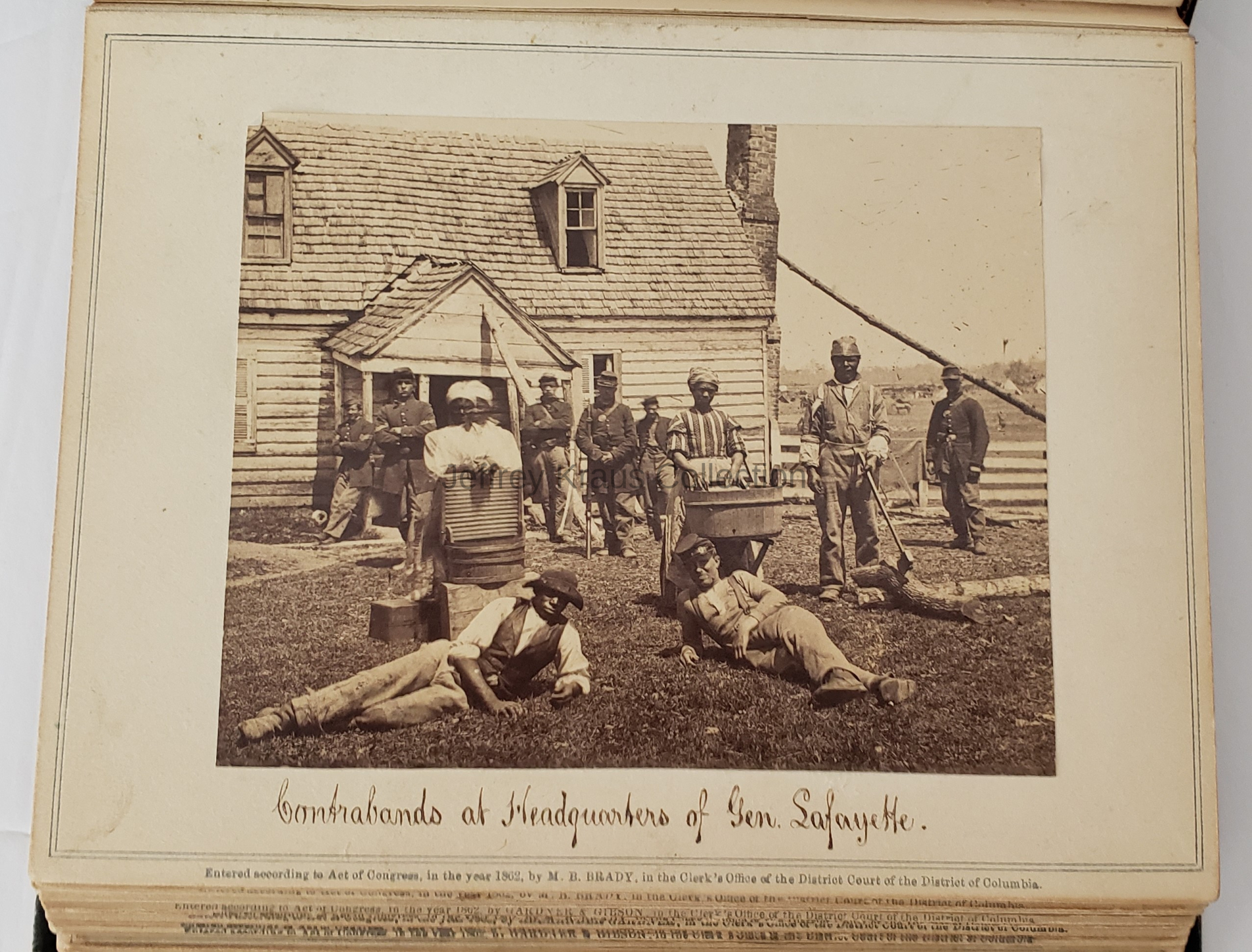
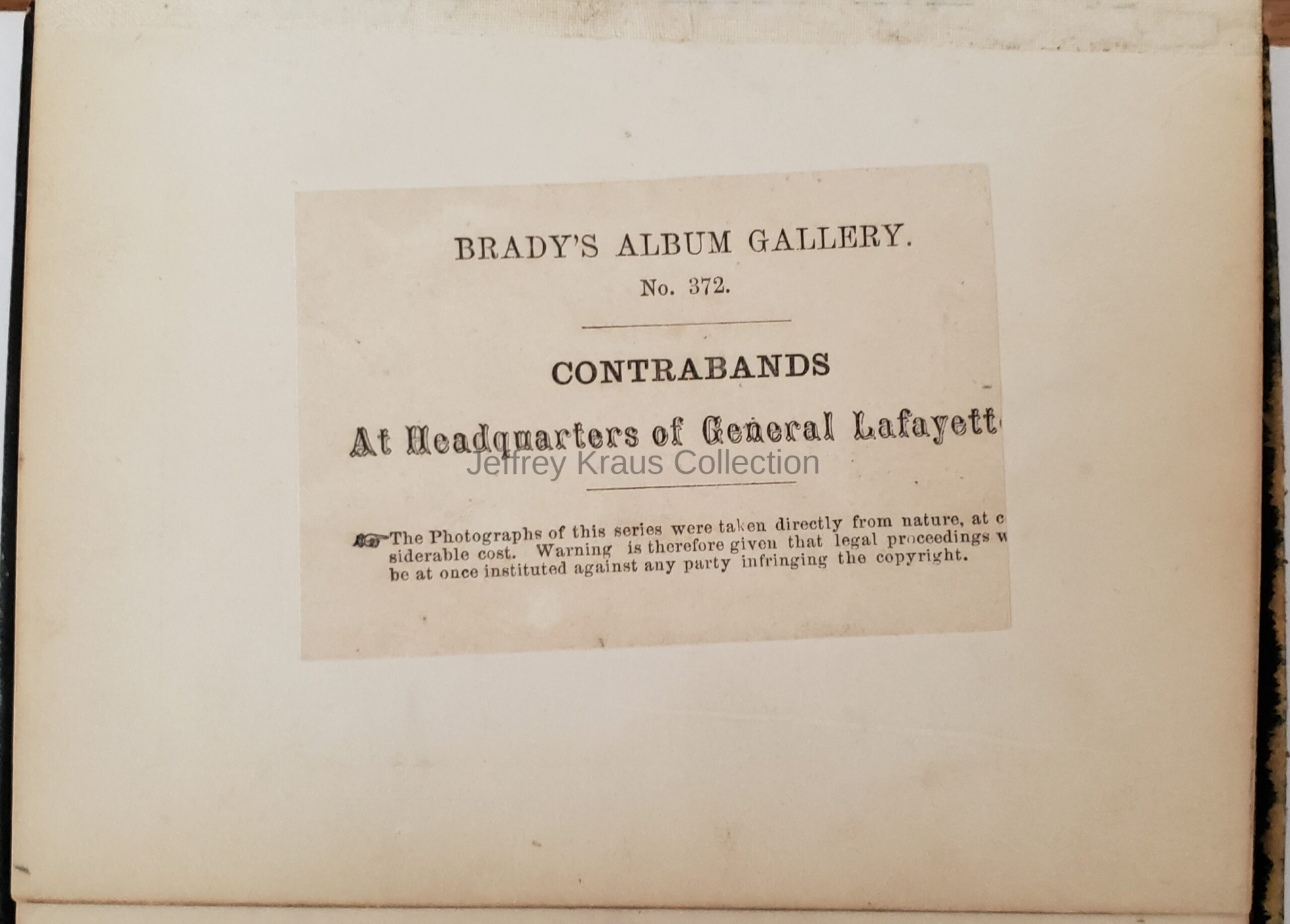
No. 372. Contrabands at Headquarters of General Lafayette.
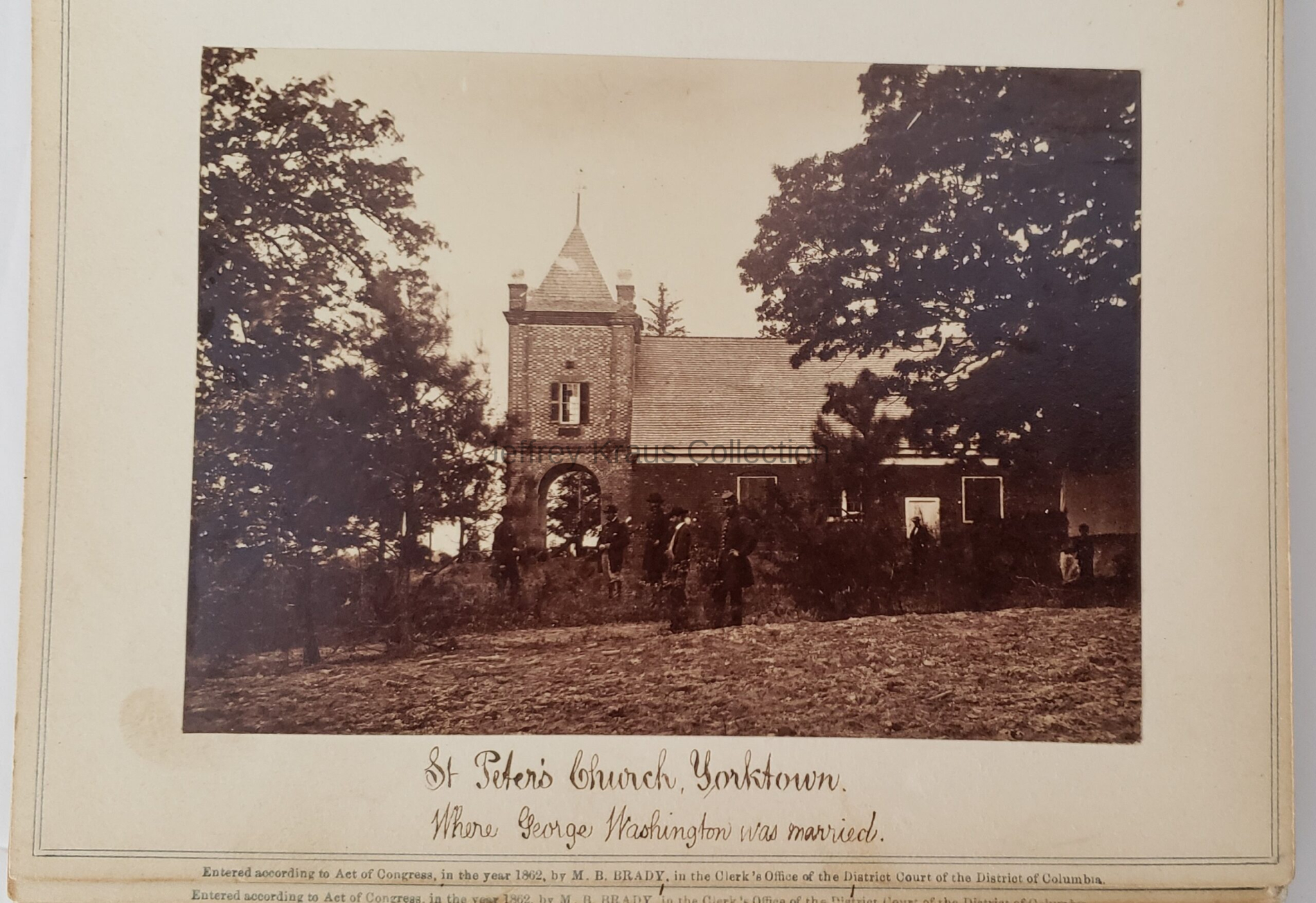
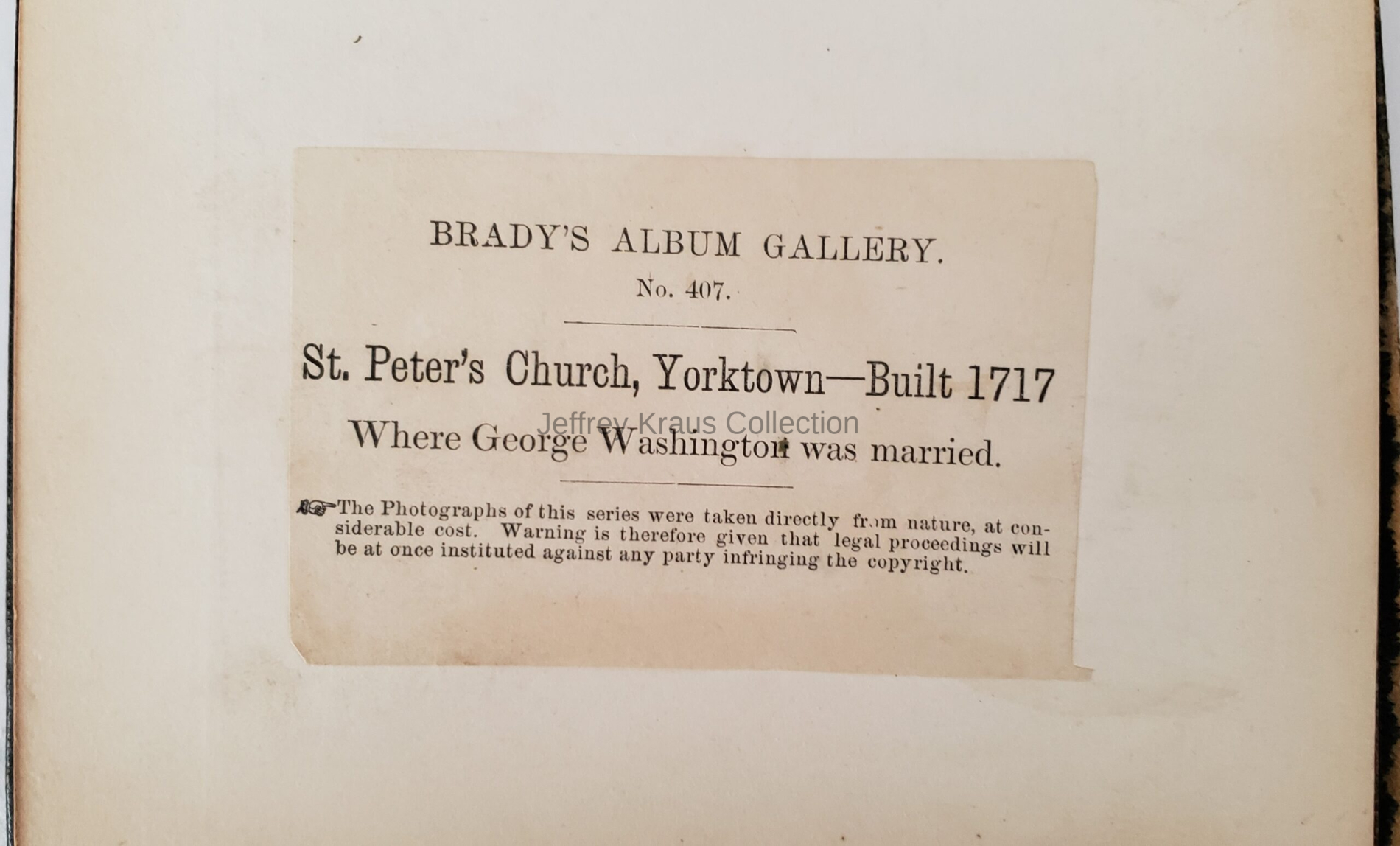
No. 407. St. Peter’s Church, Yorktown–Built 1717. Where George Washington was married.
No. 393. Headquarters of Lord Cornwallis at the Surrender of Yorktown, Now used as a Hospital, under the Superintendence of Miss Dix.
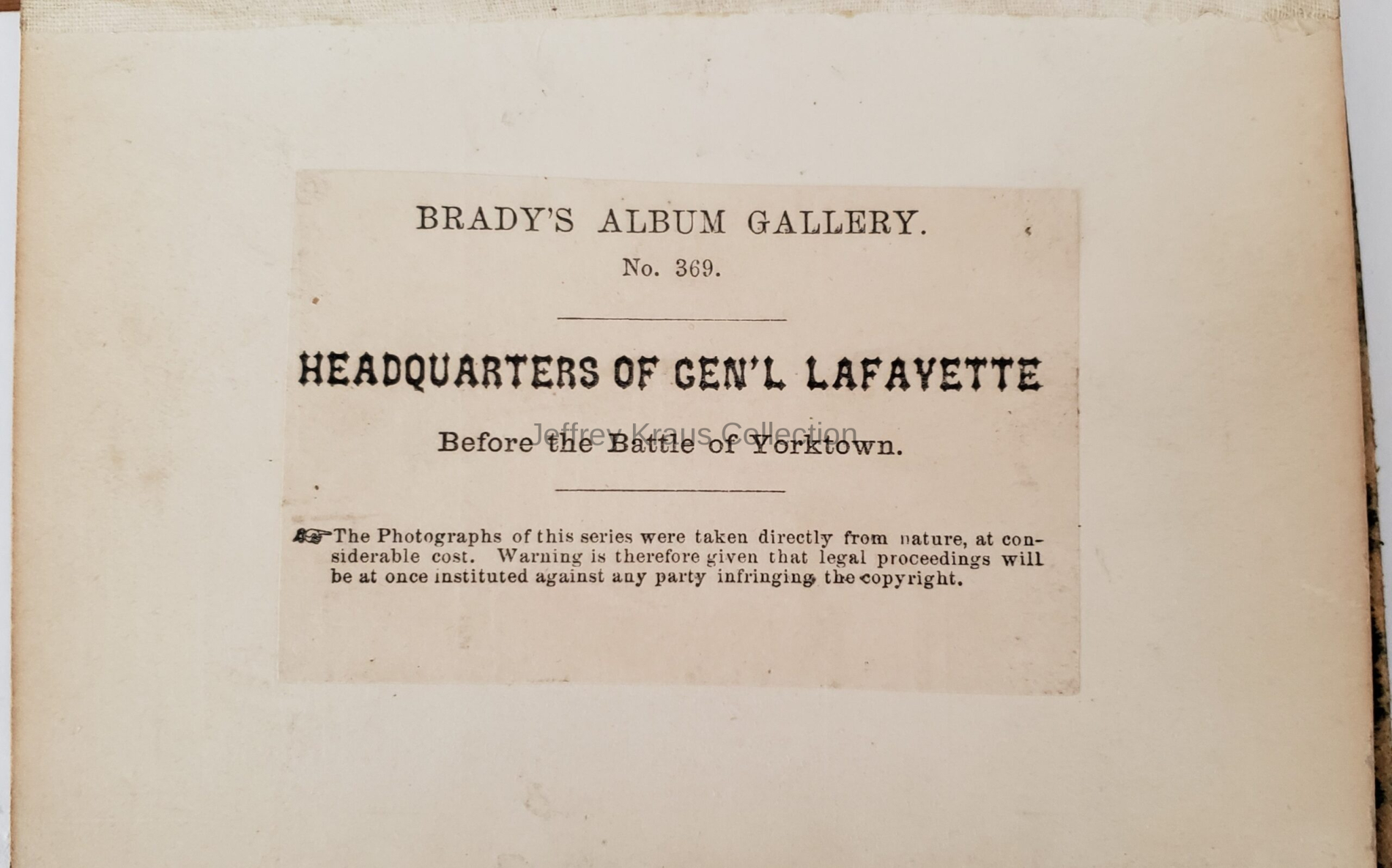
No. 369. Headquarters of Gen’l Lafayette Before the Battle of Yorktown.
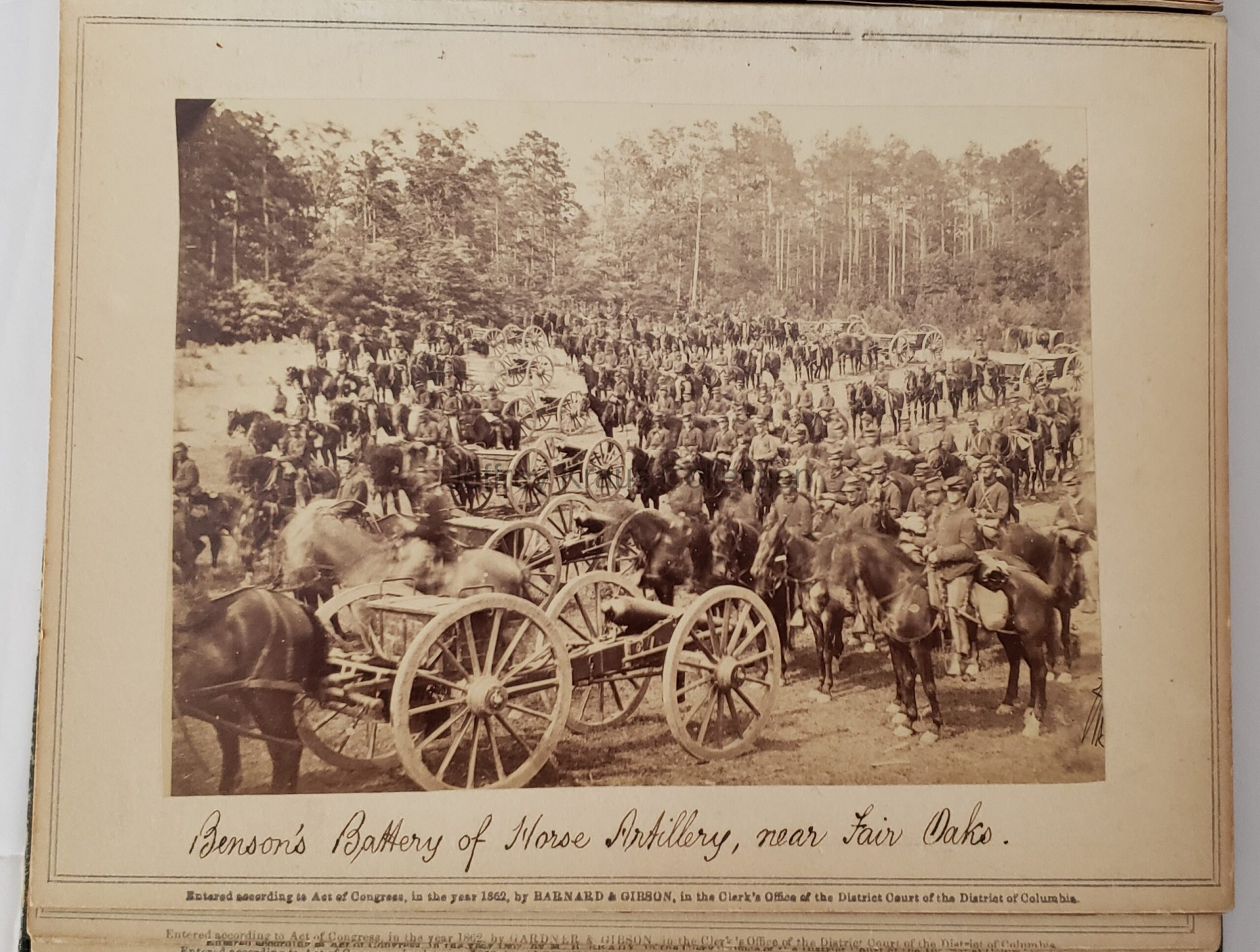
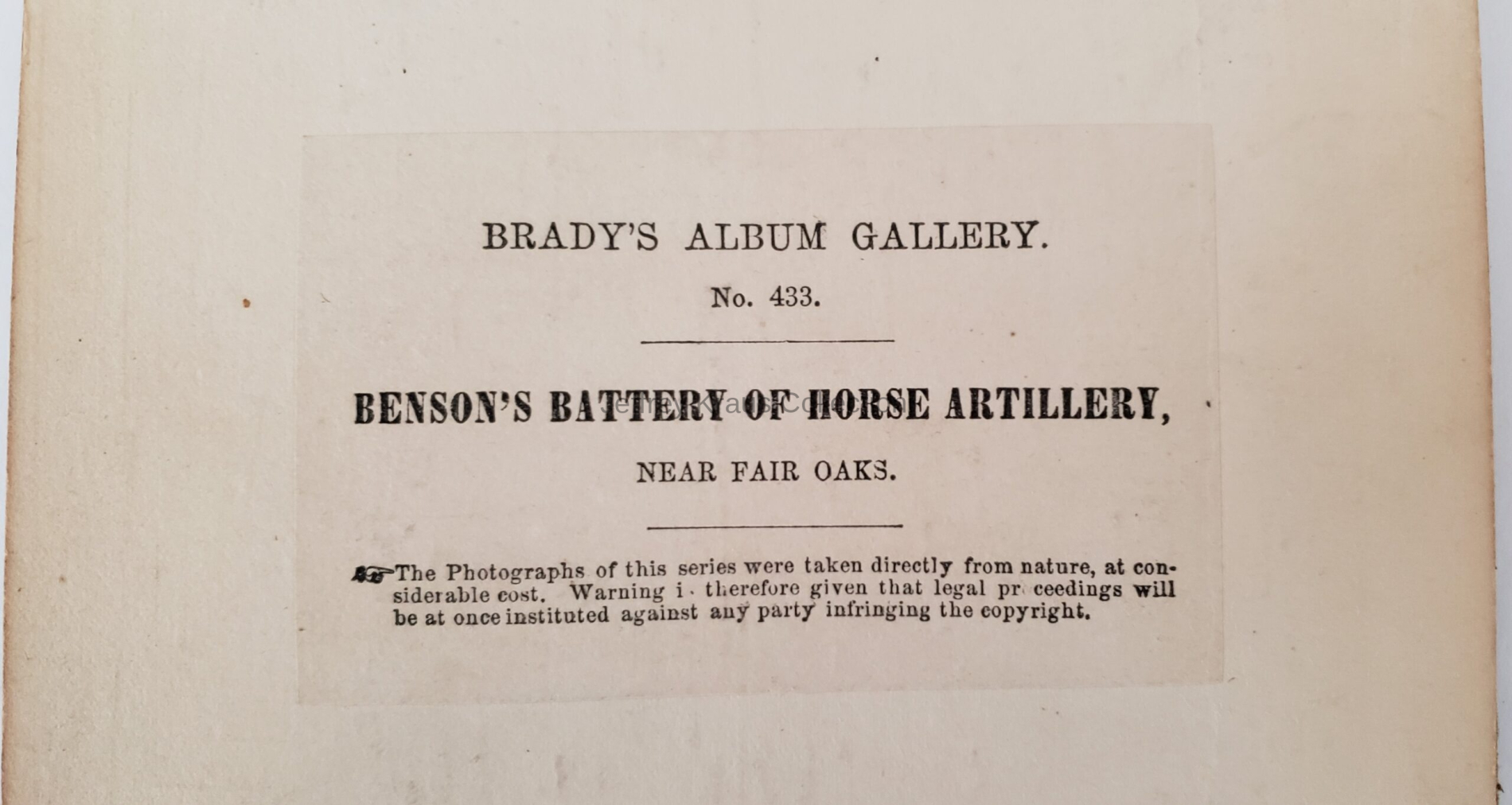
No. 433. Benson’s Battery of Horse Artillery, near Fair Oaks.
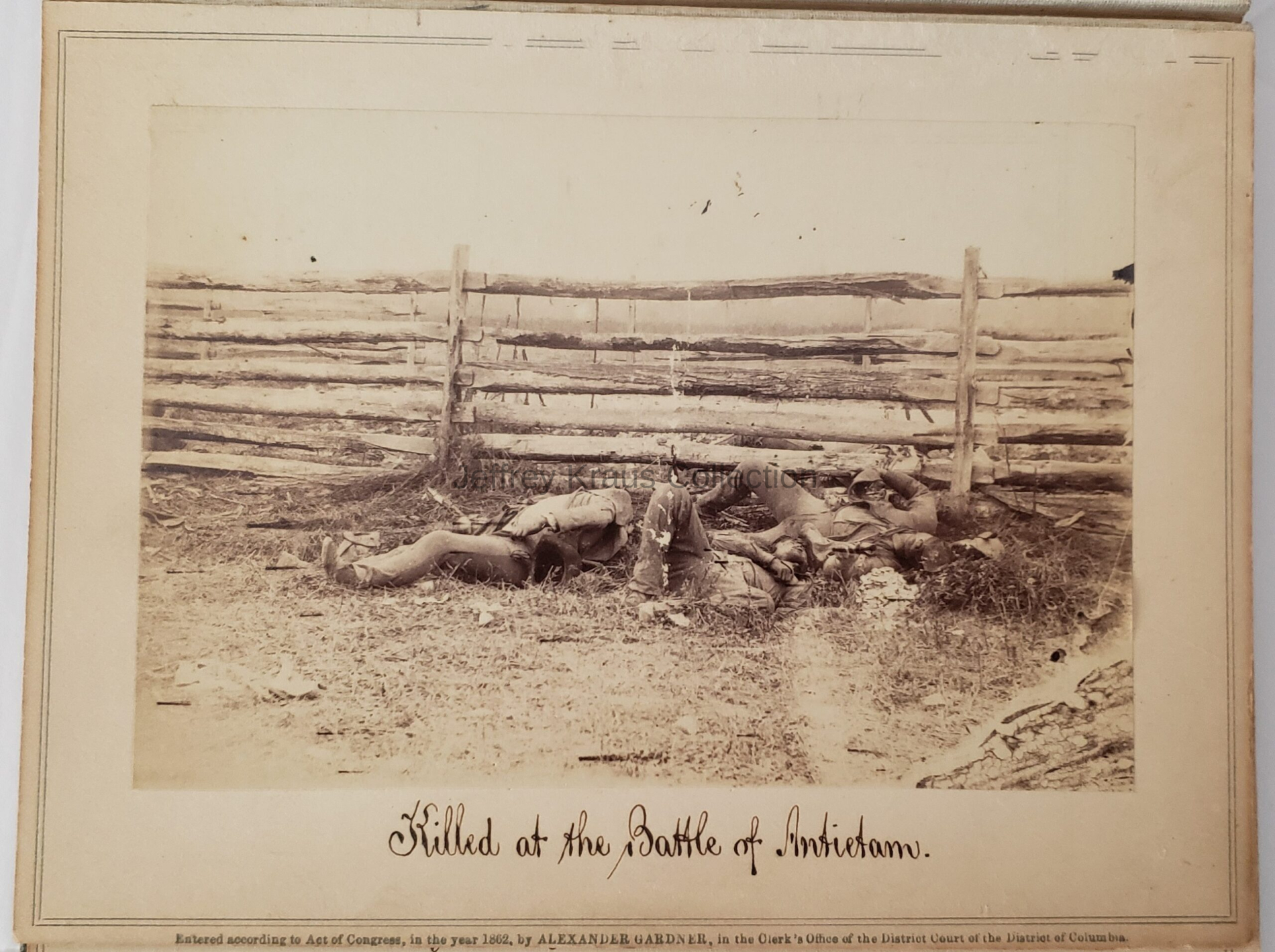
No. 559. Killed at the Battle of Antietam.
No. 489. Military Bridges across the Chickahominy, Built by the 15th N.Y.V. Engineers, Col. Murphy.
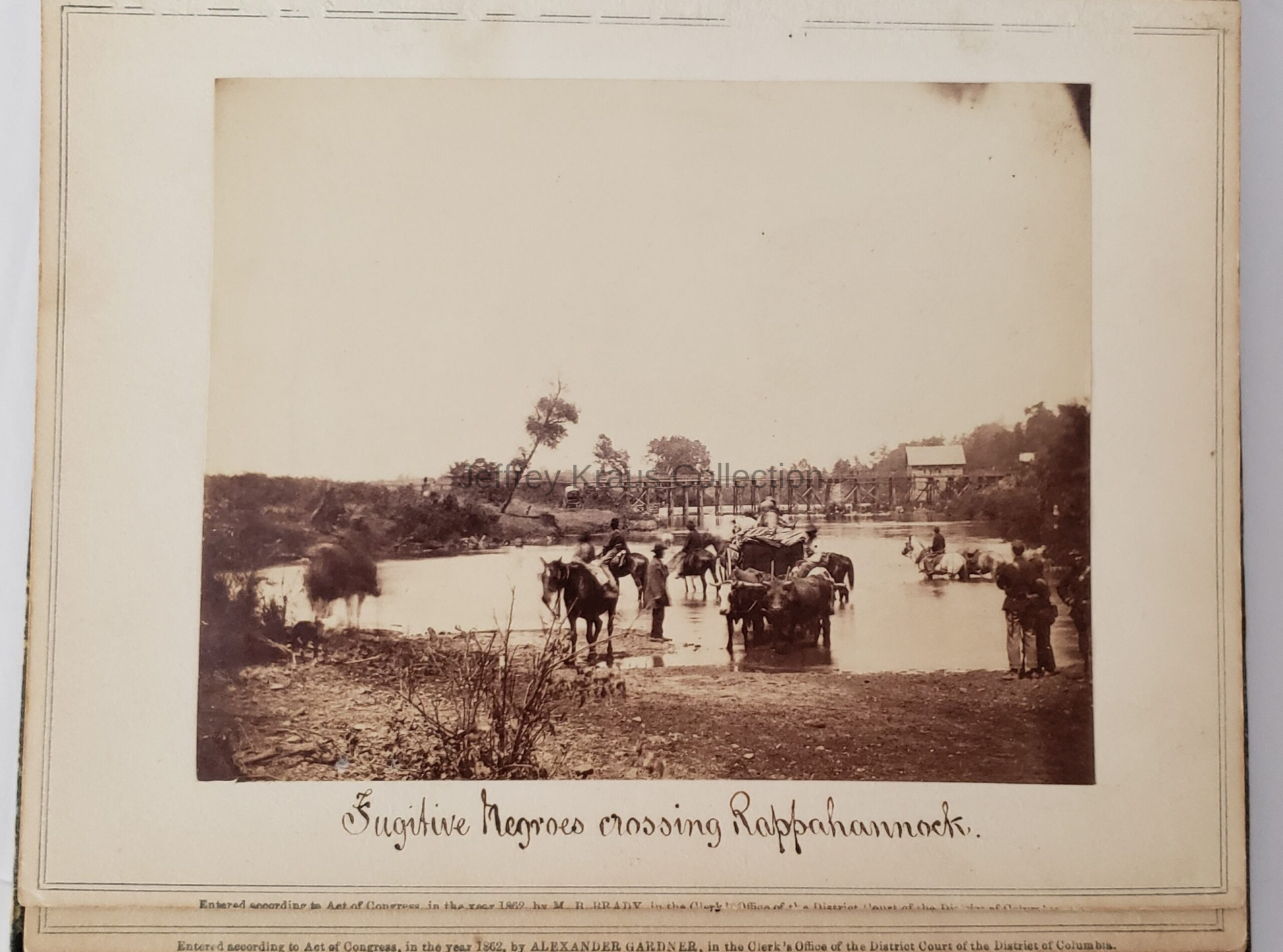
No.519. Fugitive Negroes Crossing Rappahannock.
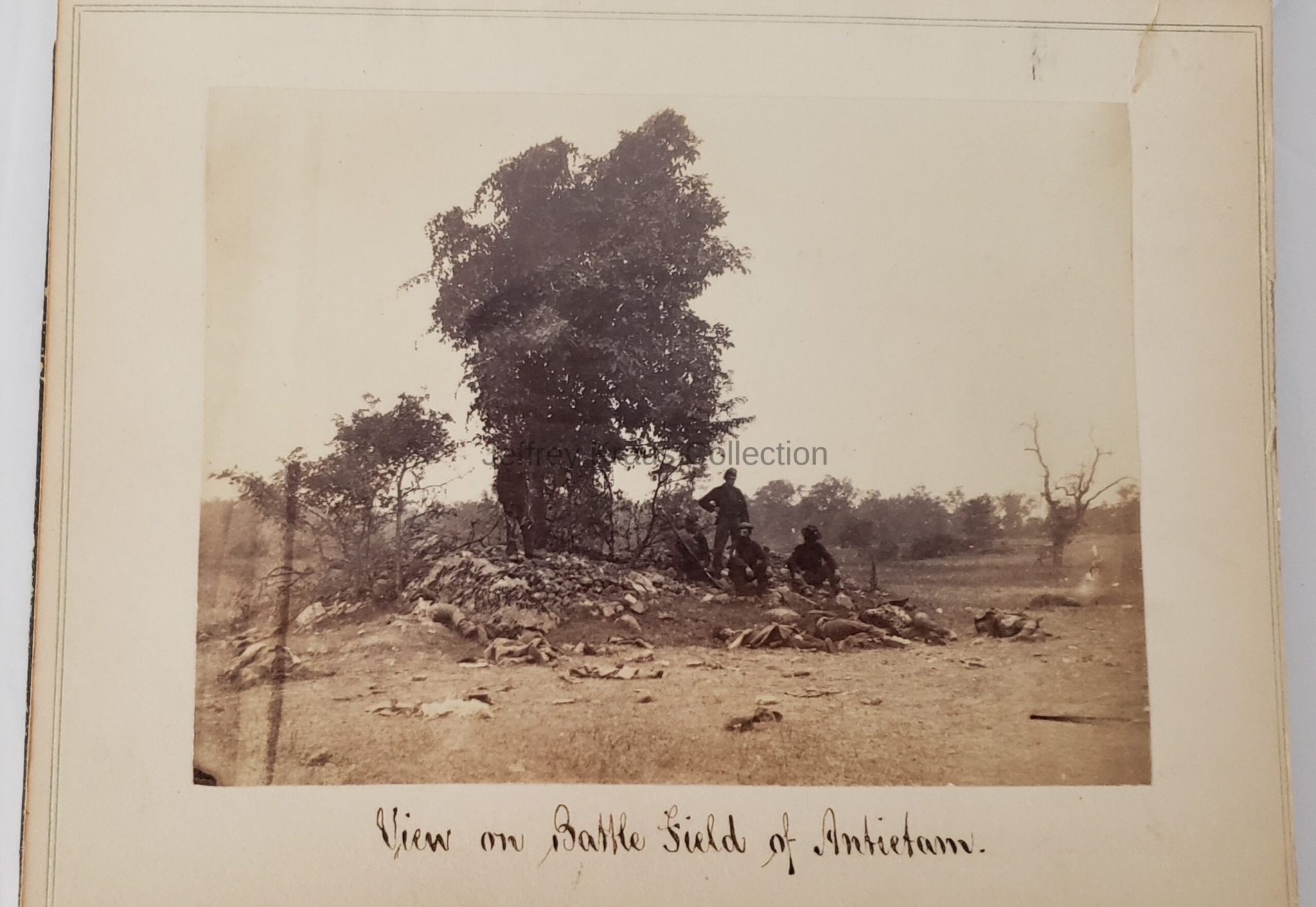
No. 569. View on Battle-Field of Antietam.
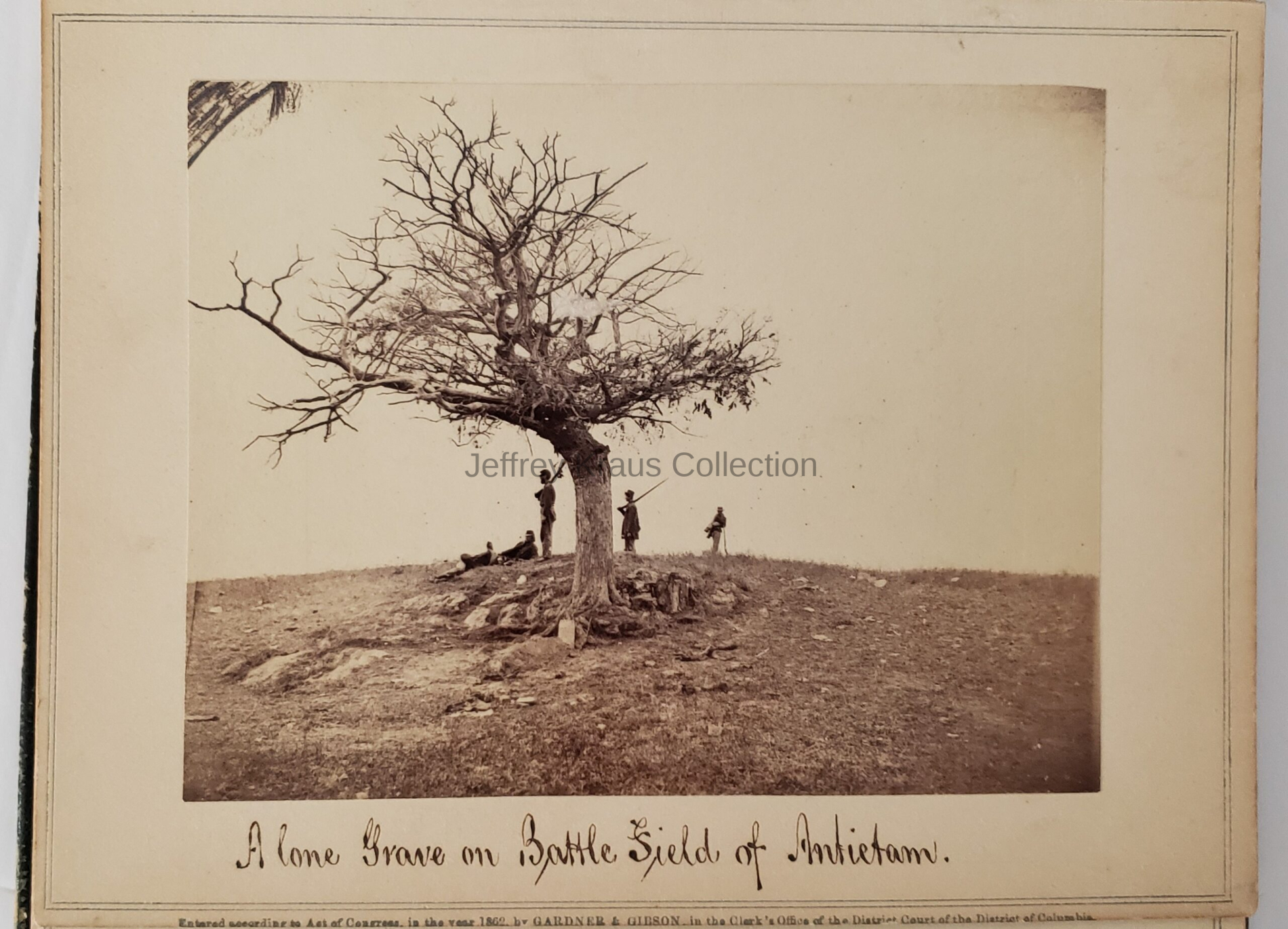
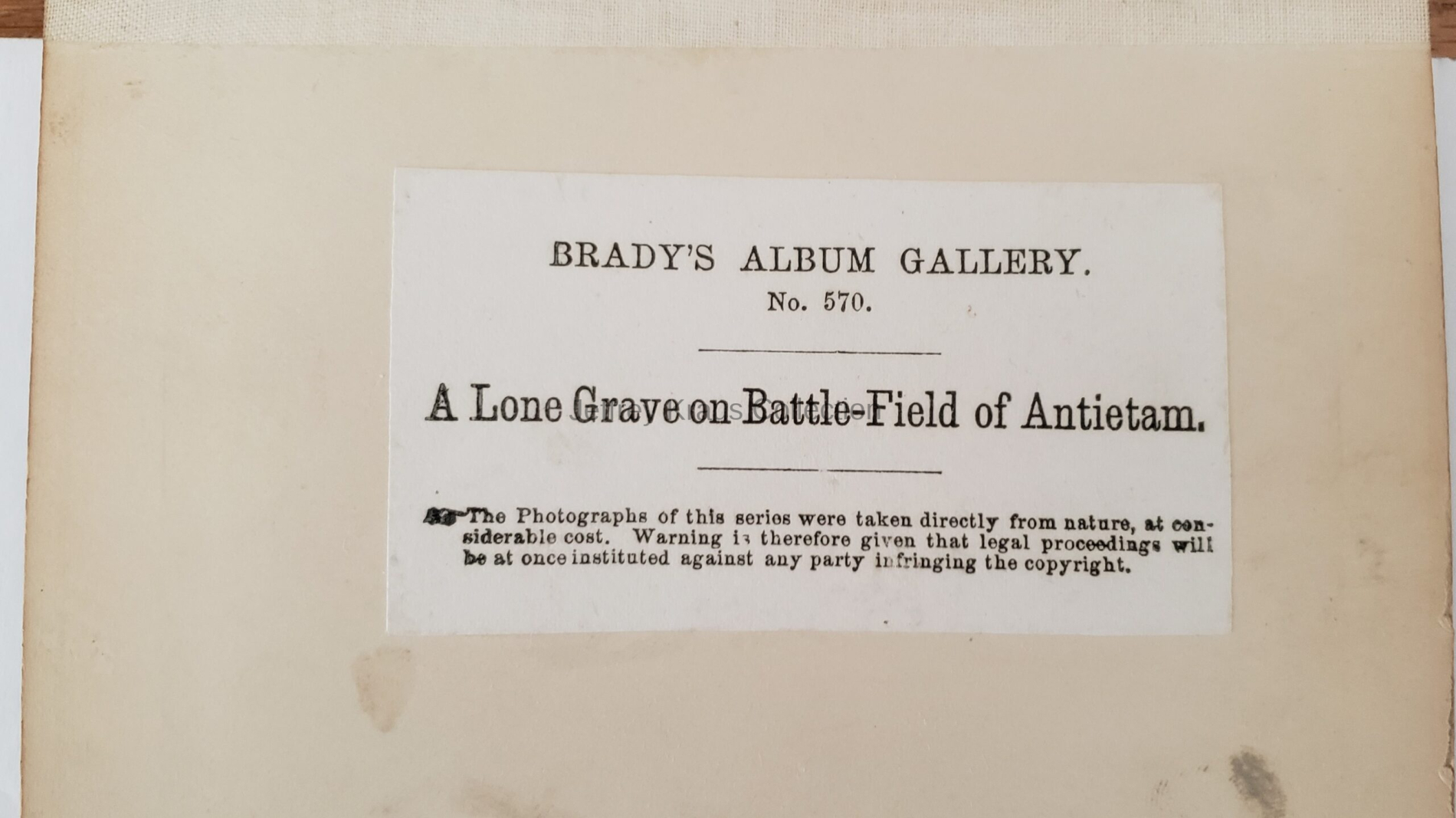
No. 570. A Lone Grave on Battle-Field of Antietam. This grave has been identified as that of John Marshall, 28th Pennsylvania: John Marshall is unique among the named fallen on the Elliott map. Born in Ireland in 1812, John was 50 years old—considerably more seasoned than his comrades—when he enlisted on July 27, 1861 as a private in the 28th Pennsylvania’s Company L. A stonemason in Allegheny City—which became part of Pittsburgh in 1907—John left behind much upon enlisting for although his first wife had died of consumption in 1855, their son William remained at home, as did John’s second wife Mary—18 years his junior—and their sons two year old Samuel and infant John, Jr. John Marshall and the 28th also marched into their first major fight that morning at Antietam, despite having served for most of the war to September 17, 1862. Assigned to Lieutenant Colonel Hector Tyndale’s Brigade of Brigadier General George S. Greene’s Division of the XII Corps, they waited while Hooker’s I Corps men battered themselves in taking and retaking the Cornfield. Sometime around 8:30 that morning, however, the 28th and Tyndale’s Brigade was sent into action as part of the “swinging door” advance. Driving through the East Woods and finally securing the Cornfield, John and his regiment relentlessly advanced until reaching the Hagerstown Pike’s eastern edge. Short on ammunition, the 28th and Greene’s Division remained aligned on a slight rise—roughly where today’s NPS visitors center stands—for over an hour before pushing across the road to secure the Dunker Church, where they remained until being driven back sometime before 1:00 p.m. John Marshall, however, probably never witnessed the regiment’s stand around the Dunker Church given the location of his burial. John’s final unique feature is that his battlefield grave was captured by photographer Alexander Gardner, shortly after the battle. Photographic historian William Fassanito in 1978 confirmed the location by identifying the still-existing rock formation and enlarging the image to read John’s name inscribed on his wooden marker. John’s body was moved to the Antietam National Cemetery by 1866 but the loneliness and sadness of his battlefield resting place haunts viewers even today. (https://antietamscornfield.com/2020/09/17/elliotts-antietam-burial-map-new-revelations-about-the-cornfields-toll/?fbclid=IwAR2wSwzQzXTeITTWejXkbHUniKYRtzG6Ow19OTmBNJZ5y5RFxhDpQFXIebw)
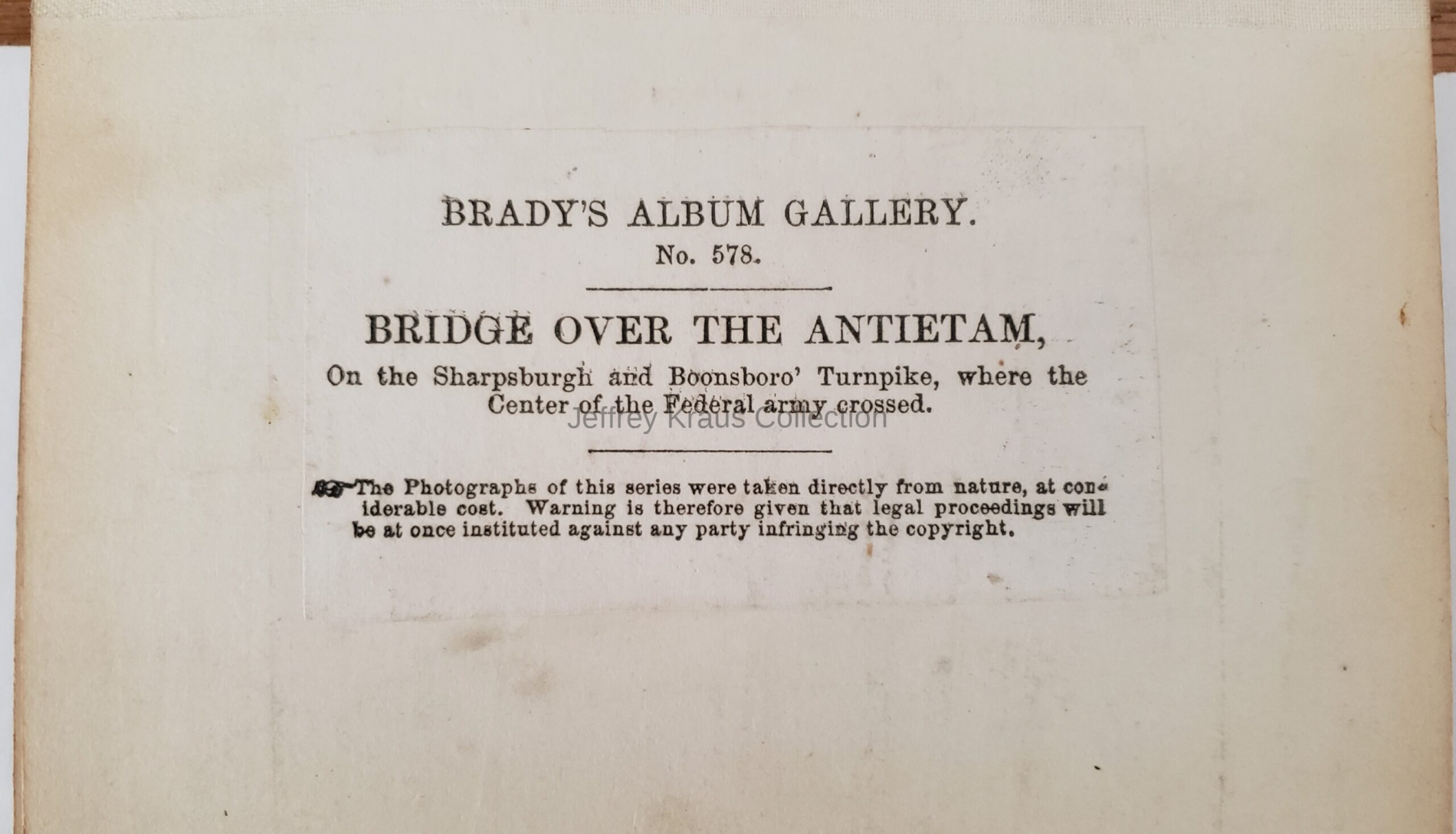
No. 578. Bridge Over the Antietam, on the Sharpsburgh and Boonsboro’ Turnpike, where the Center of the Federal Army crossed.
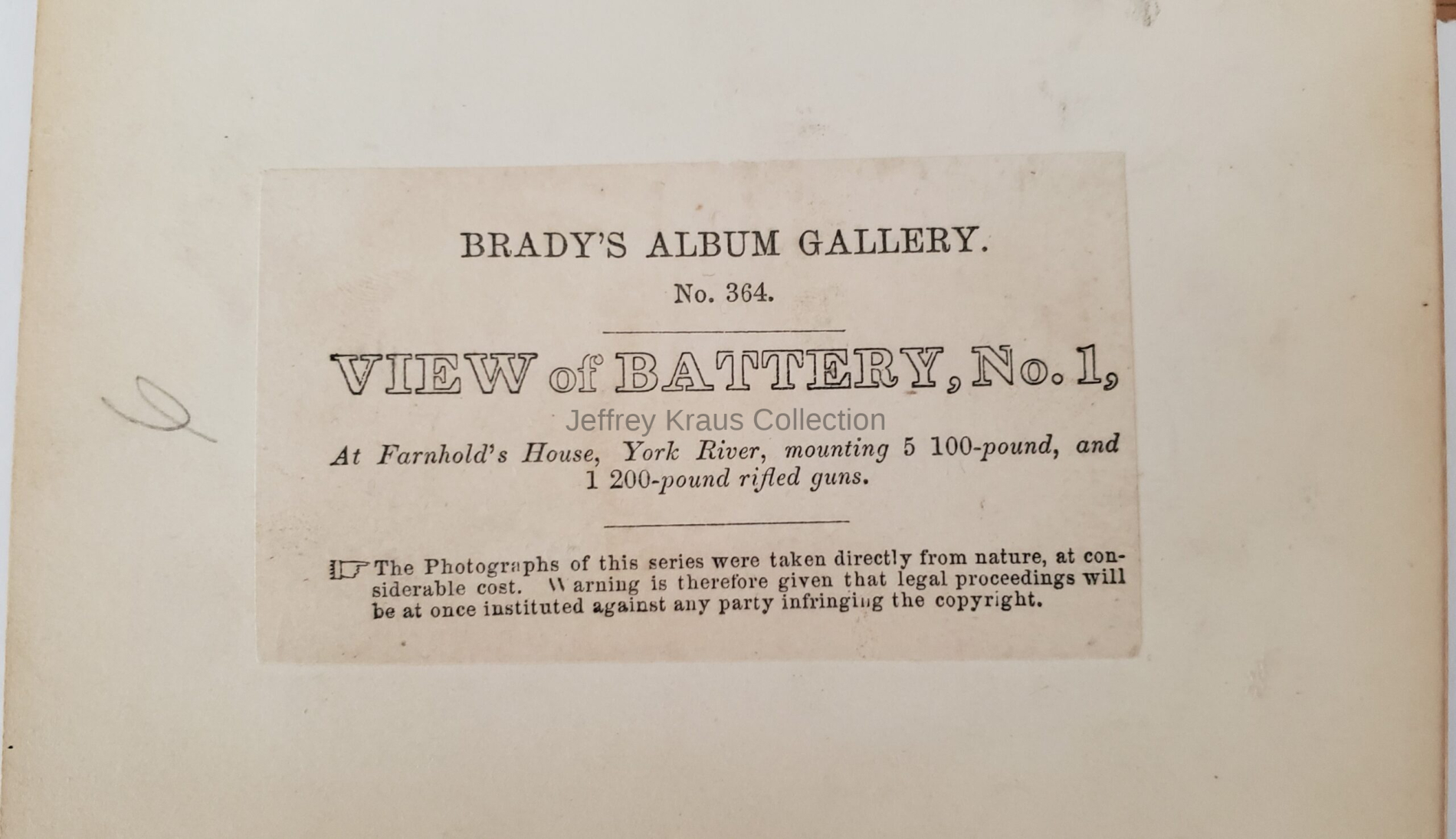
No. 364. View of Battery, No. 1, at Farnhold’s House, York River, mounting 5 100-pound and 1 200-pound rifled guns.
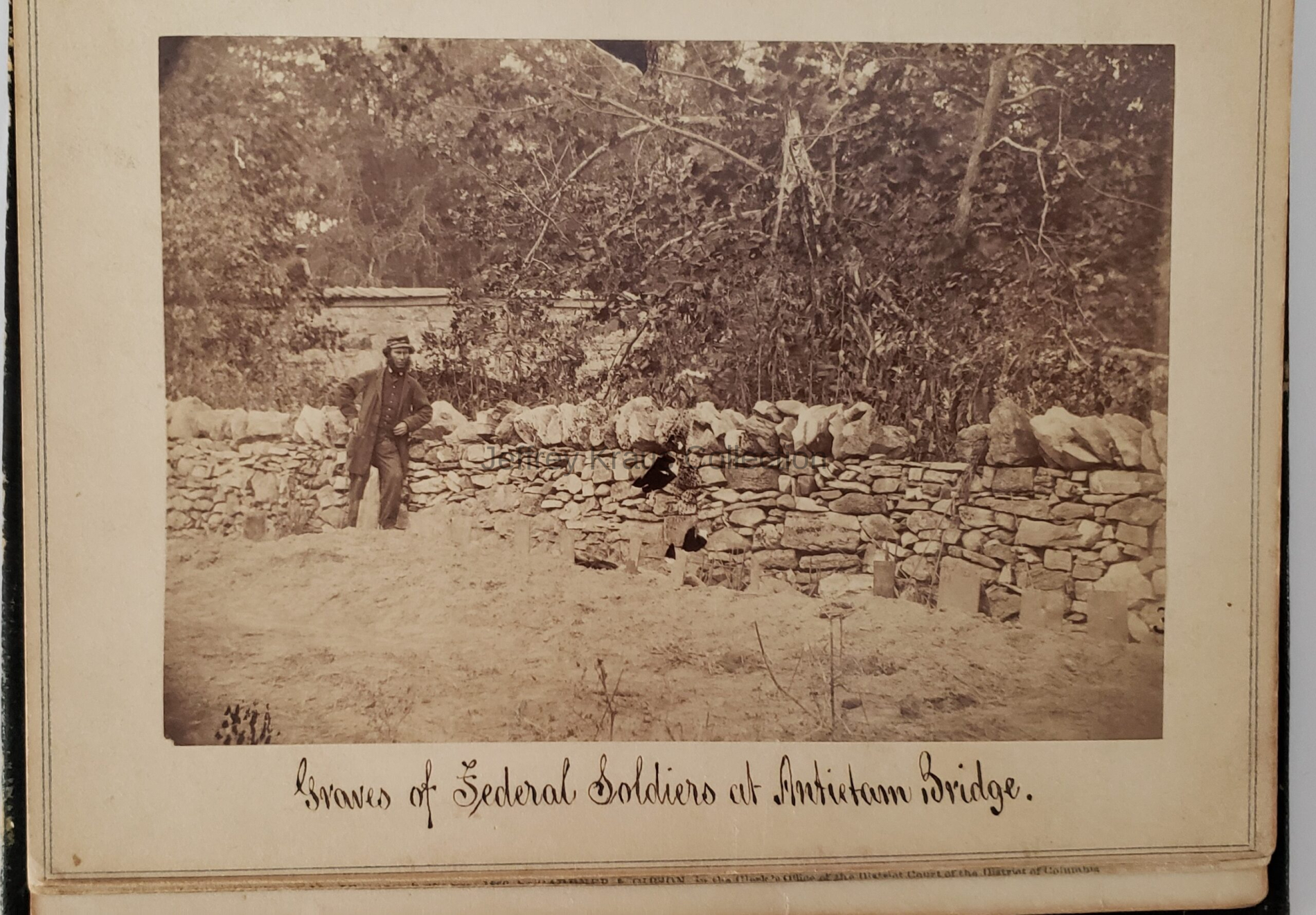
No. 585. Graves of Federal Soldiers, at Antietam Bridge.
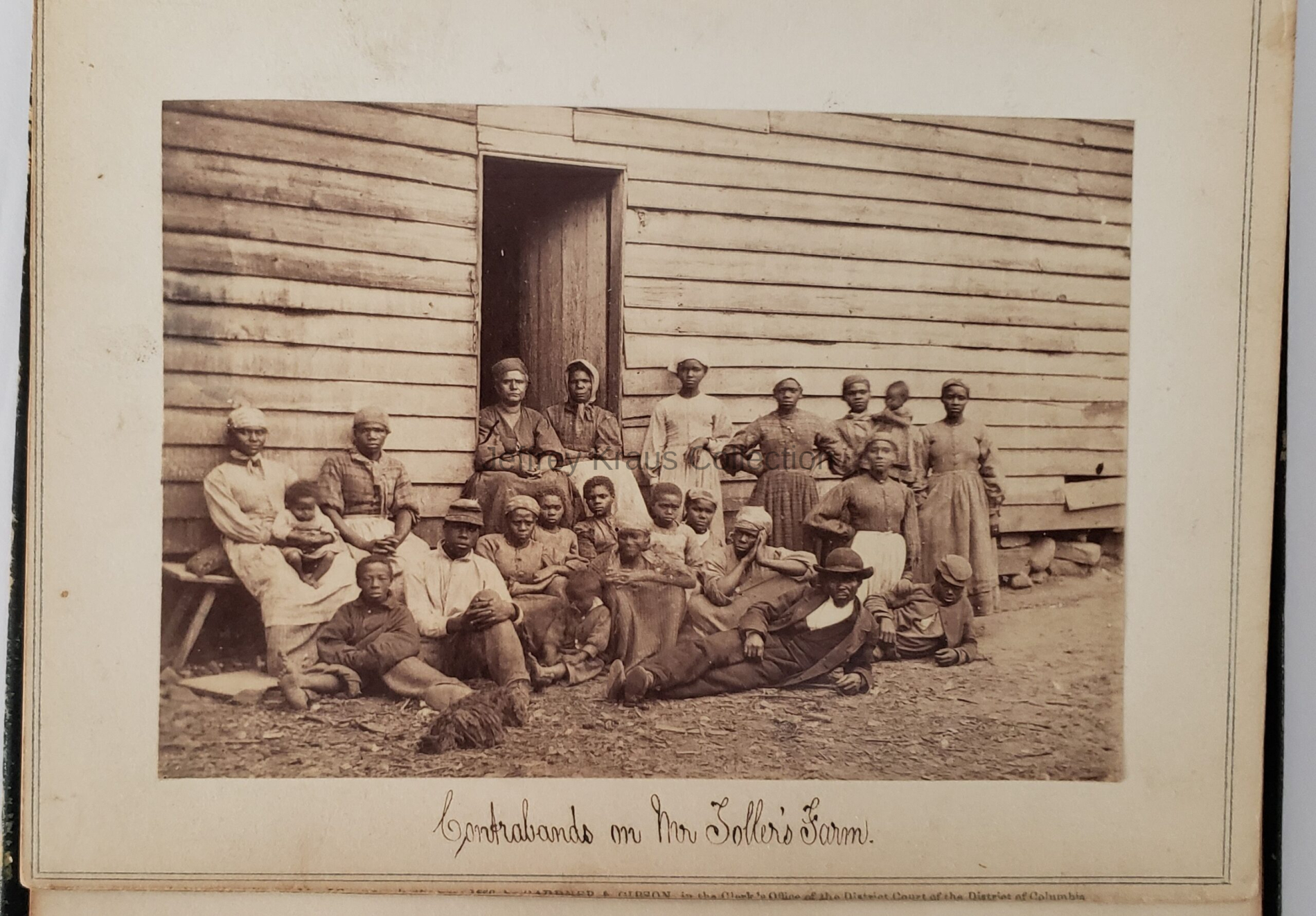
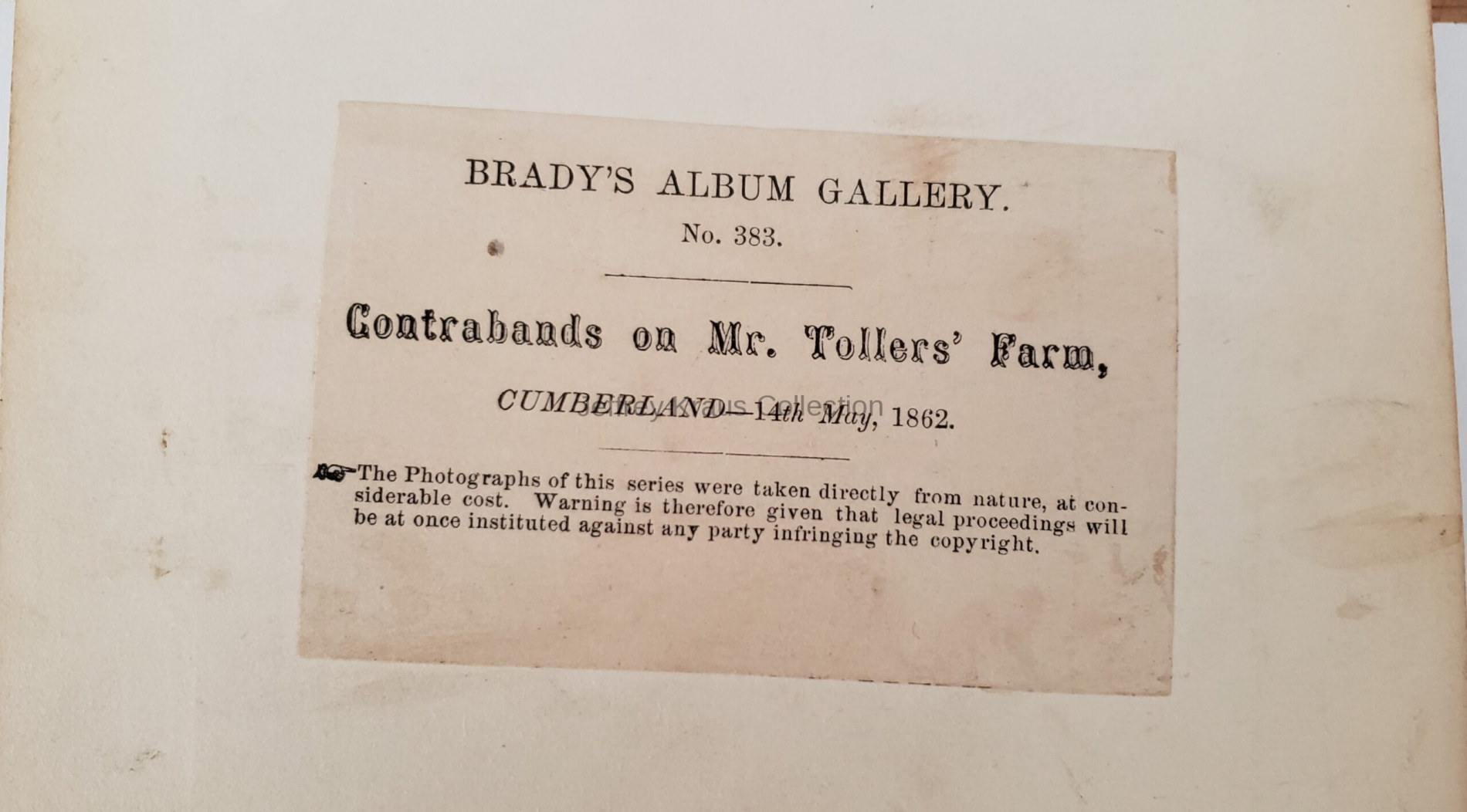
No. 383. Contrabands on Mr. Tollers’ Farm, Cumberland-14th May, 1862.
The album measures 6″ x 5.”
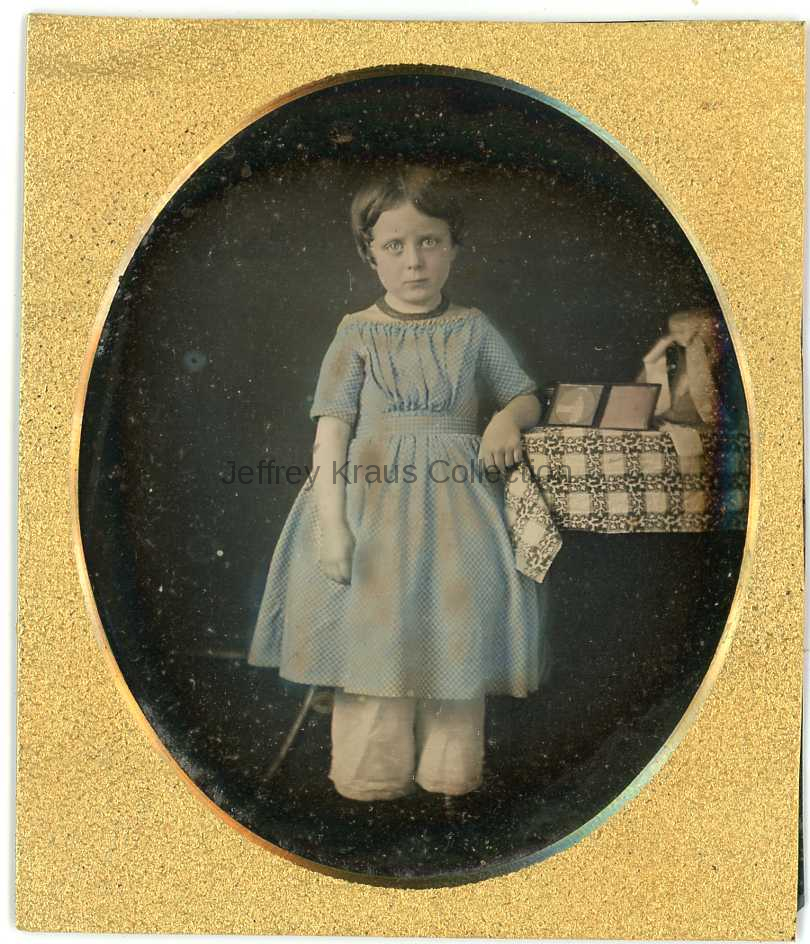
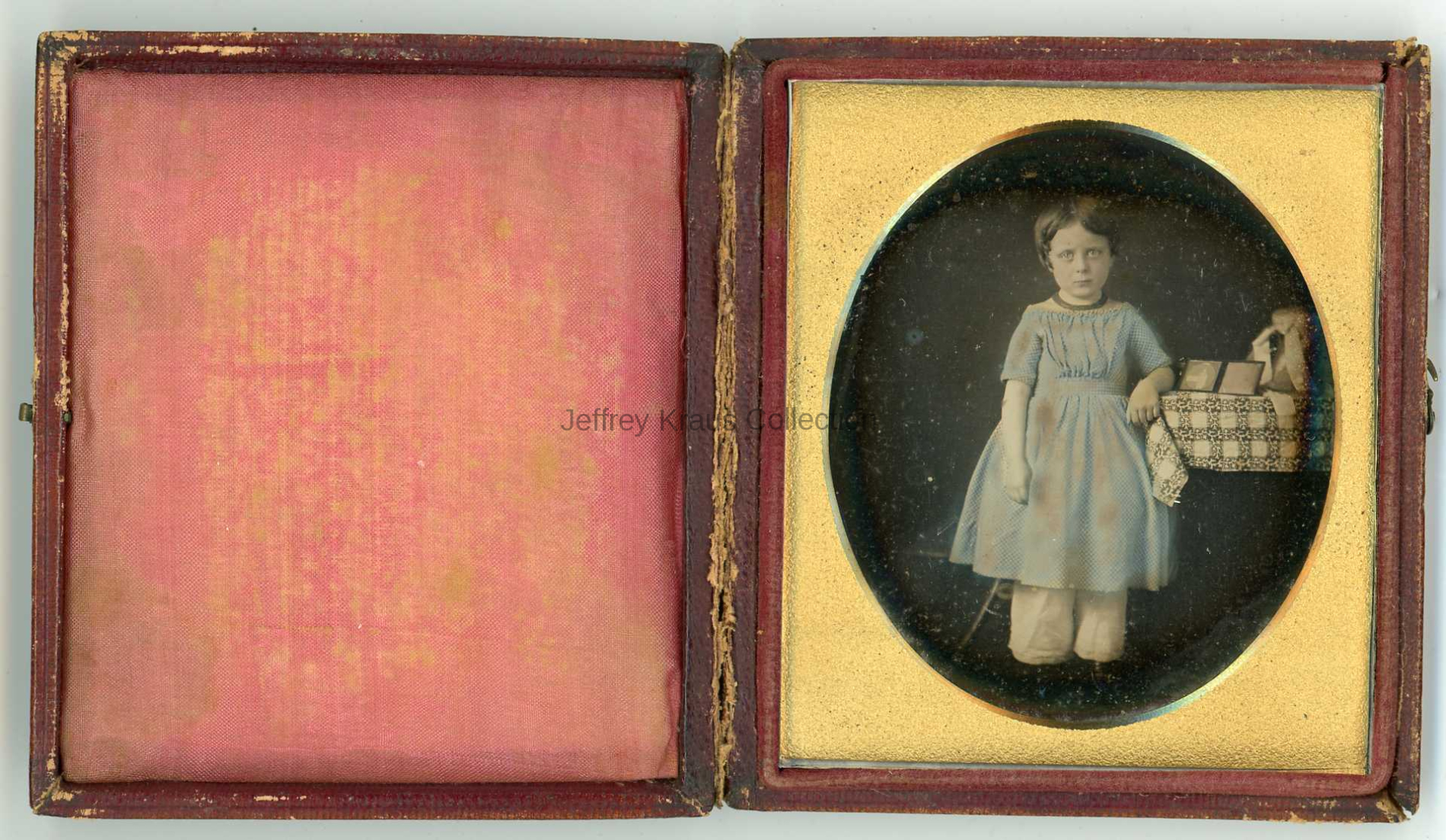
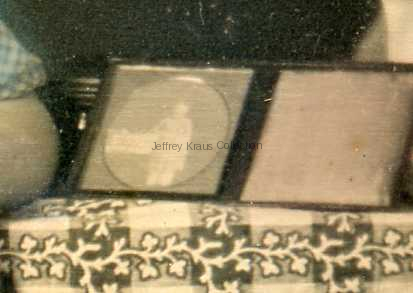
Sixth-plate tinted daguerreotype by Meade Brothers, Albany, NY of a young girl with arm on the table by her side. On the table is an open daguerreotype of a girl, possibly the same girl, in the same pose by the same table.
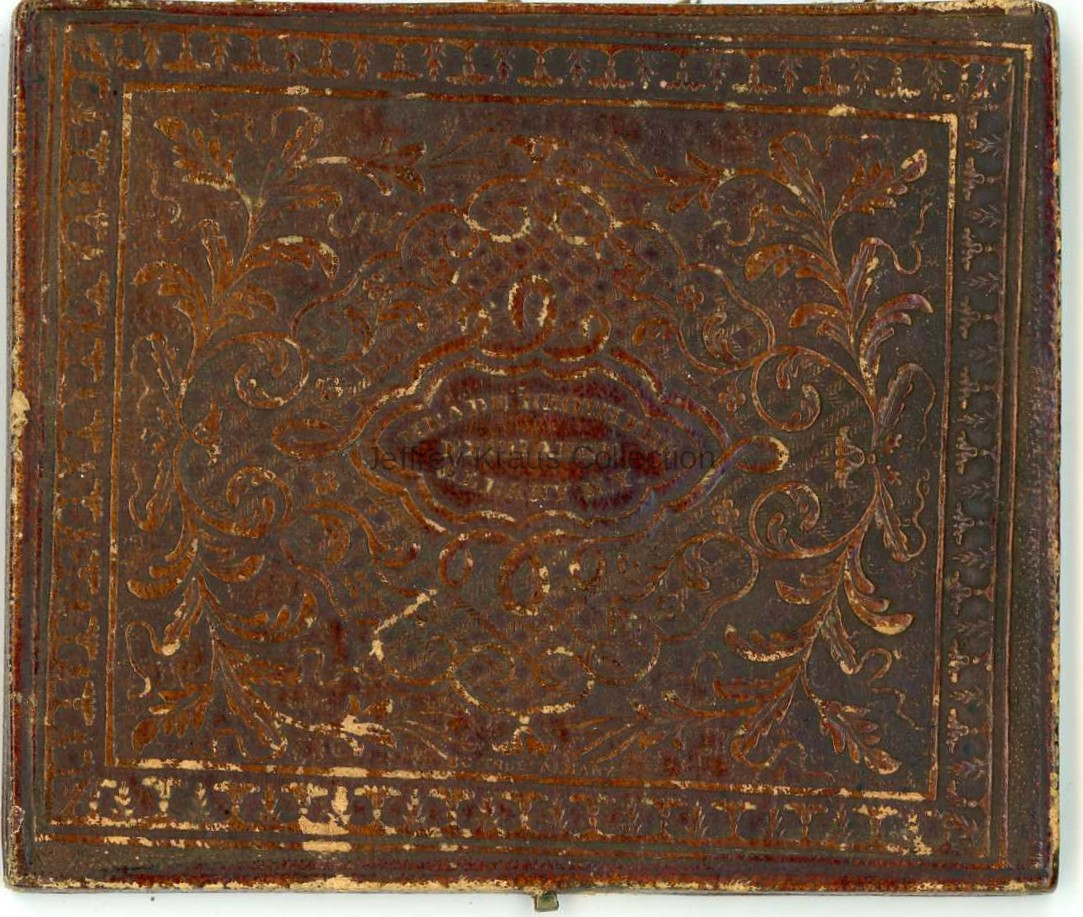
Sixth-plate tinted daguerreotype by Meade Brothers, Albany, NY of a young girl. This is the image below showing the Meade Brothers imprint on the case and an enlargement of the image on the table.
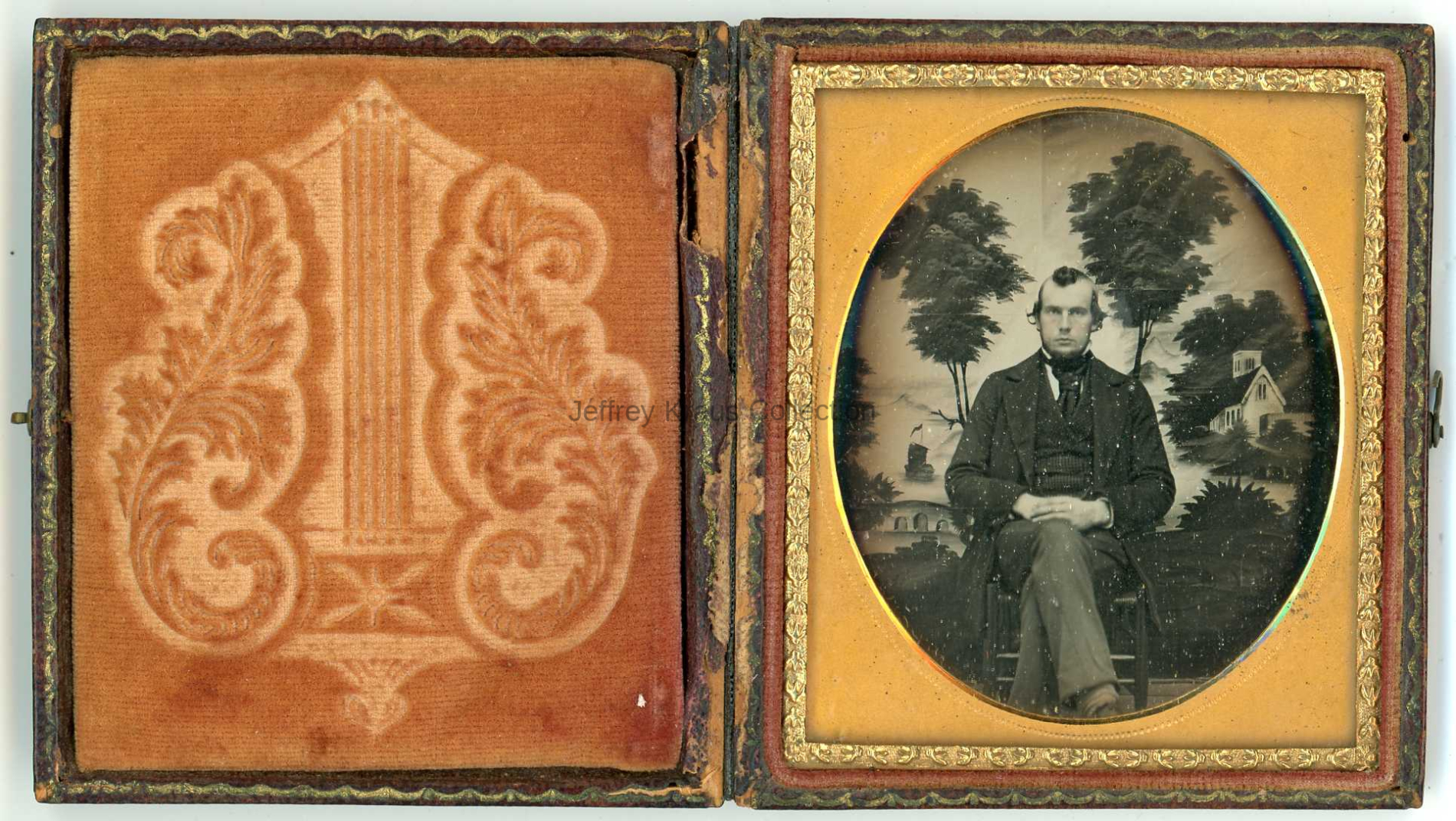
Sixth-plate daguerreotype of gentleman before fine country backdrop.
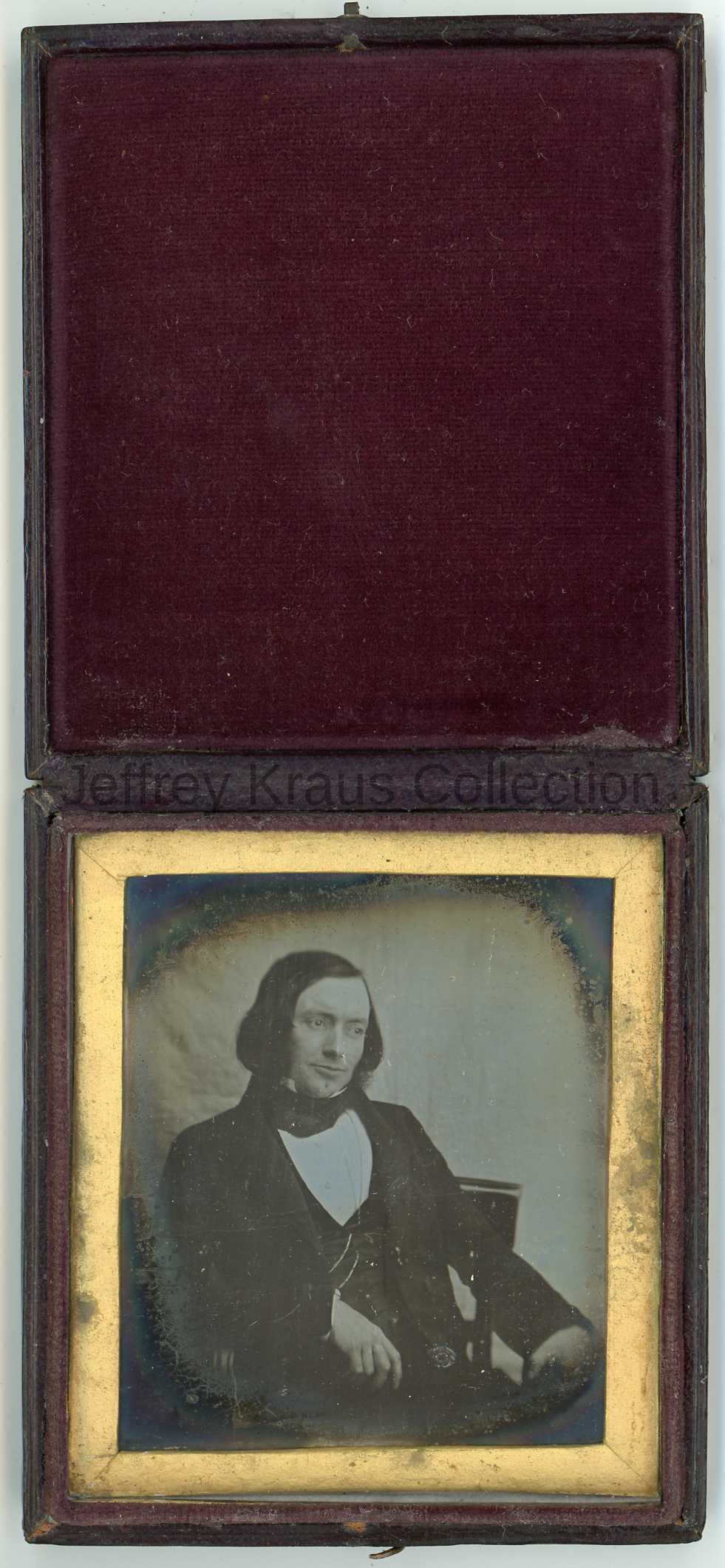
Sixth-plate, early, circa 1842 daguerreotype of young pensive man with long hair.
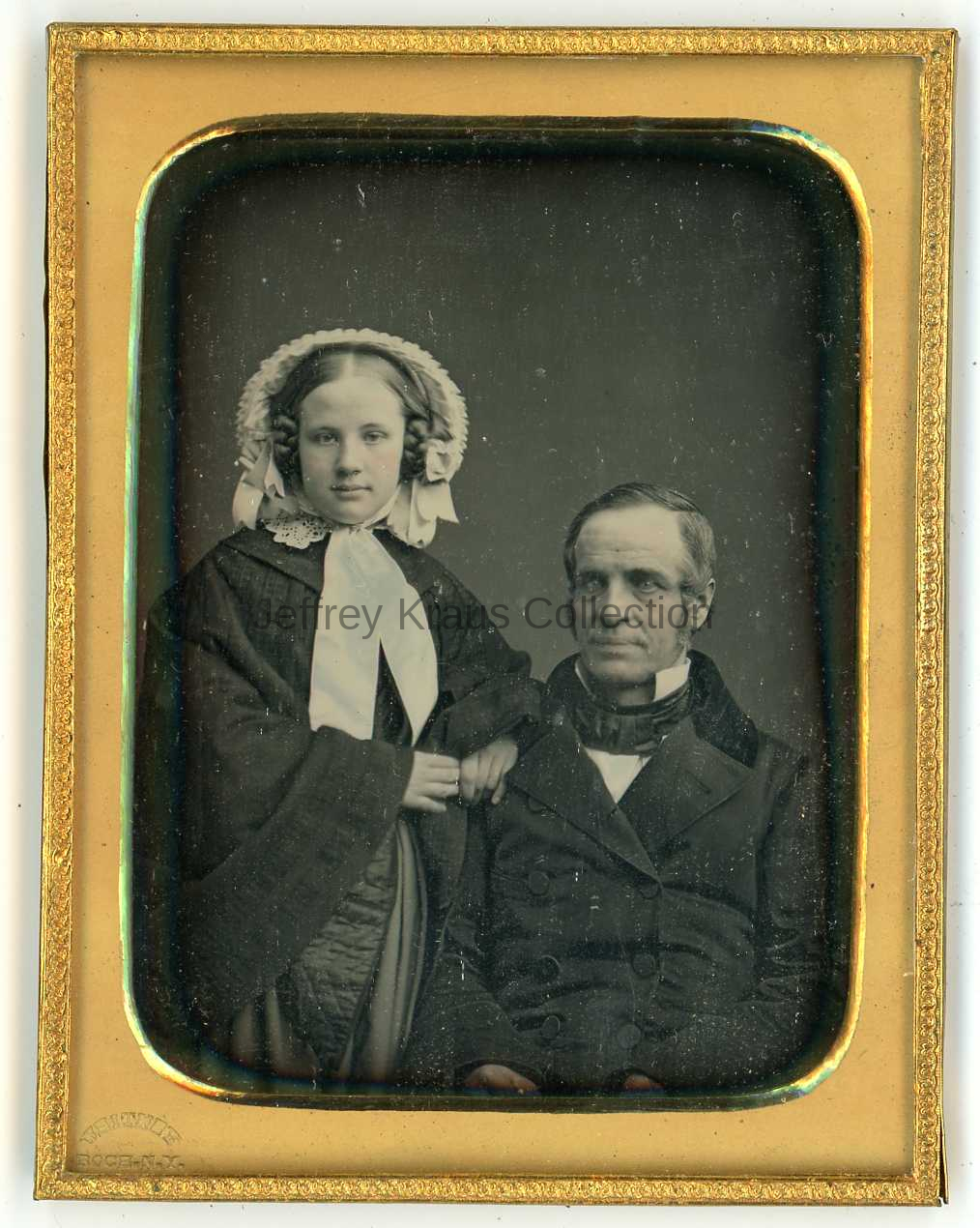
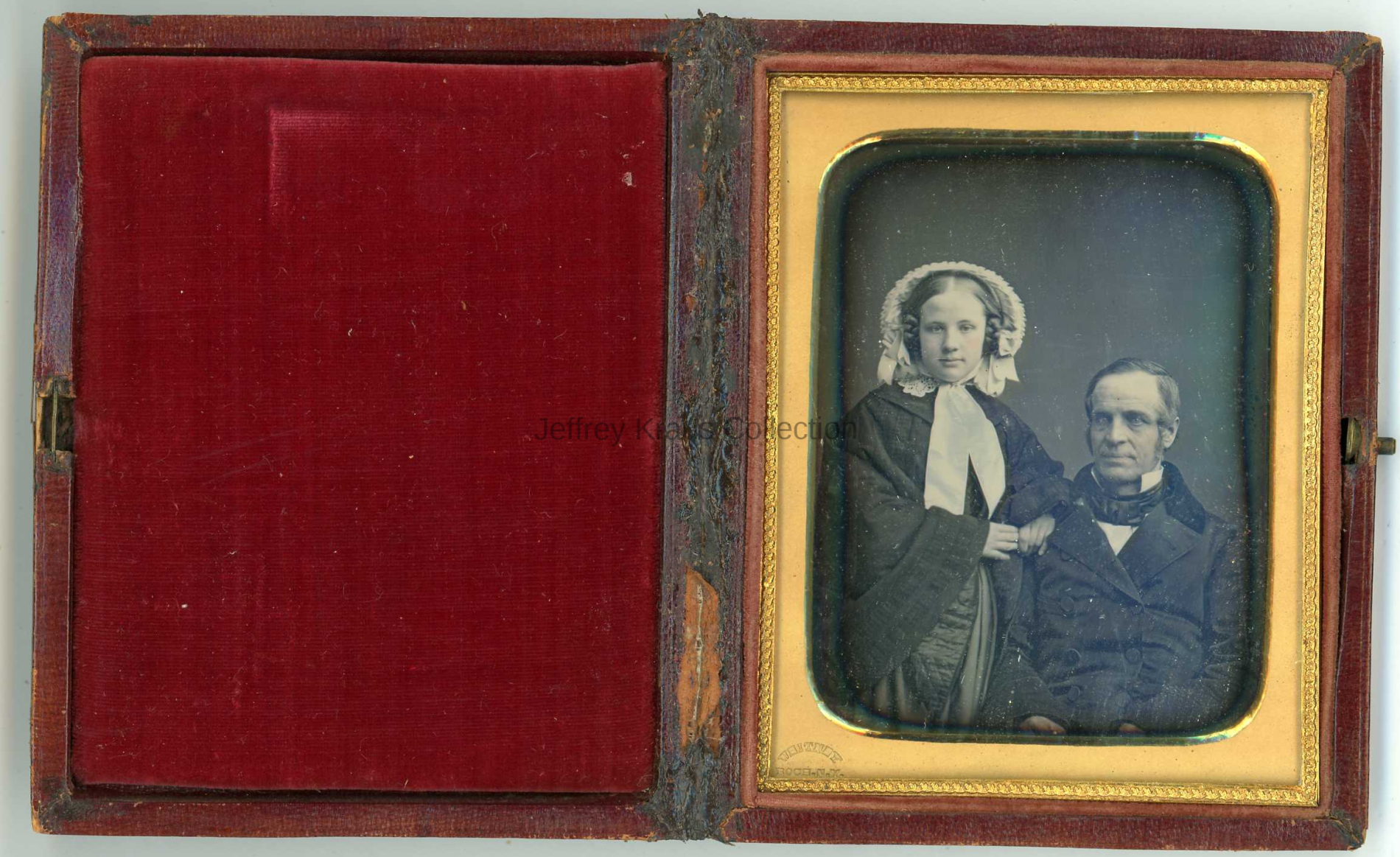
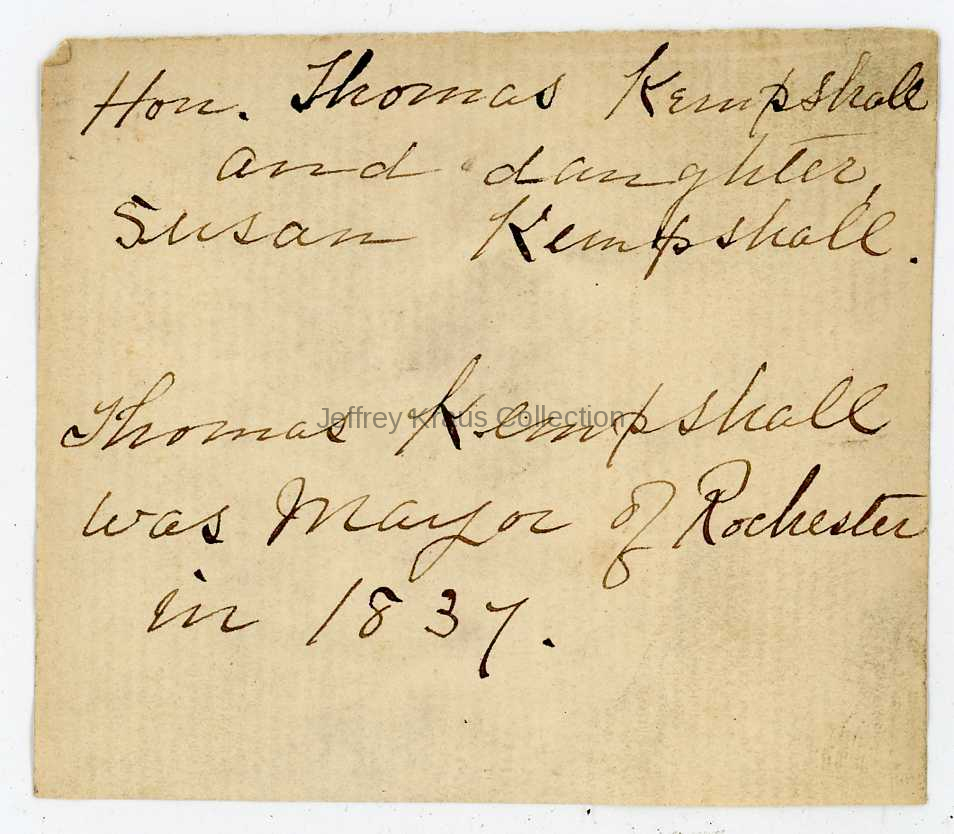
Honorable Thomas Kempshall and daughter Susan Kempshall by Edward T. Whitney, Rochester, NY. Thomas Kempshall was Mayor of Rochester, NY in 1837.
Outside of case and note with above image.
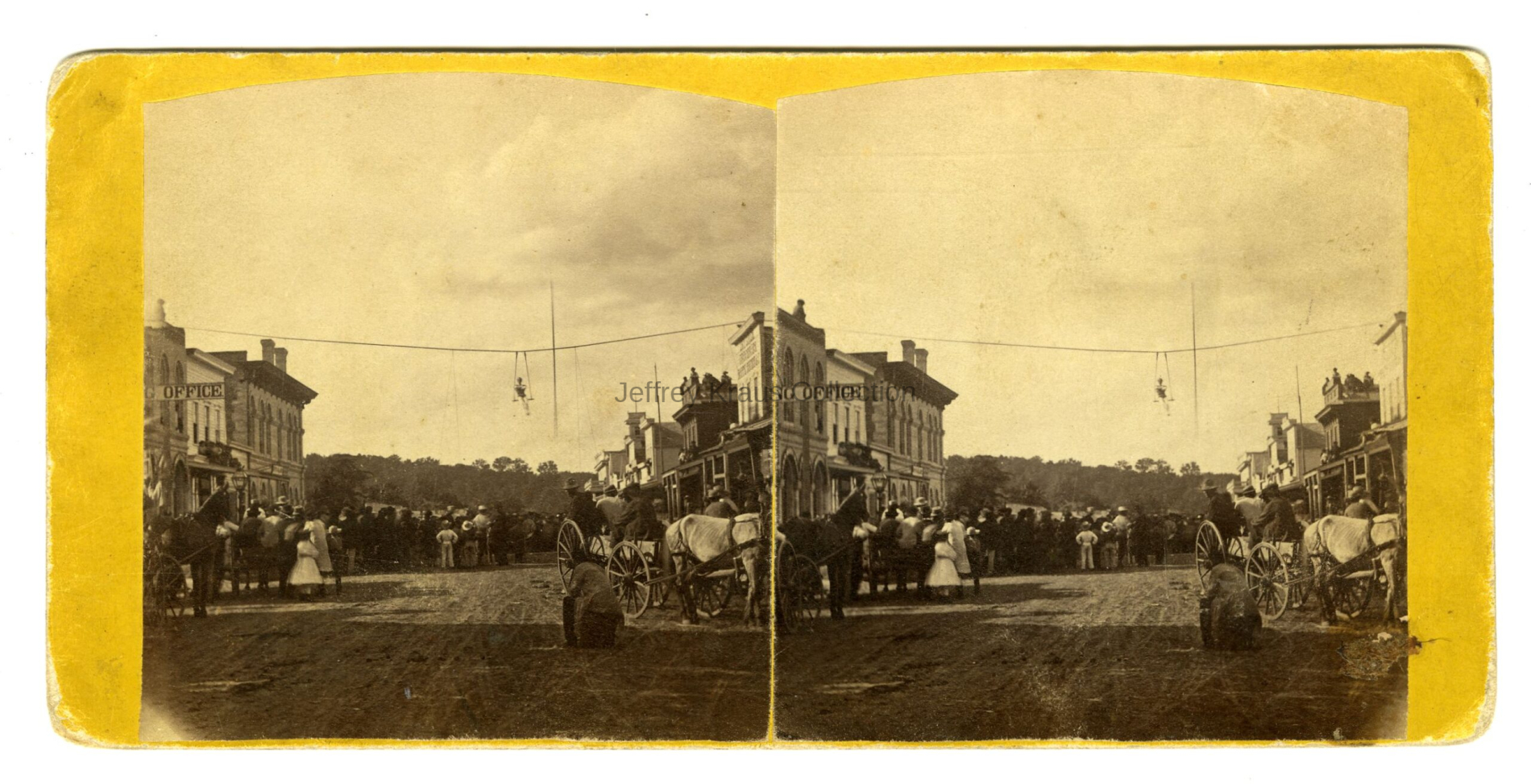
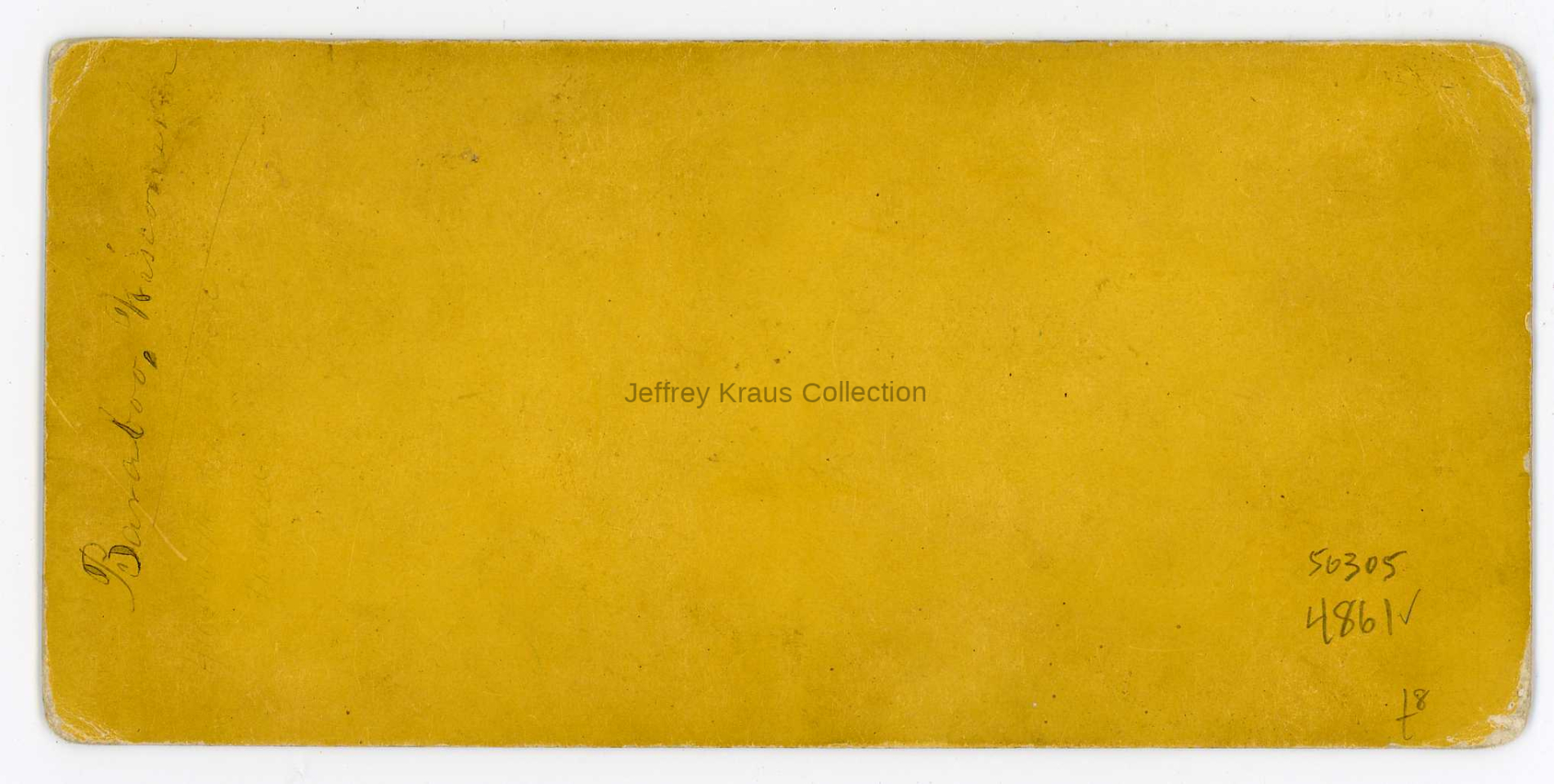
Unknown wire-walker in Baraboo, Wisconsin. Information from Paul Wolter, head of the local Sauk County Historical Society, and Fred Dahlinger:
This is definitely the 400 Block of Oak Street looking north. The Bank of Baraboo, (now Baraboo State Bank) on the left was built in 1867 and enlarged after the December fire of 1871. The picture can be dated to that time period making this among the earliest known pictures of Baraboo. In the background on the right you can see the fourth story cupola of the Western Hotel. I did some searching on Newspapers.com and I can’t find any reference to an exhibition like this on Oak Street during those years. It surely must have been reported in the paper. At first I thought it was a tightrope walker but it is more like a trapeze act [agreed F. D.]. I searched for the word “aerialist” and came up with an ad for the Dan Costello Circus that came to Baraboo in September of 1870. It might have been an exhibition act to promote the circus. It is a really neat image! The Bank of Baraboo is still operating today. They were the bank for the Ringlings. Dan Castello was a performer out of Racine, Wisconsin, where he had a winter quarters. His name was on the first circus to go by railroad across the recently completed transcontinental railroad in 1869. He partnered with William C. Coup of Delevan, WI in the 1870 Coup & Castello circus on Lake Michigan, moving by ship. That winter they proposed a partnership with P. T. Barnum for 1871 and he jumped at the proposition, going all in. That inaugurated the “Greatest Show on Earth” that has endured until recent times.
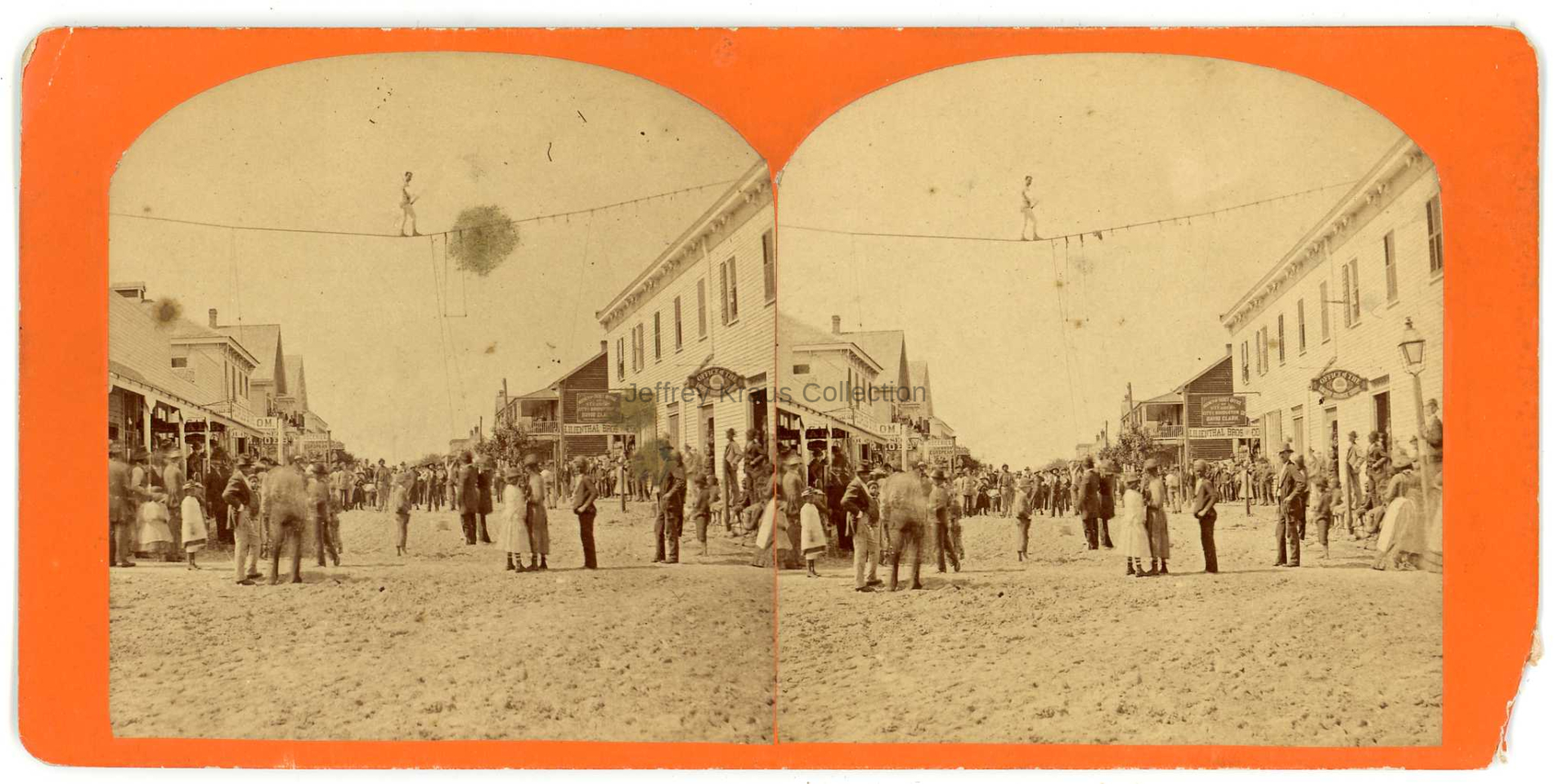
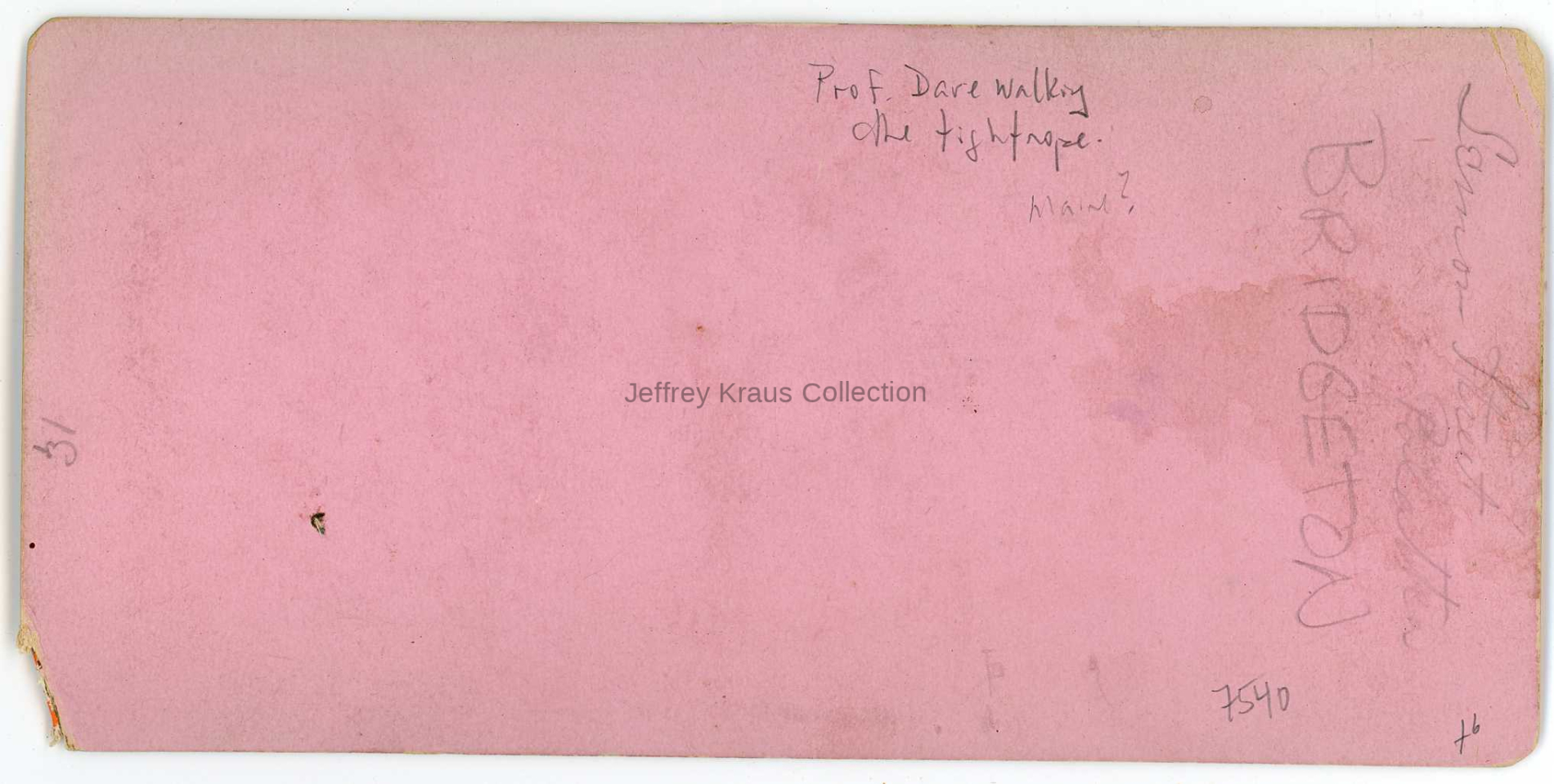
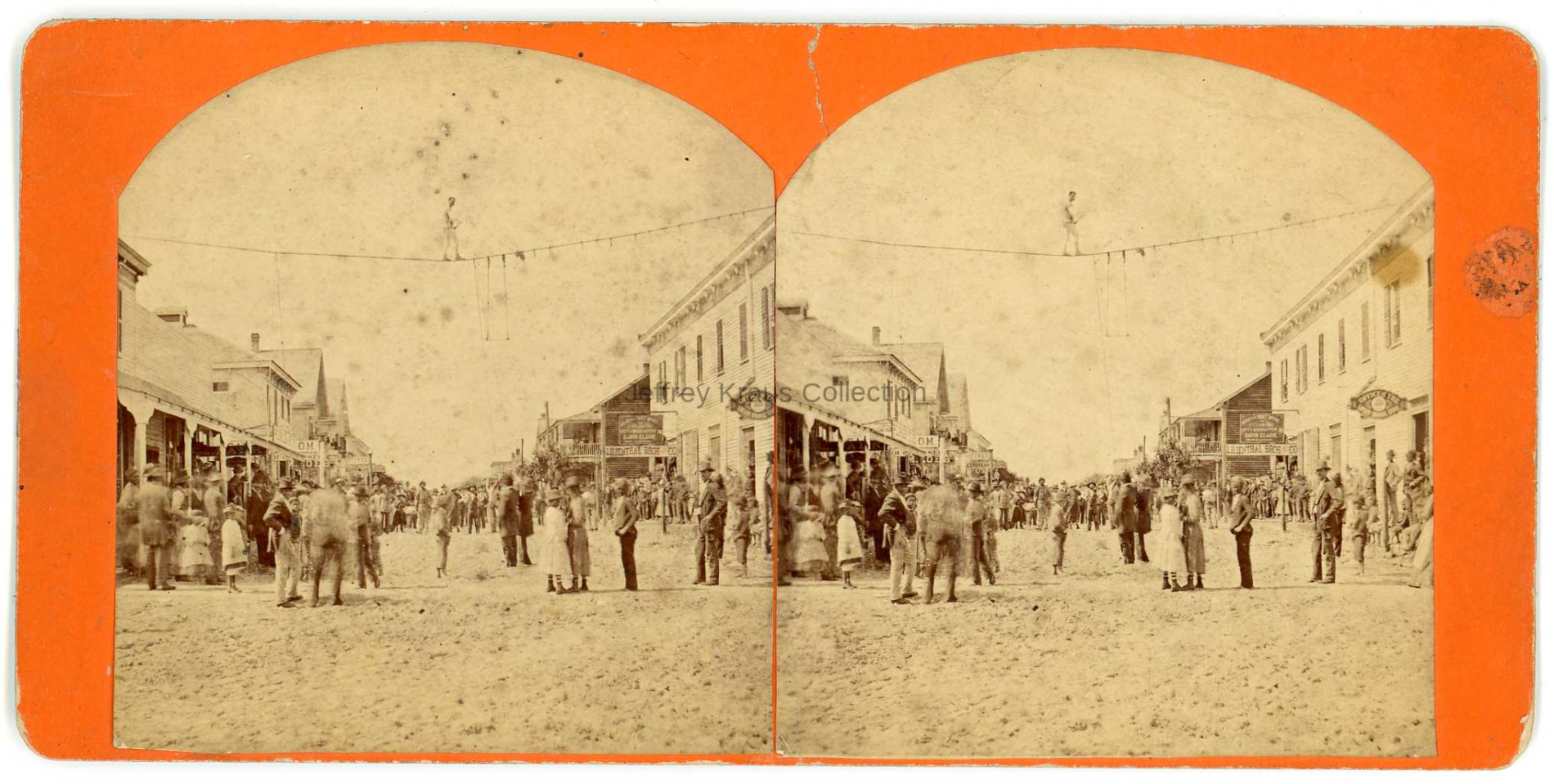
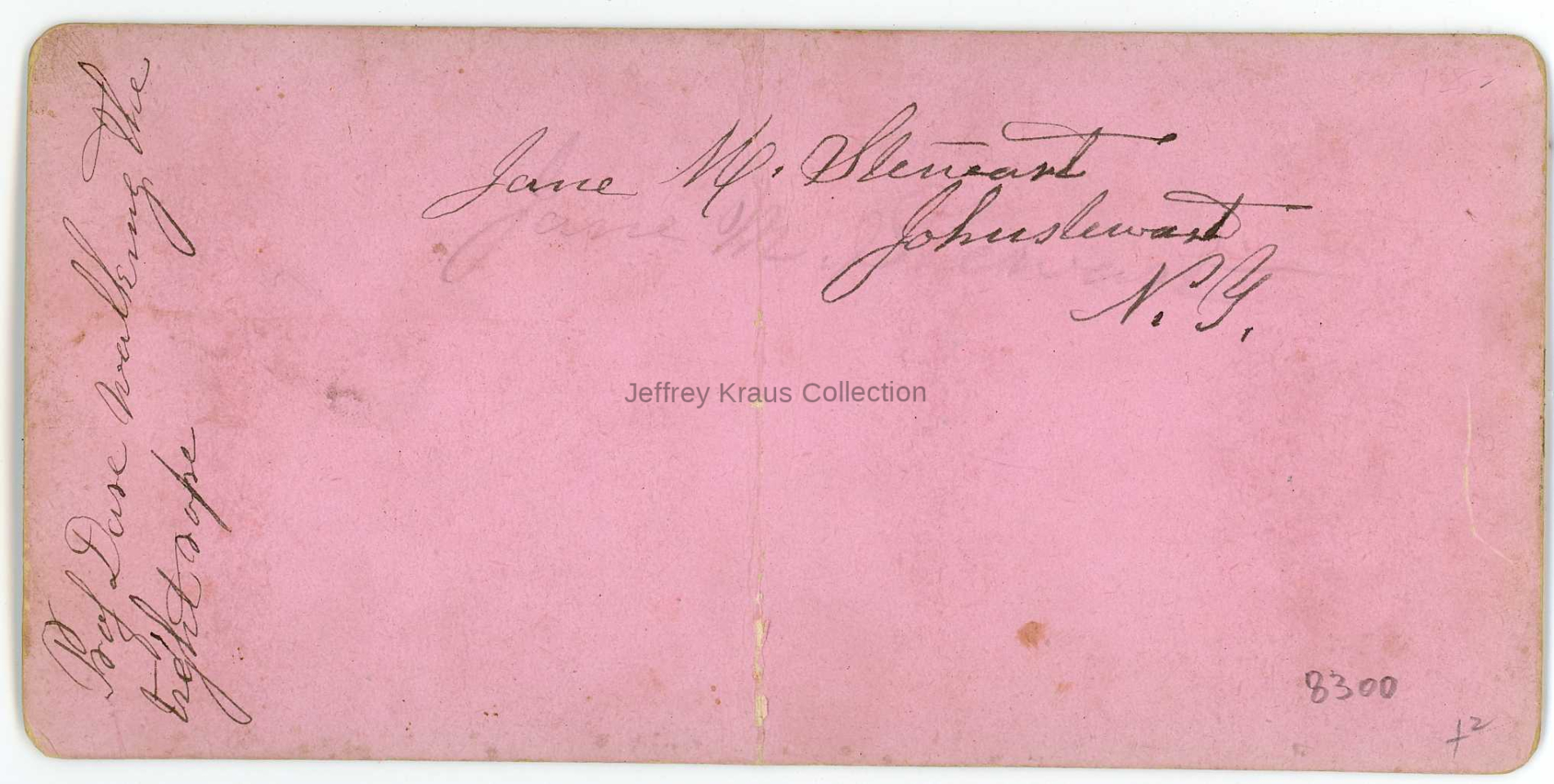
Prof. Dare walking the tightrope, Lemon Street, Palatka, Florida.
Prof. Dare walking the tightrope, Lemon Street, Palatka, Florida.
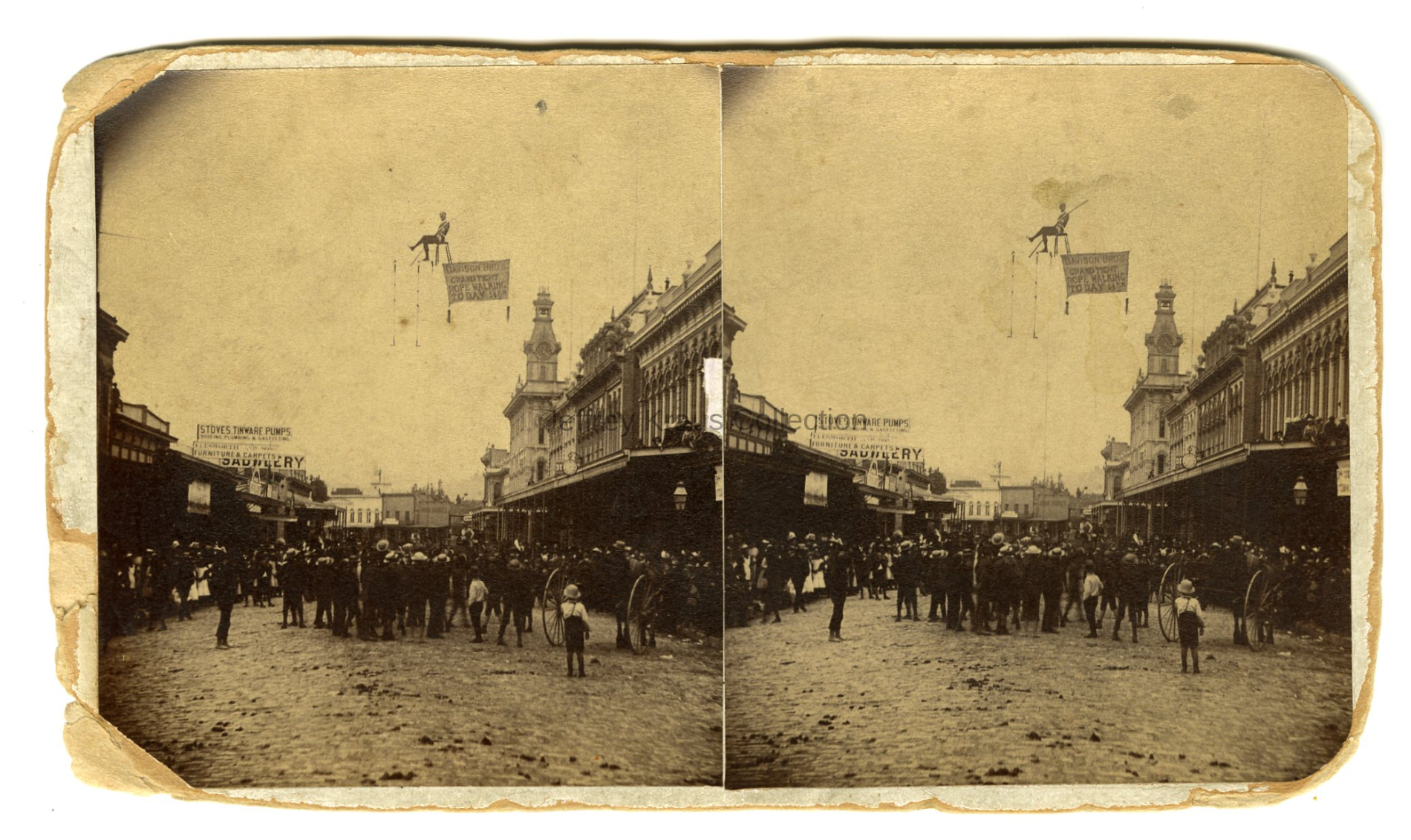
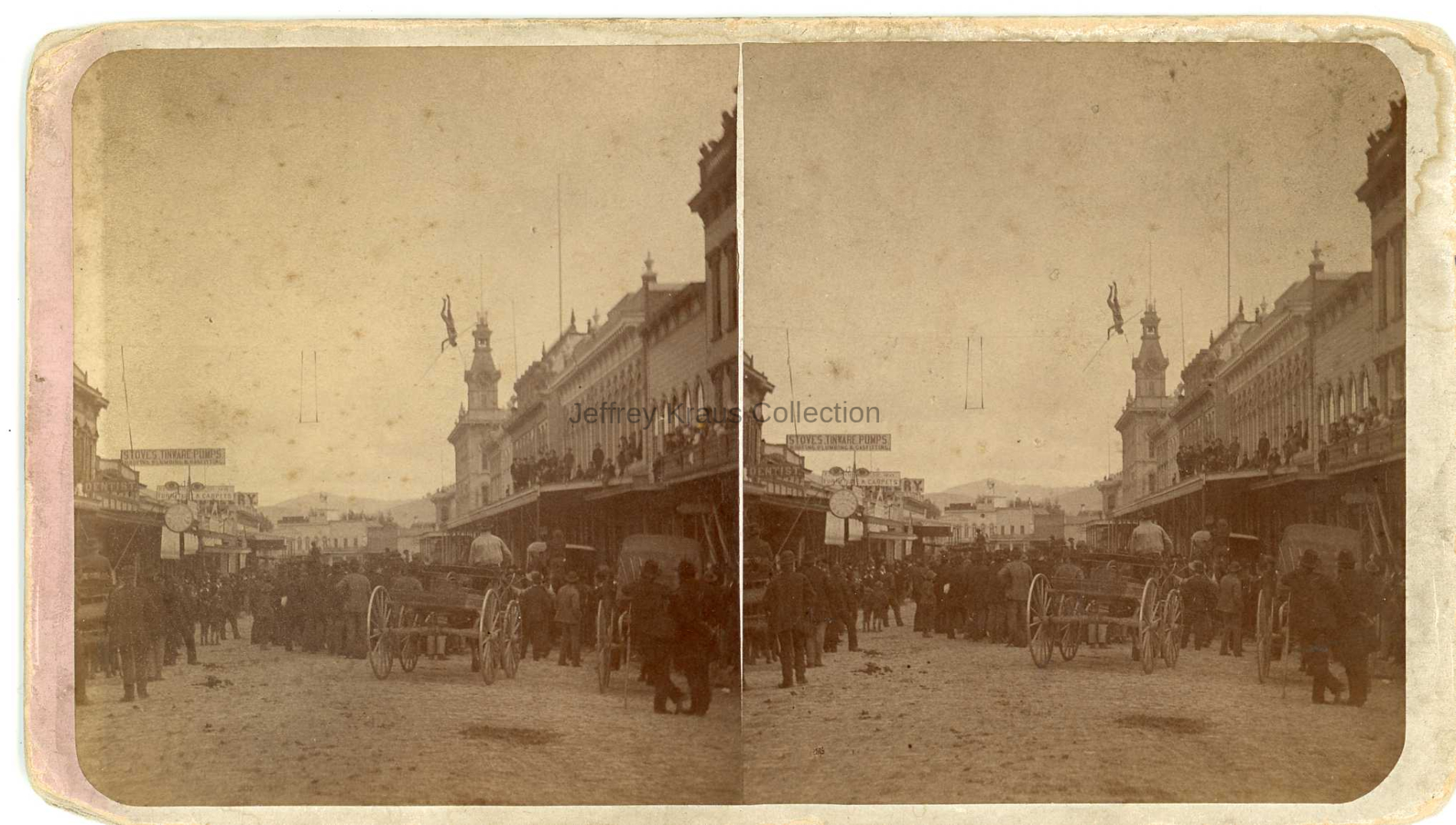
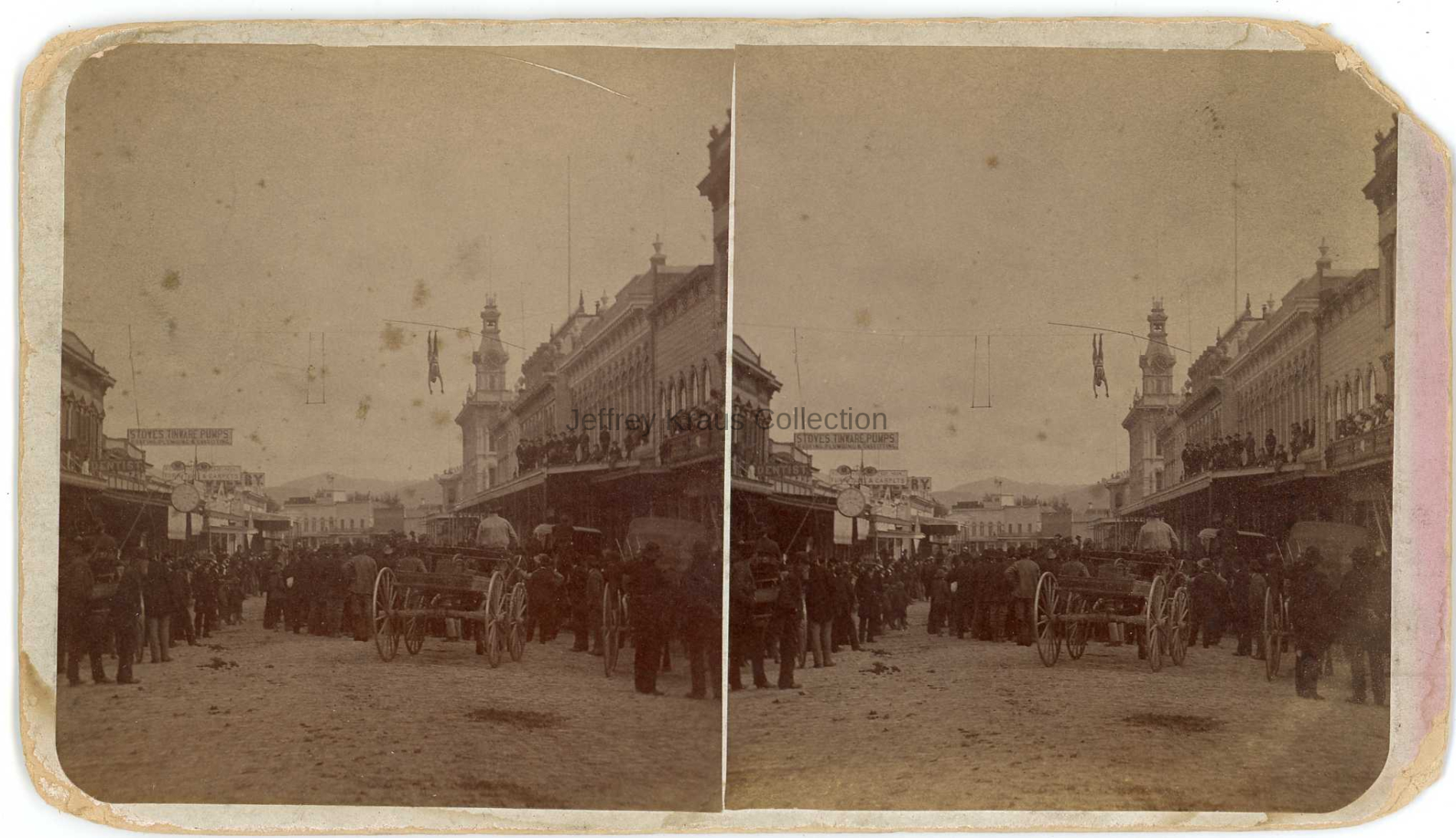
Davison Bros., tight-rope walkers, Petaluma, California.
Davison Bros., tight-rope walkers, Petaluma, California.
Davison Bros., tight-rope walkers, Petaluma, California.
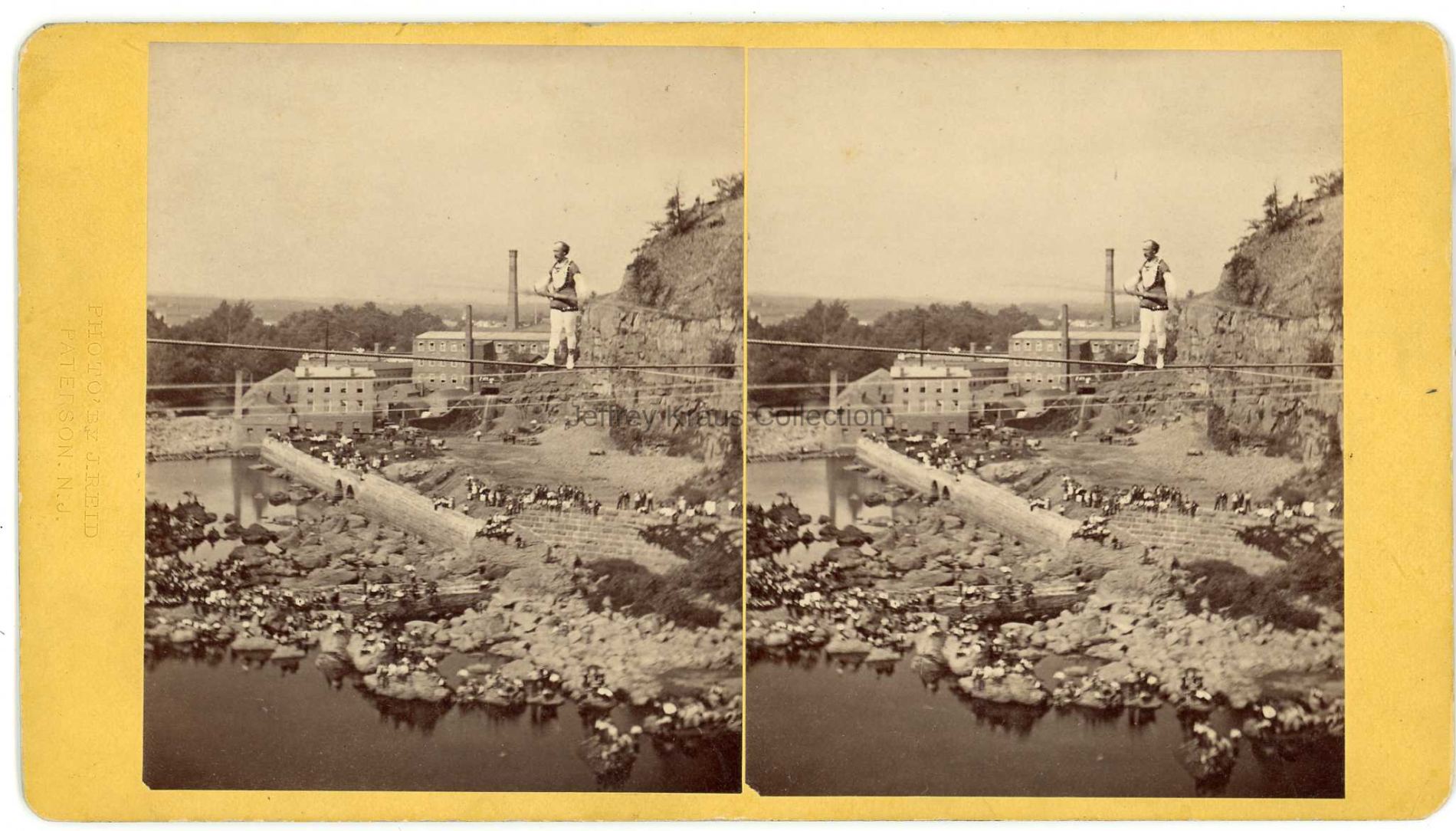
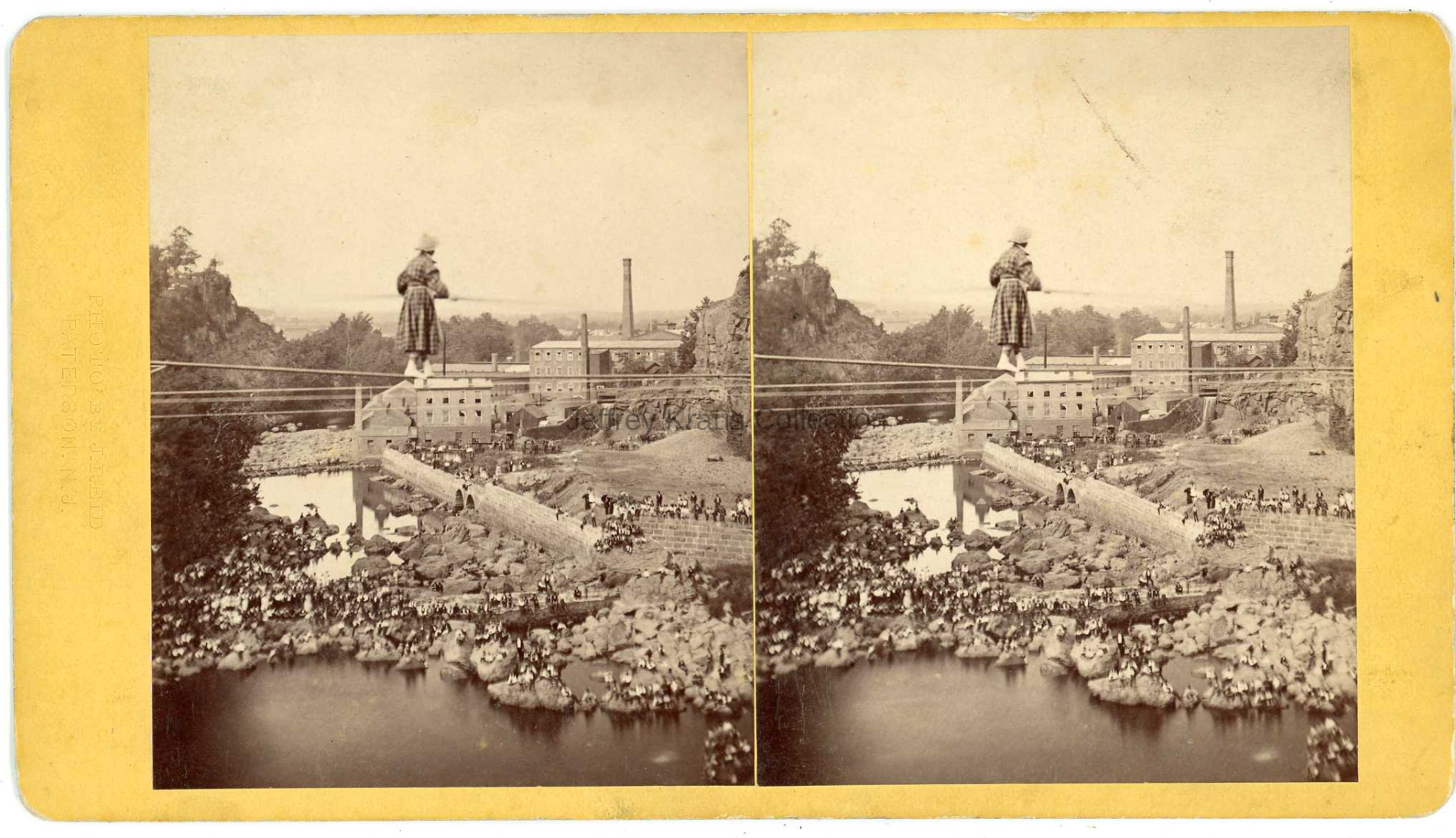
Harry Leslie, Aug. 4 & 5, 1879, Paterson, N.J.
Harry Leslie, Aug. 4 & 5, 1879, Paterson, N.J.
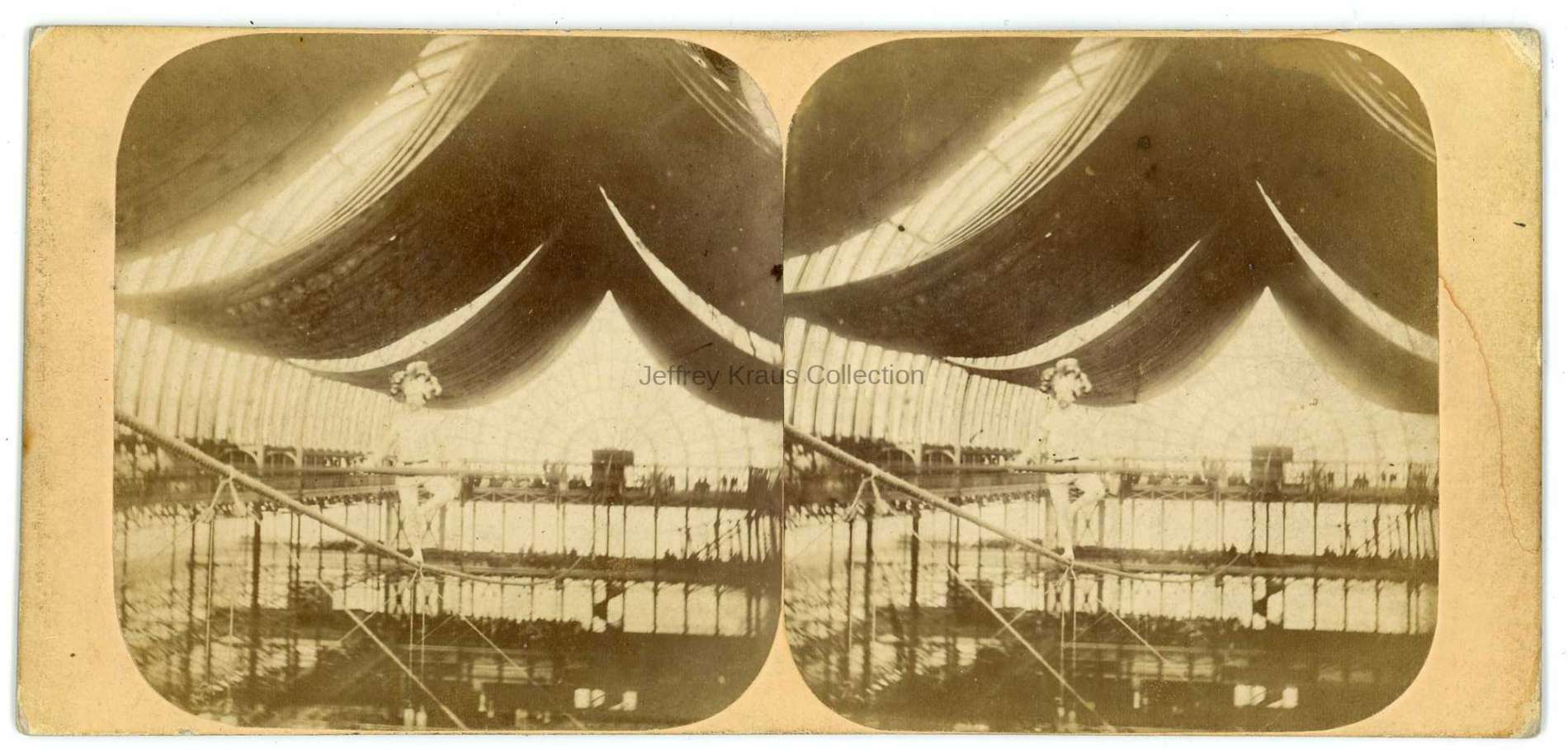
Blondin on the high wire at the Crystal Palace, London, 1861.
Blondin on the high wire at the Crystal Palace, London, 1861.
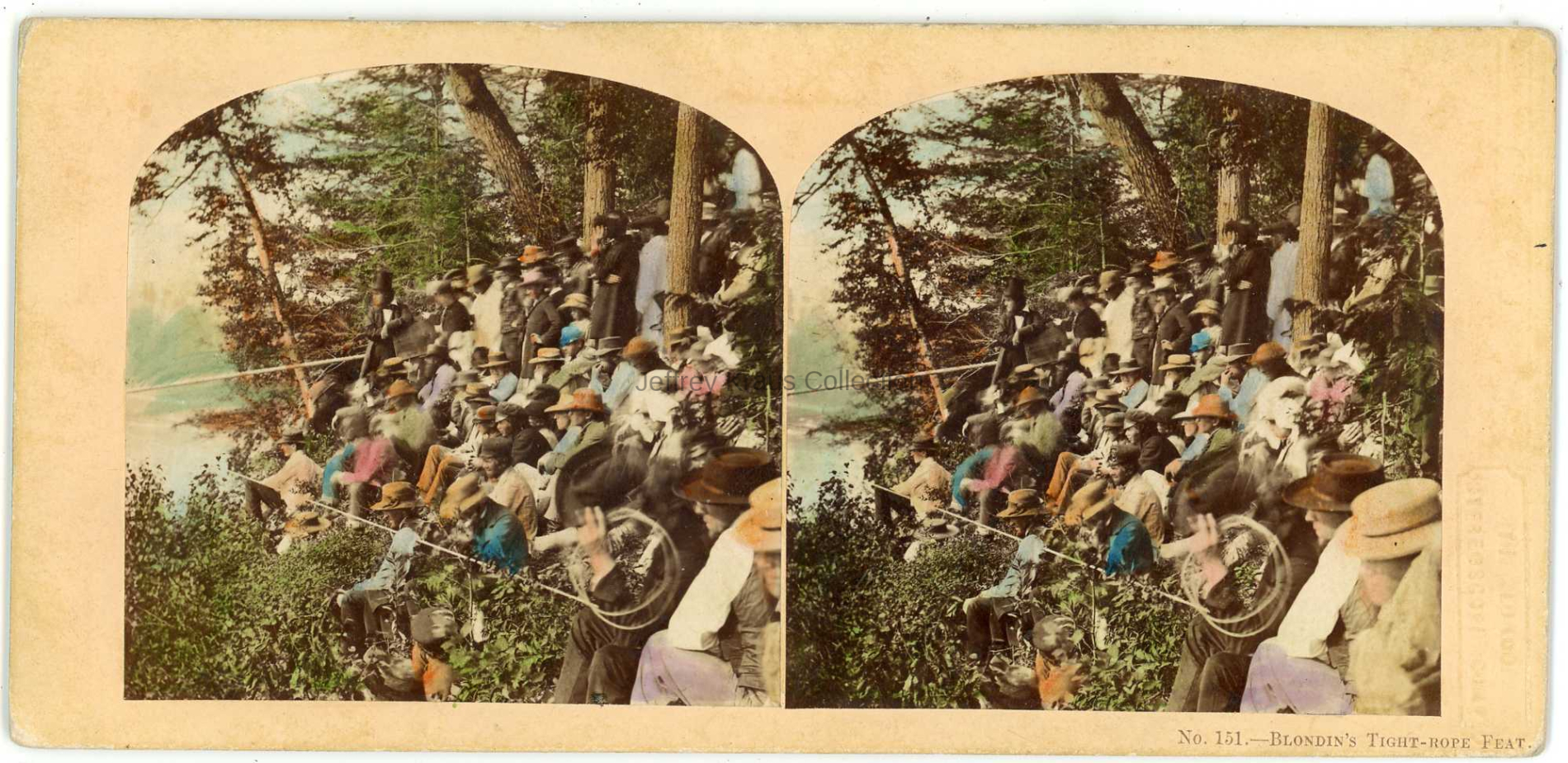
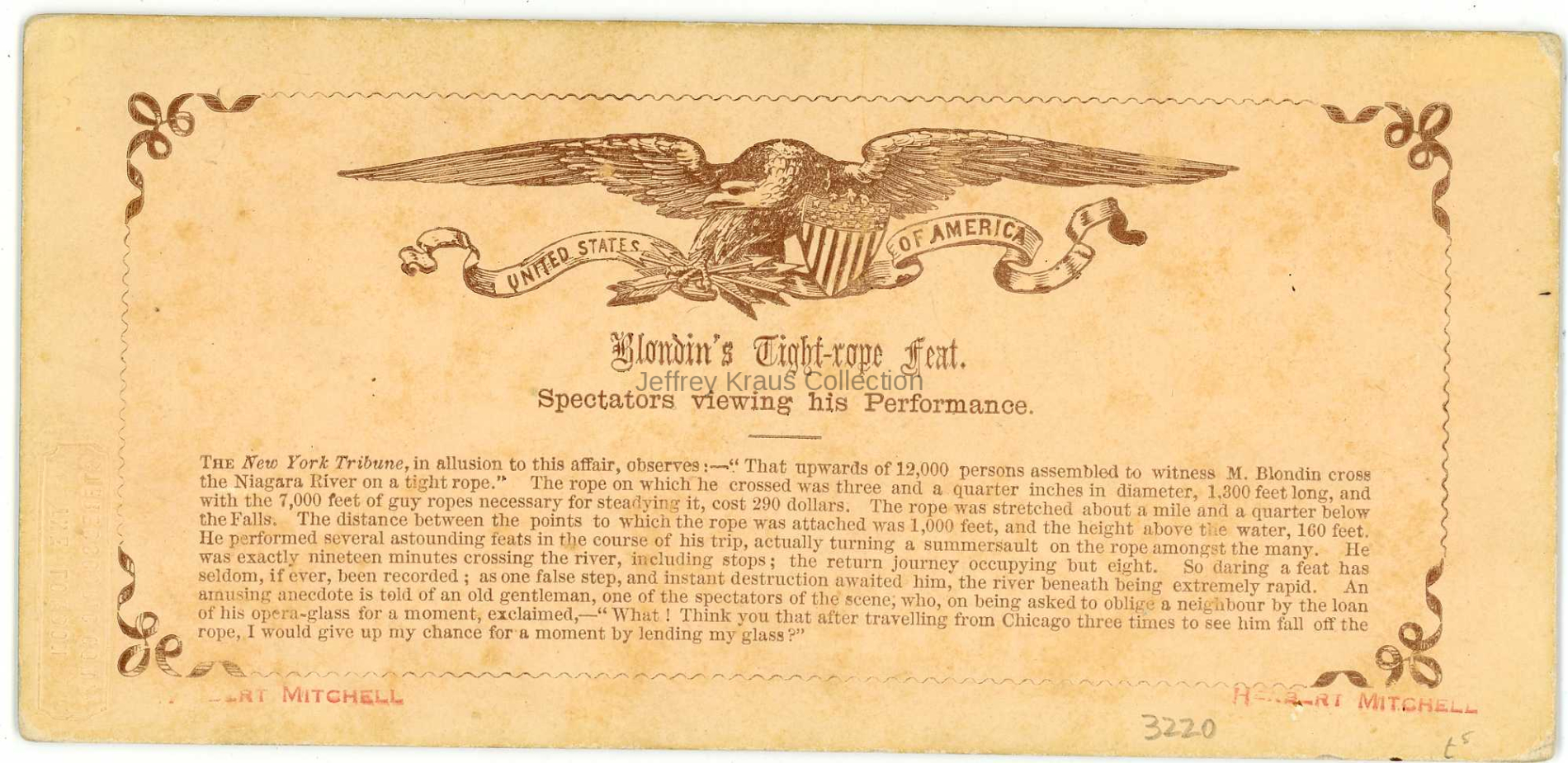
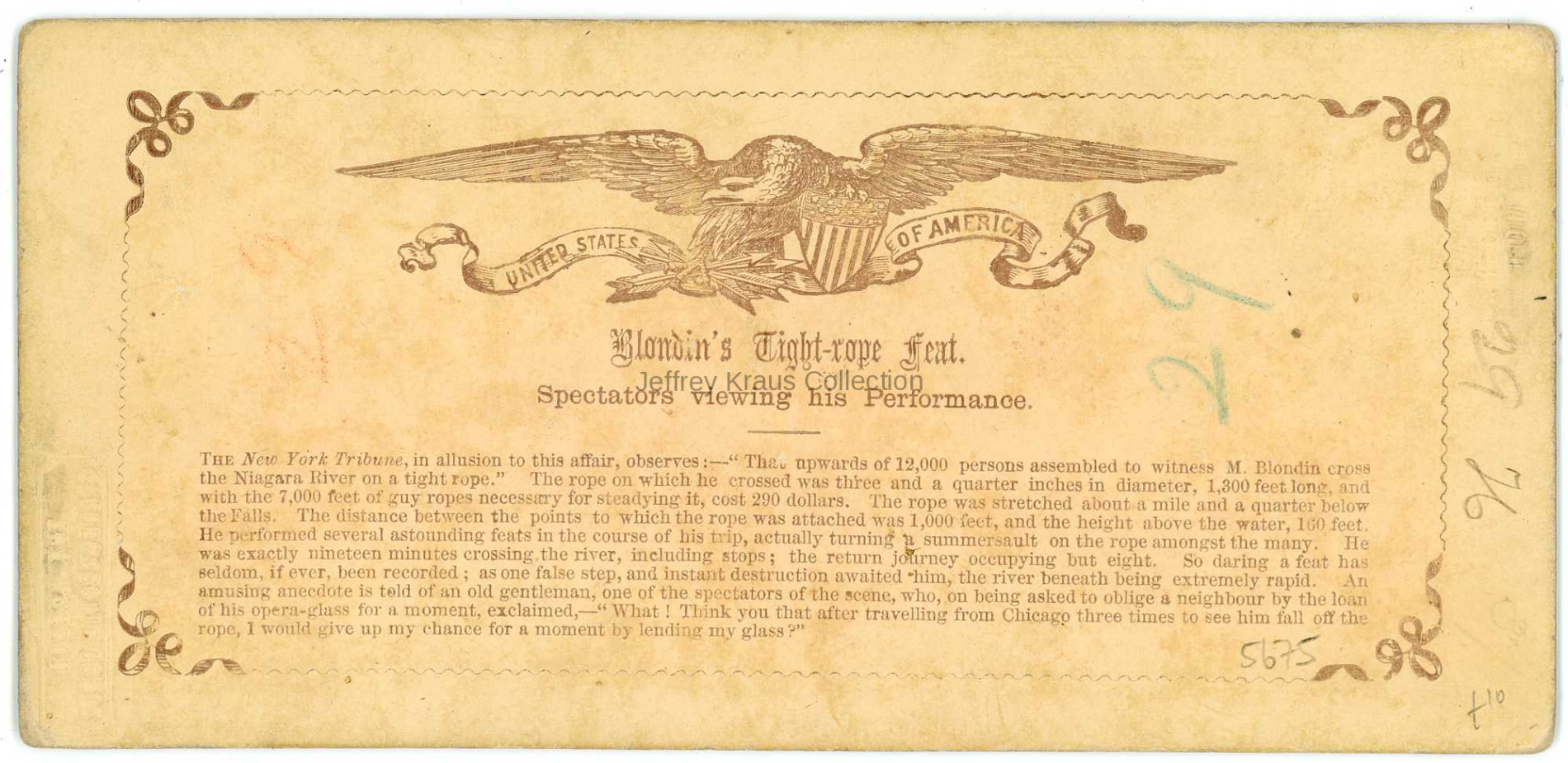
No. 151. Blondin’s Tight-rope feat. Spectators viewing his Performance.
No. 151. Blondin’s Tight-rope feat. Spectators viewing his Performance.
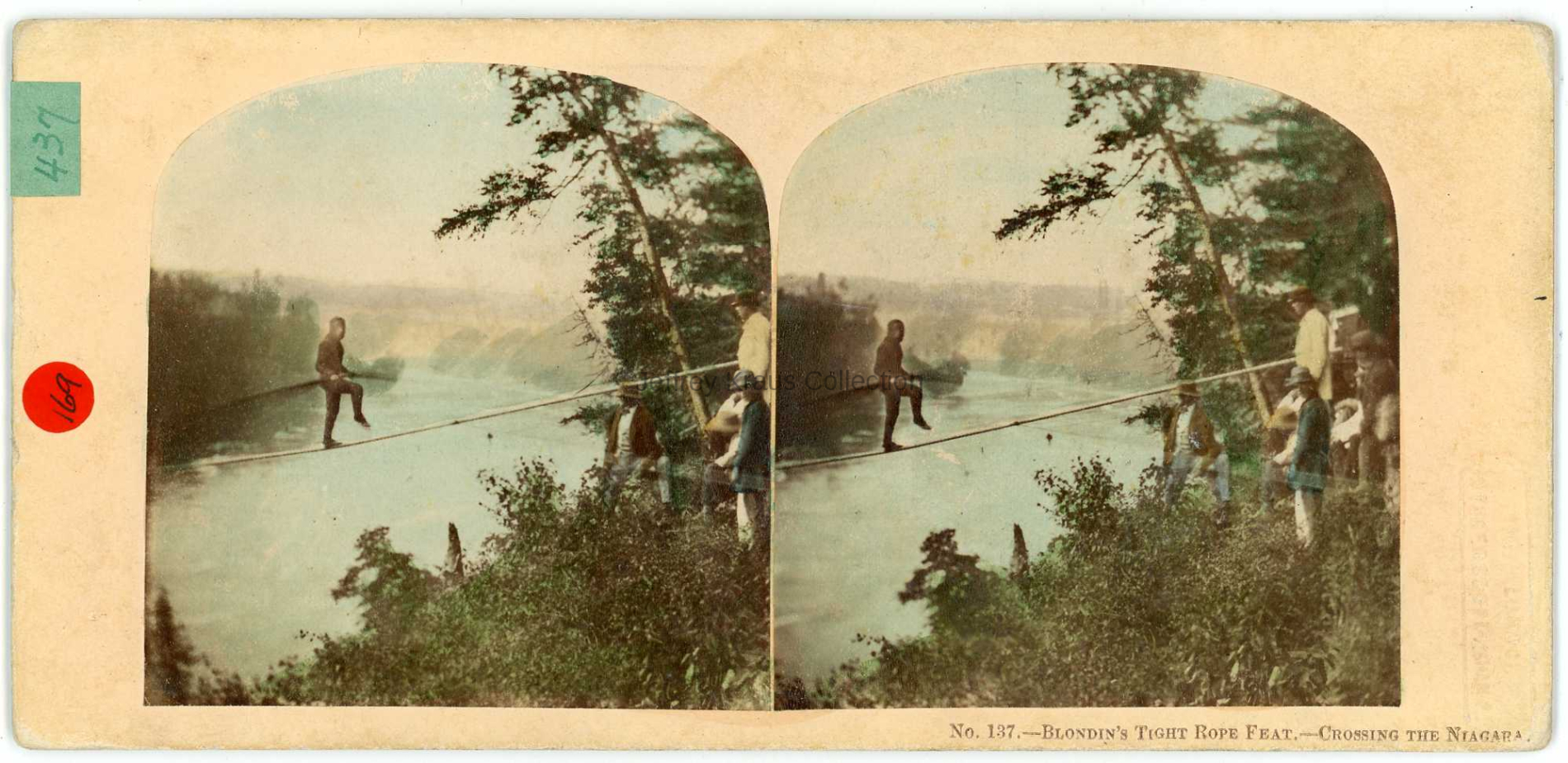
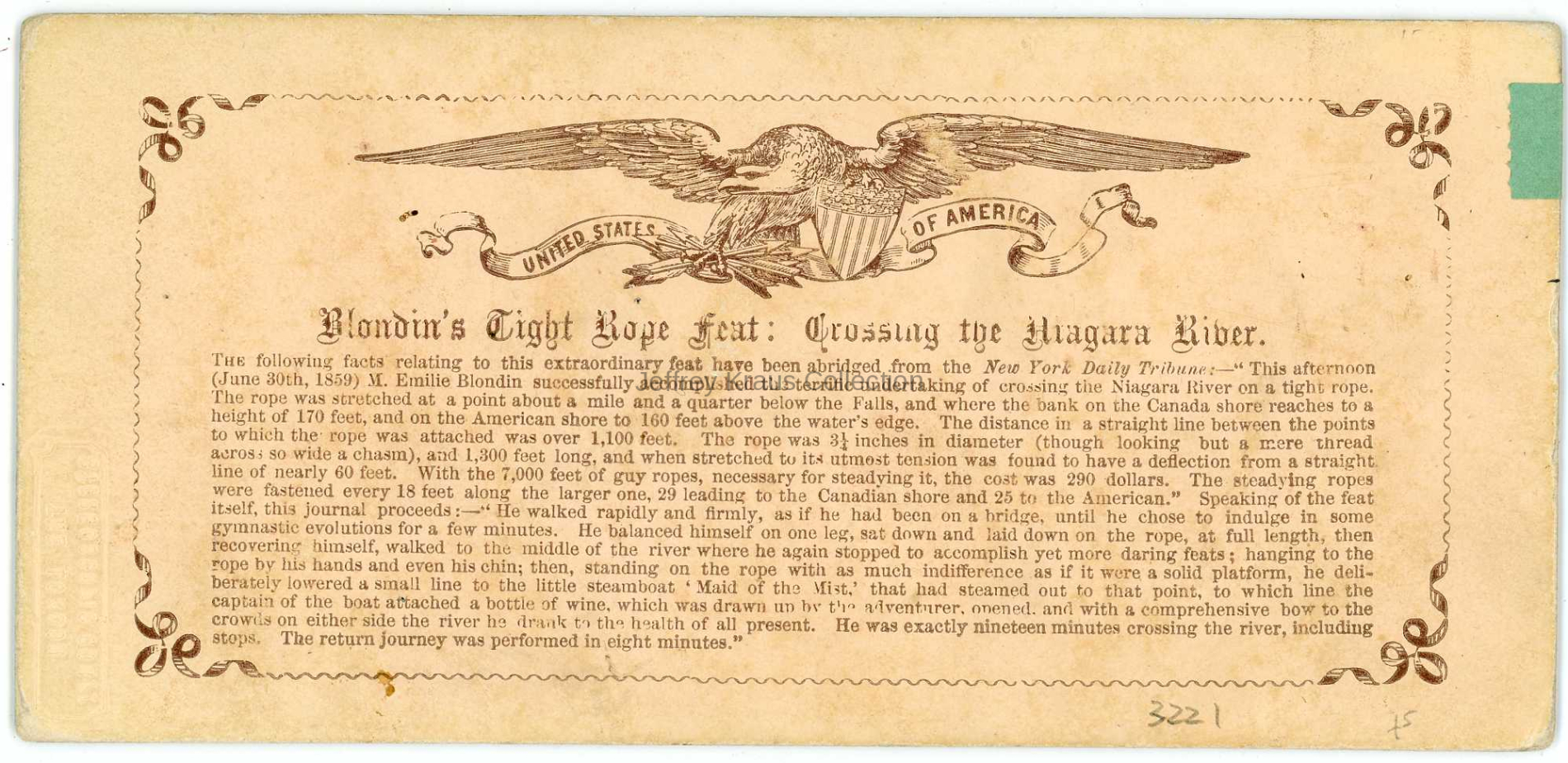
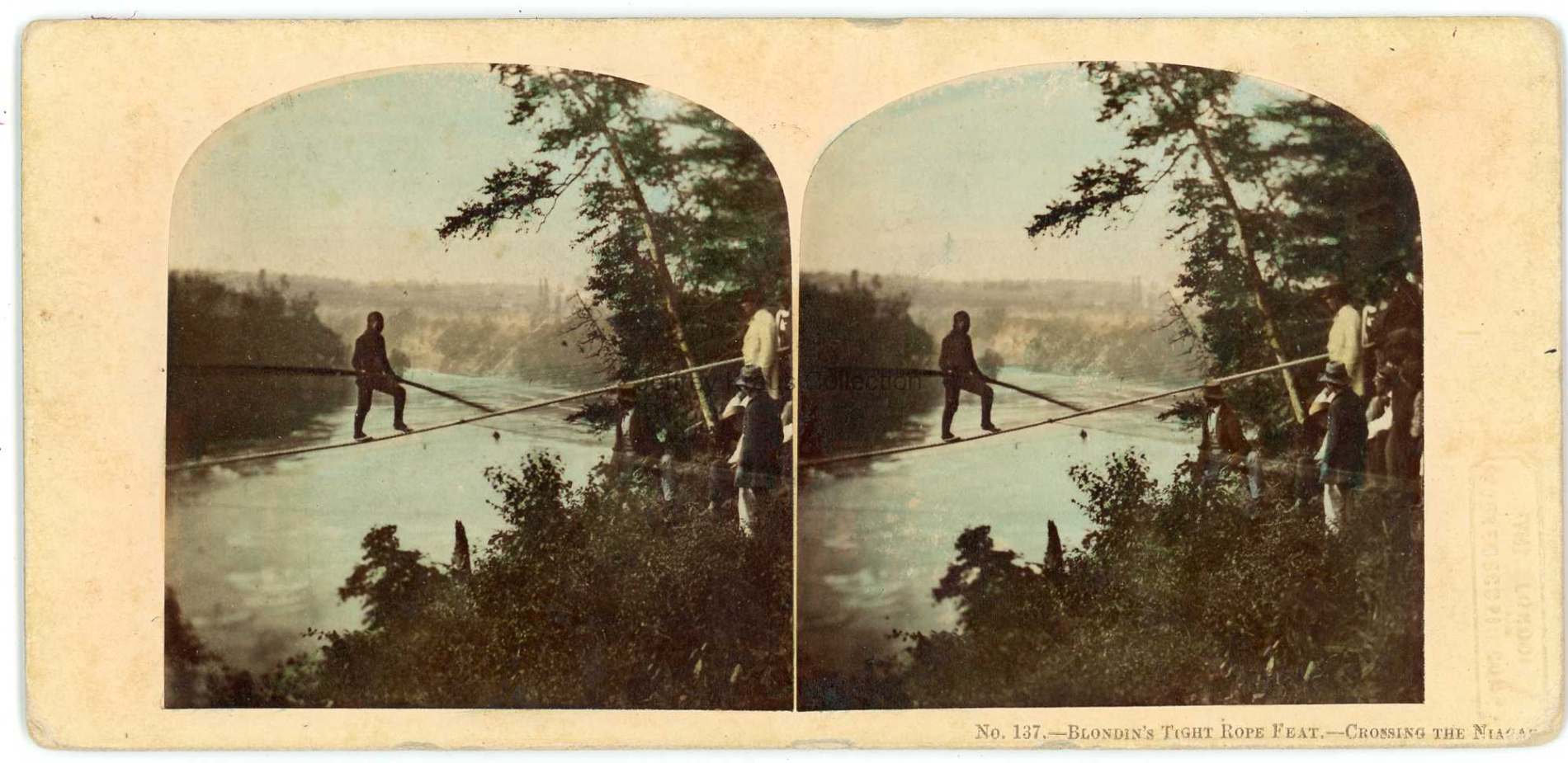
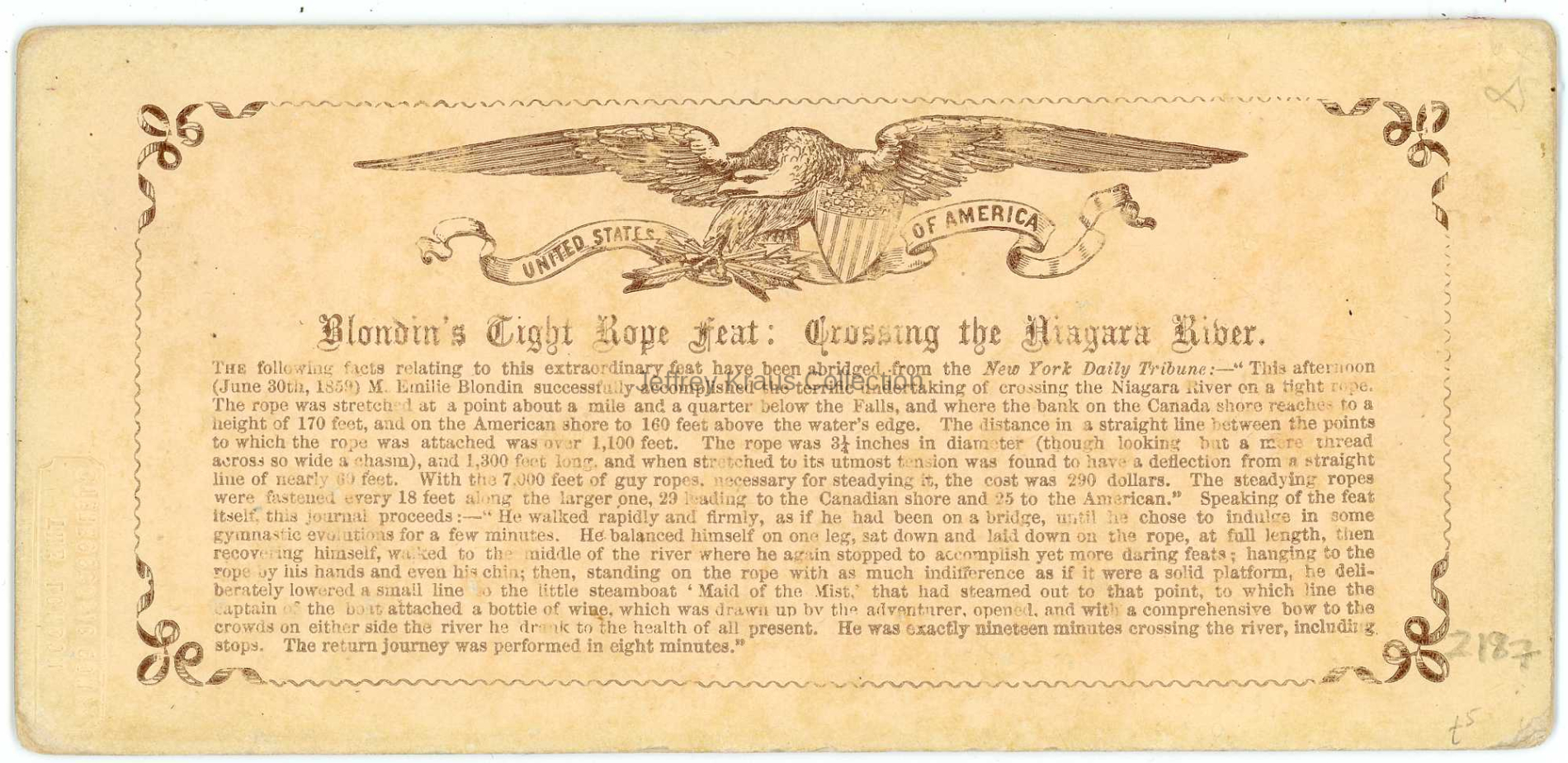
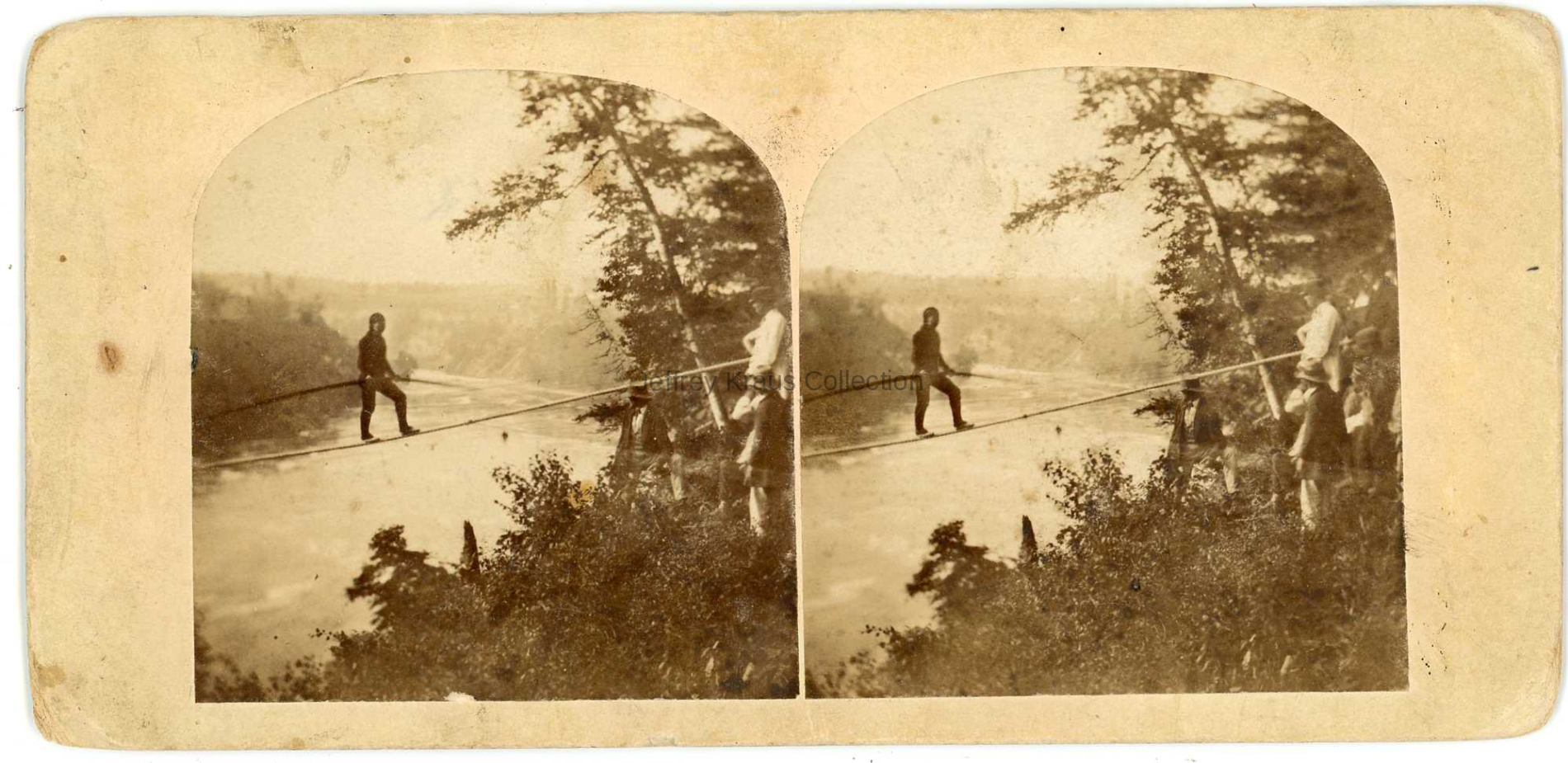
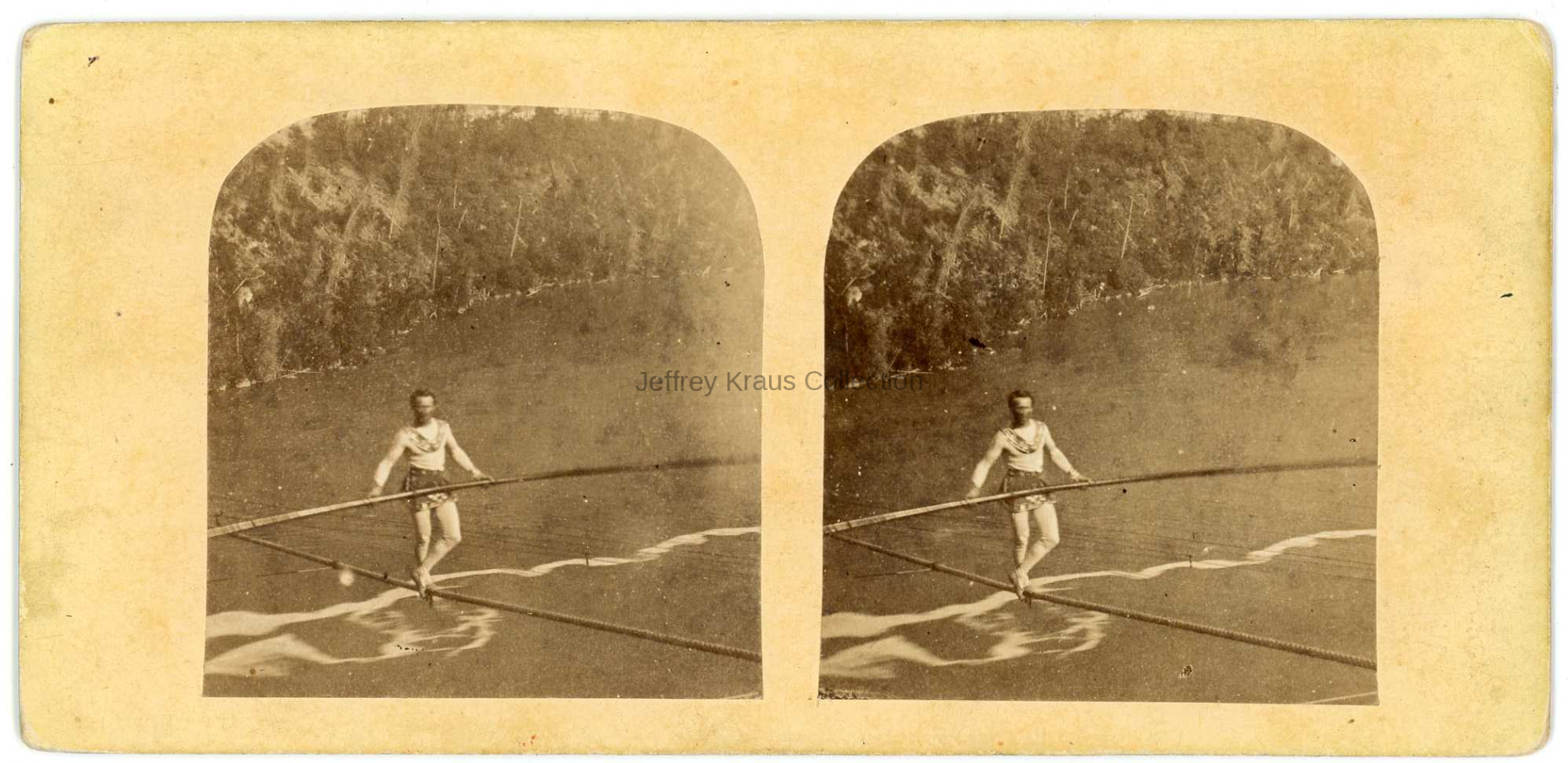
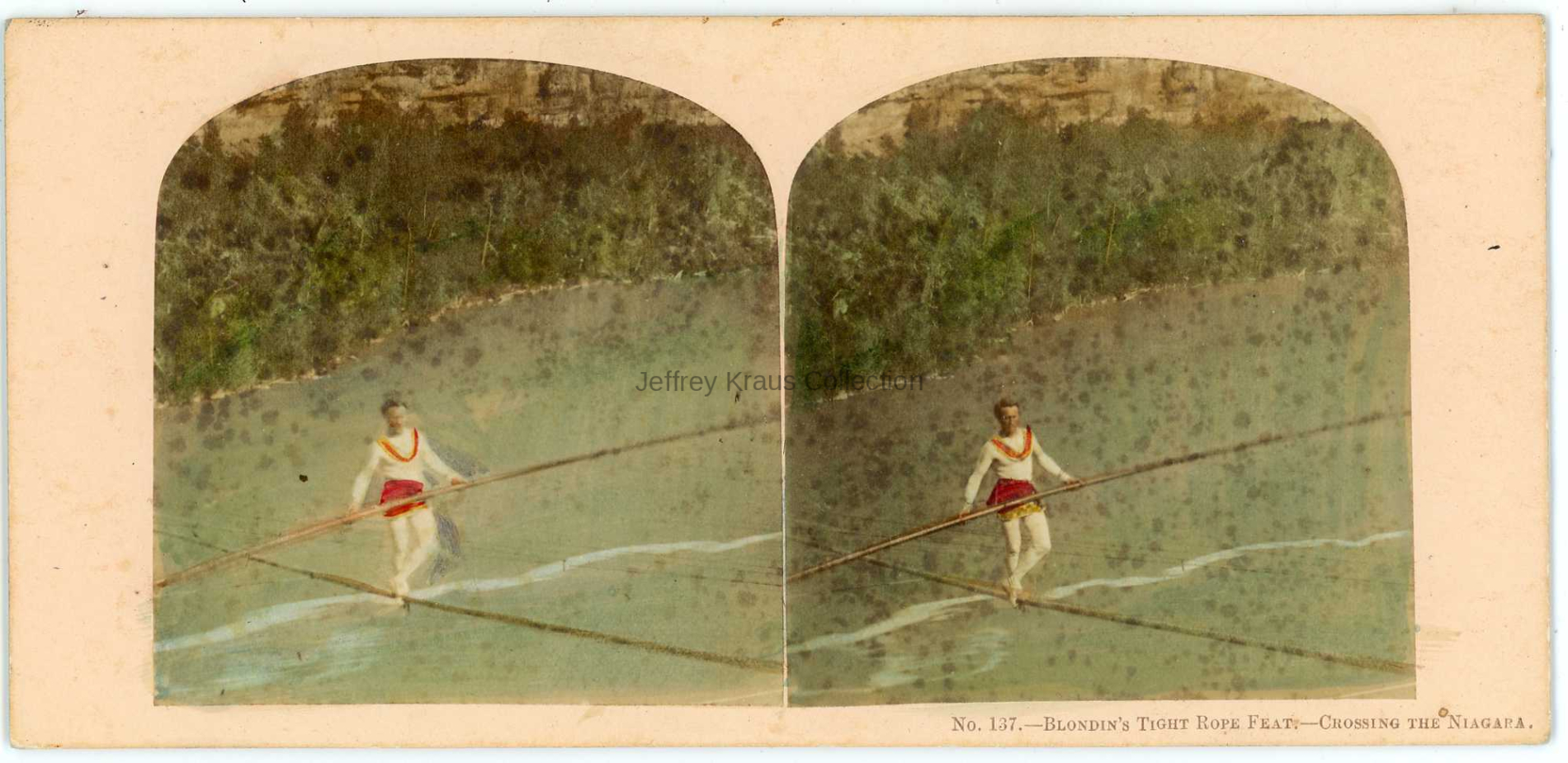
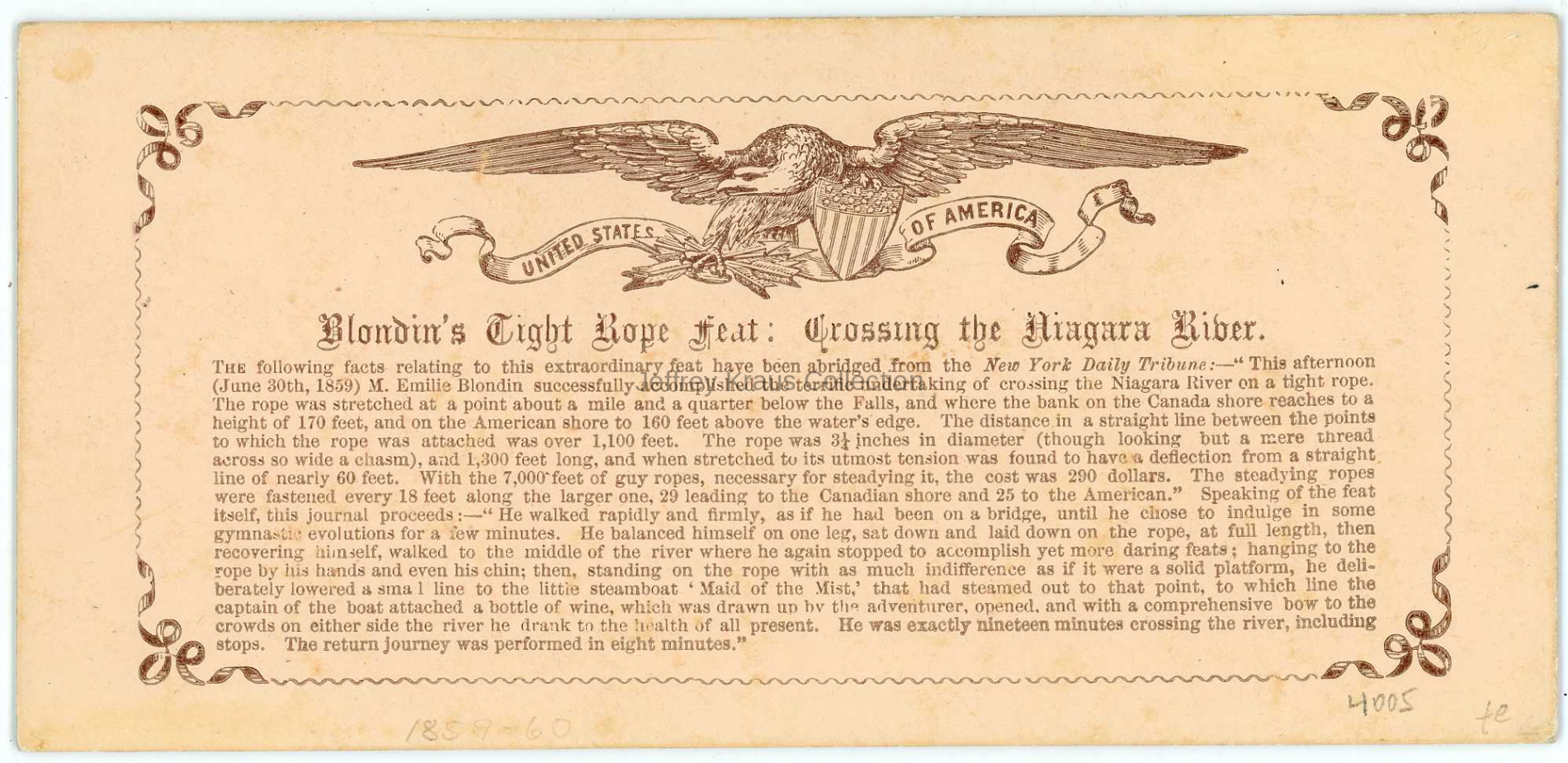
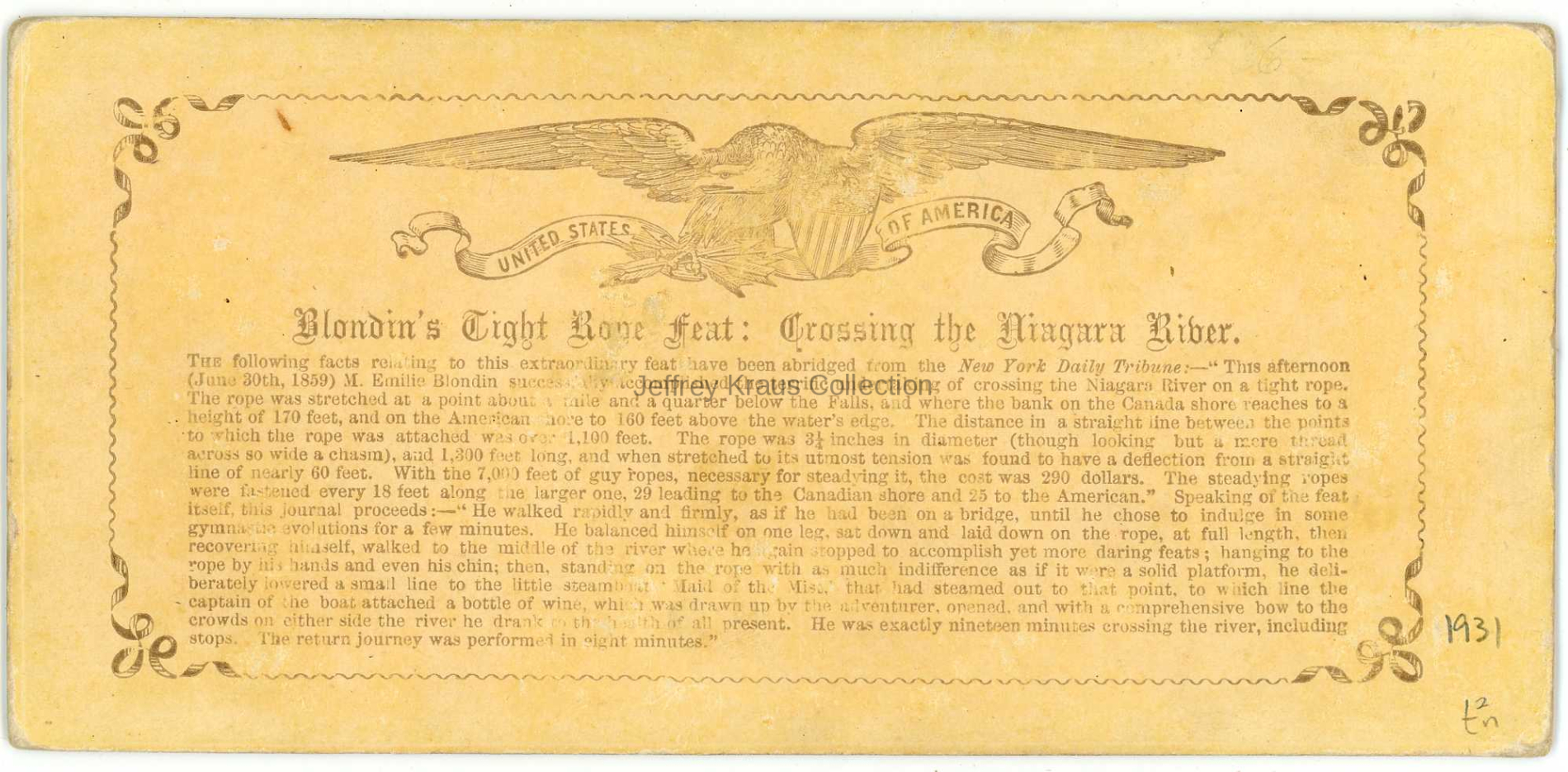
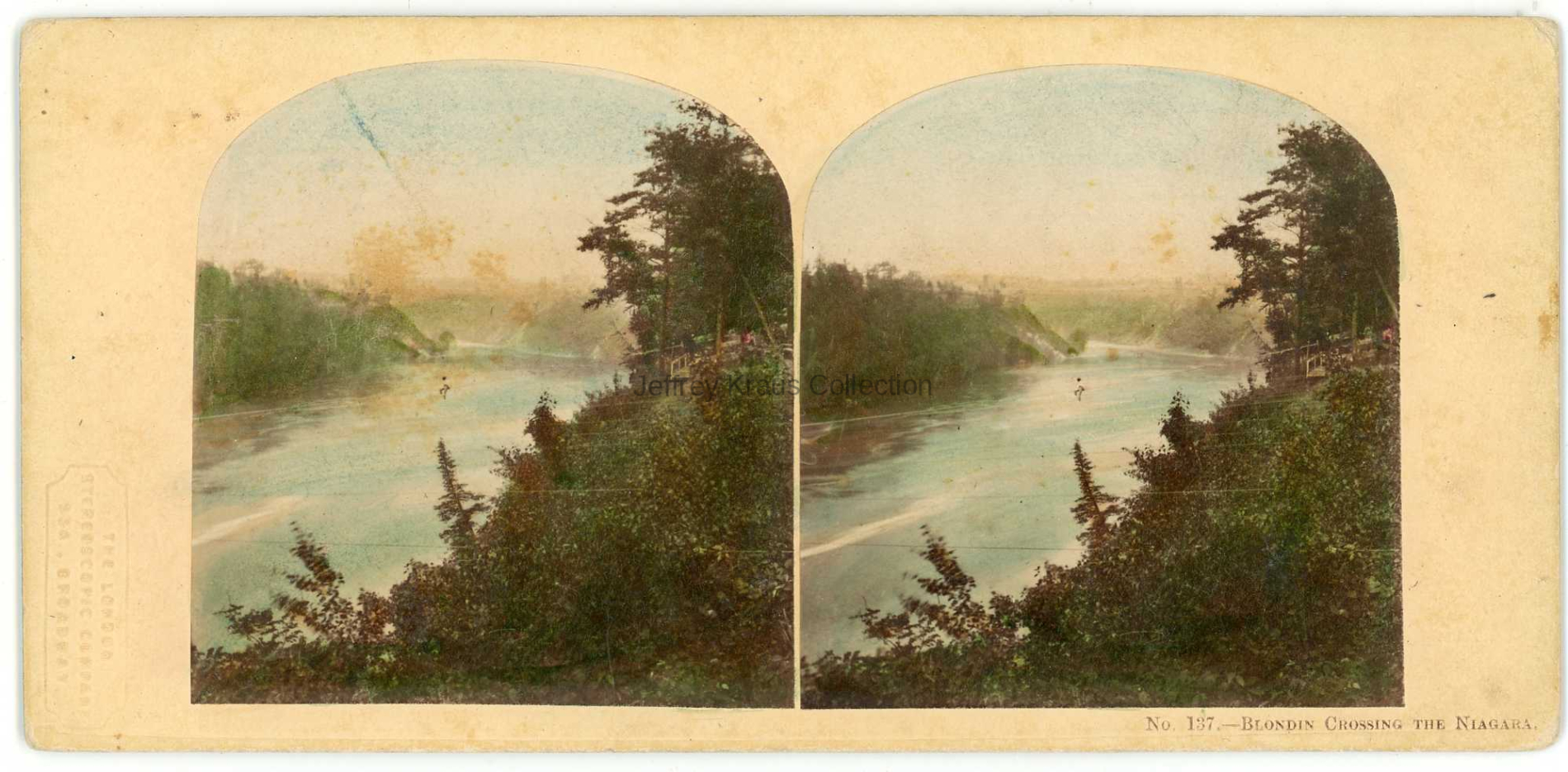
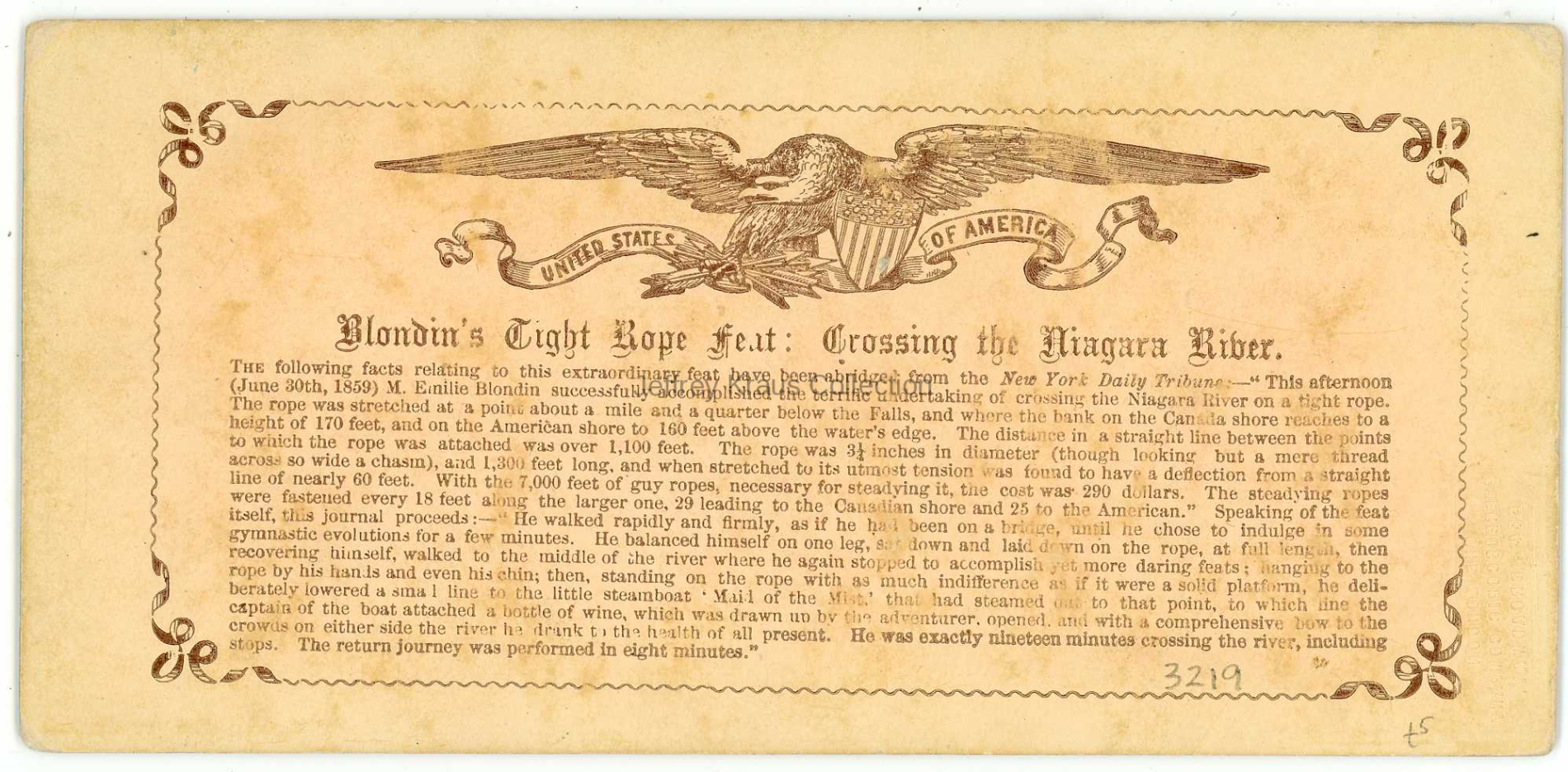
No. 137. Blondin’s Tight-Rope feat: Crossing the Niagara River.
No. 137. Blondin’s Tight-Rope feat: Crossing the Niagara River.
Blondin’s Tight-Rope feat: Crossing the Niagara River.
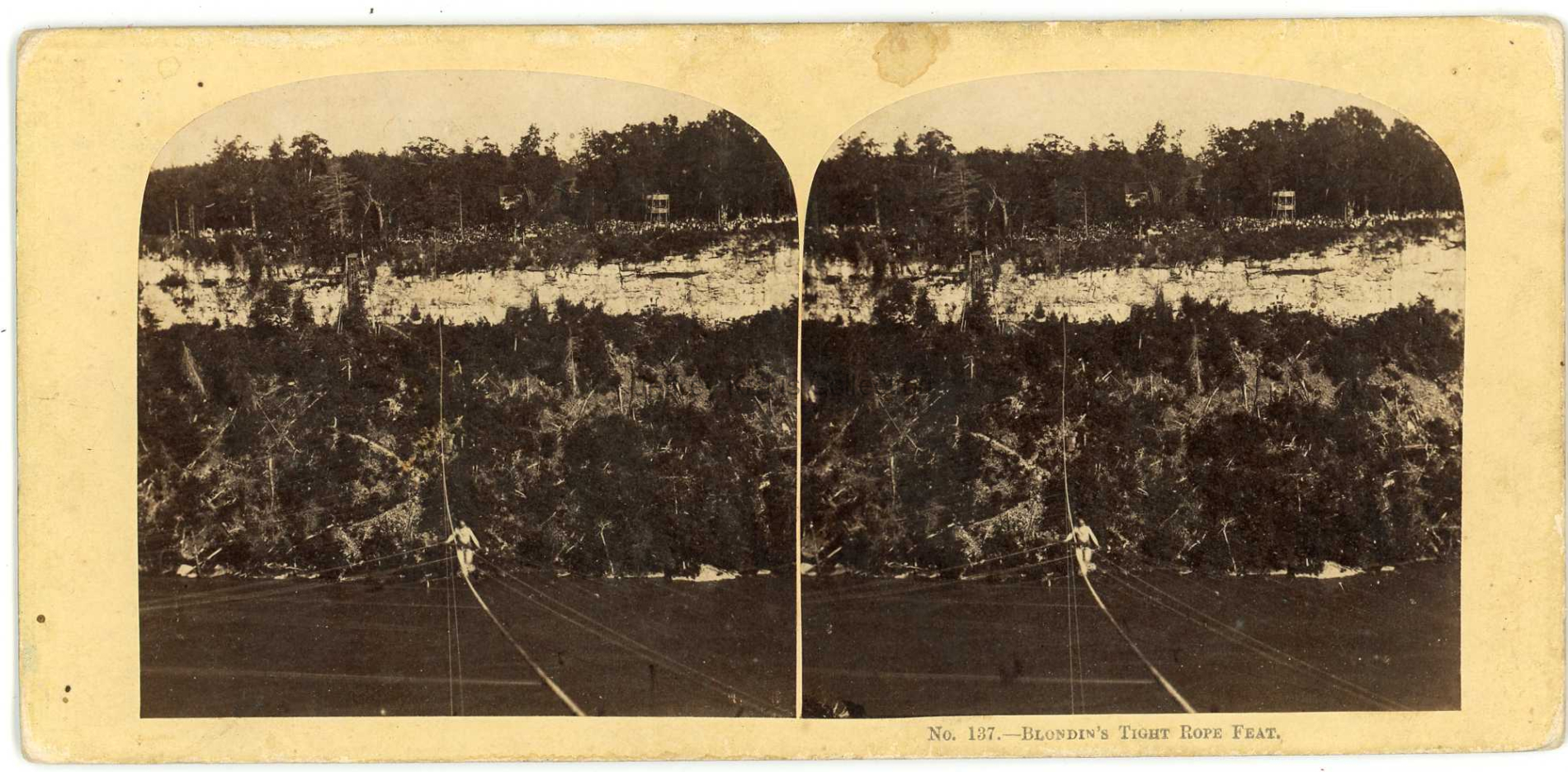
137. Blondin’s Tight Rope Feat.
No. 137. Blondin’s Tight Rope feat: Crossing the Niagara River.
No. 137. Blondin’s Tight Rope feat: Crossing the Niagara River.
No. 137. Blondin’s Tight Rope feat: Crossing the Niagara River.
335. Blondin. I think this is Harry Leslie, not Blondin.