50141.
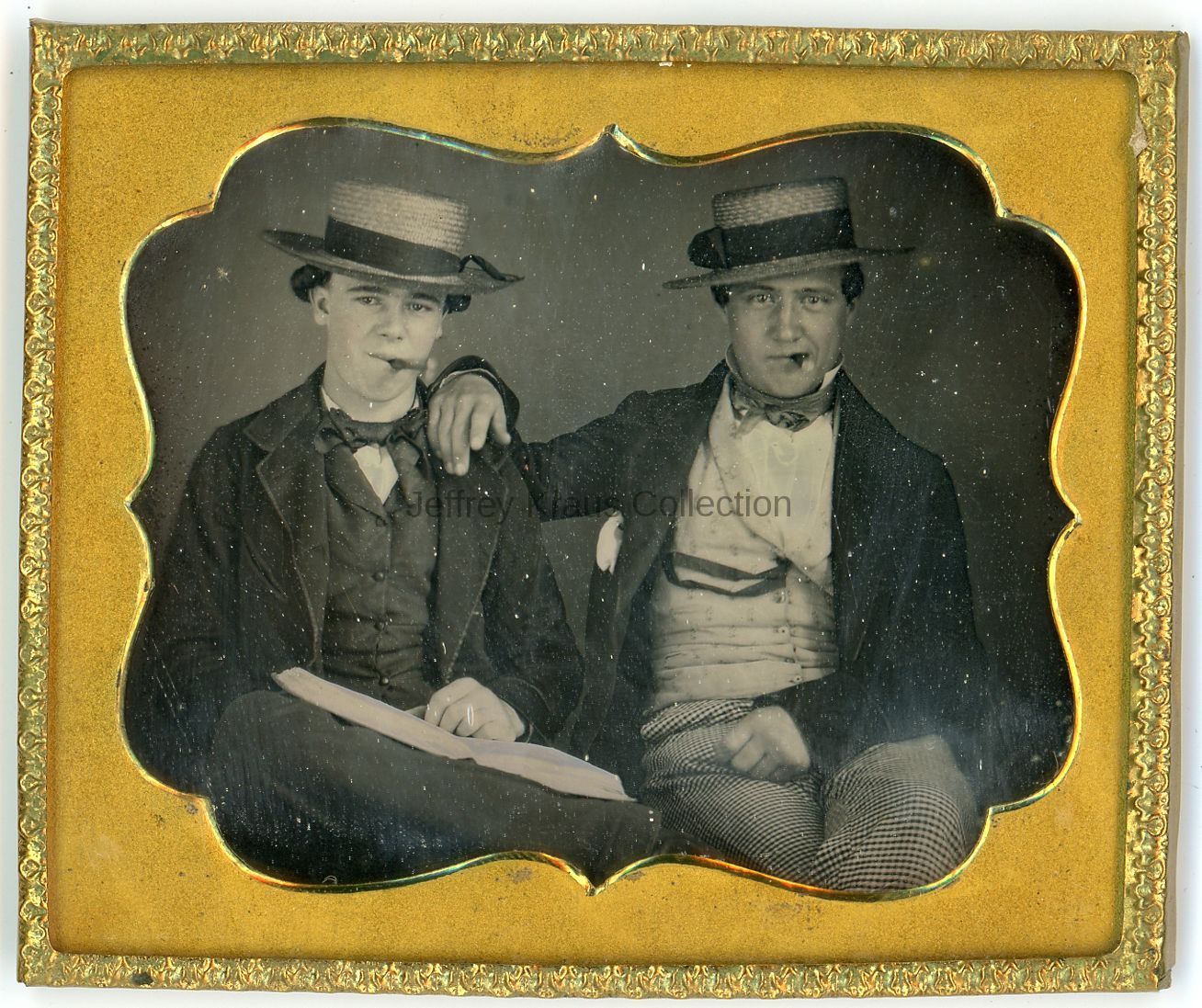
Sixth-plate daguerreotype of cigar-smoking, straw-hatted buddies.

Sixth-plate daguerreotype of cigar-smoking, straw-hatted buddies.
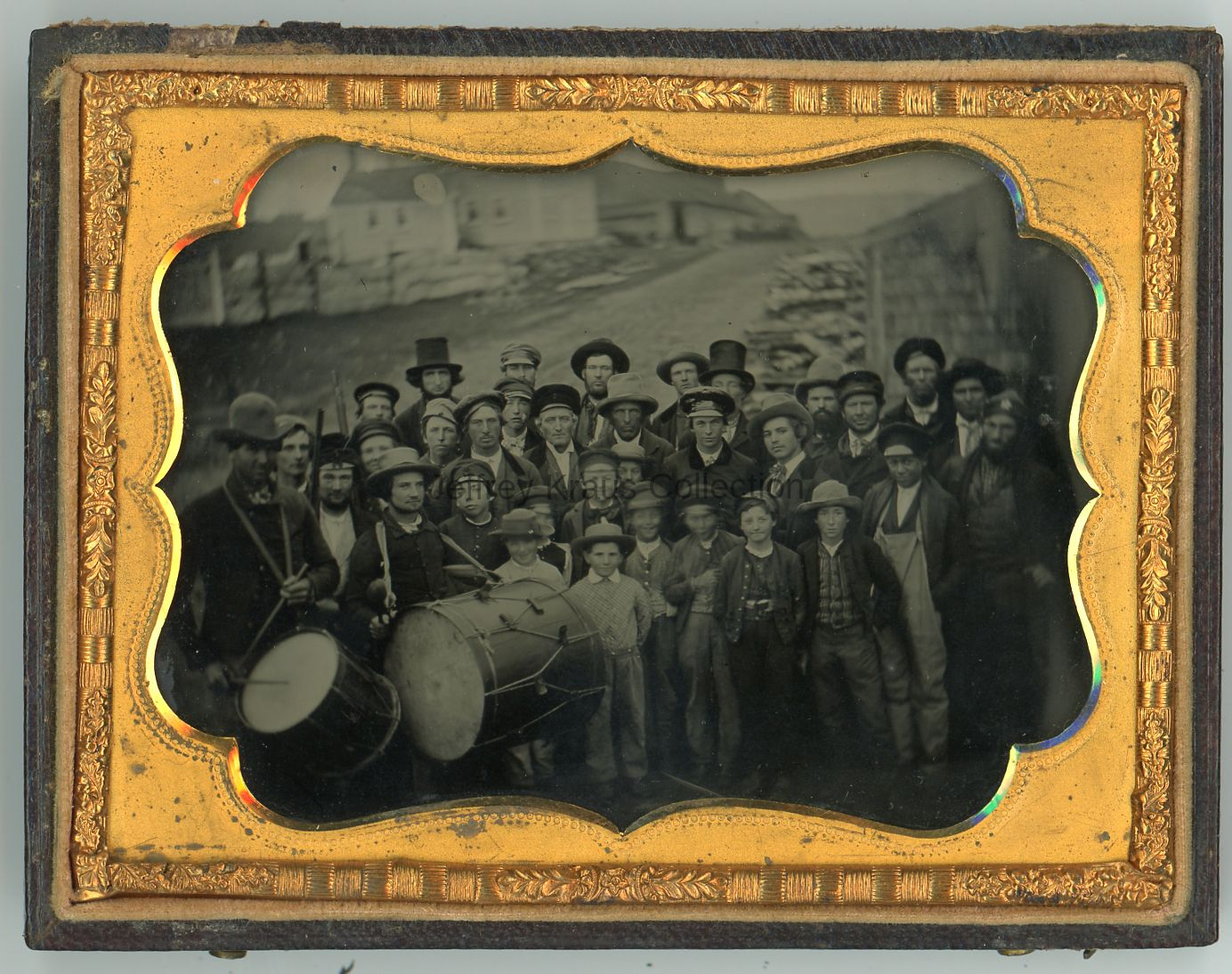
Quarter-plate ambrotype of large group of men and boys, all in hats. Several have large drums, looks like a couple have rifles or shotguns.
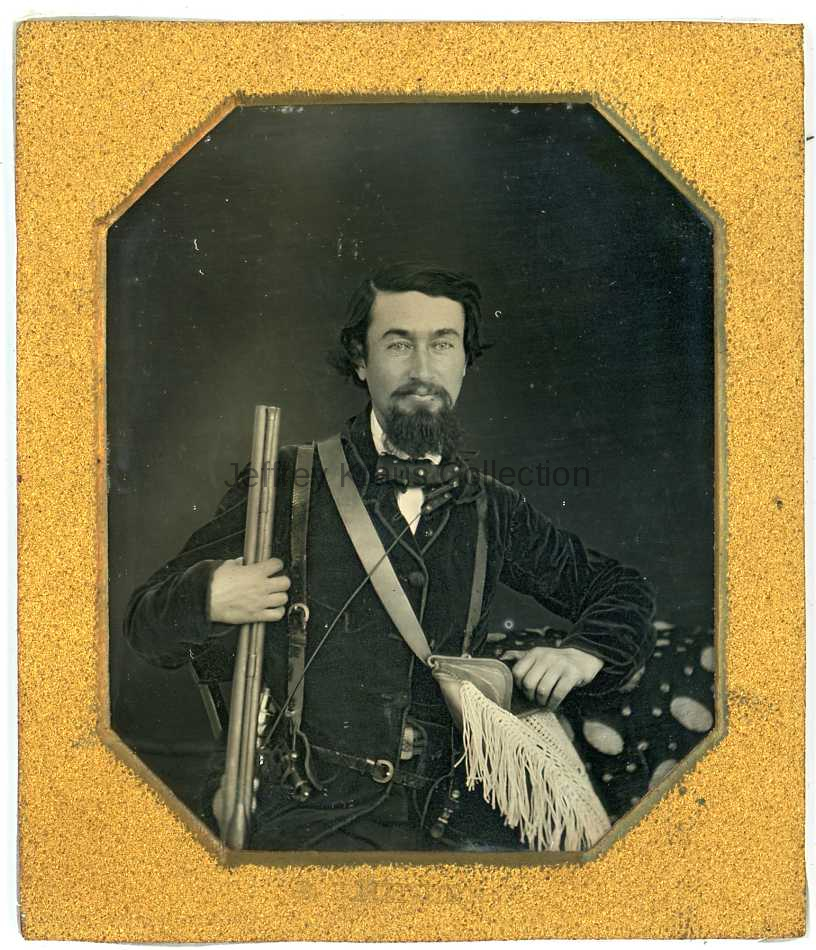
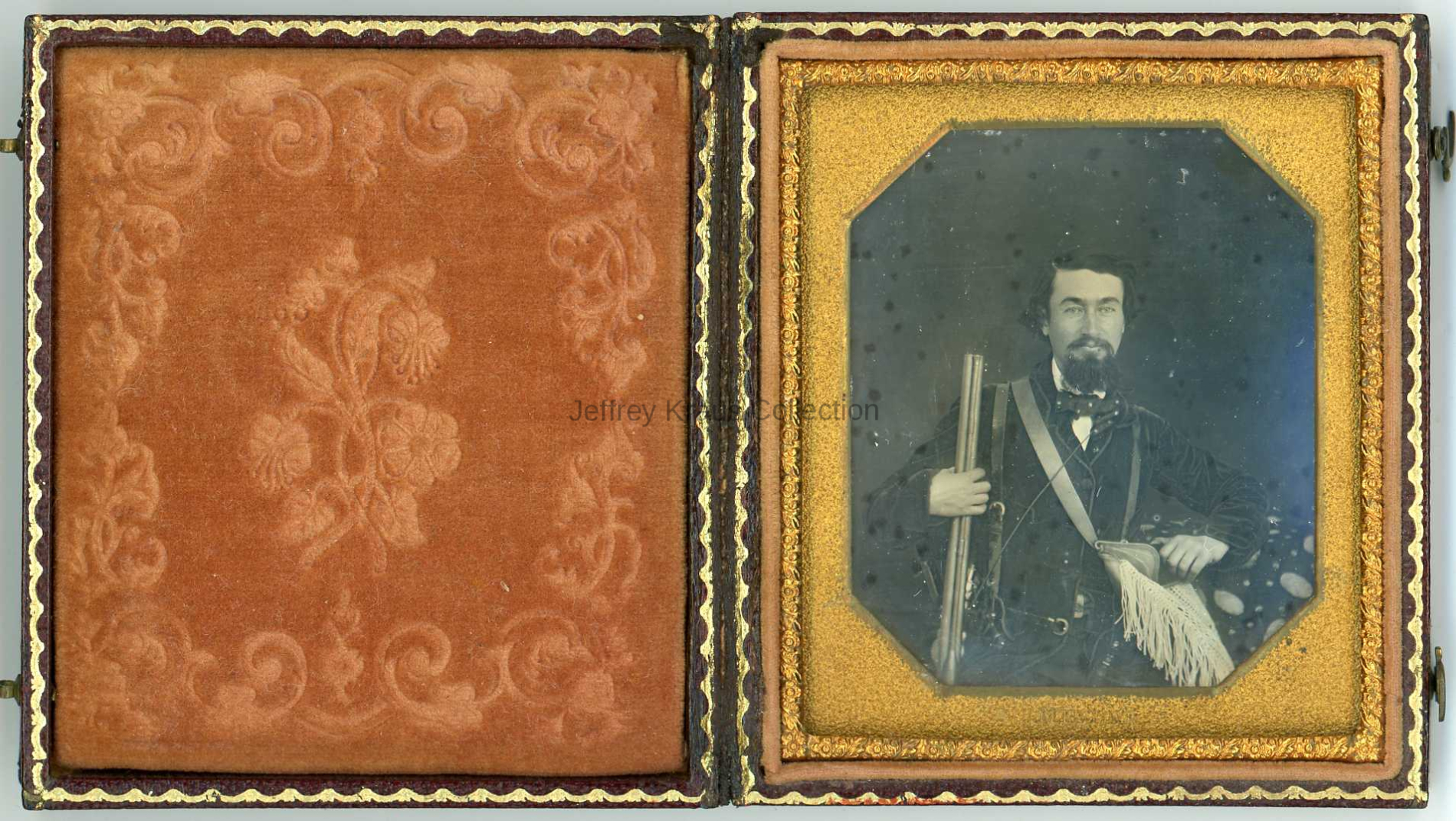
Sixth-plate daguerreotype by Miller, stamped on mat at bottom center. Image shows a smiling hunter with shotgun and other accoutrements. There were many daguerreians by the name of Miller, so it is not possible to know which one took this image.
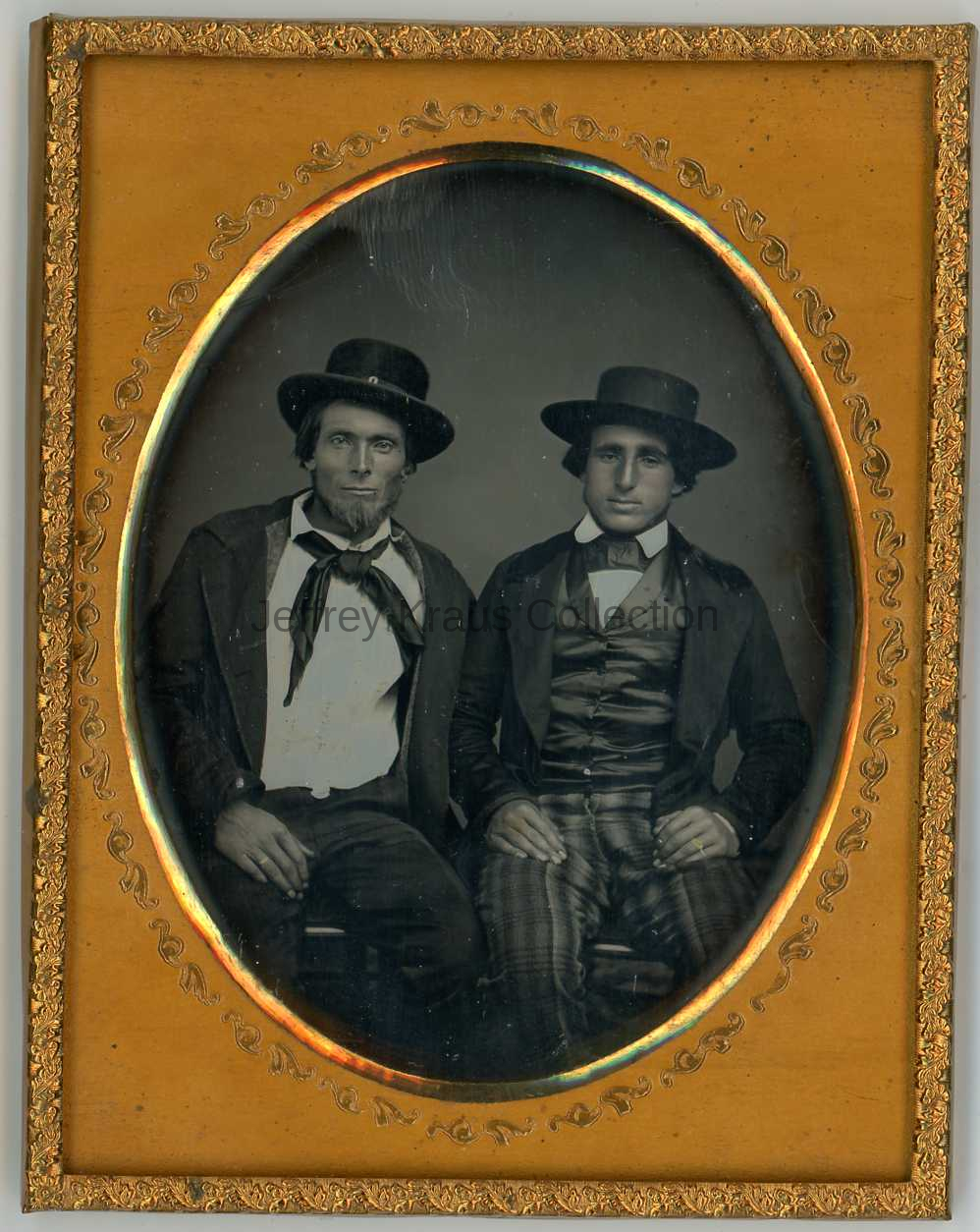
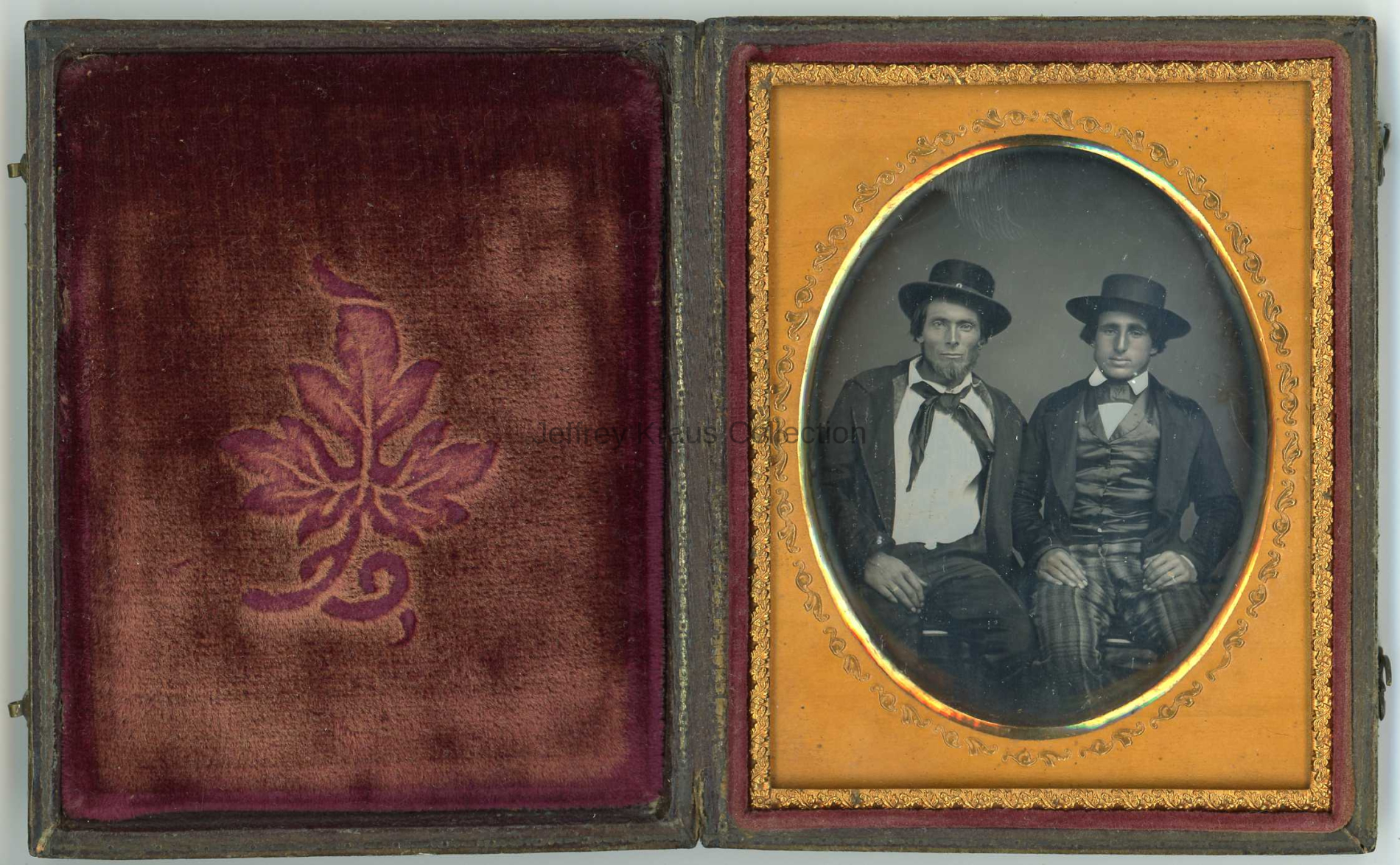
Quarter-plate daguerreotype of a pair of western-looking gents. The man on the left sports an earring.
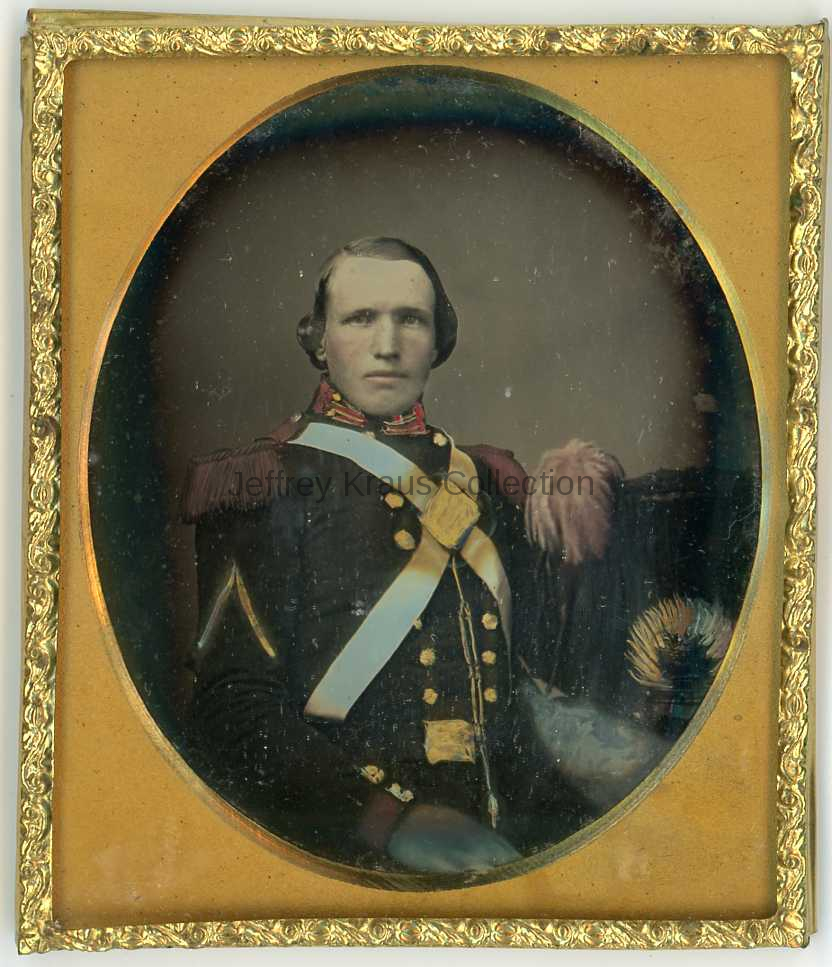
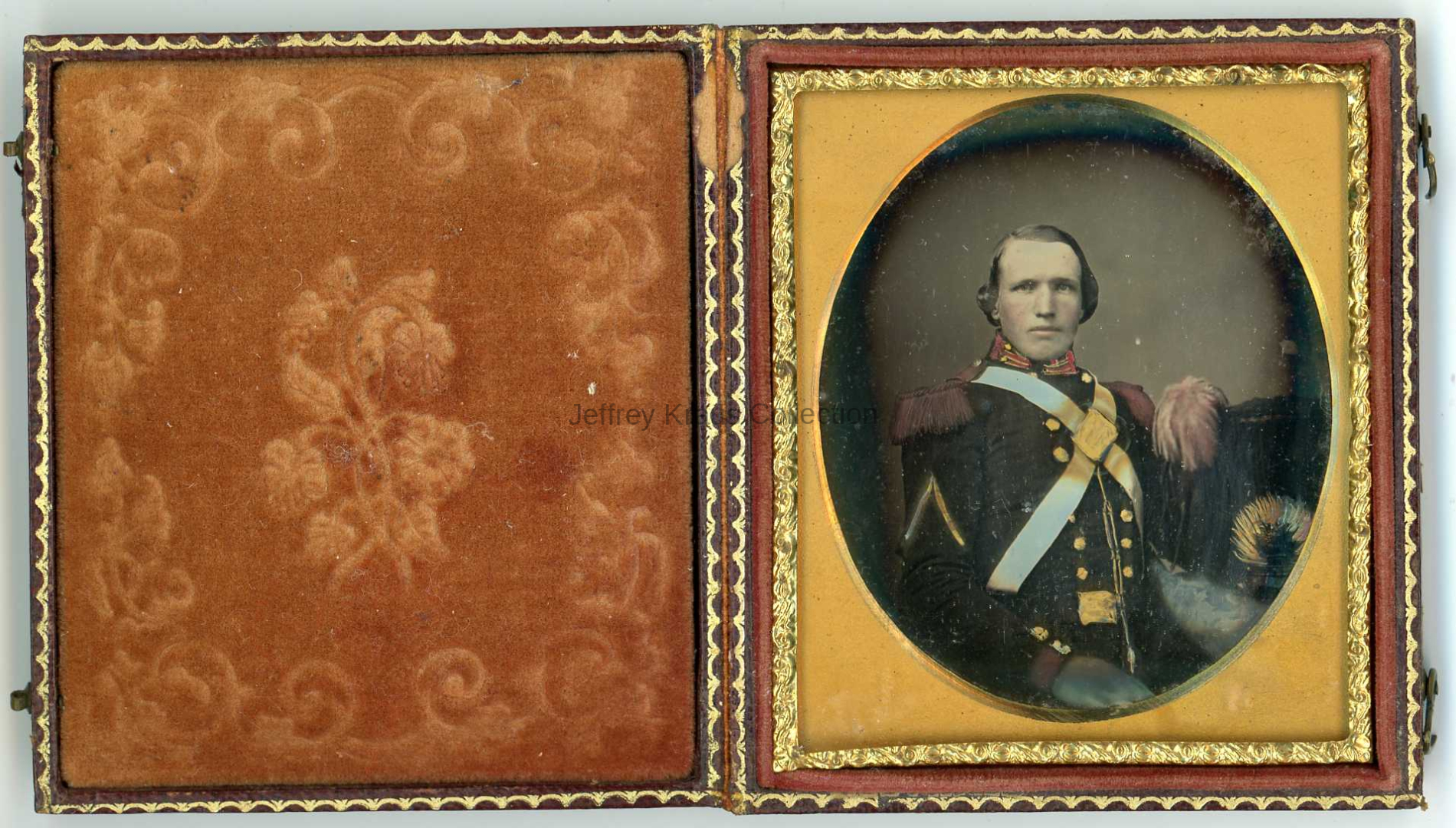
Sixth-plate tinted daguerreotype of a militiaman.
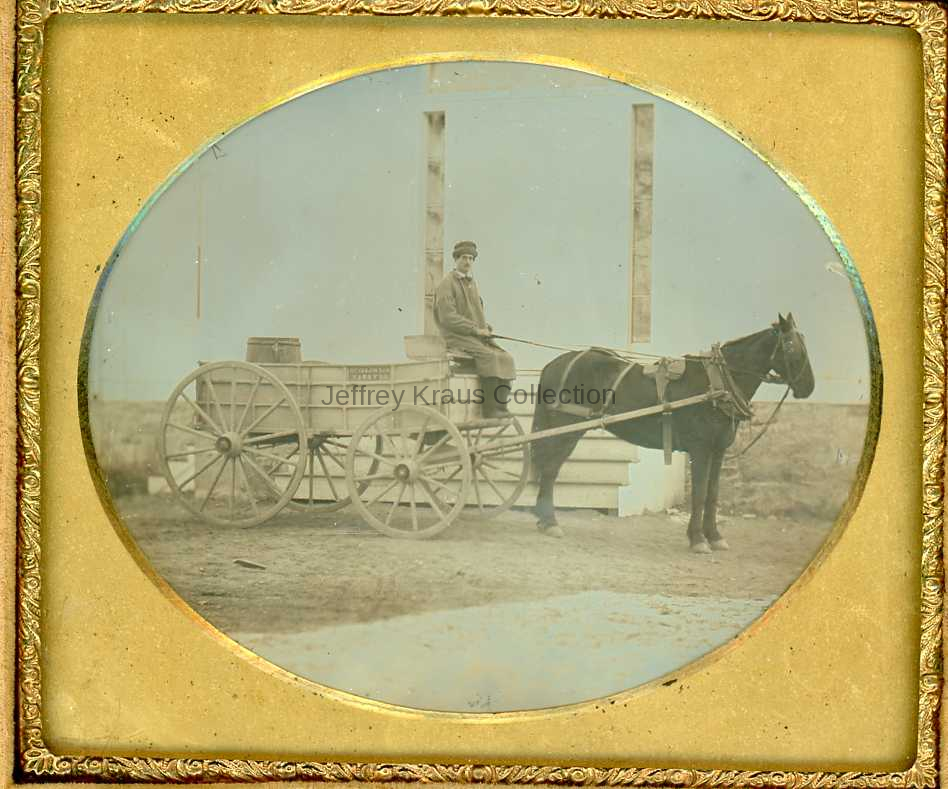
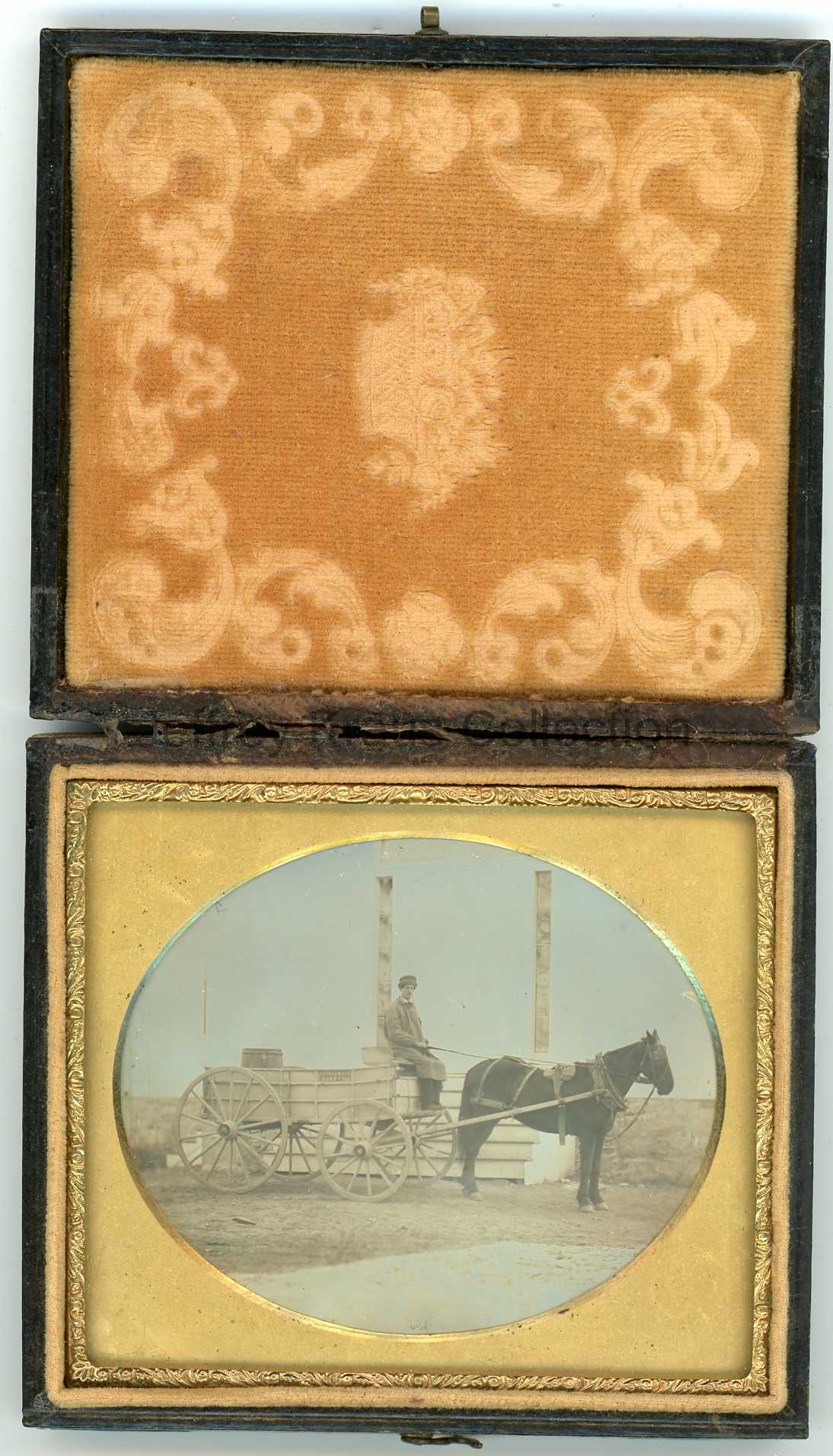
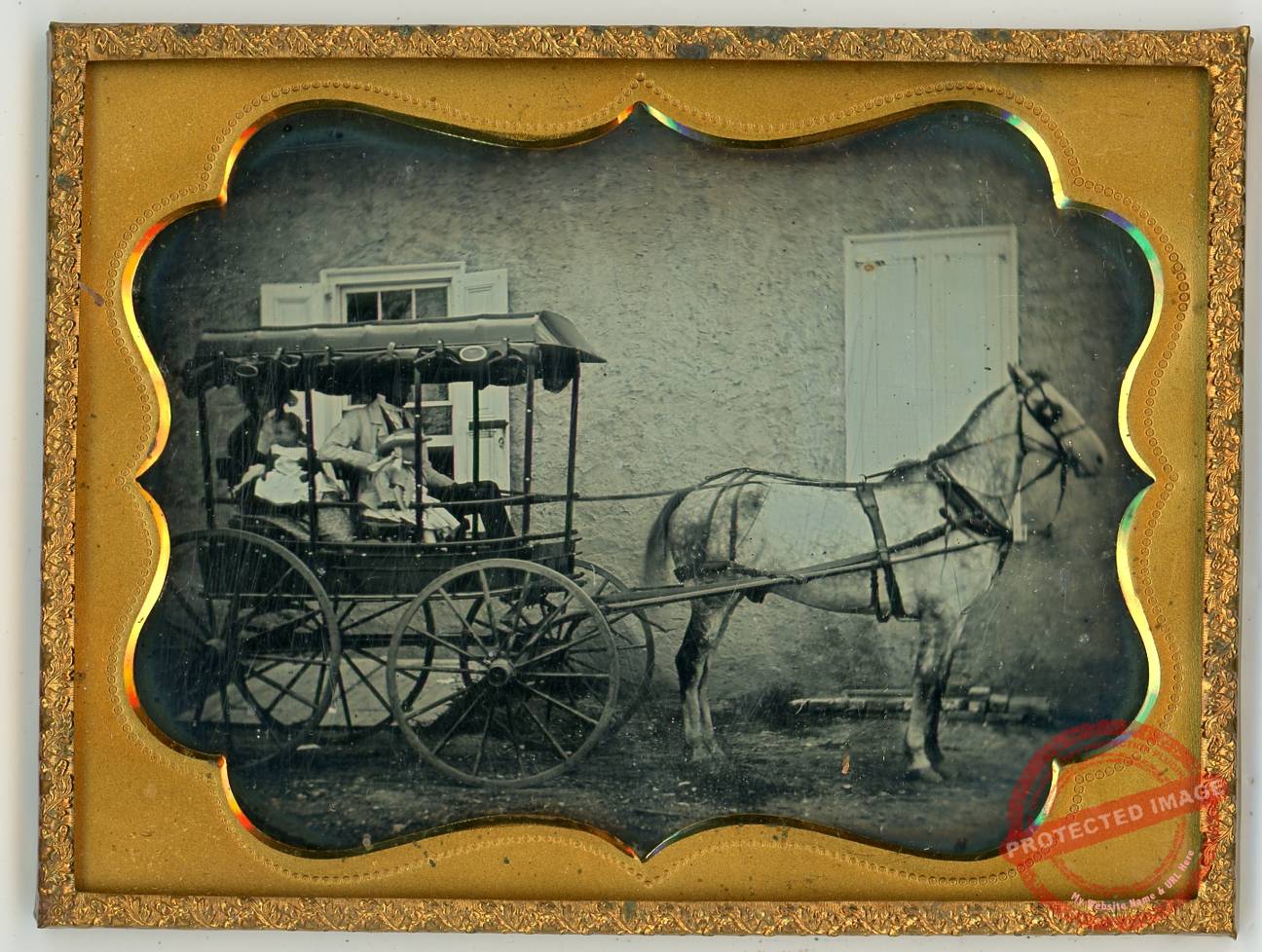
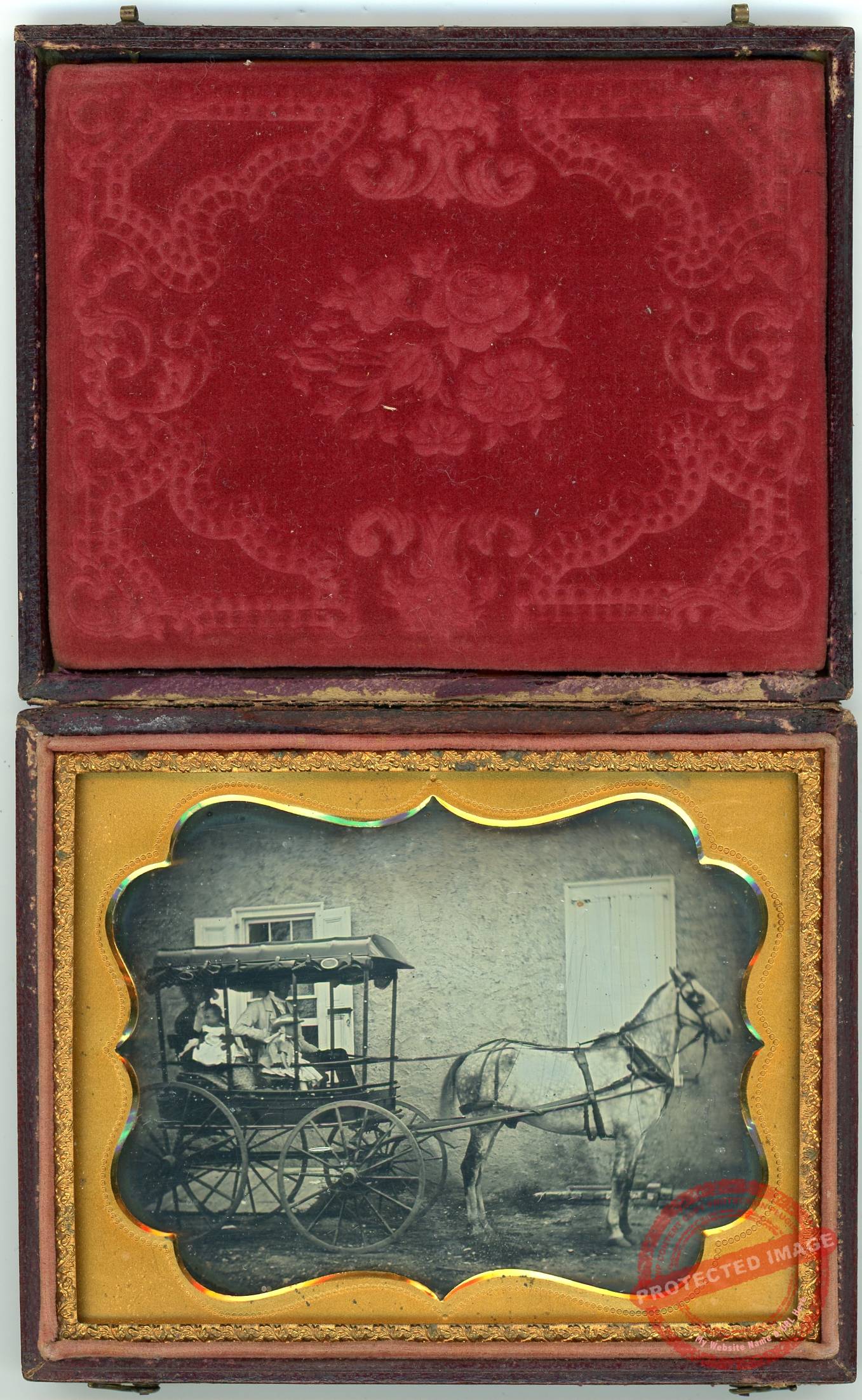
Sixth-plate occupational daguerreotype. The cart reads “D & P Hildreth Beverly.” The 1850 Beverly, Massachusetts census contains the families of Daniel and Paul Hildreth living in the same dwelling. Both were soap chandlers, along with Daniel’s sons George and Daniel. Originally the occupation of chandler made candles and then extended to those who fashioned items used in church offerings, then to those who made soap and to ship’s chandlers who made and sold candles as well as other items to be used on ships.
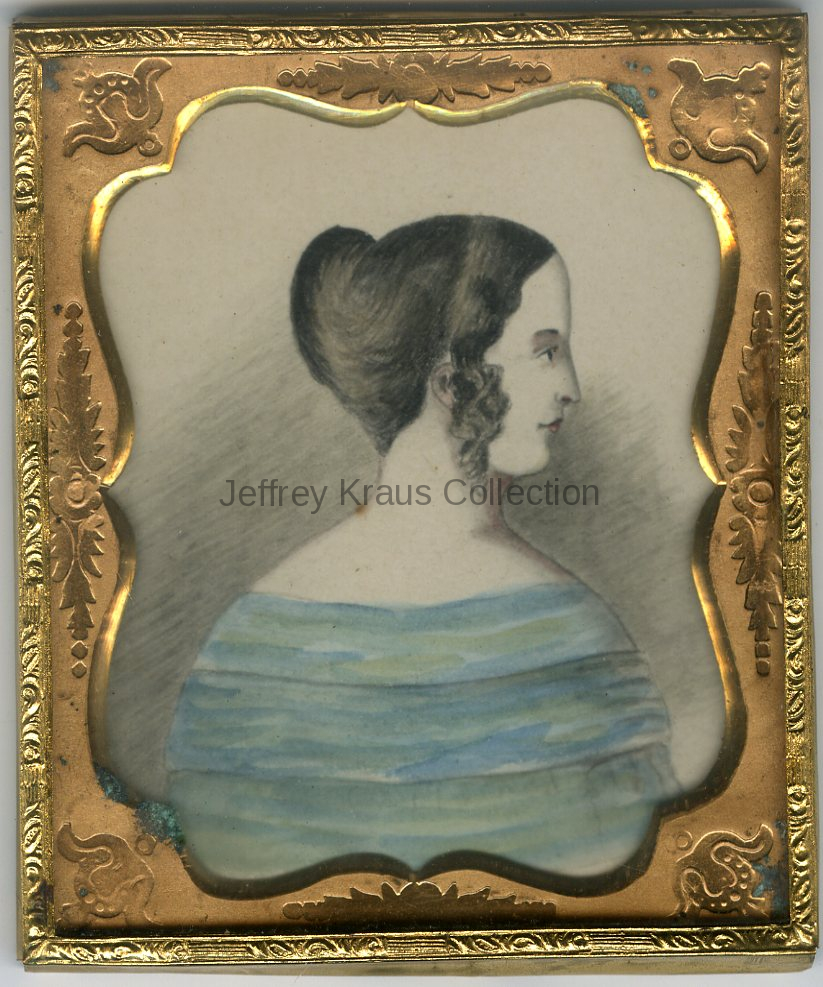
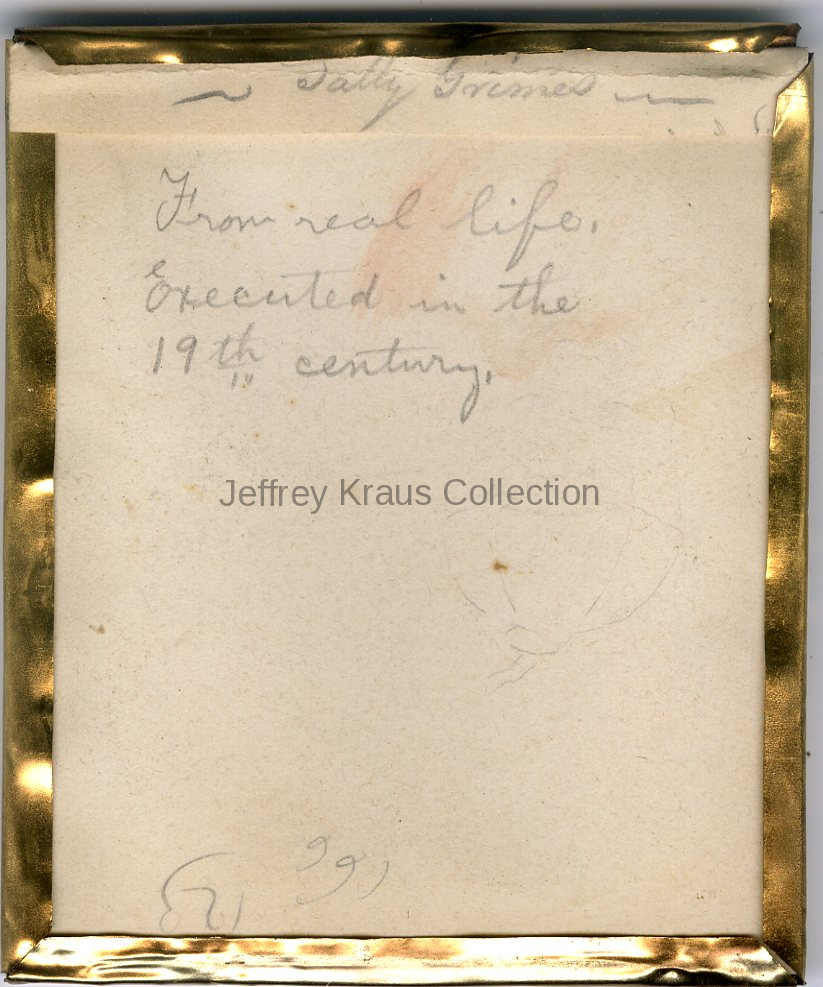
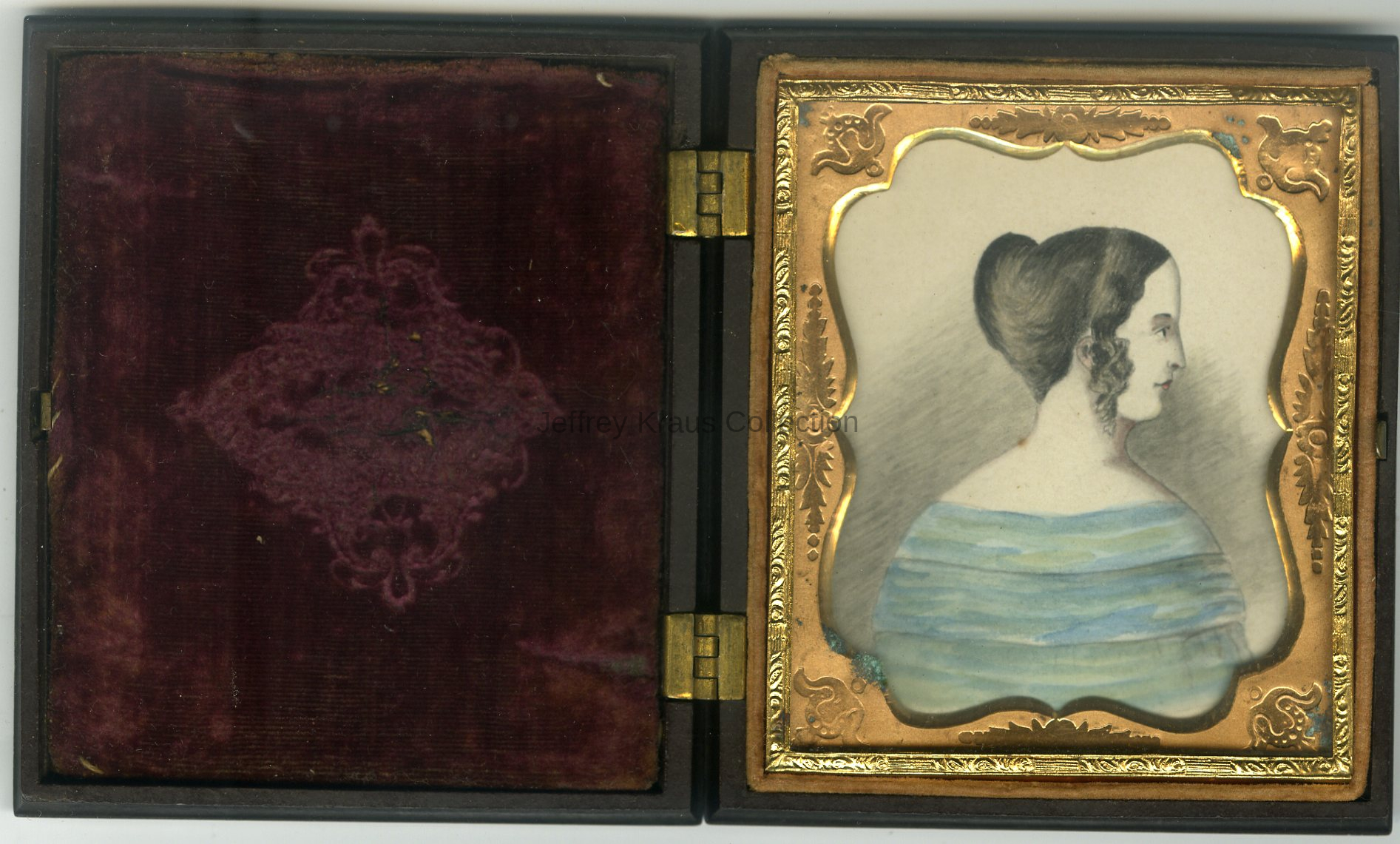
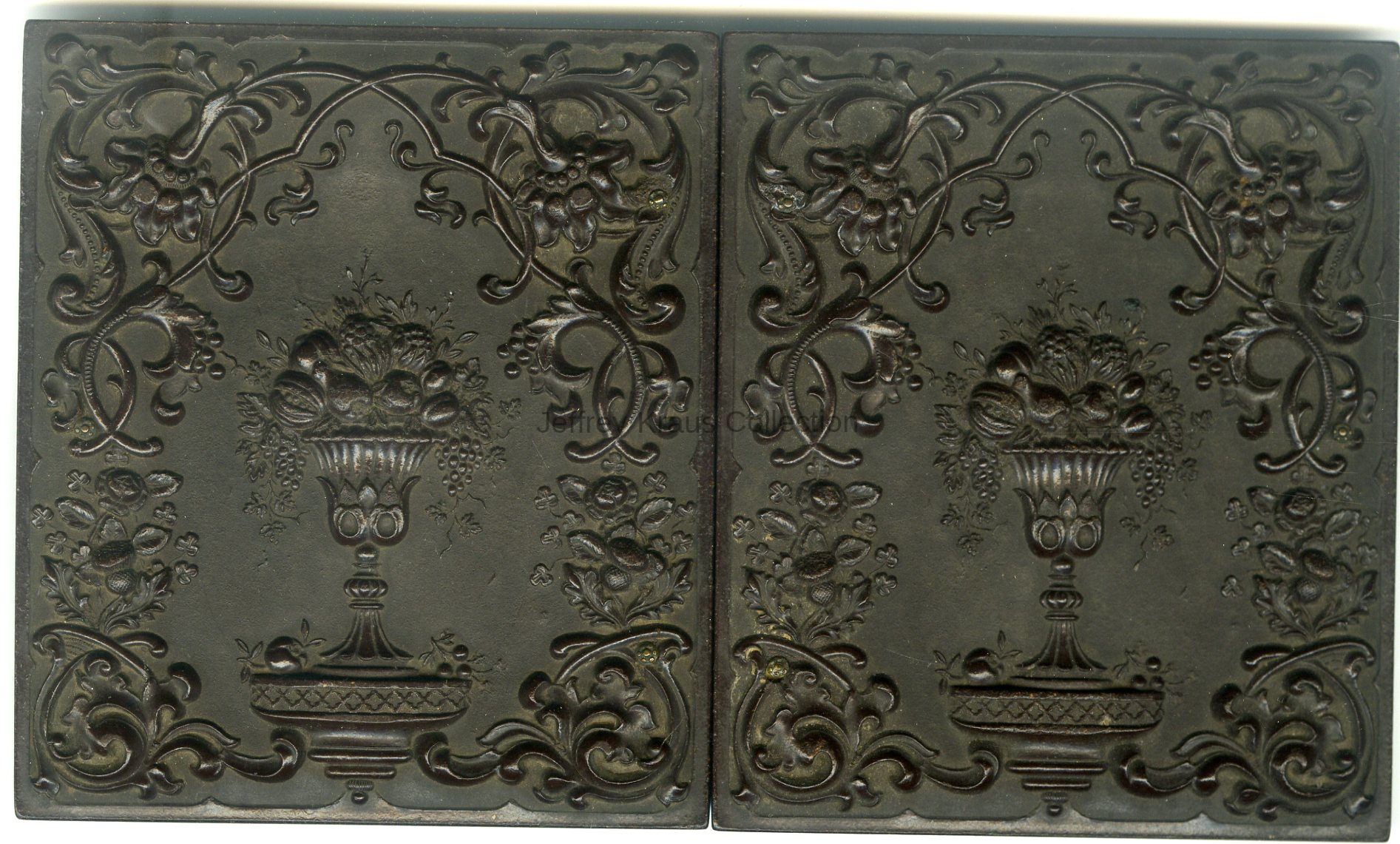
Sixth-plate color pencil drawing identified as Sally Grimes drawn from life. Housed in a thermoplastic case (Berg 2-32, Vase of Fruit).
Sixth-plate color pencil drawing identified as Sally Grimes drawn from life. Housed in a thermoplastic case (Berg 2-32, Vase of Fruit).
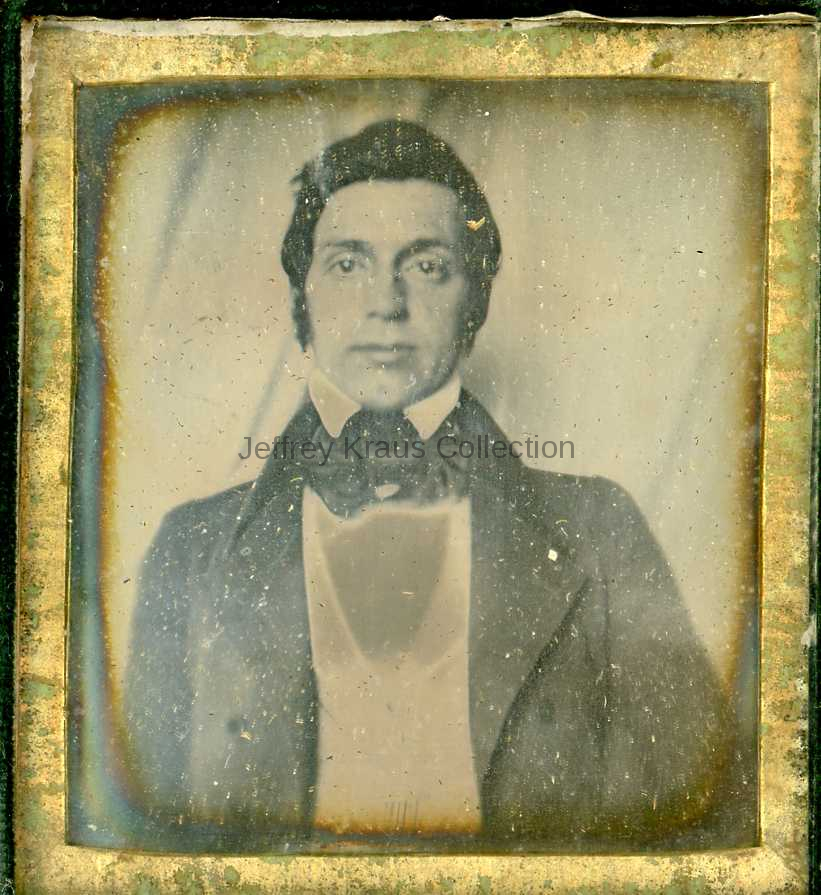
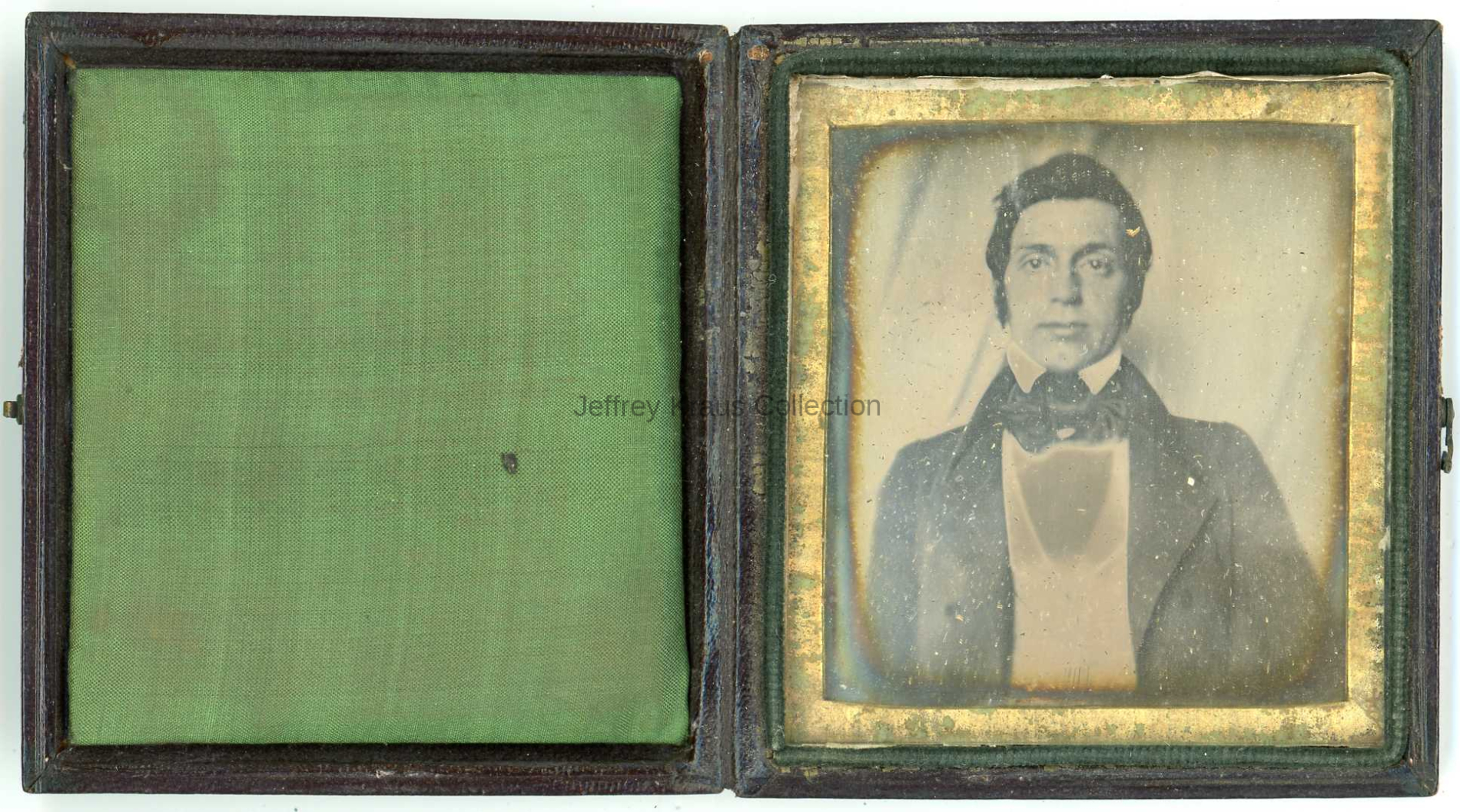
Sixth-plate very early daguerreotype portrait of gentleman, circa 1840-’41.
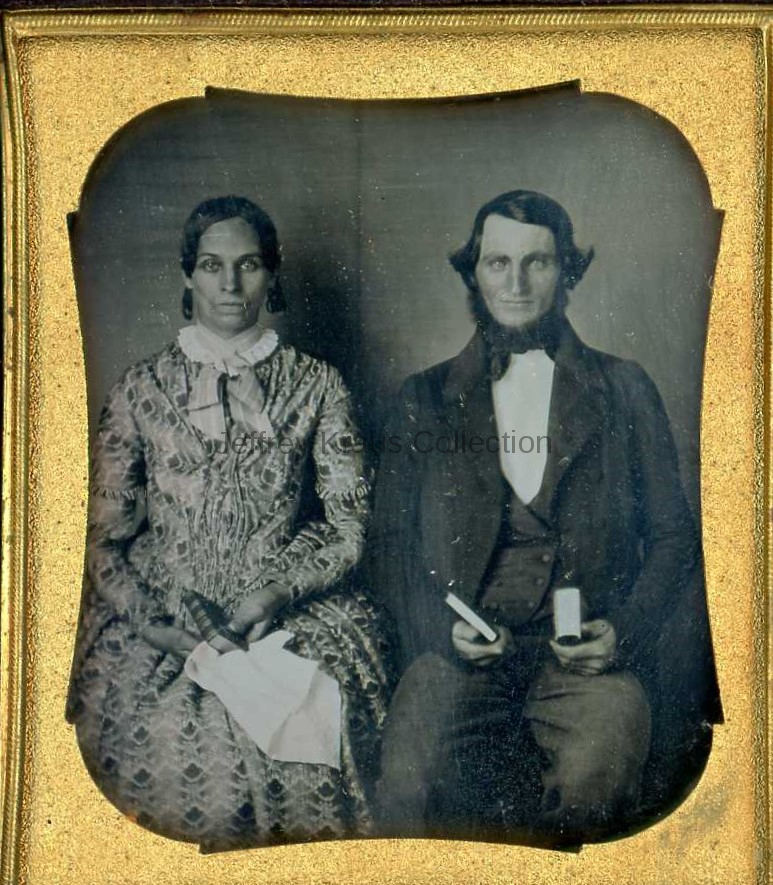
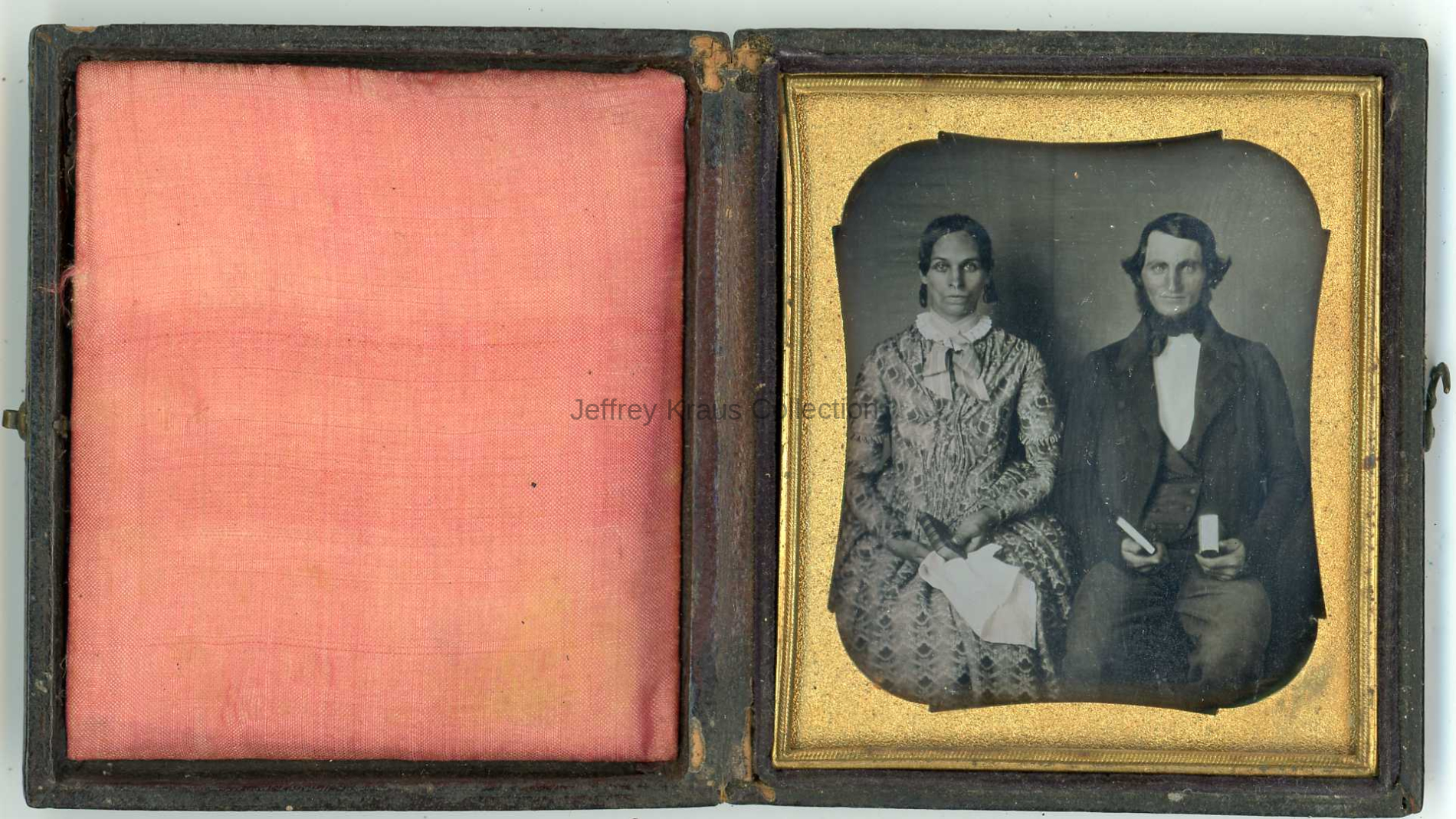
Sixth-plate daguerreotype of a couple, each holding books. The woman may be a person of color.
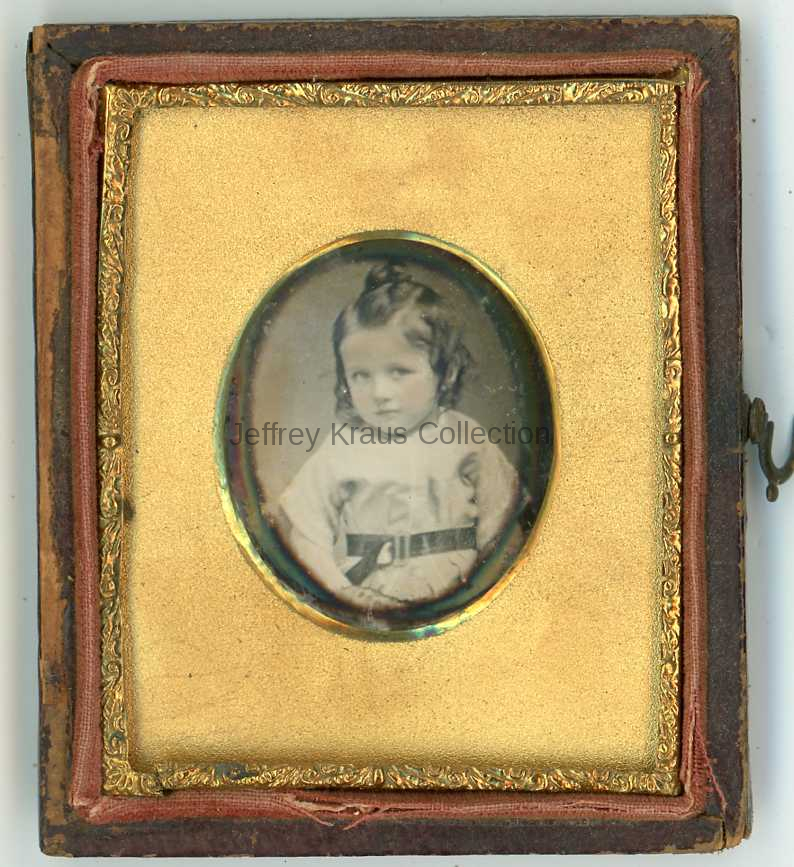
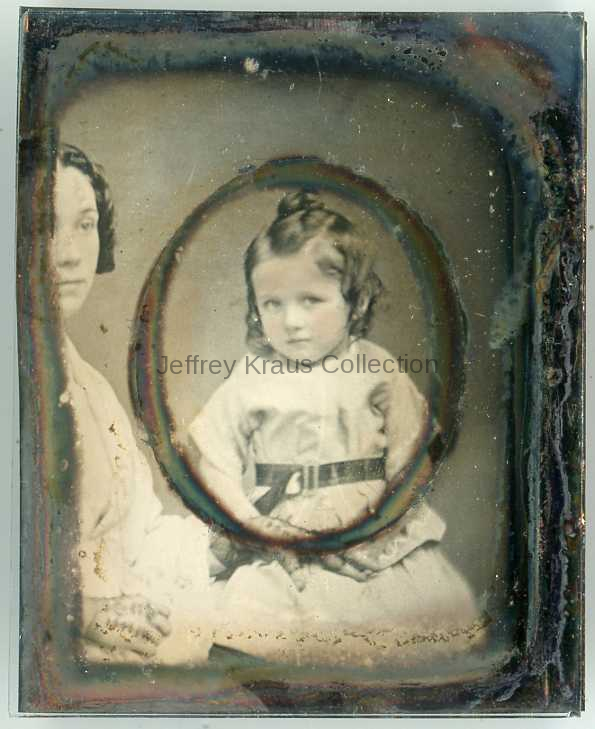
Ninth-plate daguerreotype of a child in circular mat. Remove the mat and you find the mother. We value what they did not want us to see.
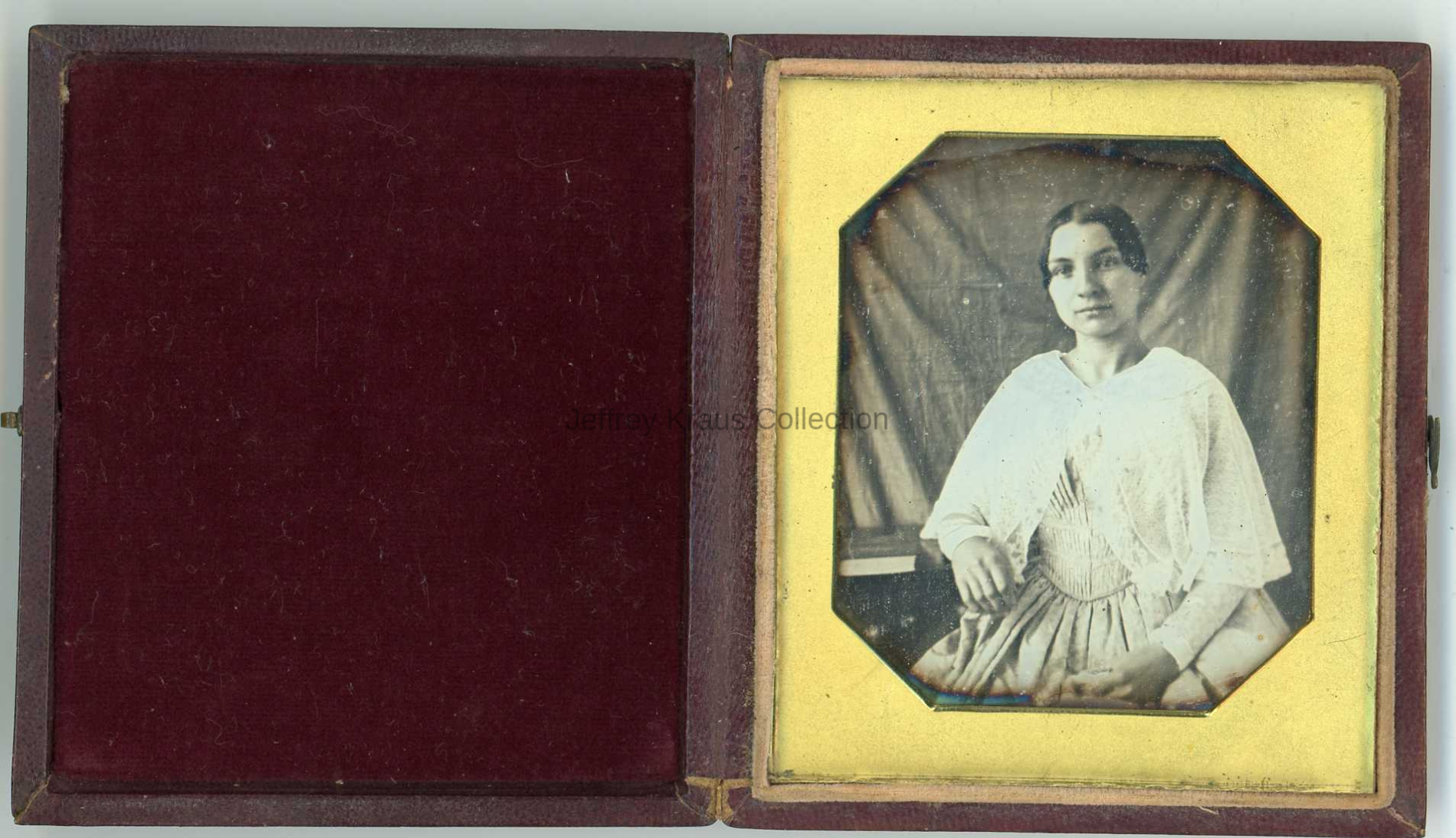
Sixth-plate daguerreotype of attractive woman posed before a primitive backdrop probably indicating the cramped quarters of an itinerant traveling photographer.
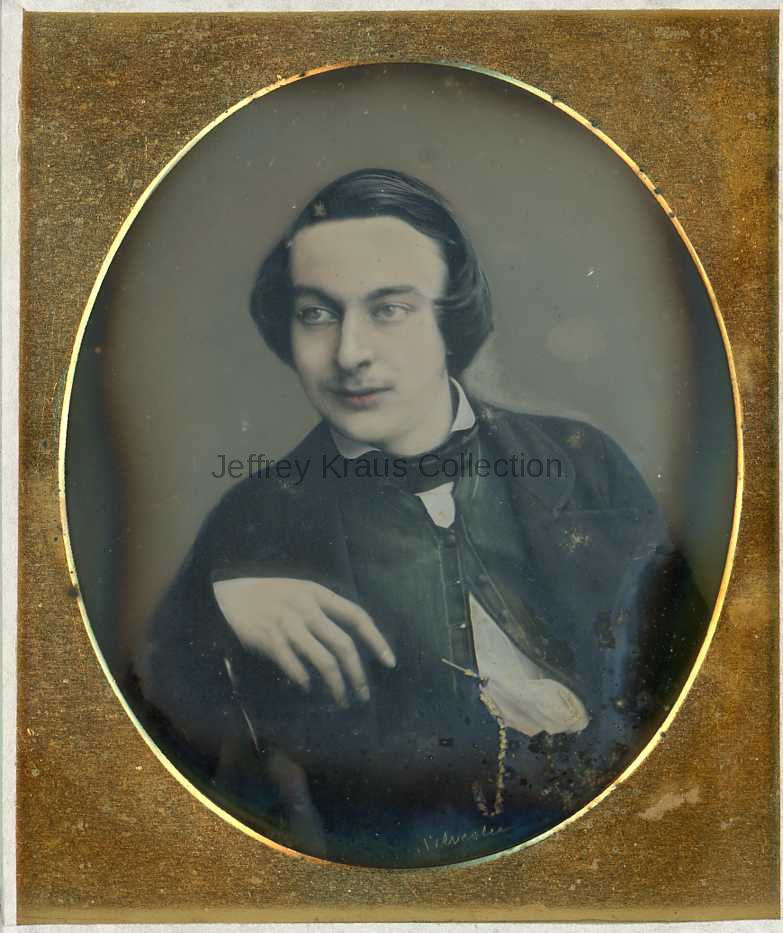
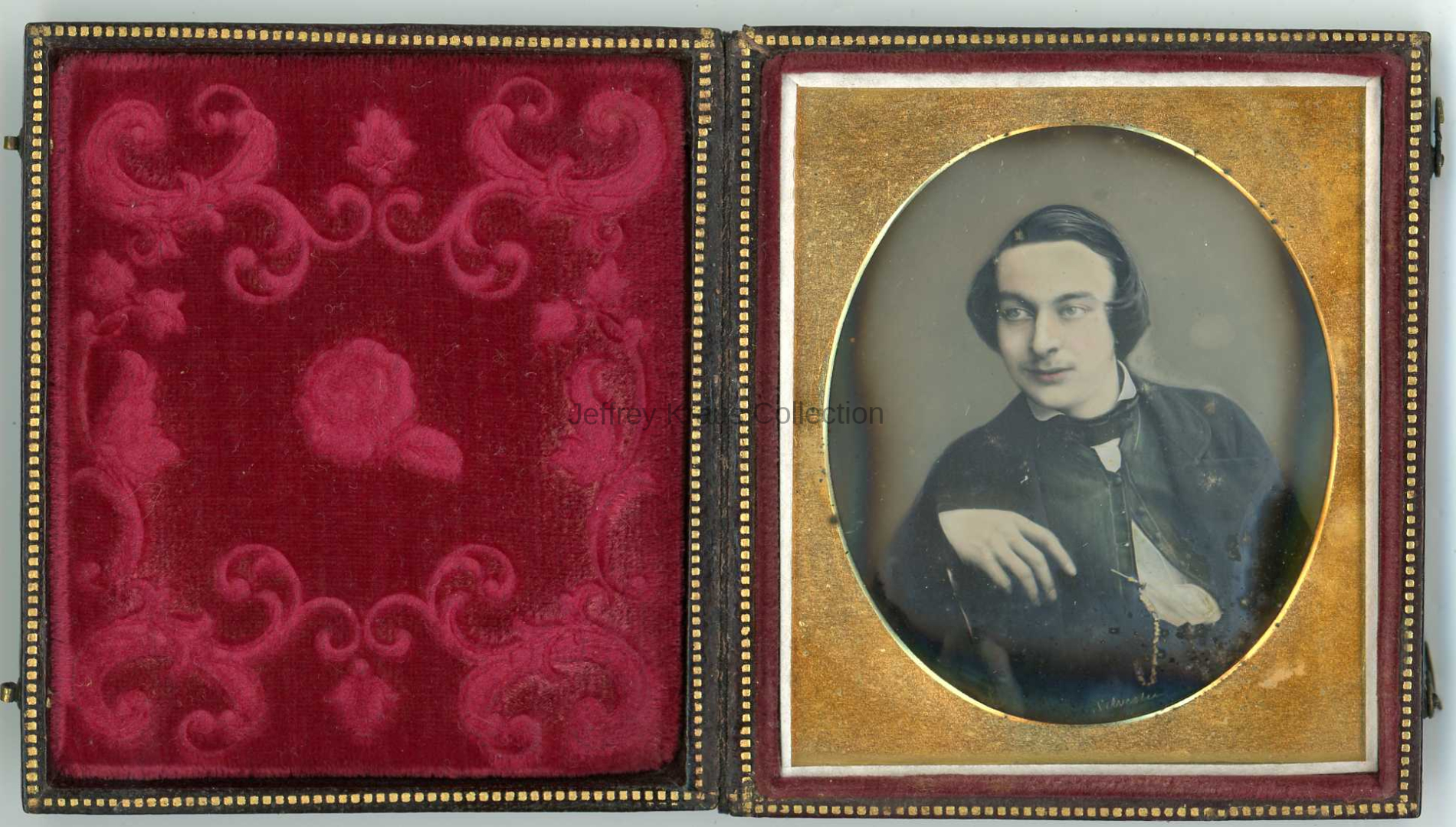
Sixth-plate tinted daguerreotype with “Silvester” etched in the plate at lower right center. No doubt an actor or mime.
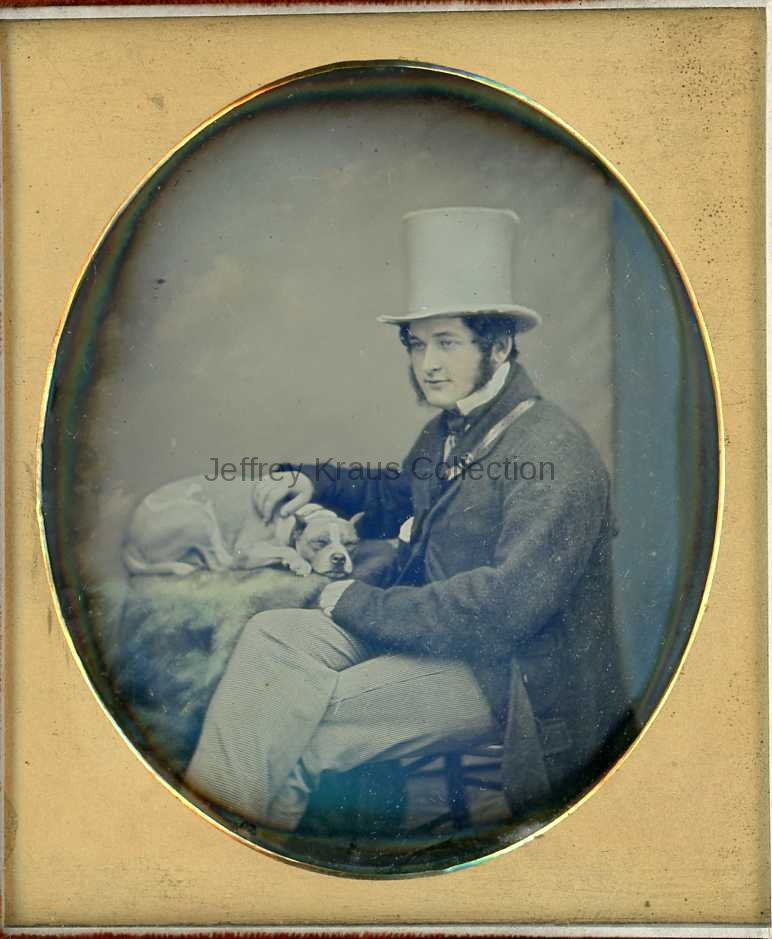
Sixth-plate tinted British daguerreotype of a gentleman in a top hat with his hand on his resting dog on the table.
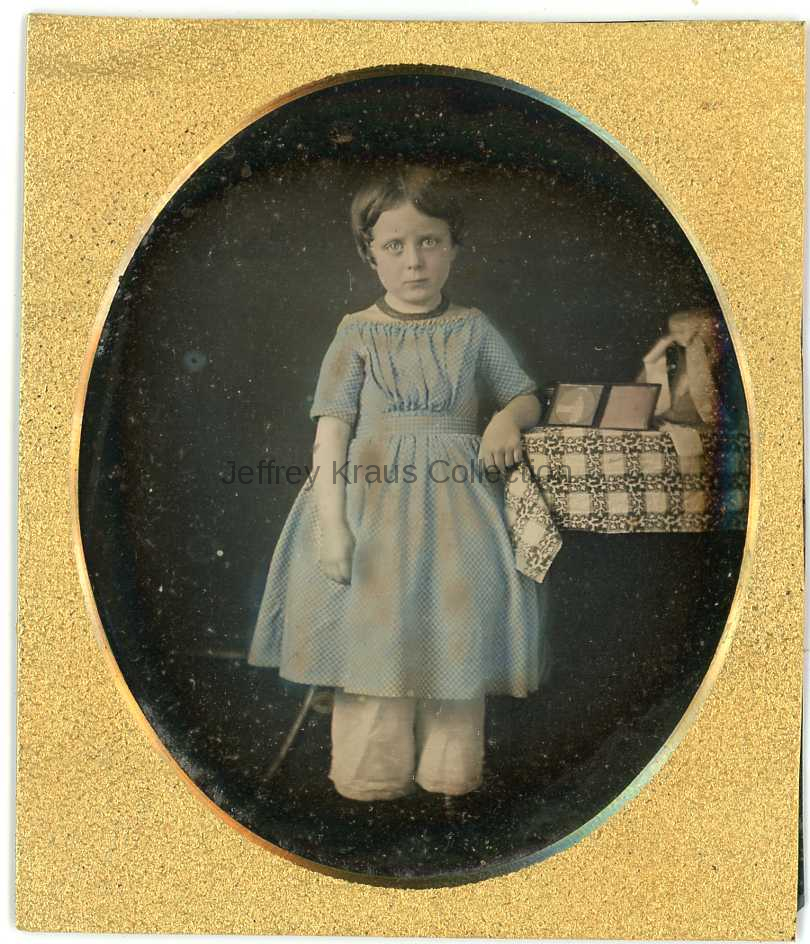
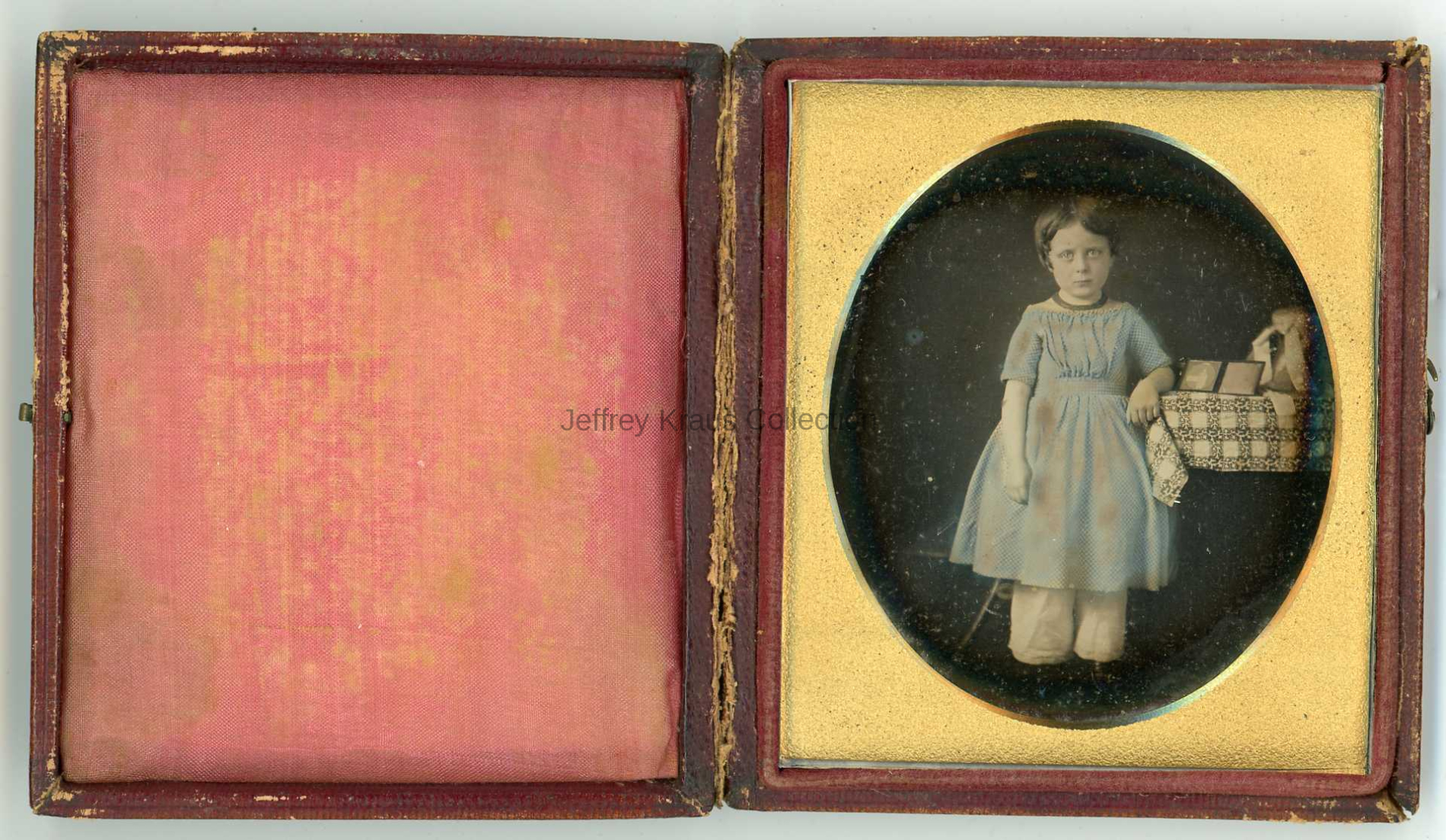
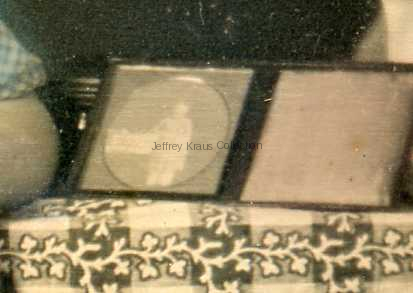
Sixth-plate tinted daguerreotype by Meade Brothers, Albany, NY of a young girl with arm on the table by her side. On the table is an open daguerreotype of a girl, possibly the same girl, in the same pose by the same table.
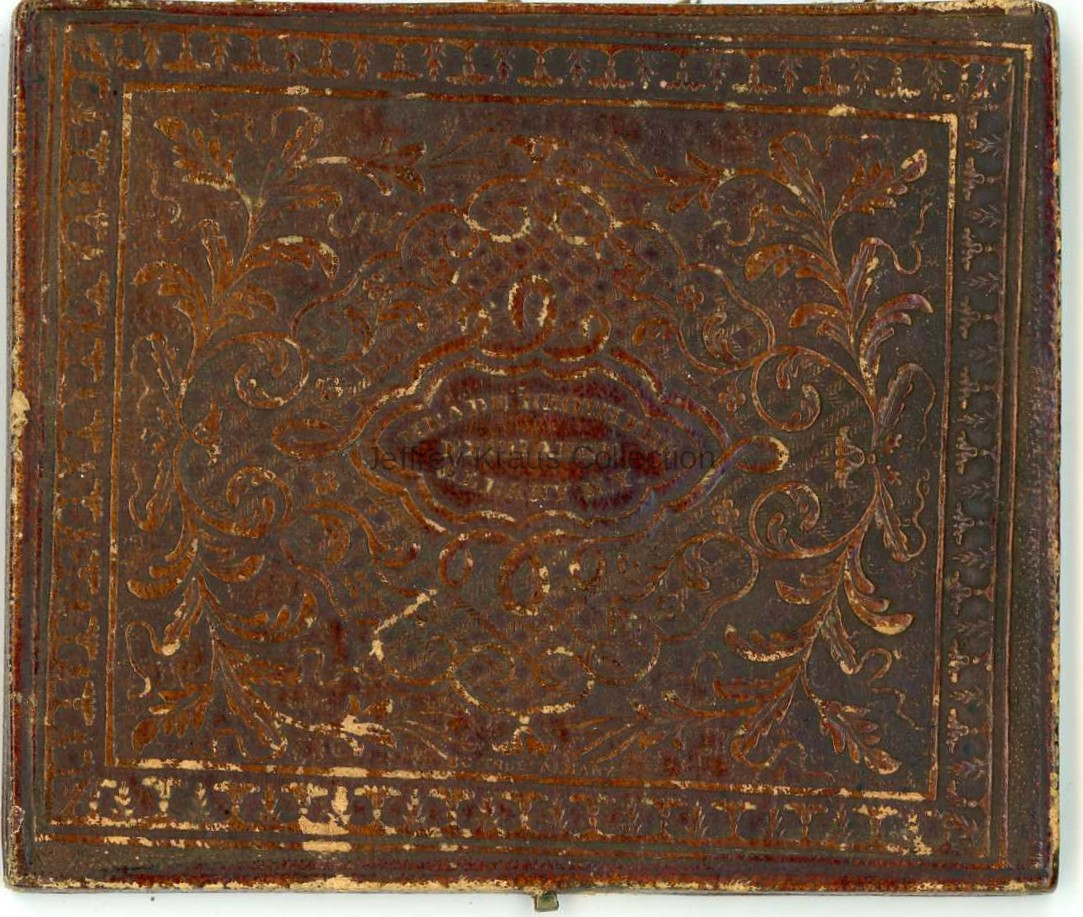
Sixth-plate tinted daguerreotype by Meade Brothers, Albany, NY of a young girl. This is the image below showing the Meade Brothers imprint on the case and an enlargement of the image on the table.
Sixth-plate daguerreotype by E.D. Palmer. The maker of this image was identified by an image with the same backdrop in the 2013 Daguerreian Annual in an article by Mark Koenigsberg on page 62. Palmer’s card is displayed in the image at the base of the table. This image is too dark to show the card. E.D. Palmer operated a gallery at the Old Museum in Utica, NY from Aug. 1842 through Jan. 1843 which dates this image to that period. It is possible that E.D. Palmer is Erastus Dow Palmer, the man who went on to become a renowned sculptor.
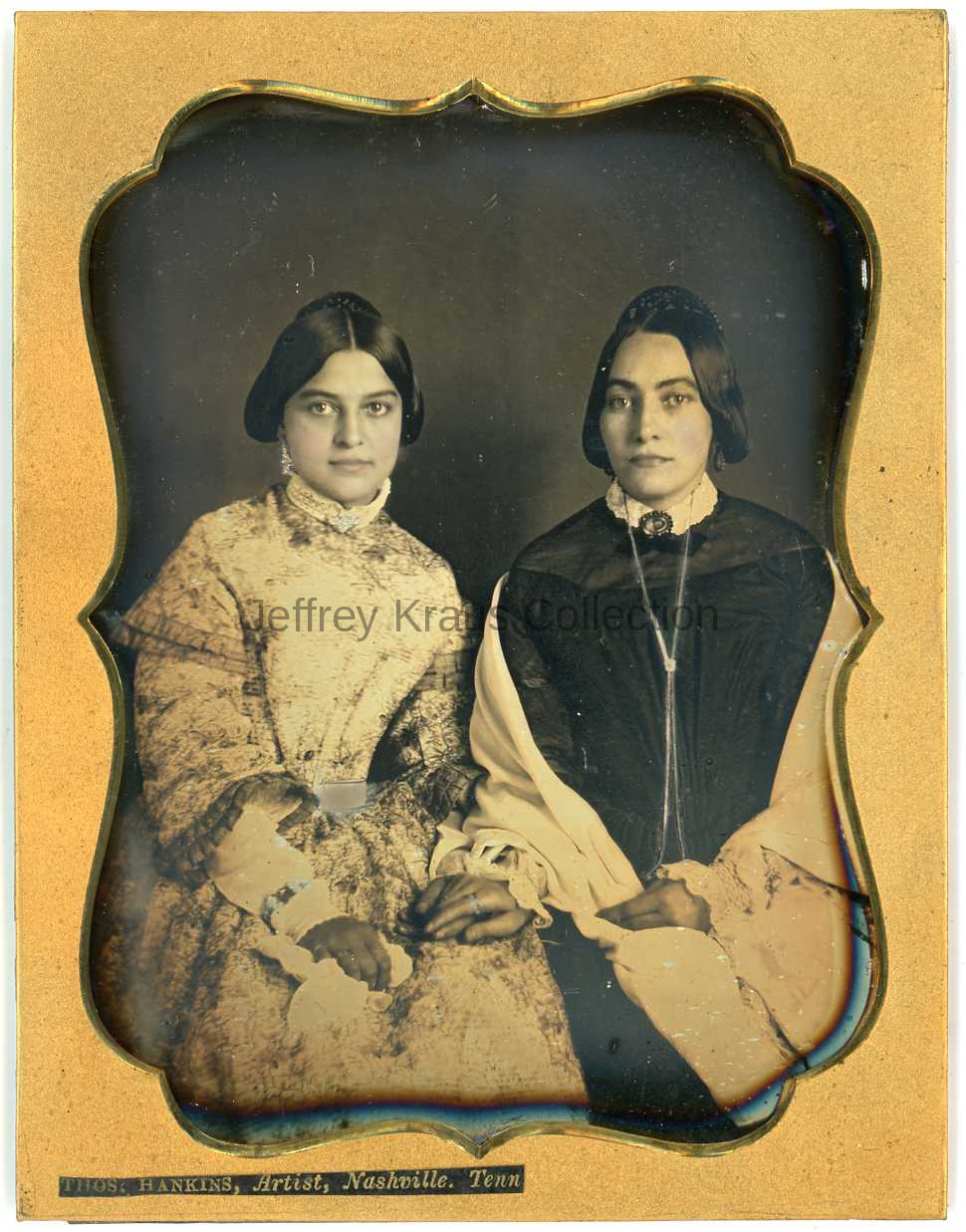
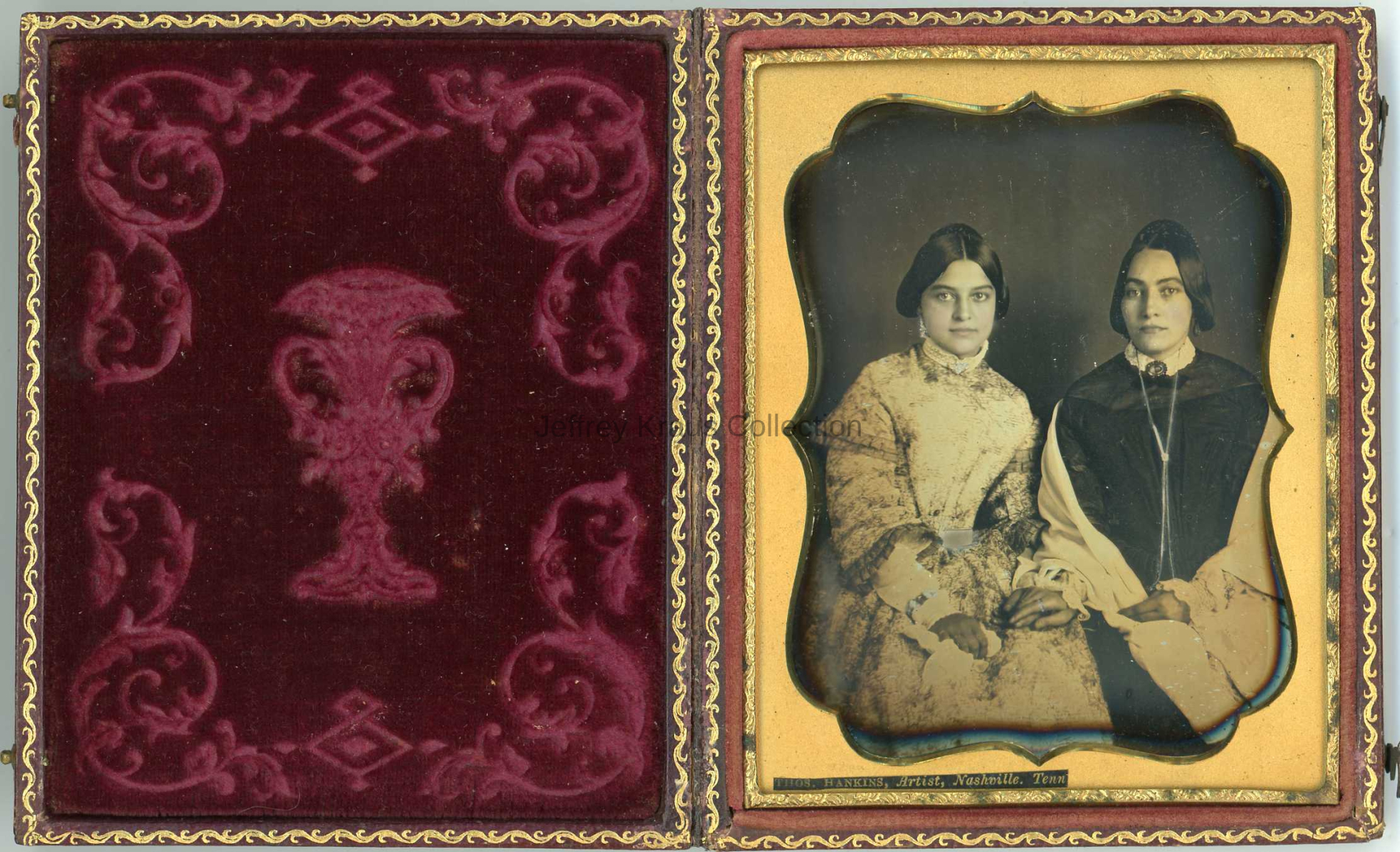
Quarter-plate daguerreotype by Thos. Hankins, Artist, Nashville, Tenn. of two attractive, affectionate women. The woman on the right wears a brooch with an image of a girl, probably a daguerreotype.
Sixth-plate daguerreotype of gentleman before fine country backdrop. [D]
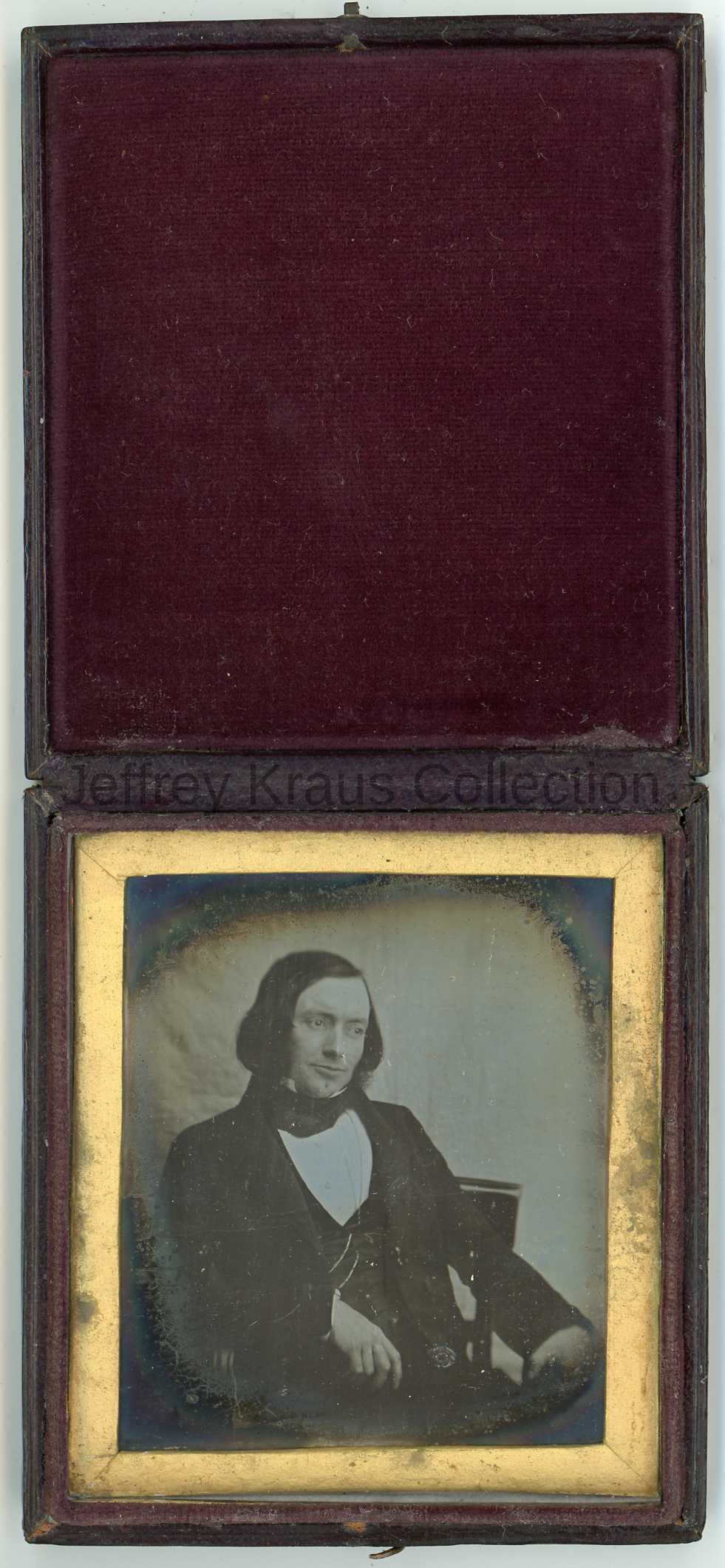
Sixth-plate, early, circa 1842 daguerreotype of young pensive man with long hair.
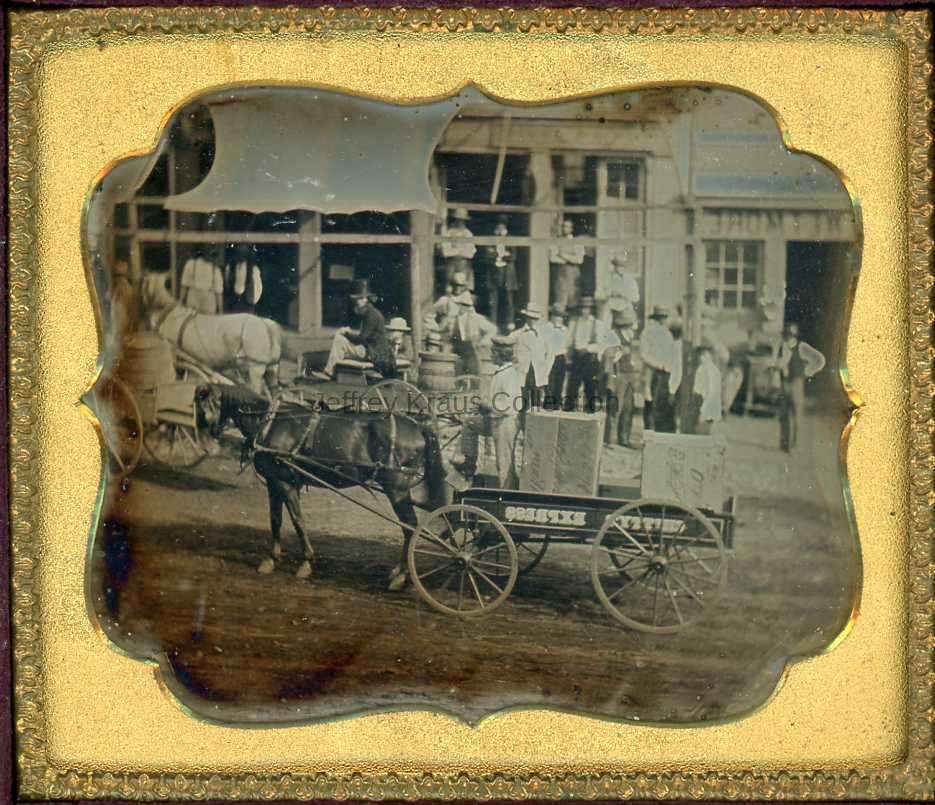
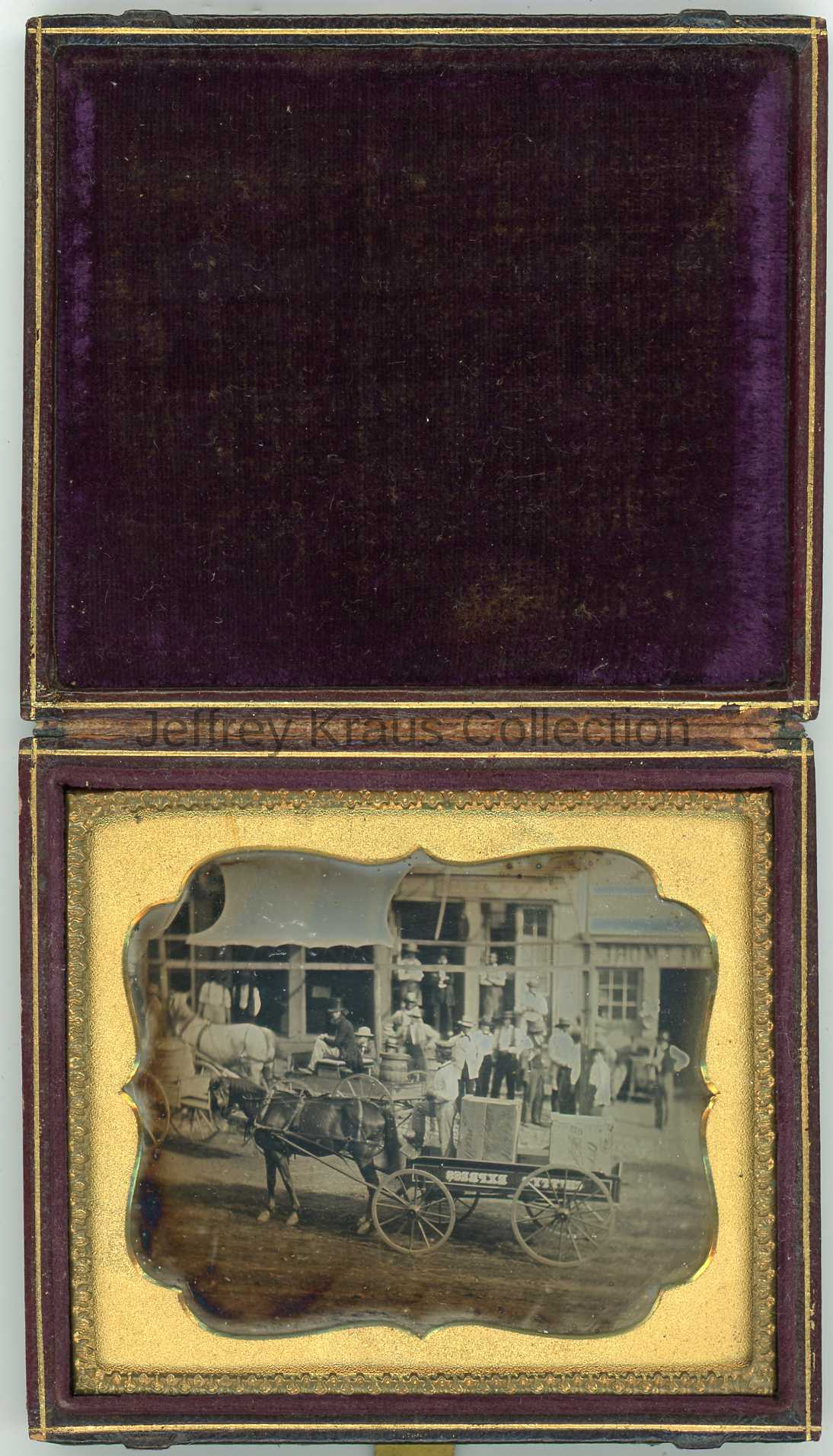
Sixth-plate daguerreotype of busy street scene. Chitty’s Express wagon in foreground with deliveries on board.
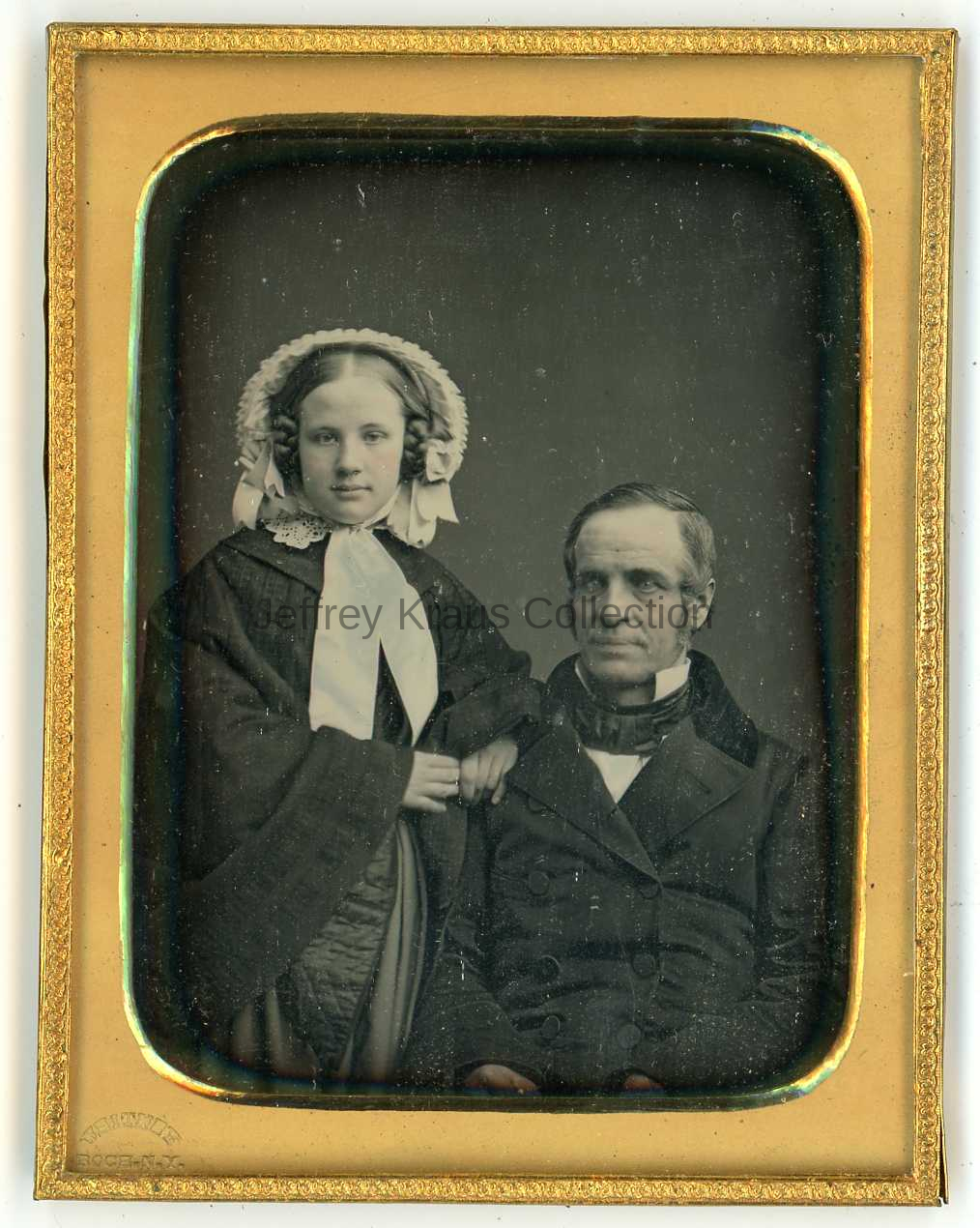
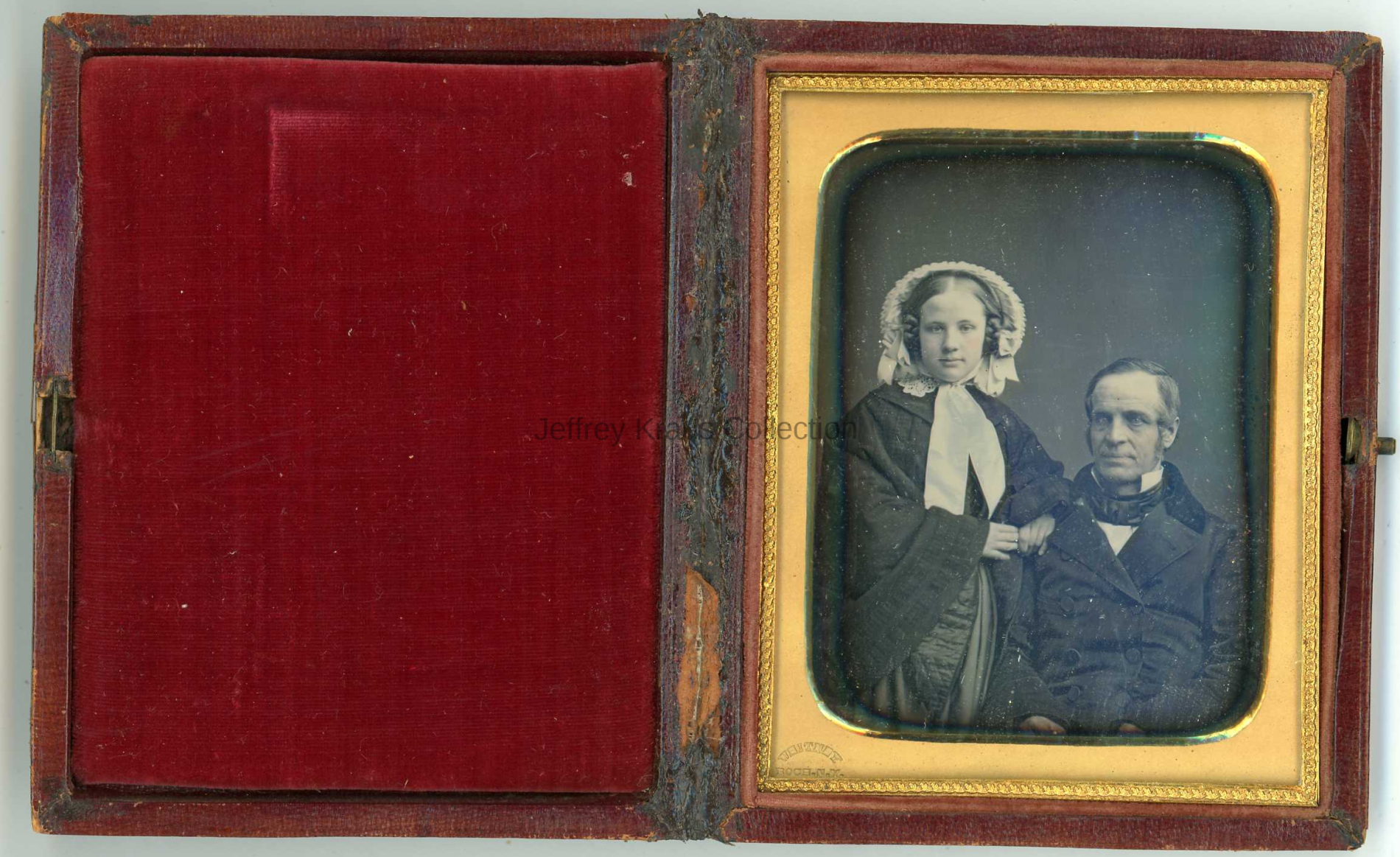
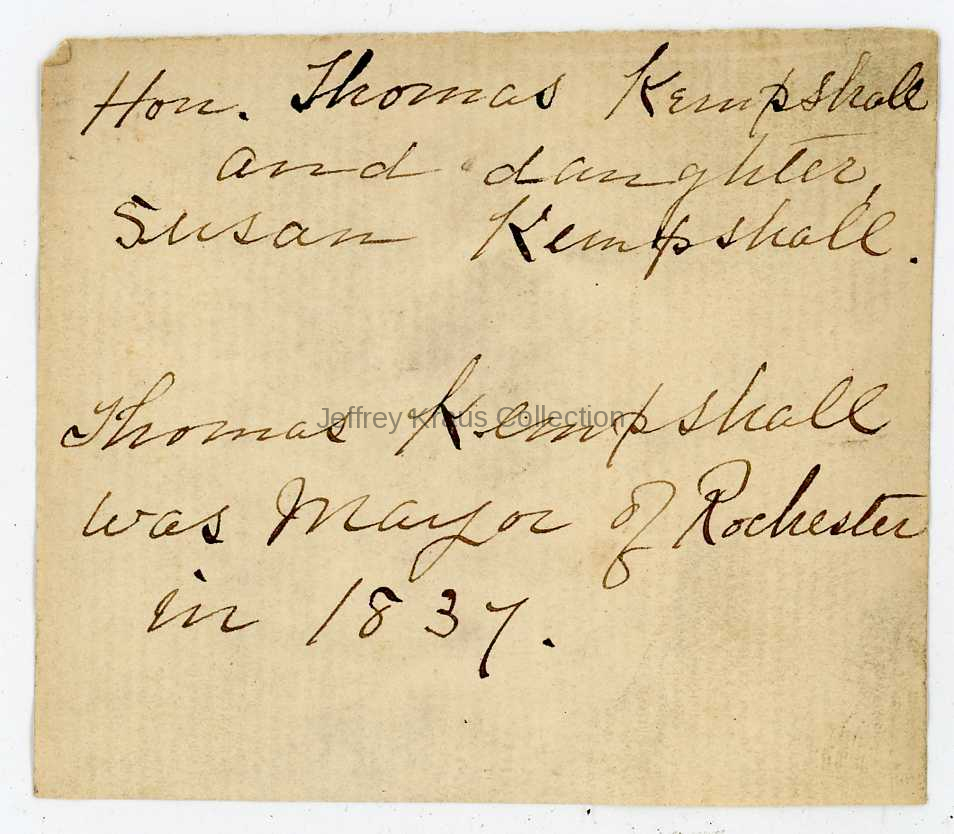
Honorable Thomas Kempshall and daughter Susan Kempshall by Edward T. Whitney, Rochester, NY. Thomas Kempshall was Mayor of Rochester, NY in 1837.
Outside of case and note with above image.
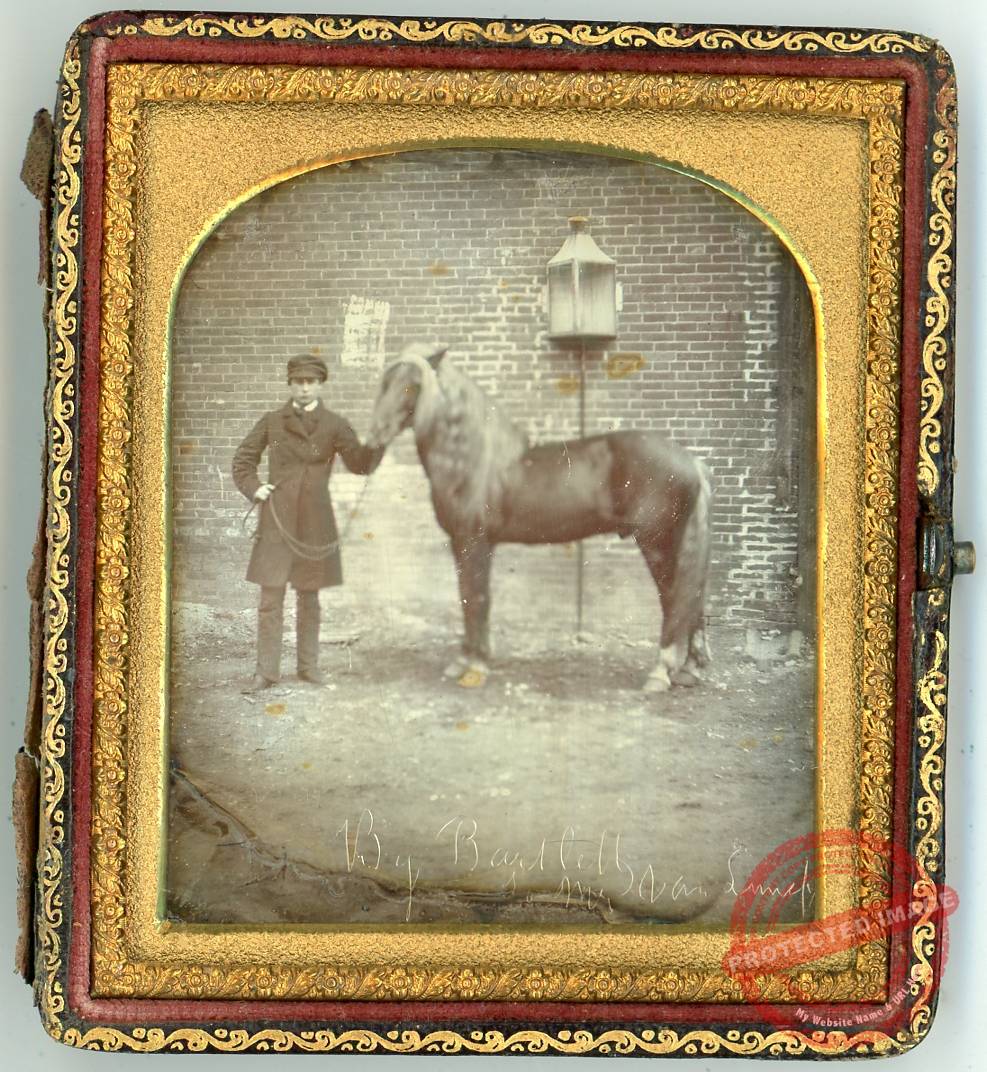
Scratched at the bottom of the plate: By Bartlett, Mr. Van Lennep.
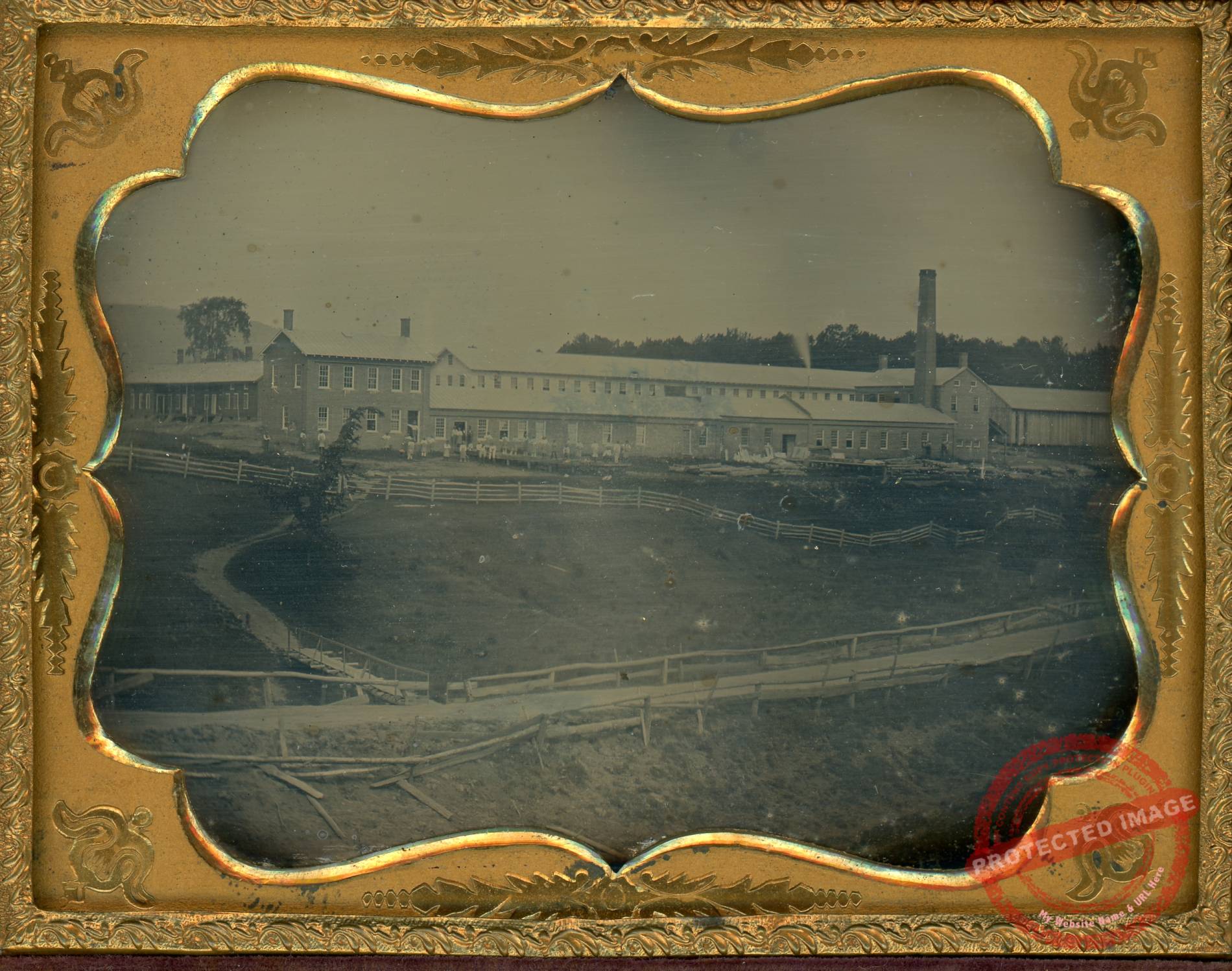
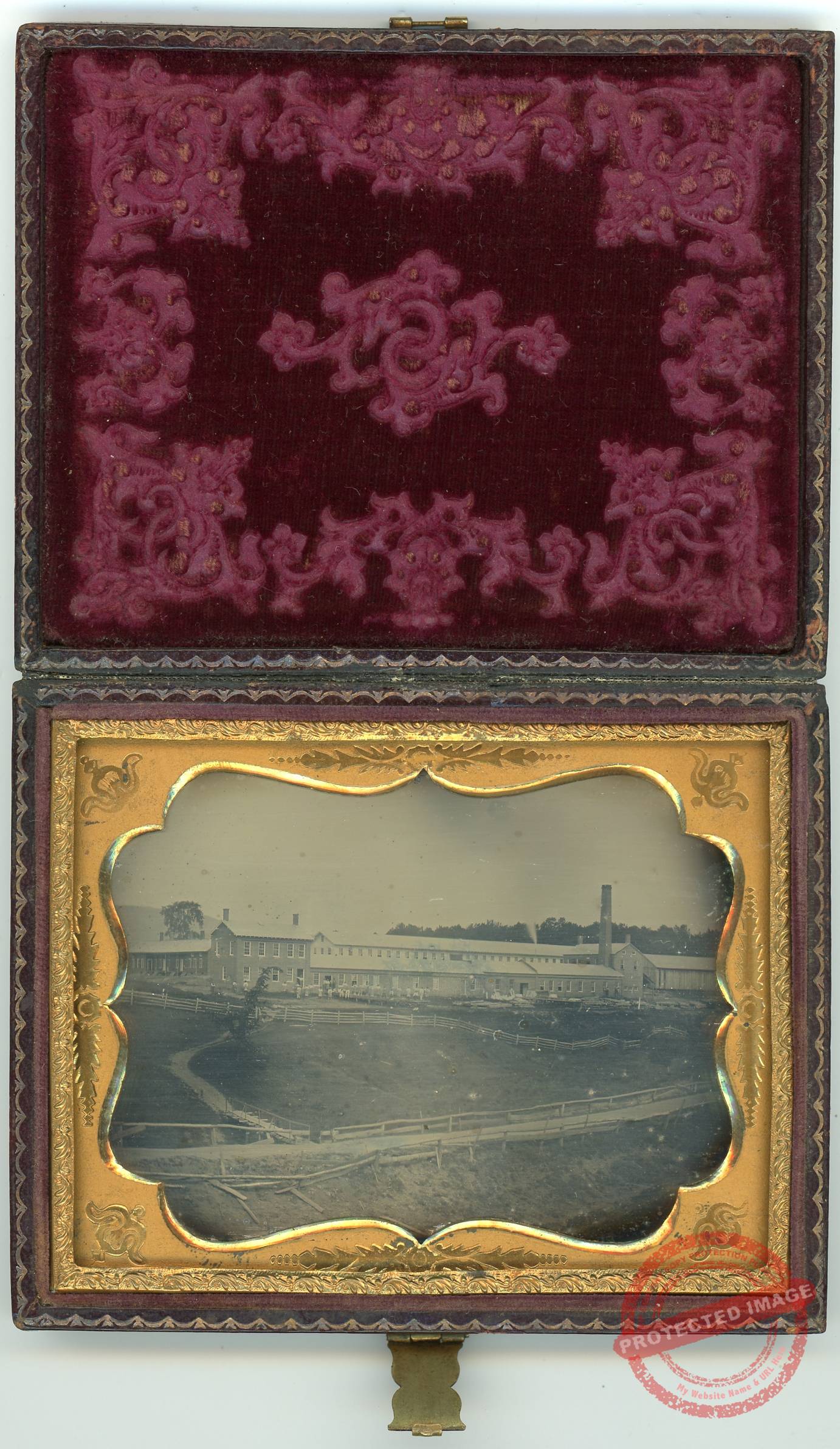
Factory scene with many workers posed outside.
Quarter-plate of gentleman with plaster mat.
Sixth-plate daguerreotype of a lamp lighter.
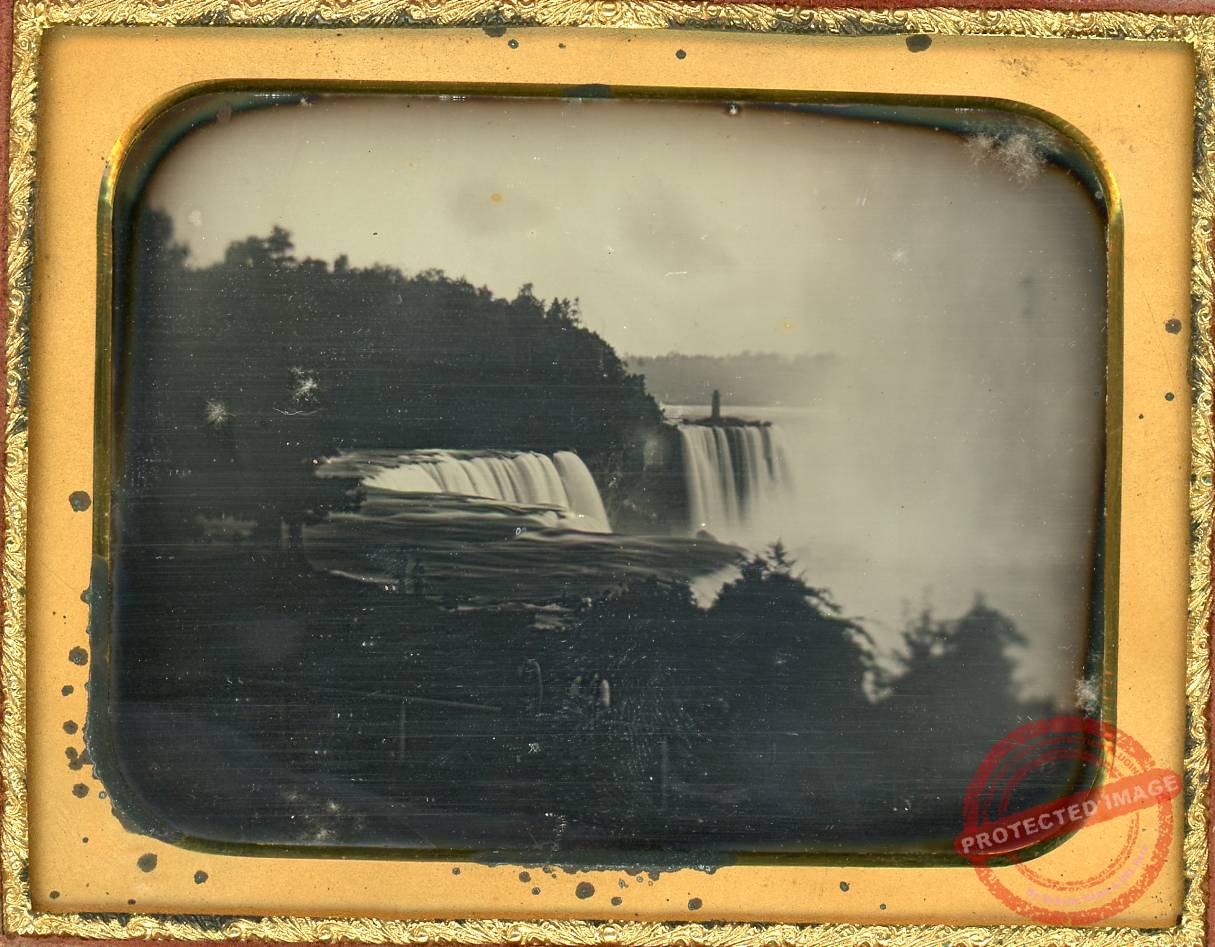
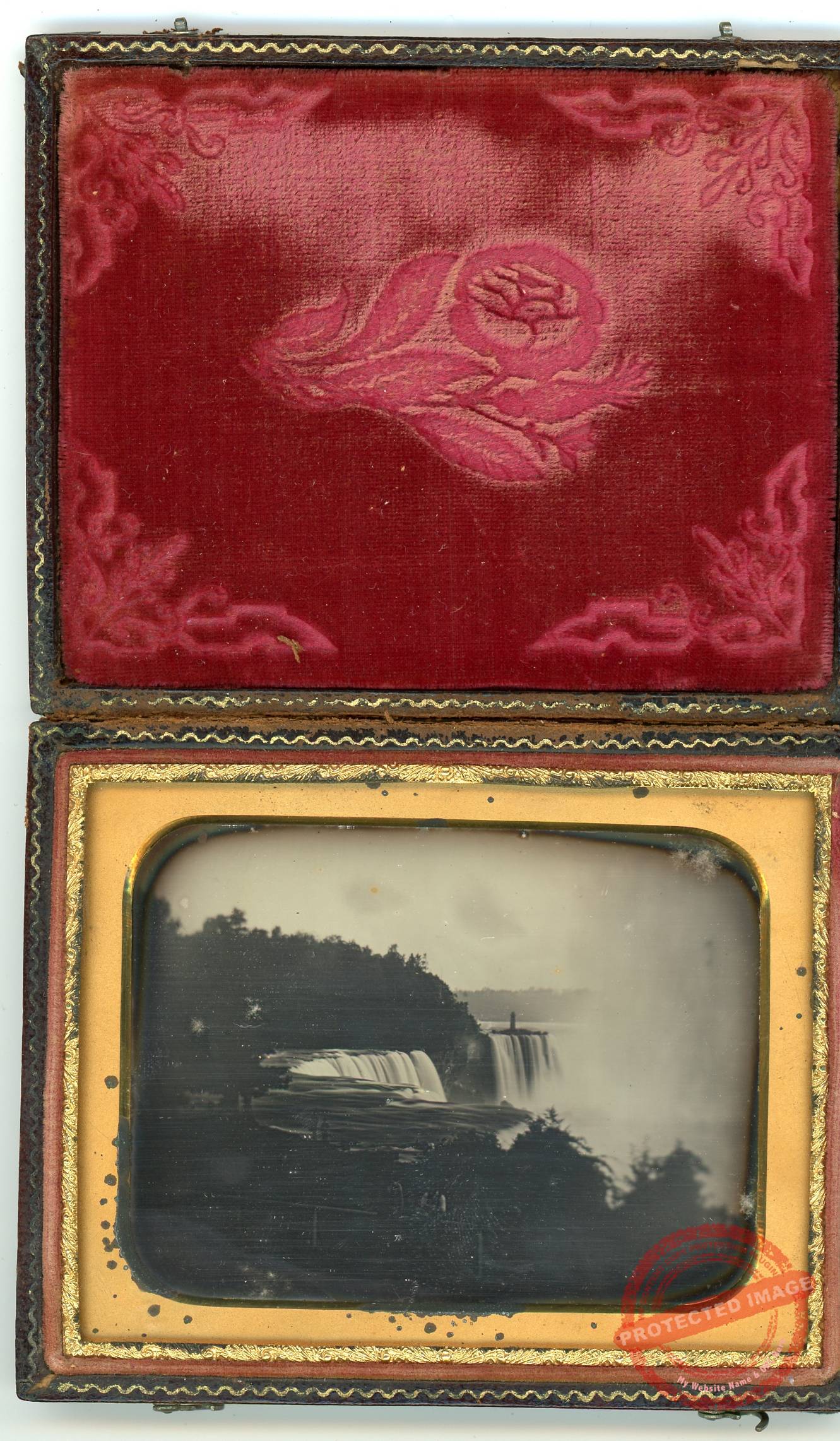
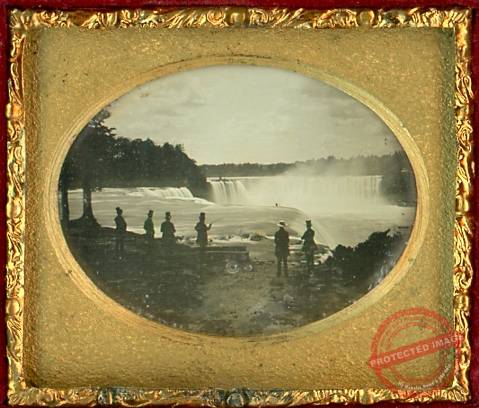
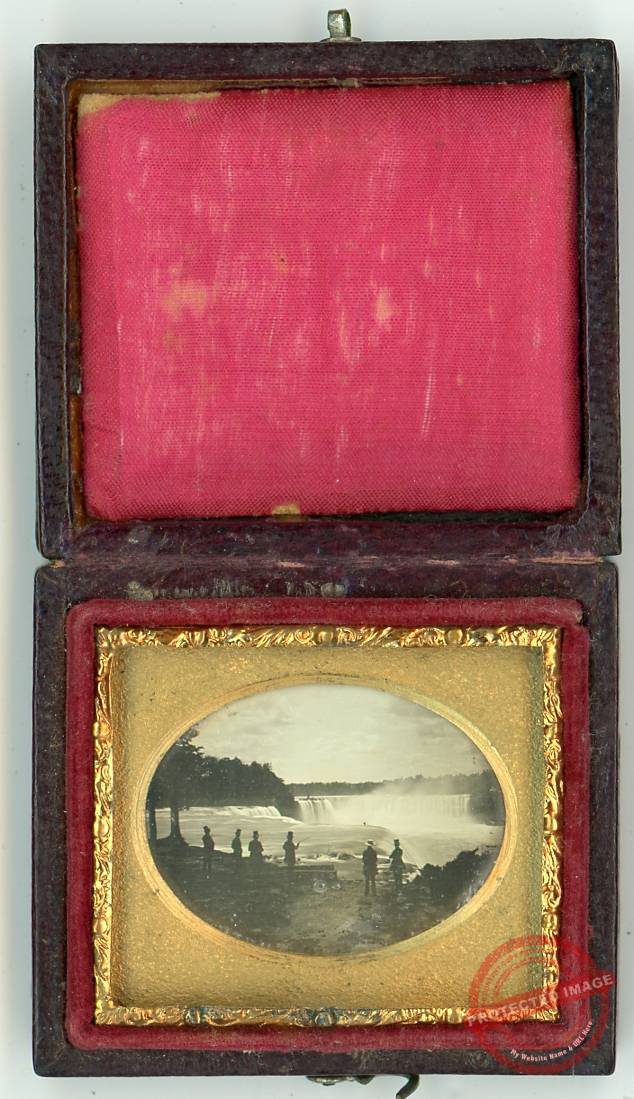
Quarter-plate daguerreotype of Niagara Falls.
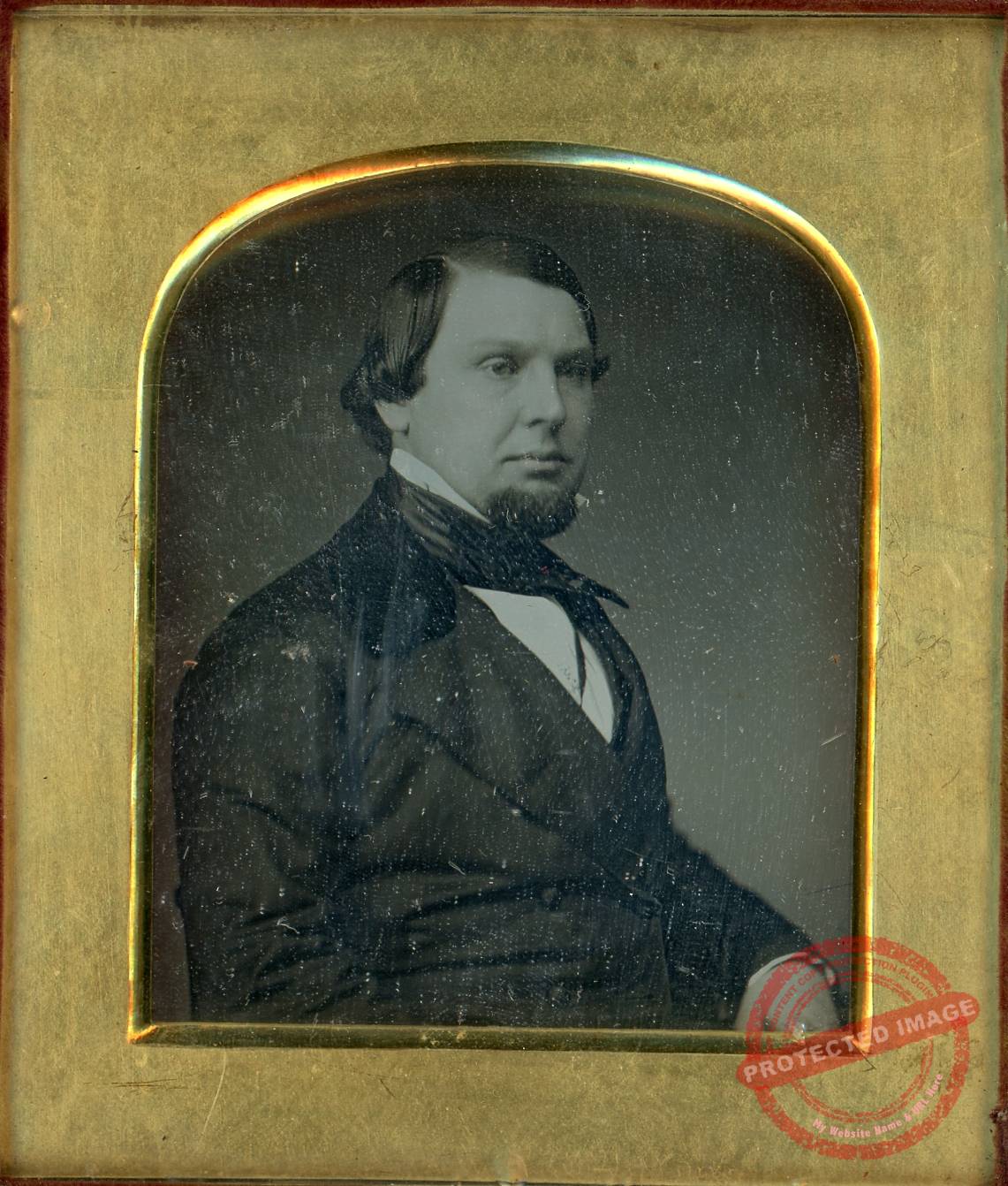
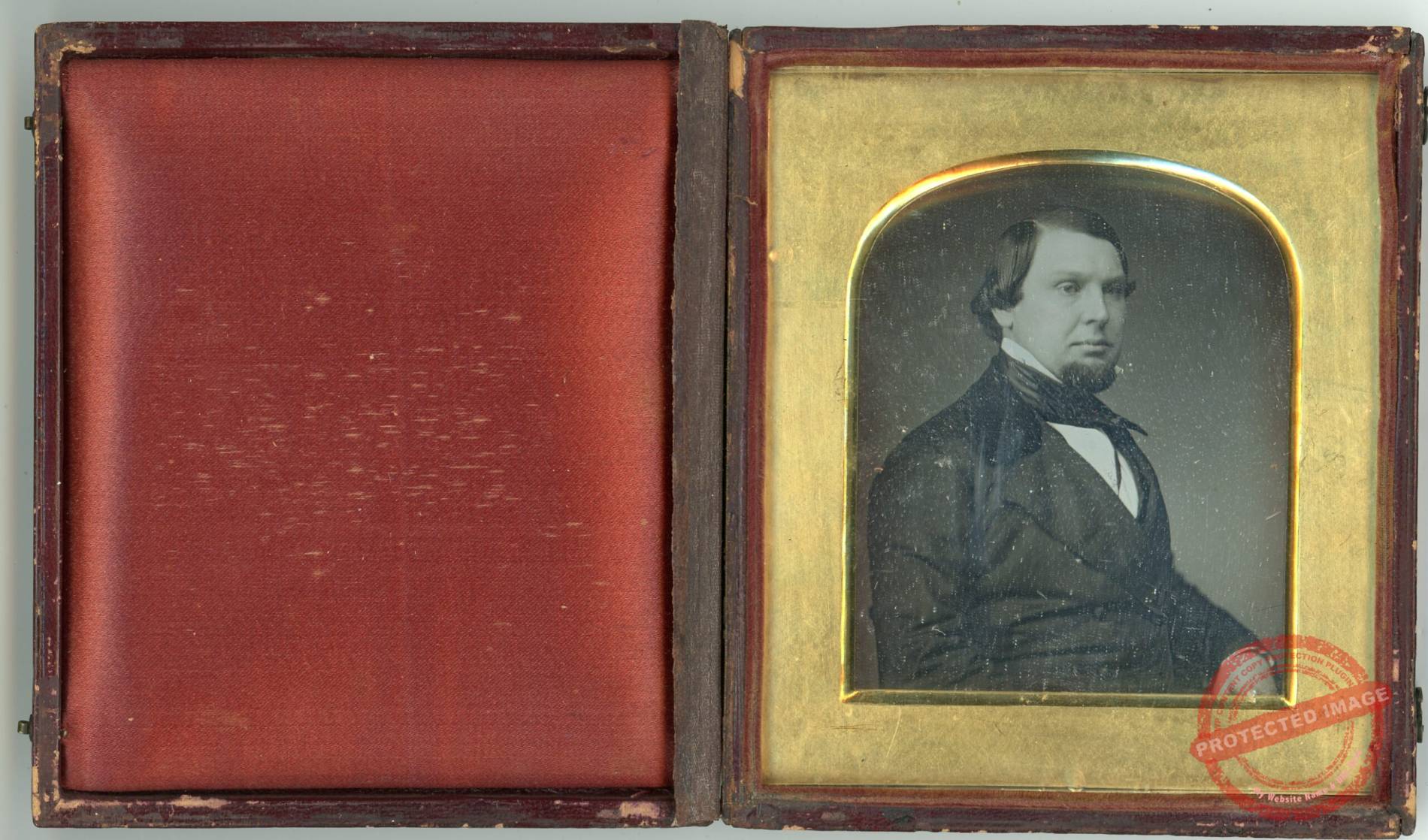
Daguerreotype, 4.75″ x 4,” of a gentleman. Plaster mat.
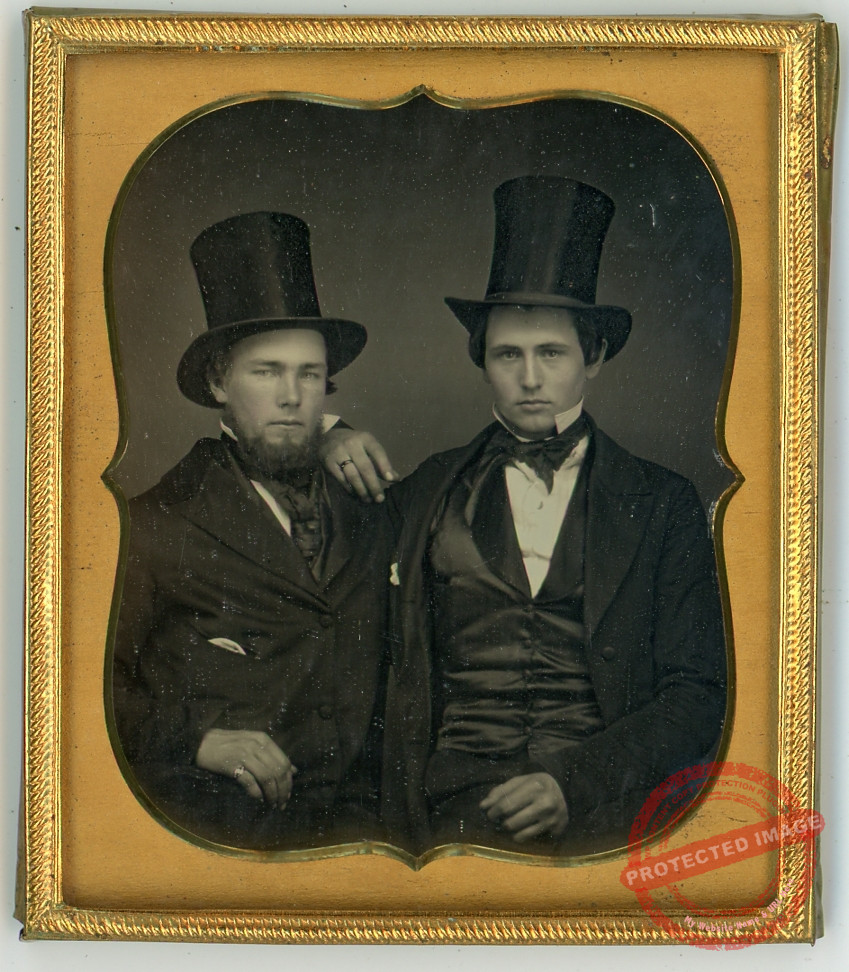
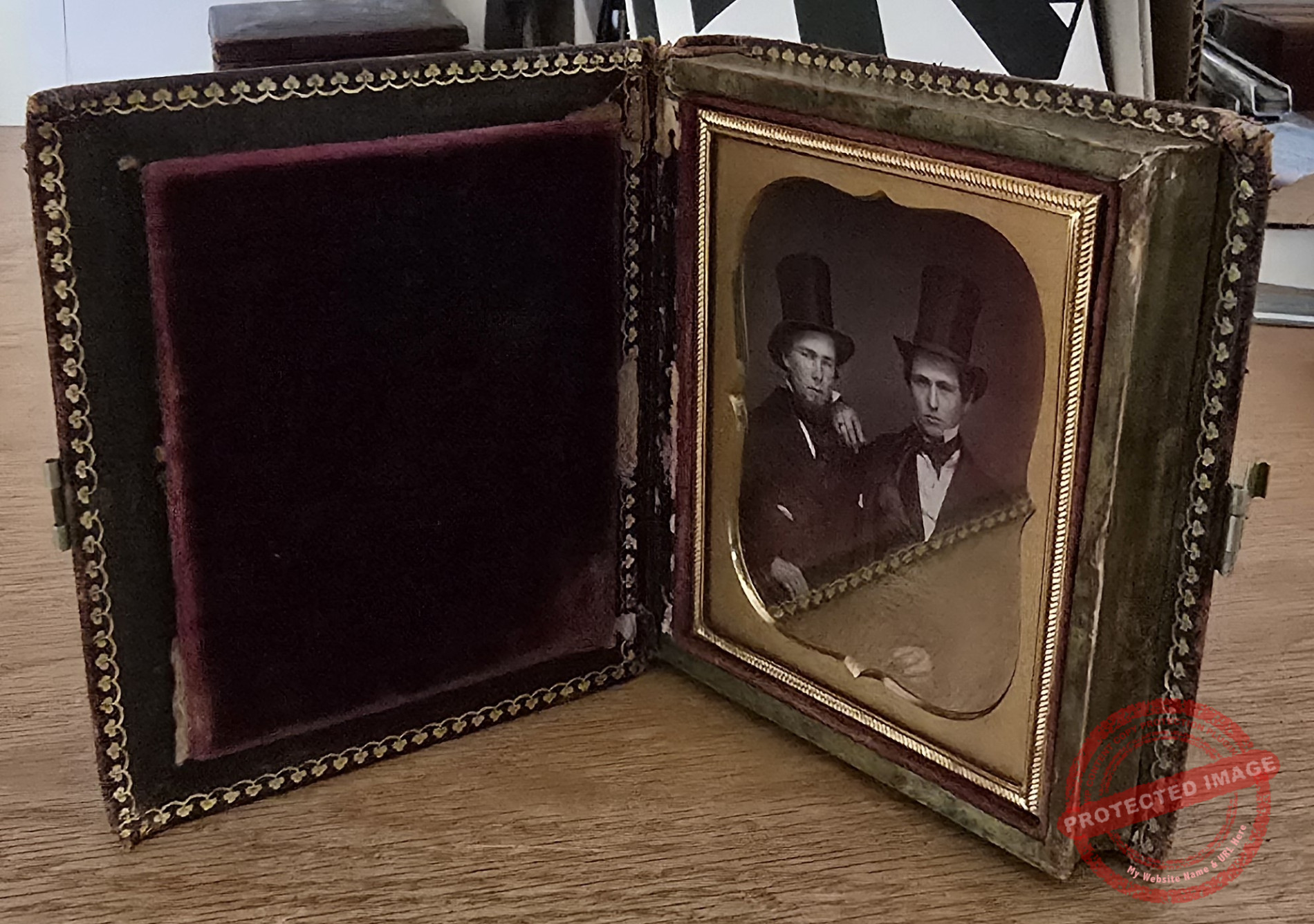
Sixth-plate daguerreotype of a pair of top-hatted gentlemen identified as Alpheus Adams and Henry Gillett.
Quarter-plate daguerreotype of a gentleman with plaster mat. Slip of paper reads “Designed by Lemuel Burnham, Wrought by Elizabeth D. Burnham.”
Quarter-plate daguerreotype of a full-standing gentleman.
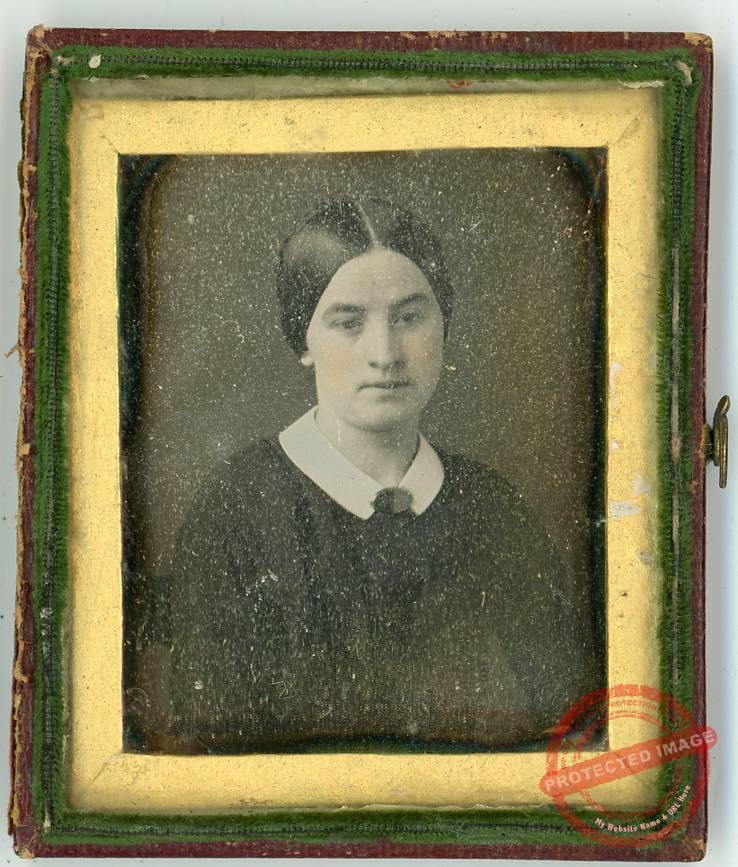
Ninth-plate daguerreotype of a woman.
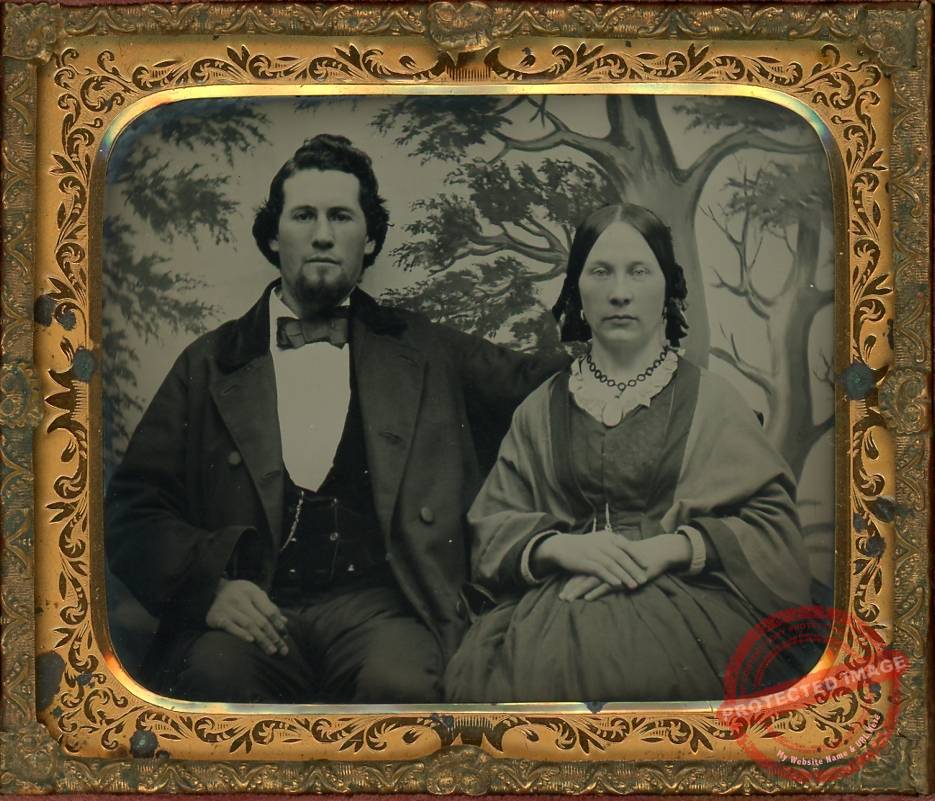
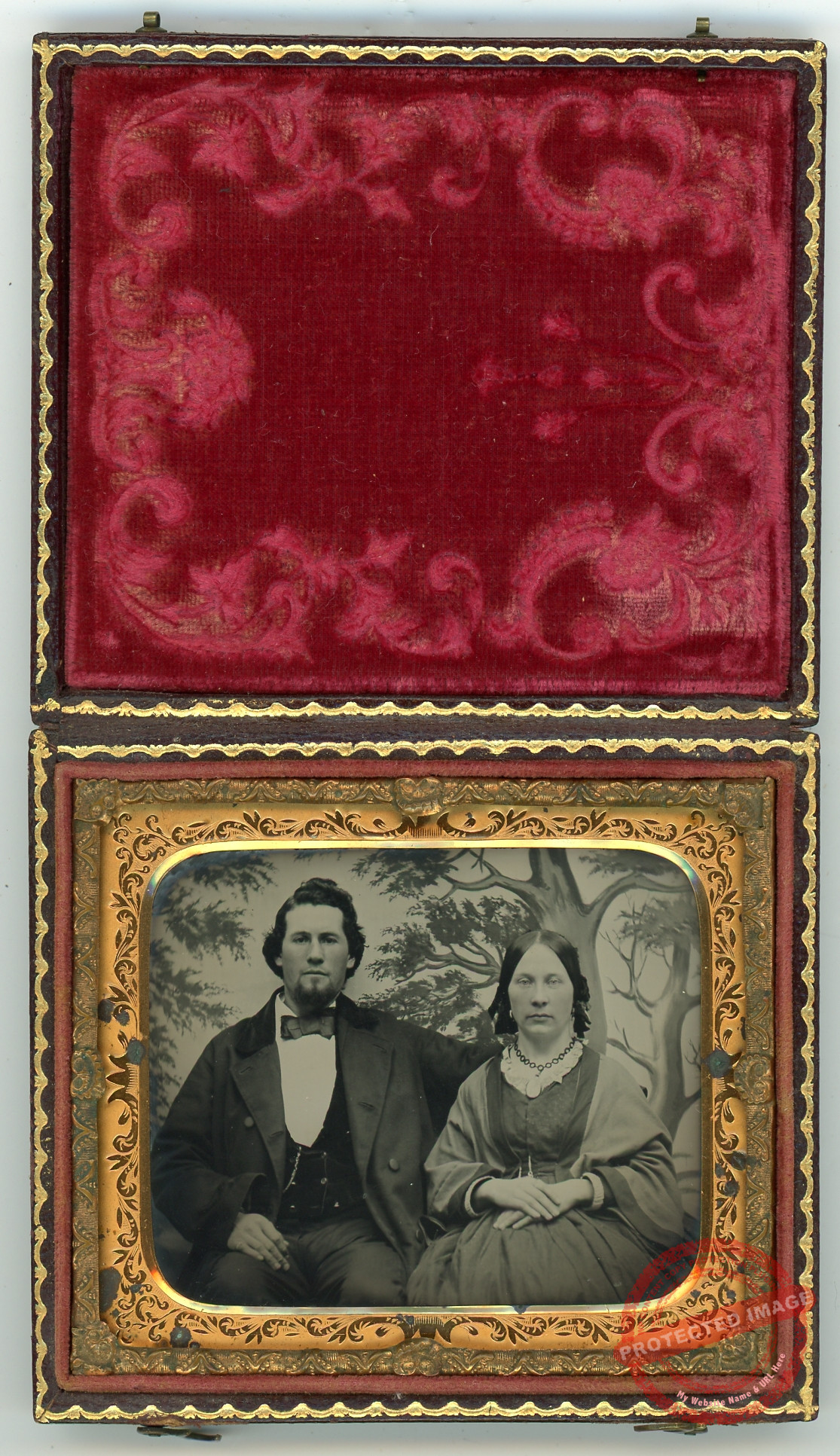
Sixth-plate ruby ambrotype of a couple before background of painted trees.
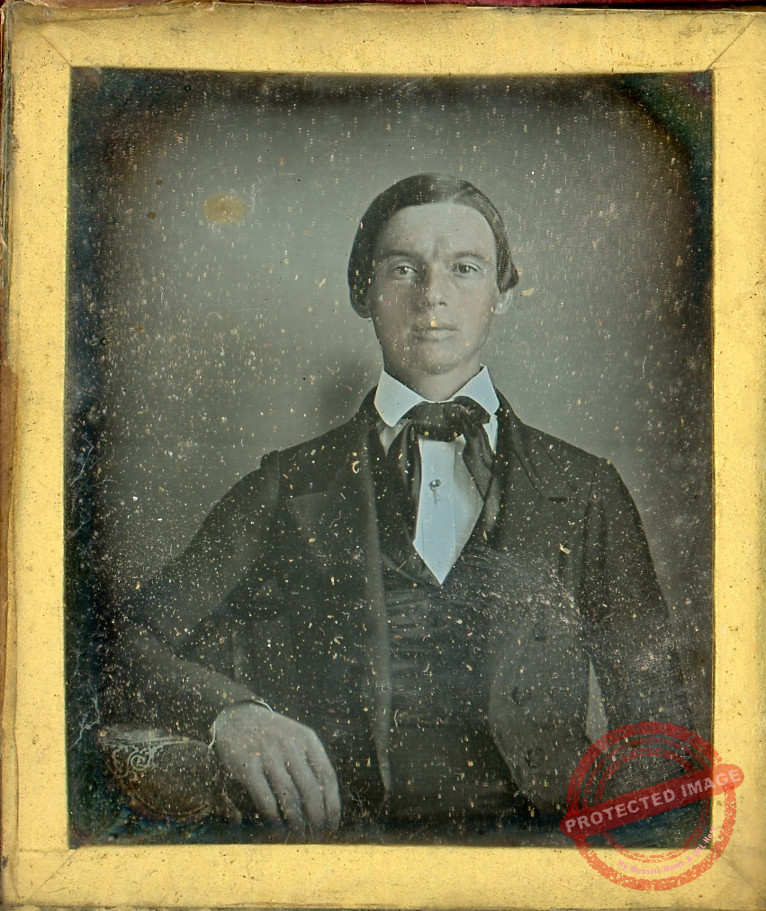
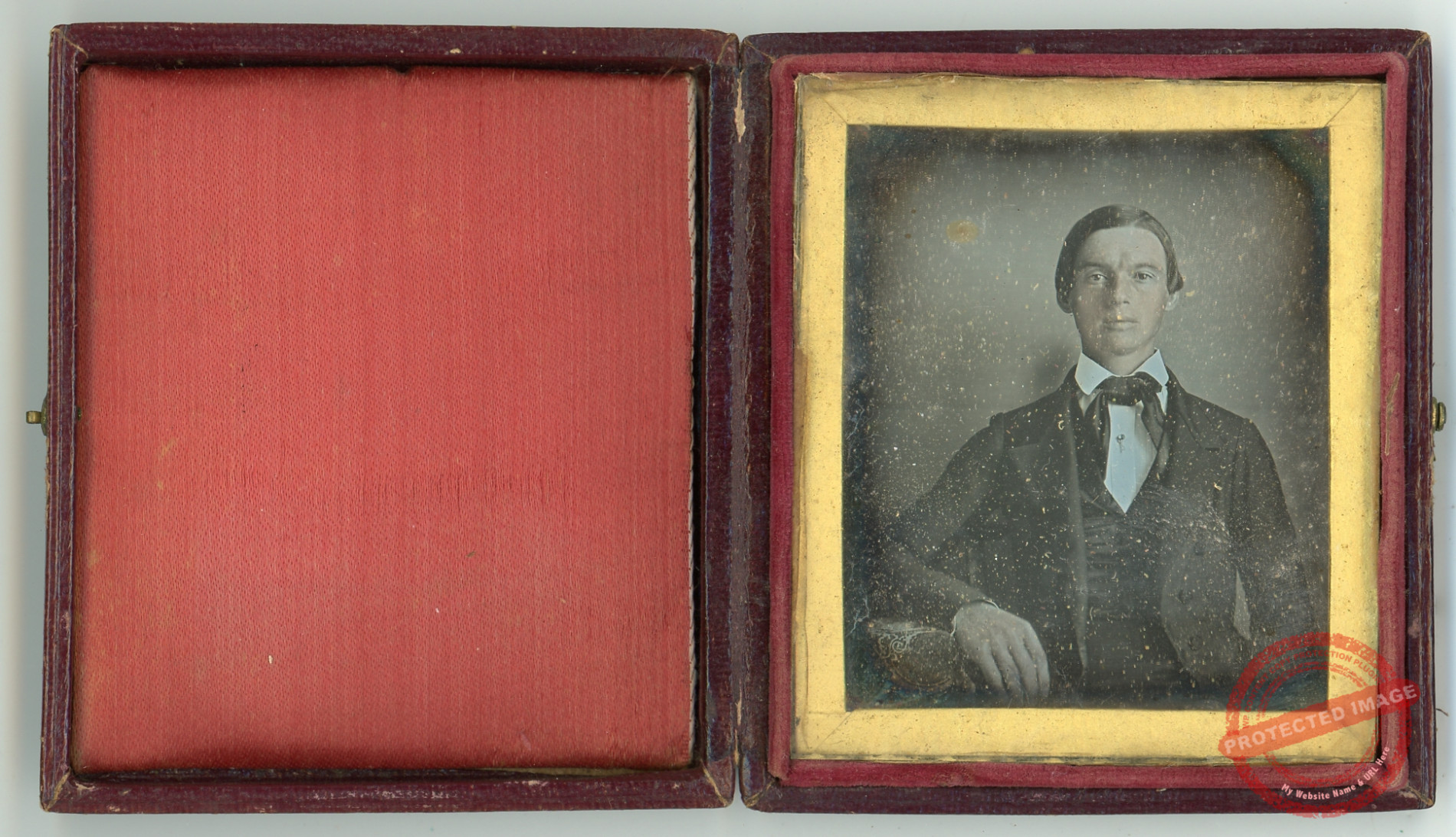
Sixth-plate early daguerreotype of a young man.
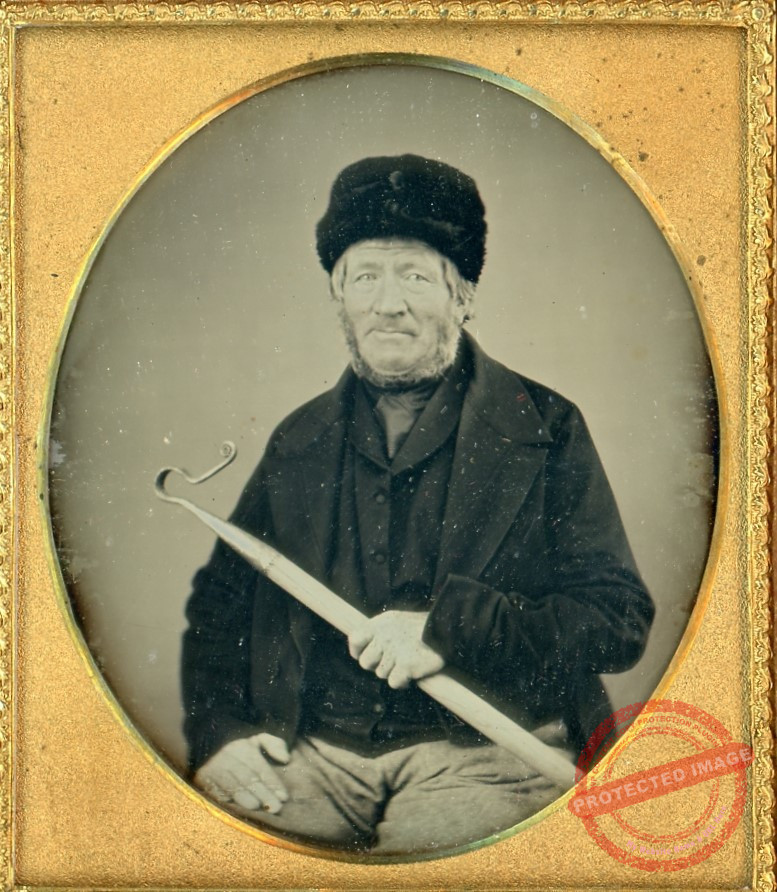
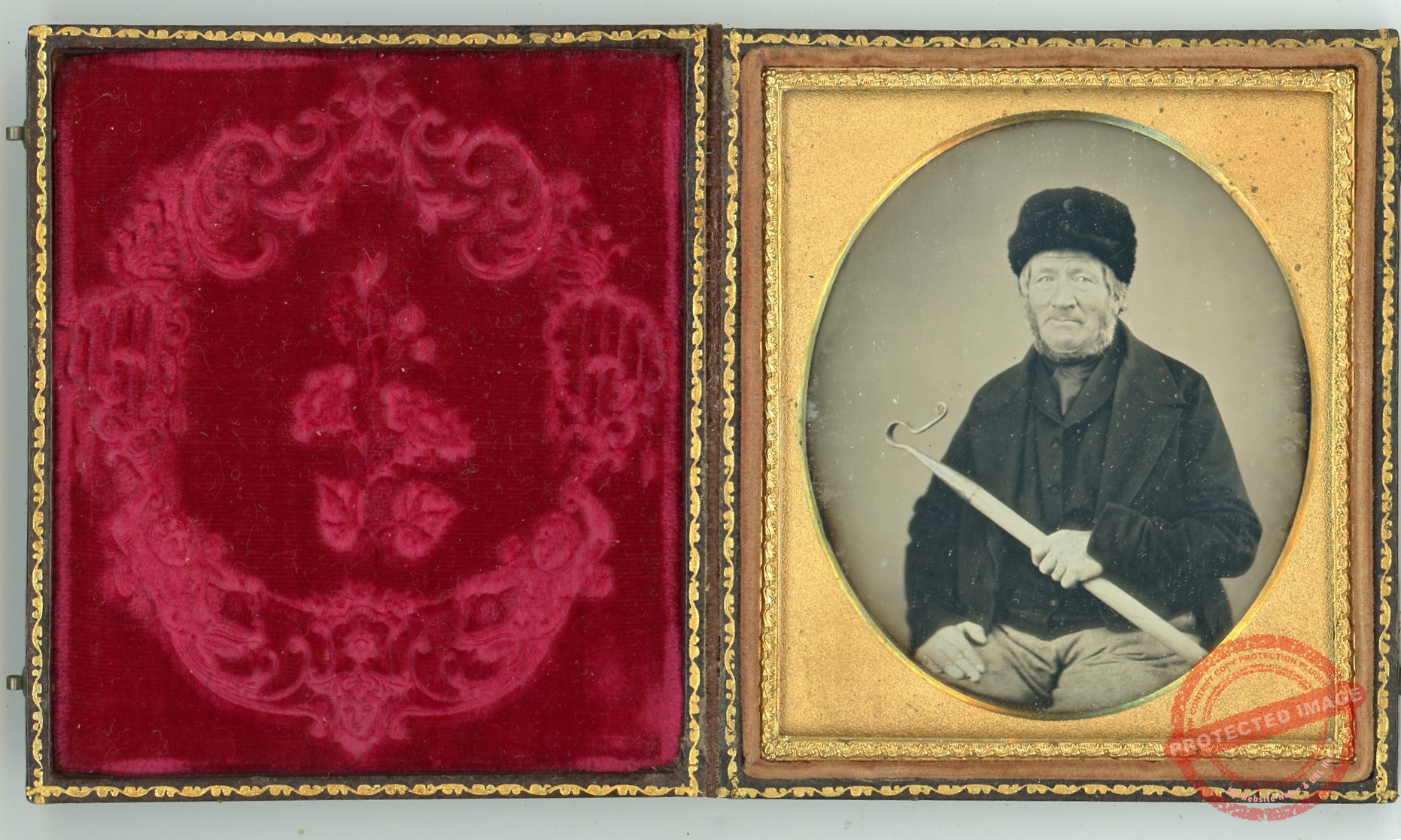
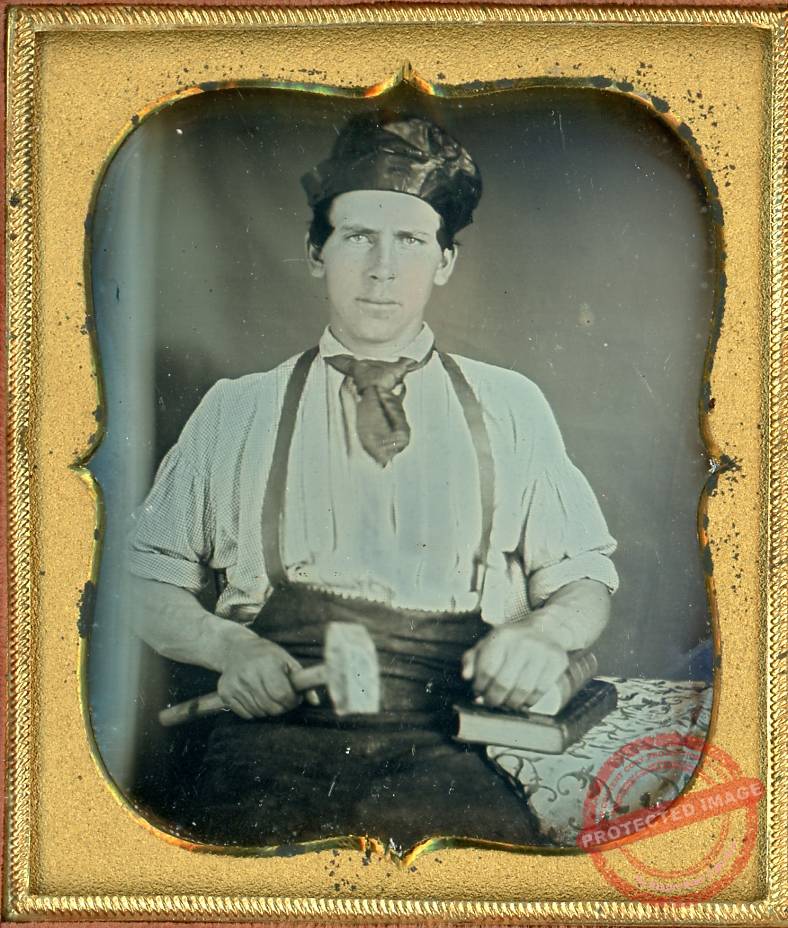
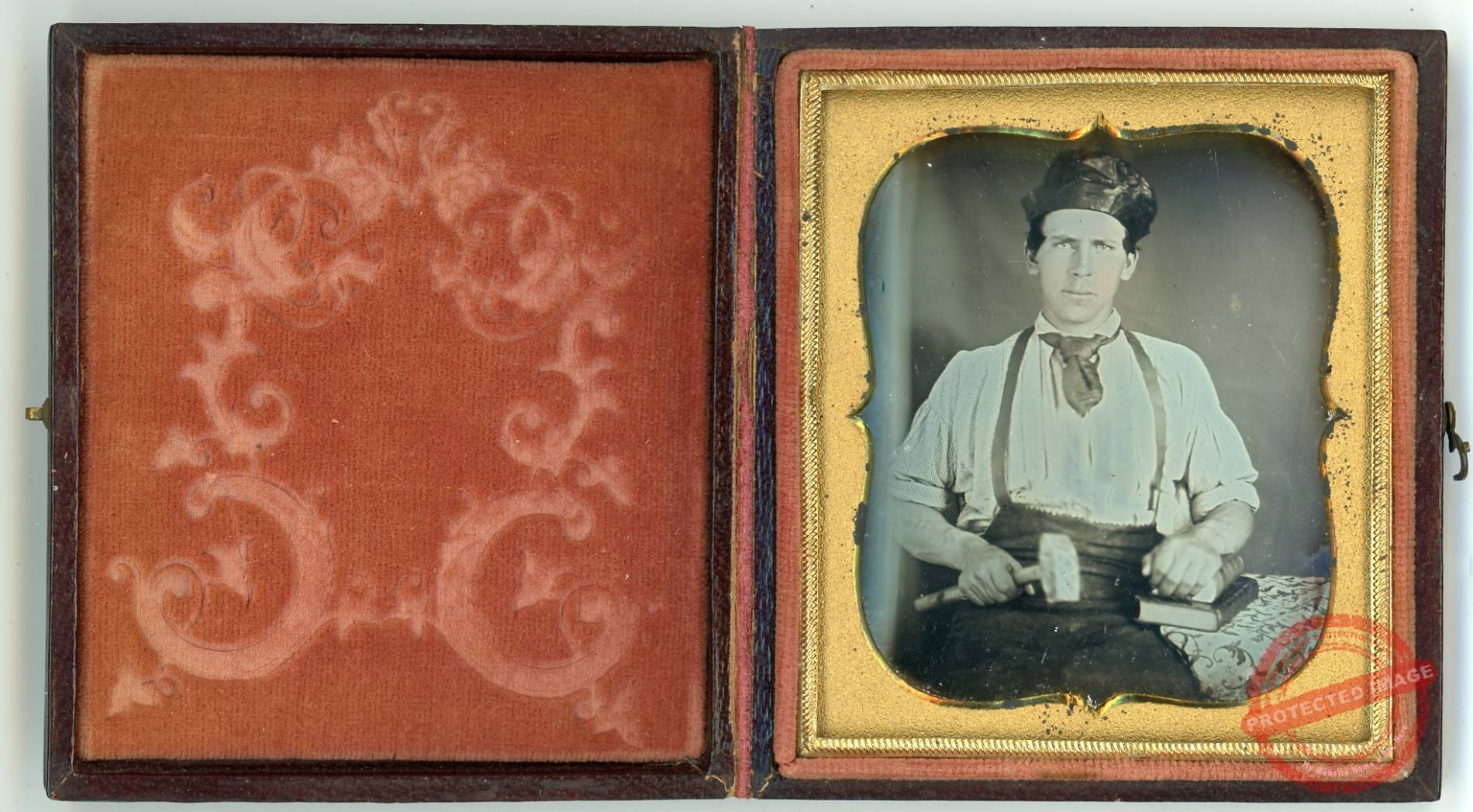
Sixth-plate daguerreotype of a workman with mallet.
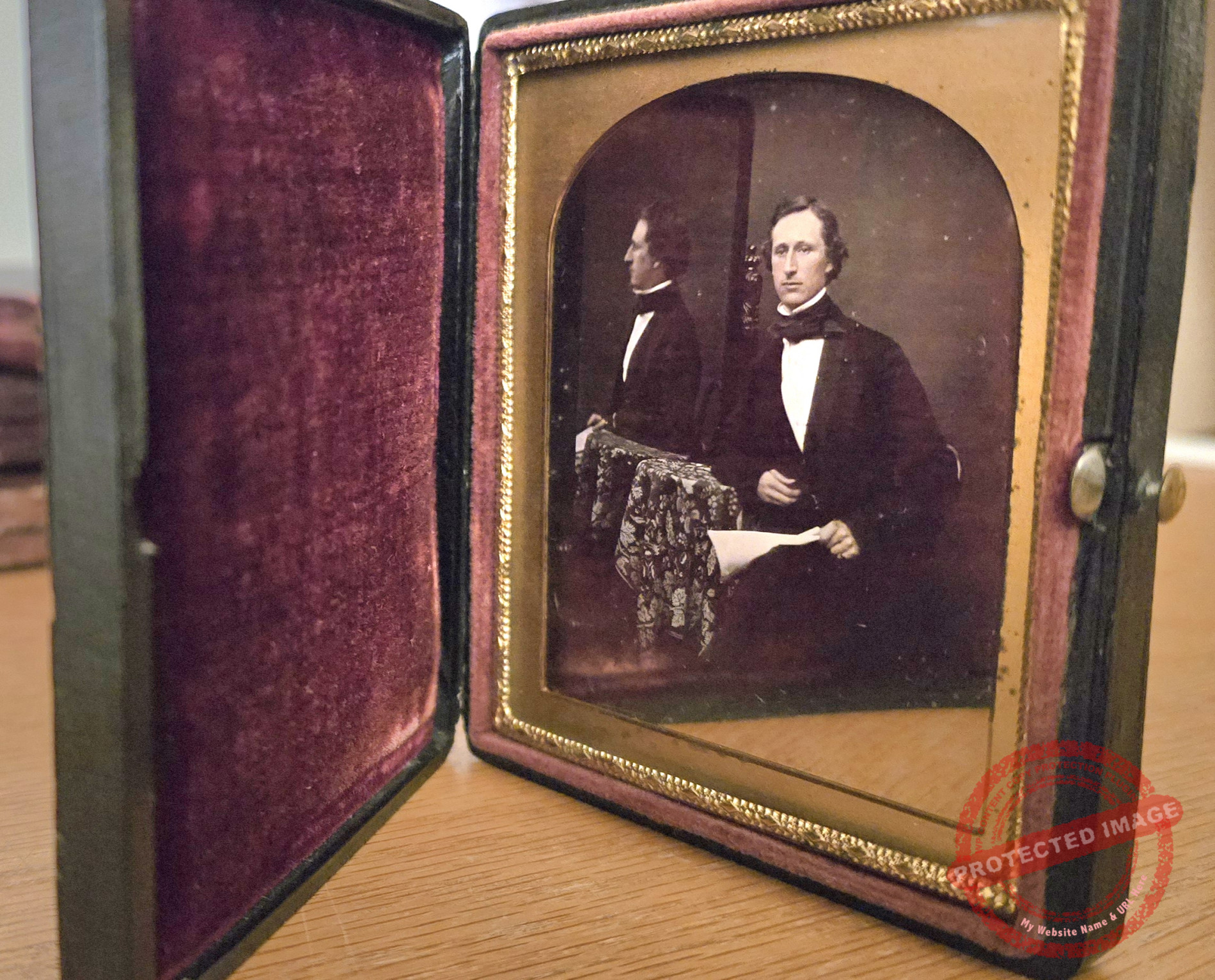
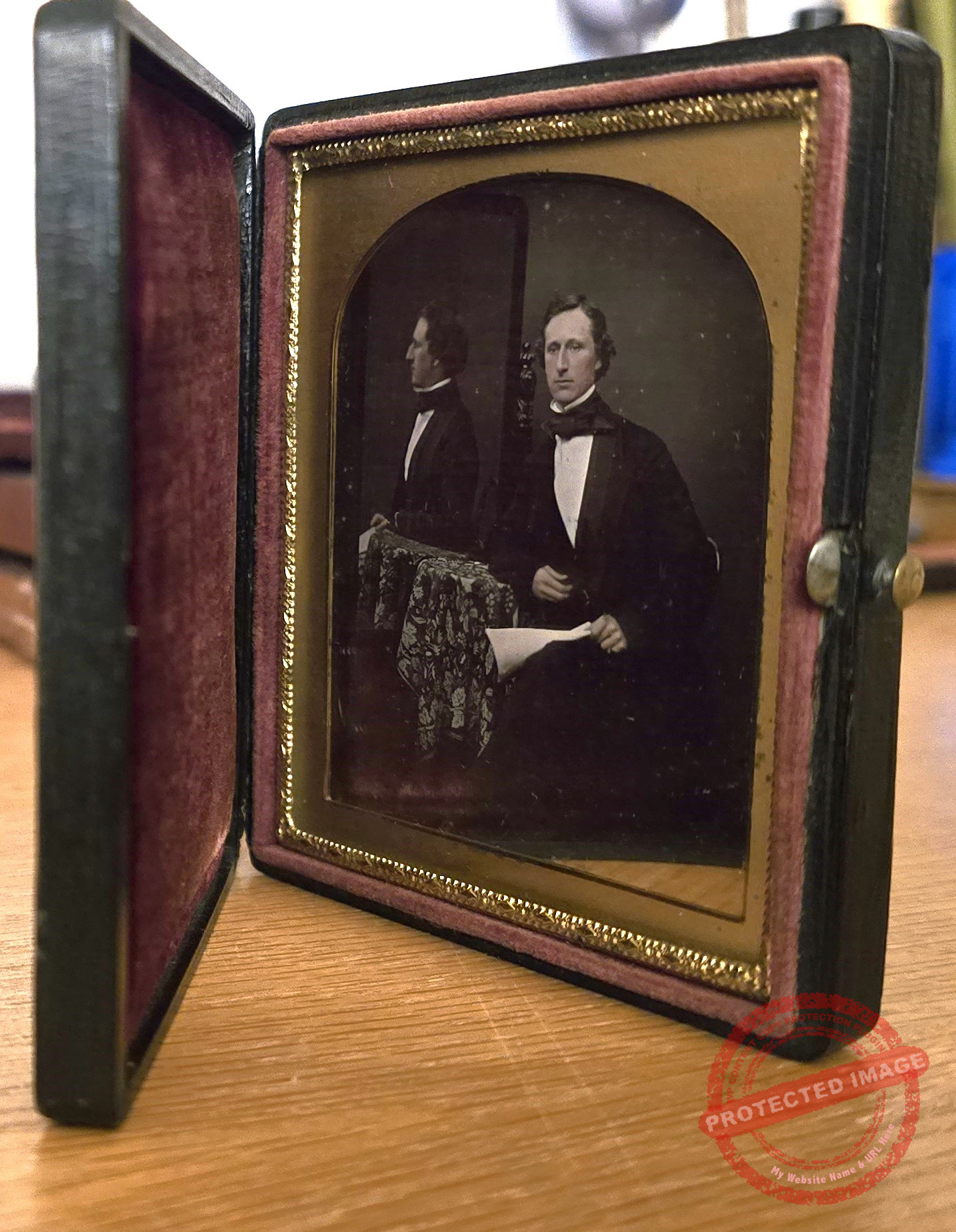
Sixth-plate daguerreotype of a seated man and his profile reflection in a mirror.
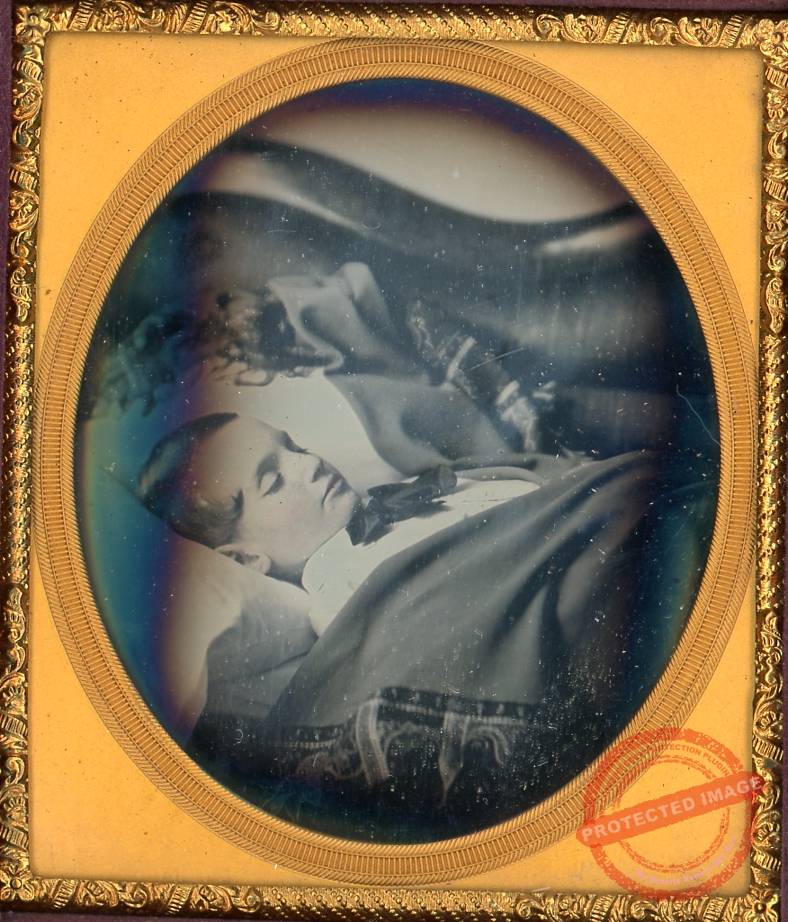
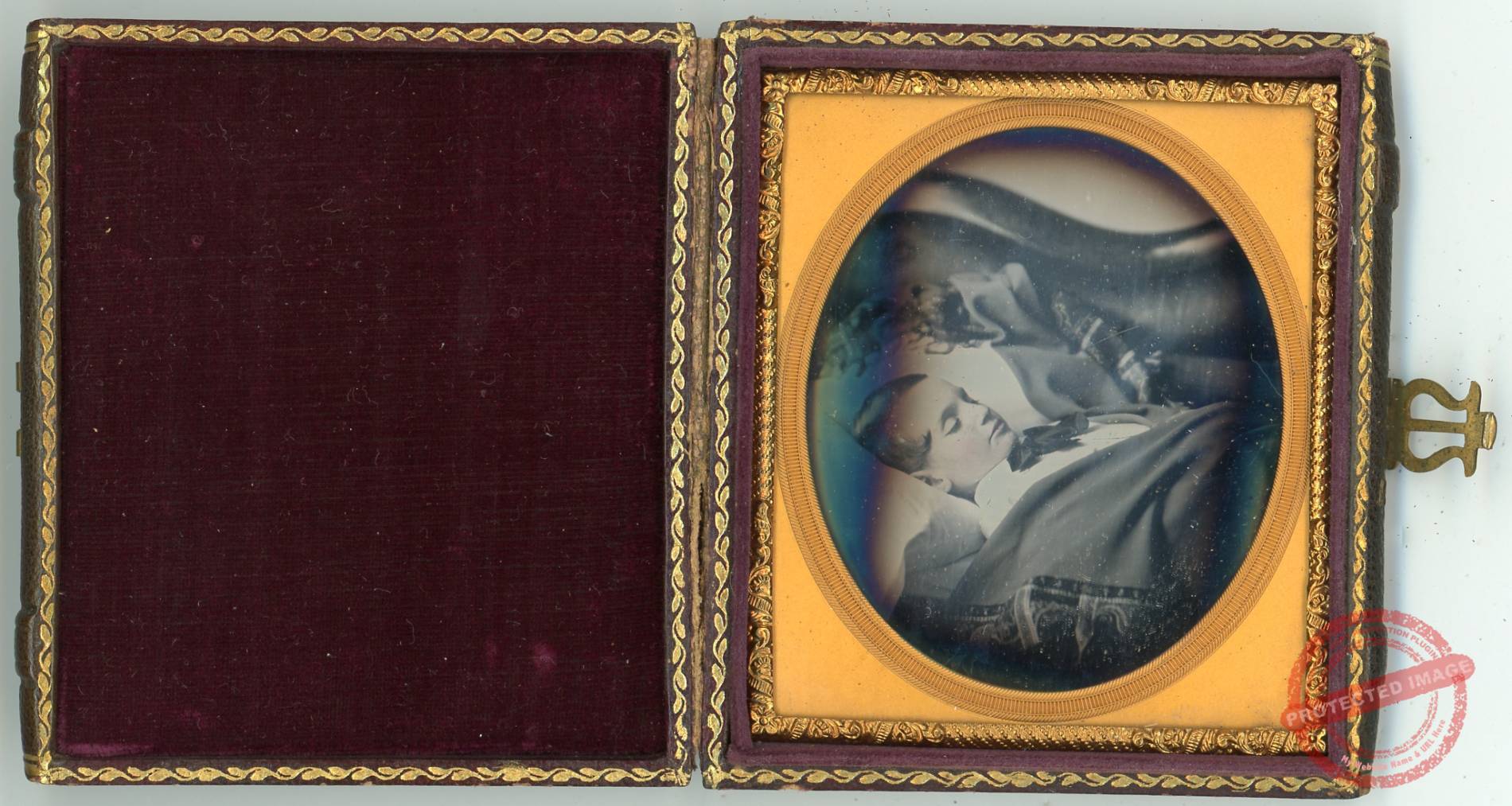
Sixth-plate post-mortem daguerreotype of a child.
Quarter-plate daguerreotype of a family in a horse-drawn coach. Identified as “Grandfather Thos. B. & Grandmother Elizabeth Hebberd, John & Mary & Jim, Horse.”
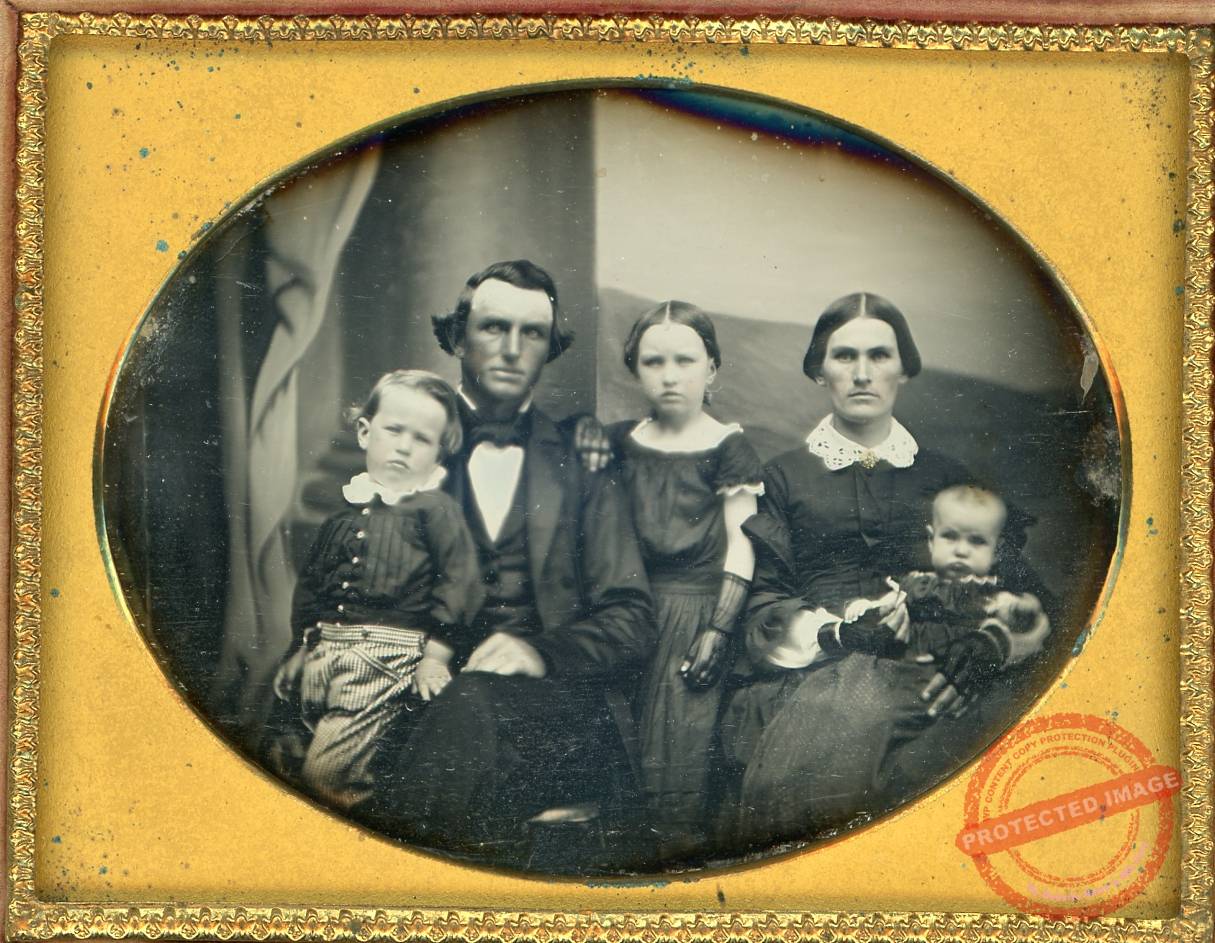
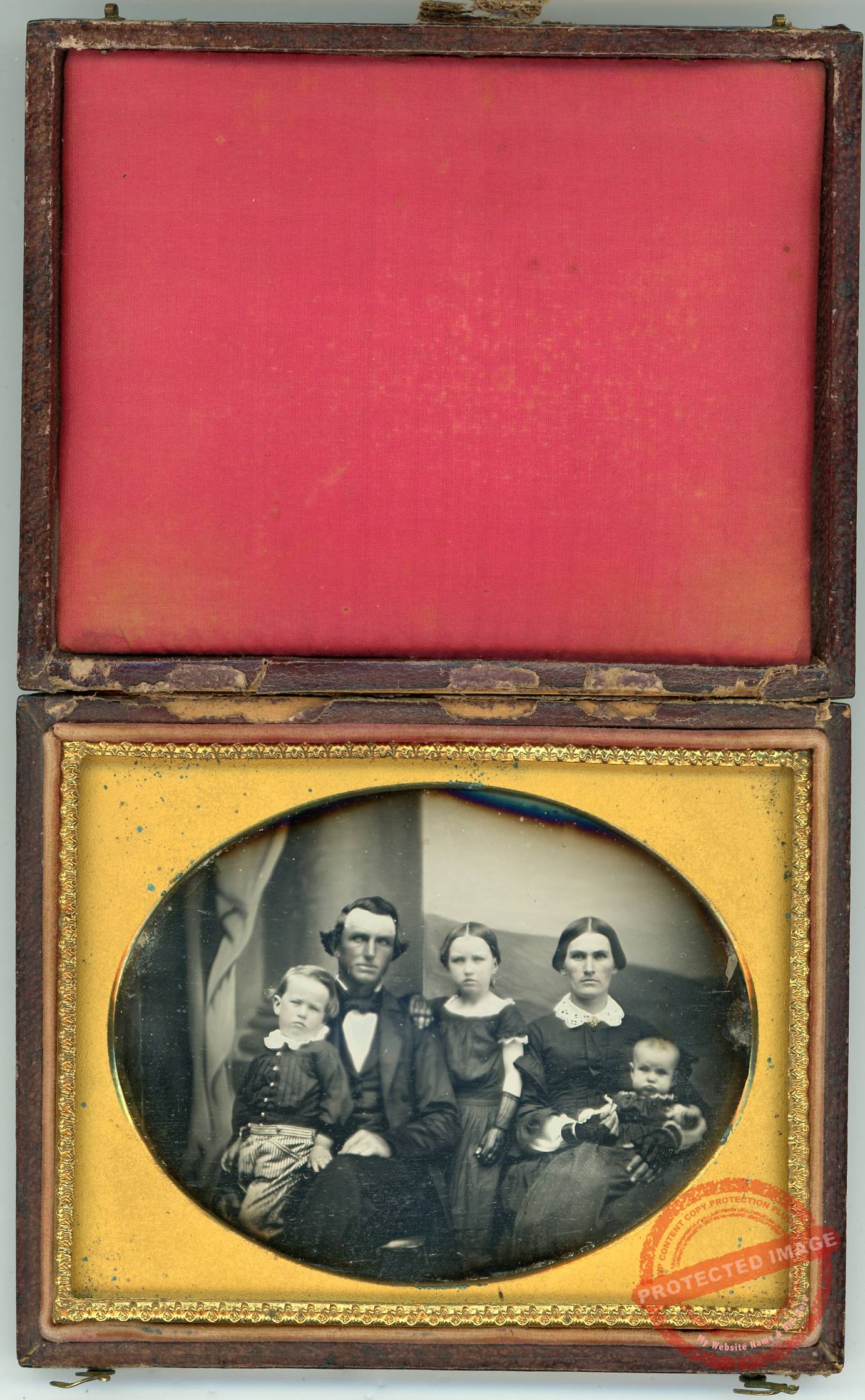
Quarter-plate daguerreotype of a family of 5. Information written on reseal: “Found in original seals, purchased 12/1/2024, Bought at auction-Davis Brothers, Missoula MT.”
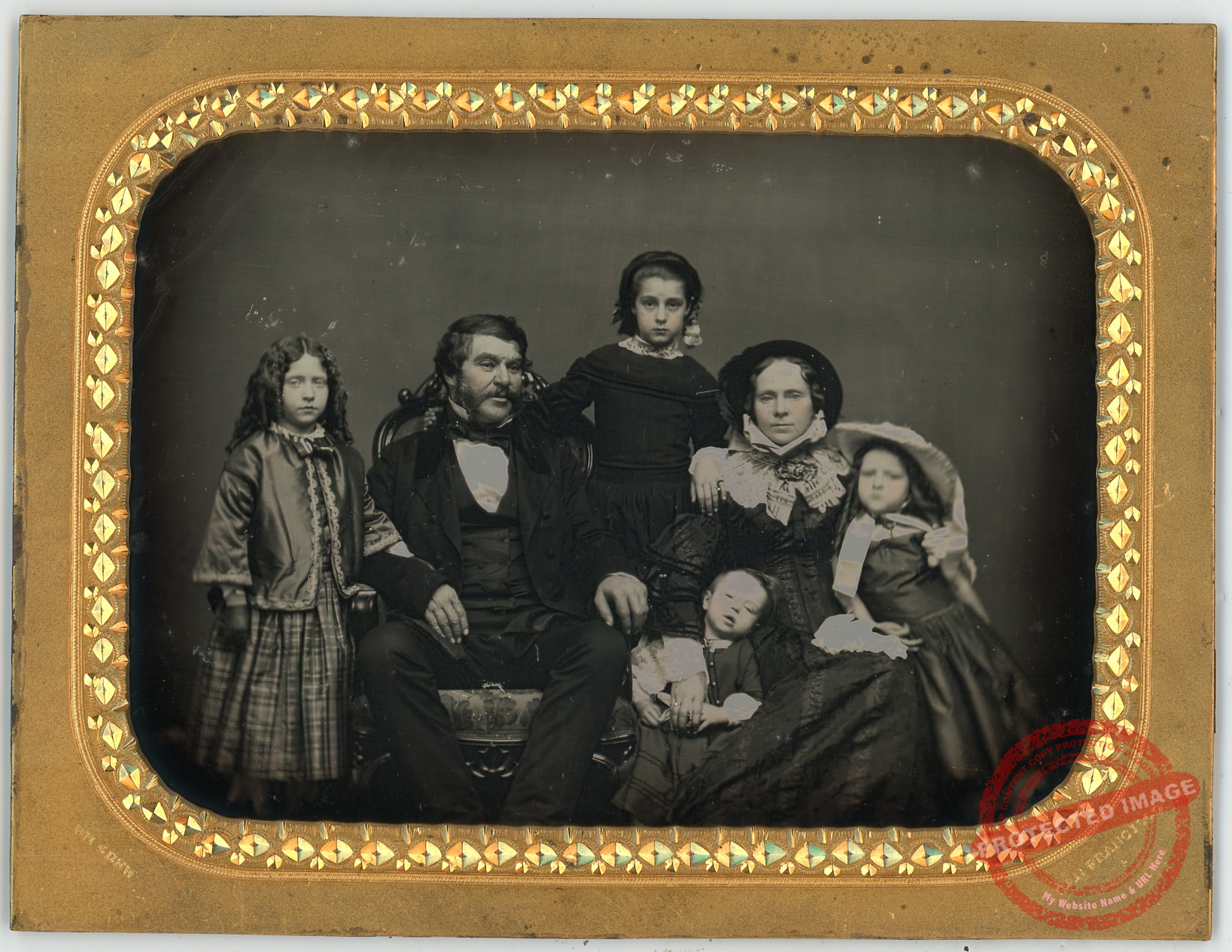
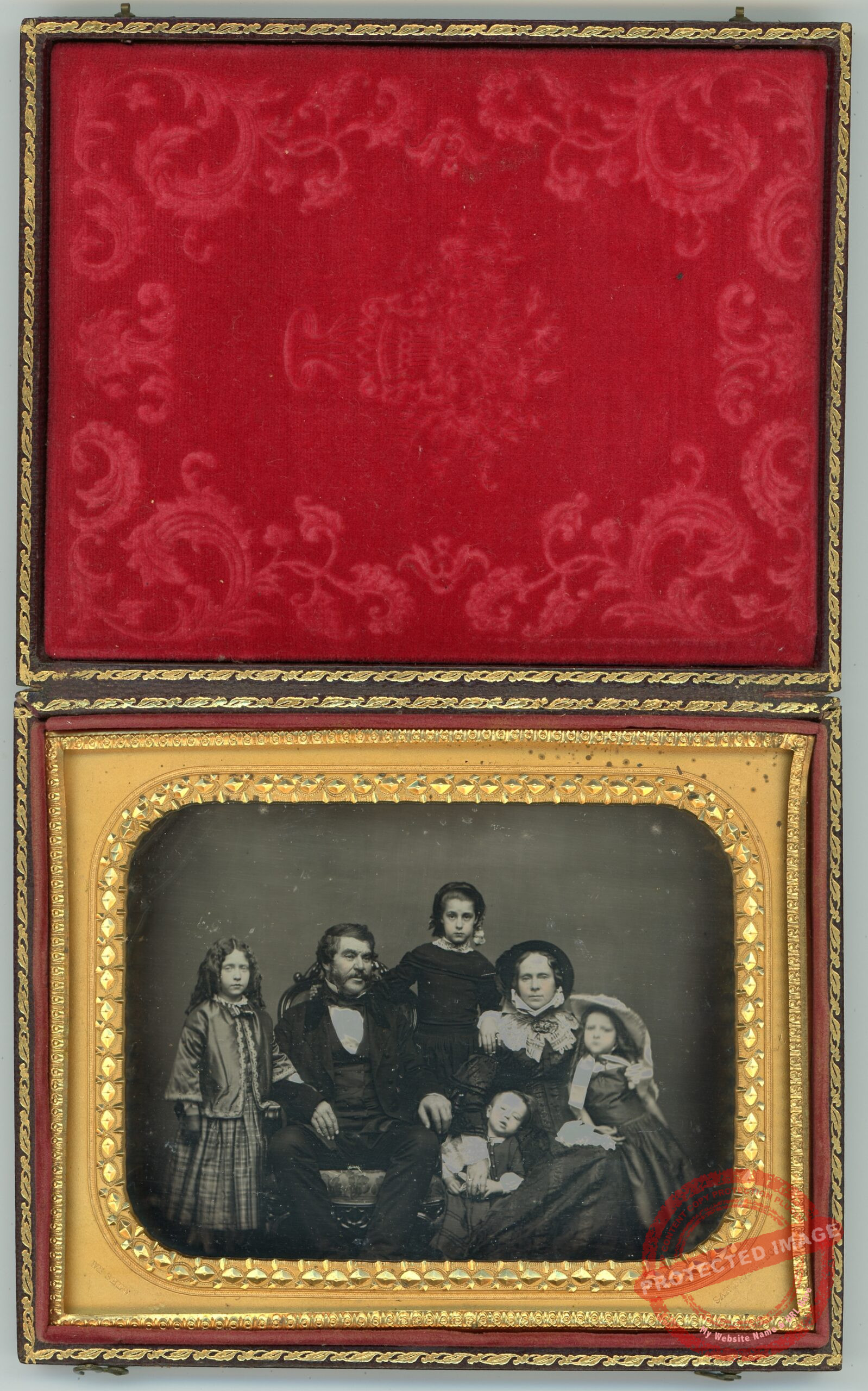
Half-plate daguerreotype by William Shew, San Francisco, of a family of six.
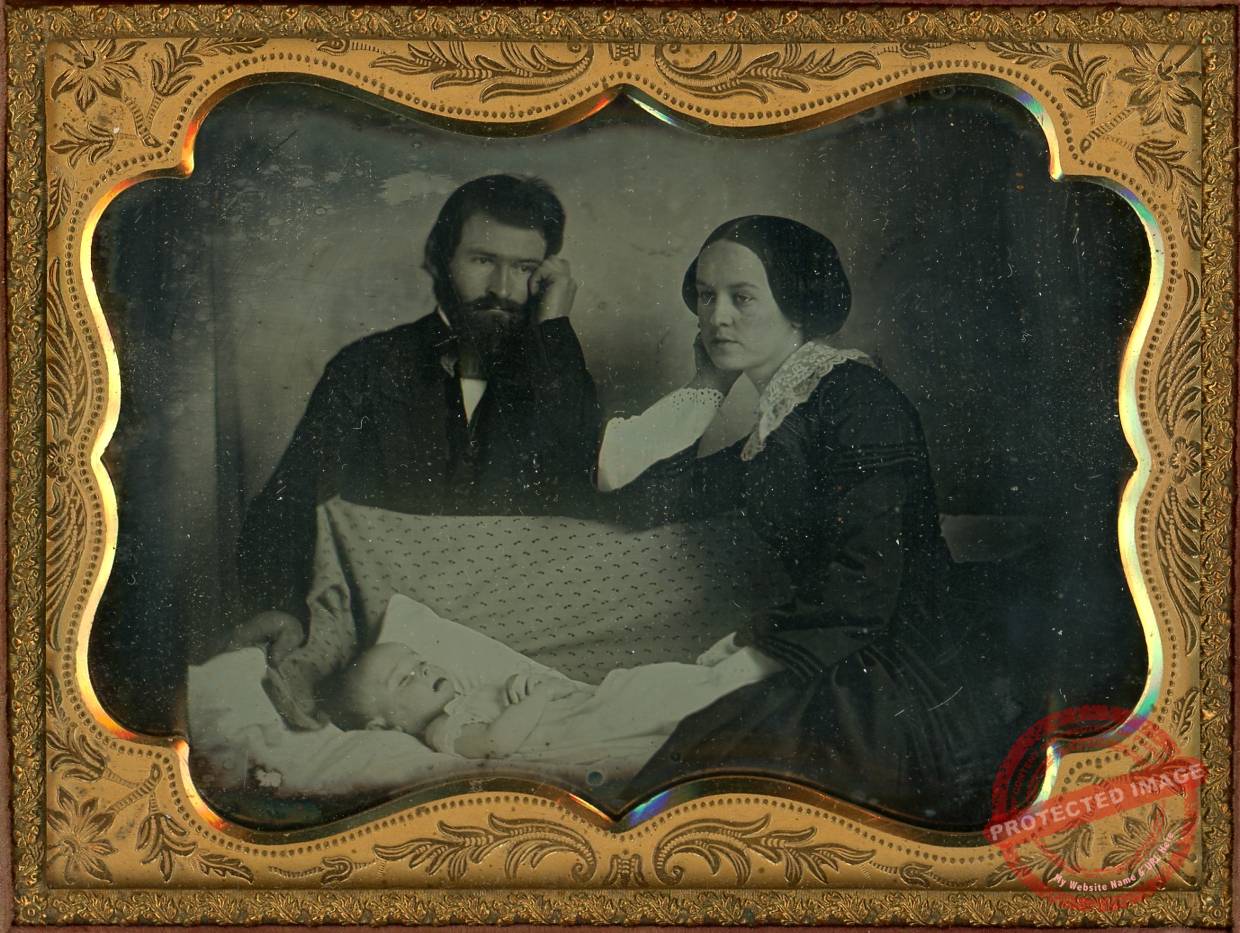
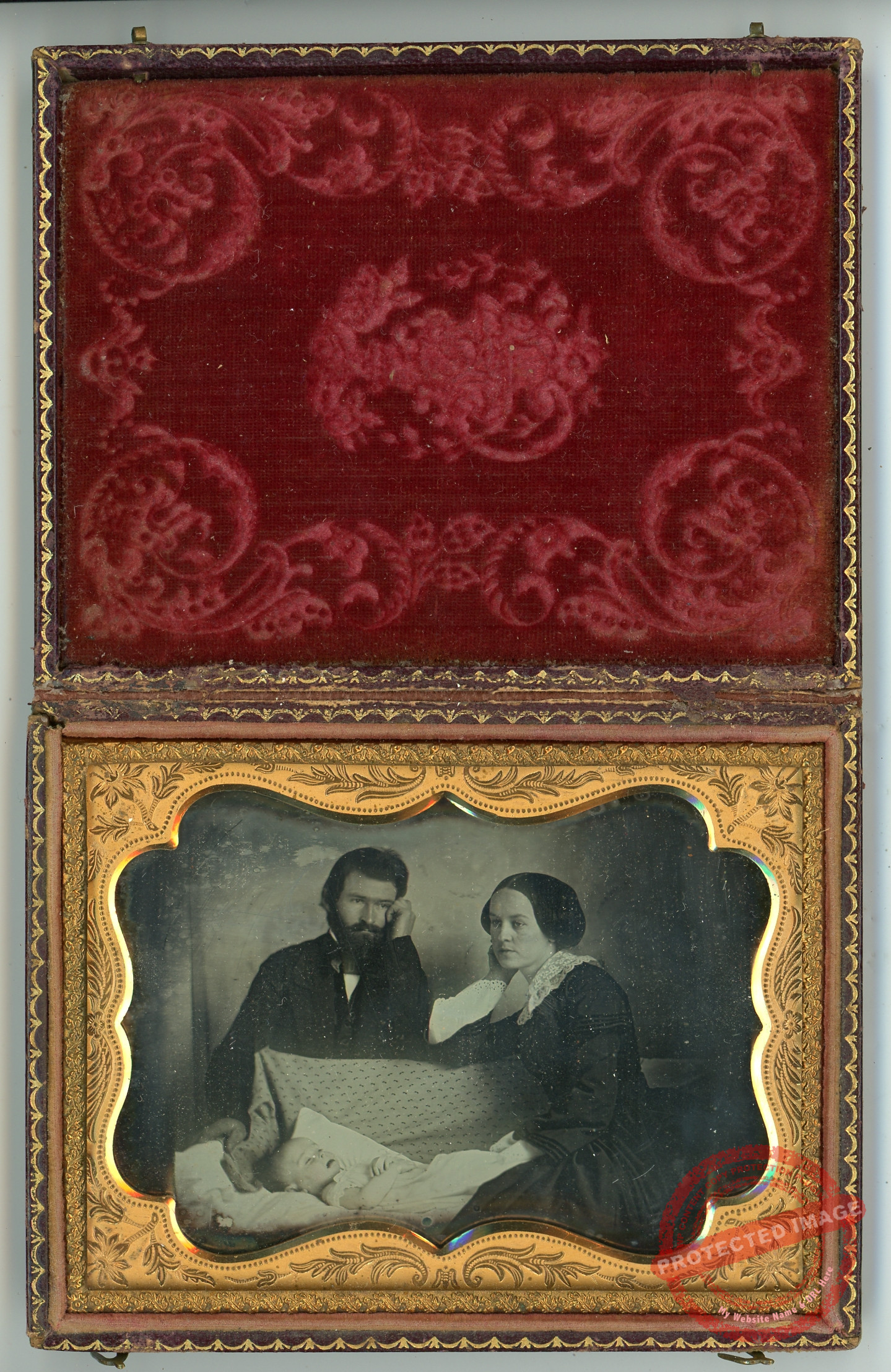
Quarter-plate post-mortem daguerreotype of child with both parents in mourning.
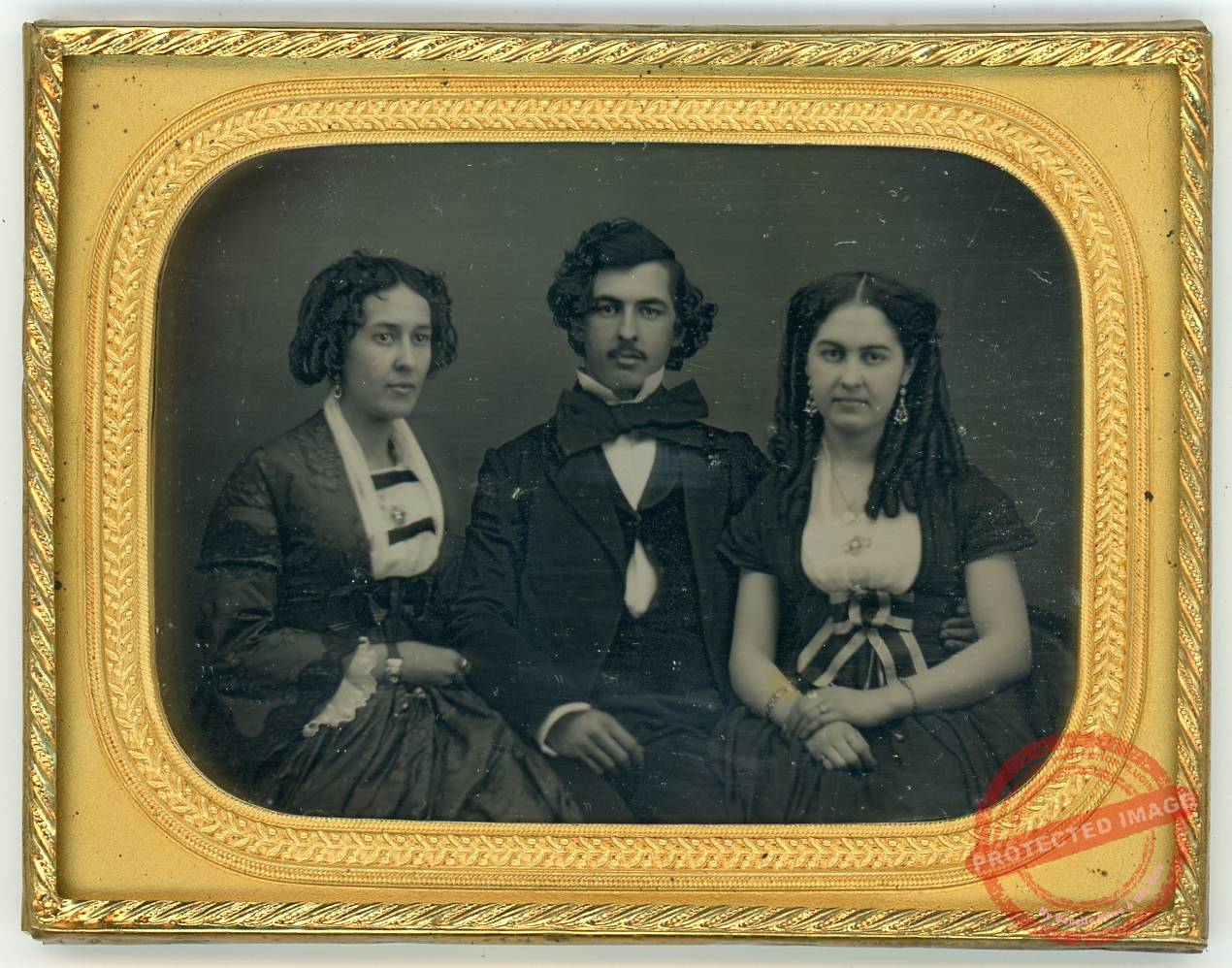
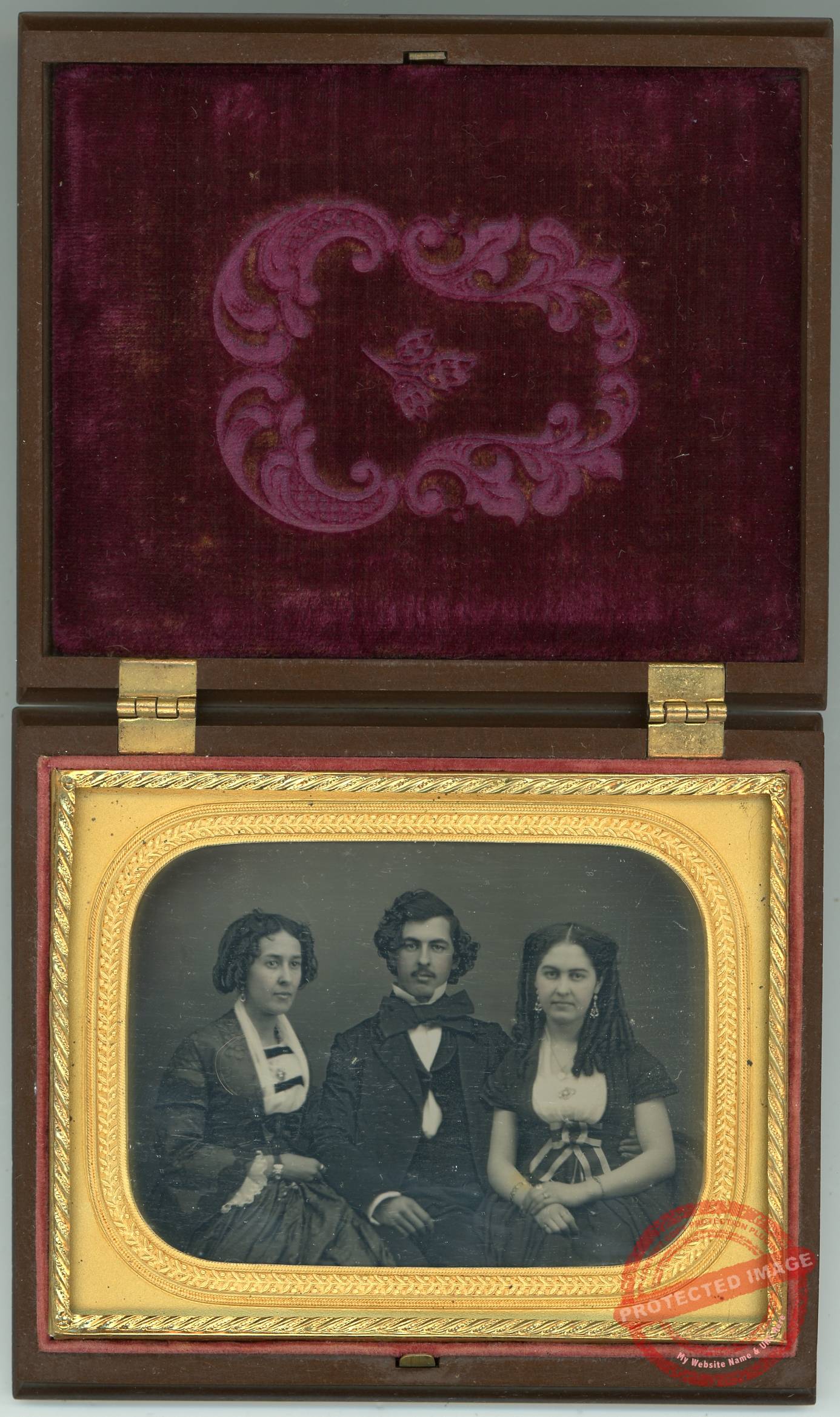
Quarter-plate daguerreotype of “Children of N.S. Grant: Melinda, 24 years; Joseph, 20 years; Eunice, 19 years. Picture taken by A. Bicknell, Dec. 28th, 1853.”
Sixteenth-plate daguerreotype of Niagara Falls.
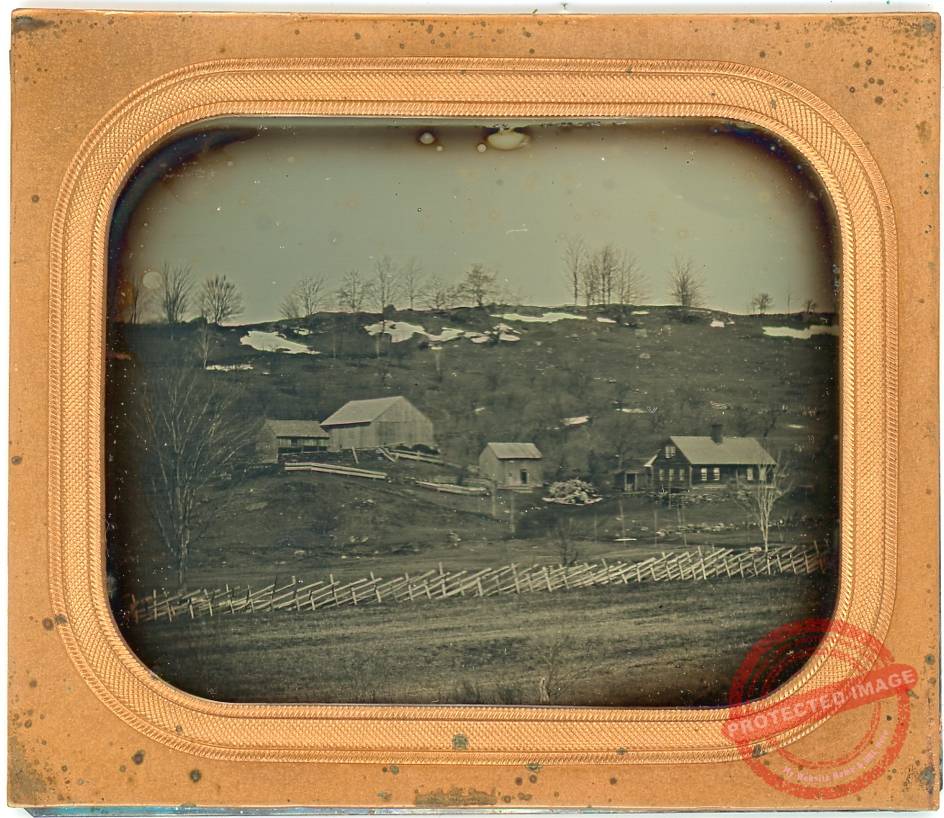
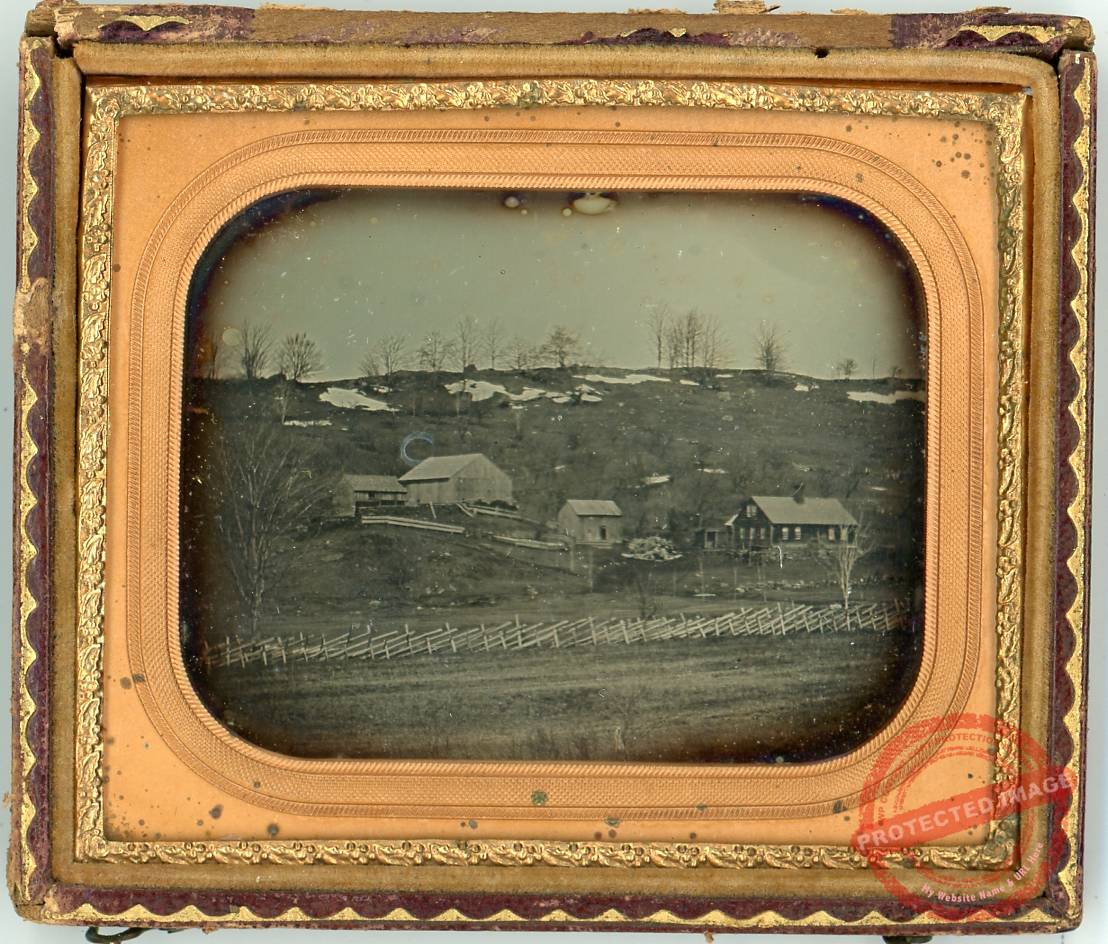
Sixth-plate daguerreotype of a farm scene with main house, barn, several outbuildings. Fence in foreground, snow on the hill.
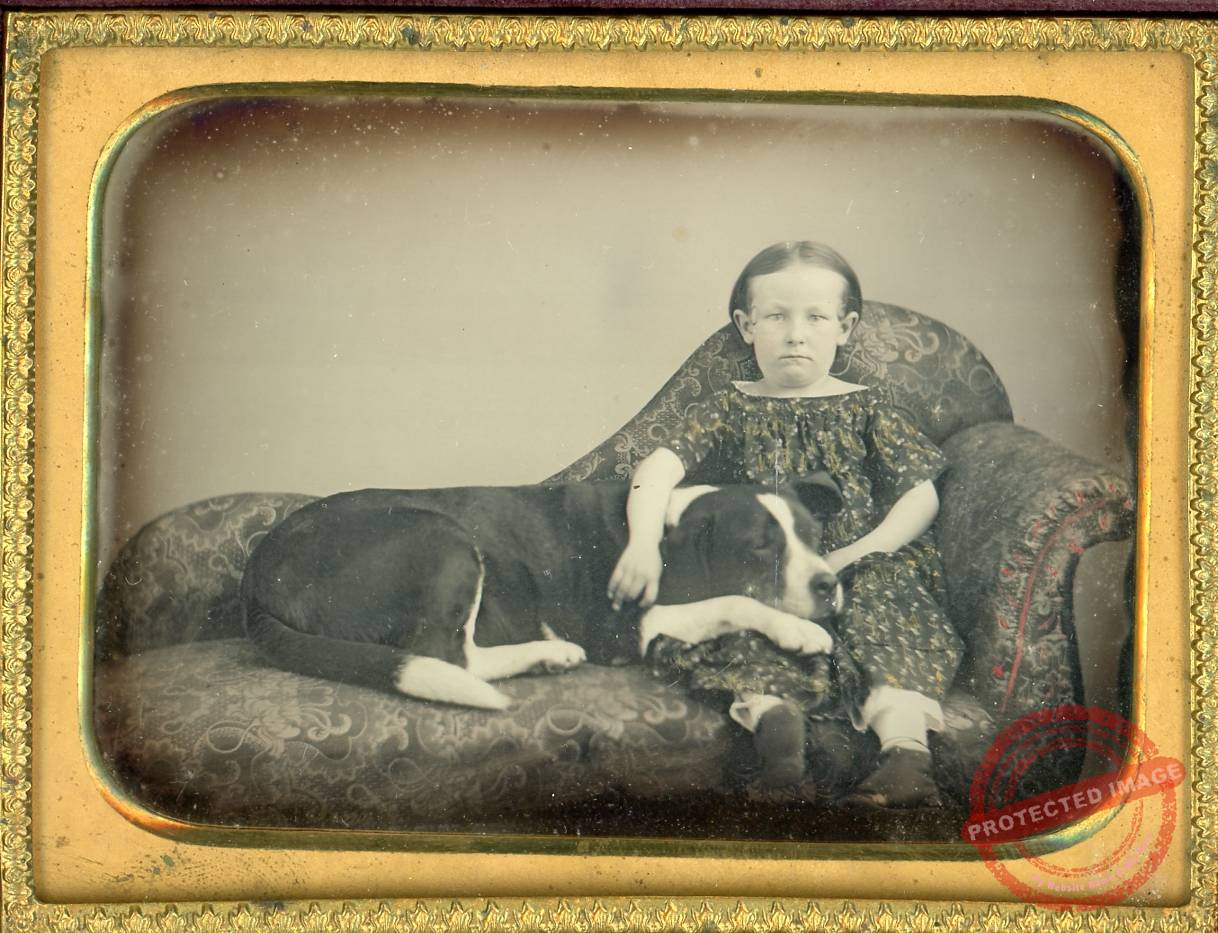
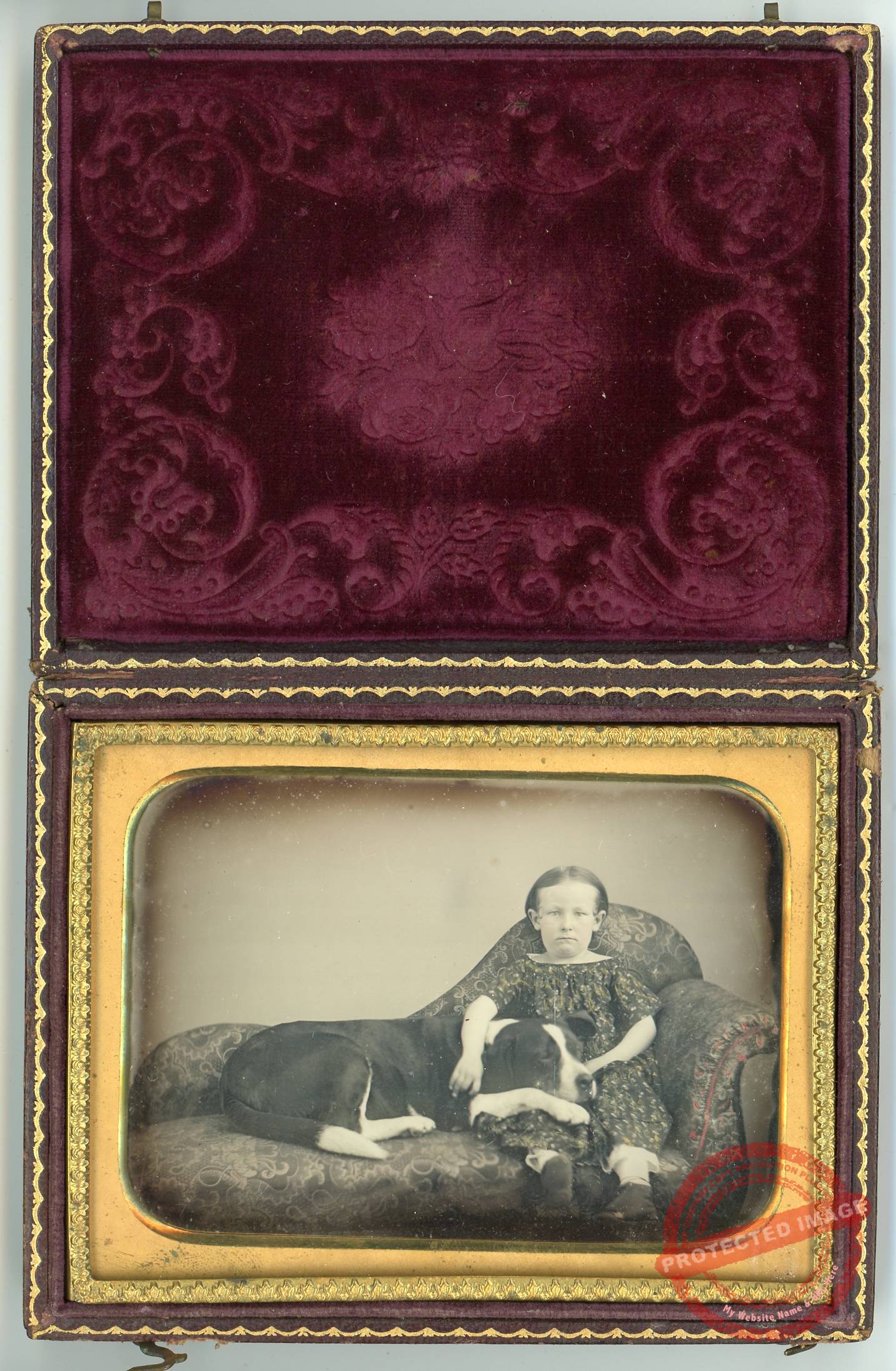
Quarter-plate daguerreotype of a girl with her large dog.
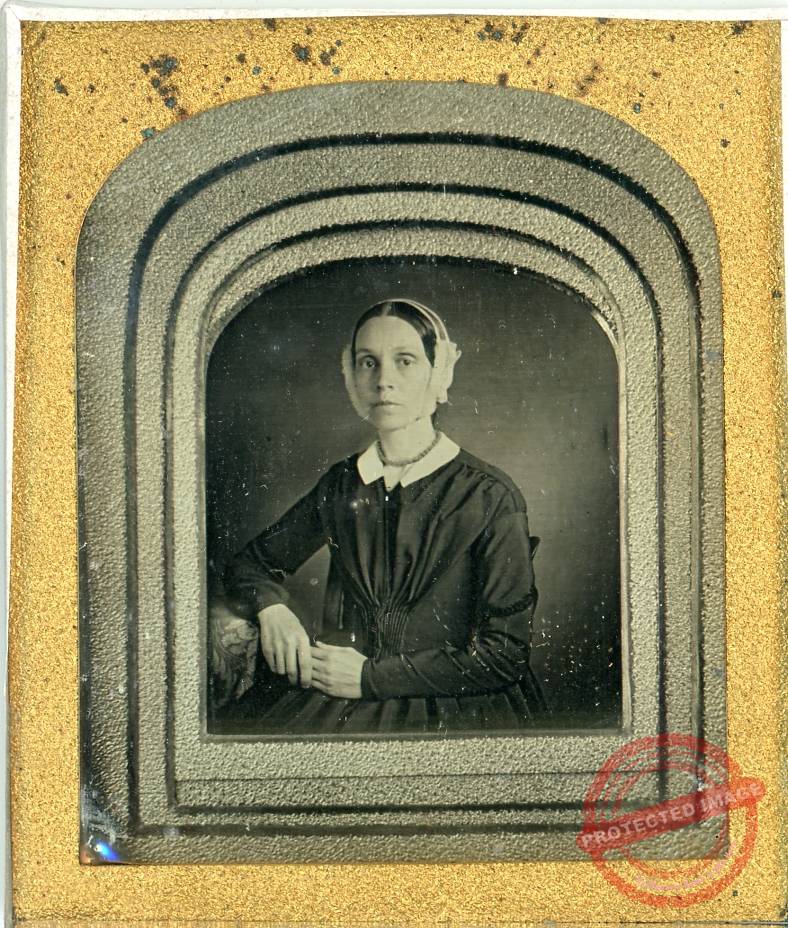
Sixth-plate daguerreotype of a woman in a multiple mat presentation.
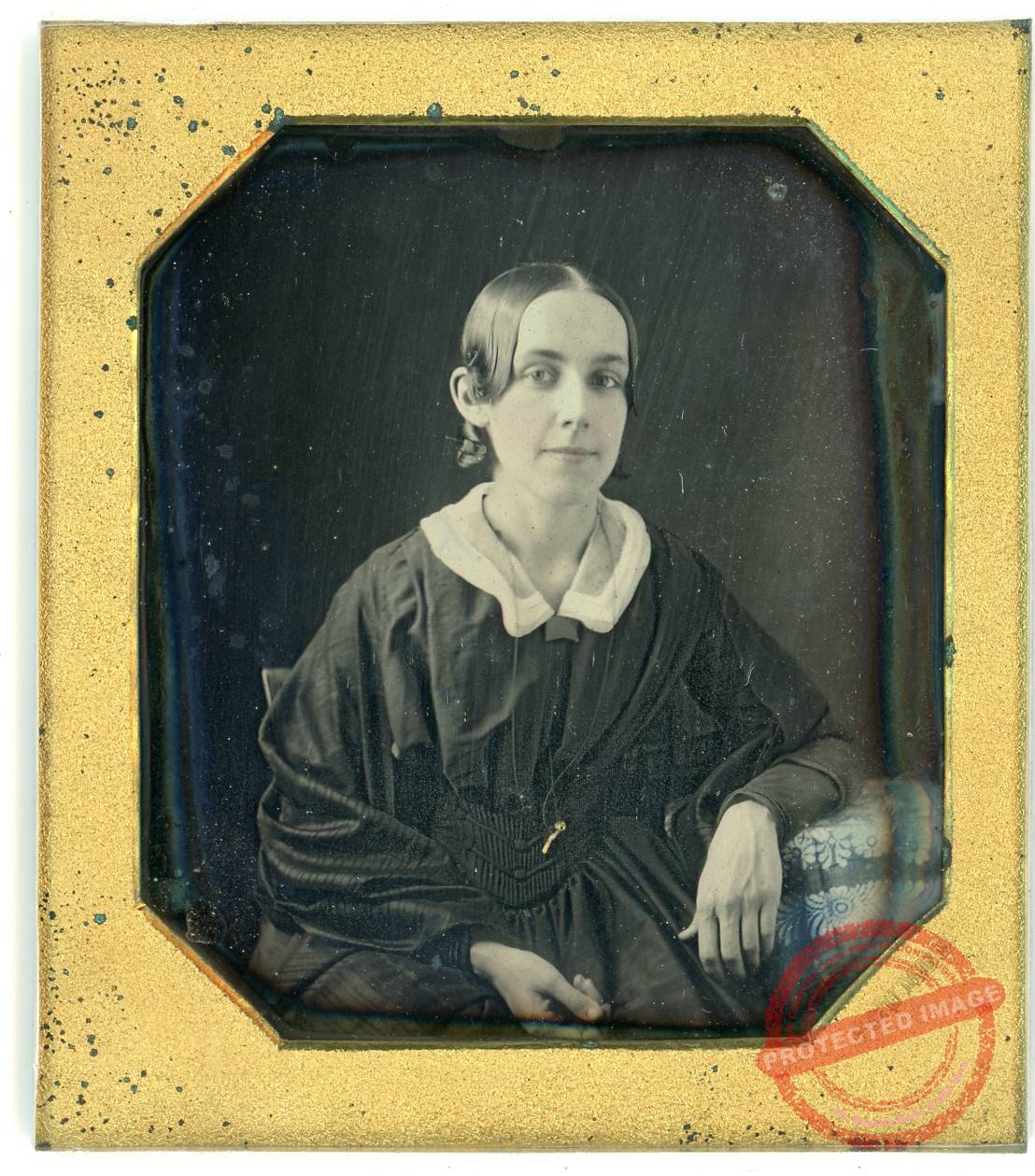
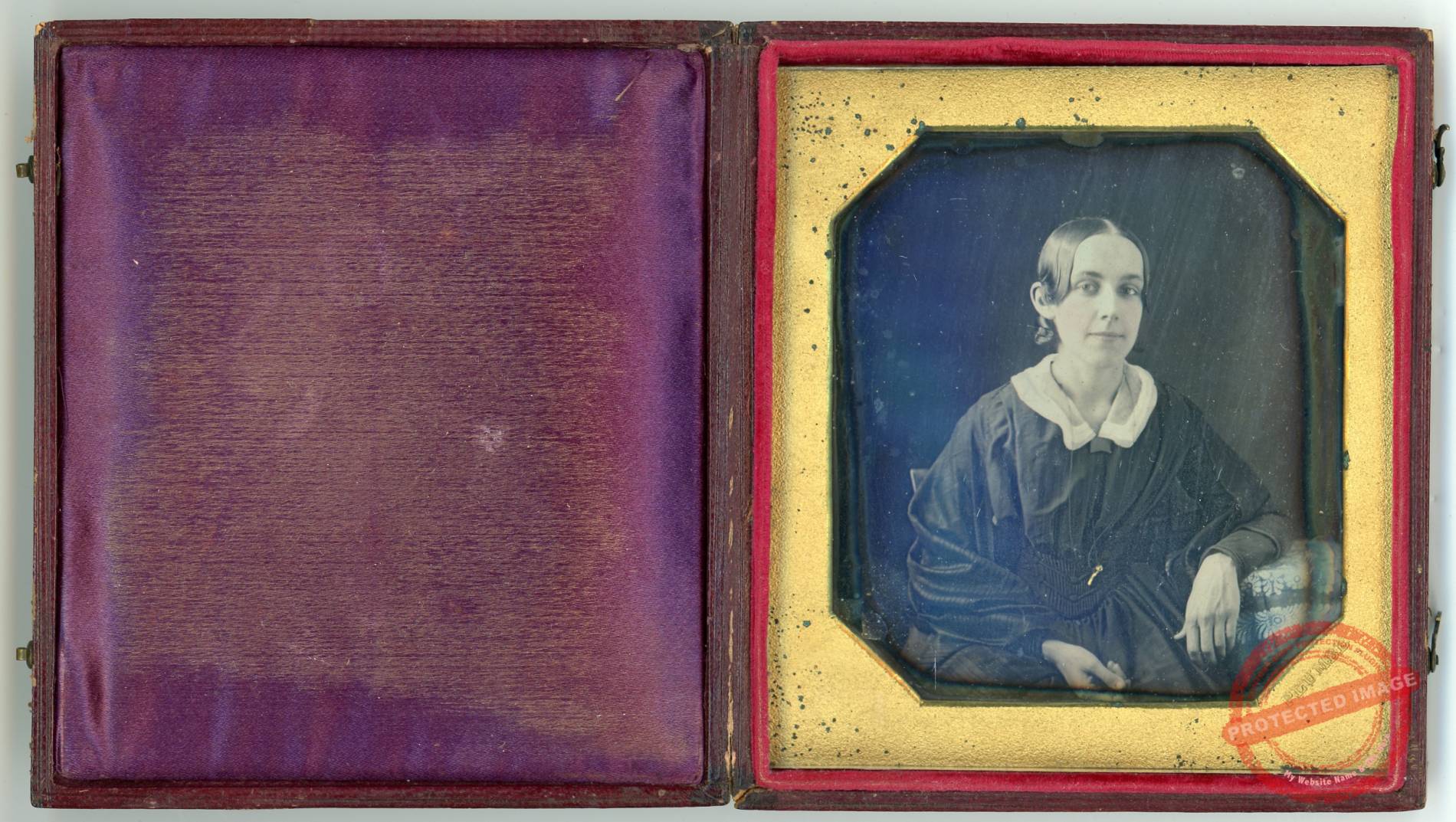
Oversized quarter-plate daguerreotype (4.25″ x 3.625″) of an attractive young woman. Resealed, housed in a Plumbe National Daguerrian Depot, New York case. Tinted.
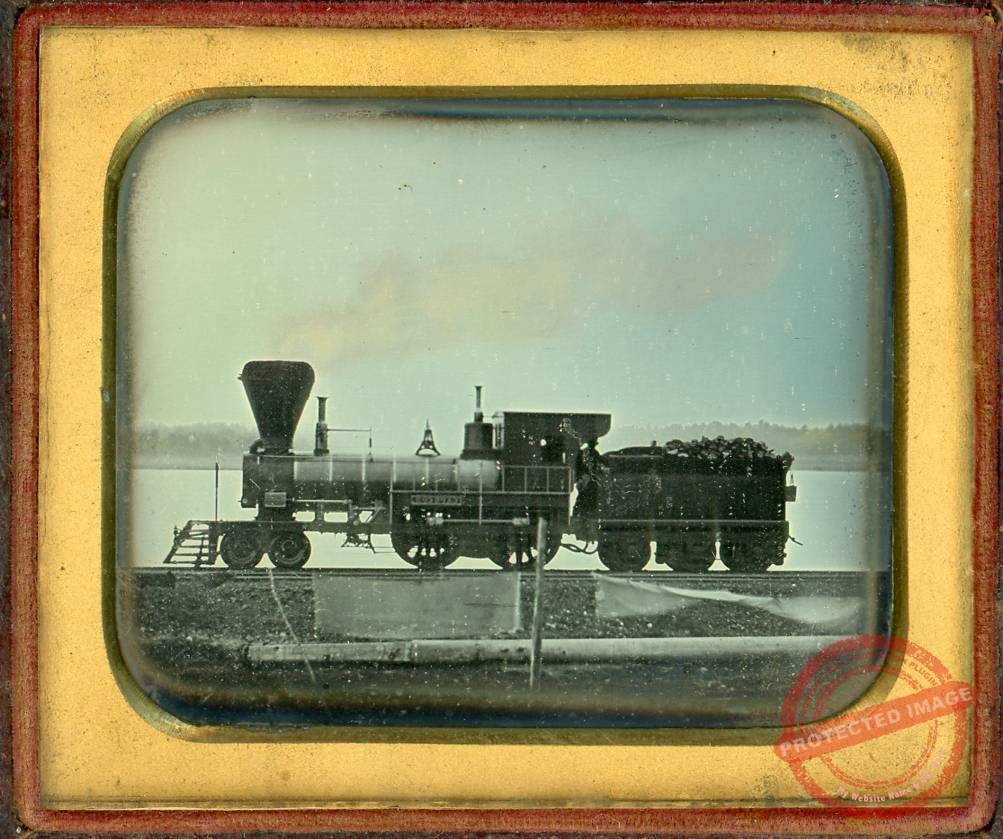
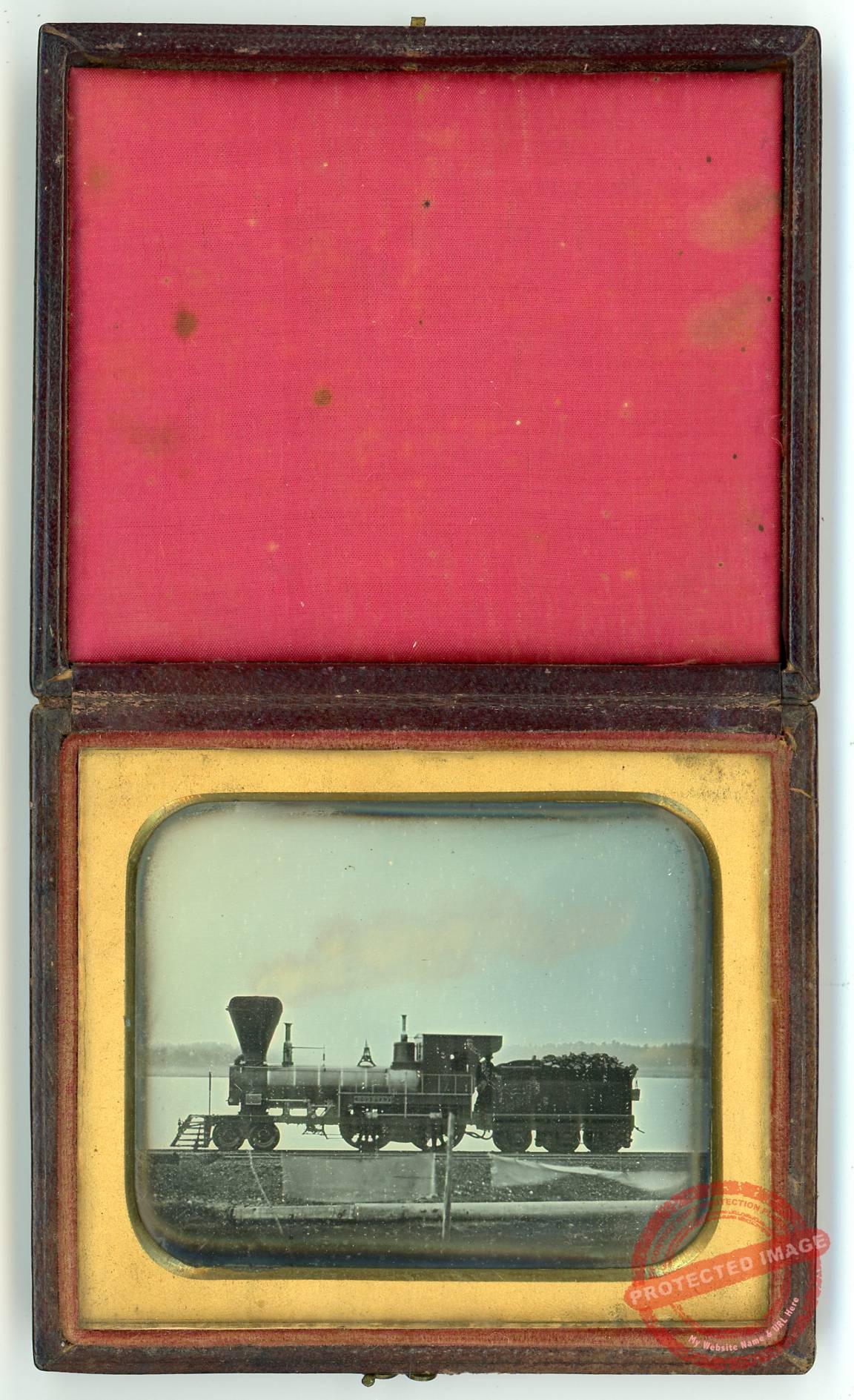
Sixth-plate daguerreotype of a railroad engine and tender with smoke. Name of the engine is “Cape Cod,” in reverse. This is likely the “Cape Cod” built in 1848 by Hinkley & Drury, Boston. Formed in the early 1840s by Holmes Hinkley and Gardner P. Drury, the firm grew into the largest locomotive builder in New England before reorganizing in 1848 as the Boston Locomotive Works.
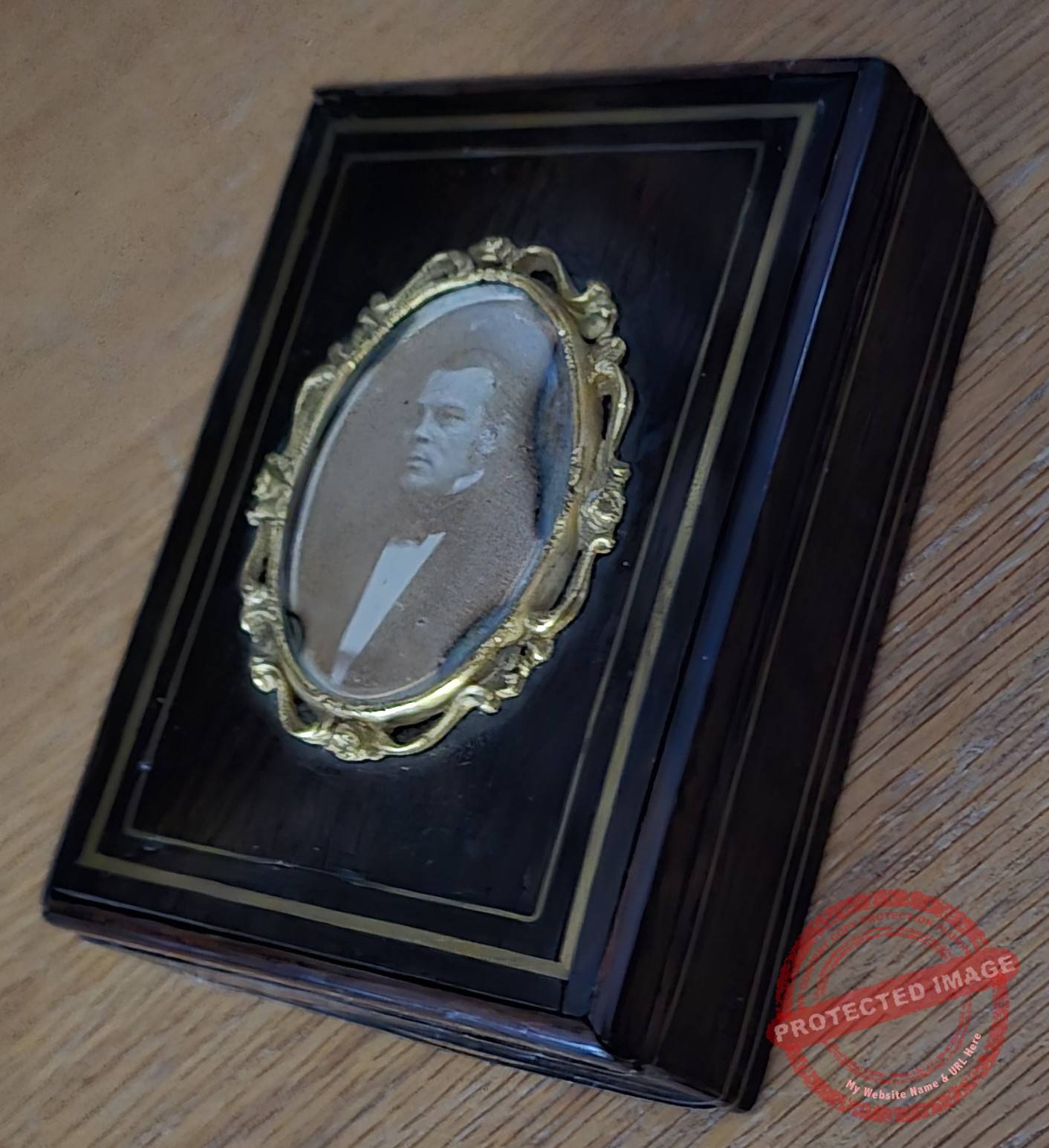
Daguerreotype of a gentleman mounted on the cover of a wooden box.