50202.
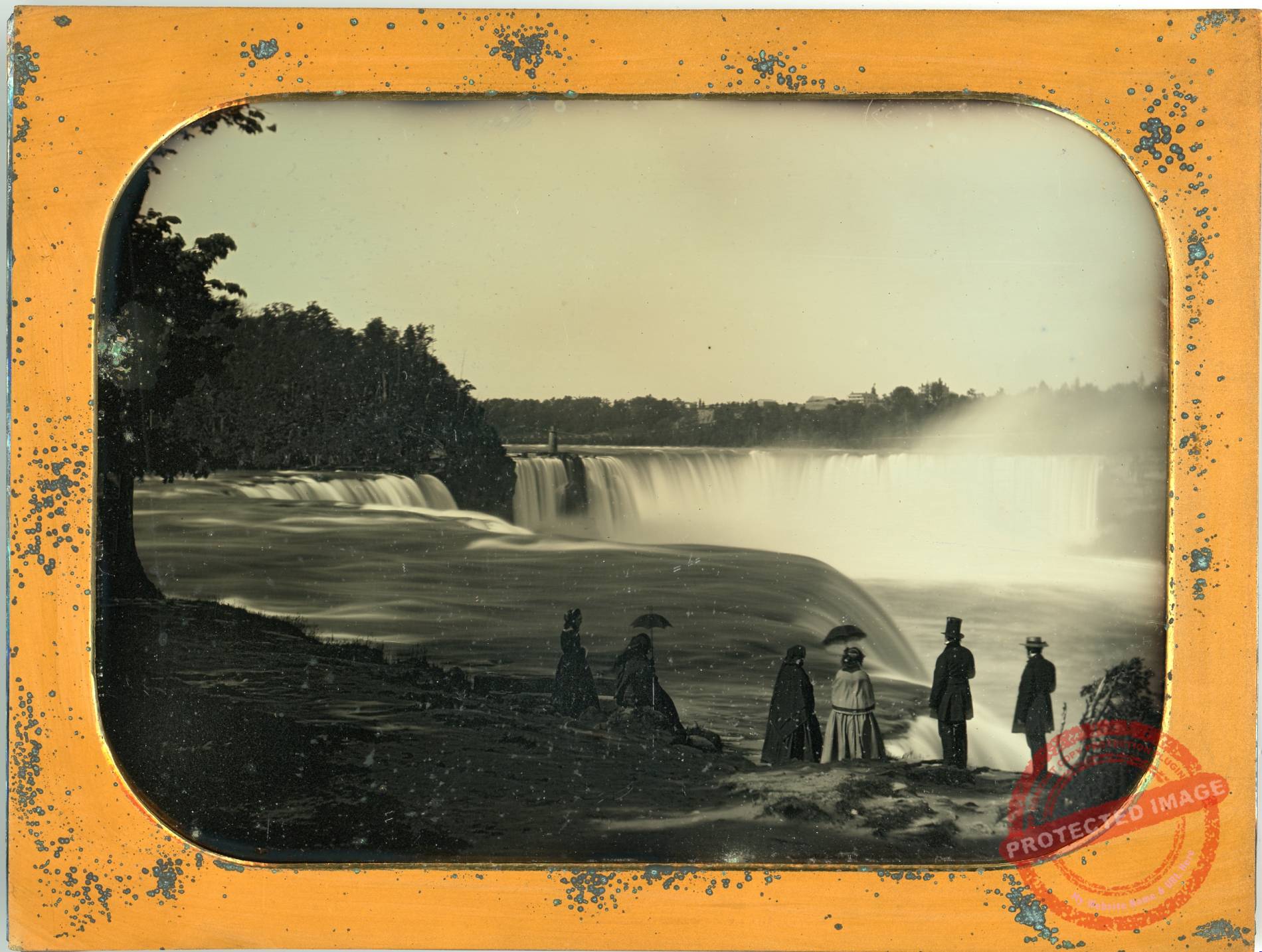
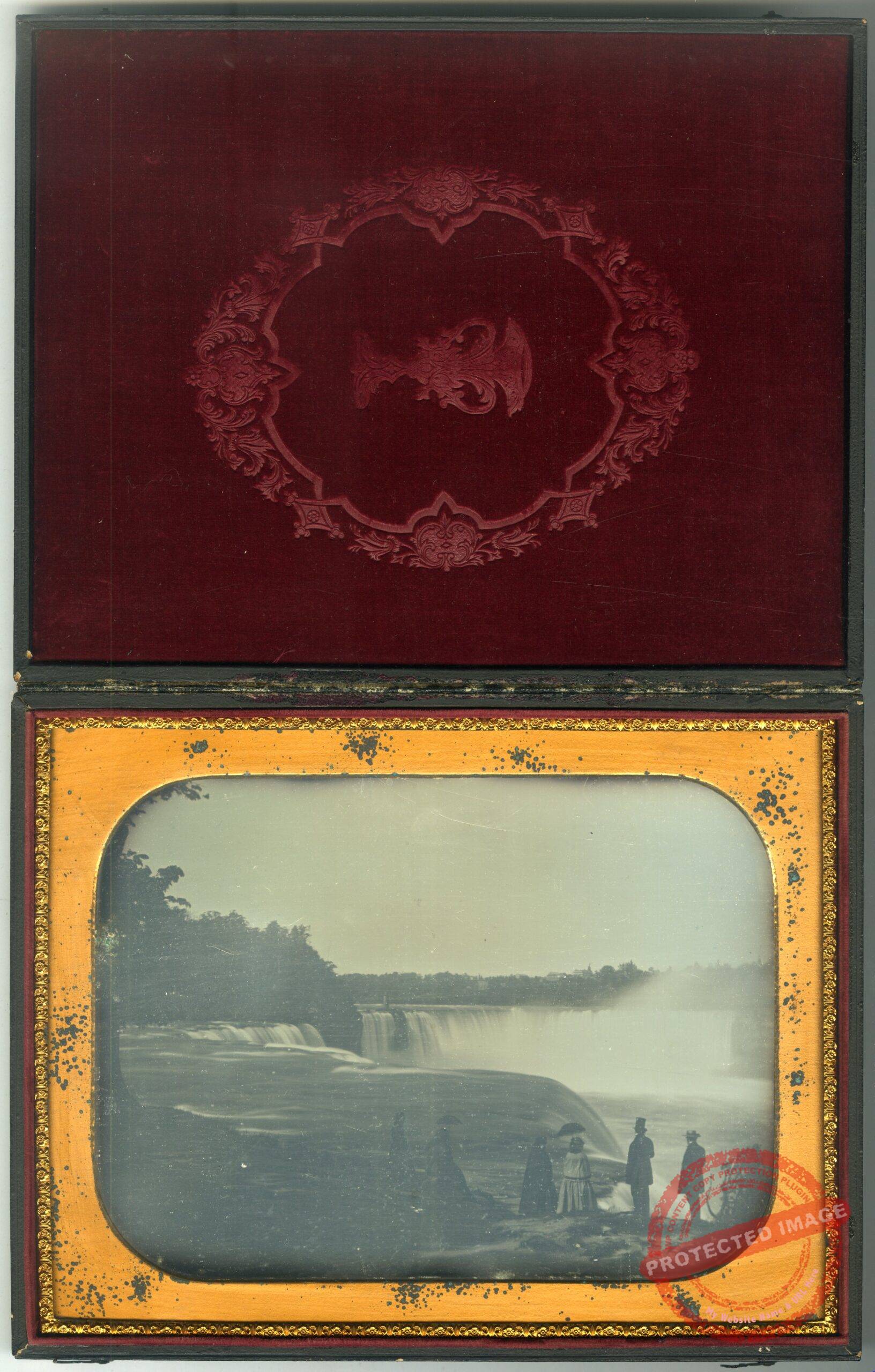
Full-plate daguerreotype of Niagara Falls.

Full-plate daguerreotype of Niagara Falls.
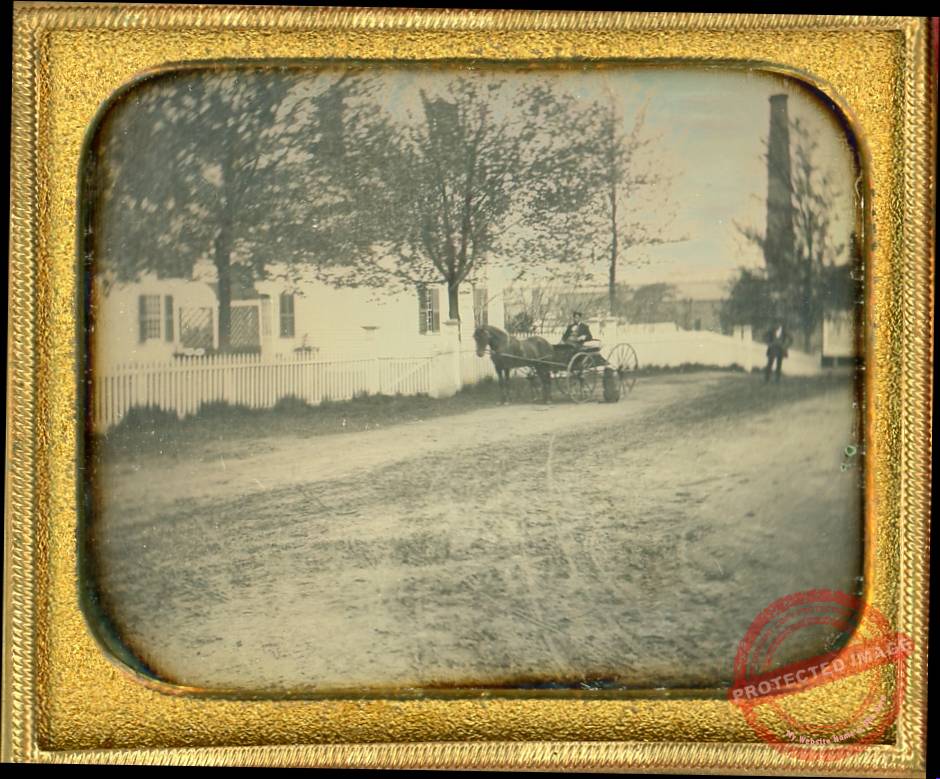
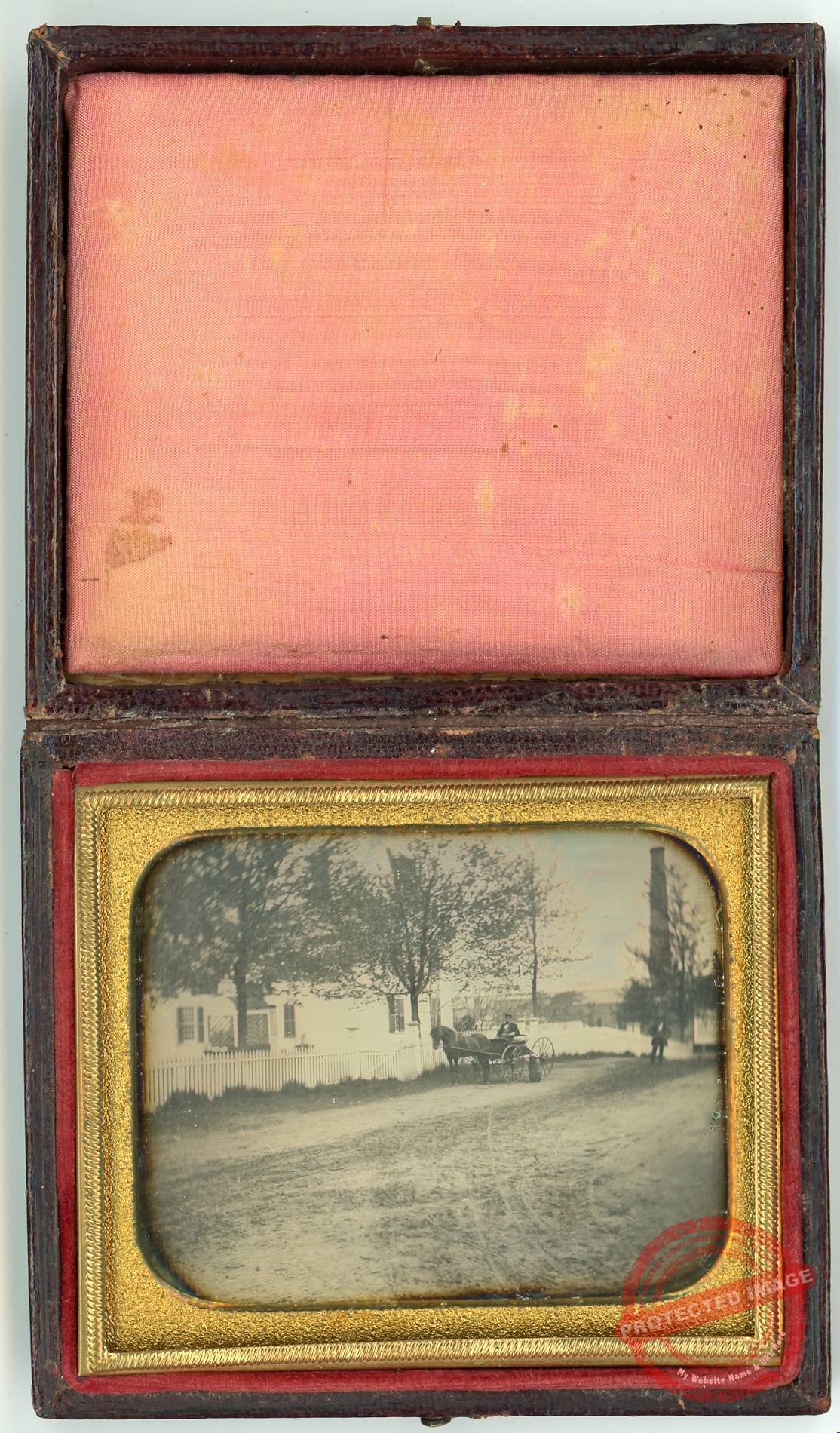
I was immediately attracted to this sixth-plate image due its tone, composition, and condition. Then when I looked at it closer, it became more important to me. I’ve been reading lately about the naturalists and transcendentalists of the mid-to-late nineteenth century and this image brought into stark contrast one of their important issues. The bottom half of the image is taken up with a well-worn dirt road. A man is relaxed in his one-horse buggy while a dog sits by the side of the buggy with his back to us. There is a woman standing by the picket fence that surrounds the house. The leaves on the trees appear to be in motion, so possibly a small breeze is in the air. Another man stands a bit to the right on the road. There are buildings in the background down the hill and there is a factory with a large chimney to the right. The contrast between the bucolic country scene and the looming industrial future is captured in this sixth-plate. Emerson, Burroughs and others spoke and wrote frequently about how industry would destroy the land and threatened the human soul, individualism and our connection to nature. All that comes to me, in this image, in my hand.
Unknown wire-walker, Emporia, Kansas.
John Denier walking the tight-rope across Broadway (5th Street). He is proceeding west on a rope stretched across the street from Wilson’s Minstrels, which adjoins the building on the southeast corner of 5th and Pine, St. Louis, Mo.
M. John Denier of John Denier’s Pantomime Troupe, wire-walkers, etc.
Unknown wire-walker, Auburn, NY, Aug. 4th, 1865.
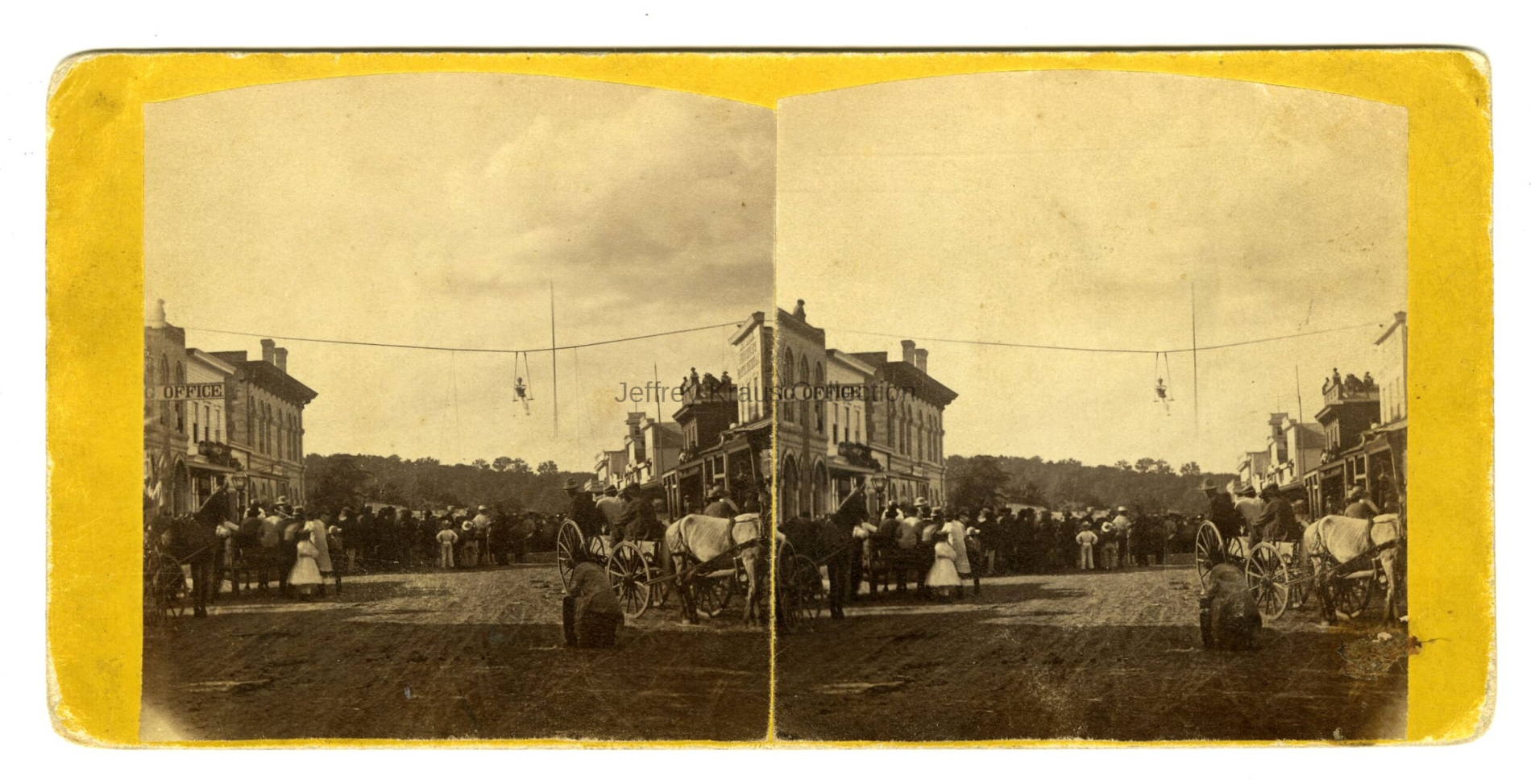
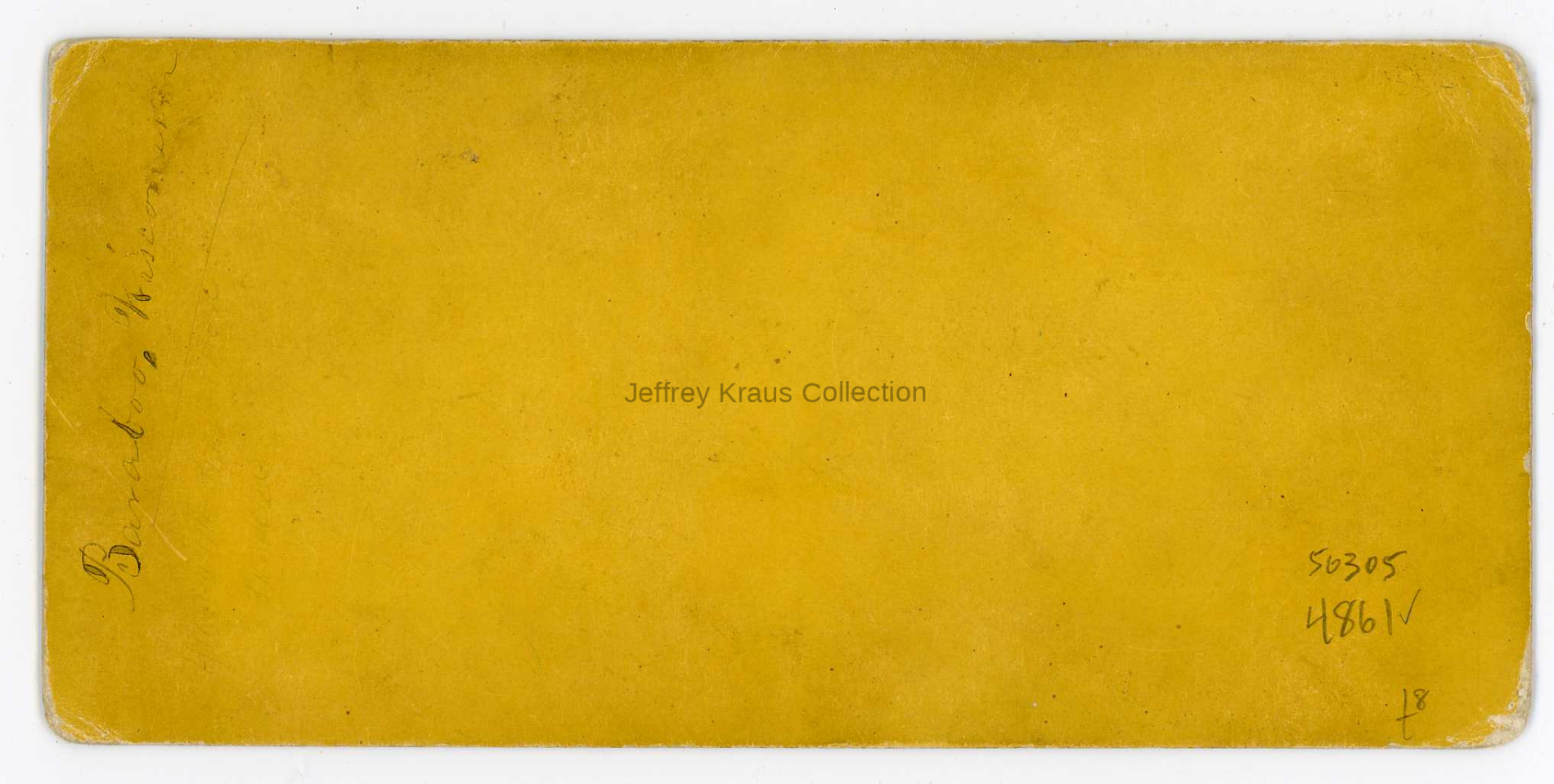
Unknown wire-walker in Baraboo, Wisconsin. Information from Paul Wolter, head of the local Sauk County Historical Society, and Fred Dahlinger:
This is definitely the 400 Block of Oak Street looking north. The Bank of Baraboo, (now Baraboo State Bank) on the left was built in 1867 and enlarged after the December fire of 1871. The picture can be dated to that time period making this among the earliest known pictures of Baraboo. In the background on the right you can see the fourth story cupola of the Western Hotel. I did some searching on Newspapers.com and I can’t find any reference to an exhibition like this on Oak Street during those years. It surely must have been reported in the paper. At first I thought it was a tightrope walker but it is more like a trapeze act [agreed F. D.]. I searched for the word “aerialist” and came up with an ad for the Dan Costello Circus that came to Baraboo in September of 1870. It might have been an exhibition act to promote the circus. It is a really neat image! The Bank of Baraboo is still operating today. They were the bank for the Ringlings. Dan Castello was a performer out of Racine, Wisconsin, where he had a winter quarters. His name was on the first circus to go by railroad across the recently completed transcontinental railroad in 1869. He partnered with William C. Coup of Delevan, WI in the 1870 Coup & Castello circus on Lake Michigan, moving by ship. That winter they proposed a partnership with P. T. Barnum for 1871 and he jumped at the proposition, going all in. That inaugurated the “Greatest Show on Earth” that has endured until recent times.
Unknown wire-walker, Peoria, Illinois.
198. Tight-Rope Performer. This is daredevil Charles Hilton, Lewiston, Maine.
Daredevil Charles Hilton, Lewiston, Maine.
Daredevil Charles Hilton, Lewiston, Maine.
Daredevil Charles Hilton, Lewiston, Maine.
Unknown wire-walker, Stockton, California.
Two unknown wire-walkers, unknown location.
Unknown daredevil, unknown location.
Unknown wire-walker, probably New Hampshire.
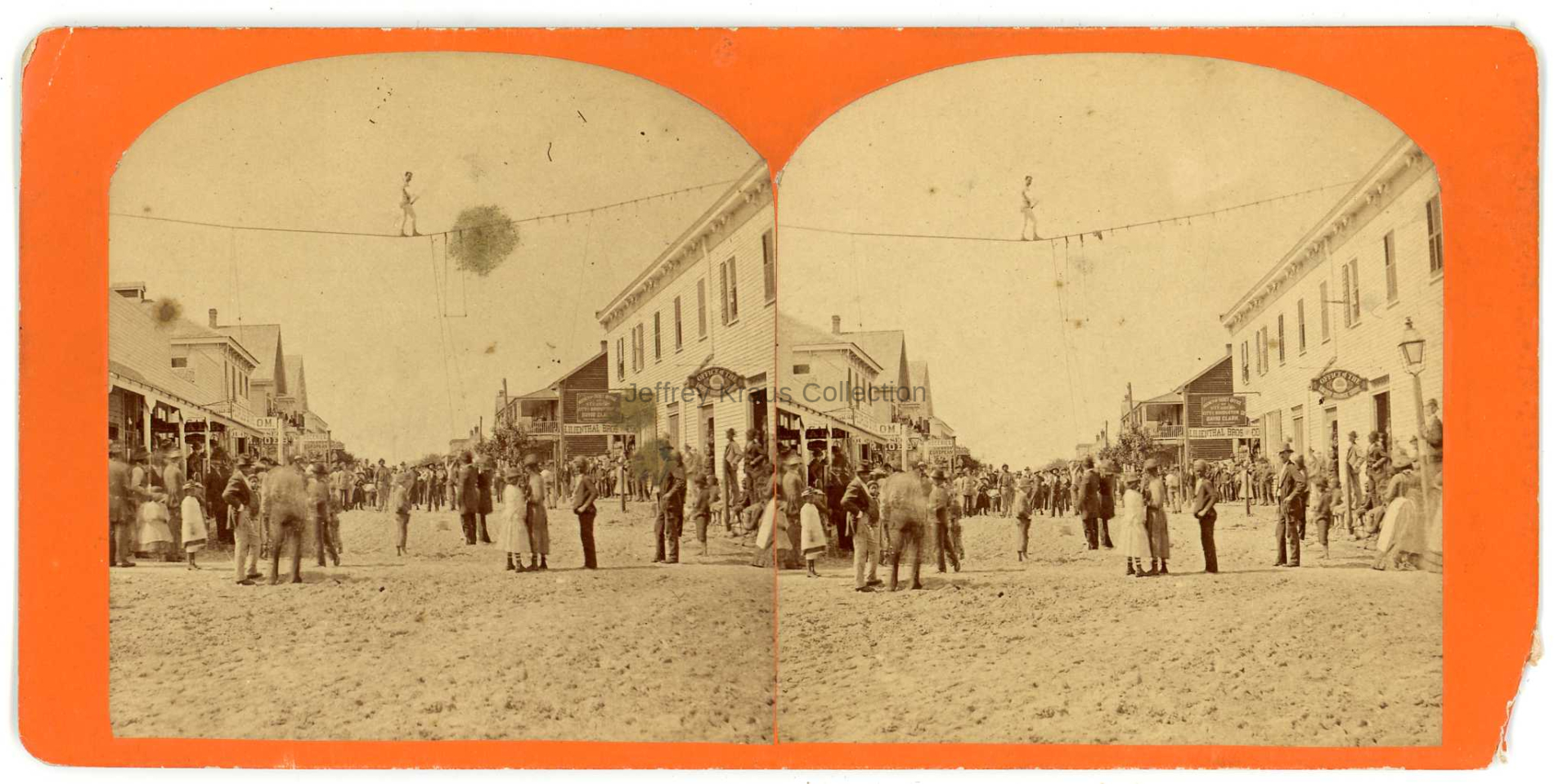
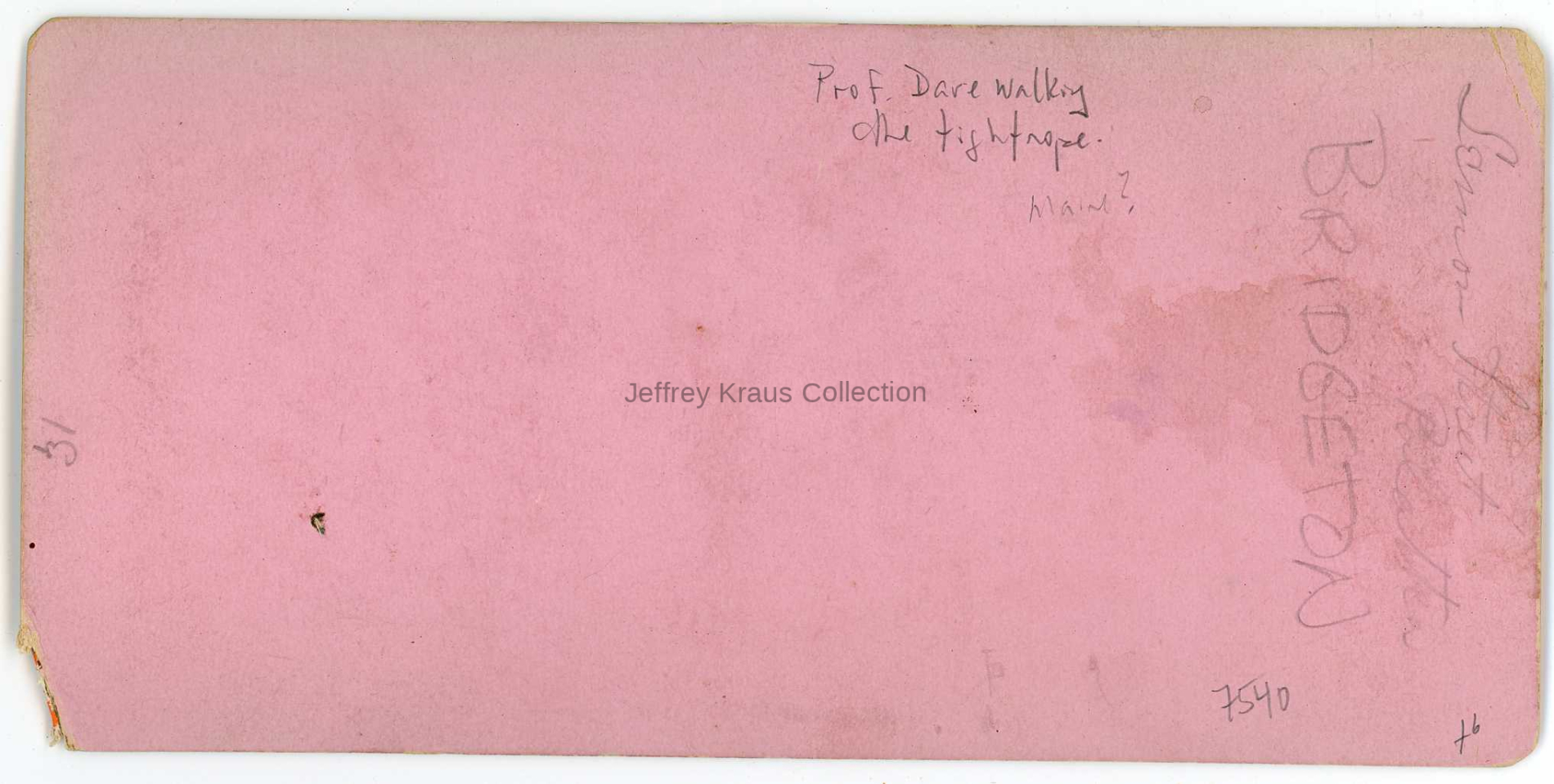
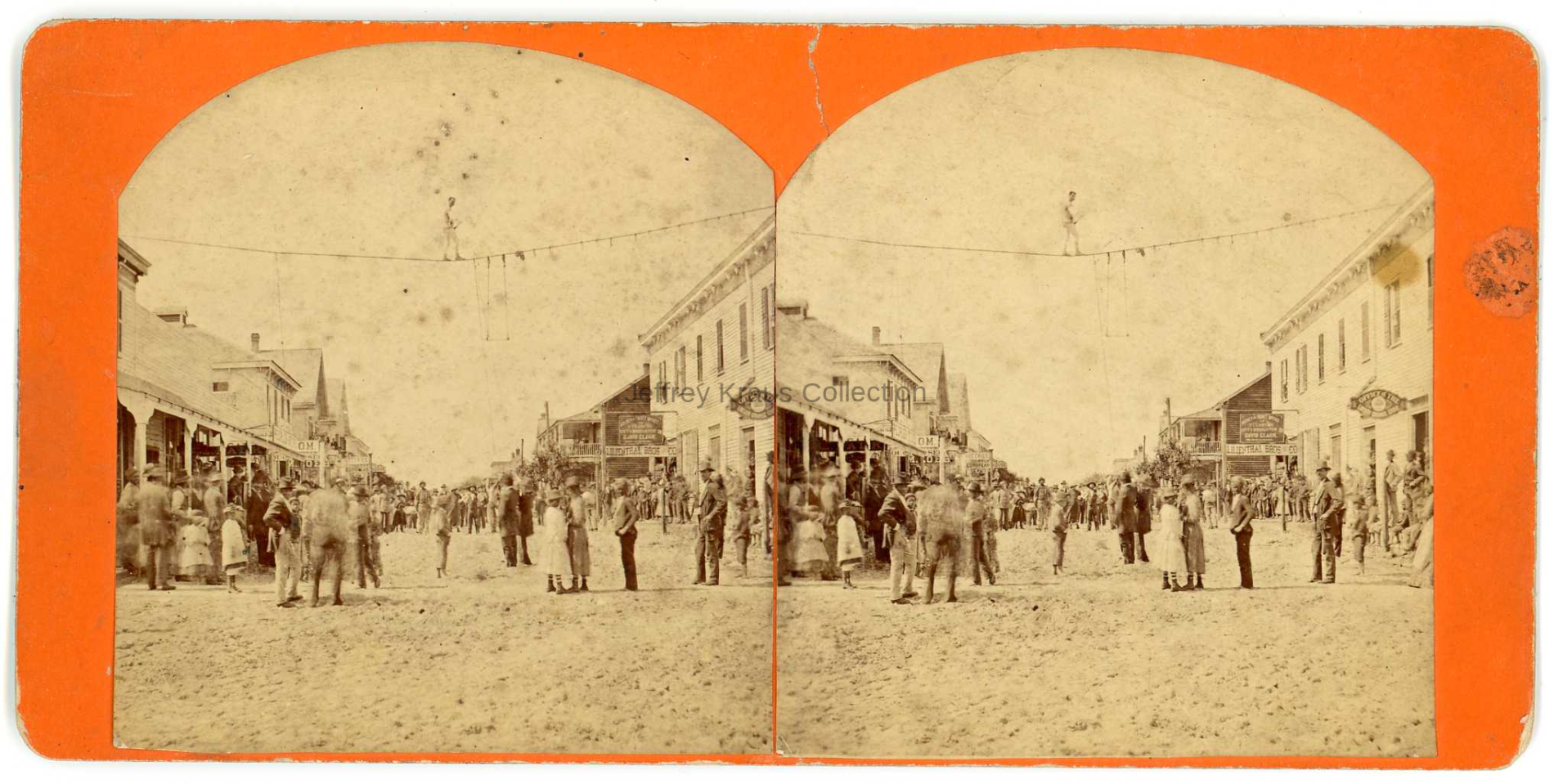
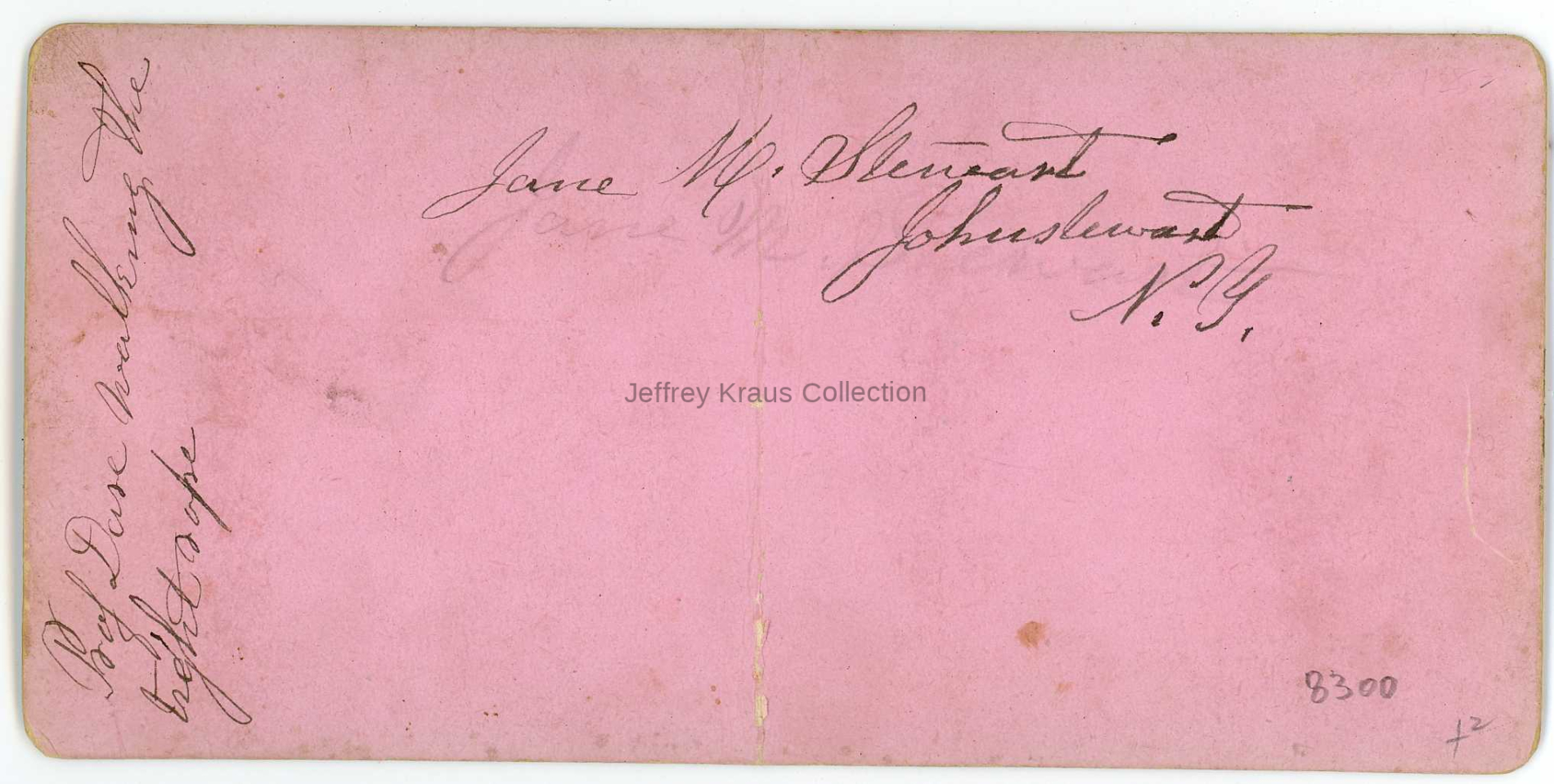
Prof. Dare walking the tightrope, Lemon Street, Palatka, Florida.
Prof. Dare walking the tightrope, Lemon Street, Palatka, Florida.
No. 430. Rope Walker. Unknown wire-walker from the Russell House, Eureka Springs, Arkansas. F.F. Fyler’s photo studio can be seen at the very left.
Unknown wire-walker in Waukesha, Wisconsin.
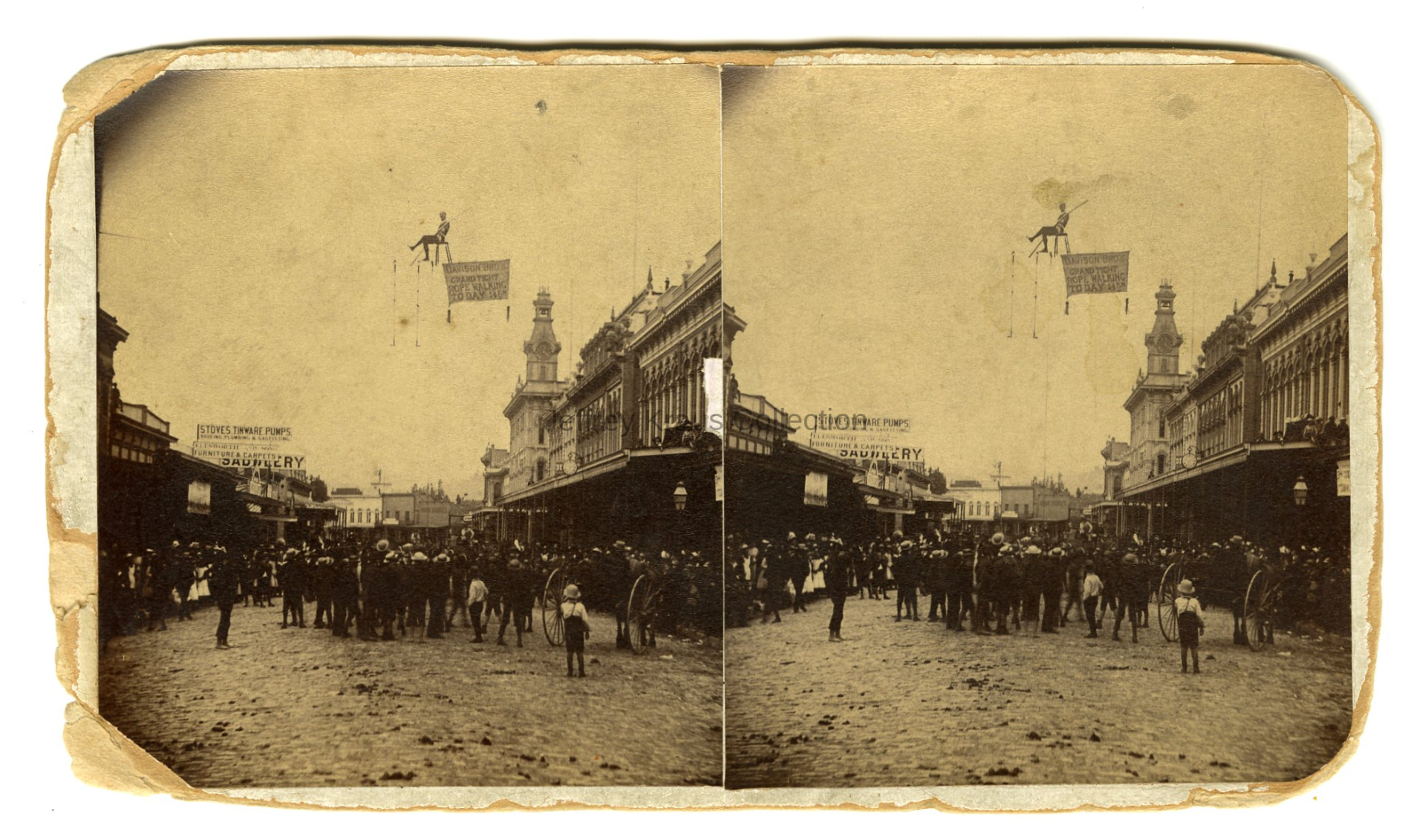
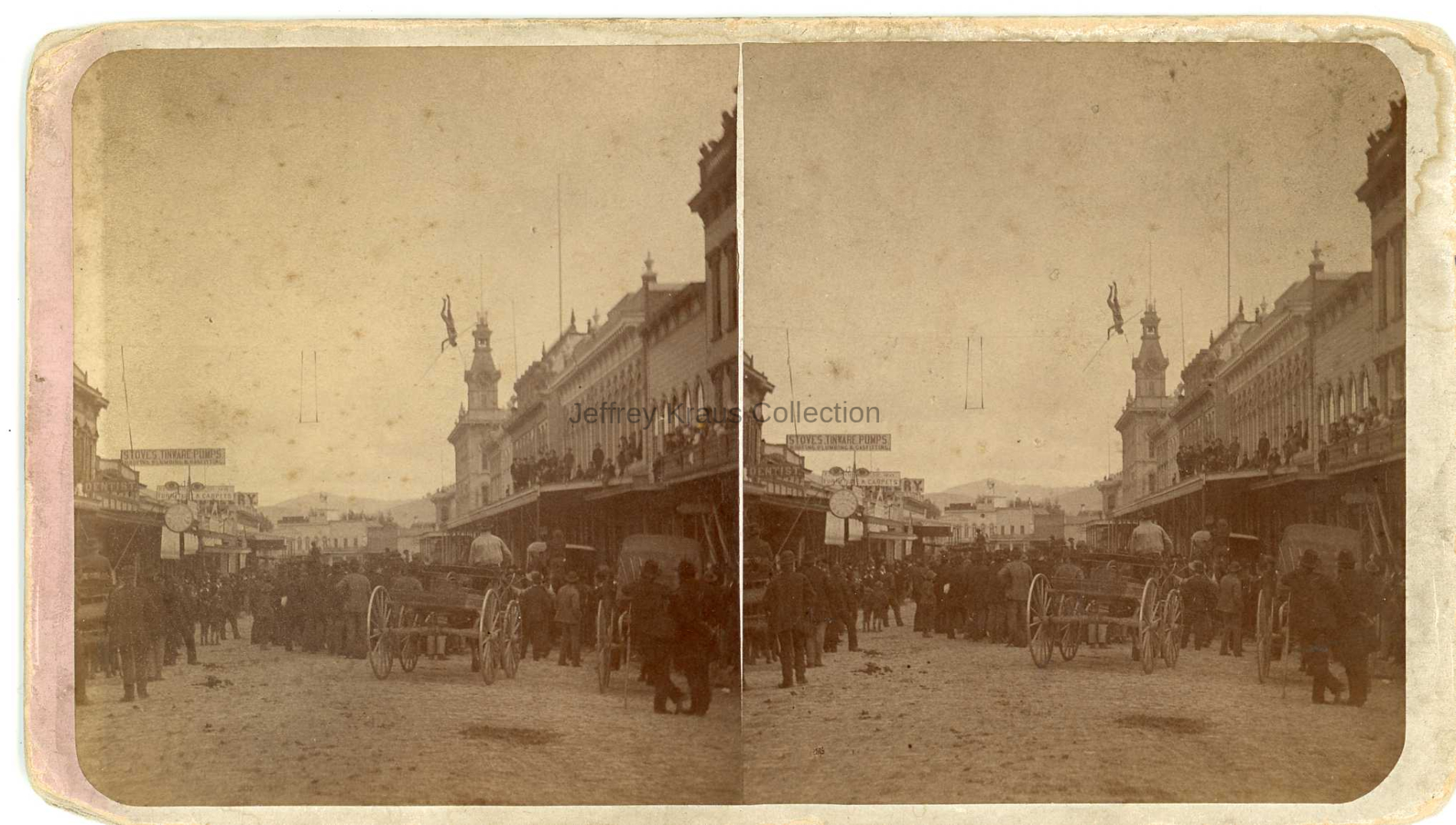
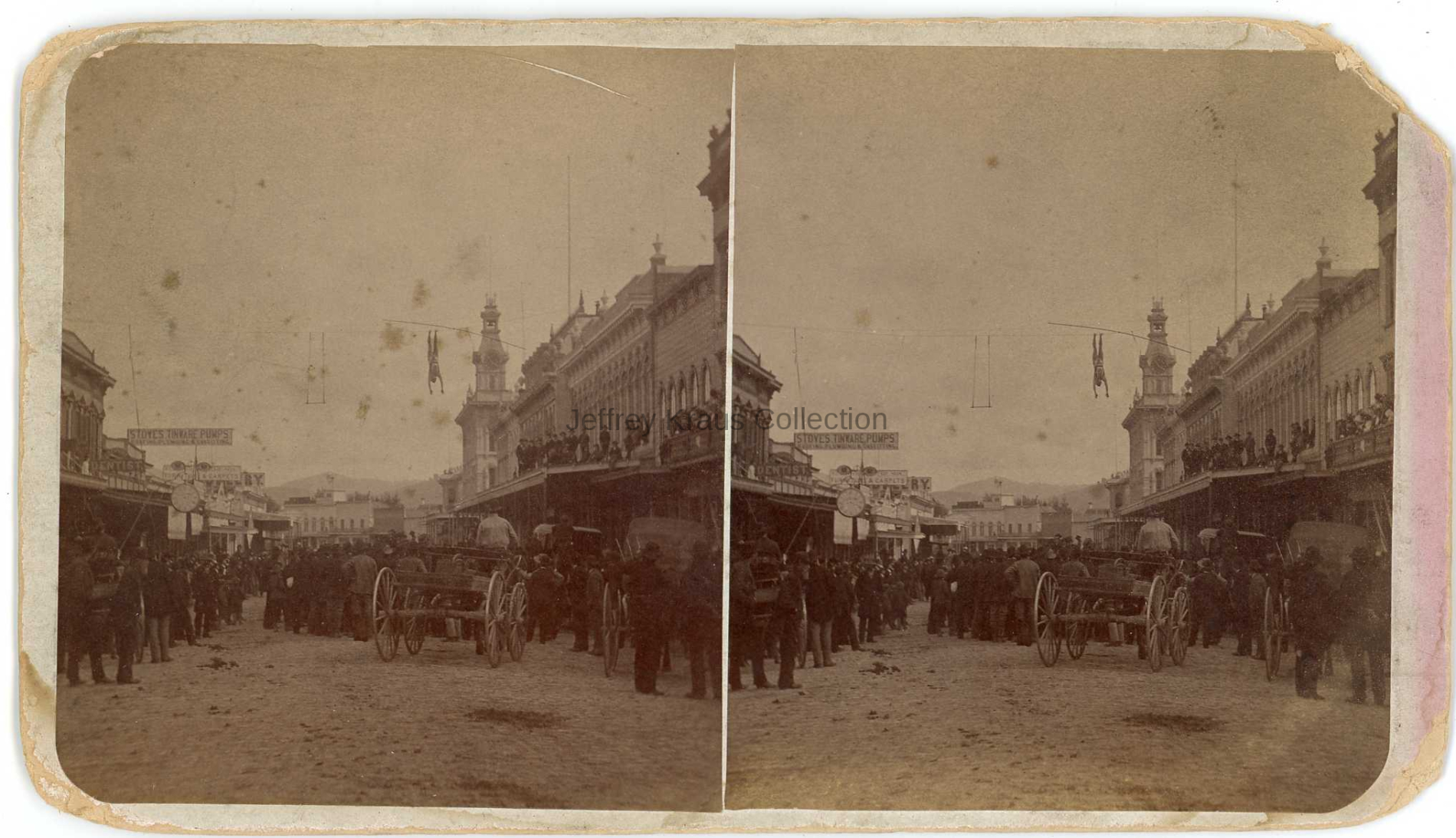
Davison Bros., tight-rope walkers, Petaluma, California.
Davison Bros., tight-rope walkers, Petaluma, California.
Davison Bros., tight-rope walkers, Petaluma, California.
211. Prof. Leon, Sandusky, Ohio.
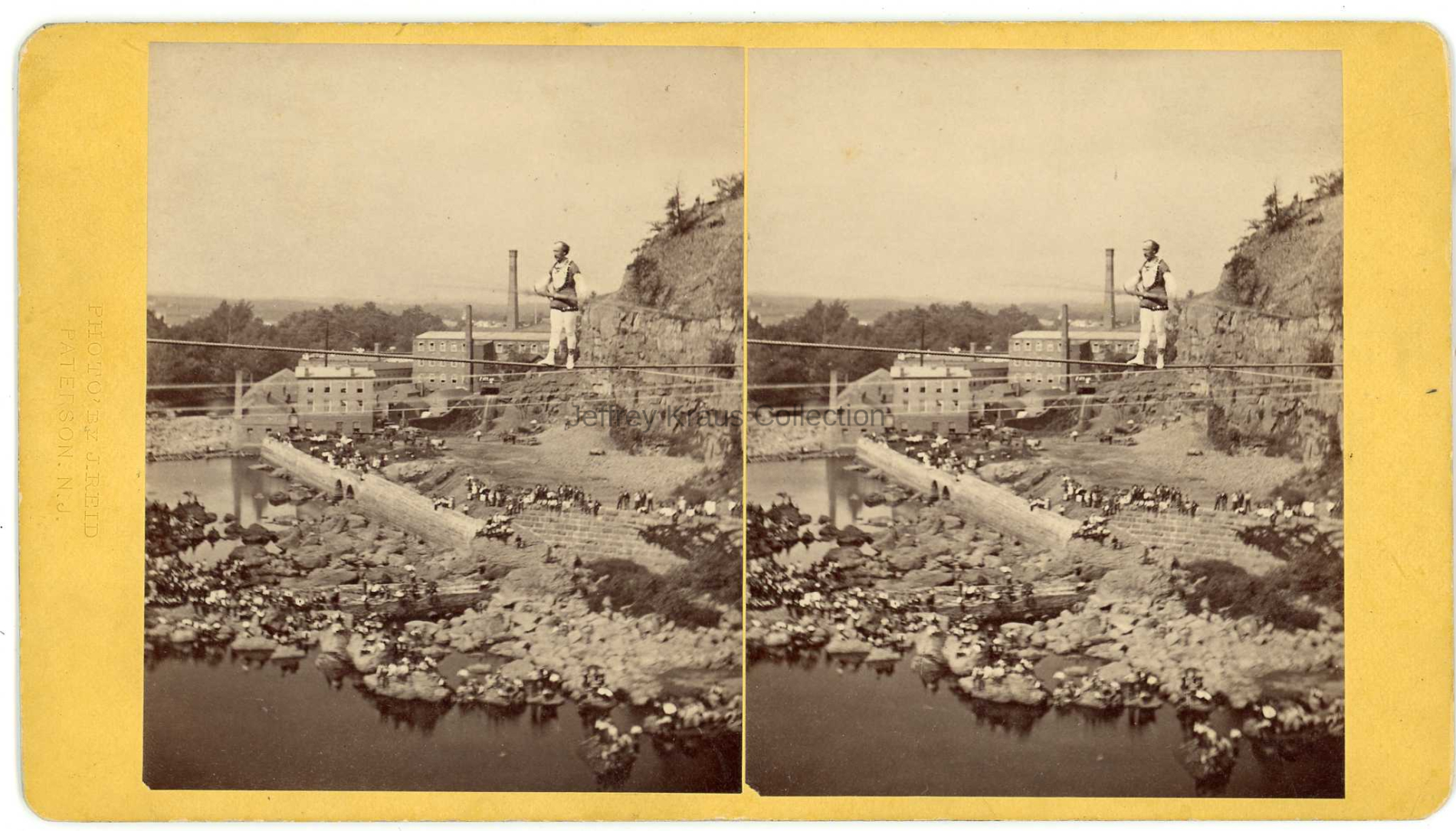
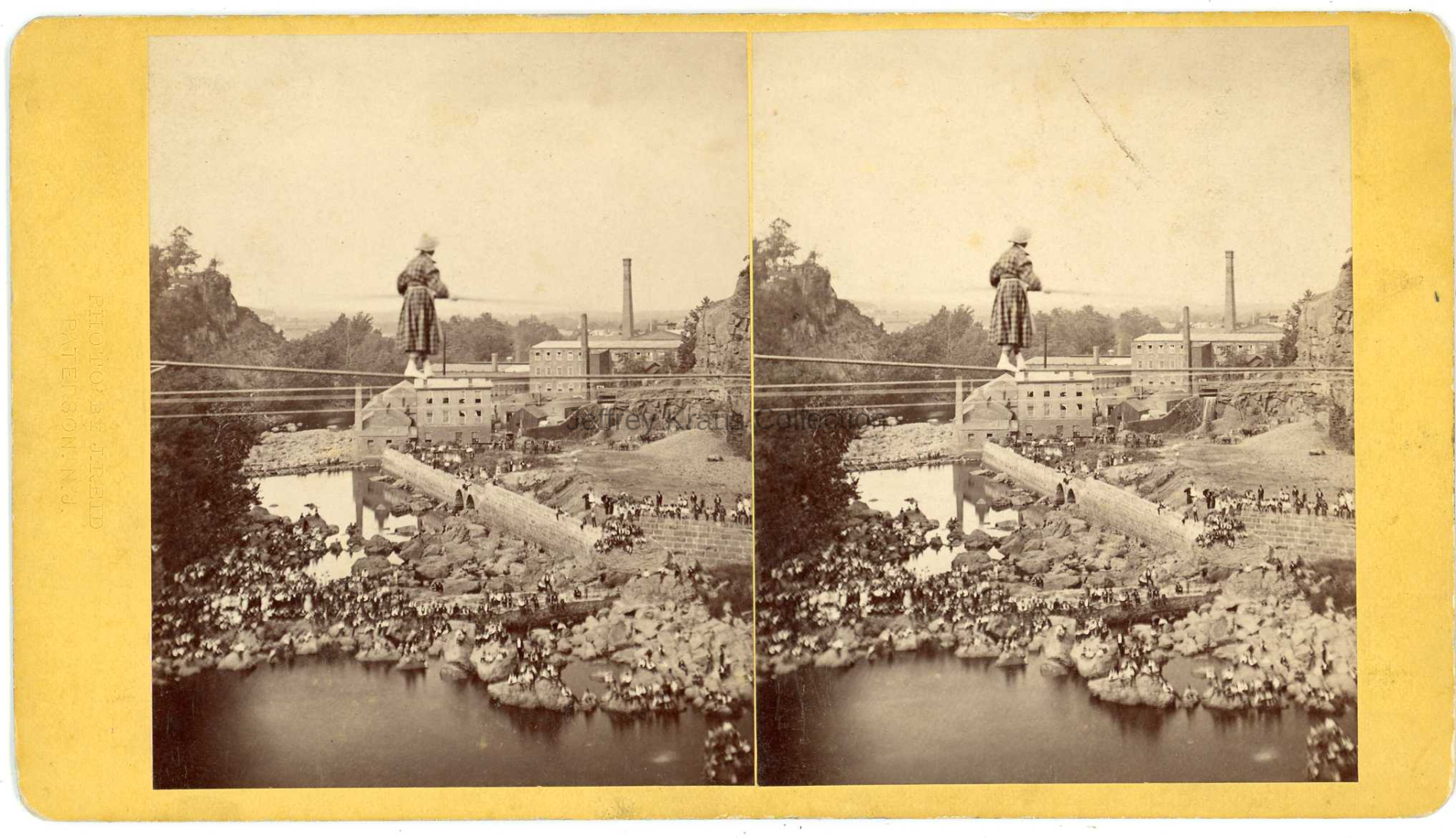
Harry Leslie, Aug. 4 & 5, 1879, Paterson, N.J.
Harry Leslie, Aug. 4 & 5, 1879, Paterson, N.J.
No. 30. Mayville House and Main St. Prof. Leon on tightrope.
Unknown wire-walker, Flemington, N.J., 1886.
Magnolia Ave., Eustis, Florida. Unknown wire-walker.
Tight-rope walking by John Denier in Havana [NY] on Tuesday, October 3rd, 1876.
Ausable Chasm-Grand Rope Ascension by Prof. Helms.
Unknown wire-walker at Chagrin Falls, Ohio, July 4th, 1898.
Unknown wire-walker, Public Square, Galion, Ohio.
Blondini at Coney Island, NY. This wire-walker capitalized on the name of Blondin by adding an “i” to his name.
Menotti Riding Bicycle on the High Wire. No. 96.
Unknown wire-walker at carnival in Mishawaka, Indiana.
No. 125. Niagara. Blondin on the Tight Rope.
Blondin on the high wire.
Blondin on the high wire.
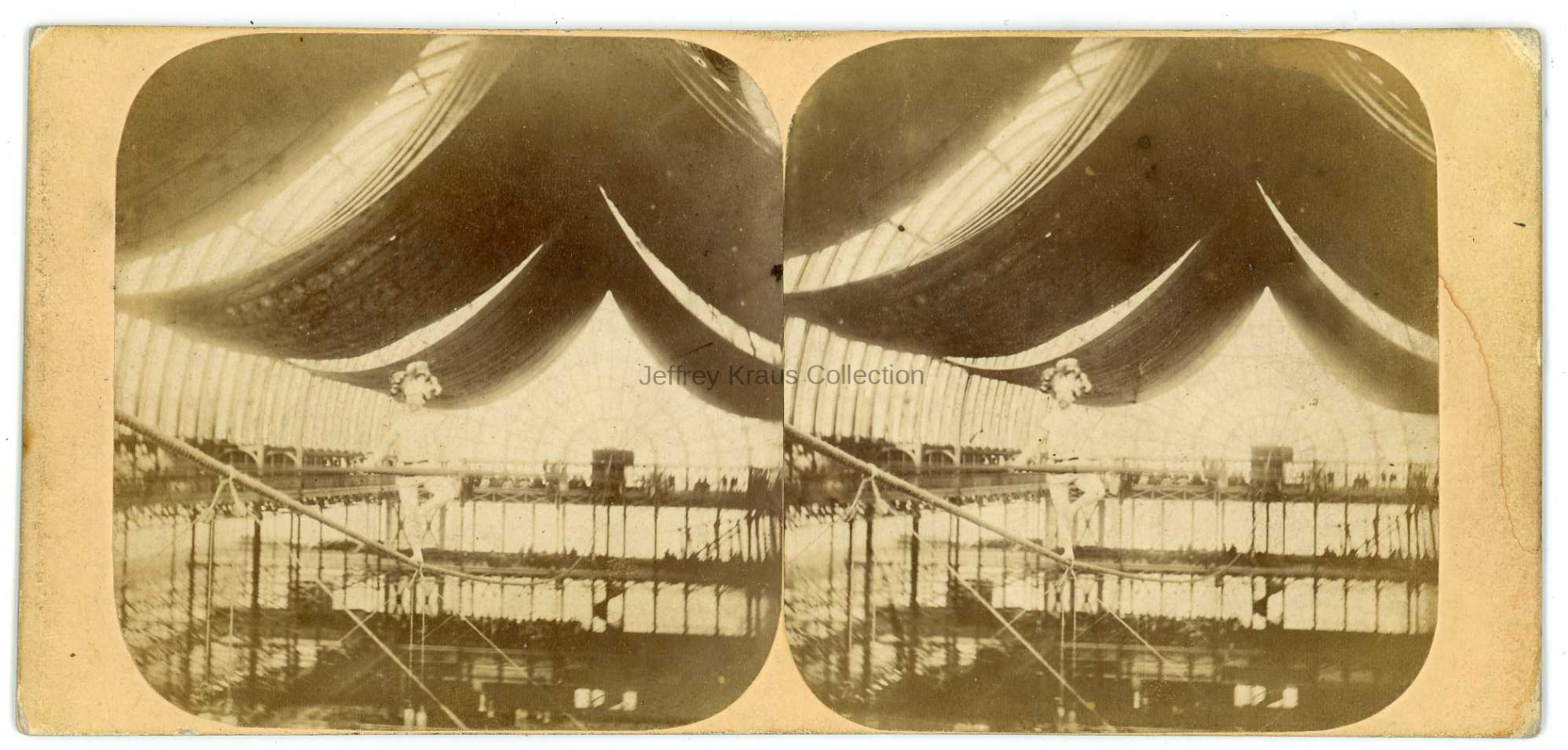
Blondin on the high wire at the Crystal Palace, London, 1861.
Blondin on the high wire at the Crystal Palace, London, 1861.
Blondin standing on his head on the high wire at the Crystal Palace, 1861.
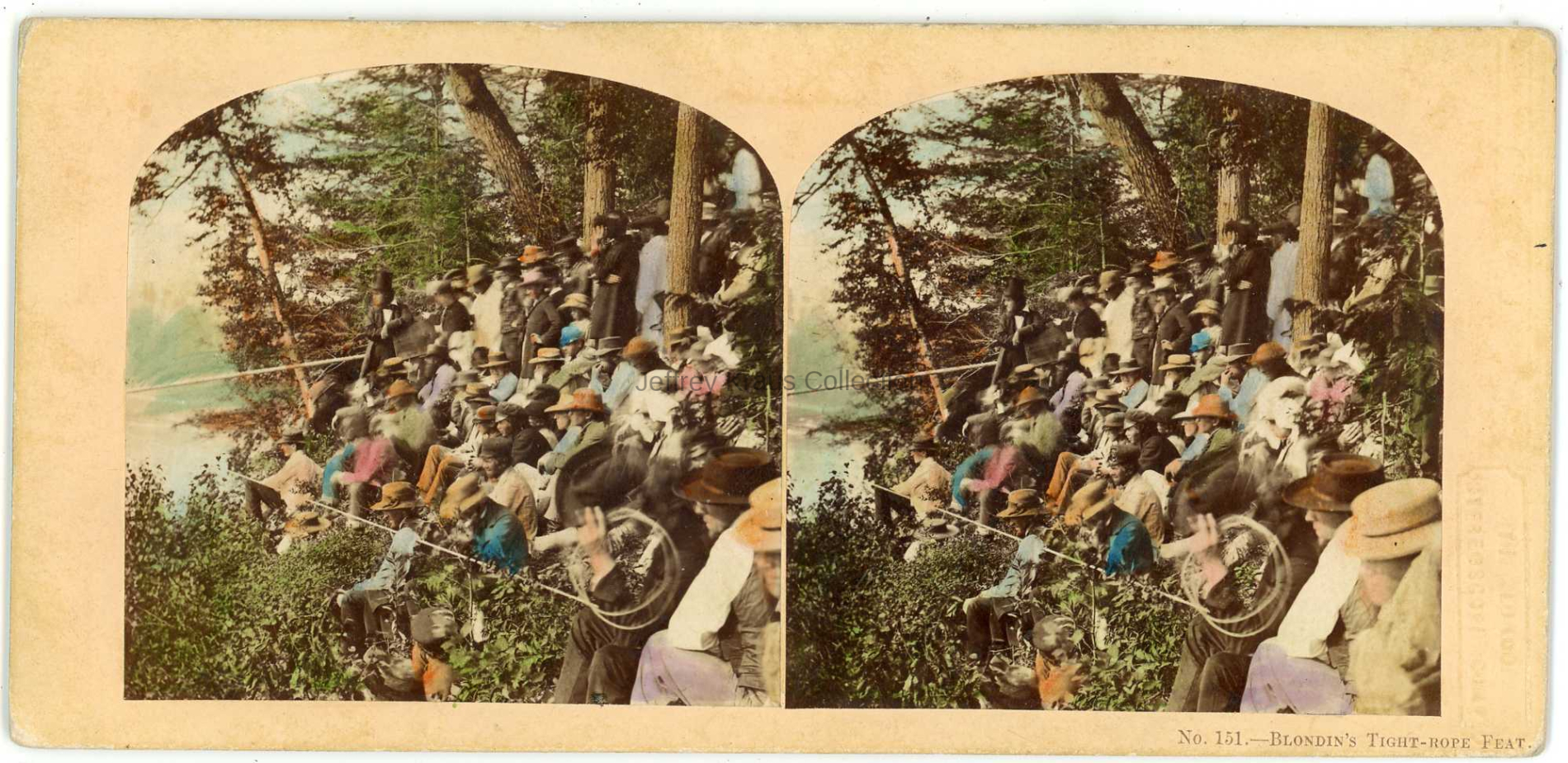
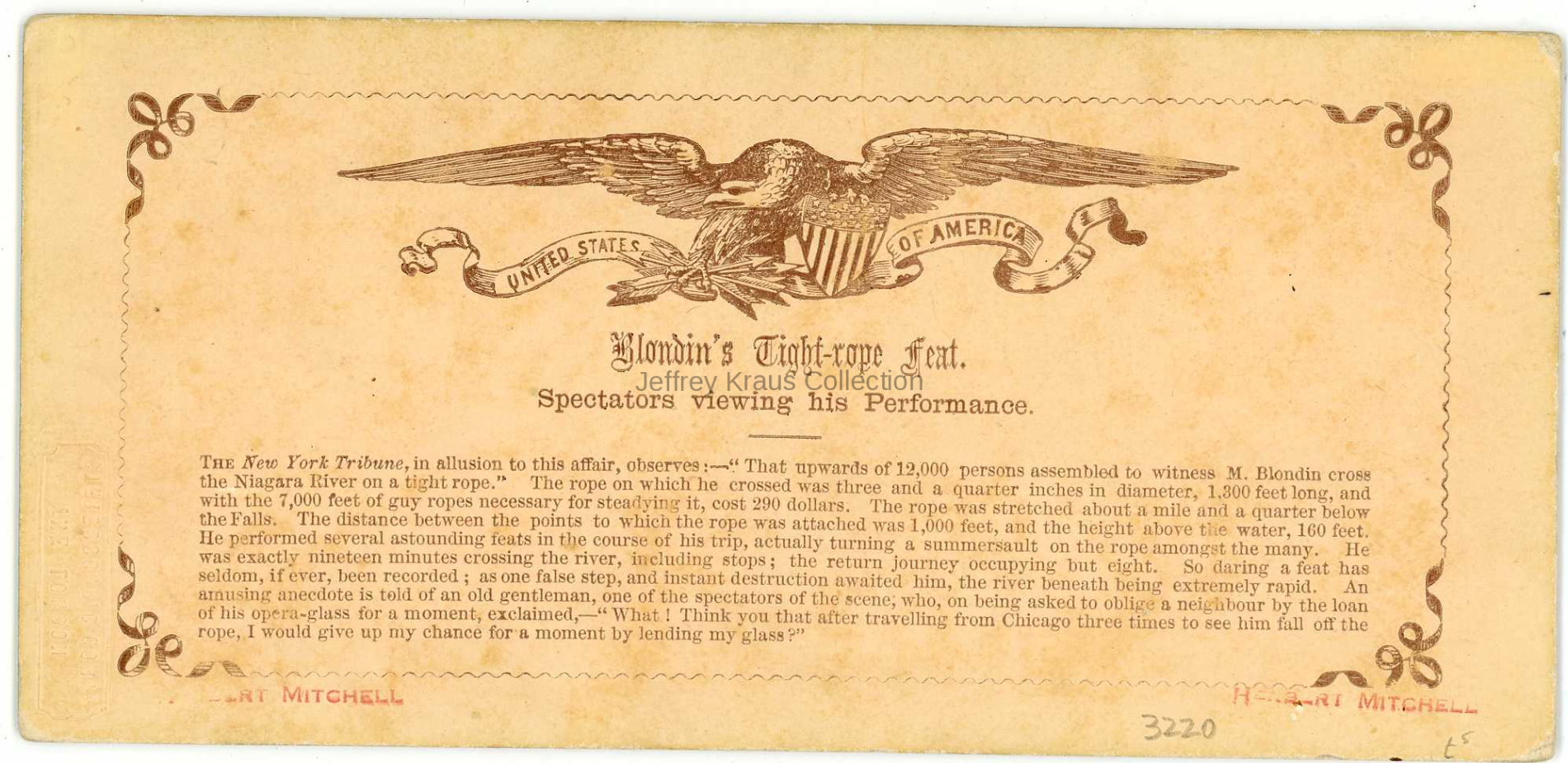
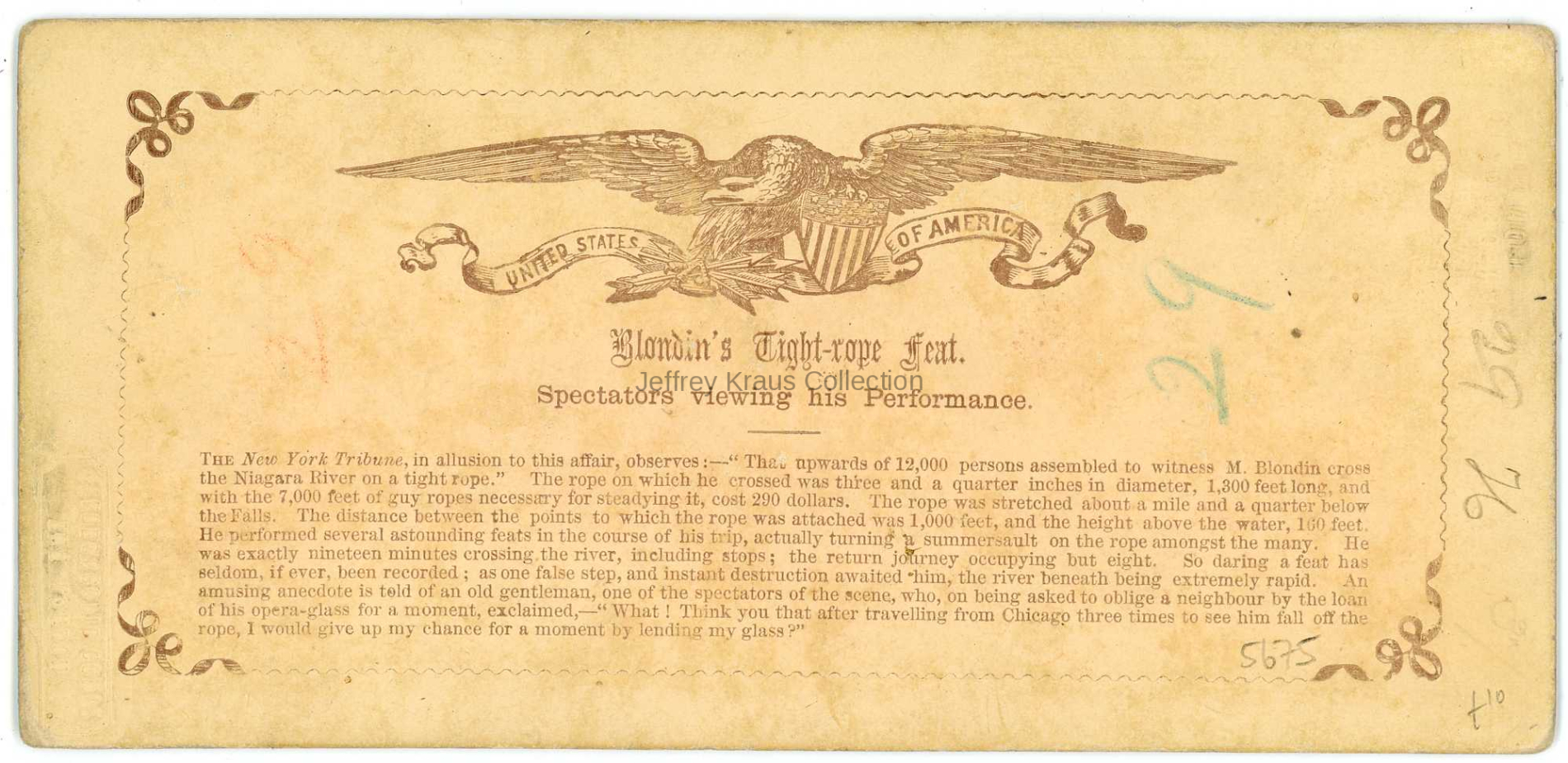
No. 151. Blondin’s Tight-rope feat. Spectators viewing his Performance.
No. 151. Blondin’s Tight-rope feat. Spectators viewing his Performance.
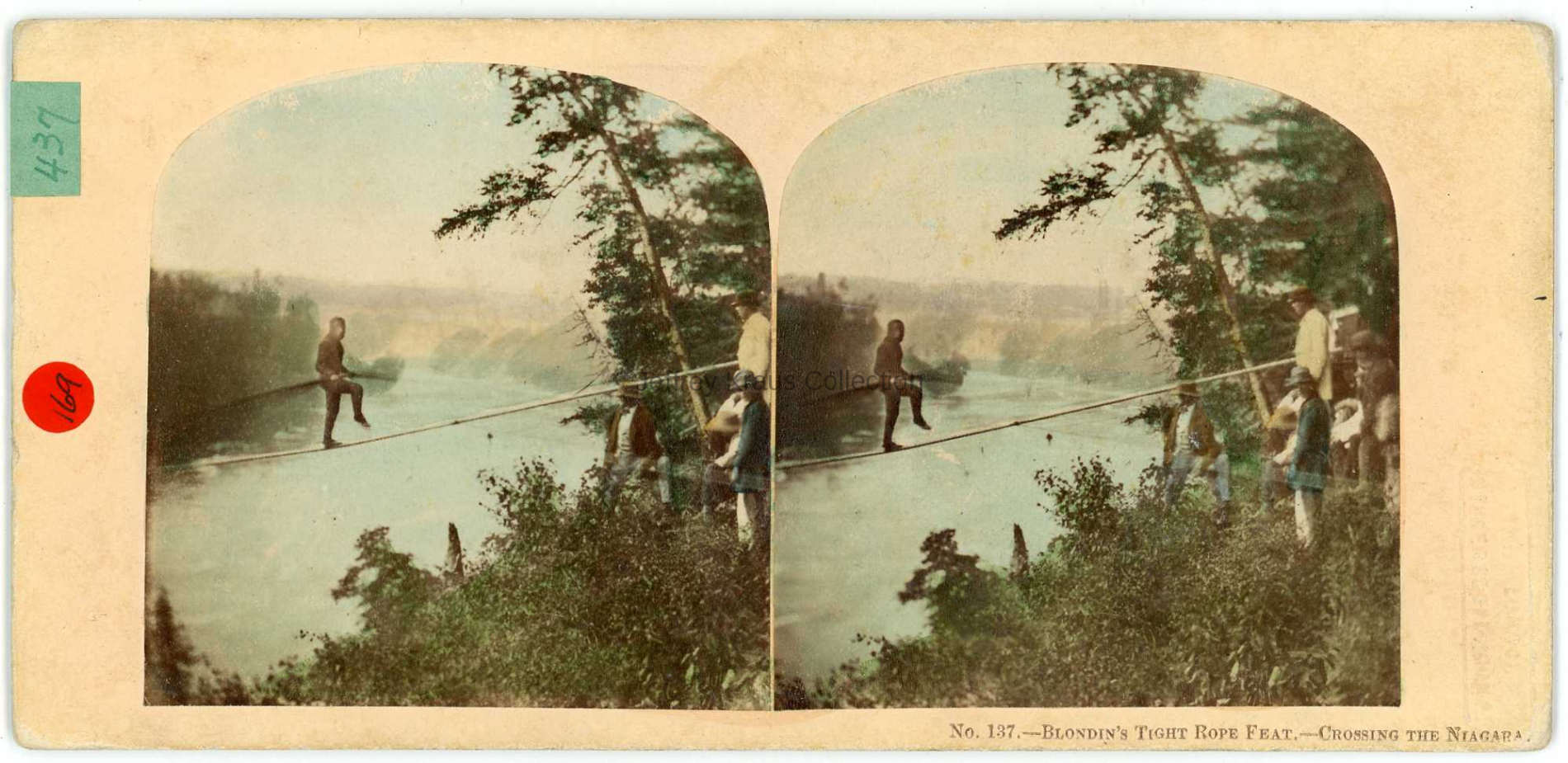
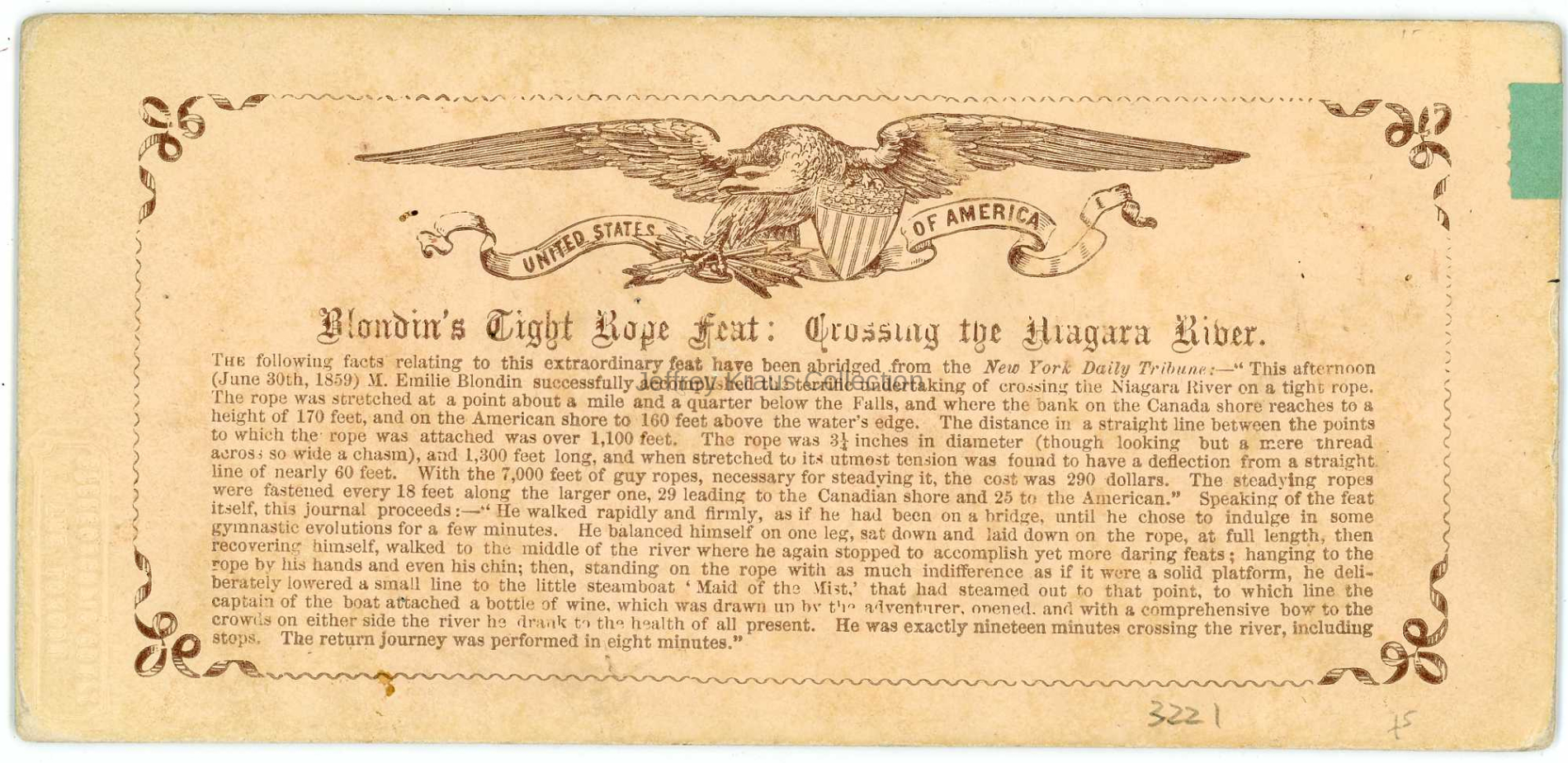
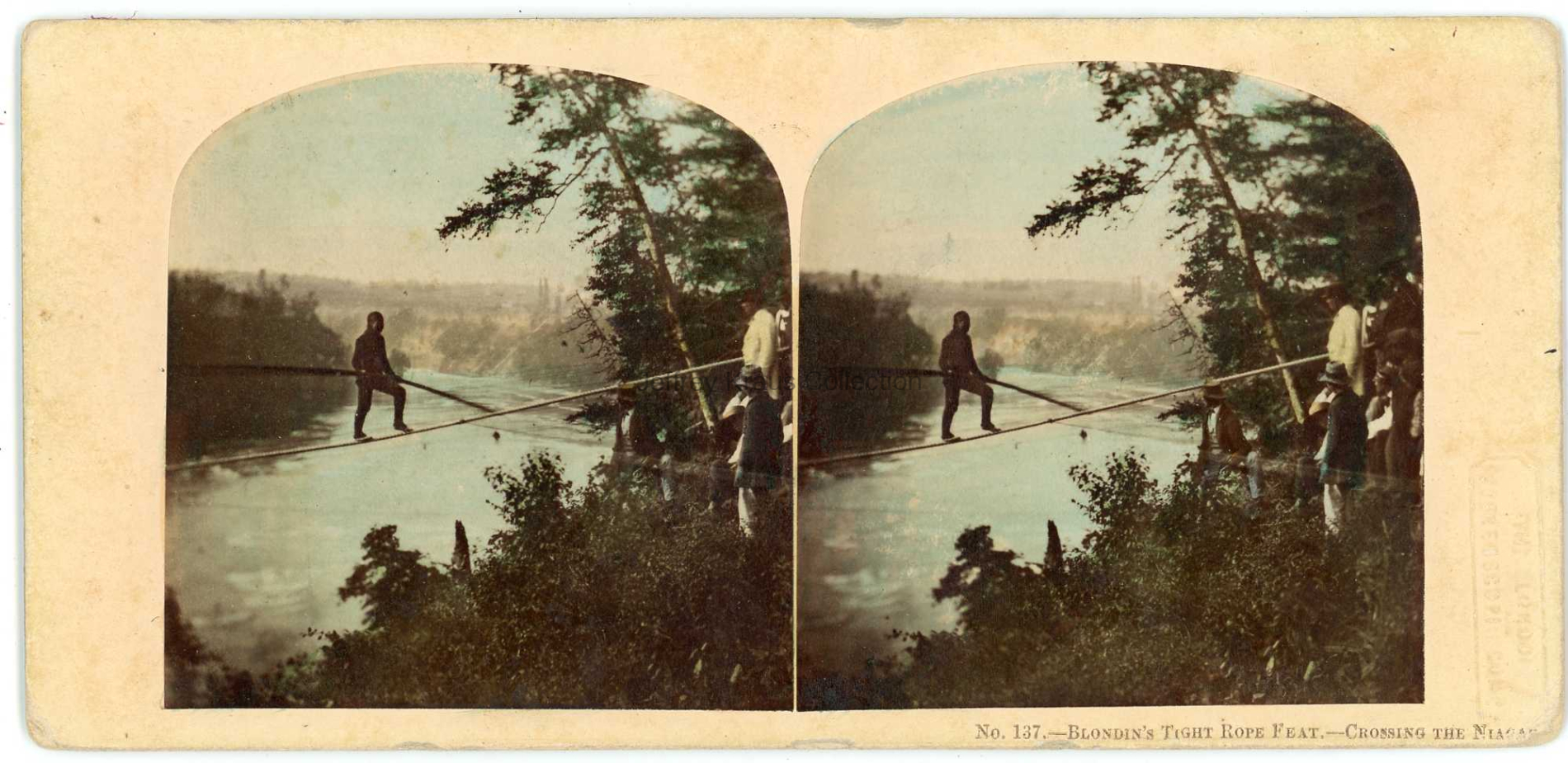
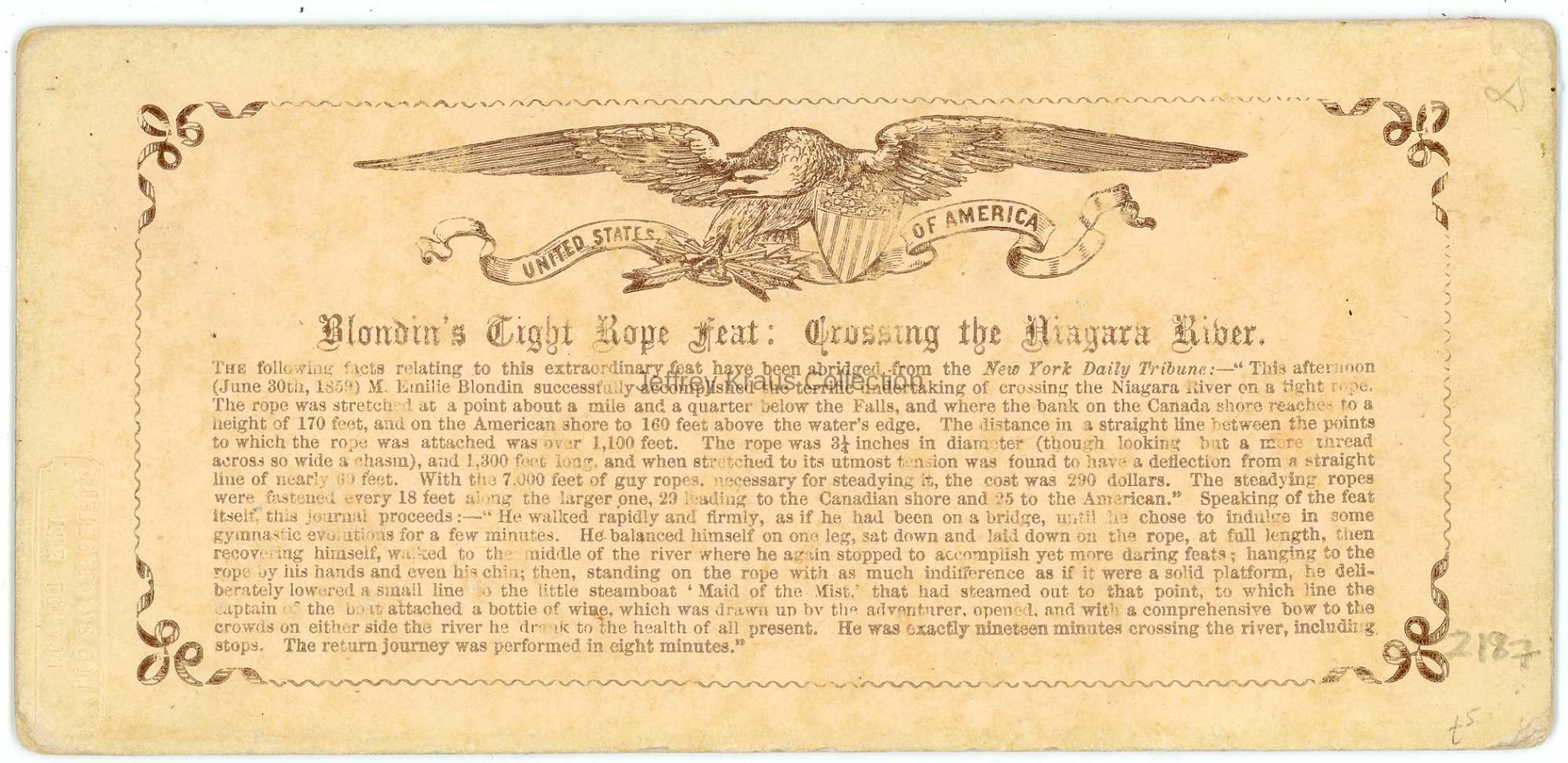
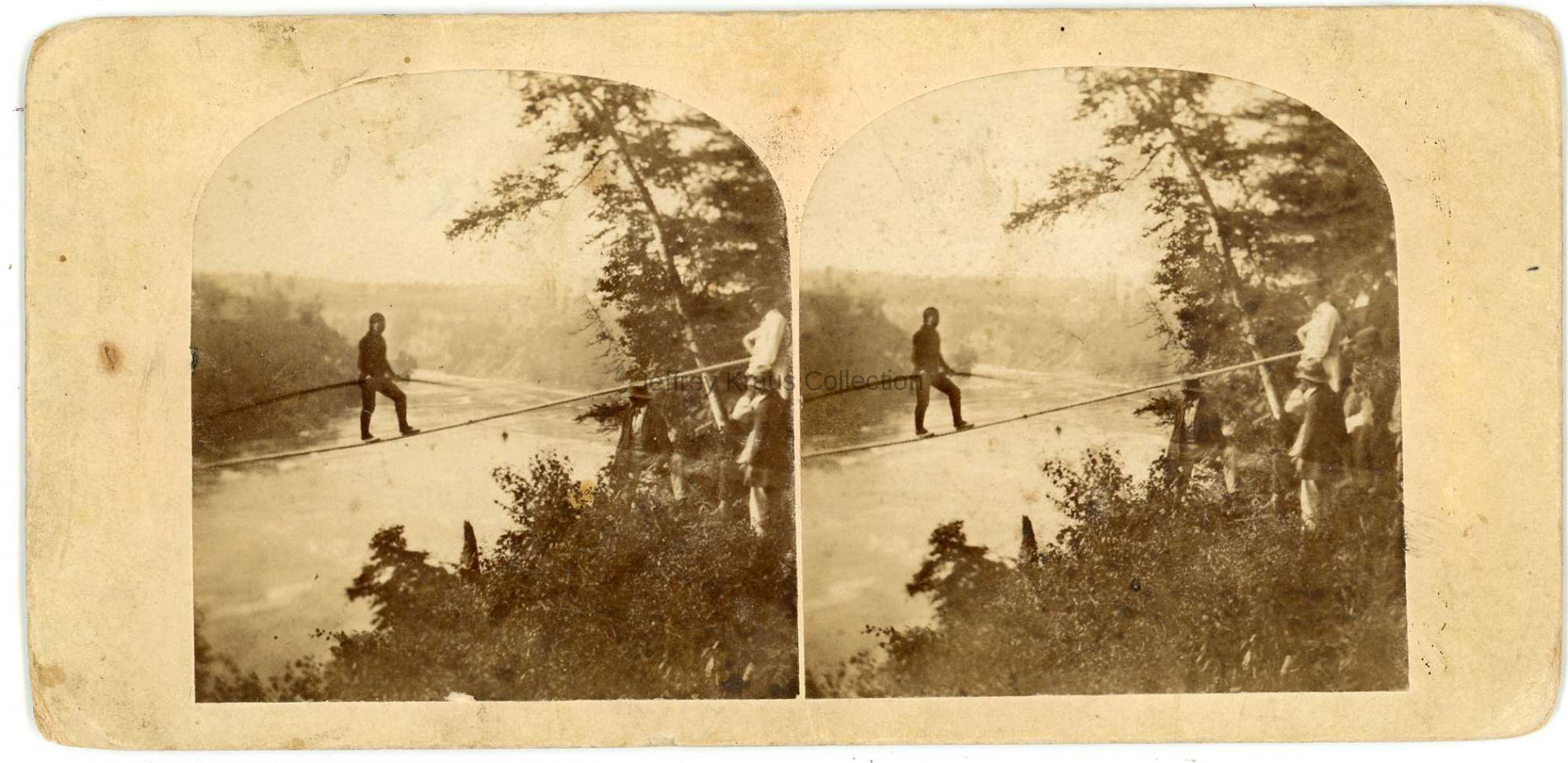
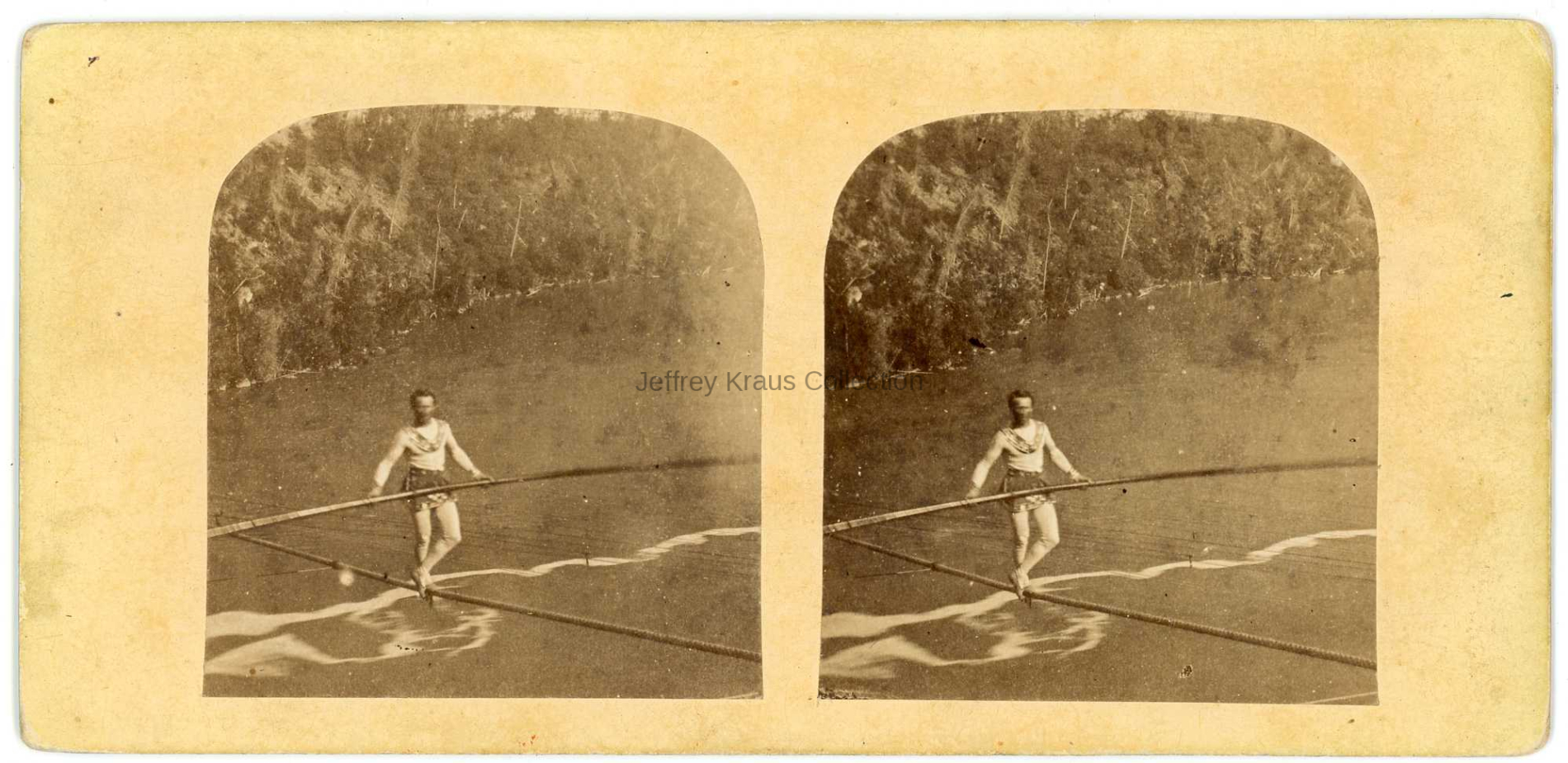
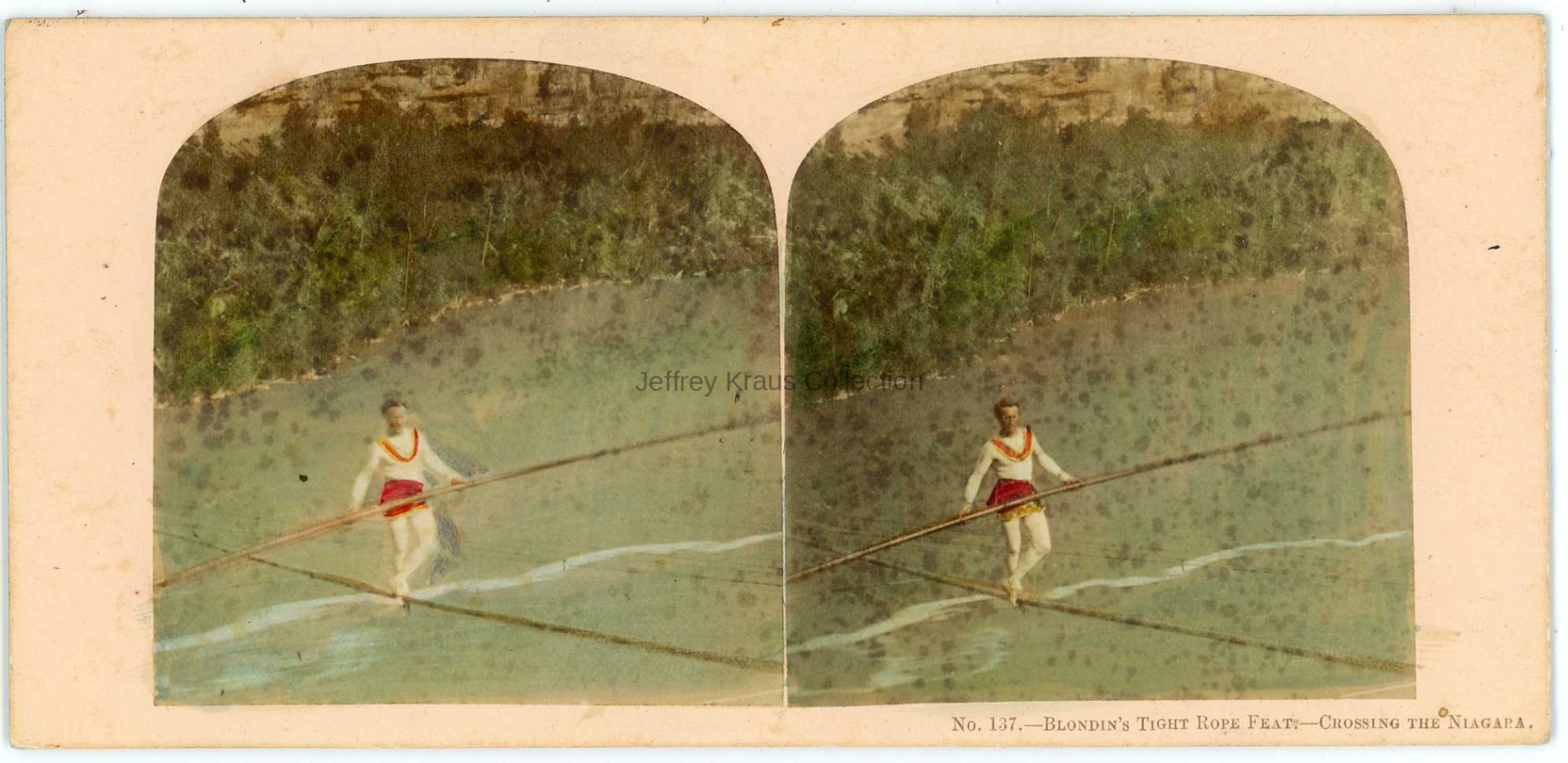
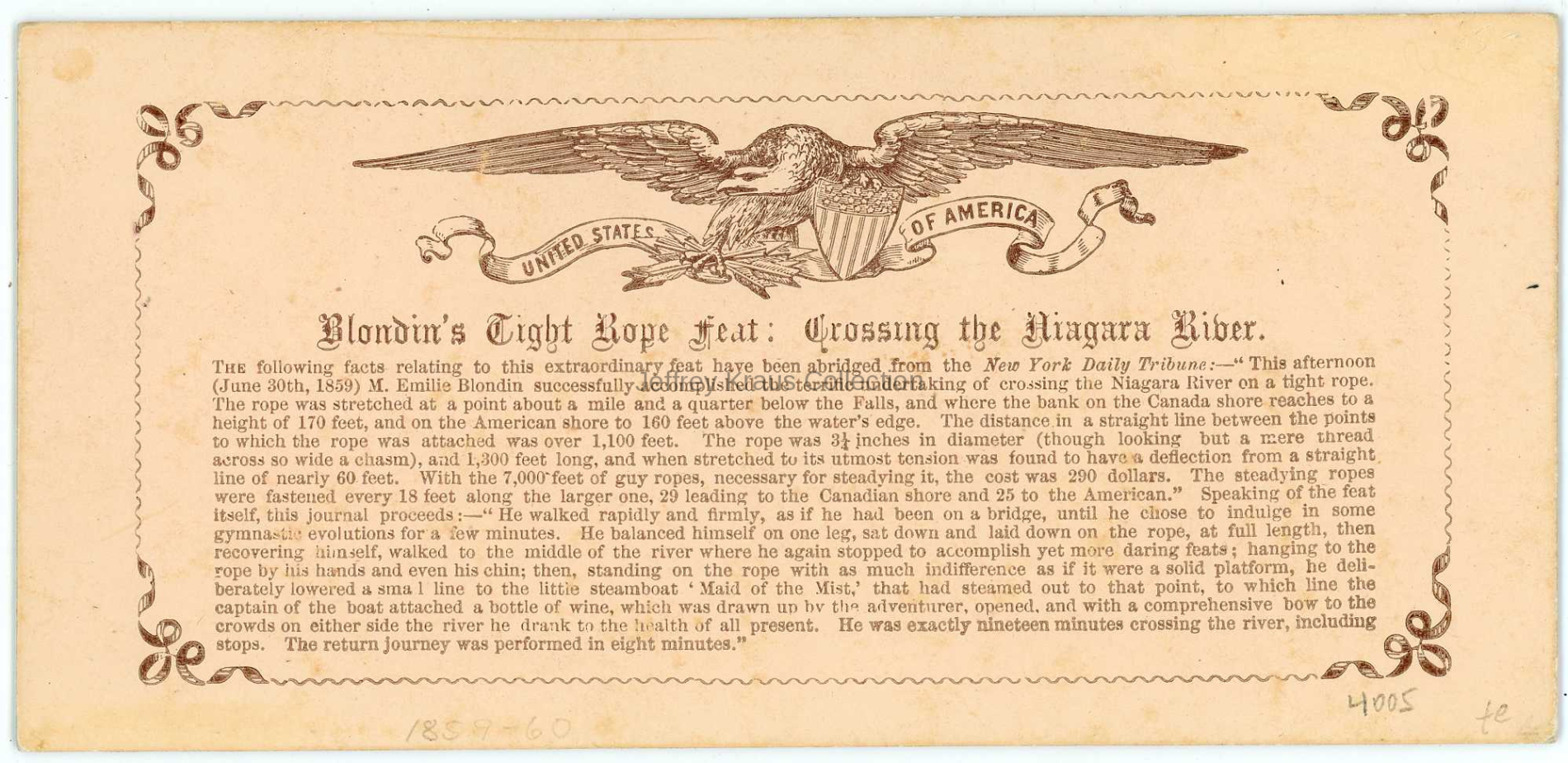
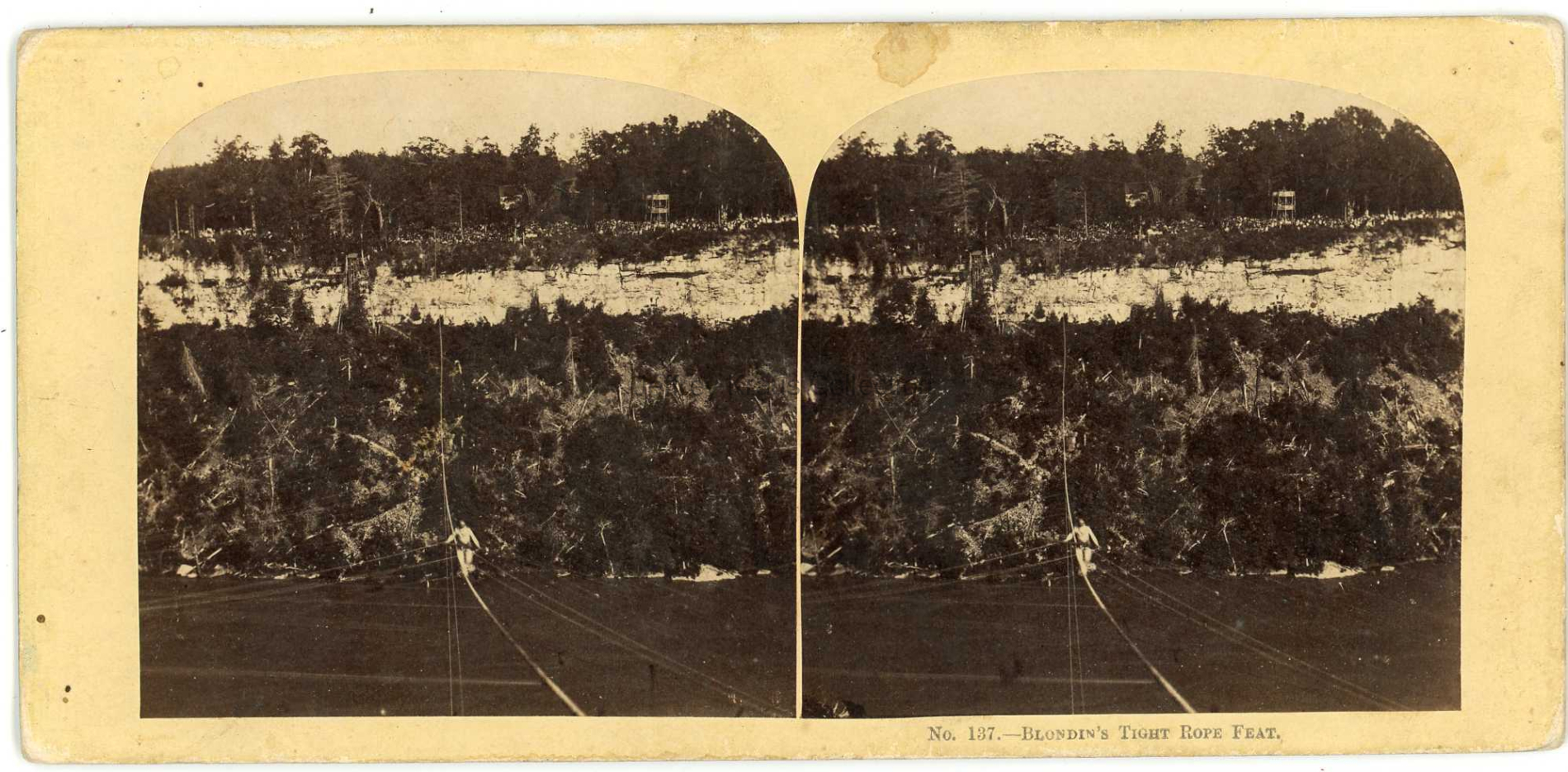
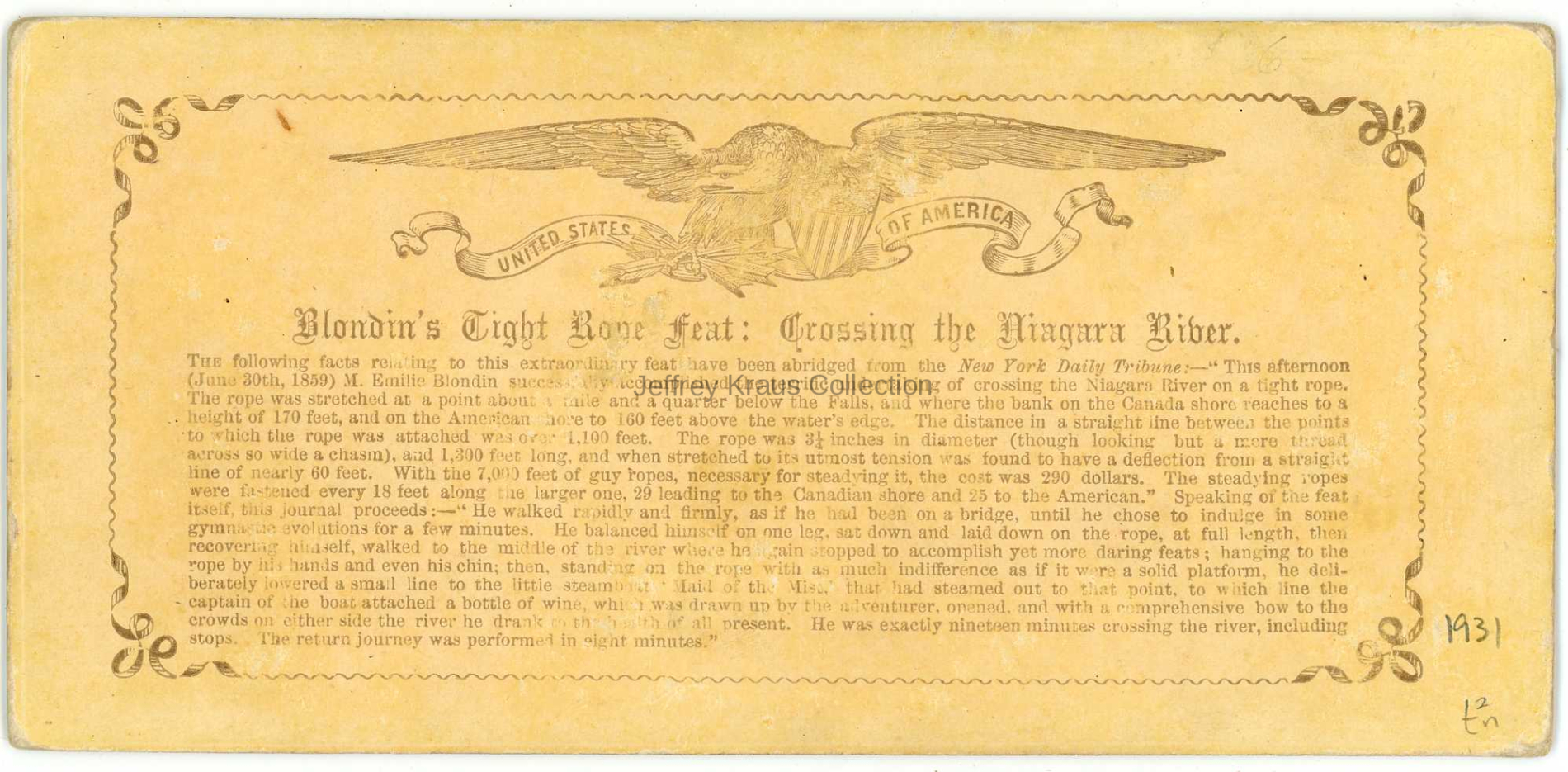
No. 137. Blondin’s Tight-Rope feat: Crossing the Niagara River.
No. 137. Blondin’s Tight-Rope feat: Crossing the Niagara River.
Blondin’s Tight-Rope feat: Crossing the Niagara River.
137. Blondin’s Tight Rope Feat.
No. 137. Blondin’s Tight Rope feat: Crossing the Niagara River.
No. 137. Blondin’s Tight Rope feat: Crossing the Niagara River.